
Pharmacognosy and Phytopharmaceuticals — Pharm D Year 2
Notes for Pharmacognosy and Phytopharmaceuticals, Pharm D Year 2, organised unit by unit following the PCI Pharm D syllabus. 16 units, 20 diagrams.
Syllabus: Pharm D Year 2 syllabus
Practicals: Pharmacognosy and Phytopharmaceuticals practicals
Units in this subject
- Unit 1: Introduction
- Unit 2: Definition, History and Scope
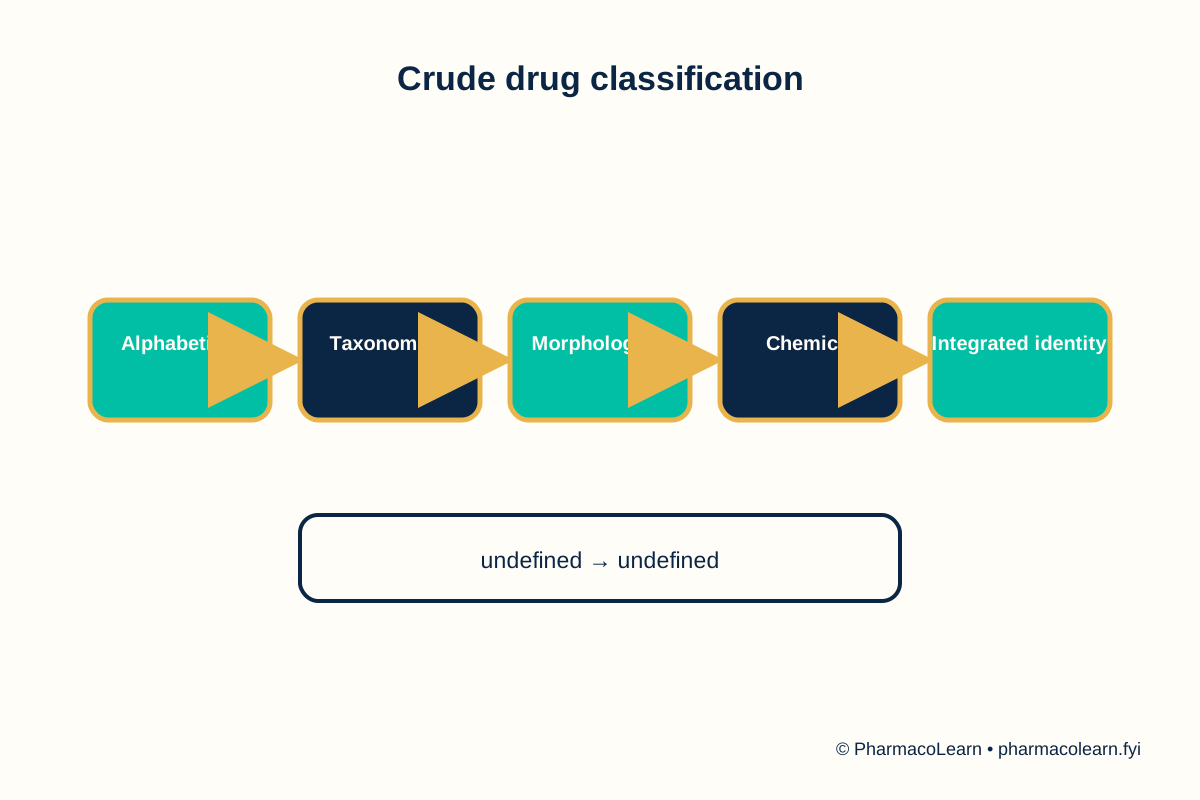
- Unit 3: Classification of Crude Drugs
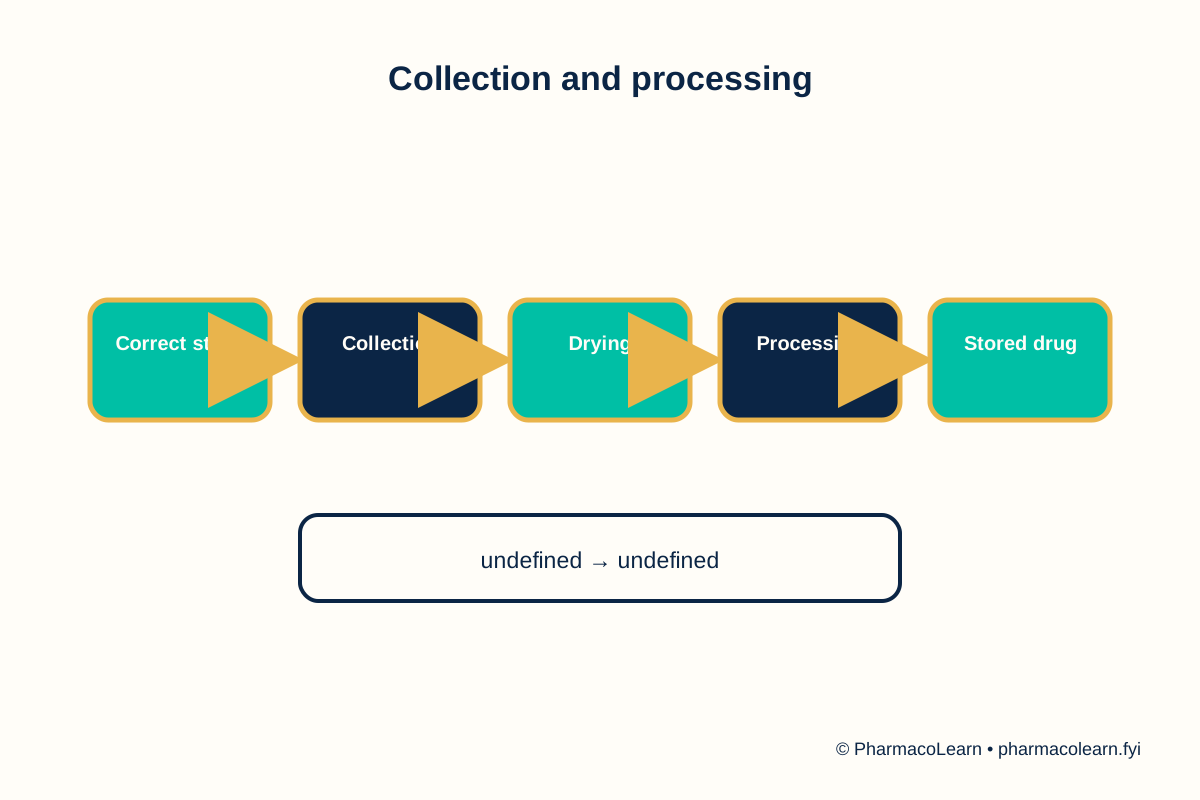
- Unit 4: Cultivation, Collection, Processing and Storage
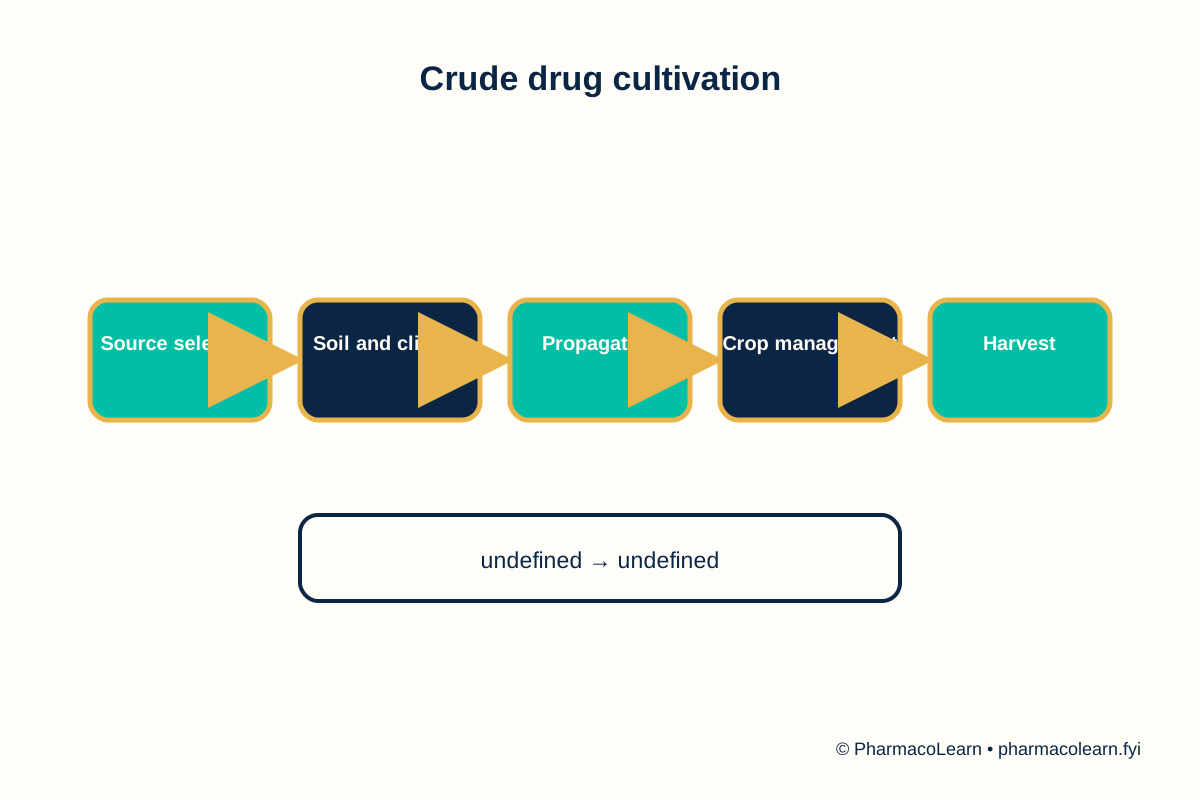
- Unit 5: Detailed Methods of Cultivation
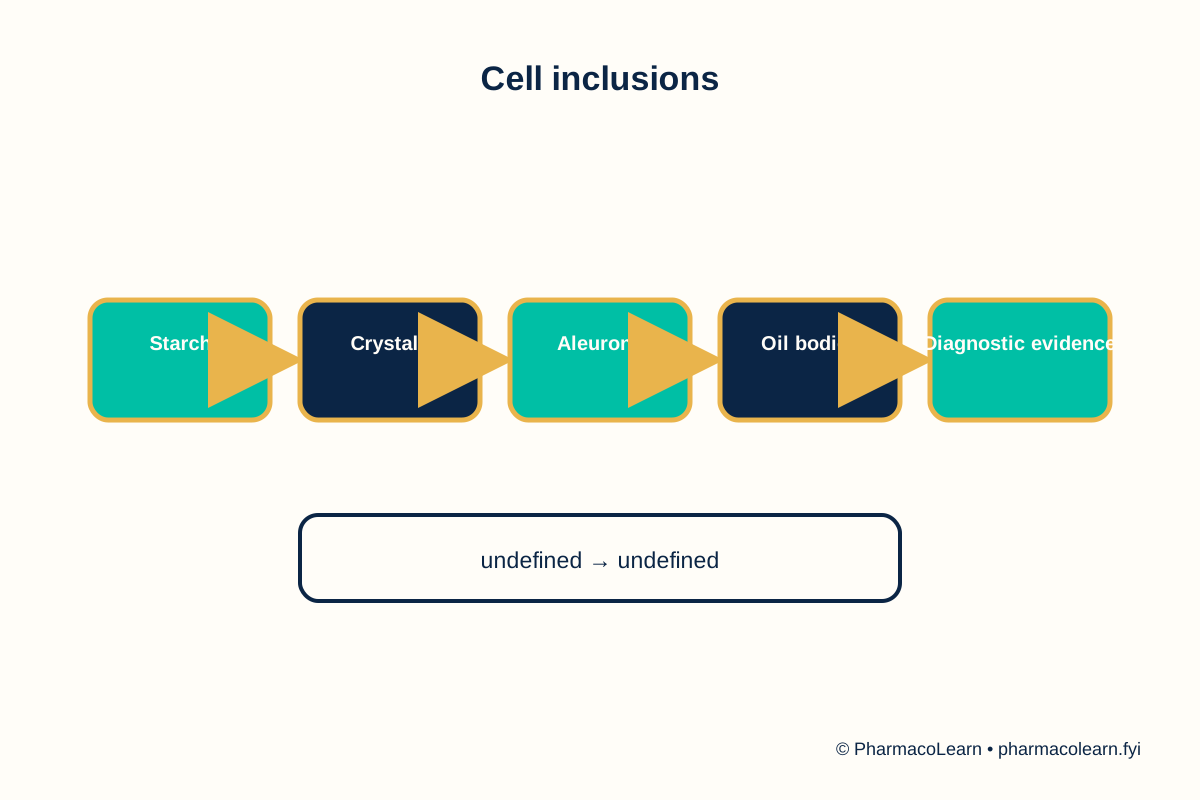
- Unit 6: Cell Wall Constituents and Cell Inclusions
- Unit 7: Microscopical and Powder Microscopical Study
- Unit 8: Natural Pesticides
- Unit 9: Detailed Study of Cell Constituents
- Unit 10: Carbohydrates and Related Products
- Unit 11: Carbohydrate Containing Drugs
- Unit 12: Lipids
- Unit 13: Detailed Study of Oils
- Unit 14: Proteins
- Unit 15: Plant Fibers and Surgical Dressings
- Unit 16: Adulteration of Crude Drugs
Unit 1: Introduction
Syllabus scope
This unit covers the purpose of pharmacognosy, natural medicinal materials and their place in pharmacy.
Core theory
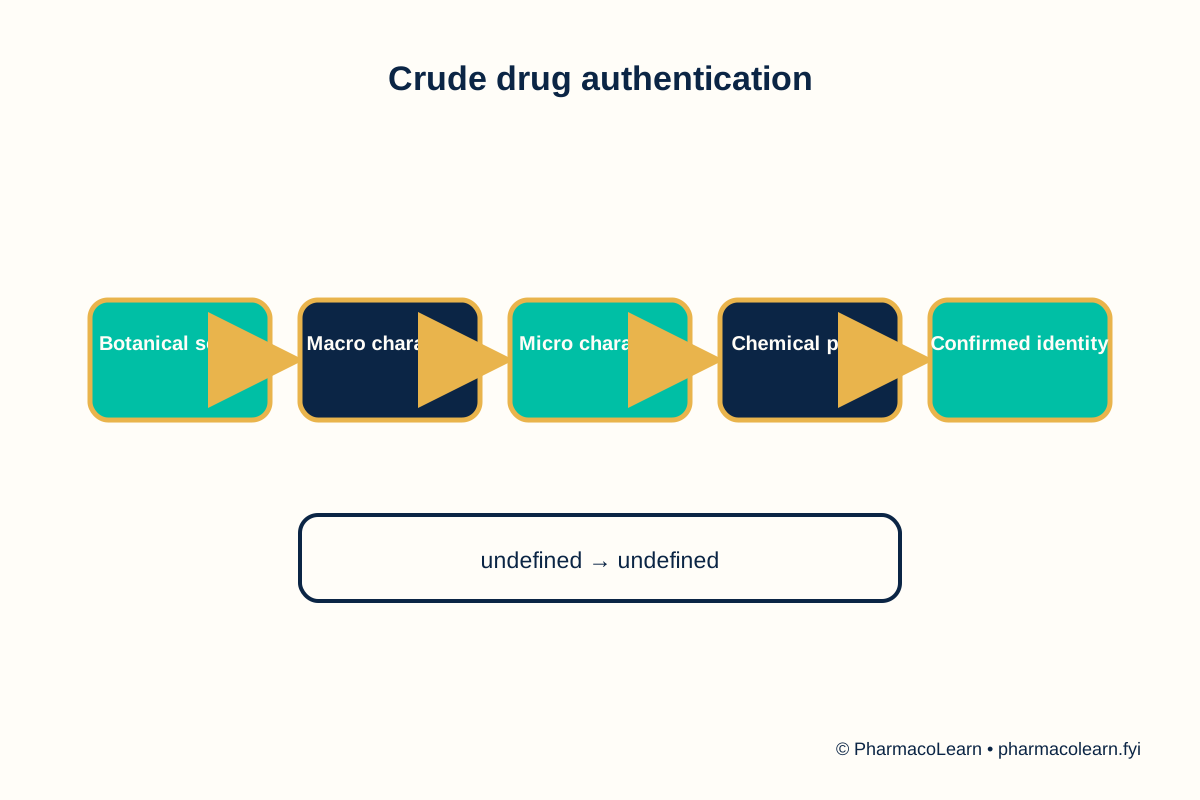
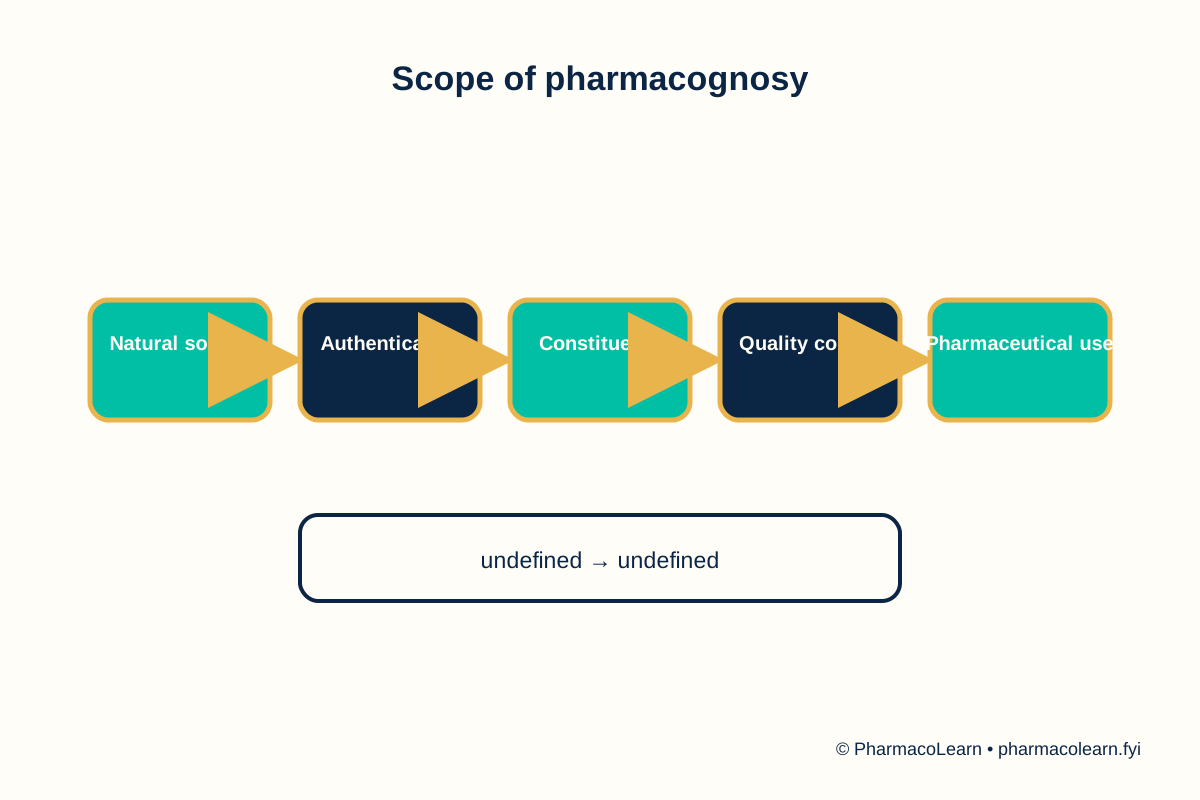
Pharmacognosy studies medicinal materials obtained from plants and other natural sources, with attention to identity, source, structure, constituents, quality and use. The correct study sequence is to identify the biological source, authenticate the material, describe the relevant structure or constituent, explain processing or extraction, evaluate quality, and connect the result with pharmaceutical use. A crude drug is not defined only by a name. Its botanical source, plant part, geographic origin, collection stage, processing history and storage conditions can all alter its quality.
The topic should be learned using both macroscopic and microscopic evidence. Chemical constituents may be primary metabolites that support plant life or secondary metabolites that contribute to defense, signaling or medicinal activity. Marker compounds support standardization but do not always represent the entire therapeutic effect.
Pharmacist correlation
The pharmacist checks identity, contamination, moisture, foreign matter, adulteration, batch traceability, storage and labeling. Natural origin does not guarantee safety. Botanical misidentification, pesticide residue, heavy metals, microbes, unstable constituents and drug interactions can all create risk. Evidence for a traditional use should not automatically be treated as proof of efficacy.
Stepwise study method
- Identify source and plant part.
- Record external and microscopic characters.
- State major constituents and their chemical class.
- Explain collection, processing and storage.
- Describe identification, purity or assay principles.
- State medicinal or pharmaceutical relevance and limitations.
Tips, FAQs and takeaways
- What is the most reliable approach? Combine source, morphology, microscopy and chemistry.
- Why does processing matter? It changes moisture, enzymes, volatile constituents and stability.
- What is the takeaway? Authentication and quality control must come before therapeutic claims.
References: PharmacoLearn Year 2 syllabus; Pharmacy Council of India, Pharm.D. Regulations 2008; Trease and Evans' Pharmacognosy; Tyler's Herbs of Choice; WHO quality-control guidance for medicinal plant materials.
Unit 2: Definition, History and Scope
Syllabus scope
This unit covers the meaning, history, development and modern scope of pharmacognosy.
Core theory
Pharmacognosy studies medicinal materials obtained from plants and other natural sources, with attention to identity, source, structure, constituents, quality and use. The correct study sequence is to identify the biological source, authenticate the material, describe the relevant structure or constituent, explain processing or extraction, evaluate quality, and connect the result with pharmaceutical use. A crude drug is not defined only by a name. Its botanical source, plant part, geographic origin, collection stage, processing history and storage conditions can all alter its quality.
The topic should be learned using both macroscopic and microscopic evidence. Chemical constituents may be primary metabolites that support plant life or secondary metabolites that contribute to defense, signaling or medicinal activity. Marker compounds support standardization but do not always represent the entire therapeutic effect.
Pharmacist correlation
The pharmacist checks identity, contamination, moisture, foreign matter, adulteration, batch traceability, storage and labeling. Natural origin does not guarantee safety. Botanical misidentification, pesticide residue, heavy metals, microbes, unstable constituents and drug interactions can all create risk. Evidence for a traditional use should not automatically be treated as proof of efficacy.
Stepwise study method
- Identify source and plant part.
- Record external and microscopic characters.
- State major constituents and their chemical class.
- Explain collection, processing and storage.
- Describe identification, purity or assay principles.
- State medicinal or pharmaceutical relevance and limitations.
Tips, FAQs and takeaways
- What is the most reliable approach? Combine source, morphology, microscopy and chemistry.
- Why does processing matter? It changes moisture, enzymes, volatile constituents and stability.
- What is the takeaway? Authentication and quality control must come before therapeutic claims.
References: PharmacoLearn Year 2 syllabus; Pharmacy Council of India, Pharm.D. Regulations 2008; Trease and Evans' Pharmacognosy; Tyler's Herbs of Choice; WHO quality-control guidance for medicinal plant materials.
Unit 3: Classification of Crude Drugs
Syllabus scope
This unit covers alphabetical, taxonomical, morphological, pharmacological, chemical and chemotaxonomical systems.
Core theory
Pharmacognosy studies medicinal materials obtained from plants and other natural sources, with attention to identity, source, structure, constituents, quality and use. The correct study sequence is to identify the biological source, authenticate the material, describe the relevant structure or constituent, explain processing or extraction, evaluate quality, and connect the result with pharmaceutical use. A crude drug is not defined only by a name. Its botanical source, plant part, geographic origin, collection stage, processing history and storage conditions can all alter its quality.
The topic should be learned using both macroscopic and microscopic evidence. Chemical constituents may be primary metabolites that support plant life or secondary metabolites that contribute to defense, signaling or medicinal activity. Marker compounds support standardization but do not always represent the entire therapeutic effect.
Pharmacist correlation
The pharmacist checks identity, contamination, moisture, foreign matter, adulteration, batch traceability, storage and labeling. Natural origin does not guarantee safety. Botanical misidentification, pesticide residue, heavy metals, microbes, unstable constituents and drug interactions can all create risk. Evidence for a traditional use should not automatically be treated as proof of efficacy.
Stepwise study method
- Identify source and plant part.
- Record external and microscopic characters.
- State major constituents and their chemical class.
- Explain collection, processing and storage.
- Describe identification, purity or assay principles.
- State medicinal or pharmaceutical relevance and limitations.
Tips, FAQs and takeaways
- What is the most reliable approach? Combine source, morphology, microscopy and chemistry.
- Why does processing matter? It changes moisture, enzymes, volatile constituents and stability.
- What is the takeaway? Authentication and quality control must come before therapeutic claims.
References: PharmacoLearn Year 2 syllabus; Pharmacy Council of India, Pharm.D. Regulations 2008; Trease and Evans' Pharmacognosy; Tyler's Herbs of Choice; WHO quality-control guidance for medicinal plant materials.
Unit 4: Cultivation, Collection, Processing and Storage
Syllabus scope
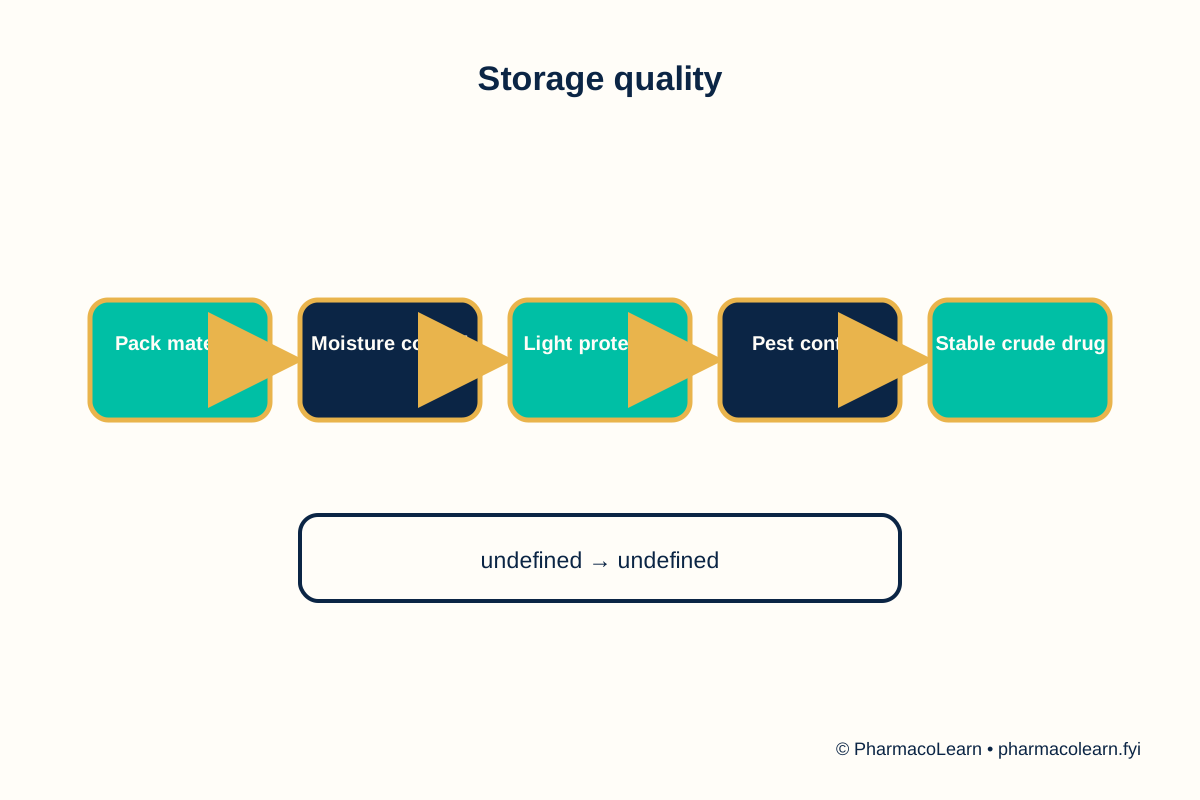
This unit covers the sequence from source selection through drying, processing, packaging and storage.
Core theory
Pharmacognosy studies medicinal materials obtained from plants and other natural sources, with attention to identity, source, structure, constituents, quality and use. The correct study sequence is to identify the biological source, authenticate the material, describe the relevant structure or constituent, explain processing or extraction, evaluate quality, and connect the result with pharmaceutical use. A crude drug is not defined only by a name. Its botanical source, plant part, geographic origin, collection stage, processing history and storage conditions can all alter its quality.
The topic should be learned using both macroscopic and microscopic evidence. Chemical constituents may be primary metabolites that support plant life or secondary metabolites that contribute to defense, signaling or medicinal activity. Marker compounds support standardization but do not always represent the entire therapeutic effect.
Pharmacist correlation
The pharmacist checks identity, contamination, moisture, foreign matter, adulteration, batch traceability, storage and labeling. Natural origin does not guarantee safety. Botanical misidentification, pesticide residue, heavy metals, microbes, unstable constituents and drug interactions can all create risk. Evidence for a traditional use should not automatically be treated as proof of efficacy.
Stepwise study method
- Identify source and plant part.
- Record external and microscopic characters.
- State major constituents and their chemical class.
- Explain collection, processing and storage.
- Describe identification, purity or assay principles.
- State medicinal or pharmaceutical relevance and limitations.
Tips, FAQs and takeaways
- What is the most reliable approach? Combine source, morphology, microscopy and chemistry.
- Why does processing matter? It changes moisture, enzymes, volatile constituents and stability.
- What is the takeaway? Authentication and quality control must come before therapeutic claims.
References: PharmacoLearn Year 2 syllabus; Pharmacy Council of India, Pharm.D. Regulations 2008; Trease and Evans' Pharmacognosy; Tyler's Herbs of Choice; WHO quality-control guidance for medicinal plant materials.
Unit 5: Detailed Methods of Cultivation
Syllabus scope
This unit covers soil, climate, propagation, planting, nutrition, irrigation, pest control, harvesting and sustainable practice.
Core theory
Pharmacognosy studies medicinal materials obtained from plants and other natural sources, with attention to identity, source, structure, constituents, quality and use. The correct study sequence is to identify the biological source, authenticate the material, describe the relevant structure or constituent, explain processing or extraction, evaluate quality, and connect the result with pharmaceutical use. A crude drug is not defined only by a name. Its botanical source, plant part, geographic origin, collection stage, processing history and storage conditions can all alter its quality.
The topic should be learned using both macroscopic and microscopic evidence. Chemical constituents may be primary metabolites that support plant life or secondary metabolites that contribute to defense, signaling or medicinal activity. Marker compounds support standardization but do not always represent the entire therapeutic effect.
Pharmacist correlation
The pharmacist checks identity, contamination, moisture, foreign matter, adulteration, batch traceability, storage and labeling. Natural origin does not guarantee safety. Botanical misidentification, pesticide residue, heavy metals, microbes, unstable constituents and drug interactions can all create risk. Evidence for a traditional use should not automatically be treated as proof of efficacy.
Stepwise study method
- Identify source and plant part.
- Record external and microscopic characters.
- State major constituents and their chemical class.
- Explain collection, processing and storage.
- Describe identification, purity or assay principles.
- State medicinal or pharmaceutical relevance and limitations.
Tips, FAQs and takeaways
- What is the most reliable approach? Combine source, morphology, microscopy and chemistry.
- Why does processing matter? It changes moisture, enzymes, volatile constituents and stability.
- What is the takeaway? Authentication and quality control must come before therapeutic claims.
References: PharmacoLearn Year 2 syllabus; Pharmacy Council of India, Pharm.D. Regulations 2008; Trease and Evans' Pharmacognosy; Tyler's Herbs of Choice; WHO quality-control guidance for medicinal plant materials.
Unit 6: Cell Wall Constituents and Cell Inclusions
Syllabus scope
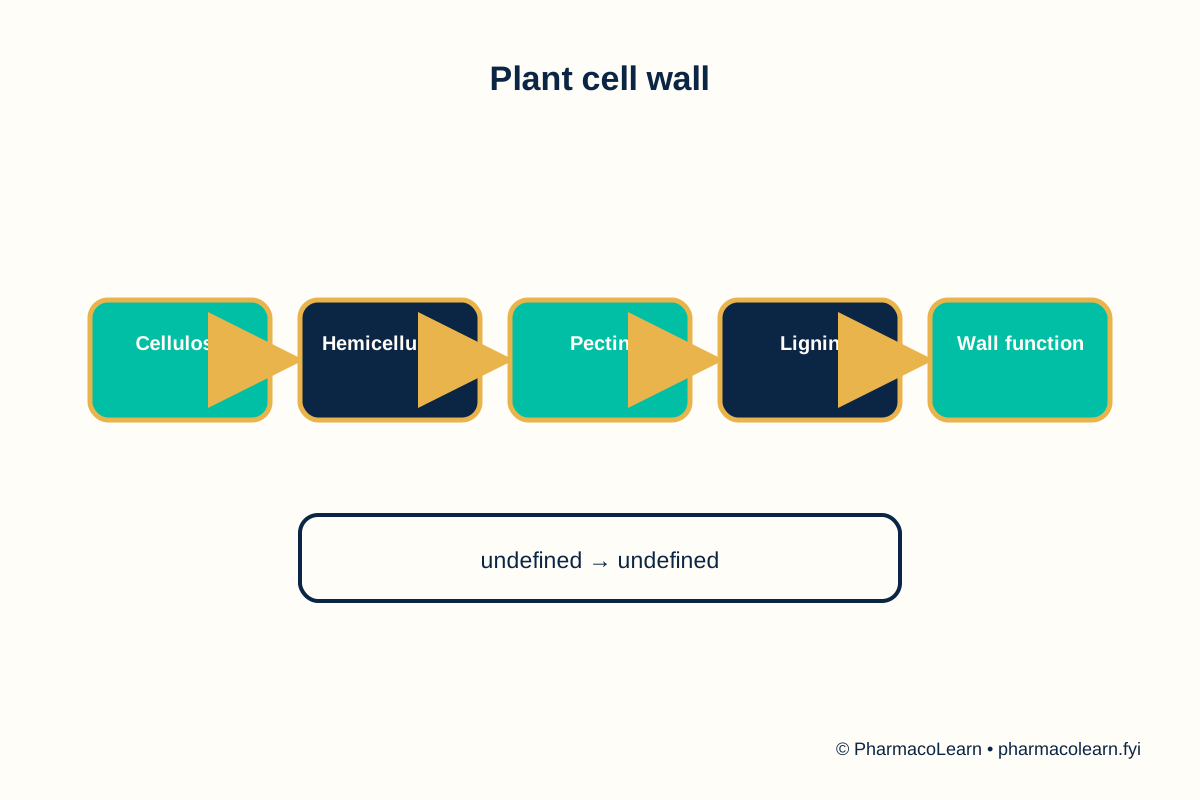
This unit covers cellulose, hemicellulose, lignin, pectin, starch, crystals, aleurone and other inclusions.
Core theory
Pharmacognosy studies medicinal materials obtained from plants and other natural sources, with attention to identity, source, structure, constituents, quality and use. The correct study sequence is to identify the biological source, authenticate the material, describe the relevant structure or constituent, explain processing or extraction, evaluate quality, and connect the result with pharmaceutical use. A crude drug is not defined only by a name. Its botanical source, plant part, geographic origin, collection stage, processing history and storage conditions can all alter its quality.
The topic should be learned using both macroscopic and microscopic evidence. Chemical constituents may be primary metabolites that support plant life or secondary metabolites that contribute to defense, signaling or medicinal activity. Marker compounds support standardization but do not always represent the entire therapeutic effect.
Pharmacist correlation
The pharmacist checks identity, contamination, moisture, foreign matter, adulteration, batch traceability, storage and labeling. Natural origin does not guarantee safety. Botanical misidentification, pesticide residue, heavy metals, microbes, unstable constituents and drug interactions can all create risk. Evidence for a traditional use should not automatically be treated as proof of efficacy.
Stepwise study method
- Identify source and plant part.
- Record external and microscopic characters.
- State major constituents and their chemical class.
- Explain collection, processing and storage.
- Describe identification, purity or assay principles.
- State medicinal or pharmaceutical relevance and limitations.
Tips, FAQs and takeaways
- What is the most reliable approach? Combine source, morphology, microscopy and chemistry.
- Why does processing matter? It changes moisture, enzymes, volatile constituents and stability.
- What is the takeaway? Authentication and quality control must come before therapeutic claims.
References: PharmacoLearn Year 2 syllabus; Pharmacy Council of India, Pharm.D. Regulations 2008; Trease and Evans' Pharmacognosy; Tyler's Herbs of Choice; WHO quality-control guidance for medicinal plant materials.
Unit 7: Microscopical and Powder Microscopical Study
Syllabus scope
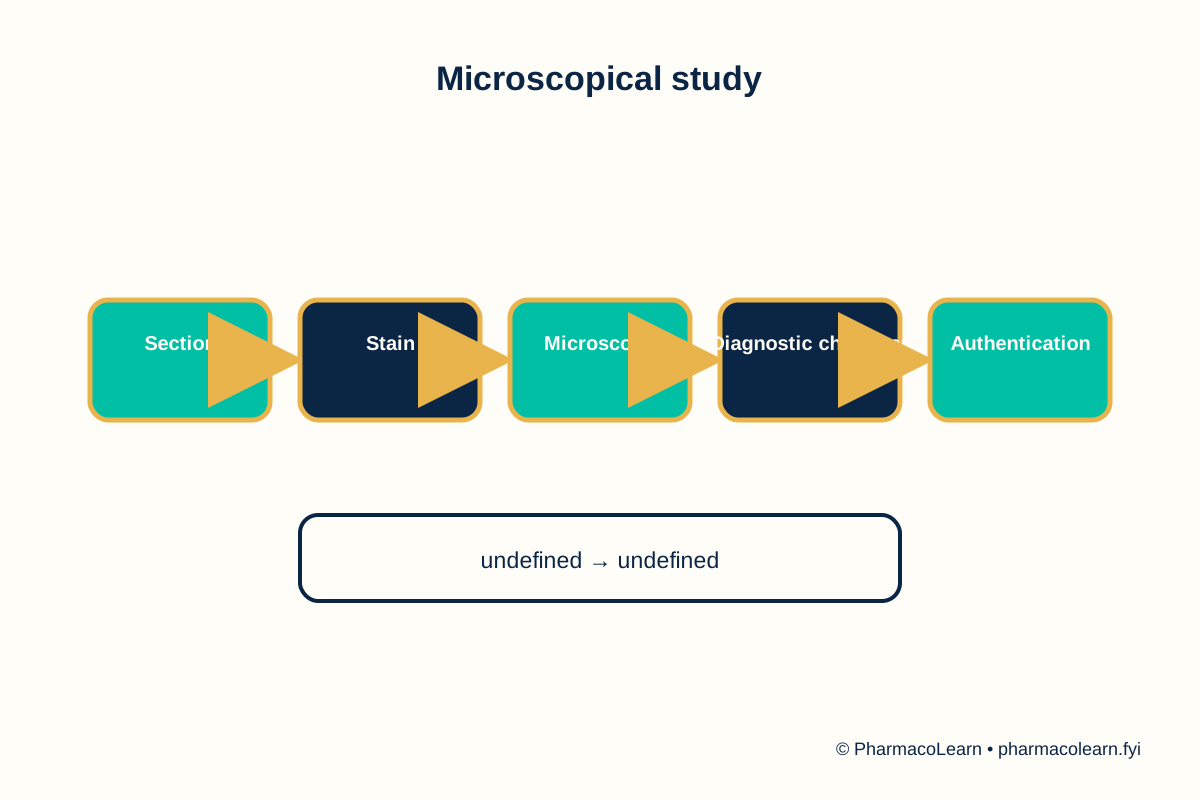
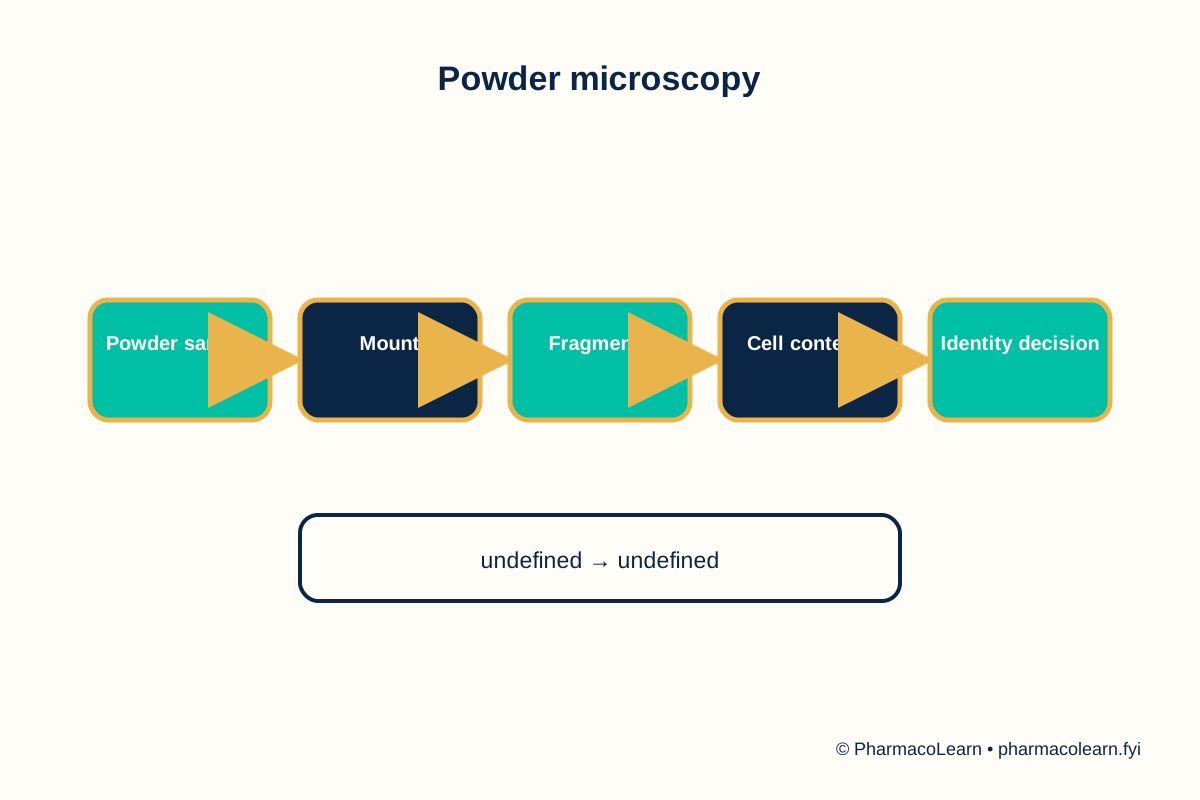
This unit covers section preparation, diagnostic characters, powder analysis and interpretation.
Core theory
Pharmacognosy studies medicinal materials obtained from plants and other natural sources, with attention to identity, source, structure, constituents, quality and use. The correct study sequence is to identify the biological source, authenticate the material, describe the relevant structure or constituent, explain processing or extraction, evaluate quality, and connect the result with pharmaceutical use. A crude drug is not defined only by a name. Its botanical source, plant part, geographic origin, collection stage, processing history and storage conditions can all alter its quality.
The topic should be learned using both macroscopic and microscopic evidence. Chemical constituents may be primary metabolites that support plant life or secondary metabolites that contribute to defense, signaling or medicinal activity. Marker compounds support standardization but do not always represent the entire therapeutic effect.
Pharmacist correlation
The pharmacist checks identity, contamination, moisture, foreign matter, adulteration, batch traceability, storage and labeling. Natural origin does not guarantee safety. Botanical misidentification, pesticide residue, heavy metals, microbes, unstable constituents and drug interactions can all create risk. Evidence for a traditional use should not automatically be treated as proof of efficacy.
Stepwise study method
- Identify source and plant part.
- Record external and microscopic characters.
- State major constituents and their chemical class.
- Explain collection, processing and storage.
- Describe identification, purity or assay principles.
- State medicinal or pharmaceutical relevance and limitations.
Tips, FAQs and takeaways
- What is the most reliable approach? Combine source, morphology, microscopy and chemistry.
- Why does processing matter? It changes moisture, enzymes, volatile constituents and stability.
- What is the takeaway? Authentication and quality control must come before therapeutic claims.
References: PharmacoLearn Year 2 syllabus; Pharmacy Council of India, Pharm.D. Regulations 2008; Trease and Evans' Pharmacognosy; Tyler's Herbs of Choice; WHO quality-control guidance for medicinal plant materials.
Unit 8: Natural Pesticides
Syllabus scope
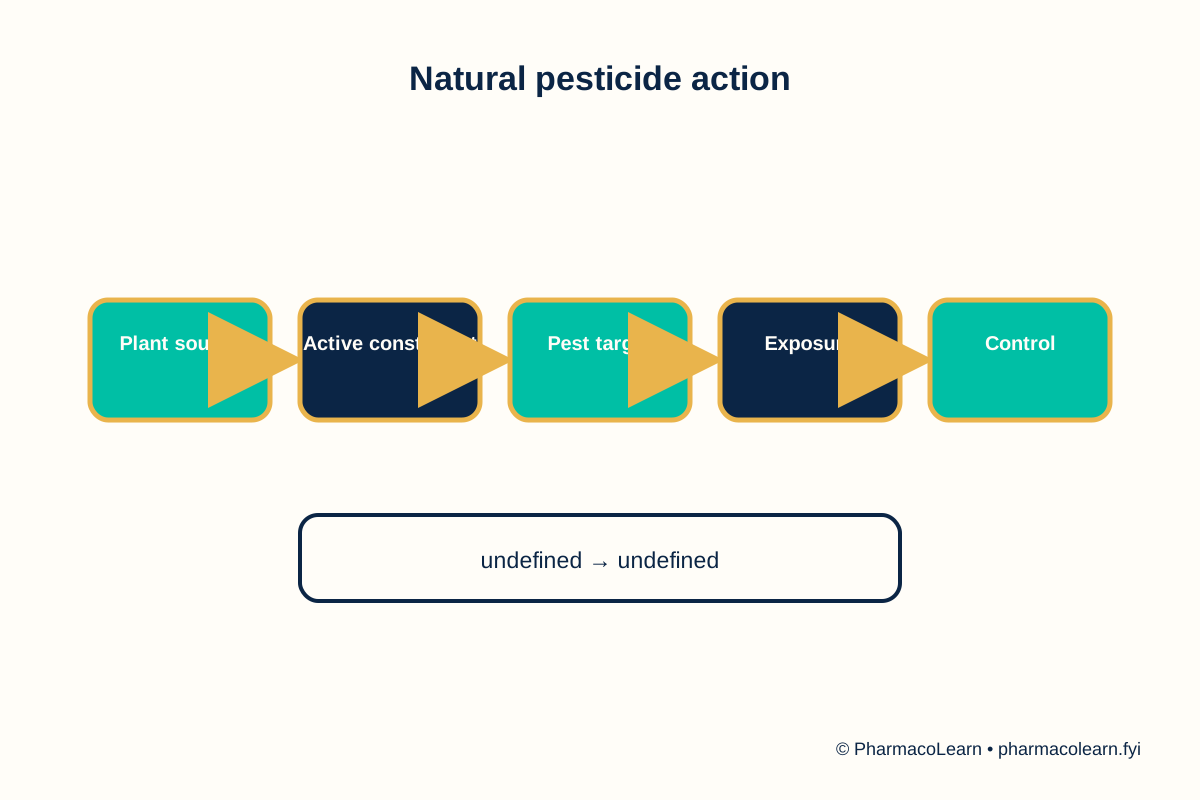
This unit covers plant-derived pest control, mechanisms, sources, safety and quality.
Core theory
Pharmacognosy studies medicinal materials obtained from plants and other natural sources, with attention to identity, source, structure, constituents, quality and use. The correct study sequence is to identify the biological source, authenticate the material, describe the relevant structure or constituent, explain processing or extraction, evaluate quality, and connect the result with pharmaceutical use. A crude drug is not defined only by a name. Its botanical source, plant part, geographic origin, collection stage, processing history and storage conditions can all alter its quality.
The topic should be learned using both macroscopic and microscopic evidence. Chemical constituents may be primary metabolites that support plant life or secondary metabolites that contribute to defense, signaling or medicinal activity. Marker compounds support standardization but do not always represent the entire therapeutic effect.
Pharmacist correlation
The pharmacist checks identity, contamination, moisture, foreign matter, adulteration, batch traceability, storage and labeling. Natural origin does not guarantee safety. Botanical misidentification, pesticide residue, heavy metals, microbes, unstable constituents and drug interactions can all create risk. Evidence for a traditional use should not automatically be treated as proof of efficacy.
Stepwise study method
- Identify source and plant part.
- Record external and microscopic characters.
- State major constituents and their chemical class.
- Explain collection, processing and storage.
- Describe identification, purity or assay principles.
- State medicinal or pharmaceutical relevance and limitations.
Tips, FAQs and takeaways
- What is the most reliable approach? Combine source, morphology, microscopy and chemistry.
- Why does processing matter? It changes moisture, enzymes, volatile constituents and stability.
- What is the takeaway? Authentication and quality control must come before therapeutic claims.
References: PharmacoLearn Year 2 syllabus; Pharmacy Council of India, Pharm.D. Regulations 2008; Trease and Evans' Pharmacognosy; Tyler's Herbs of Choice; WHO quality-control guidance for medicinal plant materials.
Unit 9: Detailed Study of Cell Constituents
Syllabus scope
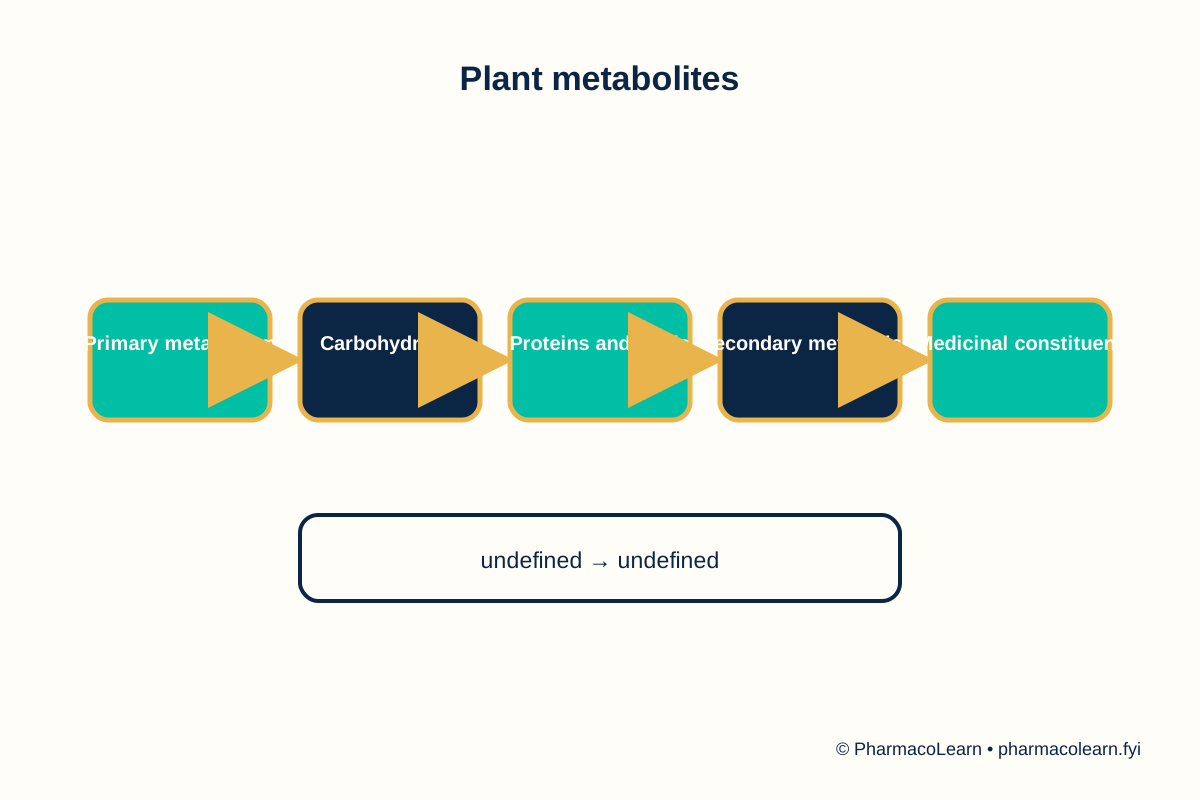
This unit covers primary and secondary metabolites and their localization and pharmaceutical significance.
Core theory
Pharmacognosy studies medicinal materials obtained from plants and other natural sources, with attention to identity, source, structure, constituents, quality and use. The correct study sequence is to identify the biological source, authenticate the material, describe the relevant structure or constituent, explain processing or extraction, evaluate quality, and connect the result with pharmaceutical use. A crude drug is not defined only by a name. Its botanical source, plant part, geographic origin, collection stage, processing history and storage conditions can all alter its quality.
The topic should be learned using both macroscopic and microscopic evidence. Chemical constituents may be primary metabolites that support plant life or secondary metabolites that contribute to defense, signaling or medicinal activity. Marker compounds support standardization but do not always represent the entire therapeutic effect.
Pharmacist correlation
The pharmacist checks identity, contamination, moisture, foreign matter, adulteration, batch traceability, storage and labeling. Natural origin does not guarantee safety. Botanical misidentification, pesticide residue, heavy metals, microbes, unstable constituents and drug interactions can all create risk. Evidence for a traditional use should not automatically be treated as proof of efficacy.
Stepwise study method
- Identify source and plant part.
- Record external and microscopic characters.
- State major constituents and their chemical class.
- Explain collection, processing and storage.
- Describe identification, purity or assay principles.
- State medicinal or pharmaceutical relevance and limitations.
Tips, FAQs and takeaways
- What is the most reliable approach? Combine source, morphology, microscopy and chemistry.
- Why does processing matter? It changes moisture, enzymes, volatile constituents and stability.
- What is the takeaway? Authentication and quality control must come before therapeutic claims.
References: PharmacoLearn Year 2 syllabus; Pharmacy Council of India, Pharm.D. Regulations 2008; Trease and Evans' Pharmacognosy; Tyler's Herbs of Choice; WHO quality-control guidance for medicinal plant materials.
Unit 10: Carbohydrates and Related Products
Syllabus scope
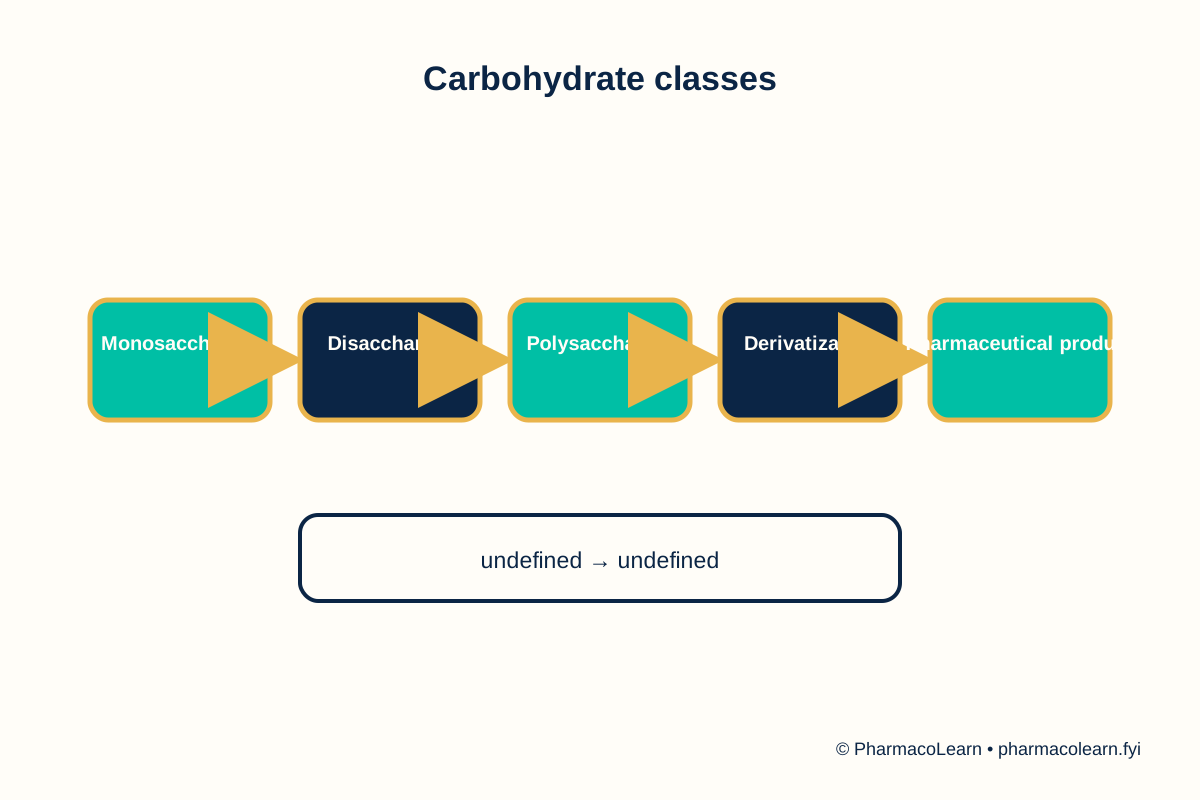
This unit covers classification, chemistry, sources, properties and pharmaceutical uses.
Core theory
Pharmacognosy studies medicinal materials obtained from plants and other natural sources, with attention to identity, source, structure, constituents, quality and use. The correct study sequence is to identify the biological source, authenticate the material, describe the relevant structure or constituent, explain processing or extraction, evaluate quality, and connect the result with pharmaceutical use. A crude drug is not defined only by a name. Its botanical source, plant part, geographic origin, collection stage, processing history and storage conditions can all alter its quality.
The topic should be learned using both macroscopic and microscopic evidence. Chemical constituents may be primary metabolites that support plant life or secondary metabolites that contribute to defense, signaling or medicinal activity. Marker compounds support standardization but do not always represent the entire therapeutic effect.
Pharmacist correlation
The pharmacist checks identity, contamination, moisture, foreign matter, adulteration, batch traceability, storage and labeling. Natural origin does not guarantee safety. Botanical misidentification, pesticide residue, heavy metals, microbes, unstable constituents and drug interactions can all create risk. Evidence for a traditional use should not automatically be treated as proof of efficacy.
Stepwise study method
- Identify source and plant part.
- Record external and microscopic characters.
- State major constituents and their chemical class.
- Explain collection, processing and storage.
- Describe identification, purity or assay principles.
- State medicinal or pharmaceutical relevance and limitations.
Tips, FAQs and takeaways
- What is the most reliable approach? Combine source, morphology, microscopy and chemistry.
- Why does processing matter? It changes moisture, enzymes, volatile constituents and stability.
- What is the takeaway? Authentication and quality control must come before therapeutic claims.
References: PharmacoLearn Year 2 syllabus; Pharmacy Council of India, Pharm.D. Regulations 2008; Trease and Evans' Pharmacognosy; Tyler's Herbs of Choice; WHO quality-control guidance for medicinal plant materials.
Unit 11: Carbohydrate Containing Drugs
Syllabus scope
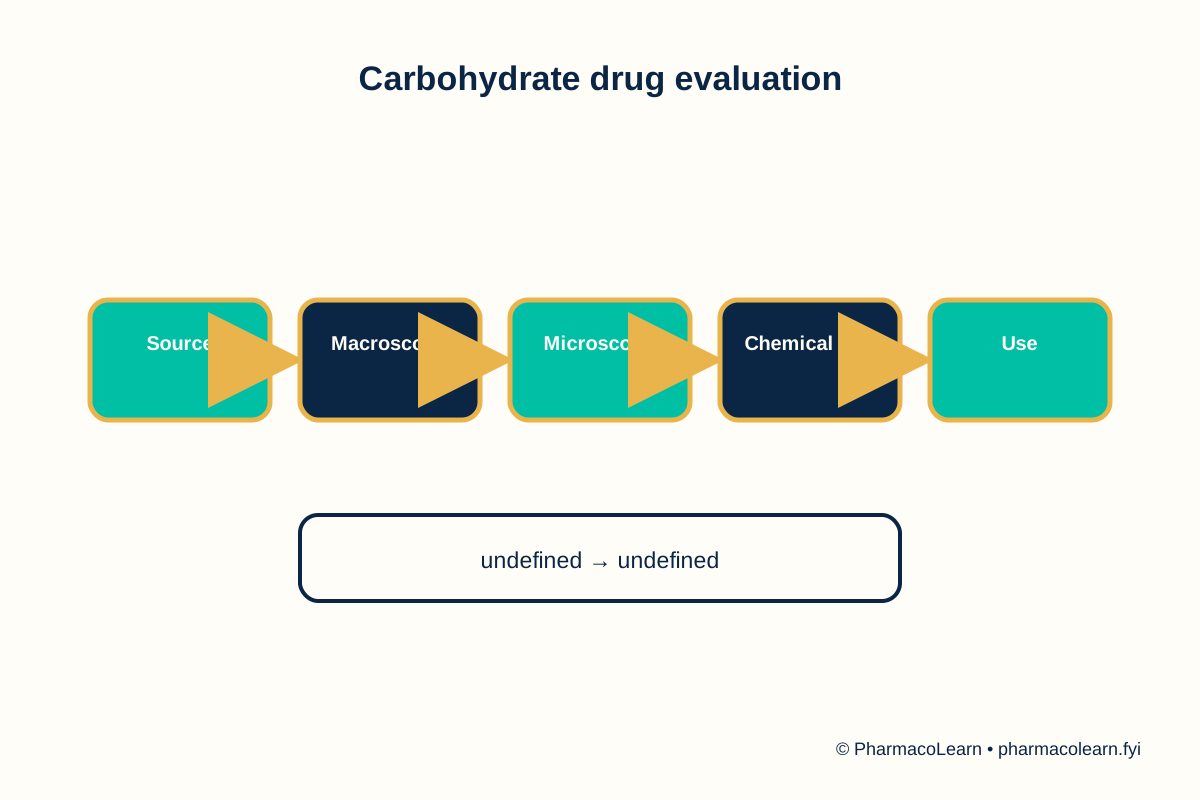
This unit covers the syllabus group of 11 carbohydrate-containing crude drugs, identification, constituents and uses.
Core theory
Pharmacognosy studies medicinal materials obtained from plants and other natural sources, with attention to identity, source, structure, constituents, quality and use. The correct study sequence is to identify the biological source, authenticate the material, describe the relevant structure or constituent, explain processing or extraction, evaluate quality, and connect the result with pharmaceutical use. A crude drug is not defined only by a name. Its botanical source, plant part, geographic origin, collection stage, processing history and storage conditions can all alter its quality.
The topic should be learned using both macroscopic and microscopic evidence. Chemical constituents may be primary metabolites that support plant life or secondary metabolites that contribute to defense, signaling or medicinal activity. Marker compounds support standardization but do not always represent the entire therapeutic effect.
Pharmacist correlation
The pharmacist checks identity, contamination, moisture, foreign matter, adulteration, batch traceability, storage and labeling. Natural origin does not guarantee safety. Botanical misidentification, pesticide residue, heavy metals, microbes, unstable constituents and drug interactions can all create risk. Evidence for a traditional use should not automatically be treated as proof of efficacy.
Stepwise study method
- Identify source and plant part.
- Record external and microscopic characters.
- State major constituents and their chemical class.
- Explain collection, processing and storage.
- Describe identification, purity or assay principles.
- State medicinal or pharmaceutical relevance and limitations.
Tips, FAQs and takeaways
- What is the most reliable approach? Combine source, morphology, microscopy and chemistry.
- Why does processing matter? It changes moisture, enzymes, volatile constituents and stability.
- What is the takeaway? Authentication and quality control must come before therapeutic claims.
References: PharmacoLearn Year 2 syllabus; Pharmacy Council of India, Pharm.D. Regulations 2008; Trease and Evans' Pharmacognosy; Tyler's Herbs of Choice; WHO quality-control guidance for medicinal plant materials.
Unit 12: Lipids
Syllabus scope
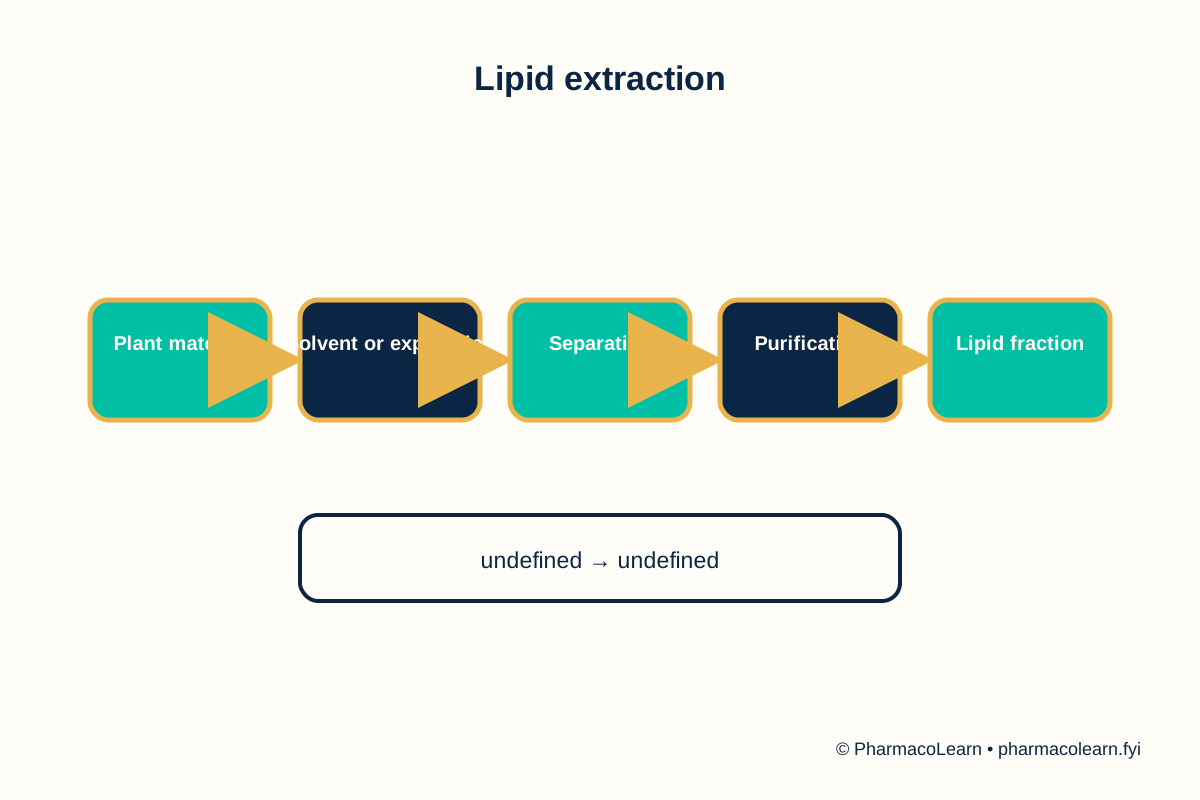
This unit covers definition, sources, extraction, chemistry and analysis of lipids.
Core theory
Pharmacognosy studies medicinal materials obtained from plants and other natural sources, with attention to identity, source, structure, constituents, quality and use. The correct study sequence is to identify the biological source, authenticate the material, describe the relevant structure or constituent, explain processing or extraction, evaluate quality, and connect the result with pharmaceutical use. A crude drug is not defined only by a name. Its botanical source, plant part, geographic origin, collection stage, processing history and storage conditions can all alter its quality.
The topic should be learned using both macroscopic and microscopic evidence. Chemical constituents may be primary metabolites that support plant life or secondary metabolites that contribute to defense, signaling or medicinal activity. Marker compounds support standardization but do not always represent the entire therapeutic effect.
Pharmacist correlation
The pharmacist checks identity, contamination, moisture, foreign matter, adulteration, batch traceability, storage and labeling. Natural origin does not guarantee safety. Botanical misidentification, pesticide residue, heavy metals, microbes, unstable constituents and drug interactions can all create risk. Evidence for a traditional use should not automatically be treated as proof of efficacy.
Stepwise study method
- Identify source and plant part.
- Record external and microscopic characters.
- State major constituents and their chemical class.
- Explain collection, processing and storage.
- Describe identification, purity or assay principles.
- State medicinal or pharmaceutical relevance and limitations.
Tips, FAQs and takeaways
- What is the most reliable approach? Combine source, morphology, microscopy and chemistry.
- Why does processing matter? It changes moisture, enzymes, volatile constituents and stability.
- What is the takeaway? Authentication and quality control must come before therapeutic claims.
References: PharmacoLearn Year 2 syllabus; Pharmacy Council of India, Pharm.D. Regulations 2008; Trease and Evans' Pharmacognosy; Tyler's Herbs of Choice; WHO quality-control guidance for medicinal plant materials.
Unit 13: Detailed Study of Oils
Syllabus scope
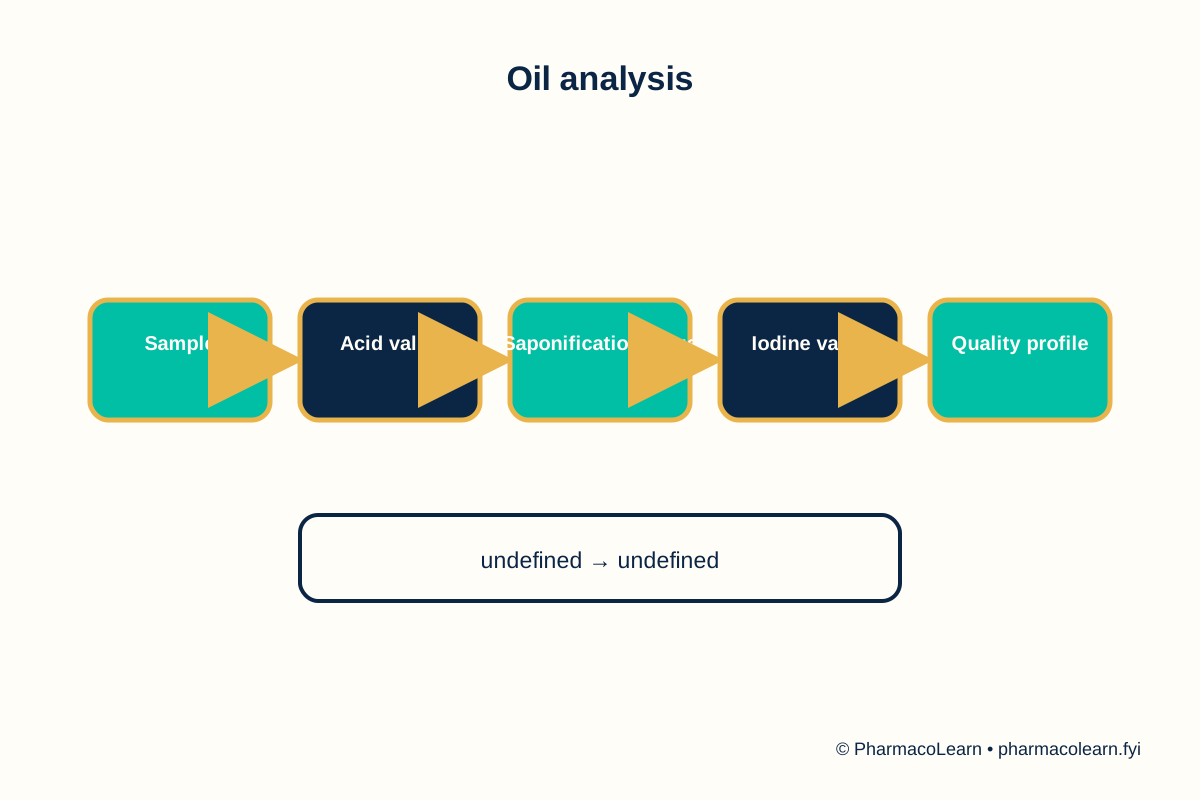
This unit covers fixed and volatile oils, source, preparation, quality parameters, storage and uses.
Core theory
Pharmacognosy studies medicinal materials obtained from plants and other natural sources, with attention to identity, source, structure, constituents, quality and use. The correct study sequence is to identify the biological source, authenticate the material, describe the relevant structure or constituent, explain processing or extraction, evaluate quality, and connect the result with pharmaceutical use. A crude drug is not defined only by a name. Its botanical source, plant part, geographic origin, collection stage, processing history and storage conditions can all alter its quality.
The topic should be learned using both macroscopic and microscopic evidence. Chemical constituents may be primary metabolites that support plant life or secondary metabolites that contribute to defense, signaling or medicinal activity. Marker compounds support standardization but do not always represent the entire therapeutic effect.
Pharmacist correlation
The pharmacist checks identity, contamination, moisture, foreign matter, adulteration, batch traceability, storage and labeling. Natural origin does not guarantee safety. Botanical misidentification, pesticide residue, heavy metals, microbes, unstable constituents and drug interactions can all create risk. Evidence for a traditional use should not automatically be treated as proof of efficacy.
Stepwise study method
- Identify source and plant part.
- Record external and microscopic characters.
- State major constituents and their chemical class.
- Explain collection, processing and storage.
- Describe identification, purity or assay principles.
- State medicinal or pharmaceutical relevance and limitations.
Tips, FAQs and takeaways
- What is the most reliable approach? Combine source, morphology, microscopy and chemistry.
- Why does processing matter? It changes moisture, enzymes, volatile constituents and stability.
- What is the takeaway? Authentication and quality control must come before therapeutic claims.
References: PharmacoLearn Year 2 syllabus; Pharmacy Council of India, Pharm.D. Regulations 2008; Trease and Evans' Pharmacognosy; Tyler's Herbs of Choice; WHO quality-control guidance for medicinal plant materials.
Unit 14: Proteins
Syllabus scope
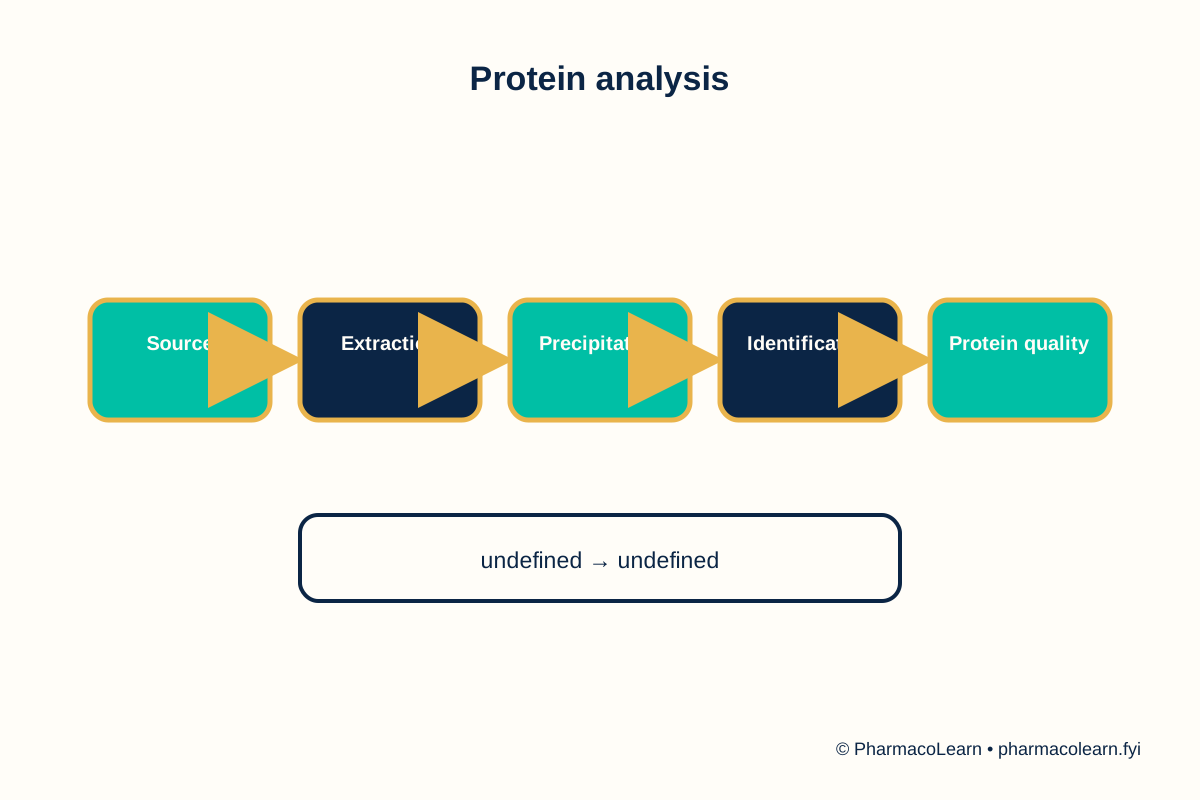
This unit covers definition, sources, classification, chemistry, analysis and pharmaceutical relevance.
Core theory
Pharmacognosy studies medicinal materials obtained from plants and other natural sources, with attention to identity, source, structure, constituents, quality and use. The correct study sequence is to identify the biological source, authenticate the material, describe the relevant structure or constituent, explain processing or extraction, evaluate quality, and connect the result with pharmaceutical use. A crude drug is not defined only by a name. Its botanical source, plant part, geographic origin, collection stage, processing history and storage conditions can all alter its quality.
The topic should be learned using both macroscopic and microscopic evidence. Chemical constituents may be primary metabolites that support plant life or secondary metabolites that contribute to defense, signaling or medicinal activity. Marker compounds support standardization but do not always represent the entire therapeutic effect.
Pharmacist correlation
The pharmacist checks identity, contamination, moisture, foreign matter, adulteration, batch traceability, storage and labeling. Natural origin does not guarantee safety. Botanical misidentification, pesticide residue, heavy metals, microbes, unstable constituents and drug interactions can all create risk. Evidence for a traditional use should not automatically be treated as proof of efficacy.
Stepwise study method
- Identify source and plant part.
- Record external and microscopic characters.
- State major constituents and their chemical class.
- Explain collection, processing and storage.
- Describe identification, purity or assay principles.
- State medicinal or pharmaceutical relevance and limitations.
Tips, FAQs and takeaways
- What is the most reliable approach? Combine source, morphology, microscopy and chemistry.
- Why does processing matter? It changes moisture, enzymes, volatile constituents and stability.
- What is the takeaway? Authentication and quality control must come before therapeutic claims.
References: PharmacoLearn Year 2 syllabus; Pharmacy Council of India, Pharm.D. Regulations 2008; Trease and Evans' Pharmacognosy; Tyler's Herbs of Choice; WHO quality-control guidance for medicinal plant materials.
Unit 15: Plant Fibers and Surgical Dressings
Syllabus scope
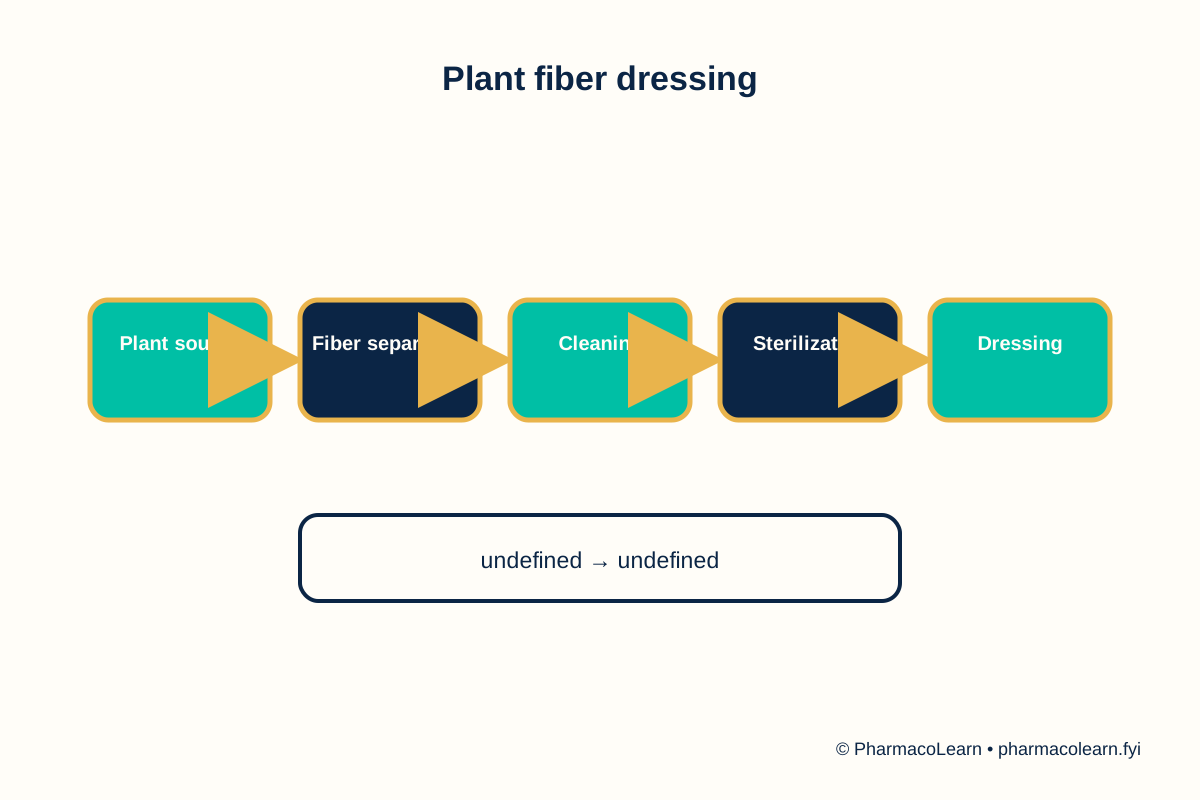
This unit covers plant fibers used in dressings and related products, processing, properties and quality.
Core theory
Pharmacognosy studies medicinal materials obtained from plants and other natural sources, with attention to identity, source, structure, constituents, quality and use. The correct study sequence is to identify the biological source, authenticate the material, describe the relevant structure or constituent, explain processing or extraction, evaluate quality, and connect the result with pharmaceutical use. A crude drug is not defined only by a name. Its botanical source, plant part, geographic origin, collection stage, processing history and storage conditions can all alter its quality.
The topic should be learned using both macroscopic and microscopic evidence. Chemical constituents may be primary metabolites that support plant life or secondary metabolites that contribute to defense, signaling or medicinal activity. Marker compounds support standardization but do not always represent the entire therapeutic effect.
Pharmacist correlation
The pharmacist checks identity, contamination, moisture, foreign matter, adulteration, batch traceability, storage and labeling. Natural origin does not guarantee safety. Botanical misidentification, pesticide residue, heavy metals, microbes, unstable constituents and drug interactions can all create risk. Evidence for a traditional use should not automatically be treated as proof of efficacy.
Stepwise study method
- Identify source and plant part.
- Record external and microscopic characters.
- State major constituents and their chemical class.
- Explain collection, processing and storage.
- Describe identification, purity or assay principles.
- State medicinal or pharmaceutical relevance and limitations.
Tips, FAQs and takeaways
- What is the most reliable approach? Combine source, morphology, microscopy and chemistry.
- Why does processing matter? It changes moisture, enzymes, volatile constituents and stability.
- What is the takeaway? Authentication and quality control must come before therapeutic claims.
References: PharmacoLearn Year 2 syllabus; Pharmacy Council of India, Pharm.D. Regulations 2008; Trease and Evans' Pharmacognosy; Tyler's Herbs of Choice; WHO quality-control guidance for medicinal plant materials.
Unit 16: Adulteration of Crude Drugs
Syllabus scope
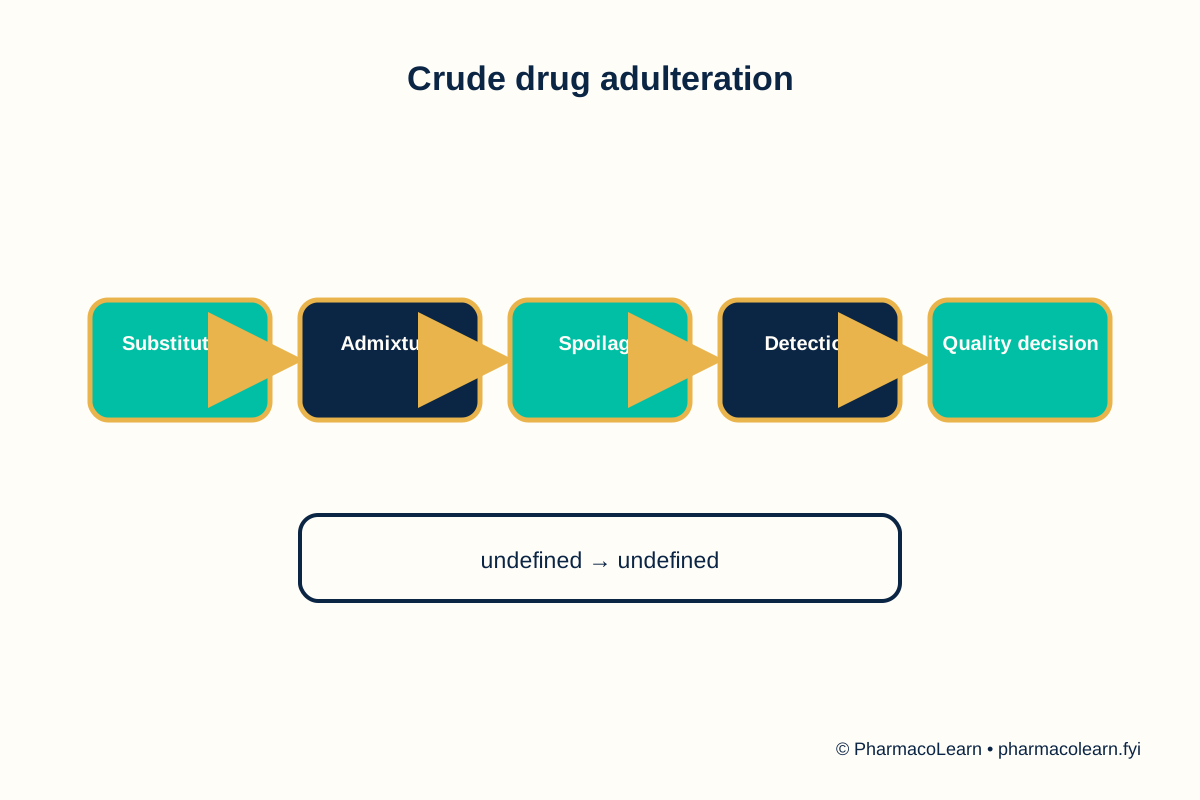
This unit covers types, causes, detection, prevention, substitution and quality assurance.
Core theory
Pharmacognosy studies medicinal materials obtained from plants and other natural sources, with attention to identity, source, structure, constituents, quality and use. The correct study sequence is to identify the biological source, authenticate the material, describe the relevant structure or constituent, explain processing or extraction, evaluate quality, and connect the result with pharmaceutical use. A crude drug is not defined only by a name. Its botanical source, plant part, geographic origin, collection stage, processing history and storage conditions can all alter its quality.
The topic should be learned using both macroscopic and microscopic evidence. Chemical constituents may be primary metabolites that support plant life or secondary metabolites that contribute to defense, signaling or medicinal activity. Marker compounds support standardization but do not always represent the entire therapeutic effect.
Pharmacist correlation
The pharmacist checks identity, contamination, moisture, foreign matter, adulteration, batch traceability, storage and labeling. Natural origin does not guarantee safety. Botanical misidentification, pesticide residue, heavy metals, microbes, unstable constituents and drug interactions can all create risk. Evidence for a traditional use should not automatically be treated as proof of efficacy.
Stepwise study method
- Identify source and plant part.
- Record external and microscopic characters.
- State major constituents and their chemical class.
- Explain collection, processing and storage.
- Describe identification, purity or assay principles.
- State medicinal or pharmaceutical relevance and limitations.
Tips, FAQs and takeaways
- What is the most reliable approach? Combine source, morphology, microscopy and chemistry.
- Why does processing matter? It changes moisture, enzymes, volatile constituents and stability.
- What is the takeaway? Authentication and quality control must come before therapeutic claims.
References: PharmacoLearn Year 2 syllabus; Pharmacy Council of India, Pharm.D. Regulations 2008; Trease and Evans' Pharmacognosy; Tyler's Herbs of Choice; WHO quality-control guidance for medicinal plant materials.
Diagrams
Other Year 2 subjects: Pathophysiology · Pharmaceutical Microbiology · Pharmacognosy and Phytopharmaceuticals · Pharmacology I · Community Pharmacy · Pharmacotherapeutics I · Year 2 · Pharm D