
Remedial Mathematics / Biology — Pharm D Year 1
Notes for Remedial Mathematics / Biology, Pharm D Year 1, organised unit by unit following the PCI Pharm D syllabus. 24 units, 23 diagrams.
Syllabus: Pharm D Year 1 syllabus
Practicals: Remedial Mathematics / Biology practicals
Units in this subject
- Algebra: Determinants and Matrices
- Trigonometry: Sides and Angles
- Analytical Geometry
- Differential Calculus
- Integral Calculus
- Differential Equations
- Laplace Transform
- Introduction
- General Organization of Plants and Inclusions
- Plant Tissues
- Plant Kingdom and Classification
- Morphology of Plants
- Root, Stem and Leaf Modifications
- Inflorescence and Pollination
- Morphology of Fruits and Seeds
- Plant Physiology
- Taxonomy of Selected Families
- Fungi, Yeast, Penicillin and Bacteria
- Animal Cell
- Animal Tissues
- Frog
- Pisces, Reptiles and Aves
- General Organization of Mammals
- Poisonous Animals
Algebra: Determinants and Matrices
Syllabus scope
This unit covers algebra: determinants and matrices and its relevance to the selected Remedial Mathematics stream and pharmaceutical study.
Theory
This unit covers determinants, matrix operations, inverse matrices, simultaneous equations and pharmacy applications. Start with definitions and classification, then move from structure to function and finally to application. The mechanism or reasoning is stepwise: identify the entities, establish the governing rule, apply the rule to the stated conditions, check units or biological context, and interpret the result. Diagrams and tables should be read as relationships rather than memorized labels.
Pharmaceutical application
Mathematics supports dose calculations, concentration relationships, rates, graphs, pharmacokinetic models and data interpretation. A pharmacist checks units, domain, significant figures and whether a model is appropriate before acting on a result.
Worked calculation
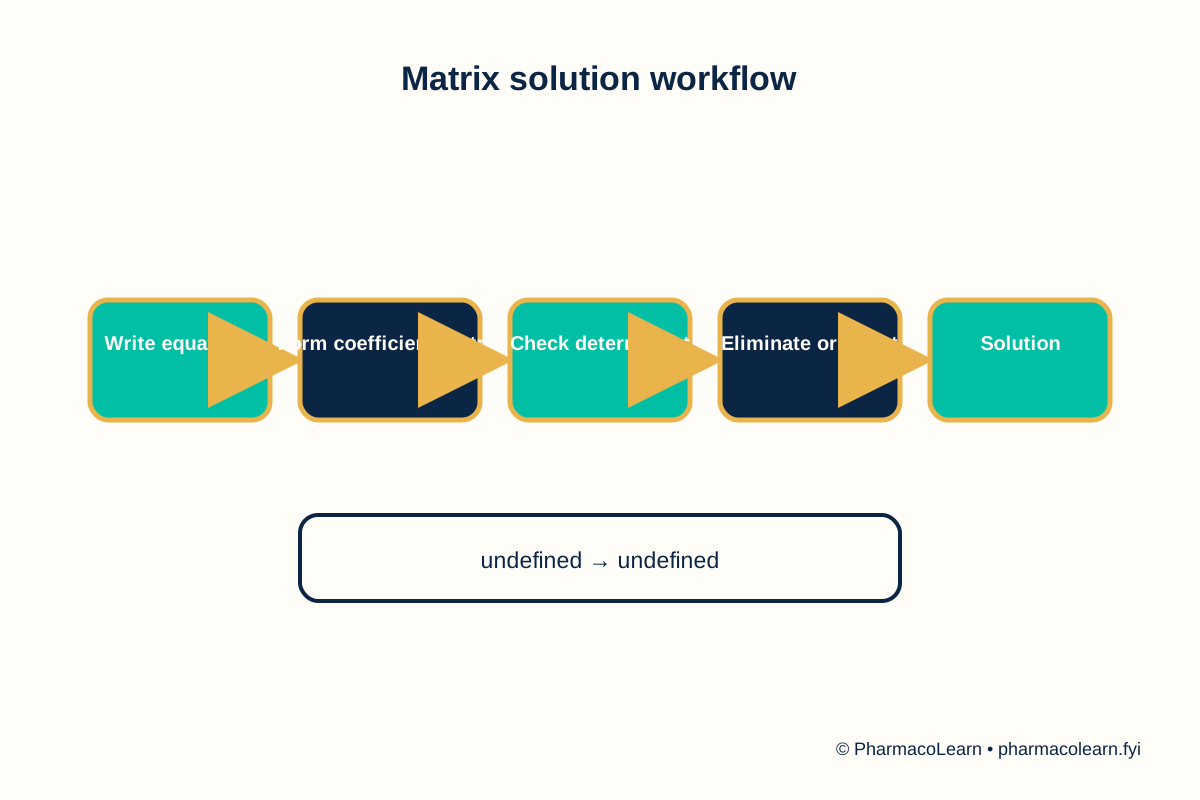
For a linear equation system, write the coefficient matrix, calculate its determinant, and use elimination or the inverse when the determinant is nonzero. For a derivative, identify the outer and inner functions, differentiate each in sequence, and multiply by the inner derivative. For an integral, reverse the differentiation rule and verify by differentiating the result.
FAQs
- What should be checked first? Definitions, assumptions, units or diagnostic characters.
- Why is sequence important? Each step depends on the result of the previous step.
- What is the takeaway? Use a controlled method, verify the result and distinguish observation from inference.
Takeaways
- Follow the defined method or observation sequence for this unit.
- Check assumptions, units, biological context, and the interpretation before applying the result.
Integrated practice note
This stream supports pharmacy study by connecting its theory to formulation, calculations, natural sources, anatomy, physiology, pharmacognosy, and safe interpretation. It is educational theory and does not replace a clinical diagnosis, validated calculation policy, or practical laboratory procedure.
References
PharmacoLearn, Pharm D Year 1 syllabus; Pharmacy Council of India, Pharm.D. Regulations 2008; Thomas' Calculus and Analytic Geometry; a standard introductory mathematics text.
Trigonometry: Sides and Angles
Syllabus scope
This unit covers trigonometry: sides and angles and its relevance to the selected Remedial Mathematics stream and pharmaceutical study.
Theory
This unit covers triangle ratios, identities, solution of triangles and measurement applications. Start with definitions and classification, then move from structure to function and finally to application. The mechanism or reasoning is stepwise: identify the entities, establish the governing rule, apply the rule to the stated conditions, check units or biological context, and interpret the result. Diagrams and tables should be read as relationships rather than memorized labels.
Pharmaceutical application
Mathematics supports dose calculations, concentration relationships, rates, graphs, pharmacokinetic models and data interpretation. A pharmacist checks units, domain, significant figures and whether a model is appropriate before acting on a result.
Worked calculation
For a linear equation system, write the coefficient matrix, calculate its determinant, and use elimination or the inverse when the determinant is nonzero. For a derivative, identify the outer and inner functions, differentiate each in sequence, and multiply by the inner derivative. For an integral, reverse the differentiation rule and verify by differentiating the result.
FAQs
- What should be checked first? Definitions, assumptions, units or diagnostic characters.
- Why is sequence important? Each step depends on the result of the previous step.
- What is the takeaway? Use a controlled method, verify the result and distinguish observation from inference.
Takeaways
- Follow the defined method or observation sequence for this unit.
- Check assumptions, units, biological context, and the interpretation before applying the result.
Integrated practice note
This stream supports pharmacy study by connecting its theory to formulation, calculations, natural sources, anatomy, physiology, pharmacognosy, and safe interpretation. It is educational theory and does not replace a clinical diagnosis, validated calculation policy, or practical laboratory procedure.
References
PharmacoLearn, Pharm D Year 1 syllabus; Pharmacy Council of India, Pharm.D. Regulations 2008; Thomas' Calculus and Analytic Geometry; a standard introductory mathematics text.
Analytical Geometry
Syllabus scope
This unit covers analytical geometry and its relevance to the selected Remedial Mathematics stream and pharmaceutical study.
Theory
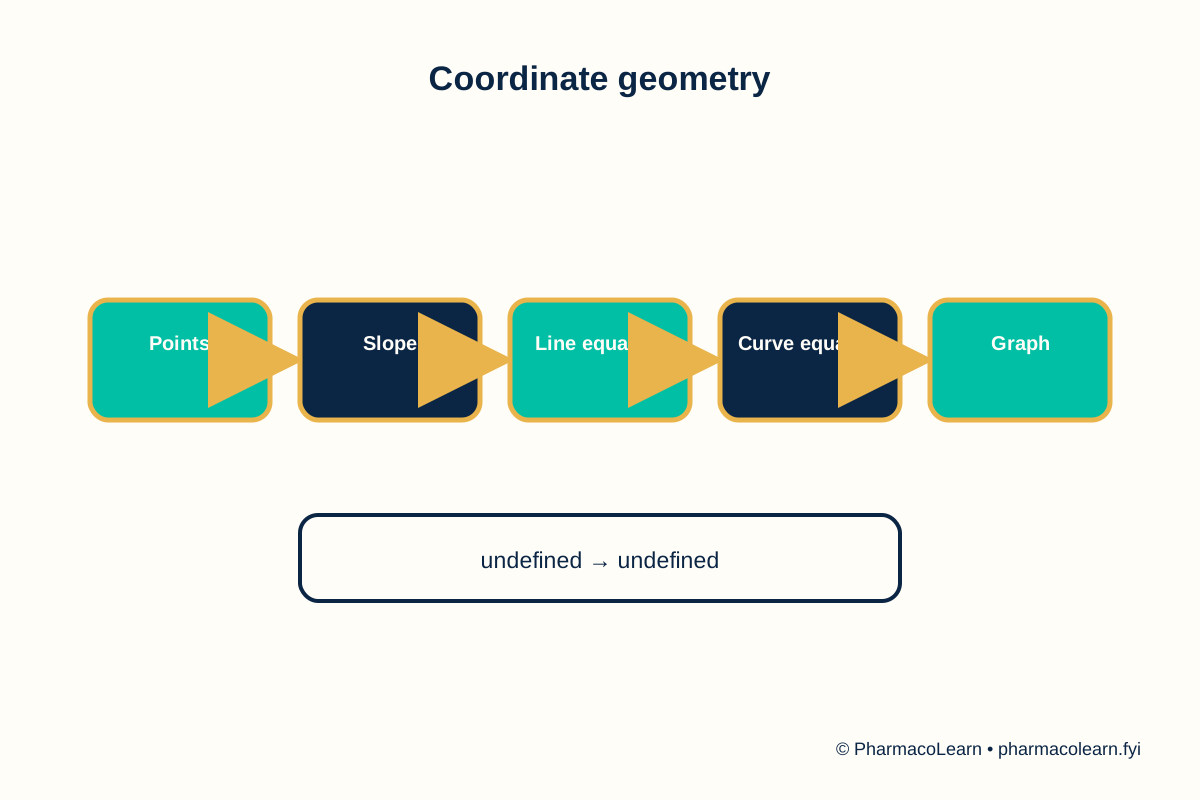
This unit covers points, straight lines, circles, parabolas, coordinates and graph interpretation. Start with definitions and classification, then move from structure to function and finally to application. The mechanism or reasoning is stepwise: identify the entities, establish the governing rule, apply the rule to the stated conditions, check units or biological context, and interpret the result. Diagrams and tables should be read as relationships rather than memorized labels.
Pharmaceutical application
Mathematics supports dose calculations, concentration relationships, rates, graphs, pharmacokinetic models and data interpretation. A pharmacist checks units, domain, significant figures and whether a model is appropriate before acting on a result.
Worked calculation
For a linear equation system, write the coefficient matrix, calculate its determinant, and use elimination or the inverse when the determinant is nonzero. For a derivative, identify the outer and inner functions, differentiate each in sequence, and multiply by the inner derivative. For an integral, reverse the differentiation rule and verify by differentiating the result.
FAQs
- What should be checked first? Definitions, assumptions, units or diagnostic characters.
- Why is sequence important? Each step depends on the result of the previous step.
- What is the takeaway? Use a controlled method, verify the result and distinguish observation from inference.
Takeaways
- Follow the defined method or observation sequence for this unit.
- Check assumptions, units, biological context, and the interpretation before applying the result.
Integrated practice note
This stream supports pharmacy study by connecting its theory to formulation, calculations, natural sources, anatomy, physiology, pharmacognosy, and safe interpretation. It is educational theory and does not replace a clinical diagnosis, validated calculation policy, or practical laboratory procedure.
References
PharmacoLearn, Pharm D Year 1 syllabus; Pharmacy Council of India, Pharm.D. Regulations 2008; Thomas' Calculus and Analytic Geometry; a standard introductory mathematics text.
Differential Calculus
Syllabus scope
This unit covers differential calculus and its relevance to the selected Remedial Mathematics stream and pharmaceutical study.
Theory
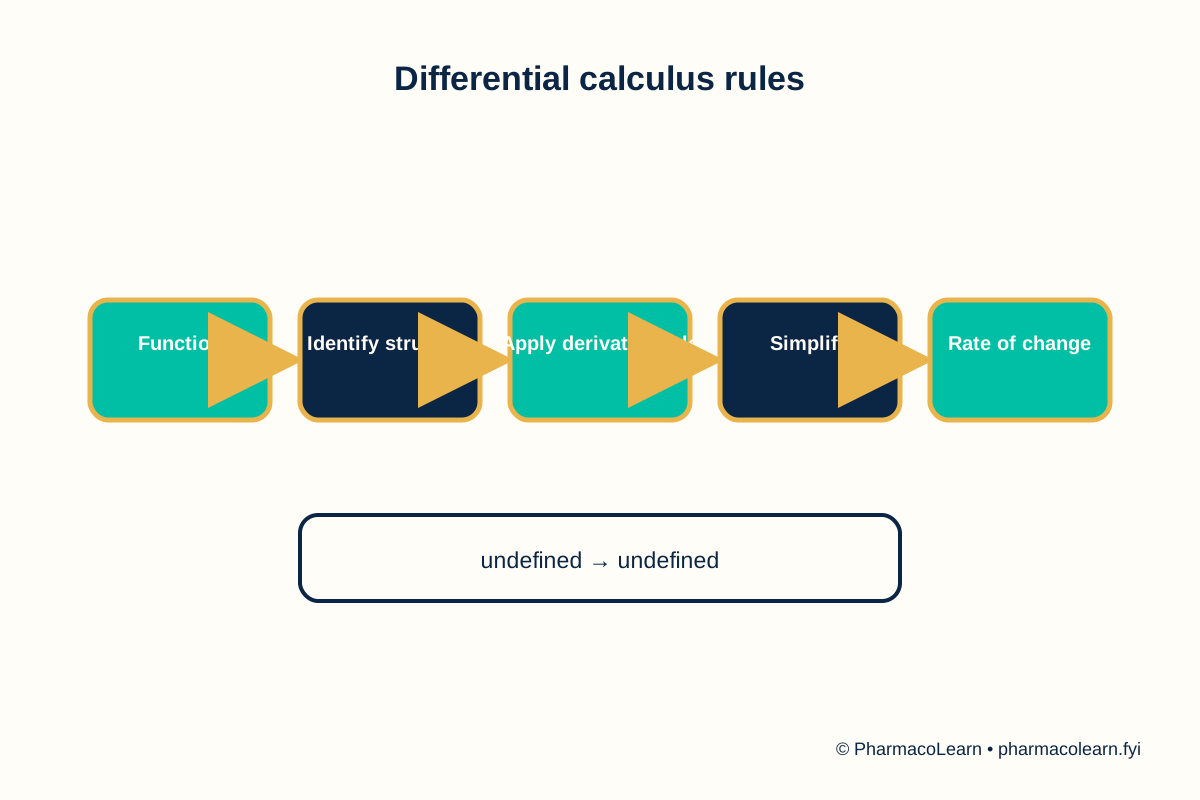
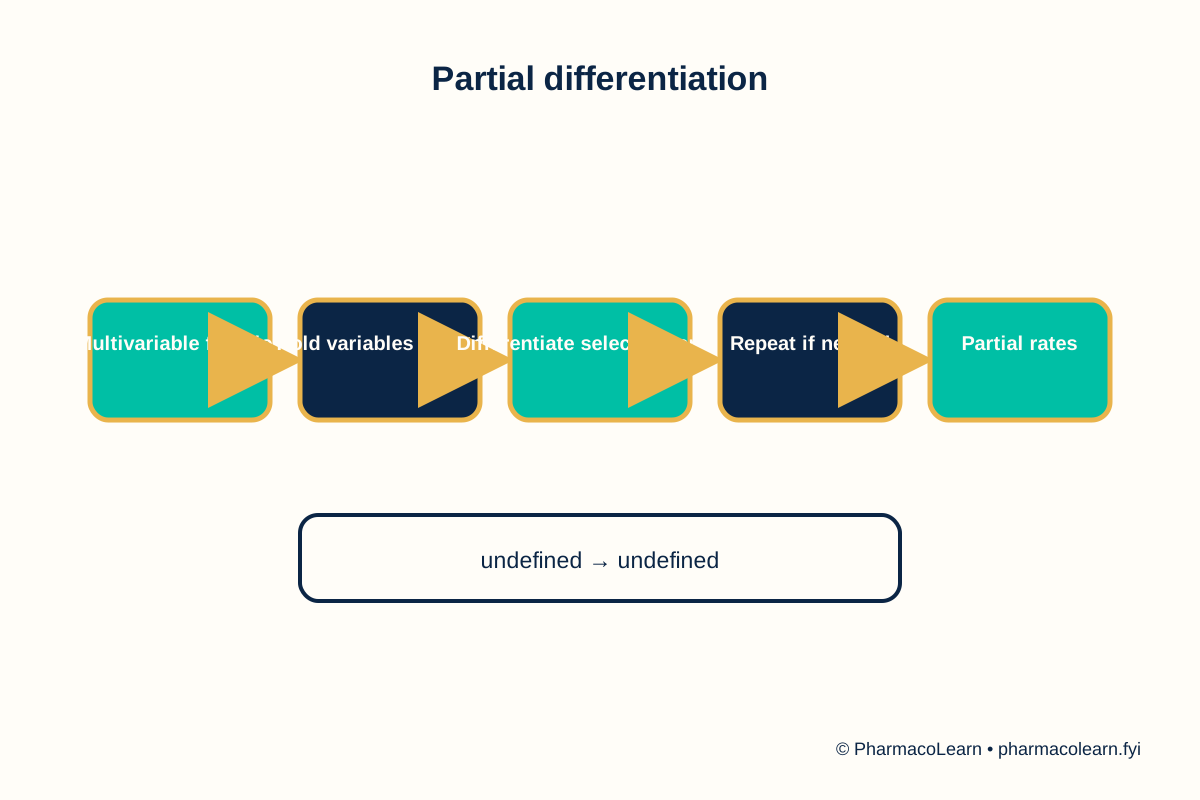
This unit covers limits, derivatives, product and quotient rules, composite, parametric, exponential, trigonometric and logarithmic functions, successive and partial differentiation, Leibnitz theorem and Euler's theorem. Start with definitions and classification, then move from structure to function and finally to application. The mechanism or reasoning is stepwise: identify the entities, establish the governing rule, apply the rule to the stated conditions, check units or biological context, and interpret the result. Diagrams and tables should be read as relationships rather than memorized labels.
Pharmaceutical application
Mathematics supports dose calculations, concentration relationships, rates, graphs, pharmacokinetic models and data interpretation. A pharmacist checks units, domain, significant figures and whether a model is appropriate before acting on a result.
Worked calculation
For a linear equation system, write the coefficient matrix, calculate its determinant, and use elimination or the inverse when the determinant is nonzero. For a derivative, identify the outer and inner functions, differentiate each in sequence, and multiply by the inner derivative. For an integral, reverse the differentiation rule and verify by differentiating the result.
FAQs
- What should be checked first? Definitions, assumptions, units or diagnostic characters.
- Why is sequence important? Each step depends on the result of the previous step.
- What is the takeaway? Use a controlled method, verify the result and distinguish observation from inference.
Takeaways
- Follow the defined method or observation sequence for this unit.
- Check assumptions, units, biological context, and the interpretation before applying the result.
Integrated practice note
This stream supports pharmacy study by connecting its theory to formulation, calculations, natural sources, anatomy, physiology, pharmacognosy, and safe interpretation. It is educational theory and does not replace a clinical diagnosis, validated calculation policy, or practical laboratory procedure.
References
PharmacoLearn, Pharm D Year 1 syllabus; Pharmacy Council of India, Pharm.D. Regulations 2008; Thomas' Calculus and Analytic Geometry; a standard introductory mathematics text.
Integral Calculus
Syllabus scope
This unit covers integral calculus and its relevance to the selected Remedial Mathematics stream and pharmaceutical study.
Theory
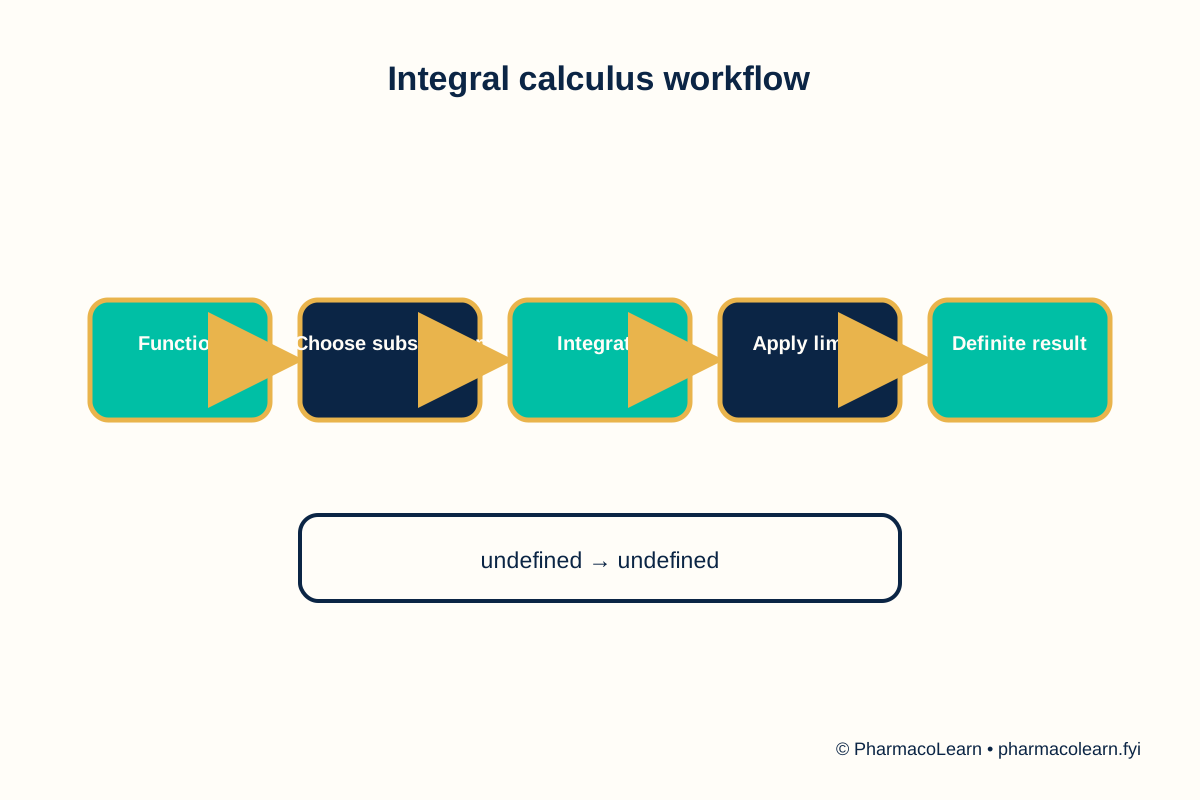
This unit covers definite integrals, substitution, integration by parts and properties of definite integrals. Start with definitions and classification, then move from structure to function and finally to application. The mechanism or reasoning is stepwise: identify the entities, establish the governing rule, apply the rule to the stated conditions, check units or biological context, and interpret the result. Diagrams and tables should be read as relationships rather than memorized labels.
Pharmaceutical application
Mathematics supports dose calculations, concentration relationships, rates, graphs, pharmacokinetic models and data interpretation. A pharmacist checks units, domain, significant figures and whether a model is appropriate before acting on a result.
Worked calculation
For a linear equation system, write the coefficient matrix, calculate its determinant, and use elimination or the inverse when the determinant is nonzero. For a derivative, identify the outer and inner functions, differentiate each in sequence, and multiply by the inner derivative. For an integral, reverse the differentiation rule and verify by differentiating the result.
FAQs
- What should be checked first? Definitions, assumptions, units or diagnostic characters.
- Why is sequence important? Each step depends on the result of the previous step.
- What is the takeaway? Use a controlled method, verify the result and distinguish observation from inference.
Takeaways
- Follow the defined method or observation sequence for this unit.
- Check assumptions, units, biological context, and the interpretation before applying the result.
Integrated practice note
This stream supports pharmacy study by connecting its theory to formulation, calculations, natural sources, anatomy, physiology, pharmacognosy, and safe interpretation. It is educational theory and does not replace a clinical diagnosis, validated calculation policy, or practical laboratory procedure.
References
PharmacoLearn, Pharm D Year 1 syllabus; Pharmacy Council of India, Pharm.D. Regulations 2008; Thomas' Calculus and Analytic Geometry; a standard introductory mathematics text.
Differential Equations
Syllabus scope
This unit covers differential equations and its relevance to the selected Remedial Mathematics stream and pharmaceutical study.
Theory
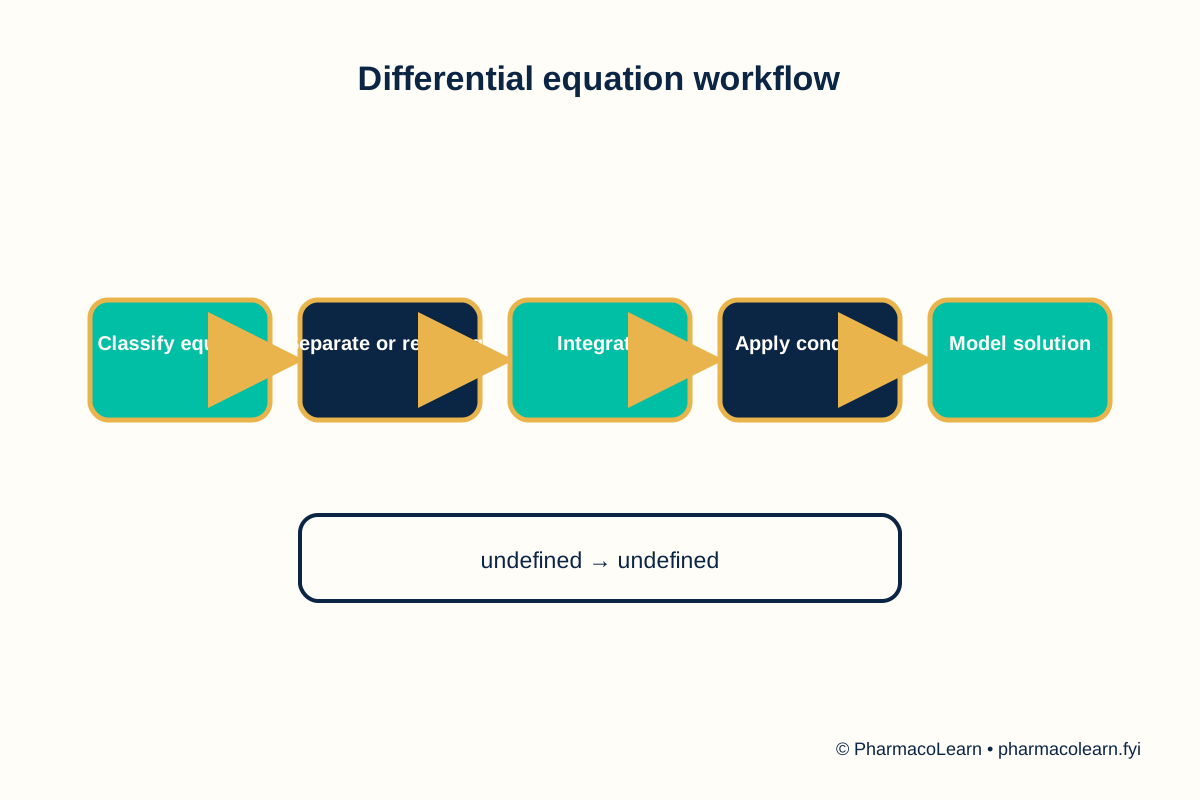
This unit covers order, degree, separable, homogeneous, linear, nonhomogeneous, constant coefficient and simultaneous second-order equations. Start with definitions and classification, then move from structure to function and finally to application. The mechanism or reasoning is stepwise: identify the entities, establish the governing rule, apply the rule to the stated conditions, check units or biological context, and interpret the result. Diagrams and tables should be read as relationships rather than memorized labels.
Pharmaceutical application
Mathematics supports dose calculations, concentration relationships, rates, graphs, pharmacokinetic models and data interpretation. A pharmacist checks units, domain, significant figures and whether a model is appropriate before acting on a result.
Worked calculation
For a linear equation system, write the coefficient matrix, calculate its determinant, and use elimination or the inverse when the determinant is nonzero. For a derivative, identify the outer and inner functions, differentiate each in sequence, and multiply by the inner derivative. For an integral, reverse the differentiation rule and verify by differentiating the result.
FAQs
- What should be checked first? Definitions, assumptions, units or diagnostic characters.
- Why is sequence important? Each step depends on the result of the previous step.
- What is the takeaway? Use a controlled method, verify the result and distinguish observation from inference.
Takeaways
- Follow the defined method or observation sequence for this unit.
- Check assumptions, units, biological context, and the interpretation before applying the result.
Integrated practice note
This stream supports pharmacy study by connecting its theory to formulation, calculations, natural sources, anatomy, physiology, pharmacognosy, and safe interpretation. It is educational theory and does not replace a clinical diagnosis, validated calculation policy, or practical laboratory procedure.
References
PharmacoLearn, Pharm D Year 1 syllabus; Pharmacy Council of India, Pharm.D. Regulations 2008; Thomas' Calculus and Analytic Geometry; a standard introductory mathematics text.
Laplace Transform
Syllabus scope
This unit covers laplace transform and its relevance to the selected Remedial Mathematics stream and pharmaceutical study.
Theory
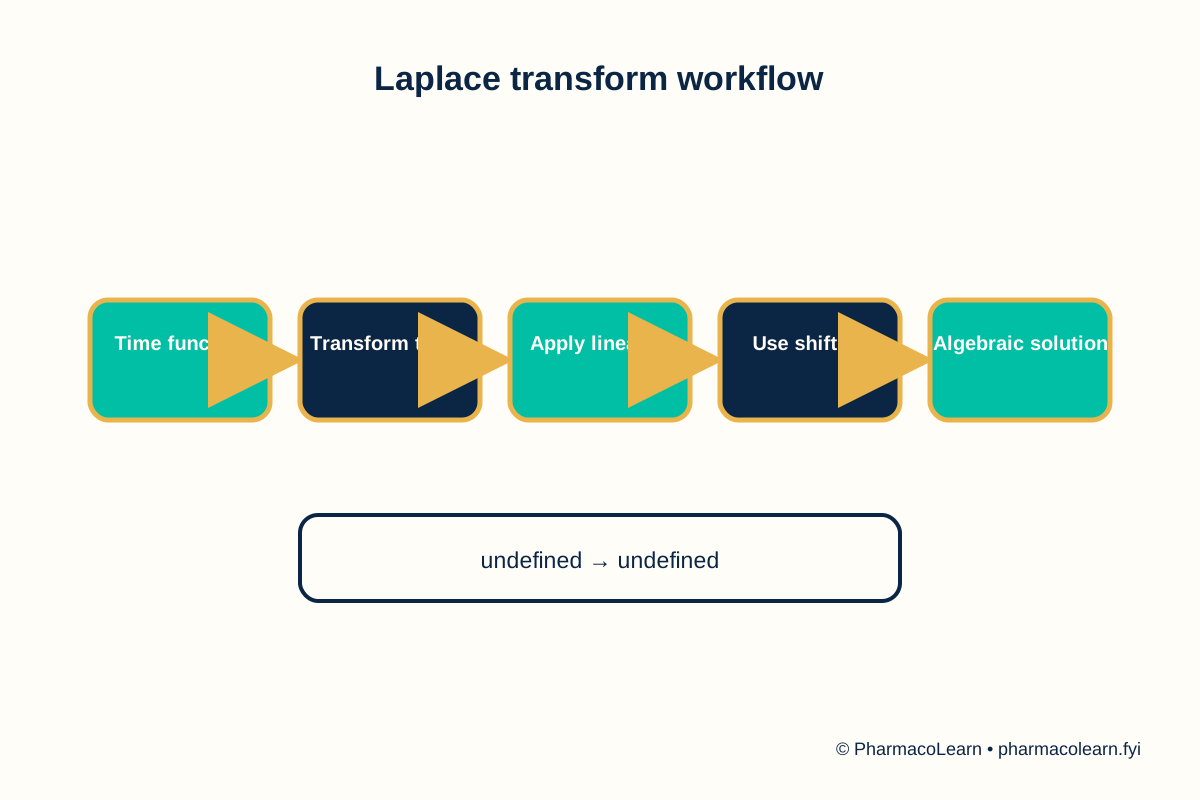
This unit covers definition, elementary functions, linearity, shifting and solving initial-value problems. Start with definitions and classification, then move from structure to function and finally to application. The mechanism or reasoning is stepwise: identify the entities, establish the governing rule, apply the rule to the stated conditions, check units or biological context, and interpret the result. Diagrams and tables should be read as relationships rather than memorized labels.
Pharmaceutical application
Mathematics supports dose calculations, concentration relationships, rates, graphs, pharmacokinetic models and data interpretation. A pharmacist checks units, domain, significant figures and whether a model is appropriate before acting on a result.
Worked calculation
For a linear equation system, write the coefficient matrix, calculate its determinant, and use elimination or the inverse when the determinant is nonzero. For a derivative, identify the outer and inner functions, differentiate each in sequence, and multiply by the inner derivative. For an integral, reverse the differentiation rule and verify by differentiating the result.
FAQs
- What should be checked first? Definitions, assumptions, units or diagnostic characters.
- Why is sequence important? Each step depends on the result of the previous step.
- What is the takeaway? Use a controlled method, verify the result and distinguish observation from inference.
Takeaways
- Follow the defined method or observation sequence for this unit.
- Check assumptions, units, biological context, and the interpretation before applying the result.
Integrated practice note
This stream supports pharmacy study by connecting its theory to formulation, calculations, natural sources, anatomy, physiology, pharmacognosy, and safe interpretation. It is educational theory and does not replace a clinical diagnosis, validated calculation policy, or practical laboratory procedure.
References
PharmacoLearn, Pharm D Year 1 syllabus; Pharmacy Council of India, Pharm.D. Regulations 2008; Thomas' Calculus and Analytic Geometry; a standard introductory mathematics text.
Introduction
Syllabus scope
This unit covers introduction and its relevance to the selected Remedial Biology stream and pharmaceutical study.
Theory
This unit covers biology as the study of living systems, natural sources and the foundation for pharmacognosy. Start with definitions and classification, then move from structure to function and finally to application. The mechanism or reasoning is stepwise: identify the entities, establish the governing rule, apply the rule to the stated conditions, check units or biological context, and interpret the result. Diagrams and tables should be read as relationships rather than memorized labels.
Pharmaceutical application
Biology supports identification of natural sources, tissue recognition, pharmacognosy, physiology and safe interpretation of living systems. A pharmacist relates structure and function to cultivation, contamination, medicinal source and patient relevance without treating a classroom description as a clinical diagnosis.
Worked application
A study sequence is: identify the structure, describe its parts, relate each part to its function, compare similar groups, and connect the observation to pharmacy or health science. Diagnostic characters should be recorded without confusing a general feature with a family-level feature.
FAQs
- What should be checked first? Definitions, assumptions, units or diagnostic characters.
- Why is sequence important? Each step depends on the result of the previous step.
- What is the takeaway? Use a controlled method, verify the result and distinguish observation from inference.
Takeaways
- Follow the defined method or observation sequence for this unit.
- Check assumptions, units, biological context, and the interpretation before applying the result.
Integrated practice note
This stream supports pharmacy study by connecting its theory to formulation, calculations, natural sources, anatomy, physiology, pharmacognosy, and safe interpretation. It is educational theory and does not replace a clinical diagnosis, validated calculation policy, or practical laboratory procedure.
References
PharmacoLearn, Pharm D Year 1 syllabus; Pharmacy Council of India, Pharm.D. Regulations 2008; Raven Biology; a standard botany and zoology text.
General Organization of Plants and Inclusions
Syllabus scope
This unit covers general organization of plants and inclusions and its relevance to the selected Remedial Biology stream and pharmaceutical study.
Theory
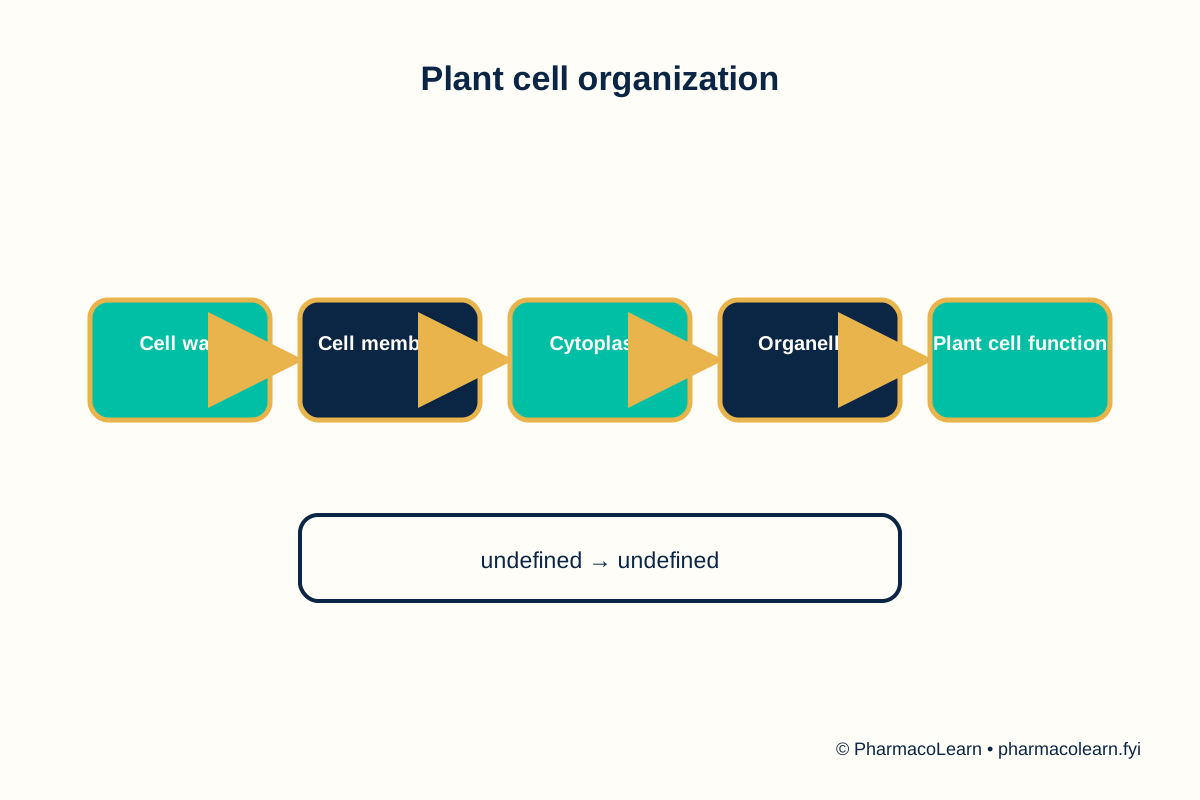
This unit covers plant cell organization, cell wall, protoplasm, plastids, vacuoles and inclusions. Start with definitions and classification, then move from structure to function and finally to application. The mechanism or reasoning is stepwise: identify the entities, establish the governing rule, apply the rule to the stated conditions, check units or biological context, and interpret the result. Diagrams and tables should be read as relationships rather than memorized labels.
Pharmaceutical application
Biology supports identification of natural sources, tissue recognition, pharmacognosy, physiology and safe interpretation of living systems. A pharmacist relates structure and function to cultivation, contamination, medicinal source and patient relevance without treating a classroom description as a clinical diagnosis.
Worked application
A study sequence is: identify the structure, describe its parts, relate each part to its function, compare similar groups, and connect the observation to pharmacy or health science. Diagnostic characters should be recorded without confusing a general feature with a family-level feature.
FAQs
- What should be checked first? Definitions, assumptions, units or diagnostic characters.
- Why is sequence important? Each step depends on the result of the previous step.
- What is the takeaway? Use a controlled method, verify the result and distinguish observation from inference.
Takeaways
- Follow the defined method or observation sequence for this unit.
- Check assumptions, units, biological context, and the interpretation before applying the result.
Integrated practice note
This stream supports pharmacy study by connecting its theory to formulation, calculations, natural sources, anatomy, physiology, pharmacognosy, and safe interpretation. It is educational theory and does not replace a clinical diagnosis, validated calculation policy, or practical laboratory procedure.
References
PharmacoLearn, Pharm D Year 1 syllabus; Pharmacy Council of India, Pharm.D. Regulations 2008; Raven Biology; a standard botany and zoology text.
Plant Tissues
Syllabus scope
This unit covers plant tissues and its relevance to the selected Remedial Biology stream and pharmaceutical study.
Theory
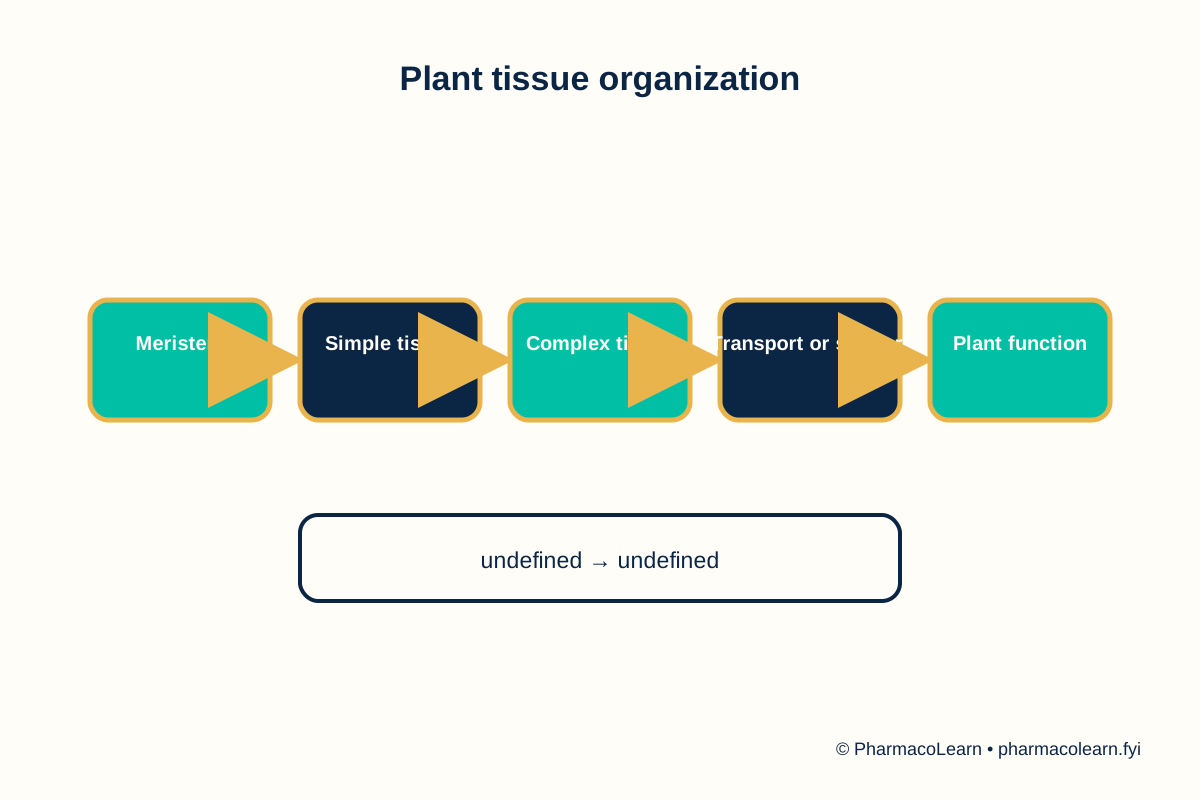
This unit covers meristematic and permanent tissues, simple and complex tissues and their functions. Start with definitions and classification, then move from structure to function and finally to application. The mechanism or reasoning is stepwise: identify the entities, establish the governing rule, apply the rule to the stated conditions, check units or biological context, and interpret the result. Diagrams and tables should be read as relationships rather than memorized labels.
Pharmaceutical application
Biology supports identification of natural sources, tissue recognition, pharmacognosy, physiology and safe interpretation of living systems. A pharmacist relates structure and function to cultivation, contamination, medicinal source and patient relevance without treating a classroom description as a clinical diagnosis.
Worked application
A study sequence is: identify the structure, describe its parts, relate each part to its function, compare similar groups, and connect the observation to pharmacy or health science. Diagnostic characters should be recorded without confusing a general feature with a family-level feature.
FAQs
- What should be checked first? Definitions, assumptions, units or diagnostic characters.
- Why is sequence important? Each step depends on the result of the previous step.
- What is the takeaway? Use a controlled method, verify the result and distinguish observation from inference.
Takeaways
- Follow the defined method or observation sequence for this unit.
- Check assumptions, units, biological context, and the interpretation before applying the result.
Integrated practice note
This stream supports pharmacy study by connecting its theory to formulation, calculations, natural sources, anatomy, physiology, pharmacognosy, and safe interpretation. It is educational theory and does not replace a clinical diagnosis, validated calculation policy, or practical laboratory procedure.
References
PharmacoLearn, Pharm D Year 1 syllabus; Pharmacy Council of India, Pharm.D. Regulations 2008; Raven Biology; a standard botany and zoology text.
Plant Kingdom and Classification
Syllabus scope
This unit covers plant kingdom and classification and its relevance to the selected Remedial Biology stream and pharmaceutical study.
Theory
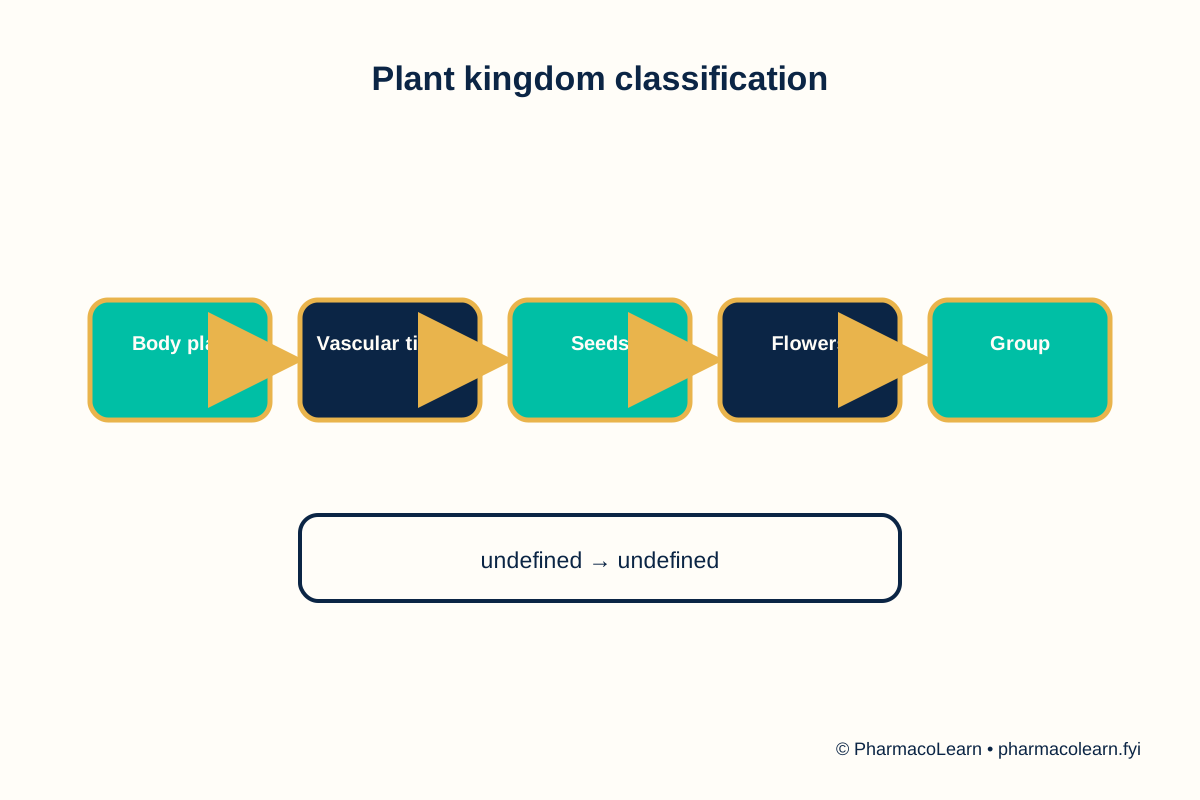
This unit covers major plant groups and the basis for classification. Start with definitions and classification, then move from structure to function and finally to application. The mechanism or reasoning is stepwise: identify the entities, establish the governing rule, apply the rule to the stated conditions, check units or biological context, and interpret the result. Diagrams and tables should be read as relationships rather than memorized labels.
Pharmaceutical application
Biology supports identification of natural sources, tissue recognition, pharmacognosy, physiology and safe interpretation of living systems. A pharmacist relates structure and function to cultivation, contamination, medicinal source and patient relevance without treating a classroom description as a clinical diagnosis.
Worked application
A study sequence is: identify the structure, describe its parts, relate each part to its function, compare similar groups, and connect the observation to pharmacy or health science. Diagnostic characters should be recorded without confusing a general feature with a family-level feature.
FAQs
- What should be checked first? Definitions, assumptions, units or diagnostic characters.
- Why is sequence important? Each step depends on the result of the previous step.
- What is the takeaway? Use a controlled method, verify the result and distinguish observation from inference.
Takeaways
- Follow the defined method or observation sequence for this unit.
- Check assumptions, units, biological context, and the interpretation before applying the result.
Integrated practice note
This stream supports pharmacy study by connecting its theory to formulation, calculations, natural sources, anatomy, physiology, pharmacognosy, and safe interpretation. It is educational theory and does not replace a clinical diagnosis, validated calculation policy, or practical laboratory procedure.
References
PharmacoLearn, Pharm D Year 1 syllabus; Pharmacy Council of India, Pharm.D. Regulations 2008; Raven Biology; a standard botany and zoology text.
Morphology of Plants
Syllabus scope
This unit covers morphology of plants and its relevance to the selected Remedial Biology stream and pharmaceutical study.
Theory
This unit covers external form, organs and characters used in botanical description. Start with definitions and classification, then move from structure to function and finally to application. The mechanism or reasoning is stepwise: identify the entities, establish the governing rule, apply the rule to the stated conditions, check units or biological context, and interpret the result. Diagrams and tables should be read as relationships rather than memorized labels.
Pharmaceutical application
Biology supports identification of natural sources, tissue recognition, pharmacognosy, physiology and safe interpretation of living systems. A pharmacist relates structure and function to cultivation, contamination, medicinal source and patient relevance without treating a classroom description as a clinical diagnosis.
Worked application
A study sequence is: identify the structure, describe its parts, relate each part to its function, compare similar groups, and connect the observation to pharmacy or health science. Diagnostic characters should be recorded without confusing a general feature with a family-level feature.
FAQs
- What should be checked first? Definitions, assumptions, units or diagnostic characters.
- Why is sequence important? Each step depends on the result of the previous step.
- What is the takeaway? Use a controlled method, verify the result and distinguish observation from inference.
Takeaways
- Follow the defined method or observation sequence for this unit.
- Check assumptions, units, biological context, and the interpretation before applying the result.
Integrated practice note
This stream supports pharmacy study by connecting its theory to formulation, calculations, natural sources, anatomy, physiology, pharmacognosy, and safe interpretation. It is educational theory and does not replace a clinical diagnosis, validated calculation policy, or practical laboratory procedure.
References
PharmacoLearn, Pharm D Year 1 syllabus; Pharmacy Council of India, Pharm.D. Regulations 2008; Raven Biology; a standard botany and zoology text.
Root, Stem and Leaf Modifications
Syllabus scope
This unit covers root, stem and leaf modifications and its relevance to the selected Remedial Biology stream and pharmaceutical study.
Theory
This unit covers modified organs, functions and recognition of representative forms. Start with definitions and classification, then move from structure to function and finally to application. The mechanism or reasoning is stepwise: identify the entities, establish the governing rule, apply the rule to the stated conditions, check units or biological context, and interpret the result. Diagrams and tables should be read as relationships rather than memorized labels.
Pharmaceutical application
Biology supports identification of natural sources, tissue recognition, pharmacognosy, physiology and safe interpretation of living systems. A pharmacist relates structure and function to cultivation, contamination, medicinal source and patient relevance without treating a classroom description as a clinical diagnosis.
Worked application
A study sequence is: identify the structure, describe its parts, relate each part to its function, compare similar groups, and connect the observation to pharmacy or health science. Diagnostic characters should be recorded without confusing a general feature with a family-level feature.
FAQs
- What should be checked first? Definitions, assumptions, units or diagnostic characters.
- Why is sequence important? Each step depends on the result of the previous step.
- What is the takeaway? Use a controlled method, verify the result and distinguish observation from inference.
Takeaways
- Follow the defined method or observation sequence for this unit.
- Check assumptions, units, biological context, and the interpretation before applying the result.
Integrated practice note
This stream supports pharmacy study by connecting its theory to formulation, calculations, natural sources, anatomy, physiology, pharmacognosy, and safe interpretation. It is educational theory and does not replace a clinical diagnosis, validated calculation policy, or practical laboratory procedure.
References
PharmacoLearn, Pharm D Year 1 syllabus; Pharmacy Council of India, Pharm.D. Regulations 2008; Raven Biology; a standard botany and zoology text.
Inflorescence and Pollination
Syllabus scope
This unit covers inflorescence and pollination and its relevance to the selected Remedial Biology stream and pharmaceutical study.
Theory
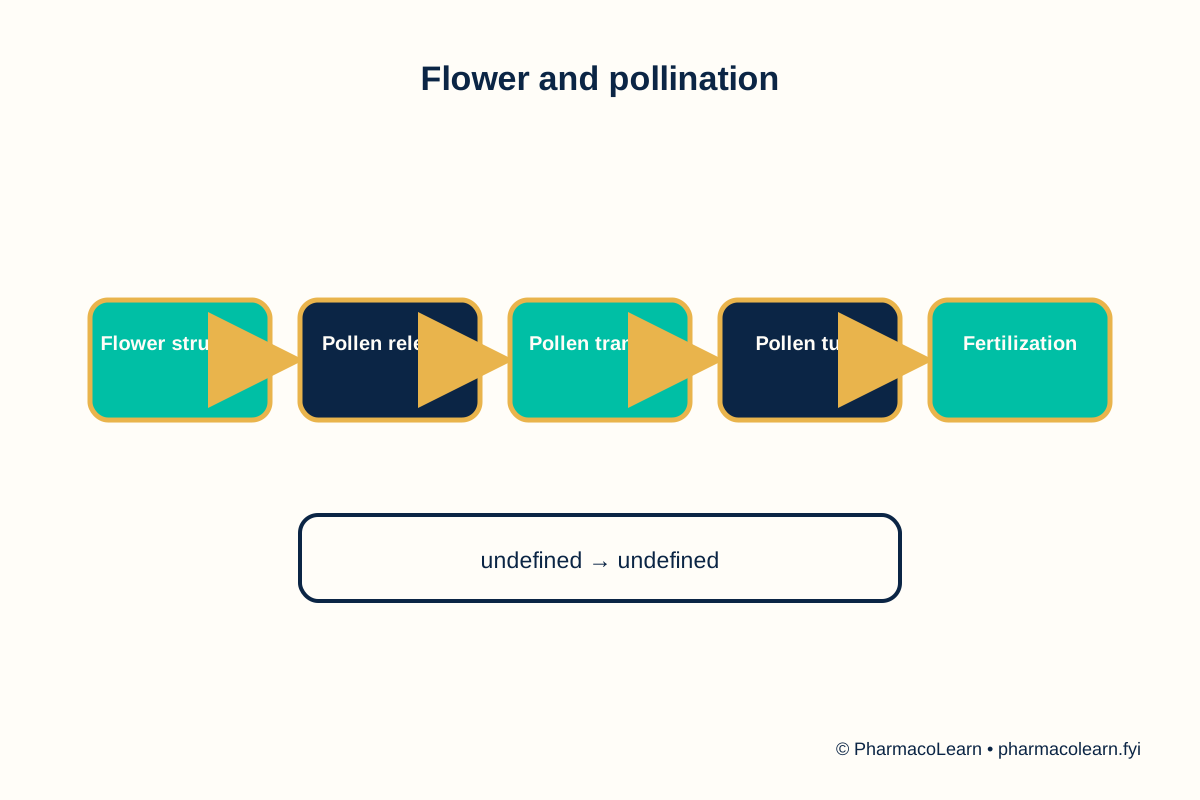
This unit covers inflorescence types, flower structure, pollination and fertilization sequence. Start with definitions and classification, then move from structure to function and finally to application. The mechanism or reasoning is stepwise: identify the entities, establish the governing rule, apply the rule to the stated conditions, check units or biological context, and interpret the result. Diagrams and tables should be read as relationships rather than memorized labels.
Pharmaceutical application
Biology supports identification of natural sources, tissue recognition, pharmacognosy, physiology and safe interpretation of living systems. A pharmacist relates structure and function to cultivation, contamination, medicinal source and patient relevance without treating a classroom description as a clinical diagnosis.
Worked application
A study sequence is: identify the structure, describe its parts, relate each part to its function, compare similar groups, and connect the observation to pharmacy or health science. Diagnostic characters should be recorded without confusing a general feature with a family-level feature.
FAQs
- What should be checked first? Definitions, assumptions, units or diagnostic characters.
- Why is sequence important? Each step depends on the result of the previous step.
- What is the takeaway? Use a controlled method, verify the result and distinguish observation from inference.
Takeaways
- Follow the defined method or observation sequence for this unit.
- Check assumptions, units, biological context, and the interpretation before applying the result.
Integrated practice note
This stream supports pharmacy study by connecting its theory to formulation, calculations, natural sources, anatomy, physiology, pharmacognosy, and safe interpretation. It is educational theory and does not replace a clinical diagnosis, validated calculation policy, or practical laboratory procedure.
References
PharmacoLearn, Pharm D Year 1 syllabus; Pharmacy Council of India, Pharm.D. Regulations 2008; Raven Biology; a standard botany and zoology text.
Morphology of Fruits and Seeds
Syllabus scope
This unit covers morphology of fruits and seeds and its relevance to the selected Remedial Biology stream and pharmaceutical study.
Theory
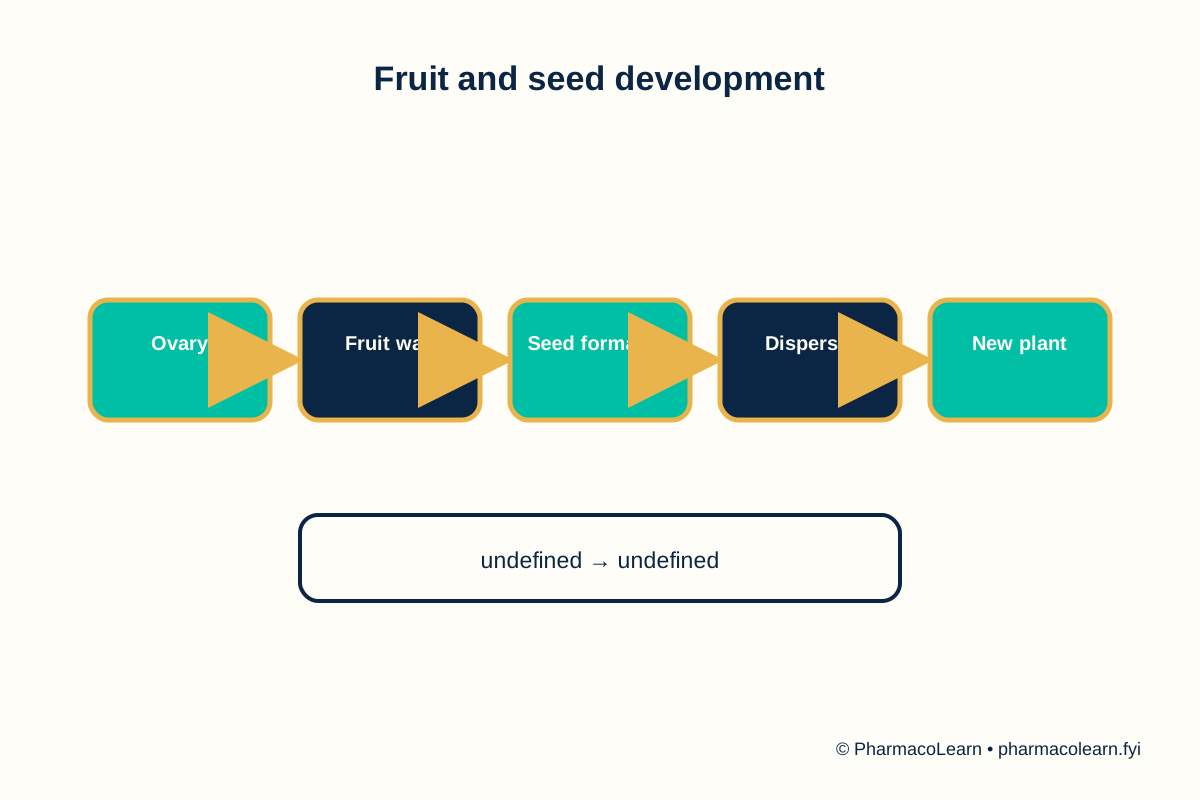
This unit covers fruit types, seed structure, dispersal and diagnostic characters. Start with definitions and classification, then move from structure to function and finally to application. The mechanism or reasoning is stepwise: identify the entities, establish the governing rule, apply the rule to the stated conditions, check units or biological context, and interpret the result. Diagrams and tables should be read as relationships rather than memorized labels.
Pharmaceutical application
Biology supports identification of natural sources, tissue recognition, pharmacognosy, physiology and safe interpretation of living systems. A pharmacist relates structure and function to cultivation, contamination, medicinal source and patient relevance without treating a classroom description as a clinical diagnosis.
Worked application
A study sequence is: identify the structure, describe its parts, relate each part to its function, compare similar groups, and connect the observation to pharmacy or health science. Diagnostic characters should be recorded without confusing a general feature with a family-level feature.
FAQs
- What should be checked first? Definitions, assumptions, units or diagnostic characters.
- Why is sequence important? Each step depends on the result of the previous step.
- What is the takeaway? Use a controlled method, verify the result and distinguish observation from inference.
Takeaways
- Follow the defined method or observation sequence for this unit.
- Check assumptions, units, biological context, and the interpretation before applying the result.
Integrated practice note
This stream supports pharmacy study by connecting its theory to formulation, calculations, natural sources, anatomy, physiology, pharmacognosy, and safe interpretation. It is educational theory and does not replace a clinical diagnosis, validated calculation policy, or practical laboratory procedure.
References
PharmacoLearn, Pharm D Year 1 syllabus; Pharmacy Council of India, Pharm.D. Regulations 2008; Raven Biology; a standard botany and zoology text.
Plant Physiology
Syllabus scope
This unit covers plant physiology and its relevance to the selected Remedial Biology stream and pharmaceutical study.
Theory
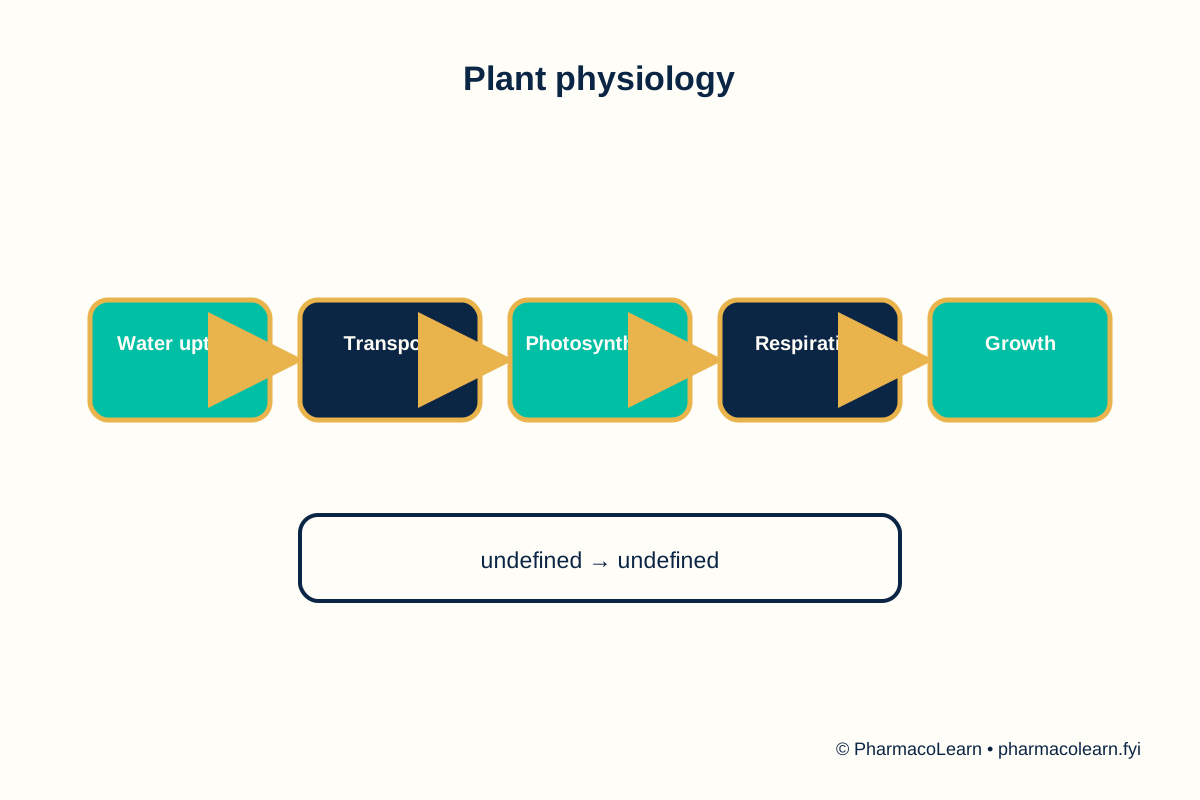
This unit covers water movement, mineral nutrition, photosynthesis, respiration, transpiration and growth. Start with definitions and classification, then move from structure to function and finally to application. The mechanism or reasoning is stepwise: identify the entities, establish the governing rule, apply the rule to the stated conditions, check units or biological context, and interpret the result. Diagrams and tables should be read as relationships rather than memorized labels.
Pharmaceutical application
Biology supports identification of natural sources, tissue recognition, pharmacognosy, physiology and safe interpretation of living systems. A pharmacist relates structure and function to cultivation, contamination, medicinal source and patient relevance without treating a classroom description as a clinical diagnosis.
Worked application
A study sequence is: identify the structure, describe its parts, relate each part to its function, compare similar groups, and connect the observation to pharmacy or health science. Diagnostic characters should be recorded without confusing a general feature with a family-level feature.
FAQs
- What should be checked first? Definitions, assumptions, units or diagnostic characters.
- Why is sequence important? Each step depends on the result of the previous step.
- What is the takeaway? Use a controlled method, verify the result and distinguish observation from inference.
Takeaways
- Follow the defined method or observation sequence for this unit.
- Check assumptions, units, biological context, and the interpretation before applying the result.
Integrated practice note
This stream supports pharmacy study by connecting its theory to formulation, calculations, natural sources, anatomy, physiology, pharmacognosy, and safe interpretation. It is educational theory and does not replace a clinical diagnosis, validated calculation policy, or practical laboratory procedure.
References
PharmacoLearn, Pharm D Year 1 syllabus; Pharmacy Council of India, Pharm.D. Regulations 2008; Raven Biology; a standard botany and zoology text.
Taxonomy of Selected Families
Syllabus scope
This unit covers taxonomy of selected families and its relevance to the selected Remedial Biology stream and pharmaceutical study.
Theory
This unit covers Leguminosae, Umbelliferae, Solanaceae, Liliaceae, Zingiberaceae and Rubiaceae. Start with definitions and classification, then move from structure to function and finally to application. The mechanism or reasoning is stepwise: identify the entities, establish the governing rule, apply the rule to the stated conditions, check units or biological context, and interpret the result. Diagrams and tables should be read as relationships rather than memorized labels.
Pharmaceutical application
Biology supports identification of natural sources, tissue recognition, pharmacognosy, physiology and safe interpretation of living systems. A pharmacist relates structure and function to cultivation, contamination, medicinal source and patient relevance without treating a classroom description as a clinical diagnosis.
Worked application
A study sequence is: identify the structure, describe its parts, relate each part to its function, compare similar groups, and connect the observation to pharmacy or health science. Diagnostic characters should be recorded without confusing a general feature with a family-level feature.
FAQs
- What should be checked first? Definitions, assumptions, units or diagnostic characters.
- Why is sequence important? Each step depends on the result of the previous step.
- What is the takeaway? Use a controlled method, verify the result and distinguish observation from inference.
Takeaways
- Follow the defined method or observation sequence for this unit.
- Check assumptions, units, biological context, and the interpretation before applying the result.
Integrated practice note
This stream supports pharmacy study by connecting its theory to formulation, calculations, natural sources, anatomy, physiology, pharmacognosy, and safe interpretation. It is educational theory and does not replace a clinical diagnosis, validated calculation policy, or practical laboratory procedure.
References
PharmacoLearn, Pharm D Year 1 syllabus; Pharmacy Council of India, Pharm.D. Regulations 2008; Raven Biology; a standard botany and zoology text.
Fungi, Yeast, Penicillin and Bacteria
Syllabus scope
This unit covers fungi, yeast, penicillin and bacteria and its relevance to the selected Remedial Biology stream and pharmaceutical study.
Theory
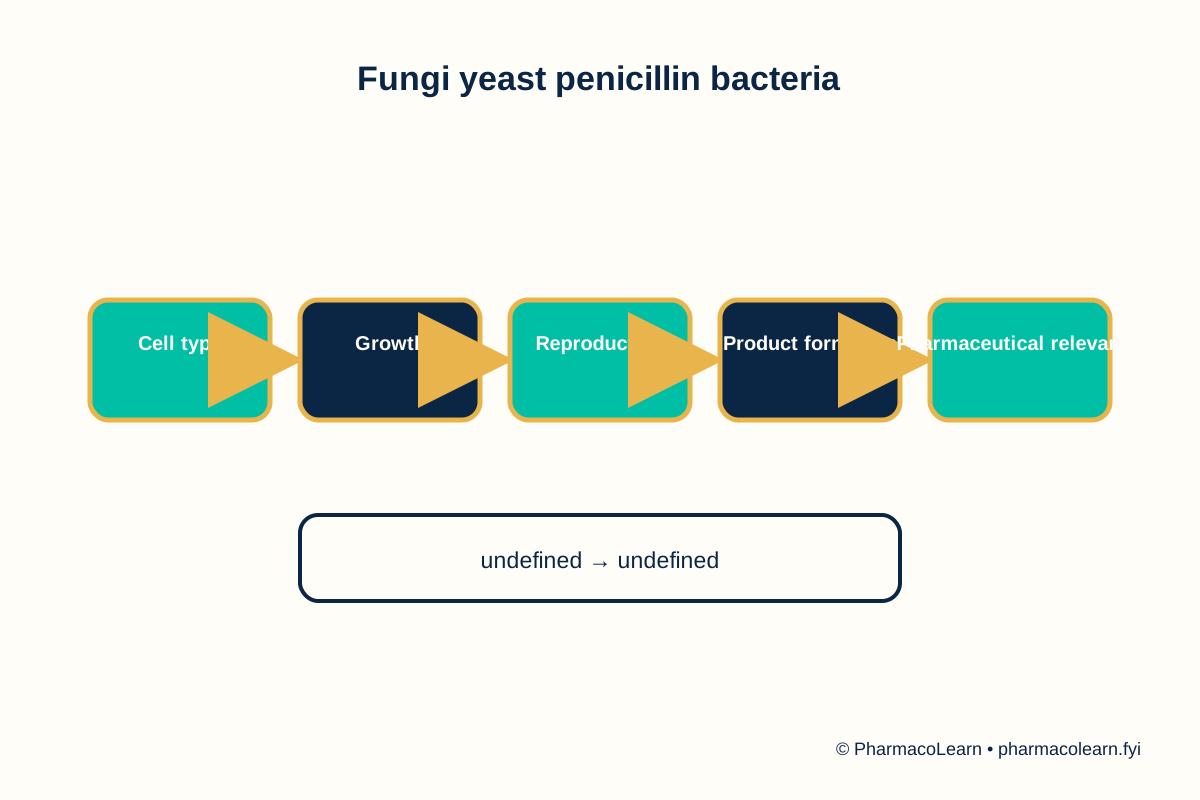
This unit covers organization, reproduction, useful products and pharmaceutical importance. Start with definitions and classification, then move from structure to function and finally to application. The mechanism or reasoning is stepwise: identify the entities, establish the governing rule, apply the rule to the stated conditions, check units or biological context, and interpret the result. Diagrams and tables should be read as relationships rather than memorized labels.
Pharmaceutical application
Biology supports identification of natural sources, tissue recognition, pharmacognosy, physiology and safe interpretation of living systems. A pharmacist relates structure and function to cultivation, contamination, medicinal source and patient relevance without treating a classroom description as a clinical diagnosis.
Worked application
A study sequence is: identify the structure, describe its parts, relate each part to its function, compare similar groups, and connect the observation to pharmacy or health science. Diagnostic characters should be recorded without confusing a general feature with a family-level feature.
FAQs
- What should be checked first? Definitions, assumptions, units or diagnostic characters.
- Why is sequence important? Each step depends on the result of the previous step.
- What is the takeaway? Use a controlled method, verify the result and distinguish observation from inference.
Takeaways
- Follow the defined method or observation sequence for this unit.
- Check assumptions, units, biological context, and the interpretation before applying the result.
Integrated practice note
This stream supports pharmacy study by connecting its theory to formulation, calculations, natural sources, anatomy, physiology, pharmacognosy, and safe interpretation. It is educational theory and does not replace a clinical diagnosis, validated calculation policy, or practical laboratory procedure.
References
PharmacoLearn, Pharm D Year 1 syllabus; Pharmacy Council of India, Pharm.D. Regulations 2008; Raven Biology; a standard botany and zoology text.
Animal Cell
Syllabus scope
This unit covers animal cell and its relevance to the selected Remedial Biology stream and pharmaceutical study.
Theory
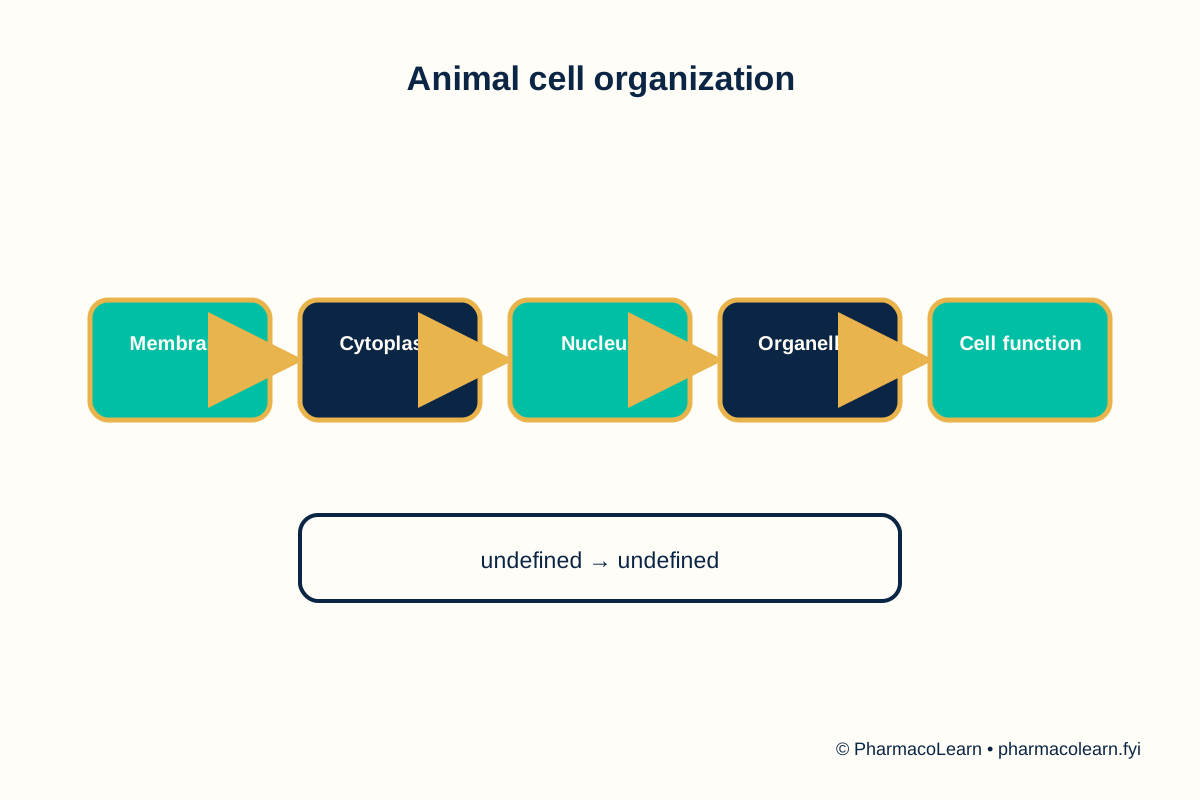
This unit covers cell membrane, organelles, transport and organization of animal cells. Start with definitions and classification, then move from structure to function and finally to application. The mechanism or reasoning is stepwise: identify the entities, establish the governing rule, apply the rule to the stated conditions, check units or biological context, and interpret the result. Diagrams and tables should be read as relationships rather than memorized labels.
Pharmaceutical application
Biology supports identification of natural sources, tissue recognition, pharmacognosy, physiology and safe interpretation of living systems. A pharmacist relates structure and function to cultivation, contamination, medicinal source and patient relevance without treating a classroom description as a clinical diagnosis.
Worked application
A study sequence is: identify the structure, describe its parts, relate each part to its function, compare similar groups, and connect the observation to pharmacy or health science. Diagnostic characters should be recorded without confusing a general feature with a family-level feature.
FAQs
- What should be checked first? Definitions, assumptions, units or diagnostic characters.
- Why is sequence important? Each step depends on the result of the previous step.
- What is the takeaway? Use a controlled method, verify the result and distinguish observation from inference.
Takeaways
- Follow the defined method or observation sequence for this unit.
- Check assumptions, units, biological context, and the interpretation before applying the result.
Integrated practice note
This stream supports pharmacy study by connecting its theory to formulation, calculations, natural sources, anatomy, physiology, pharmacognosy, and safe interpretation. It is educational theory and does not replace a clinical diagnosis, validated calculation policy, or practical laboratory procedure.
References
PharmacoLearn, Pharm D Year 1 syllabus; Pharmacy Council of India, Pharm.D. Regulations 2008; Raven Biology; a standard botany and zoology text.
Animal Tissues
Syllabus scope
This unit covers animal tissues and its relevance to the selected Remedial Biology stream and pharmaceutical study.
Theory
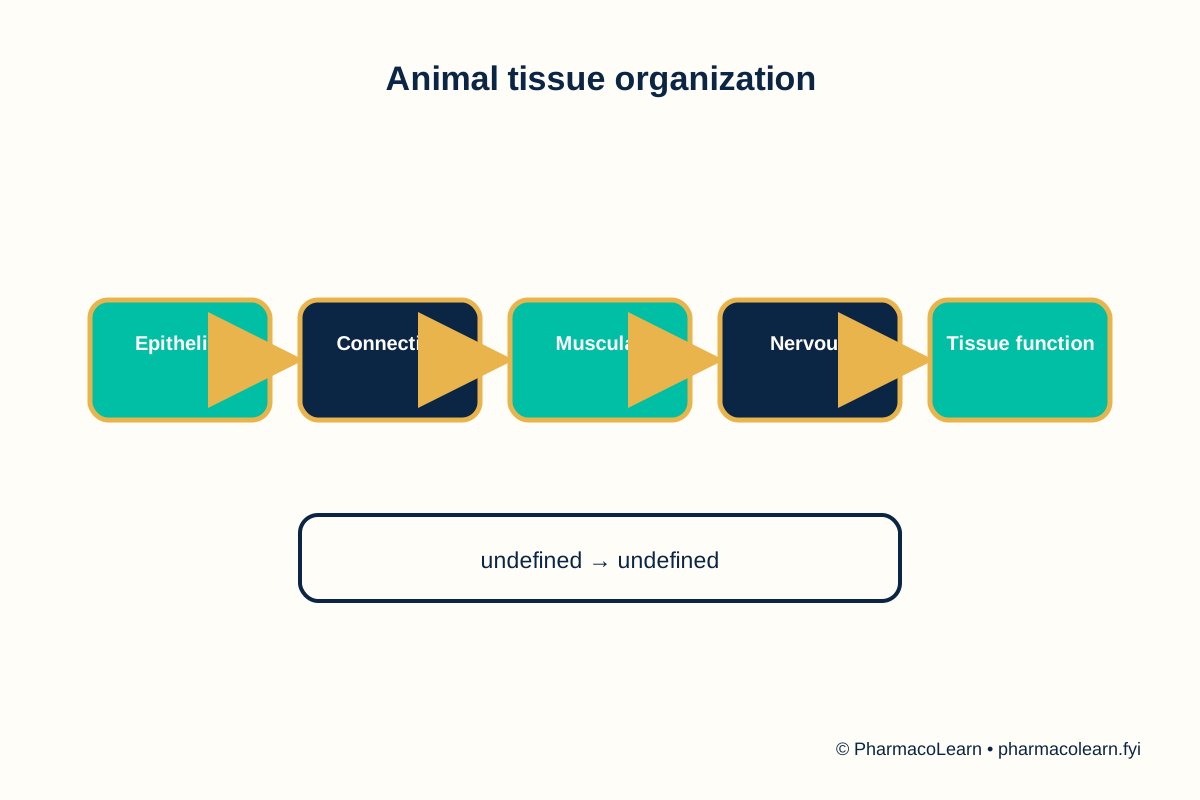
This unit covers epithelial, connective, muscular and nervous tissues. Start with definitions and classification, then move from structure to function and finally to application. The mechanism or reasoning is stepwise: identify the entities, establish the governing rule, apply the rule to the stated conditions, check units or biological context, and interpret the result. Diagrams and tables should be read as relationships rather than memorized labels.
Pharmaceutical application
Biology supports identification of natural sources, tissue recognition, pharmacognosy, physiology and safe interpretation of living systems. A pharmacist relates structure and function to cultivation, contamination, medicinal source and patient relevance without treating a classroom description as a clinical diagnosis.
Worked application
A study sequence is: identify the structure, describe its parts, relate each part to its function, compare similar groups, and connect the observation to pharmacy or health science. Diagnostic characters should be recorded without confusing a general feature with a family-level feature.
FAQs
- What should be checked first? Definitions, assumptions, units or diagnostic characters.
- Why is sequence important? Each step depends on the result of the previous step.
- What is the takeaway? Use a controlled method, verify the result and distinguish observation from inference.
Takeaways
- Follow the defined method or observation sequence for this unit.
- Check assumptions, units, biological context, and the interpretation before applying the result.
Integrated practice note
This stream supports pharmacy study by connecting its theory to formulation, calculations, natural sources, anatomy, physiology, pharmacognosy, and safe interpretation. It is educational theory and does not replace a clinical diagnosis, validated calculation policy, or practical laboratory procedure.
References
PharmacoLearn, Pharm D Year 1 syllabus; Pharmacy Council of India, Pharm.D. Regulations 2008; Raven Biology; a standard botany and zoology text.
Frog
Syllabus scope
This unit covers frog and its relevance to the selected Remedial Biology stream and pharmaceutical study.
Theory
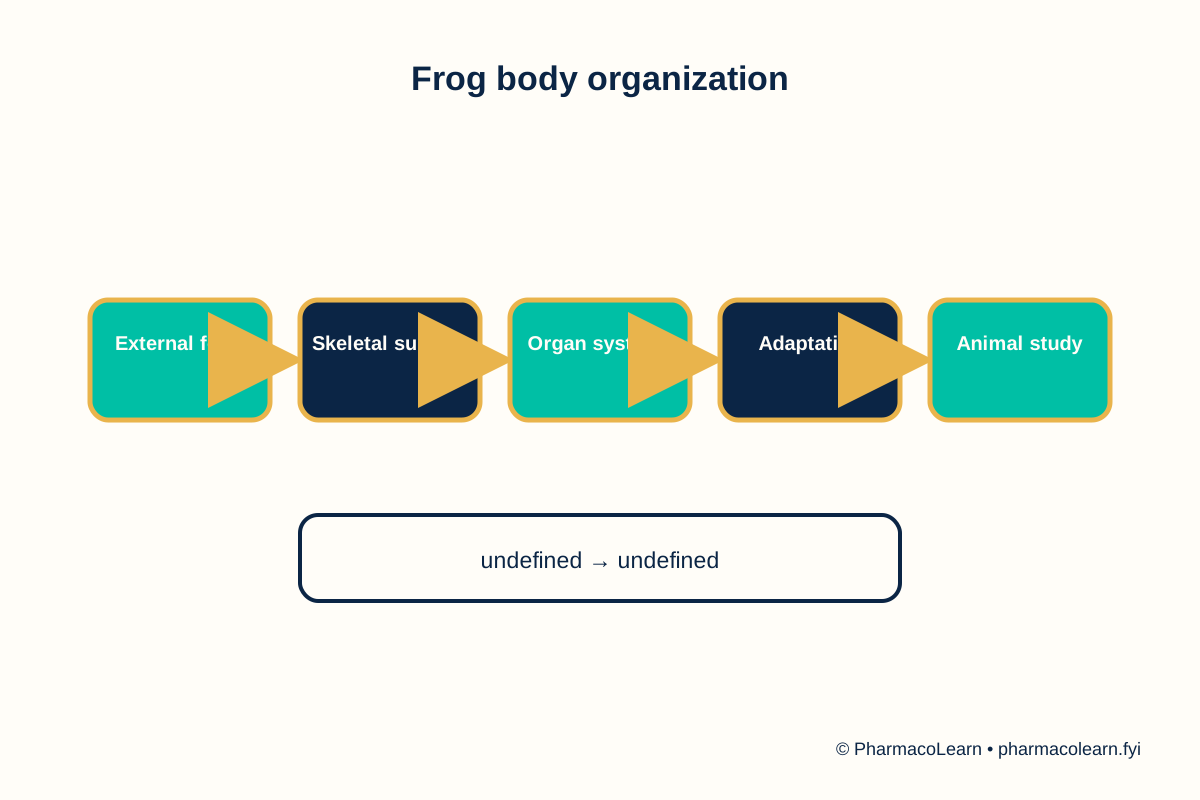
This unit covers external features, body organization and systems-level study. Start with definitions and classification, then move from structure to function and finally to application. The mechanism or reasoning is stepwise: identify the entities, establish the governing rule, apply the rule to the stated conditions, check units or biological context, and interpret the result. Diagrams and tables should be read as relationships rather than memorized labels.
Pharmaceutical application
Biology supports identification of natural sources, tissue recognition, pharmacognosy, physiology and safe interpretation of living systems. A pharmacist relates structure and function to cultivation, contamination, medicinal source and patient relevance without treating a classroom description as a clinical diagnosis.
Worked application
A study sequence is: identify the structure, describe its parts, relate each part to its function, compare similar groups, and connect the observation to pharmacy or health science. Diagnostic characters should be recorded without confusing a general feature with a family-level feature.
FAQs
- What should be checked first? Definitions, assumptions, units or diagnostic characters.
- Why is sequence important? Each step depends on the result of the previous step.
- What is the takeaway? Use a controlled method, verify the result and distinguish observation from inference.
Takeaways
- Follow the defined method or observation sequence for this unit.
- Check assumptions, units, biological context, and the interpretation before applying the result.
Integrated practice note
This stream supports pharmacy study by connecting its theory to formulation, calculations, natural sources, anatomy, physiology, pharmacognosy, and safe interpretation. It is educational theory and does not replace a clinical diagnosis, validated calculation policy, or practical laboratory procedure.
References
PharmacoLearn, Pharm D Year 1 syllabus; Pharmacy Council of India, Pharm.D. Regulations 2008; Raven Biology; a standard botany and zoology text.
Pisces, Reptiles and Aves
Syllabus scope
This unit covers pisces, reptiles and aves and its relevance to the selected Remedial Biology stream and pharmaceutical study.
Theory
This unit covers comparative characters, adaptations and classification features. Start with definitions and classification, then move from structure to function and finally to application. The mechanism or reasoning is stepwise: identify the entities, establish the governing rule, apply the rule to the stated conditions, check units or biological context, and interpret the result. Diagrams and tables should be read as relationships rather than memorized labels.
Pharmaceutical application
Biology supports identification of natural sources, tissue recognition, pharmacognosy, physiology and safe interpretation of living systems. A pharmacist relates structure and function to cultivation, contamination, medicinal source and patient relevance without treating a classroom description as a clinical diagnosis.
Worked application
A study sequence is: identify the structure, describe its parts, relate each part to its function, compare similar groups, and connect the observation to pharmacy or health science. Diagnostic characters should be recorded without confusing a general feature with a family-level feature.
FAQs
- What should be checked first? Definitions, assumptions, units or diagnostic characters.
- Why is sequence important? Each step depends on the result of the previous step.
- What is the takeaway? Use a controlled method, verify the result and distinguish observation from inference.
Takeaways
- Follow the defined method or observation sequence for this unit.
- Check assumptions, units, biological context, and the interpretation before applying the result.
Integrated practice note
This stream supports pharmacy study by connecting its theory to formulation, calculations, natural sources, anatomy, physiology, pharmacognosy, and safe interpretation. It is educational theory and does not replace a clinical diagnosis, validated calculation policy, or practical laboratory procedure.
References
PharmacoLearn, Pharm D Year 1 syllabus; Pharmacy Council of India, Pharm.D. Regulations 2008; Raven Biology; a standard botany and zoology text.
General Organization of Mammals
Syllabus scope
This unit covers general organization of mammals and its relevance to the selected Remedial Biology stream and pharmaceutical study.
Theory
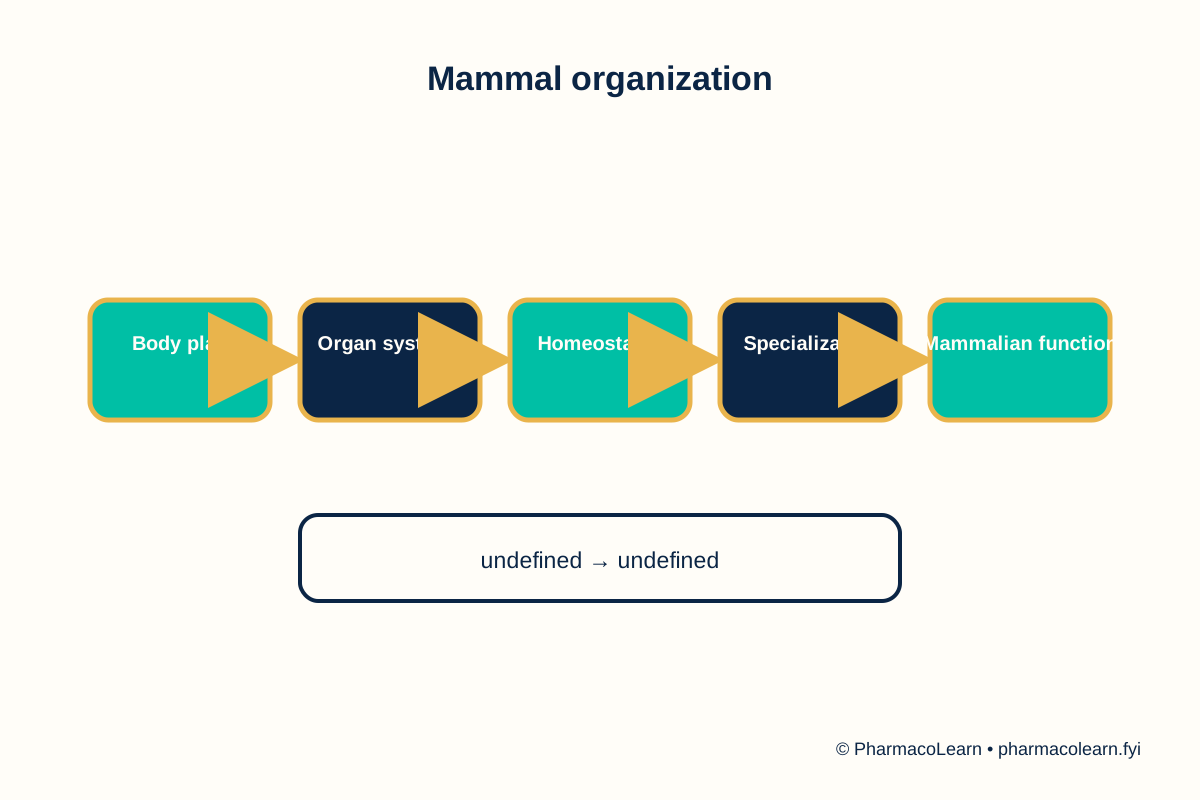
This unit covers body plan, organ systems, homeostasis and mammalian characteristics. Start with definitions and classification, then move from structure to function and finally to application. The mechanism or reasoning is stepwise: identify the entities, establish the governing rule, apply the rule to the stated conditions, check units or biological context, and interpret the result. Diagrams and tables should be read as relationships rather than memorized labels.
Pharmaceutical application
Biology supports identification of natural sources, tissue recognition, pharmacognosy, physiology and safe interpretation of living systems. A pharmacist relates structure and function to cultivation, contamination, medicinal source and patient relevance without treating a classroom description as a clinical diagnosis.
Worked application
A study sequence is: identify the structure, describe its parts, relate each part to its function, compare similar groups, and connect the observation to pharmacy or health science. Diagnostic characters should be recorded without confusing a general feature with a family-level feature.
FAQs
- What should be checked first? Definitions, assumptions, units or diagnostic characters.
- Why is sequence important? Each step depends on the result of the previous step.
- What is the takeaway? Use a controlled method, verify the result and distinguish observation from inference.
Takeaways
- Follow the defined method or observation sequence for this unit.
- Check assumptions, units, biological context, and the interpretation before applying the result.
Integrated practice note
This stream supports pharmacy study by connecting its theory to formulation, calculations, natural sources, anatomy, physiology, pharmacognosy, and safe interpretation. It is educational theory and does not replace a clinical diagnosis, validated calculation policy, or practical laboratory procedure.
References
PharmacoLearn, Pharm D Year 1 syllabus; Pharmacy Council of India, Pharm.D. Regulations 2008; Raven Biology; a standard botany and zoology text.
Poisonous Animals
Syllabus scope
This unit covers poisonous animals and its relevance to the selected Remedial Biology stream and pharmaceutical study.
Theory
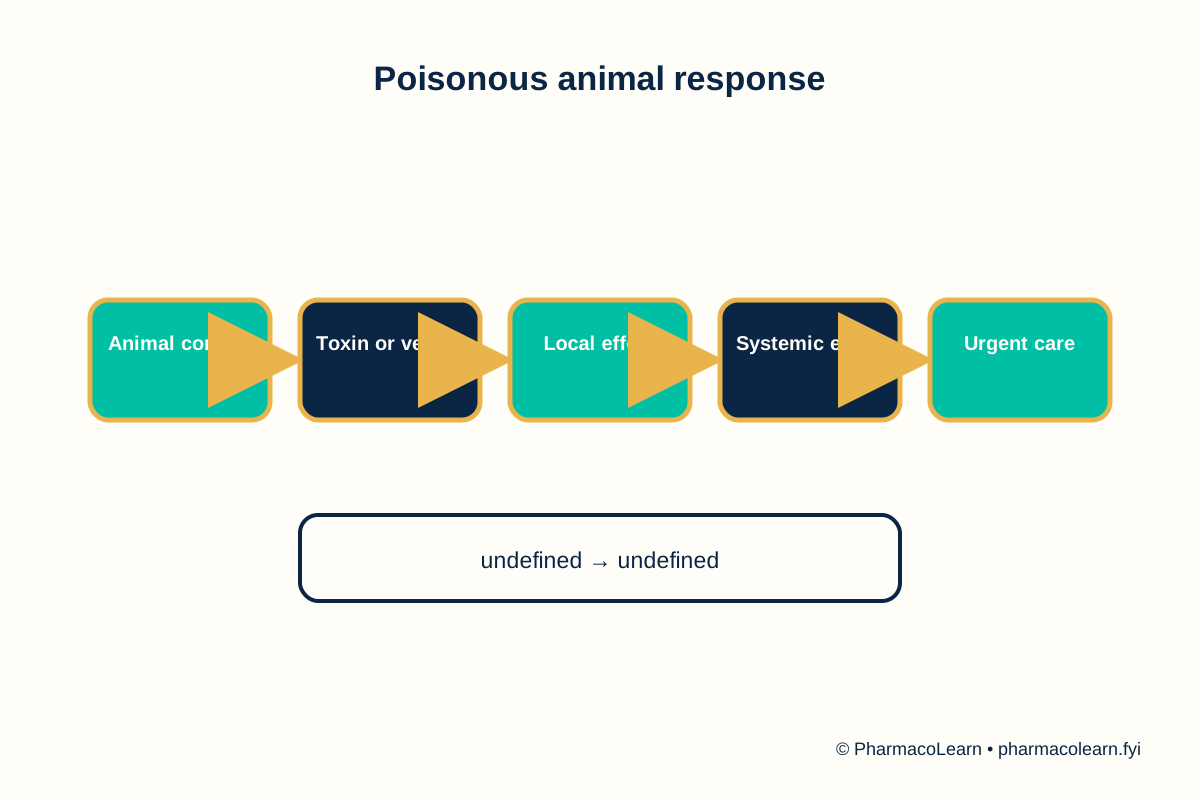
This unit covers venom, poison, delivery mechanisms, clinical effects and first-response principles. Start with definitions and classification, then move from structure to function and finally to application. The mechanism or reasoning is stepwise: identify the entities, establish the governing rule, apply the rule to the stated conditions, check units or biological context, and interpret the result. Diagrams and tables should be read as relationships rather than memorized labels.
Pharmaceutical application
Biology supports identification of natural sources, tissue recognition, pharmacognosy, physiology and safe interpretation of living systems. A pharmacist relates structure and function to cultivation, contamination, medicinal source and patient relevance without treating a classroom description as a clinical diagnosis.
Worked application
A study sequence is: identify the structure, describe its parts, relate each part to its function, compare similar groups, and connect the observation to pharmacy or health science. Diagnostic characters should be recorded without confusing a general feature with a family-level feature.
FAQs
- What should be checked first? Definitions, assumptions, units or diagnostic characters.
- Why is sequence important? Each step depends on the result of the previous step.
- What is the takeaway? Use a controlled method, verify the result and distinguish observation from inference.
Takeaways
- Follow the defined method or observation sequence for this unit.
- Check assumptions, units, biological context, and the interpretation before applying the result.
Integrated practice note
This stream supports pharmacy study by connecting its theory to formulation, calculations, natural sources, anatomy, physiology, pharmacognosy, and safe interpretation. It is educational theory and does not replace a clinical diagnosis, validated calculation policy, or practical laboratory procedure.
References
PharmacoLearn, Pharm D Year 1 syllabus; Pharmacy Council of India, Pharm.D. Regulations 2008; Raven Biology; a standard botany and zoology text.
Diagrams
Other Year 1 subjects: Human Anatomy and Physiology · Pharmaceutics · Medicinal Biochemistry · Pharmaceutical Organic Chemistry · Pharmaceutical Inorganic Chemistry · Remedial Mathematics / Biology · Year 1 · Pharm D