
Pharmaceutical Inorganic Chemistry — Pharm D Year 1
Notes for Pharmaceutical Inorganic Chemistry, Pharm D Year 1, organised unit by unit following the PCI Pharm D syllabus. 21 units, 20 diagrams.
Syllabus: Pharm D Year 1 syllabus
Practicals: Pharmaceutical Inorganic Chemistry practicals
Units in this subject
- Unit 1: Errors
- Unit 2: Volumetric analysis
- Unit 3: Acid base titrations
- Unit 4: Redox titrations
- Unit 5: Non aqueous titrations
- Unit 6: Precipitation titrations
- Unit 7: Complexometric titrations
- Unit 8: Theory of indicators
- Unit 9: Gravimetry
- Unit 10: Limit tests
- Unit 11: Medicinal gases
- Unit 12: Acidifiers
- Unit 13: Antacids
- Unit 14: Cathartics
- Unit 15: Electrolyte replenishers
- Unit 16: Essential trace elements
- Unit 17: Antimicrobials
- Unit 18: Pharmaceutical aids
- Unit 19: Dental products
- Unit 20: Miscellaneous compounds
- Unit 21: Radio Pharmaceuticals
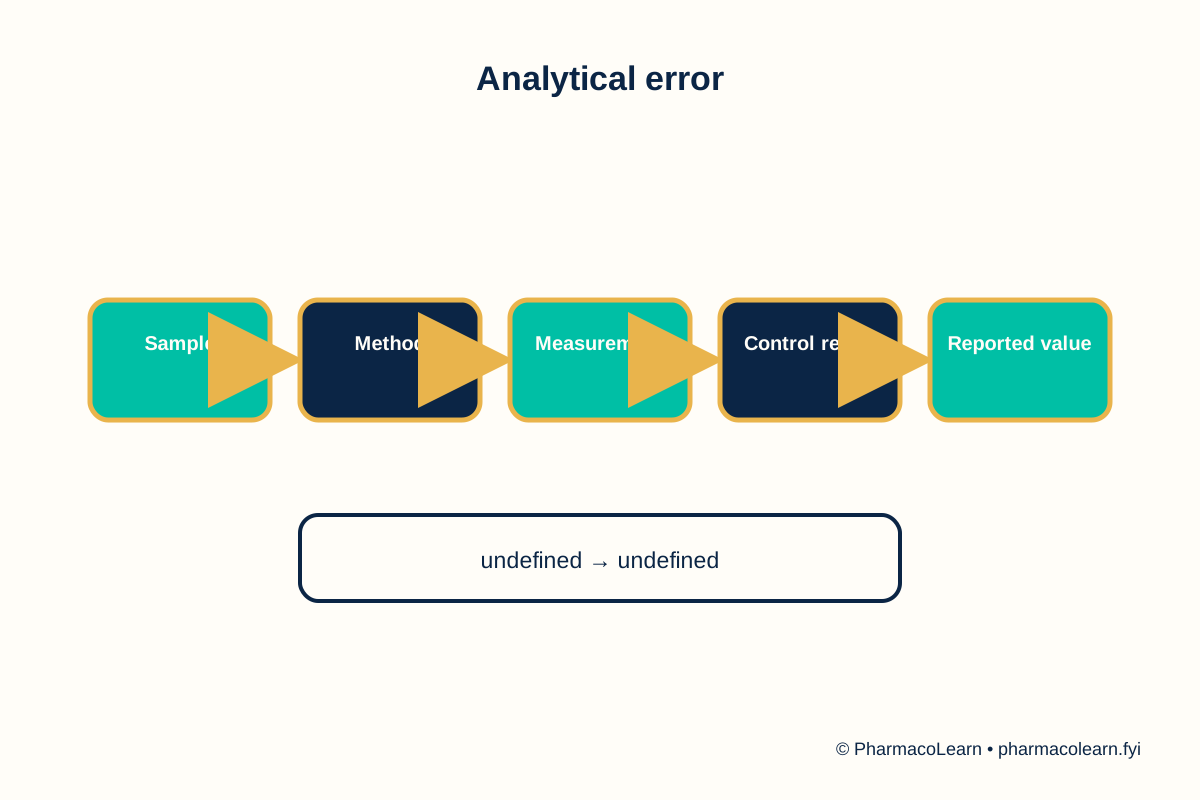
Unit 1: Errors
Syllabus scope
This unit covers errors and its application to pharmaceutical quality, formulation, safe supply, and patient care.
Core theory
This unit covers systematic error, random error, gross error, accuracy, precision and uncertainty. Begin by identifying the analyte or pharmaceutical substance, its chemical state, the reaction or physical process involved, and the acceptance criterion. Then control the sample, reagent order, concentration, temperature, pH, contact time and endpoint. A balanced equation or defined comparison is required before calculation or interpretation. The mechanism is stepwise: prepare the system, allow the specified chemical interaction, observe the endpoint or measured property, correct for blanks or controls, and calculate or compare against the approved specification.
Pharmaceutical application
The same chemistry affects medicine quality, stability, compatibility and patient safety. A pharmacist should check route, dose, formulation grade, storage, interactions and patient factors. A false pass may release an ineffective or unsafe product. A false fail may waste a suitable batch. Current official monographs and local procedures control exact reagents, limits and regulatory decisions.
Worked example
For a one-to-one reaction, amount of analyte equals concentration of standard multiplied by volume used, after converting units and applying any dilution factor. If the reaction ratio differs, multiply by the balanced stoichiometric ratio. For a limit test, compare the test response with the identically prepared permitted standard rather than treating the visual signal as a full assay.
FAQs
- Why are controls important? They reveal reagent, instrument and procedural error.
- Why does pH matter? Ionization, complexation, precipitation and indicator response can all change.
- What is the main takeaway? Follow the validated method, document observations and never replace an official limit with a guess.
Takeaways
- Use the defined chemical principle, validated procedure, and approved specification for this unit.
- Document observations, calculations, controls, and any clarification before release or use.
Integrated practice note
The pharmacist connects inorganic chemistry with identity, purity, stability, compatibility, storage, labelling, and patient safety. Exact current monograph procedures, limits, and local regulatory decisions must be taken from the applicable official source rather than inferred.
References
PharmacoLearn, Pharm D Year 1 syllabus; Pharmacy Council of India, Pharm.D. Regulations 2008; Vogel's Textbook of Quantitative Chemical Analysis; Harris, Quantitative Chemical Analysis; Indian Pharmacopoeia, applicable current edition.
Unit 2: Volumetric analysis
Syllabus scope
This unit covers volumetric analysis and its application to pharmaceutical quality, formulation, safe supply, and patient care.
Core theory
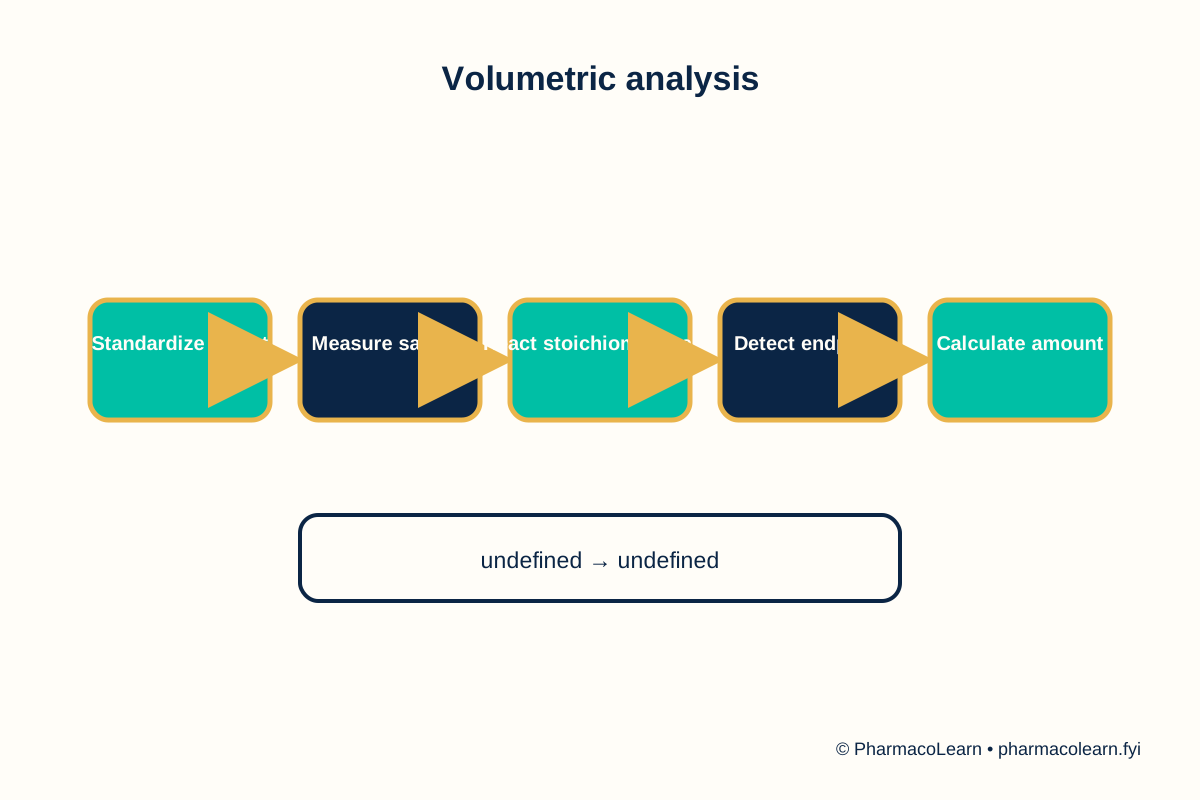
This unit covers standard solutions, primary standards, standardization, equivalence point, endpoint and stoichiometric calculation. Begin by identifying the analyte or pharmaceutical substance, its chemical state, the reaction or physical process involved, and the acceptance criterion. Then control the sample, reagent order, concentration, temperature, pH, contact time and endpoint. A balanced equation or defined comparison is required before calculation or interpretation. The mechanism is stepwise: prepare the system, allow the specified chemical interaction, observe the endpoint or measured property, correct for blanks or controls, and calculate or compare against the approved specification.
Pharmaceutical application
The same chemistry affects medicine quality, stability, compatibility and patient safety. A pharmacist should check route, dose, formulation grade, storage, interactions and patient factors. A false pass may release an ineffective or unsafe product. A false fail may waste a suitable batch. Current official monographs and local procedures control exact reagents, limits and regulatory decisions.
Worked example
For a one-to-one reaction, amount of analyte equals concentration of standard multiplied by volume used, after converting units and applying any dilution factor. If the reaction ratio differs, multiply by the balanced stoichiometric ratio. For a limit test, compare the test response with the identically prepared permitted standard rather than treating the visual signal as a full assay.
FAQs
- Why are controls important? They reveal reagent, instrument and procedural error.
- Why does pH matter? Ionization, complexation, precipitation and indicator response can all change.
- What is the main takeaway? Follow the validated method, document observations and never replace an official limit with a guess.
Takeaways
- Use the defined chemical principle, validated procedure, and approved specification for this unit.
- Document observations, calculations, controls, and any clarification before release or use.
Integrated practice note
The pharmacist connects inorganic chemistry with identity, purity, stability, compatibility, storage, labelling, and patient safety. Exact current monograph procedures, limits, and local regulatory decisions must be taken from the applicable official source rather than inferred.
References
PharmacoLearn, Pharm D Year 1 syllabus; Pharmacy Council of India, Pharm.D. Regulations 2008; Vogel's Textbook of Quantitative Chemical Analysis; Harris, Quantitative Chemical Analysis; Indian Pharmacopoeia, applicable current edition.
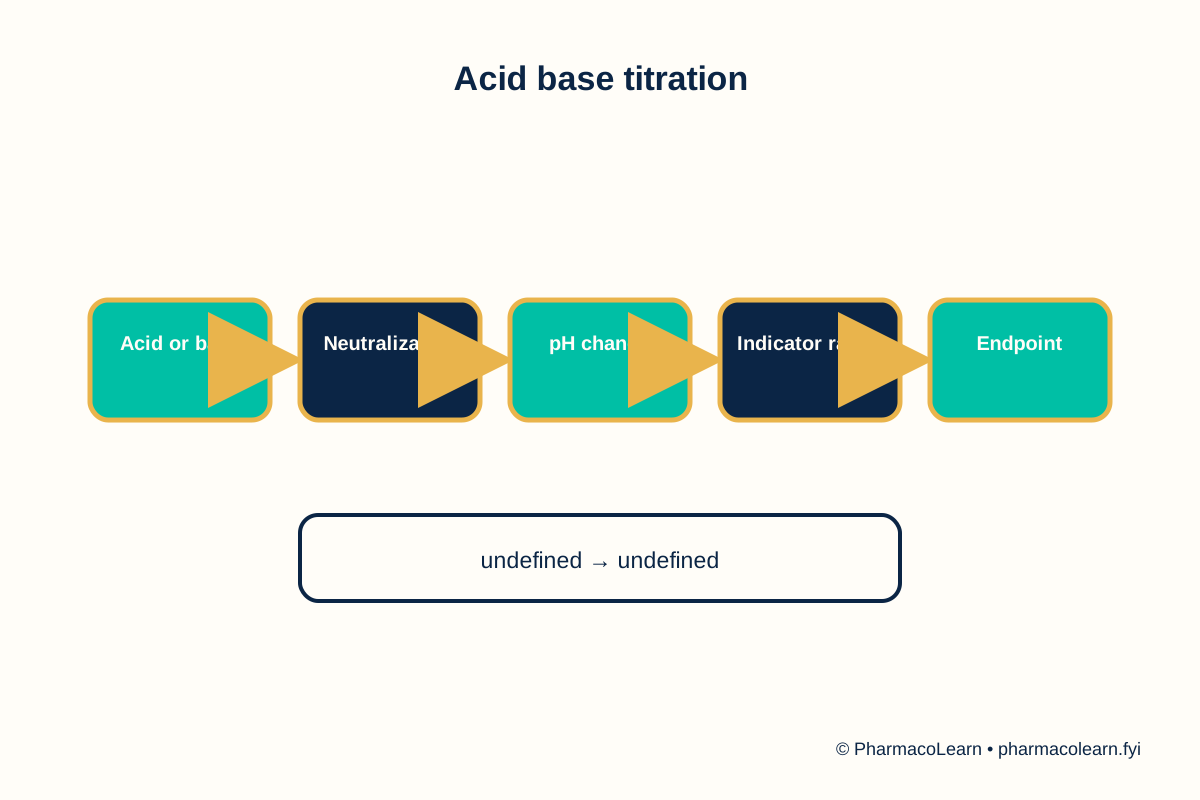
Unit 3: Acid base titrations
Syllabus scope
This unit covers acid base titrations and its application to pharmaceutical quality, formulation, safe supply, and patient care.
Core theory
This unit covers neutralization, strong and weak systems, indicators, buffers and potentiometric endpoints. Begin by identifying the analyte or pharmaceutical substance, its chemical state, the reaction or physical process involved, and the acceptance criterion. Then control the sample, reagent order, concentration, temperature, pH, contact time and endpoint. A balanced equation or defined comparison is required before calculation or interpretation. The mechanism is stepwise: prepare the system, allow the specified chemical interaction, observe the endpoint or measured property, correct for blanks or controls, and calculate or compare against the approved specification.
Pharmaceutical application
The same chemistry affects medicine quality, stability, compatibility and patient safety. A pharmacist should check route, dose, formulation grade, storage, interactions and patient factors. A false pass may release an ineffective or unsafe product. A false fail may waste a suitable batch. Current official monographs and local procedures control exact reagents, limits and regulatory decisions.
Worked example
For a one-to-one reaction, amount of analyte equals concentration of standard multiplied by volume used, after converting units and applying any dilution factor. If the reaction ratio differs, multiply by the balanced stoichiometric ratio. For a limit test, compare the test response with the identically prepared permitted standard rather than treating the visual signal as a full assay.
FAQs
- Why are controls important? They reveal reagent, instrument and procedural error.
- Why does pH matter? Ionization, complexation, precipitation and indicator response can all change.
- What is the main takeaway? Follow the validated method, document observations and never replace an official limit with a guess.
Takeaways
- Use the defined chemical principle, validated procedure, and approved specification for this unit.
- Document observations, calculations, controls, and any clarification before release or use.
Integrated practice note
The pharmacist connects inorganic chemistry with identity, purity, stability, compatibility, storage, labelling, and patient safety. Exact current monograph procedures, limits, and local regulatory decisions must be taken from the applicable official source rather than inferred.
References
PharmacoLearn, Pharm D Year 1 syllabus; Pharmacy Council of India, Pharm.D. Regulations 2008; Vogel's Textbook of Quantitative Chemical Analysis; Harris, Quantitative Chemical Analysis; Indian Pharmacopoeia, applicable current edition.
Unit 4: Redox titrations
Syllabus scope
This unit covers redox titrations and its application to pharmaceutical quality, formulation, safe supply, and patient care.
Core theory
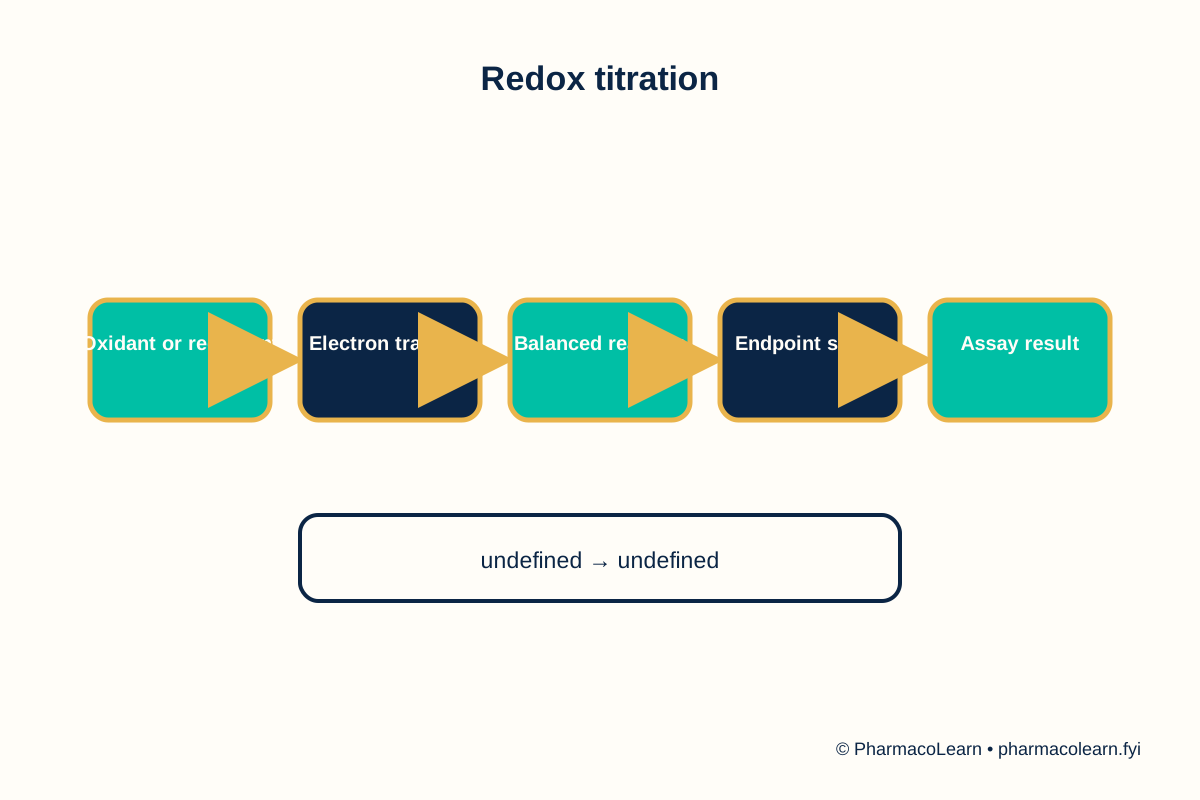
This unit covers electron transfer, oxidation states, permanganometry, cerimetry, iodometry and endpoint control. Begin by identifying the analyte or pharmaceutical substance, its chemical state, the reaction or physical process involved, and the acceptance criterion. Then control the sample, reagent order, concentration, temperature, pH, contact time and endpoint. A balanced equation or defined comparison is required before calculation or interpretation. The mechanism is stepwise: prepare the system, allow the specified chemical interaction, observe the endpoint or measured property, correct for blanks or controls, and calculate or compare against the approved specification.
Pharmaceutical application
The same chemistry affects medicine quality, stability, compatibility and patient safety. A pharmacist should check route, dose, formulation grade, storage, interactions and patient factors. A false pass may release an ineffective or unsafe product. A false fail may waste a suitable batch. Current official monographs and local procedures control exact reagents, limits and regulatory decisions.
Worked example
For a one-to-one reaction, amount of analyte equals concentration of standard multiplied by volume used, after converting units and applying any dilution factor. If the reaction ratio differs, multiply by the balanced stoichiometric ratio. For a limit test, compare the test response with the identically prepared permitted standard rather than treating the visual signal as a full assay.
FAQs
- Why are controls important? They reveal reagent, instrument and procedural error.
- Why does pH matter? Ionization, complexation, precipitation and indicator response can all change.
- What is the main takeaway? Follow the validated method, document observations and never replace an official limit with a guess.
Takeaways
- Use the defined chemical principle, validated procedure, and approved specification for this unit.
- Document observations, calculations, controls, and any clarification before release or use.
Integrated practice note
The pharmacist connects inorganic chemistry with identity, purity, stability, compatibility, storage, labelling, and patient safety. Exact current monograph procedures, limits, and local regulatory decisions must be taken from the applicable official source rather than inferred.
References
PharmacoLearn, Pharm D Year 1 syllabus; Pharmacy Council of India, Pharm.D. Regulations 2008; Vogel's Textbook of Quantitative Chemical Analysis; Harris, Quantitative Chemical Analysis; Indian Pharmacopoeia, applicable current edition.
Unit 5: Non aqueous titrations
Syllabus scope
This unit covers non aqueous titrations and its application to pharmaceutical quality, formulation, safe supply, and patient care.
Core theory
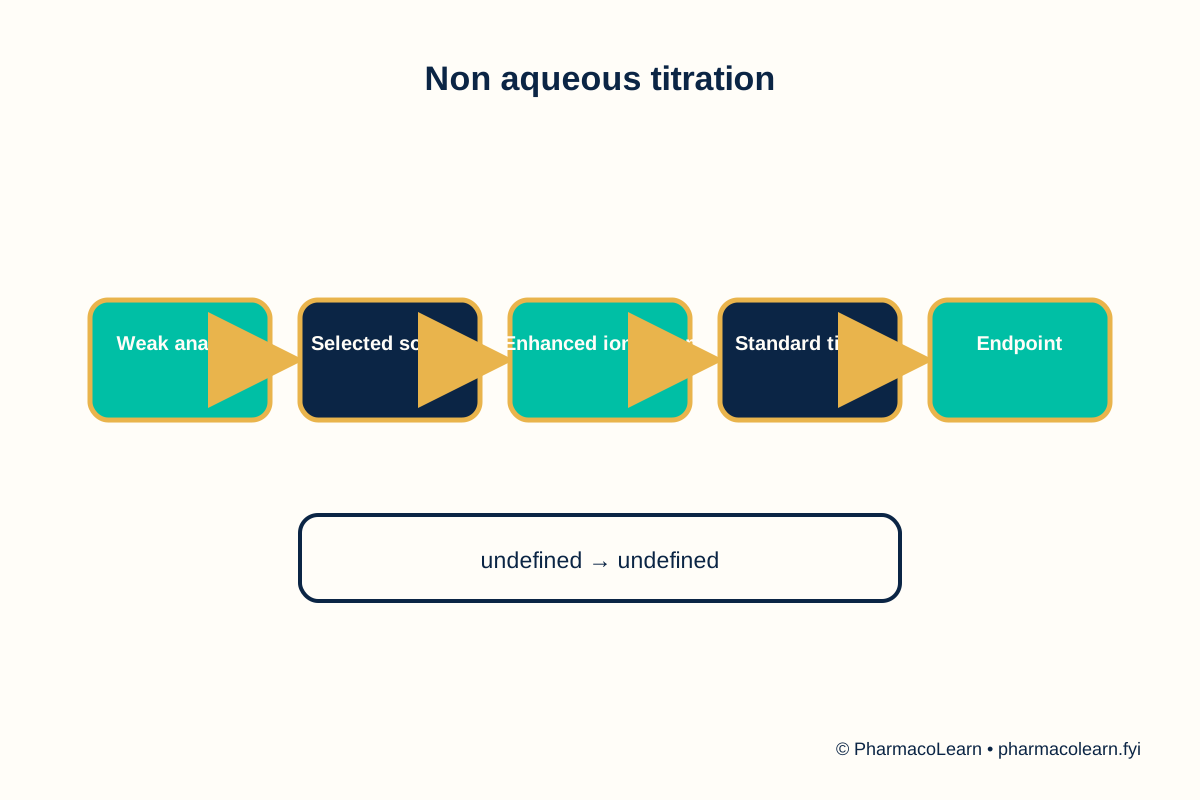
This unit covers weak acids and bases, solvent effects, ionization enhancement, indicators and moisture control. Begin by identifying the analyte or pharmaceutical substance, its chemical state, the reaction or physical process involved, and the acceptance criterion. Then control the sample, reagent order, concentration, temperature, pH, contact time and endpoint. A balanced equation or defined comparison is required before calculation or interpretation. The mechanism is stepwise: prepare the system, allow the specified chemical interaction, observe the endpoint or measured property, correct for blanks or controls, and calculate or compare against the approved specification.
Pharmaceutical application
The same chemistry affects medicine quality, stability, compatibility and patient safety. A pharmacist should check route, dose, formulation grade, storage, interactions and patient factors. A false pass may release an ineffective or unsafe product. A false fail may waste a suitable batch. Current official monographs and local procedures control exact reagents, limits and regulatory decisions.
Worked example
For a one-to-one reaction, amount of analyte equals concentration of standard multiplied by volume used, after converting units and applying any dilution factor. If the reaction ratio differs, multiply by the balanced stoichiometric ratio. For a limit test, compare the test response with the identically prepared permitted standard rather than treating the visual signal as a full assay.
FAQs
- Why are controls important? They reveal reagent, instrument and procedural error.
- Why does pH matter? Ionization, complexation, precipitation and indicator response can all change.
- What is the main takeaway? Follow the validated method, document observations and never replace an official limit with a guess.
Takeaways
- Use the defined chemical principle, validated procedure, and approved specification for this unit.
- Document observations, calculations, controls, and any clarification before release or use.
Integrated practice note
The pharmacist connects inorganic chemistry with identity, purity, stability, compatibility, storage, labelling, and patient safety. Exact current monograph procedures, limits, and local regulatory decisions must be taken from the applicable official source rather than inferred.
References
PharmacoLearn, Pharm D Year 1 syllabus; Pharmacy Council of India, Pharm.D. Regulations 2008; Vogel's Textbook of Quantitative Chemical Analysis; Harris, Quantitative Chemical Analysis; Indian Pharmacopoeia, applicable current edition.
Unit 6: Precipitation titrations
Syllabus scope
This unit covers precipitation titrations and its application to pharmaceutical quality, formulation, safe supply, and patient care.
Core theory
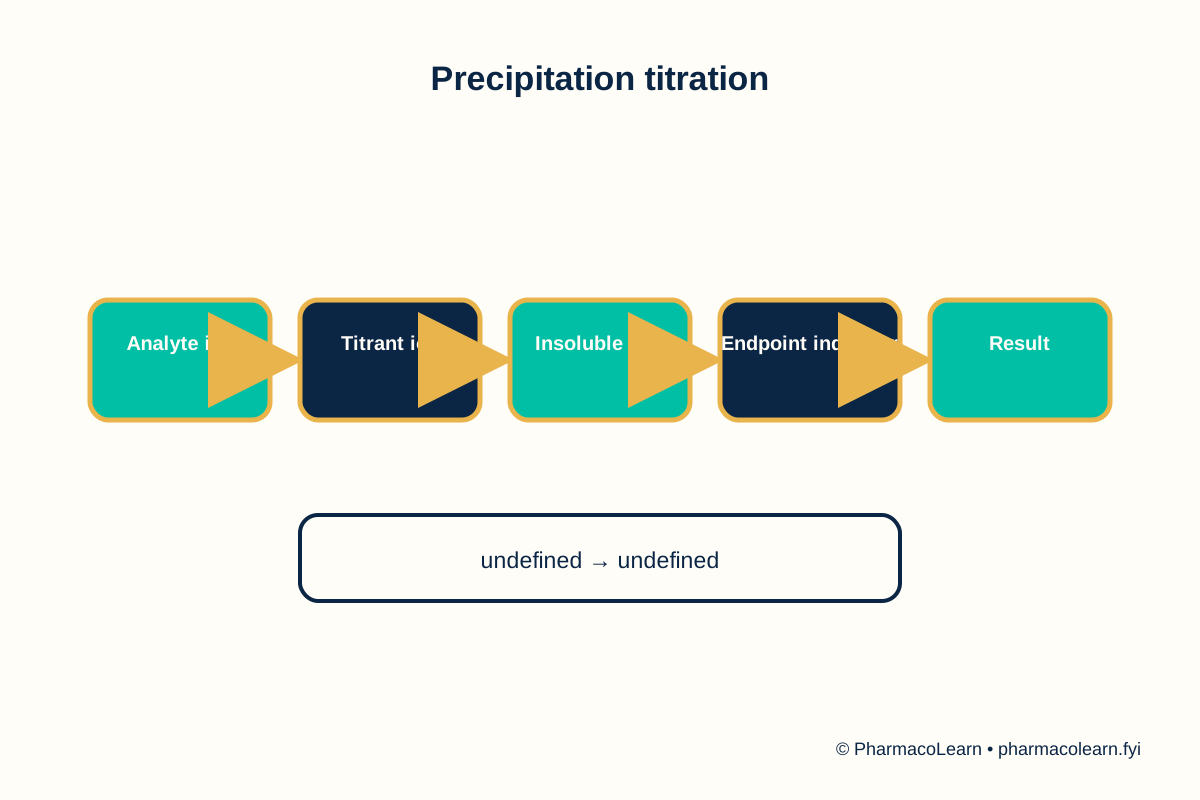
This unit covers sparingly soluble salts, Mohr, Volhard and Fajans methods, adsorption and solubility. Begin by identifying the analyte or pharmaceutical substance, its chemical state, the reaction or physical process involved, and the acceptance criterion. Then control the sample, reagent order, concentration, temperature, pH, contact time and endpoint. A balanced equation or defined comparison is required before calculation or interpretation. The mechanism is stepwise: prepare the system, allow the specified chemical interaction, observe the endpoint or measured property, correct for blanks or controls, and calculate or compare against the approved specification.
Pharmaceutical application
The same chemistry affects medicine quality, stability, compatibility and patient safety. A pharmacist should check route, dose, formulation grade, storage, interactions and patient factors. A false pass may release an ineffective or unsafe product. A false fail may waste a suitable batch. Current official monographs and local procedures control exact reagents, limits and regulatory decisions.
Worked example
For a one-to-one reaction, amount of analyte equals concentration of standard multiplied by volume used, after converting units and applying any dilution factor. If the reaction ratio differs, multiply by the balanced stoichiometric ratio. For a limit test, compare the test response with the identically prepared permitted standard rather than treating the visual signal as a full assay.
FAQs
- Why are controls important? They reveal reagent, instrument and procedural error.
- Why does pH matter? Ionization, complexation, precipitation and indicator response can all change.
- What is the main takeaway? Follow the validated method, document observations and never replace an official limit with a guess.
Takeaways
- Use the defined chemical principle, validated procedure, and approved specification for this unit.
- Document observations, calculations, controls, and any clarification before release or use.
Integrated practice note
The pharmacist connects inorganic chemistry with identity, purity, stability, compatibility, storage, labelling, and patient safety. Exact current monograph procedures, limits, and local regulatory decisions must be taken from the applicable official source rather than inferred.
References
PharmacoLearn, Pharm D Year 1 syllabus; Pharmacy Council of India, Pharm.D. Regulations 2008; Vogel's Textbook of Quantitative Chemical Analysis; Harris, Quantitative Chemical Analysis; Indian Pharmacopoeia, applicable current edition.
Unit 7: Complexometric titrations
Syllabus scope
This unit covers complexometric titrations and its application to pharmaceutical quality, formulation, safe supply, and patient care.
Core theory
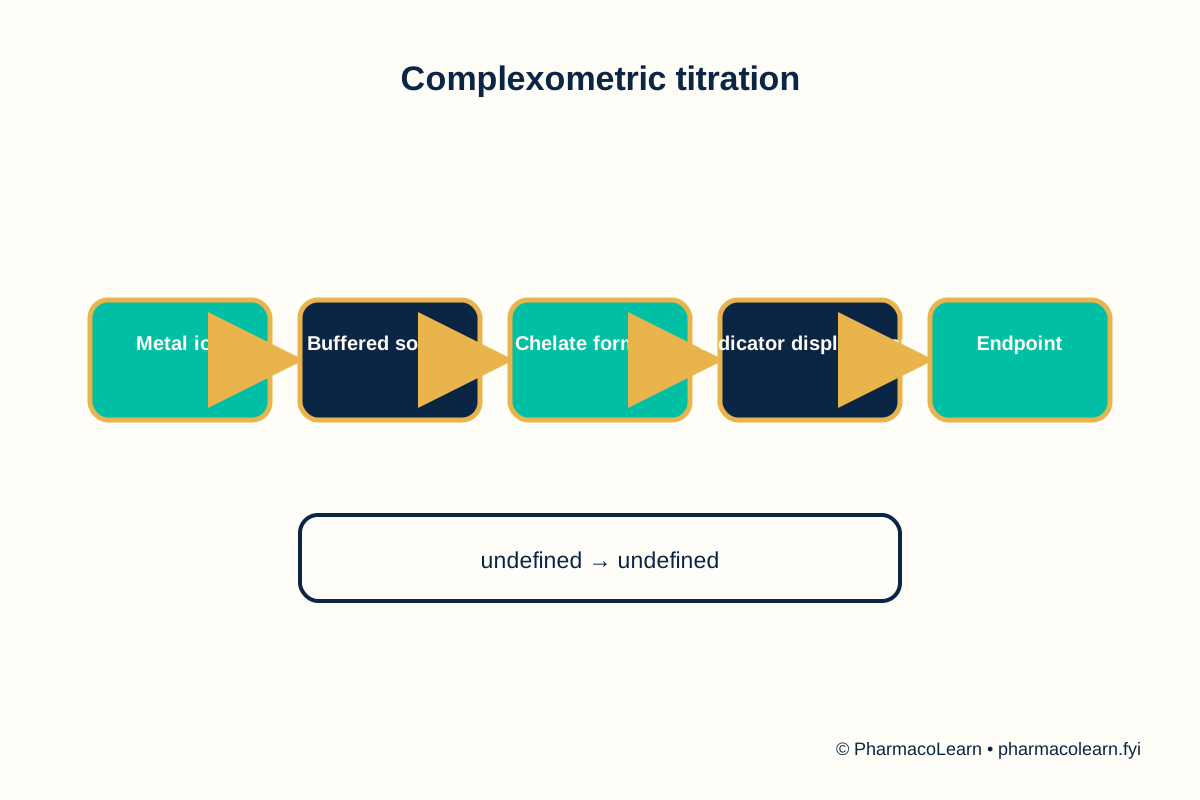
This unit covers metal chelation, EDTA, buffers, metallochromic indicators, conditional stability and masking. Begin by identifying the analyte or pharmaceutical substance, its chemical state, the reaction or physical process involved, and the acceptance criterion. Then control the sample, reagent order, concentration, temperature, pH, contact time and endpoint. A balanced equation or defined comparison is required before calculation or interpretation. The mechanism is stepwise: prepare the system, allow the specified chemical interaction, observe the endpoint or measured property, correct for blanks or controls, and calculate or compare against the approved specification.
Pharmaceutical application
The same chemistry affects medicine quality, stability, compatibility and patient safety. A pharmacist should check route, dose, formulation grade, storage, interactions and patient factors. A false pass may release an ineffective or unsafe product. A false fail may waste a suitable batch. Current official monographs and local procedures control exact reagents, limits and regulatory decisions.
Worked example
For a one-to-one reaction, amount of analyte equals concentration of standard multiplied by volume used, after converting units and applying any dilution factor. If the reaction ratio differs, multiply by the balanced stoichiometric ratio. For a limit test, compare the test response with the identically prepared permitted standard rather than treating the visual signal as a full assay.
FAQs
- Why are controls important? They reveal reagent, instrument and procedural error.
- Why does pH matter? Ionization, complexation, precipitation and indicator response can all change.
- What is the main takeaway? Follow the validated method, document observations and never replace an official limit with a guess.
Takeaways
- Use the defined chemical principle, validated procedure, and approved specification for this unit.
- Document observations, calculations, controls, and any clarification before release or use.
Integrated practice note
The pharmacist connects inorganic chemistry with identity, purity, stability, compatibility, storage, labelling, and patient safety. Exact current monograph procedures, limits, and local regulatory decisions must be taken from the applicable official source rather than inferred.
References
PharmacoLearn, Pharm D Year 1 syllabus; Pharmacy Council of India, Pharm.D. Regulations 2008; Vogel's Textbook of Quantitative Chemical Analysis; Harris, Quantitative Chemical Analysis; Indian Pharmacopoeia, applicable current edition.
Unit 8: Theory of indicators
Syllabus scope
This unit covers theory of indicators and its application to pharmaceutical quality, formulation, safe supply, and patient care.
Core theory
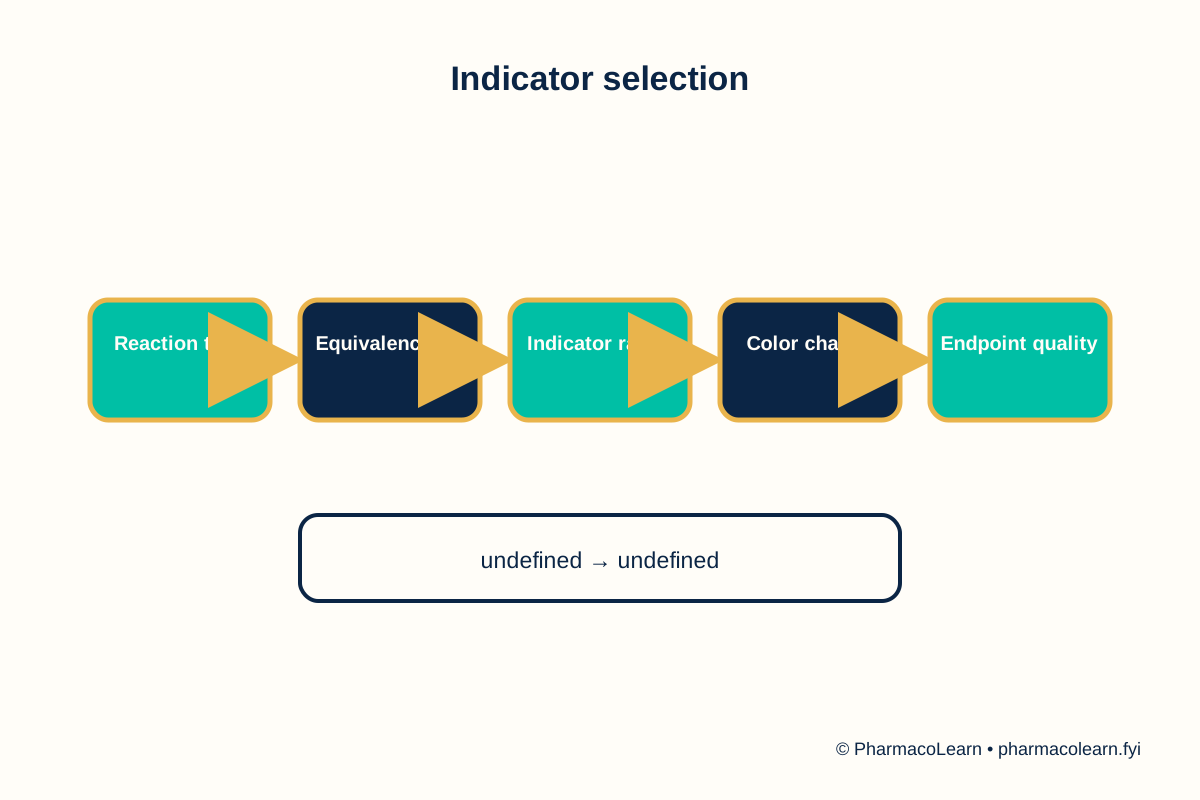
This unit covers acid base, redox, adsorption and metallochromic indicators, transition range and endpoint error. Begin by identifying the analyte or pharmaceutical substance, its chemical state, the reaction or physical process involved, and the acceptance criterion. Then control the sample, reagent order, concentration, temperature, pH, contact time and endpoint. A balanced equation or defined comparison is required before calculation or interpretation. The mechanism is stepwise: prepare the system, allow the specified chemical interaction, observe the endpoint or measured property, correct for blanks or controls, and calculate or compare against the approved specification.
Pharmaceutical application
The same chemistry affects medicine quality, stability, compatibility and patient safety. A pharmacist should check route, dose, formulation grade, storage, interactions and patient factors. A false pass may release an ineffective or unsafe product. A false fail may waste a suitable batch. Current official monographs and local procedures control exact reagents, limits and regulatory decisions.
Worked example
For a one-to-one reaction, amount of analyte equals concentration of standard multiplied by volume used, after converting units and applying any dilution factor. If the reaction ratio differs, multiply by the balanced stoichiometric ratio. For a limit test, compare the test response with the identically prepared permitted standard rather than treating the visual signal as a full assay.
FAQs
- Why are controls important? They reveal reagent, instrument and procedural error.
- Why does pH matter? Ionization, complexation, precipitation and indicator response can all change.
- What is the main takeaway? Follow the validated method, document observations and never replace an official limit with a guess.
Takeaways
- Use the defined chemical principle, validated procedure, and approved specification for this unit.
- Document observations, calculations, controls, and any clarification before release or use.
Integrated practice note
The pharmacist connects inorganic chemistry with identity, purity, stability, compatibility, storage, labelling, and patient safety. Exact current monograph procedures, limits, and local regulatory decisions must be taken from the applicable official source rather than inferred.
References
PharmacoLearn, Pharm D Year 1 syllabus; Pharmacy Council of India, Pharm.D. Regulations 2008; Vogel's Textbook of Quantitative Chemical Analysis; Harris, Quantitative Chemical Analysis; Indian Pharmacopoeia, applicable current edition.
Unit 9: Gravimetry
Syllabus scope
This unit covers gravimetry and its application to pharmaceutical quality, formulation, safe supply, and patient care.
Core theory
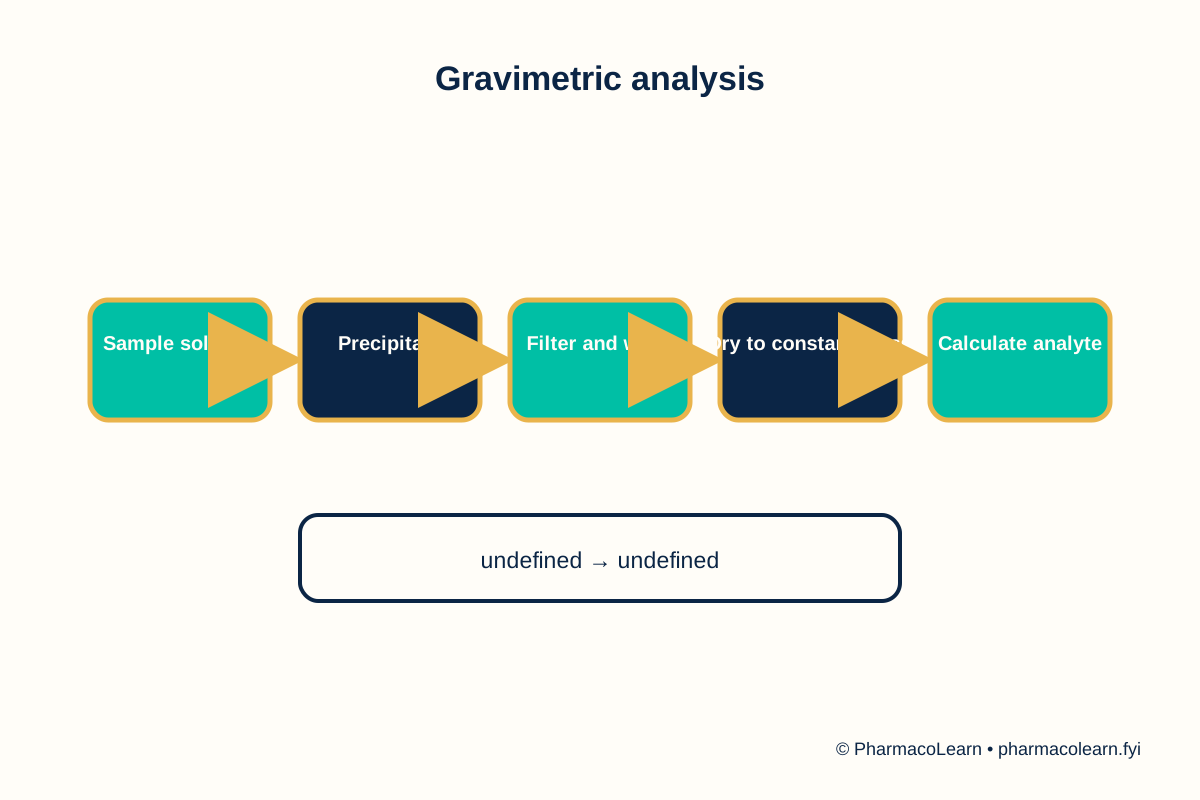
This unit covers precipitation, digestion, filtration, washing, drying, ignition, desiccation and constant mass. Begin by identifying the analyte or pharmaceutical substance, its chemical state, the reaction or physical process involved, and the acceptance criterion. Then control the sample, reagent order, concentration, temperature, pH, contact time and endpoint. A balanced equation or defined comparison is required before calculation or interpretation. The mechanism is stepwise: prepare the system, allow the specified chemical interaction, observe the endpoint or measured property, correct for blanks or controls, and calculate or compare against the approved specification.
Pharmaceutical application
The same chemistry affects medicine quality, stability, compatibility and patient safety. A pharmacist should check route, dose, formulation grade, storage, interactions and patient factors. A false pass may release an ineffective or unsafe product. A false fail may waste a suitable batch. Current official monographs and local procedures control exact reagents, limits and regulatory decisions.
Worked example
For a one-to-one reaction, amount of analyte equals concentration of standard multiplied by volume used, after converting units and applying any dilution factor. If the reaction ratio differs, multiply by the balanced stoichiometric ratio. For a limit test, compare the test response with the identically prepared permitted standard rather than treating the visual signal as a full assay.
FAQs
- Why are controls important? They reveal reagent, instrument and procedural error.
- Why does pH matter? Ionization, complexation, precipitation and indicator response can all change.
- What is the main takeaway? Follow the validated method, document observations and never replace an official limit with a guess.
Takeaways
- Use the defined chemical principle, validated procedure, and approved specification for this unit.
- Document observations, calculations, controls, and any clarification before release or use.
Integrated practice note
The pharmacist connects inorganic chemistry with identity, purity, stability, compatibility, storage, labelling, and patient safety. Exact current monograph procedures, limits, and local regulatory decisions must be taken from the applicable official source rather than inferred.
References
PharmacoLearn, Pharm D Year 1 syllabus; Pharmacy Council of India, Pharm.D. Regulations 2008; Vogel's Textbook of Quantitative Chemical Analysis; Harris, Quantitative Chemical Analysis; Indian Pharmacopoeia, applicable current edition.
Unit 10: Limit tests
Syllabus scope
This unit covers limit tests and its application to pharmaceutical quality, formulation, safe supply, and patient care.
Core theory
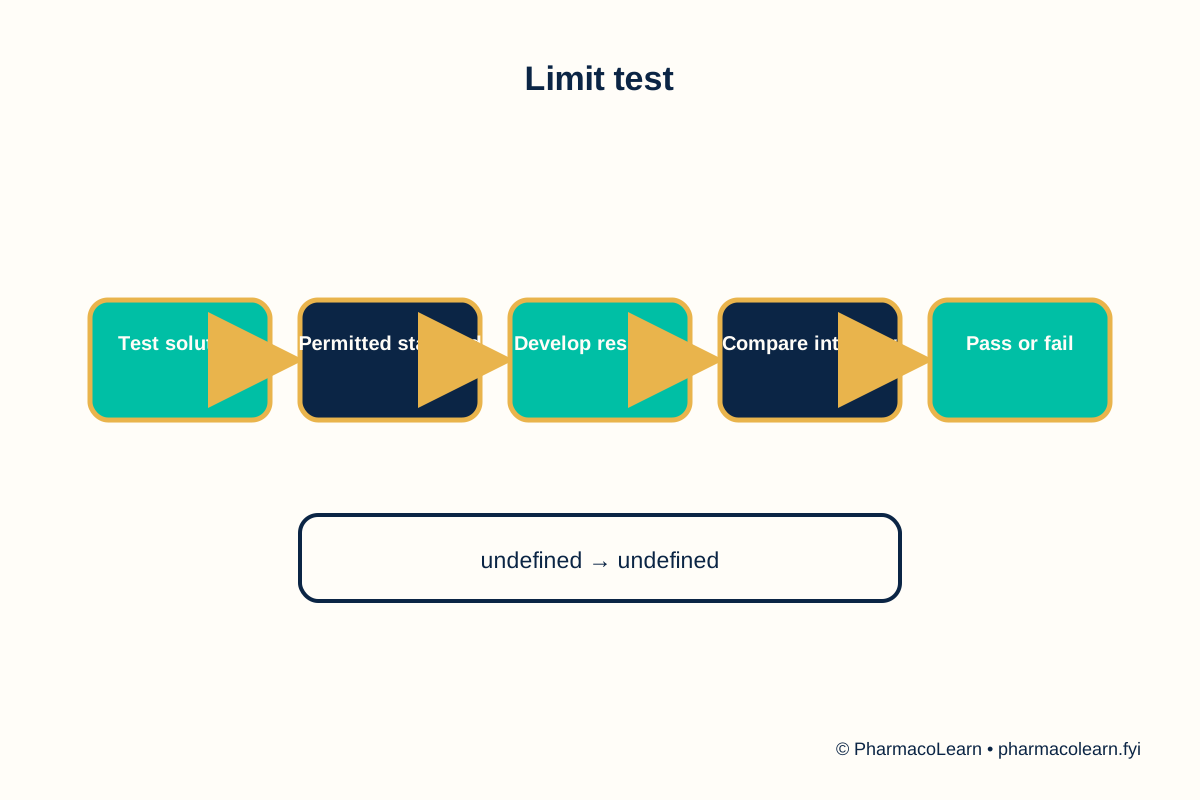
This unit covers comparison with a permitted standard for chloride, sulphate, iron, heavy metals and arsenic. Begin by identifying the analyte or pharmaceutical substance, its chemical state, the reaction or physical process involved, and the acceptance criterion. Then control the sample, reagent order, concentration, temperature, pH, contact time and endpoint. A balanced equation or defined comparison is required before calculation or interpretation. The mechanism is stepwise: prepare the system, allow the specified chemical interaction, observe the endpoint or measured property, correct for blanks or controls, and calculate or compare against the approved specification.
Pharmaceutical application
The same chemistry affects medicine quality, stability, compatibility and patient safety. A pharmacist should check route, dose, formulation grade, storage, interactions and patient factors. A false pass may release an ineffective or unsafe product. A false fail may waste a suitable batch. Current official monographs and local procedures control exact reagents, limits and regulatory decisions.
Worked example
For a one-to-one reaction, amount of analyte equals concentration of standard multiplied by volume used, after converting units and applying any dilution factor. If the reaction ratio differs, multiply by the balanced stoichiometric ratio. For a limit test, compare the test response with the identically prepared permitted standard rather than treating the visual signal as a full assay.
FAQs
- Why are controls important? They reveal reagent, instrument and procedural error.
- Why does pH matter? Ionization, complexation, precipitation and indicator response can all change.
- What is the main takeaway? Follow the validated method, document observations and never replace an official limit with a guess.
Takeaways
- Use the defined chemical principle, validated procedure, and approved specification for this unit.
- Document observations, calculations, controls, and any clarification before release or use.
Integrated practice note
The pharmacist connects inorganic chemistry with identity, purity, stability, compatibility, storage, labelling, and patient safety. Exact current monograph procedures, limits, and local regulatory decisions must be taken from the applicable official source rather than inferred.
References
PharmacoLearn, Pharm D Year 1 syllabus; Pharmacy Council of India, Pharm.D. Regulations 2008; Vogel's Textbook of Quantitative Chemical Analysis; Harris, Quantitative Chemical Analysis; Indian Pharmacopoeia, applicable current edition.
Unit 11: Medicinal gases
Syllabus scope
This unit covers medicinal gases and its application to pharmaceutical quality, formulation, safe supply, and patient care.
Core theory
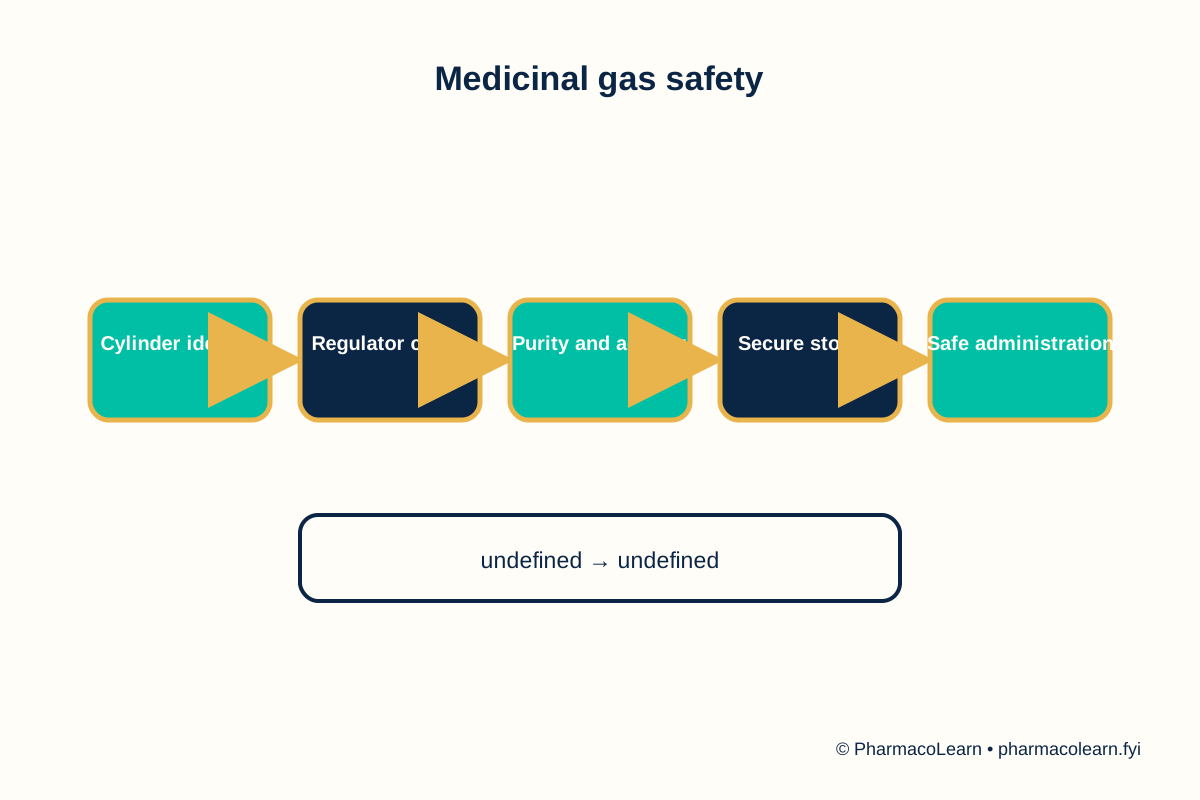
This unit covers identity, purity, cylinders, oxygen, nitrous oxide, carbon dioxide and safe handling. Begin by identifying the analyte or pharmaceutical substance, its chemical state, the reaction or physical process involved, and the acceptance criterion. Then control the sample, reagent order, concentration, temperature, pH, contact time and endpoint. A balanced equation or defined comparison is required before calculation or interpretation. The mechanism is stepwise: prepare the system, allow the specified chemical interaction, observe the endpoint or measured property, correct for blanks or controls, and calculate or compare against the approved specification.
Pharmaceutical application
The same chemistry affects medicine quality, stability, compatibility and patient safety. A pharmacist should check route, dose, formulation grade, storage, interactions and patient factors. A false pass may release an ineffective or unsafe product. A false fail may waste a suitable batch. Current official monographs and local procedures control exact reagents, limits and regulatory decisions.
Worked example
For a one-to-one reaction, amount of analyte equals concentration of standard multiplied by volume used, after converting units and applying any dilution factor. If the reaction ratio differs, multiply by the balanced stoichiometric ratio. For a limit test, compare the test response with the identically prepared permitted standard rather than treating the visual signal as a full assay.
FAQs
- Why are controls important? They reveal reagent, instrument and procedural error.
- Why does pH matter? Ionization, complexation, precipitation and indicator response can all change.
- What is the main takeaway? Follow the validated method, document observations and never replace an official limit with a guess.
Takeaways
- Use the defined chemical principle, validated procedure, and approved specification for this unit.
- Document observations, calculations, controls, and any clarification before release or use.
Integrated practice note
The pharmacist connects inorganic chemistry with identity, purity, stability, compatibility, storage, labelling, and patient safety. Exact current monograph procedures, limits, and local regulatory decisions must be taken from the applicable official source rather than inferred.
References
PharmacoLearn, Pharm D Year 1 syllabus; Pharmacy Council of India, Pharm.D. Regulations 2008; Vogel's Textbook of Quantitative Chemical Analysis; Harris, Quantitative Chemical Analysis; Indian Pharmacopoeia, applicable current edition.
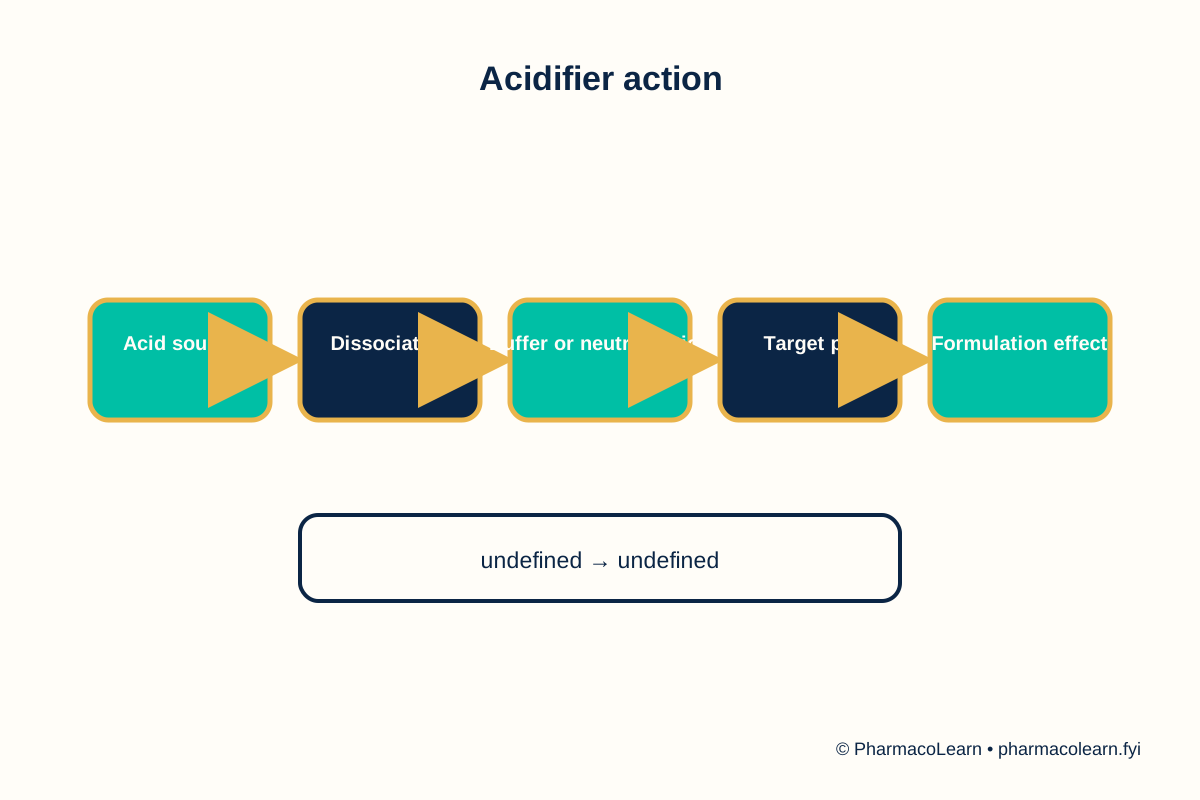
Unit 12: Acidifiers
Syllabus scope
This unit covers acidifiers and its application to pharmaceutical quality, formulation, safe supply, and patient care.
Core theory
This unit covers acid dissociation, neutralization, formulation pH, buffers, compatibility and systemic or gastric action. Begin by identifying the analyte or pharmaceutical substance, its chemical state, the reaction or physical process involved, and the acceptance criterion. Then control the sample, reagent order, concentration, temperature, pH, contact time and endpoint. A balanced equation or defined comparison is required before calculation or interpretation. The mechanism is stepwise: prepare the system, allow the specified chemical interaction, observe the endpoint or measured property, correct for blanks or controls, and calculate or compare against the approved specification.
Pharmaceutical application
The same chemistry affects medicine quality, stability, compatibility and patient safety. A pharmacist should check route, dose, formulation grade, storage, interactions and patient factors. A false pass may release an ineffective or unsafe product. A false fail may waste a suitable batch. Current official monographs and local procedures control exact reagents, limits and regulatory decisions.
Worked example
For a one-to-one reaction, amount of analyte equals concentration of standard multiplied by volume used, after converting units and applying any dilution factor. If the reaction ratio differs, multiply by the balanced stoichiometric ratio. For a limit test, compare the test response with the identically prepared permitted standard rather than treating the visual signal as a full assay.
FAQs
- Why are controls important? They reveal reagent, instrument and procedural error.
- Why does pH matter? Ionization, complexation, precipitation and indicator response can all change.
- What is the main takeaway? Follow the validated method, document observations and never replace an official limit with a guess.
Takeaways
- Use the defined chemical principle, validated procedure, and approved specification for this unit.
- Document observations, calculations, controls, and any clarification before release or use.
Integrated practice note
The pharmacist connects inorganic chemistry with identity, purity, stability, compatibility, storage, labelling, and patient safety. Exact current monograph procedures, limits, and local regulatory decisions must be taken from the applicable official source rather than inferred.
References
PharmacoLearn, Pharm D Year 1 syllabus; Pharmacy Council of India, Pharm.D. Regulations 2008; Vogel's Textbook of Quantitative Chemical Analysis; Harris, Quantitative Chemical Analysis; Indian Pharmacopoeia, applicable current edition.
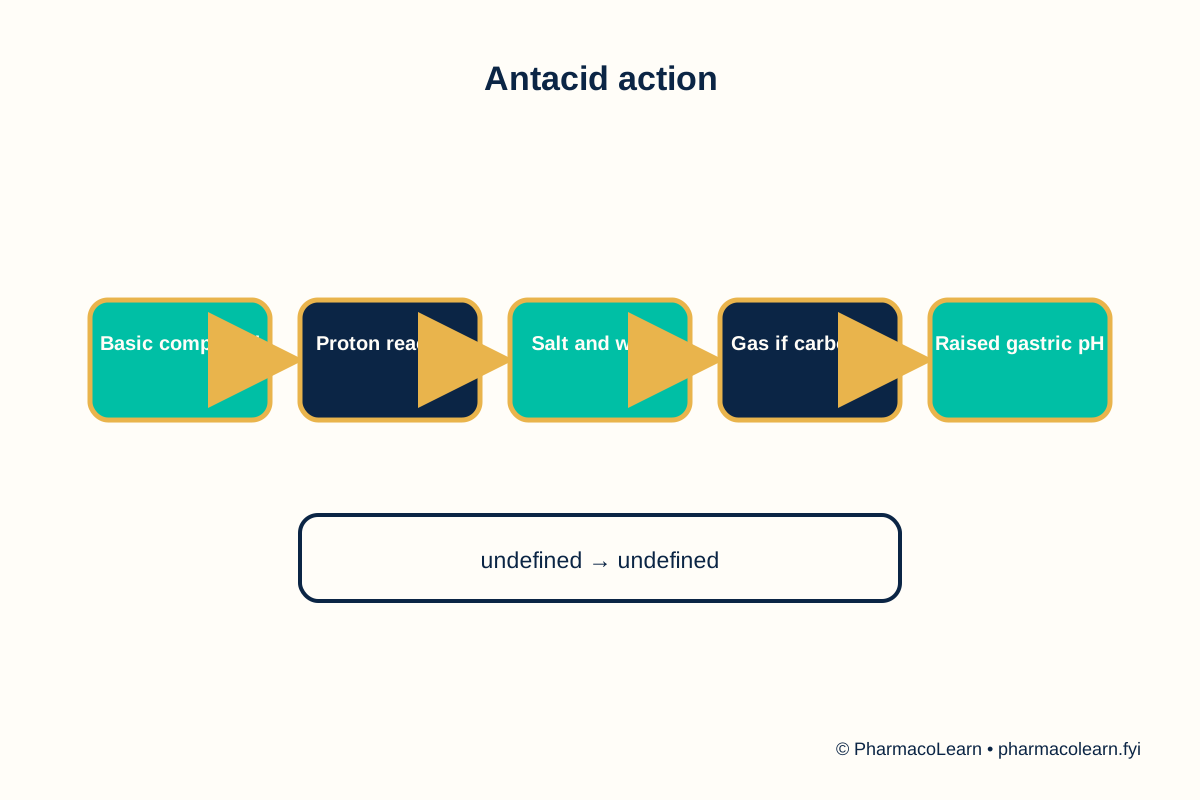
Unit 13: Antacids
Syllabus scope
This unit covers antacids and its application to pharmaceutical quality, formulation, safe supply, and patient care.
Core theory
This unit covers proton neutralization, carbonate gas release, neutralizing capacity, interactions and patient selection. Begin by identifying the analyte or pharmaceutical substance, its chemical state, the reaction or physical process involved, and the acceptance criterion. Then control the sample, reagent order, concentration, temperature, pH, contact time and endpoint. A balanced equation or defined comparison is required before calculation or interpretation. The mechanism is stepwise: prepare the system, allow the specified chemical interaction, observe the endpoint or measured property, correct for blanks or controls, and calculate or compare against the approved specification.
Pharmaceutical application
The same chemistry affects medicine quality, stability, compatibility and patient safety. A pharmacist should check route, dose, formulation grade, storage, interactions and patient factors. A false pass may release an ineffective or unsafe product. A false fail may waste a suitable batch. Current official monographs and local procedures control exact reagents, limits and regulatory decisions.
Worked example
For a one-to-one reaction, amount of analyte equals concentration of standard multiplied by volume used, after converting units and applying any dilution factor. If the reaction ratio differs, multiply by the balanced stoichiometric ratio. For a limit test, compare the test response with the identically prepared permitted standard rather than treating the visual signal as a full assay.
FAQs
- Why are controls important? They reveal reagent, instrument and procedural error.
- Why does pH matter? Ionization, complexation, precipitation and indicator response can all change.
- What is the main takeaway? Follow the validated method, document observations and never replace an official limit with a guess.
Takeaways
- Use the defined chemical principle, validated procedure, and approved specification for this unit.
- Document observations, calculations, controls, and any clarification before release or use.
Integrated practice note
The pharmacist connects inorganic chemistry with identity, purity, stability, compatibility, storage, labelling, and patient safety. Exact current monograph procedures, limits, and local regulatory decisions must be taken from the applicable official source rather than inferred.
References
PharmacoLearn, Pharm D Year 1 syllabus; Pharmacy Council of India, Pharm.D. Regulations 2008; Vogel's Textbook of Quantitative Chemical Analysis; Harris, Quantitative Chemical Analysis; Indian Pharmacopoeia, applicable current edition.
Unit 14: Cathartics
Syllabus scope
This unit covers cathartics and its application to pharmaceutical quality, formulation, safe supply, and patient care.
Core theory
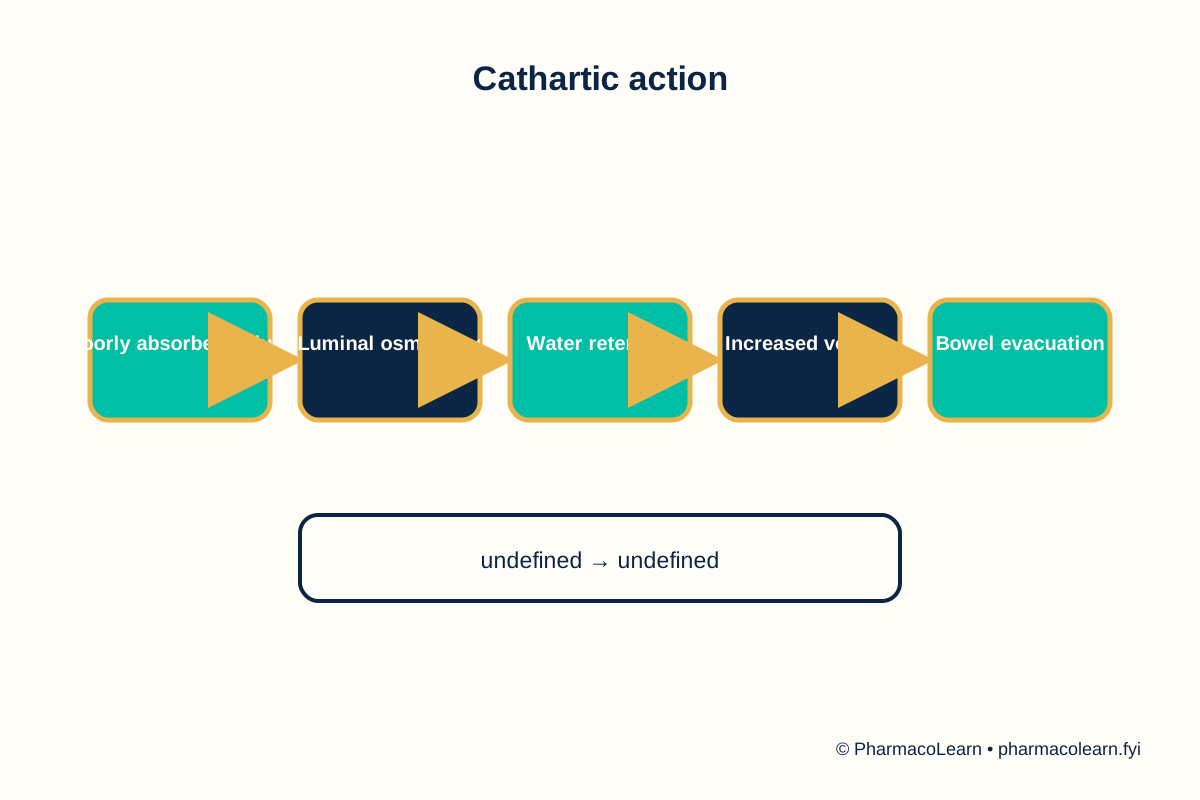
This unit covers osmotic water retention, bowel propulsion, electrolyte loss, hydration and renal or cardiac risk. Begin by identifying the analyte or pharmaceutical substance, its chemical state, the reaction or physical process involved, and the acceptance criterion. Then control the sample, reagent order, concentration, temperature, pH, contact time and endpoint. A balanced equation or defined comparison is required before calculation or interpretation. The mechanism is stepwise: prepare the system, allow the specified chemical interaction, observe the endpoint or measured property, correct for blanks or controls, and calculate or compare against the approved specification.
Pharmaceutical application
The same chemistry affects medicine quality, stability, compatibility and patient safety. A pharmacist should check route, dose, formulation grade, storage, interactions and patient factors. A false pass may release an ineffective or unsafe product. A false fail may waste a suitable batch. Current official monographs and local procedures control exact reagents, limits and regulatory decisions.
Worked example
For a one-to-one reaction, amount of analyte equals concentration of standard multiplied by volume used, after converting units and applying any dilution factor. If the reaction ratio differs, multiply by the balanced stoichiometric ratio. For a limit test, compare the test response with the identically prepared permitted standard rather than treating the visual signal as a full assay.
FAQs
- Why are controls important? They reveal reagent, instrument and procedural error.
- Why does pH matter? Ionization, complexation, precipitation and indicator response can all change.
- What is the main takeaway? Follow the validated method, document observations and never replace an official limit with a guess.
Takeaways
- Use the defined chemical principle, validated procedure, and approved specification for this unit.
- Document observations, calculations, controls, and any clarification before release or use.
Integrated practice note
The pharmacist connects inorganic chemistry with identity, purity, stability, compatibility, storage, labelling, and patient safety. Exact current monograph procedures, limits, and local regulatory decisions must be taken from the applicable official source rather than inferred.
References
PharmacoLearn, Pharm D Year 1 syllabus; Pharmacy Council of India, Pharm.D. Regulations 2008; Vogel's Textbook of Quantitative Chemical Analysis; Harris, Quantitative Chemical Analysis; Indian Pharmacopoeia, applicable current edition.
Unit 15: Electrolyte replenishers
Syllabus scope
This unit covers electrolyte replenishers and its application to pharmaceutical quality, formulation, safe supply, and patient care.
Core theory
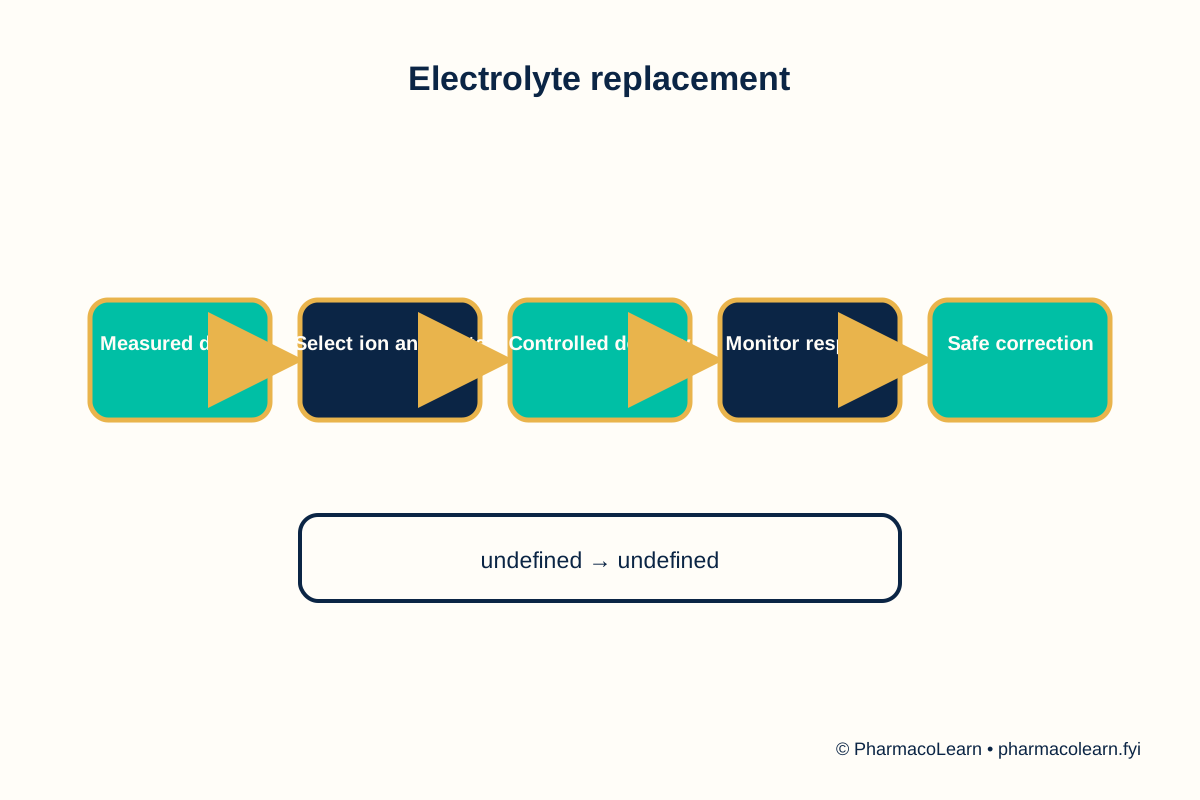
This unit covers sodium, potassium, calcium and chloride replacement, osmotic effects, routes and monitoring. Begin by identifying the analyte or pharmaceutical substance, its chemical state, the reaction or physical process involved, and the acceptance criterion. Then control the sample, reagent order, concentration, temperature, pH, contact time and endpoint. A balanced equation or defined comparison is required before calculation or interpretation. The mechanism is stepwise: prepare the system, allow the specified chemical interaction, observe the endpoint or measured property, correct for blanks or controls, and calculate or compare against the approved specification.
Pharmaceutical application
The same chemistry affects medicine quality, stability, compatibility and patient safety. A pharmacist should check route, dose, formulation grade, storage, interactions and patient factors. A false pass may release an ineffective or unsafe product. A false fail may waste a suitable batch. Current official monographs and local procedures control exact reagents, limits and regulatory decisions.
Worked example
For a one-to-one reaction, amount of analyte equals concentration of standard multiplied by volume used, after converting units and applying any dilution factor. If the reaction ratio differs, multiply by the balanced stoichiometric ratio. For a limit test, compare the test response with the identically prepared permitted standard rather than treating the visual signal as a full assay.
FAQs
- Why are controls important? They reveal reagent, instrument and procedural error.
- Why does pH matter? Ionization, complexation, precipitation and indicator response can all change.
- What is the main takeaway? Follow the validated method, document observations and never replace an official limit with a guess.
Takeaways
- Use the defined chemical principle, validated procedure, and approved specification for this unit.
- Document observations, calculations, controls, and any clarification before release or use.
Integrated practice note
The pharmacist connects inorganic chemistry with identity, purity, stability, compatibility, storage, labelling, and patient safety. Exact current monograph procedures, limits, and local regulatory decisions must be taken from the applicable official source rather than inferred.
References
PharmacoLearn, Pharm D Year 1 syllabus; Pharmacy Council of India, Pharm.D. Regulations 2008; Vogel's Textbook of Quantitative Chemical Analysis; Harris, Quantitative Chemical Analysis; Indian Pharmacopoeia, applicable current edition.
Unit 16: Essential trace elements
Syllabus scope
This unit covers essential trace elements and its application to pharmaceutical quality, formulation, safe supply, and patient care.
Core theory
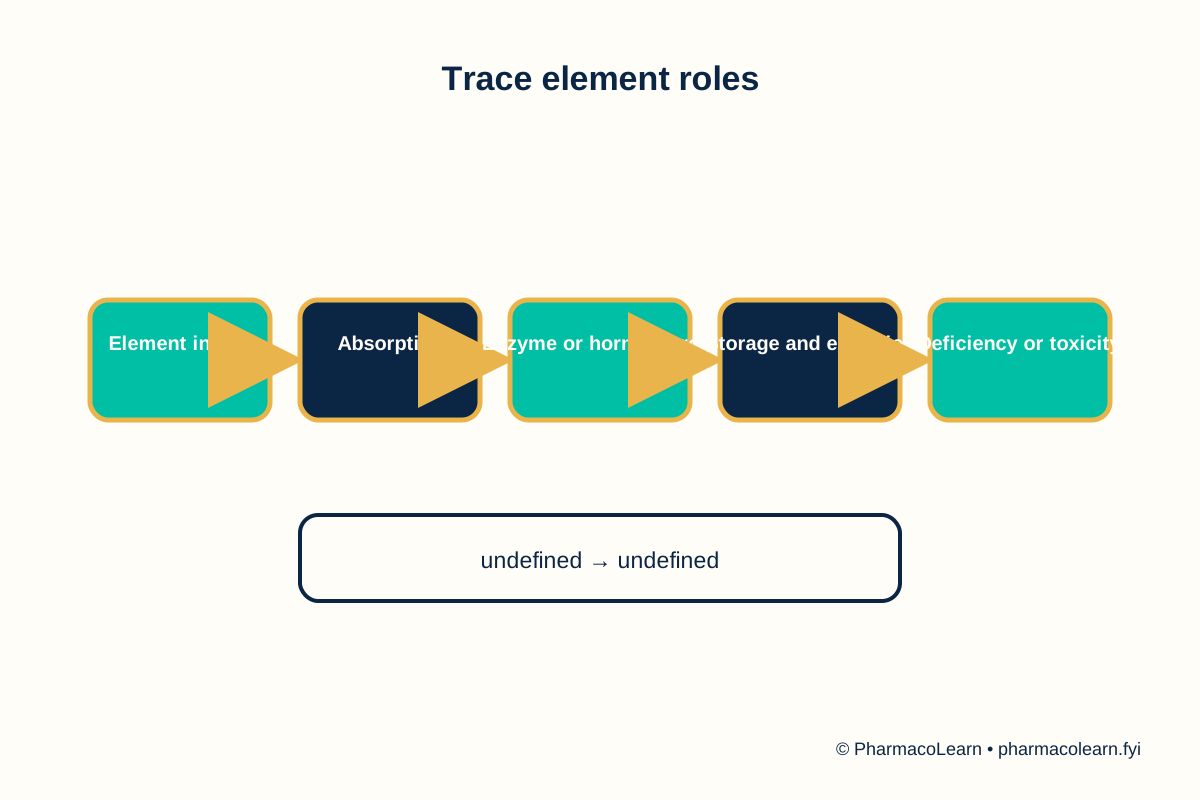
This unit covers iron, zinc, copper and iodine roles, deficiency, interactions, narrow safety margins. Begin by identifying the analyte or pharmaceutical substance, its chemical state, the reaction or physical process involved, and the acceptance criterion. Then control the sample, reagent order, concentration, temperature, pH, contact time and endpoint. A balanced equation or defined comparison is required before calculation or interpretation. The mechanism is stepwise: prepare the system, allow the specified chemical interaction, observe the endpoint or measured property, correct for blanks or controls, and calculate or compare against the approved specification.
Pharmaceutical application
The same chemistry affects medicine quality, stability, compatibility and patient safety. A pharmacist should check route, dose, formulation grade, storage, interactions and patient factors. A false pass may release an ineffective or unsafe product. A false fail may waste a suitable batch. Current official monographs and local procedures control exact reagents, limits and regulatory decisions.
Worked example
For a one-to-one reaction, amount of analyte equals concentration of standard multiplied by volume used, after converting units and applying any dilution factor. If the reaction ratio differs, multiply by the balanced stoichiometric ratio. For a limit test, compare the test response with the identically prepared permitted standard rather than treating the visual signal as a full assay.
FAQs
- Why are controls important? They reveal reagent, instrument and procedural error.
- Why does pH matter? Ionization, complexation, precipitation and indicator response can all change.
- What is the main takeaway? Follow the validated method, document observations and never replace an official limit with a guess.
Takeaways
- Use the defined chemical principle, validated procedure, and approved specification for this unit.
- Document observations, calculations, controls, and any clarification before release or use.
Integrated practice note
The pharmacist connects inorganic chemistry with identity, purity, stability, compatibility, storage, labelling, and patient safety. Exact current monograph procedures, limits, and local regulatory decisions must be taken from the applicable official source rather than inferred.
References
PharmacoLearn, Pharm D Year 1 syllabus; Pharmacy Council of India, Pharm.D. Regulations 2008; Vogel's Textbook of Quantitative Chemical Analysis; Harris, Quantitative Chemical Analysis; Indian Pharmacopoeia, applicable current edition.
Unit 17: Antimicrobials
Syllabus scope
This unit covers antimicrobials and its application to pharmaceutical quality, formulation, safe supply, and patient care.
Core theory
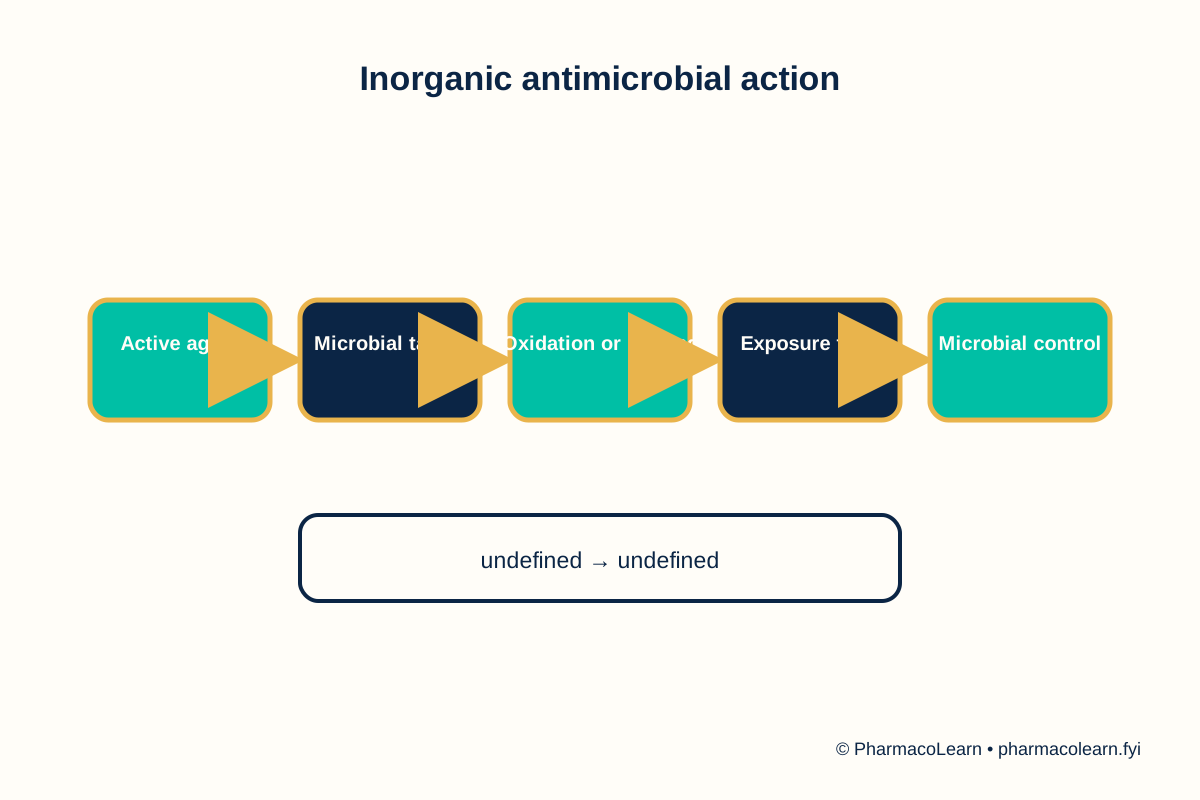
This unit covers oxidation, membrane damage, protein binding, contact time, organic load and tissue safety. Begin by identifying the analyte or pharmaceutical substance, its chemical state, the reaction or physical process involved, and the acceptance criterion. Then control the sample, reagent order, concentration, temperature, pH, contact time and endpoint. A balanced equation or defined comparison is required before calculation or interpretation. The mechanism is stepwise: prepare the system, allow the specified chemical interaction, observe the endpoint or measured property, correct for blanks or controls, and calculate or compare against the approved specification.
Pharmaceutical application
The same chemistry affects medicine quality, stability, compatibility and patient safety. A pharmacist should check route, dose, formulation grade, storage, interactions and patient factors. A false pass may release an ineffective or unsafe product. A false fail may waste a suitable batch. Current official monographs and local procedures control exact reagents, limits and regulatory decisions.
Worked example
For a one-to-one reaction, amount of analyte equals concentration of standard multiplied by volume used, after converting units and applying any dilution factor. If the reaction ratio differs, multiply by the balanced stoichiometric ratio. For a limit test, compare the test response with the identically prepared permitted standard rather than treating the visual signal as a full assay.
FAQs
- Why are controls important? They reveal reagent, instrument and procedural error.
- Why does pH matter? Ionization, complexation, precipitation and indicator response can all change.
- What is the main takeaway? Follow the validated method, document observations and never replace an official limit with a guess.
Takeaways
- Use the defined chemical principle, validated procedure, and approved specification for this unit.
- Document observations, calculations, controls, and any clarification before release or use.
Integrated practice note
The pharmacist connects inorganic chemistry with identity, purity, stability, compatibility, storage, labelling, and patient safety. Exact current monograph procedures, limits, and local regulatory decisions must be taken from the applicable official source rather than inferred.
References
PharmacoLearn, Pharm D Year 1 syllabus; Pharmacy Council of India, Pharm.D. Regulations 2008; Vogel's Textbook of Quantitative Chemical Analysis; Harris, Quantitative Chemical Analysis; Indian Pharmacopoeia, applicable current edition.
Unit 18: Pharmaceutical aids
Syllabus scope
This unit covers pharmaceutical aids and its application to pharmaceutical quality, formulation, safe supply, and patient care.
Core theory
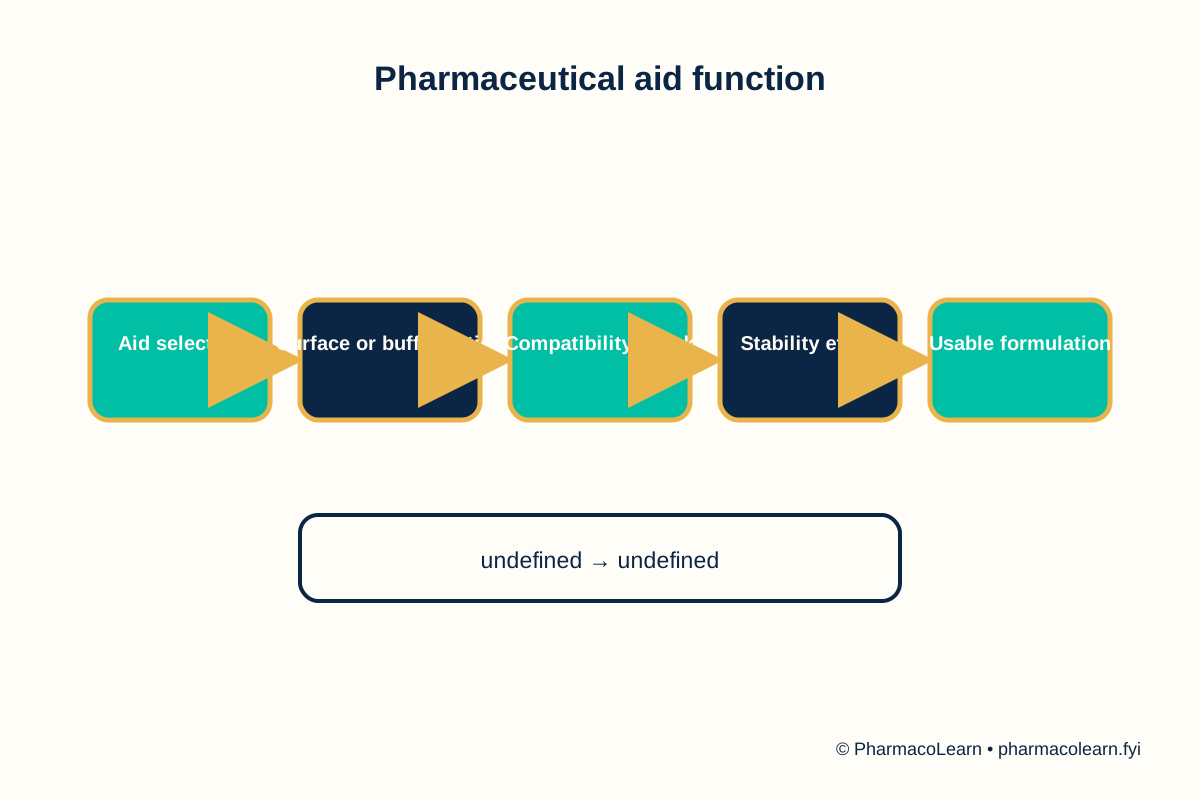
This unit covers adsorbents, buffers, desiccants, suspending materials, surface chemistry and compatibility. Begin by identifying the analyte or pharmaceutical substance, its chemical state, the reaction or physical process involved, and the acceptance criterion. Then control the sample, reagent order, concentration, temperature, pH, contact time and endpoint. A balanced equation or defined comparison is required before calculation or interpretation. The mechanism is stepwise: prepare the system, allow the specified chemical interaction, observe the endpoint or measured property, correct for blanks or controls, and calculate or compare against the approved specification.
Pharmaceutical application
The same chemistry affects medicine quality, stability, compatibility and patient safety. A pharmacist should check route, dose, formulation grade, storage, interactions and patient factors. A false pass may release an ineffective or unsafe product. A false fail may waste a suitable batch. Current official monographs and local procedures control exact reagents, limits and regulatory decisions.
Worked example
For a one-to-one reaction, amount of analyte equals concentration of standard multiplied by volume used, after converting units and applying any dilution factor. If the reaction ratio differs, multiply by the balanced stoichiometric ratio. For a limit test, compare the test response with the identically prepared permitted standard rather than treating the visual signal as a full assay.
FAQs
- Why are controls important? They reveal reagent, instrument and procedural error.
- Why does pH matter? Ionization, complexation, precipitation and indicator response can all change.
- What is the main takeaway? Follow the validated method, document observations and never replace an official limit with a guess.
Takeaways
- Use the defined chemical principle, validated procedure, and approved specification for this unit.
- Document observations, calculations, controls, and any clarification before release or use.
Integrated practice note
The pharmacist connects inorganic chemistry with identity, purity, stability, compatibility, storage, labelling, and patient safety. Exact current monograph procedures, limits, and local regulatory decisions must be taken from the applicable official source rather than inferred.
References
PharmacoLearn, Pharm D Year 1 syllabus; Pharmacy Council of India, Pharm.D. Regulations 2008; Vogel's Textbook of Quantitative Chemical Analysis; Harris, Quantitative Chemical Analysis; Indian Pharmacopoeia, applicable current edition.
Unit 19: Dental products
Syllabus scope
This unit covers dental products and its application to pharmaceutical quality, formulation, safe supply, and patient care.
Core theory
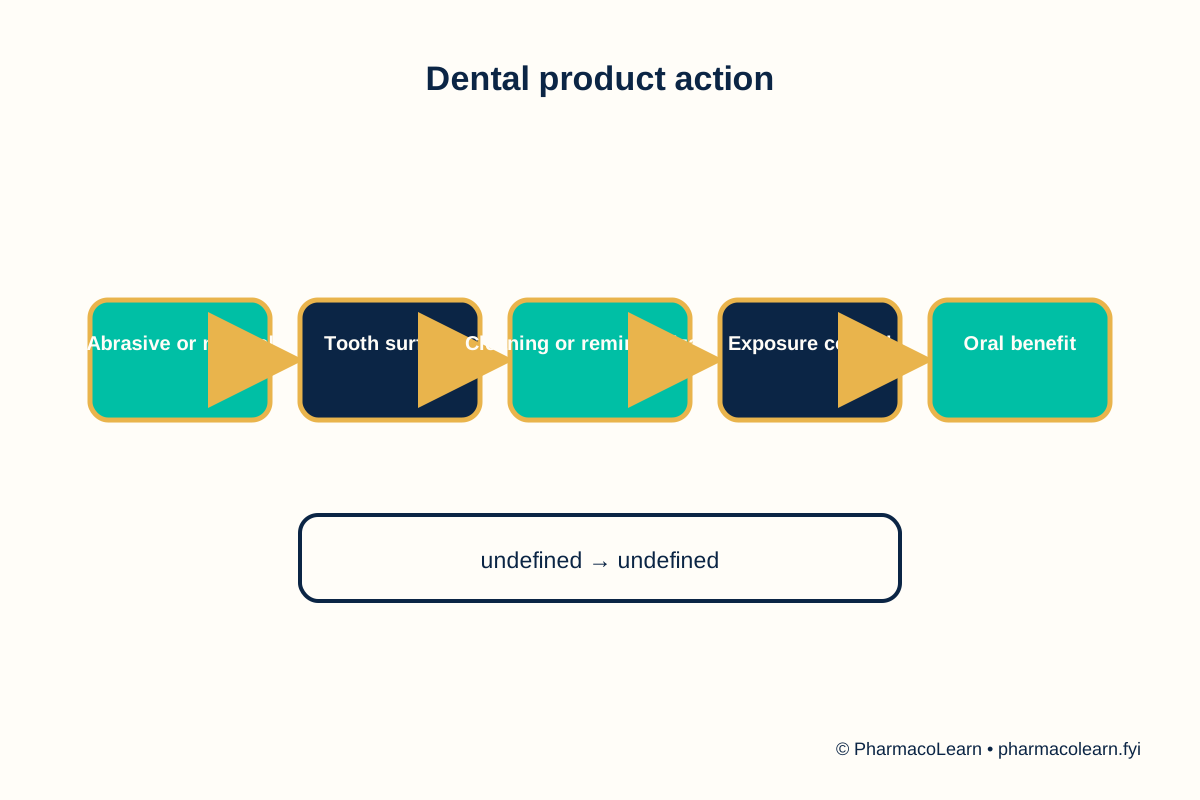
This unit covers abrasives, fluoride, calcium phosphate, polishing, enamel protection and safe exposure. Begin by identifying the analyte or pharmaceutical substance, its chemical state, the reaction or physical process involved, and the acceptance criterion. Then control the sample, reagent order, concentration, temperature, pH, contact time and endpoint. A balanced equation or defined comparison is required before calculation or interpretation. The mechanism is stepwise: prepare the system, allow the specified chemical interaction, observe the endpoint or measured property, correct for blanks or controls, and calculate or compare against the approved specification.
Pharmaceutical application
The same chemistry affects medicine quality, stability, compatibility and patient safety. A pharmacist should check route, dose, formulation grade, storage, interactions and patient factors. A false pass may release an ineffective or unsafe product. A false fail may waste a suitable batch. Current official monographs and local procedures control exact reagents, limits and regulatory decisions.
Worked example
For a one-to-one reaction, amount of analyte equals concentration of standard multiplied by volume used, after converting units and applying any dilution factor. If the reaction ratio differs, multiply by the balanced stoichiometric ratio. For a limit test, compare the test response with the identically prepared permitted standard rather than treating the visual signal as a full assay.
FAQs
- Why are controls important? They reveal reagent, instrument and procedural error.
- Why does pH matter? Ionization, complexation, precipitation and indicator response can all change.
- What is the main takeaway? Follow the validated method, document observations and never replace an official limit with a guess.
Takeaways
- Use the defined chemical principle, validated procedure, and approved specification for this unit.
- Document observations, calculations, controls, and any clarification before release or use.
Integrated practice note
The pharmacist connects inorganic chemistry with identity, purity, stability, compatibility, storage, labelling, and patient safety. Exact current monograph procedures, limits, and local regulatory decisions must be taken from the applicable official source rather than inferred.
References
PharmacoLearn, Pharm D Year 1 syllabus; Pharmacy Council of India, Pharm.D. Regulations 2008; Vogel's Textbook of Quantitative Chemical Analysis; Harris, Quantitative Chemical Analysis; Indian Pharmacopoeia, applicable current edition.
Unit 20: Miscellaneous compounds
Syllabus scope
This unit covers miscellaneous compounds and its application to pharmaceutical quality, formulation, safe supply, and patient care.
Core theory
This unit covers monograph-based identity, purity, assay, solubility, acid base behavior and incompatibility. Begin by identifying the analyte or pharmaceutical substance, its chemical state, the reaction or physical process involved, and the acceptance criterion. Then control the sample, reagent order, concentration, temperature, pH, contact time and endpoint. A balanced equation or defined comparison is required before calculation or interpretation. The mechanism is stepwise: prepare the system, allow the specified chemical interaction, observe the endpoint or measured property, correct for blanks or controls, and calculate or compare against the approved specification.
Pharmaceutical application
The same chemistry affects medicine quality, stability, compatibility and patient safety. A pharmacist should check route, dose, formulation grade, storage, interactions and patient factors. A false pass may release an ineffective or unsafe product. A false fail may waste a suitable batch. Current official monographs and local procedures control exact reagents, limits and regulatory decisions.
Worked example
For a one-to-one reaction, amount of analyte equals concentration of standard multiplied by volume used, after converting units and applying any dilution factor. If the reaction ratio differs, multiply by the balanced stoichiometric ratio. For a limit test, compare the test response with the identically prepared permitted standard rather than treating the visual signal as a full assay.
FAQs
- Why are controls important? They reveal reagent, instrument and procedural error.
- Why does pH matter? Ionization, complexation, precipitation and indicator response can all change.
- What is the main takeaway? Follow the validated method, document observations and never replace an official limit with a guess.
Takeaways
- Use the defined chemical principle, validated procedure, and approved specification for this unit.
- Document observations, calculations, controls, and any clarification before release or use.
Integrated practice note
The pharmacist connects inorganic chemistry with identity, purity, stability, compatibility, storage, labelling, and patient safety. Exact current monograph procedures, limits, and local regulatory decisions must be taken from the applicable official source rather than inferred.
References
PharmacoLearn, Pharm D Year 1 syllabus; Pharmacy Council of India, Pharm.D. Regulations 2008; Vogel's Textbook of Quantitative Chemical Analysis; Harris, Quantitative Chemical Analysis; Indian Pharmacopoeia, applicable current edition.
Unit 21: Radio Pharmaceuticals
Syllabus scope
This unit covers radio pharmaceuticals and its application to pharmaceutical quality, formulation, safe supply, and patient care.
Core theory
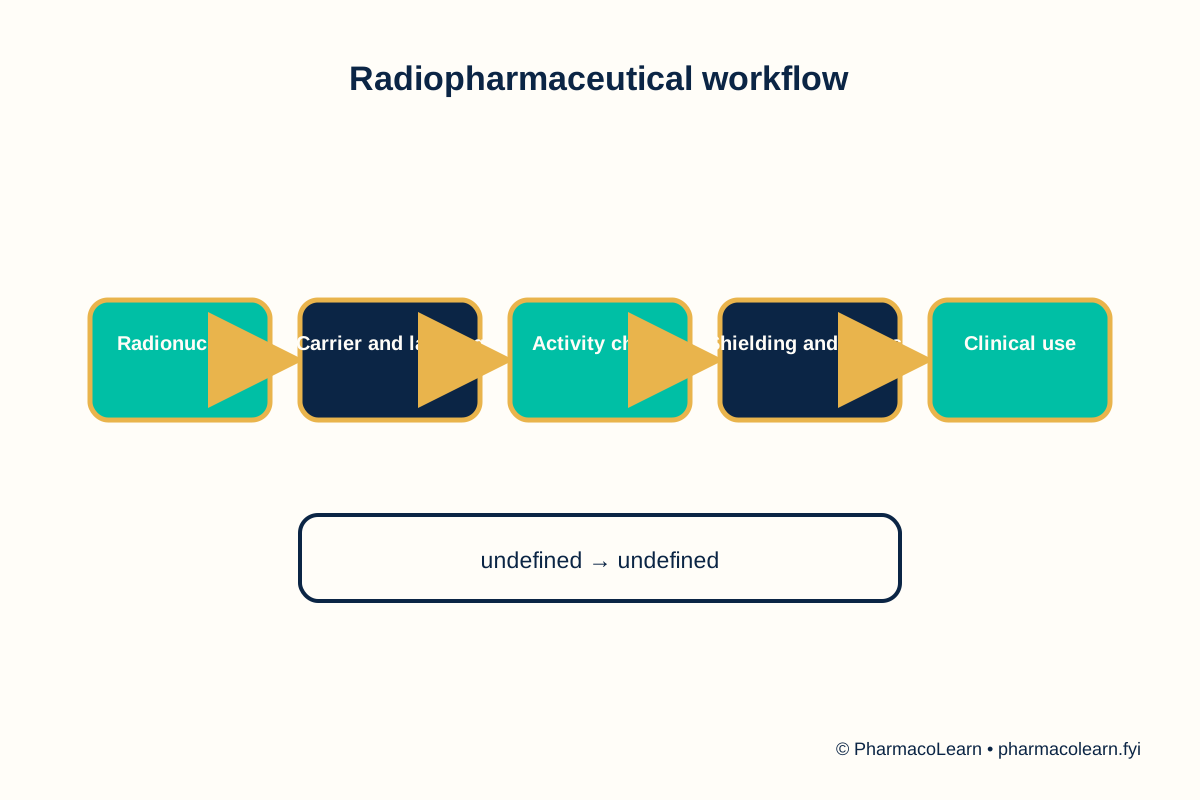
This unit covers radionuclide, physical and biological half-life, activity, radiochemical purity, shielding and disposal. Begin by identifying the analyte or pharmaceutical substance, its chemical state, the reaction or physical process involved, and the acceptance criterion. Then control the sample, reagent order, concentration, temperature, pH, contact time and endpoint. A balanced equation or defined comparison is required before calculation or interpretation. The mechanism is stepwise: prepare the system, allow the specified chemical interaction, observe the endpoint or measured property, correct for blanks or controls, and calculate or compare against the approved specification.
Pharmaceutical application
The same chemistry affects medicine quality, stability, compatibility and patient safety. A pharmacist should check route, dose, formulation grade, storage, interactions and patient factors. A false pass may release an ineffective or unsafe product. A false fail may waste a suitable batch. Current official monographs and local procedures control exact reagents, limits and regulatory decisions.
Worked example
For a one-to-one reaction, amount of analyte equals concentration of standard multiplied by volume used, after converting units and applying any dilution factor. If the reaction ratio differs, multiply by the balanced stoichiometric ratio. For a limit test, compare the test response with the identically prepared permitted standard rather than treating the visual signal as a full assay.
FAQs
- Why are controls important? They reveal reagent, instrument and procedural error.
- Why does pH matter? Ionization, complexation, precipitation and indicator response can all change.
- What is the main takeaway? Follow the validated method, document observations and never replace an official limit with a guess.
Takeaways
- Use the defined chemical principle, validated procedure, and approved specification for this unit.
- Document observations, calculations, controls, and any clarification before release or use.
Integrated practice note
The pharmacist connects inorganic chemistry with identity, purity, stability, compatibility, storage, labelling, and patient safety. Exact current monograph procedures, limits, and local regulatory decisions must be taken from the applicable official source rather than inferred.
References
PharmacoLearn, Pharm D Year 1 syllabus; Pharmacy Council of India, Pharm.D. Regulations 2008; Vogel's Textbook of Quantitative Chemical Analysis; Harris, Quantitative Chemical Analysis; Indian Pharmacopoeia, applicable current edition.
Diagrams
Other Year 1 subjects: Human Anatomy and Physiology · Pharmaceutics · Medicinal Biochemistry · Pharmaceutical Organic Chemistry · Pharmaceutical Inorganic Chemistry · Remedial Mathematics / Biology · Year 1 · Pharm D