
MPL202T — Pharmacological and Toxicological Screening Methods II
4 hrs/week, 4 credits, 60 hours, 100 marks. Notes follow the M.Pharm syllabus, unit by unit.
MPL202T Pharmacological and Toxicological Screening Methods II notes for M.Pharm Semester 2 Pharmacology: OECD toxicity studies, GLP, reproductive and genotoxicity testing, IND enabling studies, safety pharmacology, toxicokinetics and alternatives, with free unit wise PDF downloads on PharmacoLearn.
Units in this subject
- Unit 1 — Foundations of Toxicology, Regulatory Guidelines and Good Laboratory Practice
- Unit 2 — Acute, Repeated Dose and Local Toxicity Studies; Test Item Characterization
- Unit 3 — Reproductive Toxicology, Genotoxicity and Carcinogenicity
- Unit 4 — IND Enabling Studies and Safety Pharmacology
- Unit 5 — Toxicokinetics and Alternative Methods to Animal Toxicity Testing
Download MPL202T PDF Notes
Free PDFs for this subject, one per unit:
Pharmacological and Toxicological Screening Methods II, subject code MPL202T, is a core Semester 2 subject of M.Pharm Pharmacology. It carries 4 credits and 60 hours of theory, taught at 4 hours per week, for 100 marks.
Screening Methods I asked whether a new substance works. This subject asks the harder question that decides whether it may ever be given to a human being: whether it is safe enough, at what exposure its harm begins, and how that harm can be detected, measured and judged before the first clinical trial. Unit 1 builds the foundations: the definition and branches of toxicology, the regulatory guideline systems of the OECD, ICH, EPA and Schedule Y, and the OECD principles of good laboratory practice that make a toxicity study legally believable. Unit 2 covers the general toxicity studies themselves: acute, sub-acute and chronic studies by the oral, dermal and inhalational routes as per OECD guidelines, the local tolerance studies of the eye and skin, and the characterization of the test item without which no result can be interpreted. Unit 3 covers the special toxicity studies: reproductive toxicology in its three segments, the genotoxicity battery built around the Ames test and the micronucleus and chromosomal aberration assays, and the in vivo carcinogenicity bioassay. Unit 4 brings the package together into the IND enabling studies that open the door to clinical trials, and teaches safety pharmacology with its Tier 1 core battery and Tier 2 follow up studies. Unit 5 completes the subject with toxicokinetics, the measurement of exposure inside toxicity studies, and the alternative methods that are steadily replacing animal toxicity testing. A student who completes this subject should be able to name the study, the guideline and the endpoint for every element of a preclinical safety package, and explain why regulators across the world accept each other's data.
Unit 1: Foundations of Toxicology, Regulatory Guidelines and Good Laboratory Practice
1.1 Toxicology: the science of harm
Toxicology is the study of the adverse effects of chemical, physical and biological agents on living organisms, and of the conditions under which those effects appear. Its founding idea is usually credited to Paracelsus, the sixteenth century physician who wrote that all things are poison and nothing is without poison; the dose alone makes a thing not poison. That single sentence still organizes the whole subject: a drug is not safe or unsafe in itself, it is safe or unsafe at a dose, in a species, by a route, for a duration. Toxicology exists to find those boundaries before patients do.
The scope of the science is wide. It covers the detection of adverse effects (what happens), their mechanism (how it happens), their dose and time relationships (how much and how fast), and their prediction for humans (what it means for the patient). In drug development, toxicology is the discipline that stands between a promising pharmacological result and the first human dose: the efficacy screening of Screening Methods I shows that a substance can work, and the toxicity studies of this subject show the price at which it works and the margin between the price and the poison.
1.2 The four branches named by the syllabus
The PCI syllabus names four types or branches of toxicology, and the distinction between them is a distinction of purpose.
- General toxicology studies the overall adverse effect profile of a substance: which organs it injures, at what doses, after what duration, and whether the injury reverses when dosing stops. The acute and repeated dose studies of Unit 2 are its main tools.
- Mechanistic toxicology asks how the injury happens at the molecular and cellular level: which enzyme is inhibited, which reactive metabolite is formed, which receptor is overstimulated. Mechanistic knowledge turns an observed lesion into an understood risk, and often explains why one species is injured and another is not.
- Regulatory toxicology is the applied branch: it designs, conducts and judges studies so that they satisfy the requirements of the authorities who license medicines. It works to named guidelines (OECD, ICH, EPA, Schedule Y) under good laboratory practice, and its product is not a paper but a decision: a licence application accepted, a clinical trial permitted, a warning written.
- Descriptive toxicology describes the toxicity of substances in practical terms: toxicity data for existing chemicals, antidotes and treatment of poisoning, and the hazard information carried on labels and safety data sheets. It is the branch closest to clinical and occupational practice.
Around these four sit recognised special areas that grew out of them: reproductive and developmental toxicology (Unit 3), genetic toxicology (Unit 3), carcinogenicity assessment (Unit 3), and the safety pharmacology of Unit 4.
1.3 Dose and response: the grammar of every toxicity study
Every study in this subject is a variation on one experiment: give graded doses, observe graded responses, and find where benefit ends and harm begins. The key terms are used identically by every guideline system in the world.
- The dose response relationship links the size of the dose to the incidence and severity of an effect. For toxicity work the response of interest is an adverse effect, and the curve is usually steep near the dose where injury starts.
- The NOAEL (no observed adverse effect level) is the highest dose at which no adverse effect is seen. It is the single most important number in a toxicity study, because safety margins for human dosing are built from it.
- The LOAEL (lowest observed adverse effect level) is the lowest dose at which an adverse effect does appear. Together, NOAEL and LOAEL bracket the threshold of harm.
- The LD50, the dose lethal to 50 percent of animals, was the historical centre of acute toxicity testing. Modern guidelines have largely replaced the precise LD50 with classification methods that use far fewer animals (Unit 2), but the concept still explains the older literature.
- Target organ toxicity names the pattern regulators look for: most toxicants injure one or two organs first (liver and kidney lead the list because they metabolise and excrete), and the histopathology of those organs is where the NOAEL is usually decided.
A toxicity study is regulatory when three conditions hold together: it follows a named guideline, it is conducted under good laboratory practice, and it is performed on a characterized test item (Unit 2). Only then will an authority in another country accept it without asking for the work to be repeated.
The NOAEL also has a practical partner that students should be able to define: the maximum tolerated dose (MTD), the highest dose that produces toxicity without death, severe suffering or a body weight loss so large that the study becomes uninterpretable. Regulatory designs deliberately aim the top dose at or near the MTD, because a study whose highest dose produces no effect at all leaves the regulator asking whether the substance was ever truly challenged. Between the NOAEL below and the MTD above, the dose response curve of a toxicity study tells its whole story.
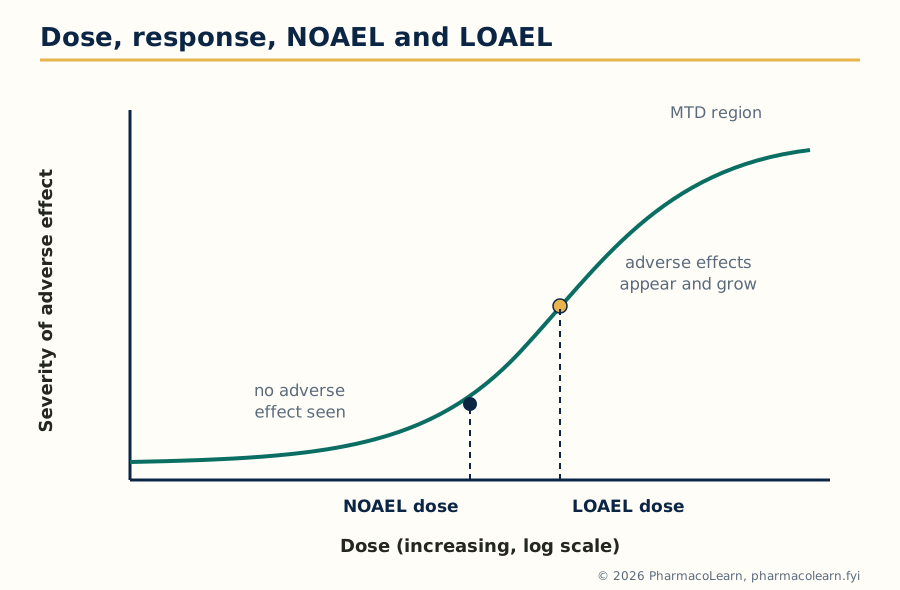 Figure: The dose response grammar of every toxicity study: severity stays at zero through the NOAEL dose, adverse effects appear from the LOAEL dose, and the top doses approach the maximum tolerated dose.
1.4 Why toxicity studies are regulated at all
Toxicity data decide whether human beings may be exposed to a new substance, so society does not leave their quality to chance. Regulation serves four purposes. It protects trial volunteers and patients by demanding proof of a safety margin before exposure. It protects animals by standardising studies so that no study is wasted or repeated needlessly. It makes results comparable between laboratories and countries, so a study done once, properly, is accepted everywhere. And it creates trust: a regulator can rely on data it did not watch being generated only if the study followed a guideline, under GLP, with auditable raw data.
The practical shape of the whole subject follows from this: a standard battery of studies, run in a standard order, each one answering a question the regulator will ask.
The standard preclinical safety battery, in the order it is usually built

  Acute and repeated dose toxicity (Unit 2)
        |
  Local tolerance: eye, skin (Unit 2)
        |
  Reproductive toxicity, segments I to III (Unit 3)
        |
  Genotoxicity battery (Unit 3)
        |
  Carcinogenicity bioassay, when required (Unit 3)
        |
  Safety pharmacology core battery (Unit 4)
        |
  Toxicokinetic exposure data throughout (Unit 5)
        |
  IND submission and first human dose (Unit 4)
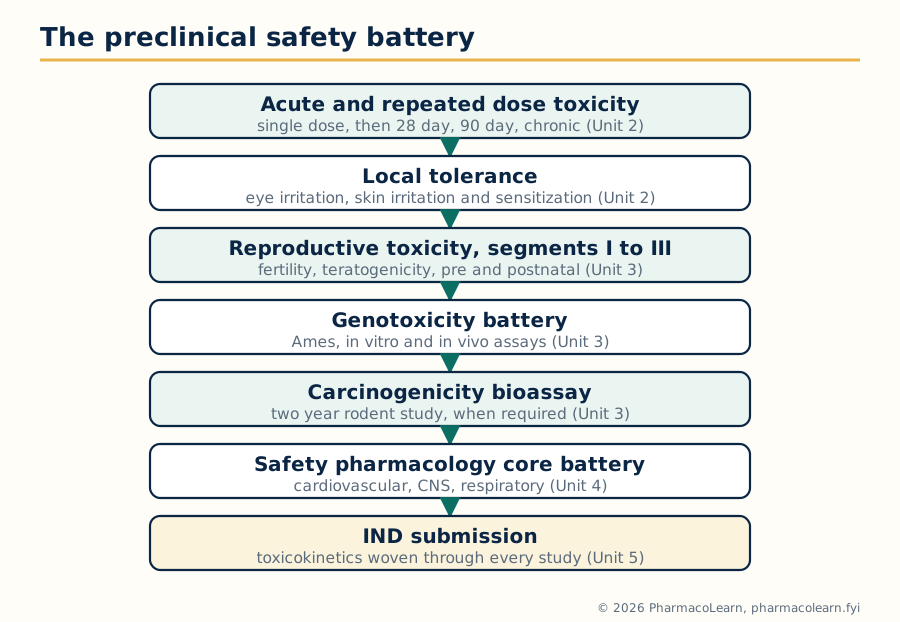 Figure: The standard preclinical safety battery in the order it is usually built, from acute toxicity to the IND submission, with toxicokinetics measured throughout.
1.5 The OECD and its test guidelines
The OECD (Organisation for Economic Co-operation and Development) is the body whose test guidelines dominate regulatory toxicology worldwide. Its Guidelines for the Testing of Chemicals are numbered methods, each describing one study in operational detail: the species, group sizes, dose levels, observations, and the data to be reported. A study run to an OECD test guideline in an OECD member or adherent country, under GLP, benefits from the OECD system of Mutual Acceptance of Data (MAD): other member countries must accept the data for assessment, which abolishes duplicate testing across borders.
For the student, the OECD guidelines are best learned as a numbered map of this subject: 400 series numbers cover health effects testing, and Unit 2 and Unit 3 of these notes cite the guideline number beside each study design. The OECD also maintains the Principles of Good Laboratory Practice (section 1.10), which are the quality rules under which guideline studies must be run to count as regulatory.
1.6 ICH: harmonising the drug specific requirements
The ICH (International Council for Harmonisation) harmonises the technical requirements for registering medicines in its member regions, so that one development programme can serve the world. Its safety (S) series is the drug specific layer that sits above the OECD chemical guidelines:
- ICH M3(R2) is the umbrella guidance: it states which nonclinical studies are needed to support each stage of clinical development, and when. It is the document a development team opens first.
- ICH S3A covers toxicokinetics (Unit 5).
- ICH S2(R1) defines the genotoxicity battery (Unit 3).
- ICH S5 covers reproductive and developmental toxicity (Unit 3).
- ICH S1 covers carcinogenicity studies (Unit 3).
- ICH S7A and S7B cover safety pharmacology and the QT interval risk (Unit 4).
The division of labour is simple to state: OECD writes the detailed study methods, ICH states which studies a medicine needs and how they fit together.
1.7 EPA and the United States framework
In the United States, drug safety for human medicines is regulated by the Food and Drug Administration (FDA), which receives the IND of Unit 4 and applies ICH and OECD standards. The EPA (Environmental Protection Agency) is named in the syllabus because it is the other great American toxicology regulator: it governs pesticides and industrial chemicals under its own test guidelines and its own GLP standard, and much of the classical toxicology literature, terminology and study design in textbooks was shaped by EPA requirements. A student of regulatory toxicology should know that the same study may be judged under FDA rules for a medicine and EPA rules for a pesticide, with closely similar designs and different legal homes.
1.8 Schedule Y and the Indian framework
Schedule Y of the Drugs and Cosmetics Rules is the Indian appendix that historically prescribed the requirements for clinical trials and for the preclinical toxicity data needed to support them, including the animal toxicity studies expected before a new drug could be tried or marketed in India. It is the framework under which generations of Indian toxicology studies were planned, and the syllabus names it for that reason. The clinical trial provisions have since been carried into the New Drugs and Clinical Trials Rules, 2019, which now govern trial permission and conduct in India, while the underlying expectation is unchanged: local regulators, like all others, ask for guideline toxicity studies under GLP, and India participates in the OECD MAD system through its National GLP Compliance Monitoring Authority (NGCMA), which inspects and certifies Indian GLP test facilities.
1.9 The guideline systems compared
| System | Who issues it | What it governs | Key instruments for this subject |
|---|---|---|---|
| OECD | Organisation for Economic Co-operation and Development, member countries | Detailed study methods and GLP quality rules for chemicals and medicines | Test Guidelines (400 series), Principles of GLP, Mutual Acceptance of Data |
| ICH | International Council for Harmonisation | Which nonclinical studies a medicine needs, and their timing | M3(R2), S1, S2(R1), S3A, S5, S7A, S7B |
| EPA | United States Environmental Protection Agency | Pesticides and industrial chemicals, US | Harmonised test guidelines, EPA GLP standard |
| FDA | United States Food and Drug Administration | Human medicines, US | IND system, ICH adoption, 21 CFR Part 58 (GLP) |
| Schedule Y | Government of India, Drugs and Cosmetics Rules | New drug trials and approvals in India (now largely carried into the NDCT Rules 2019) | Toxicity study requirements, Indian GLP monitoring through NGCMA |
1.10 Good laboratory practice: history and concept
Good laboratory practice (GLP) is a quality system concerned with the organisational process and the conditions under which nonclinical health and environmental safety studies are planned, performed, monitored, recorded, archived and reported. It is not about whether the science is clever; it is about whether the data can be trusted and reconstructed years later by someone who was not there.
The history explains the severity of the rules. In the 1970s, inspections of some contract testing laboratories in the United States, most famously Industrial Bio-Test Laboratories, revealed studies that had been fabricated, backdated or so badly recorded that the results could not be believed. The response was regulatory: the US FDA issued GLP regulations in 1978 (21 CFR Part 58), and the OECD adopted its Principles of GLP in 1981 so that the standard, and the data produced under it, could cross borders under MAD. The concept has three pillars: everything is planned in advance in a written study plan, everything done is recorded contemporaneously as raw data, and an independent quality assurance unit audits the work against both.
1.11 The OECD principles of GLP
The OECD principles organise a test facility around responsibility and traceability.
- Test facility management appoints the study director, provides resources, and owns the system as a whole.
- The study director is the single point of control for one study: they approve the study plan, ensure the work follows it, and sign the final report accepting responsibility for the data.
- A quality assurance (QA) programme, independent of the study staff, inspects the study at critical phases, audits the report against the raw data, and issues a QA statement.
- Standard operating procedures (SOPs) fix in writing how every routine operation is done, from animal receipt to balance calibration, so that the method does not depend on who is on duty.
- The study plan (protocol) is written and approved before work begins; amendments and deviations are documented, never silent.
- Raw data are recorded promptly, legibly and indelibly, with every change made so that the original entry remains readable, initialled and dated.
- Test item and reference item are characterized and their handling documented (Unit 2), and specimens, raw data and the final report are archived for a defined period under controlled access.
1.12 GLP in drug development: why it matters
GLP matters in drug development for one practical reason: nonclinical safety studies are almost never repeated. A two year carcinogenicity study or a 90 day toxicity study is too expensive and too slow to redo, and the ethics of animal use forbid casual repetition. The regulator's decision to let humans be exposed rests, once and permanently, on these studies. GLP is the mechanism that lets a reviewer in any country trust them. Studies that are not run under GLP may still be scientifically interesting, but they generally cannot support an IND or a marketing application, which is why sponsors treat GLP compliance as a gate, not a preference.
1.13 GLP and its neighbours: GCP and GMP
| System | Full name | Protects | Where it applies |
|---|---|---|---|
| GLP | Good laboratory practice | Integrity of nonclinical safety data | Animal toxicity and safety studies before and during development |
| GCP | Good clinical practice | Rights of trial participants and integrity of clinical data | Human clinical trials |
| GMP | Good manufacturing practice | Quality of the manufactured product | Production and quality control of medicines |
The three systems share one philosophy: if it is not written down and checked, it did not happen. GLP is the member of the family that this subject applies.
Unit 2: Acute, Repeated Dose and Local Toxicity Studies; Test Item Characterization
2.1 The logic of general toxicity testing
General toxicity studies answer three questions in sequence: what happens after one exposure (acute), what happens when exposure repeats (sub-acute, sub-chronic and chronic), and which organs pay the price. All of them share one architecture: a control group and at least three dose groups, both sexes, daily observation, scheduled clinical pathology, and a full post mortem with histopathology at the end. The output is a target organ list and a NOAEL for that duration and route, and each longer study builds on the shorter one: the acute study sets the first doses, the 28 day study sets the 90 day doses, and so on towards the clinic.
2.2 Acute toxicity: one dose, fourteen days
An acute toxicity study observes the effects of a single dose (or several doses within 24 hours), followed by an observation period of at least 14 days. It records the pattern of signs, their onset, duration and reversibility, deaths and their timing, and gross pathology in animals that die and in survivors at termination. Its modern purpose is classification and first information, not a precise LD50: the classical LD50 test (the deleted OECD TG 401) used many animals to fix one number, and animal welfare pressure replaced it with three alternative methods that classify a substance using very few animals.
2.3 Acute oral toxicity as per OECD: 420, 423 and 425
Three OECD methods now cover acute oral toxicity, and the differences between them are a favourite examination topic.
- TG 420, the Fixed Dose Procedure, uses fixed dose levels of 5, 50, 300 and 2000 mg/kg. A sighting study in single animals finds the dose range that produces clear signs of toxicity without death, and the main study then classifies the substance by evident toxicity at one of the fixed doses. Death is not the intended endpoint.
- TG 423, the Acute Toxic Class Method, is a stepwise procedure using the same fixed doses. Three animals (normally females) are dosed at one step; the outcome (death or survival) decides whether the next step goes up, goes down, or repeats, until the substance can be placed in a hazard class.
- TG 425, the Up and Down Procedure, doses single animals one at a time, each dose adjusted up or down by a constant factor (the default progression factor is a half log unit, about 3.2) depending on whether the previous animal survived. It estimates an LD50 with a confidence interval using few animals, and is chosen when an LD50 value itself is needed.
All three read across to the GHS (Globally Harmonized System) classification of acute oral toxicity: category 1 at 5 mg/kg or below, category 2 above 5 to 50, category 3 above 50 to 300, category 4 above 300 to 2000, and category 5 above 2000 to 5000 mg/kg. The limit test concept runs through all of them: if no toxicity appears at 2000 mg/kg, higher dosing is normally unnecessary.
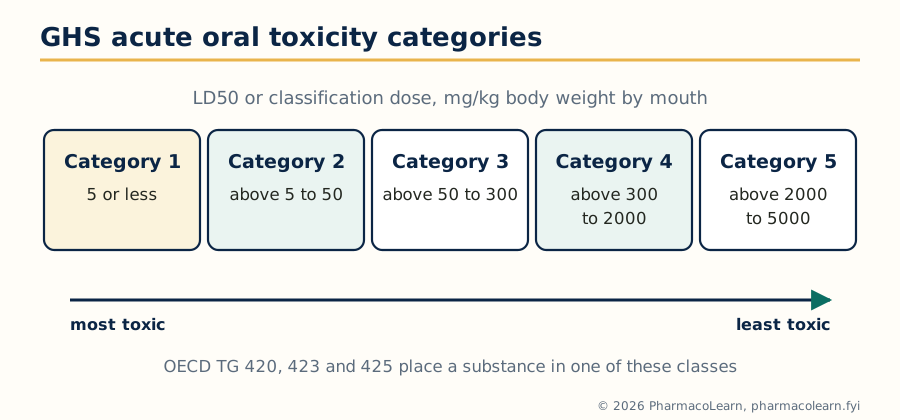 Figure: The GHS categories for acute oral toxicity: the fixed doses of the OECD methods, 5, 50, 300 and 2000 mg/kg, are the boundaries between the classes.
2.4 Acute dermal and acute inhalational toxicity
- Acute dermal toxicity (TG 402) applies a single dose to clipped skin, normally of the rat or rabbit, under a semi occlusive dressing for 24 hours, with 14 days of observation. It matters for substances with occupational or topical exposure and feeds the same GHS classification by the dermal route.
- Acute inhalation toxicity (TG 403) exposes rodents, preferably rats, to the test atmosphere for 4 hours in whole body or nose only chambers, at measured concentrations, and classifies gases, vapours and aerosols separately. Atmosphere generation and concentration monitoring are the technical heart of the study: an inhalation result is only as good as the proof of what the animals actually breathed.
2.5 Repeated dose studies: the 28 day and 90 day designs
Sub-acute in the syllabus language means the repeated dose studies of weeks: the 28 day study is the workhorse (TG 407 for the oral route in rodents, TG 410 for 28 day dermal, TG 412 for 28 day inhalation). Its standard shape is a control group and at least three dose levels, at least 5 males and 5 females per group in rodents, dosed daily for 28 days, with satellite recovery groups at the top dose and control kept for at least 14 further days to show whether effects reverse, persist or appear late.
Sub-chronic means the 90 day studies (TG 408 oral in rodents, TG 409 in the non-rodent, usually the dog, TG 411 dermal, TG 413 inhalation). Groups grow to at least 10 males and 10 females per group in rodents, and the clinical pathology and histopathology lists are fuller. The 90 day NOAEL, together with the 28 day result, is the usual basis on which early clinical trials of limited duration are supported, following the ICH M3(R2) rule that the animal studies should equal or exceed the planned human exposure duration.
Anatomy of a repeated dose toxicity study (28 day or 90 day)

  Control group          vehicle only, the reference for every comparison
  Low dose group         near the expected no effect level
  Mid dose group         geometric step up, bridges the curve
  High dose group        shows clear toxicity, but not death as the rule
  Recovery satellites    top dose and control, kept after dosing ends
        |
  Daily: clinical signs, mortality, body weight, food consumption
  Scheduled: haematology, clinical chemistry, urinalysis
  End: gross pathology, organ weights, full histopathology
        |
  Output: target organs + NOAEL for this duration and route
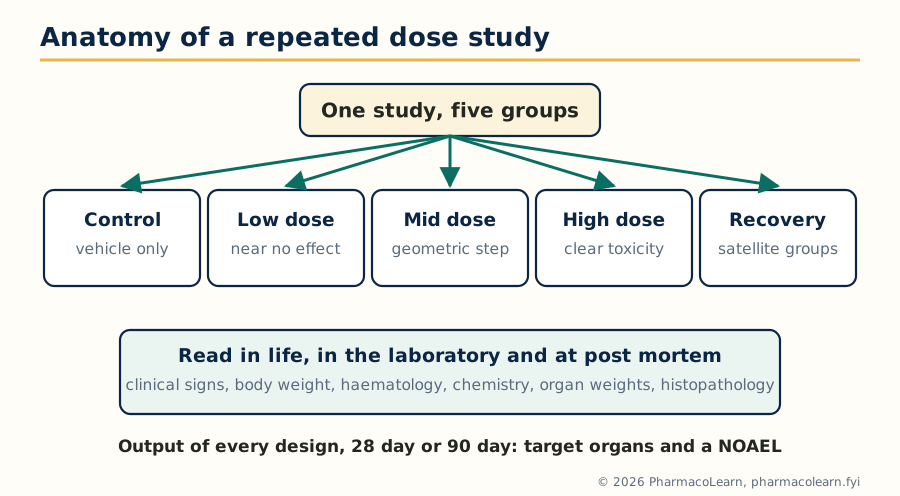 Figure: The five groups of a repeated dose study and the three layers of observation, in life, in the laboratory and at post mortem, that produce the target organ list and the NOAEL.
2.6 Chronic toxicity studies
Chronic toxicity studies extend dosing to a major part of the lifespan: TG 452 covers chronic toxicity, normally 12 months in rodents, and TG 453 combines chronic toxicity with carcinogenicity in one design to save animals. Group sizes rise (at least 20 males and 20 females per group for the chronic phase), interim sacrifices may be scheduled, and the questions change with the duration: cumulative injury, slowly developing organ damage, and effects that only months of exposure reveal. These studies support long term human treatment and are commonly run in parallel with the later clinical phases rather than before the first trial.
Dermal and inhalational repeated dose studies belong in the same table of designs, because the syllabus names all three routes together: TG 410 (28 day dermal) and TG 411 (90 day dermal) apply the substance daily to clipped skin, and TG 412 (28 day inhalation) and TG 413 (90 day inhalation) expose animals in chambers, typically 6 hours per day, to measured atmospheres. The route always follows the intended human exposure: a medicine is tested by the route patients will meet, and occupational or accidental routes are added when they are realistic.
2.7 What every general toxicity study measures
| Endpoint group | Typical observations | What it detects |
|---|---|---|
| In life | Clinical signs, mortality, body weight, food and water consumption, ophthalmology | Overall health, growth effects, eye injury |
| Clinical pathology | Haematology, coagulation, clinical chemistry, urinalysis | Liver, kidney, marrow and metabolic injury before it is visible |
| Post mortem | Gross lesions, organ weights | Organ enlargement or atrophy, visible damage |
| Histopathology | Microscopy of a standard tissue list, full in control and high dose, target organs in all groups | The cellular nature of the injury and the NOAEL decision |
Dose selection follows a consistent logic: the high dose should produce toxicity but not death or severe suffering, the low dose should approach or sit at the expected no effect level, and the spacing between doses is usually geometric. A limit dose of 1000 mg/kg per day applies to repeated dose studies when no toxicity is expected, so animals are not dosed meaninglessly.
2.8 Dermal irritation and corrosion: TG 404
The acute dermal irritation and corrosion study (TG 404) applies a single dose, normally 0.5 g or 0.5 mL, to the clipped skin of the rabbit for up to 4 hours, and scores erythema (redness) and oedema (swelling) at set times after patch removal over up to 14 days. The scoring separates corrosion (irreversible destruction of the skin) from reversible irritation, and the result drives the GHS skin hazard labelling. In vitro reconstructed human epidermis methods now replace this test for corrosion in many settings (Unit 5).
2.9 Skin sensitization: TG 406 and TG 429
Skin sensitization is allergic contact dermatitis produced by the immune system, and it is tested differently from irritation because the endpoint is memory, not damage. The classical methods of TG 406 are guinea pig tests: the maximisation test (GPMT), which uses intradermal induction with an adjuvant plus topical induction, and the Buehler test, which uses repeated occluded topical induction; both end with a challenge application, and a sensitiser is read from the challenge reaction in test animals compared with controls. The modern TG 429, the Local Lymph Node Assay (LLNA) in mice, measures proliferation in the lymph nodes draining the application site and gives a quantitative stimulation index, using fewer animals with less distress, and is preferred where it applies.
2.10 Acute eye irritation: TG 405
The acute eye irritation and corrosion study (TG 405), the descendant of the Draize test, instils a single dose into one eye of the rabbit, the other eye serving as control, and scores corneal opacity, iris involvement, conjunctival redness and swelling over up to 21 days. Sequential testing in single animals, prior in vitro screening, and weight of evidence approaches now limit its use to cases where the answer cannot be obtained otherwise, because it is among the most distressing of the classical tests. Its replacement by in vitro eye methods is a central case study of Unit 5.
2.11 Test item characterization: why the study stands or falls on it
A toxicity study is a comparison between groups that differ only in the dose of one defined substance. If that substance is not what the report claims, every result is worthless, which is why GLP requires the test item to be characterized before and during the study. Characterization answers four questions. What is it: identity, established by appropriate analytical methods against a reference standard. How pure is it: purity and the impurity profile, because an impurity, not the drug, may be the toxicant. Is it stable: stability under the storage conditions of the study and in the dosing vehicle for the period of use. And is each dose what it claims: the concentration, homogeneity and stability of dose formulations are verified by analysis at intervals during the study, a step called dose formulation analysis. Batch number, receipt, storage, dispensing and reconciliation of the test item are all documented, so that the material tested can be traced exactly, a chain of custody for the molecule at the centre of the study.
2.12 Test item characterization: the methods
| Question | Typical methods | Failure it prevents |
|---|---|---|
| Identity | Spectroscopic and chromatographic comparison with a reference standard (IR, NMR, MS, HPLC retention) | Testing the wrong substance |
| Purity and impurities | HPLC or GC assay and related substances, residual solvents | Attributing an impurity's toxicity to the drug |
| Stability | Stability indicating assay over storage and in vehicle | Dosing a degraded substance at an unknown strength |
| Dose formulation | Concentration and homogeneity analysis of dosing preparations | Groups receiving doses different from the plan |
Unit 3: Reproductive Toxicology, Genotoxicity and Carcinogenicity
3.1 Reproductive toxicology: protecting the next generation
Most toxicity studies dose adult animals and watch adult organs. Reproductive toxicology asks what a substance does to the making of the next generation: to fertility, to the embryo and foetus developing in the uterus, and to the newborn growing to maturity. History justifies the separate discipline: thalidomide passed the general toxicity testing of its day and still produced catastrophic malformations in children, because the developing organism is not a small adult but a system under construction, in which a brief exposure on the wrong day can redirect development permanently. The PCI syllabus follows the standard international design: a three segment scheme, with male and female studies, teratogenicity at its centre.
3.2 The three segment scheme
- Segment I covers fertility and early embryonic development: dosing of males and females before mating and through mating (and of females into early pregnancy), reading fertility, conception, implantation and early embryo survival.
- Segment II covers embryofoetal development, the classical teratogenicity study: dosing of pregnant animals through organogenesis, the period when organs are laid down, with examination of the foetuses near term for malformations.
- Segment III covers pre and postnatal development: dosing of the mother from implantation through lactation, reading the birth, growth, development and eventual reproductive capacity of the offspring.
The scheme is codified in ICH S5; the OECD supplies parallel designs (TG 414 for prenatal developmental toxicity, TG 415 and 416 for one and two generation reproduction studies, TG 421 and 422 screening designs, and the extended one generation study TG 443). Examination papers use the segment language, so it is learned as printed in the syllabus.
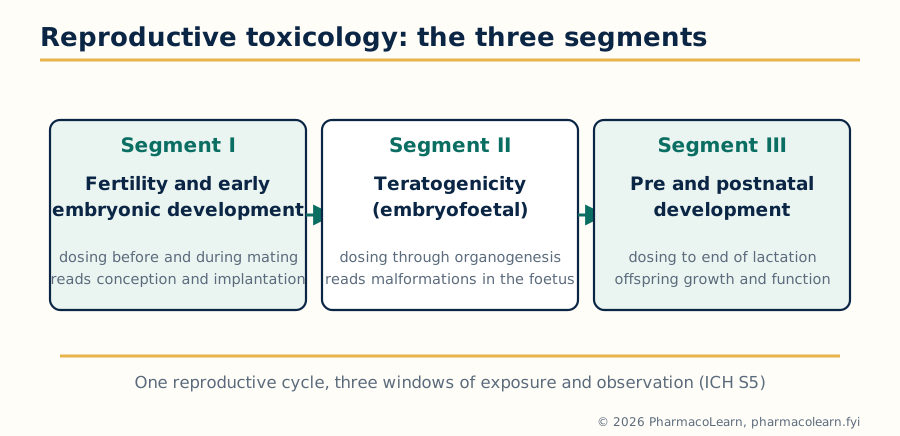 Figure: One reproductive cycle read through three windows: fertility and implantation, organogenesis, and birth to maturity.
3.3 Male reproductive toxicity studies
Male studies assess the organs and products of male reproduction under dosing: testis and epididymis weights and histopathology, sperm count, motility and morphology, and mating performance and fertility when males are paired with untreated females. Within a segment I design, males are dosed for a period covering a full spermatogenic cycle before mating (commonly at least 4 weeks, and longer in classical fertility designs), because sperm exposed as mature cells and sperm exposed as developing cells are different experiments. A substance that damages spermatogenesis may show normal mating behaviour with silently abnormal sperm, which is why the study reads both.
3.4 Segment I: fertility and early embryonic development
The segment I study doses both sexes: females from before mating through implantation, males as described above. Its endpoints trace the first links of the reproductive chain: oestrous cycling, mating and conception indices, the number of corpora lutea, implantations, resorptions and live embryos, and pre and post implantation loss. It detects effects on gametes, fertilisation and the earliest embryo that a teratogenicity study, which starts dosing after implantation, would miss entirely.
3.5 Segment II: teratogenicity and embryofoetal development
The teratogenicity study is the emotional centre of the subject. Pregnant animals, classically the rat and the rabbit as the standard second species, are dosed daily through organogenesis and the foetuses are delivered by caesarean section shortly before term, so that every foetus can be examined fresh. Findings are classified with care:
- Malformations: permanent structural changes harmful to the animal (the true teratogenic signal).
- Variations: common structural differences that are not harmful and occur in controls.
- Growth retardation and embryofoetal death (resorptions): developmental toxicity that is not structural.
The endpoints also separate maternal toxicity from direct developmental toxicity: a foetal effect seen only at doses that poison the mother is interpreted differently from one that appears in healthy mothers, and the developmental NOAEL is set accordingly. The rat reads the skeleton well after staining; the rabbit, being non-rodent and historically sensitive to thalidomide, is the confirmatory species.
3.6 Segment III: pre and postnatal development
Segment III doses the mother from implantation to the end of lactation and then follows the offspring, usually untreated, through weaning to maturity. It reads parturition and littering, pup survival and growth, physical and reflex development landmarks, behaviour, and in due course the reproductive performance of the F1 generation itself. It is the only segment that can detect effects expressed after birth: a substance may leave the newborn structurally normal yet alter its development or its fertility as an adult.
3.7 Endpoints across the reproductive studies
| Study | Core question | Signature endpoints |
|---|---|---|
| Male fertility | Can treated males sire normal litters | Sperm count, motility, morphology; testis histopathology; fertility index |
| Segment I | Do gametes, mating and implantation work | Conception rate, implantations, pre implantation loss |
| Segment II | Is the embryo built correctly | Malformations, variations, resorptions, foetal weight |
| Segment III | Does the offspring develop and function | Pup survival, growth, landmarks, F1 reproductive performance |
3.8 Genotoxicity: damage to the genetic material
Genotoxicity is damage to DNA and chromosomes: gene mutations, chromosome breaks and rearrangements, and gains or losses of whole chromosomes. It is tested separately from general toxicity because of one brutal property: a single unrepaired lesion in a single cell can, in principle, start a cancer or be passed to a child, so genotoxicity is treated as having no safe threshold by default. The regulatory question is therefore qualitative and strict: is the substance genotoxic, yes or no, answered by a battery of complementary tests rather than one assay.
3.9 The Ames test: the bacterial reverse mutation assay
The Ames test (OECD TG 471) is the foundation of the battery and the most examined single assay in this unit. It uses histidine dependent strains of the bacterium Salmonella typhimurium (with tryptophan dependent Escherichia coli strains in the standard set) that cannot grow without the amino acid because of a mutation in its synthesis gene. The bacteria are exposed to the test substance on minimal medium: only bacteria in which a reverse mutation restores the gene can form colonies, so colonies counted are mutations measured. The design has two features students must state:
- The test is run with and without metabolic activation, the S9 fraction of rat liver, because many mutagens are created by metabolism rather than present in the parent substance.
- A result is positive when there is a reproducible, dose related increase in revertant colonies over the concurrent control, judged against the laboratory's historical control range, with positive controls proving the system worked.
The Ames test detects point mutations efficiently and cheaply; by design it cannot see chromosome level damage, which is why the battery continues.
The standard genotoxicity battery (ICH S2(R1), option 1)

  Ames test (TG 471) .................. gene mutations in bacteria
        +
  In vitro mammalian test ............. chromosomal damage or mutation
  (chromosomal aberration TG 473,       in cultured cells
   or in vitro micronucleus TG 487)
        +
  In vivo test, normally the .......... chromosomal damage in the
  rodent micronucleus test (TG 474)     living animal
        |
  All negative: the substance is treated as non genotoxic
  Any positive: weight of evidence review and follow up testing
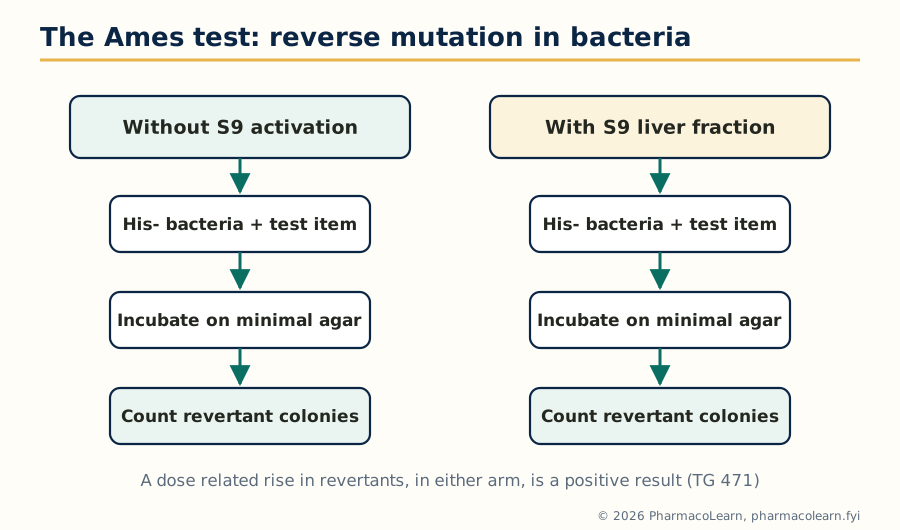 Figure: The Ames test runs every strain and dose with and without the S9 liver fraction, because metabolism creates many mutagens from inactive parent substances.
3.10 In vitro chromosomal aberration and micronucleus tests
The in vitro chromosomal aberration test (TG 473) cultures mammalian cells, classically Chinese hamster ovary cells or human lymphocytes, exposes them with and without S9, and scores metaphase chromosomes under the microscope for breaks, exchanges and other structural aberrations. The in vitro micronucleus test (TG 487) reads the same class of damage more simply: micronuclei are small extra nuclei formed from chromosome fragments or whole lagging chromosomes that failed to join a daughter nucleus at division, and counting them in divided cells detects both clastogens (chromosome breakers) and aneugens (agents that disturb chromosome number).
3.11 In vivo micronucleus and chromosomal aberration tests
The in vivo arm moves the question into the whole animal, with real absorption, metabolism and DNA repair. The rodent micronucleus test (TG 474) uses bone marrow or peripheral blood: immature red blood cells normally expel their nucleus as they mature, and any micronucleus left behind records chromosomal damage suffered in the marrow, counted in thousands of young erythrocytes after dosing. The in vivo chromosomal aberration test (TG 475) scores metaphases in bone marrow directly. The in vivo comet assay (TG 489), which measures DNA strand breaks in individual cells by electrophoresis, is a common follow up when a specific organ, such as the liver, needs examination. Positive in vitro results that cannot be reproduced in vivo at adequate exposure are weighed as evidence, not verdicts: the battery is read as a whole.
3.12 Carcinogenicity: the long shadow
A carcinogen produces tumours. Regulatory thinking divides carcinogens into genotoxic carcinogens, which damage DNA directly and are assumed to have no threshold, and non genotoxic carcinogens, which act through sustained mechanisms such as hormonal disturbance, chronic tissue injury or receptor driven proliferation, and may have thresholds. Unit 3's genotoxicity battery exists to find the first kind early; the in vivo bioassay of the next section exists because the second kind can only be found by long exposure of living animals.
3.13 In vivo carcinogenicity studies: the two year bioassay
The standard carcinogenicity study (TG 451) doses rodents, classically the rat and the mouse, at three dose levels plus control, with at least 50 animals per sex per group, for most of the lifespan: about 24 months in rats and 18 months in mice. The top dose is the maximum tolerated dose found in the earlier 90 day studies, high enough to stress the animal without shortening its life by other toxicity, because a study in which the high dose kills early cannot read late tumours. Every animal receives a complete post mortem and histopathology of the full tissue list; tumours are recorded by type, site, malignancy and time of appearance, and statistics compare incidence and latency against concurrent and historical controls. TG 453 combines this design with chronic toxicity satellites to answer both questions in one study. Because the bioassay takes years and hundreds of animals, ICH S1 allows weight of evidence arguments and, increasingly, six month studies in transgenic mouse models (such as rasH2) as part of the assessment for some substances. The result is read with the genotoxicity data: a genotoxic substance with tumours is a clear carcinogen; a non genotoxic substance with tumours only at the maximum tolerated dose invites a mechanistic argument about human relevance.
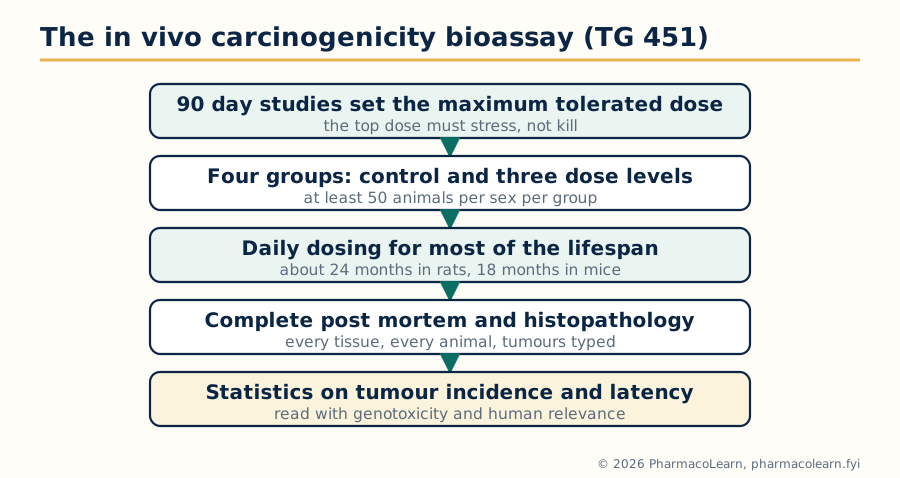 Figure: The in vivo carcinogenicity bioassay, from the 90 day studies that set the top dose to the statistics that read the tumour outcome.
Unit 4: IND Enabling Studies and Safety Pharmacology
4.1 The IND: the licence to test in humans
IND stands for Investigational New Drug. In the United States system, a new drug may not legally be given to humans, or even shipped across state lines for a trial, until an IND application is in effect with the FDA. The application tells the regulator what the drug is, how it is made, what the animal studies showed, and exactly how the first human trial will be run. The FDA then has 30 days from receipt to raise a clinical hold; if it does not, the trial may begin. Other systems use other names for the same gate (the clinical trial application in Europe and in India's NDCT Rules framework), but the concept the syllabus teaches is universal: human exposure is a permission earned with preclinical data, and the IND enabling studies are the preclinical studies performed to earn it.
4.2 Importance of the IND: the industry perspective
From the industry side, the IND is the first great value gate of development. Up to the IND, spending is comparatively small and failure is cheap; after it, clinical trials consume the great majority of the development budget. Companies therefore treat the IND enabling package as a disciplined investment decision: the studies must be the right ones, run under GLP, reported to a standard that survives regulatory review the first time, because a clinical hold costs months and a refused programme costs everything spent so far. The IND also converts science into a negotiable asset: a candidate with an accepted IND and a permitted trial is worth a multiple of the same molecule without one, which is why the studies of Units 2 and 3 are scheduled backwards from the intended IND date in every development plan.
4.3 The list of studies needed for IND submission
The IND enabling sequence

  Pharmacology proof of concept and dose ranging (Screening Methods I)
        |
  Safety pharmacology core battery (this unit)
        |
  Genotoxicity battery: Ames + in vitro + in vivo (Unit 3)
        |
  Repeated dose toxicity in two species, rodent and non-rodent,
  duration at least equal to the planned trial (Unit 2)
        |
  Toxicokinetic exposure data from those studies (Unit 5)
        |
  Local tolerance for the intended route (Unit 2)
        |
  Compilation into the IND (pharmacology and toxicology summaries)
        |
  Submission: 30 day regulator review, then the first human dose
In concrete terms, the standard first in human IND package contains: the primary pharmacology and dose ranging data; the safety pharmacology core battery; the genotoxicity battery; repeated dose toxicity studies in a rodent and a non-rodent species whose duration supports the planned trial length under ICH M3(R2), with toxicokinetics; local tolerance data for the clinical route; and reproductive toxicity and carcinogenicity studies staged later, before the trial phases and populations they protect (embryofoetal studies before trials including women of childbearing potential under the applicable regional rules, carcinogenicity normally before marketing). The examiner's phrase "list of studies needed for IND submission" refers to exactly this list.
4.4 Safety pharmacology: origin and concept
Safety pharmacology grew out of classical general pharmacology. Through the twentieth century, new drugs were examined for secondary effects beyond their target organ, informally and inconsistently. Two forces formalised the discipline: a series of drug withdrawals for unexpected effects on the heart's electrical rhythm, and the ICH decision to give the field its own guidelines, S7A for safety pharmacology studies for human pharmaceuticals and S7B for the delayed ventricular repolarisation (QT interval) risk. The concept is precise: safety pharmacology studies investigate the potential undesirable pharmacodynamic effects of a substance on physiological functions in relation to exposure within and above the therapeutic range. The emphasis differs from toxicology: toxicology studies structural injury at high doses over time, safety pharmacology studies functional disturbance, often immediate and dose related, in the systems whose failure can kill quickly: the cardiovascular system, the central nervous system and the respiratory system.
4.5 Tier 1: the core battery
The syllabus calls the core battery Tier 1. Before first human exposure, three systems are examined as a rule:
- Cardiovascular system: blood pressure, heart rate and the electrocardiogram, usually in a conscious non-rodent by telemetry, with the QT interval under special scrutiny (section 4.6).
- Central nervous system: a functional observational battery or modified Irwin test in rodents, scoring motor activity, behaviour, coordination, reflexes and body temperature.
- Respiratory system: respiratory rate and measures such as tidal volume, usually by plethysmography in rodents.
These studies are normally run as stand alone single dose studies at exposures bracketing the therapeutic exposure, and their findings feed directly into the monitoring plan of the first clinical trial.
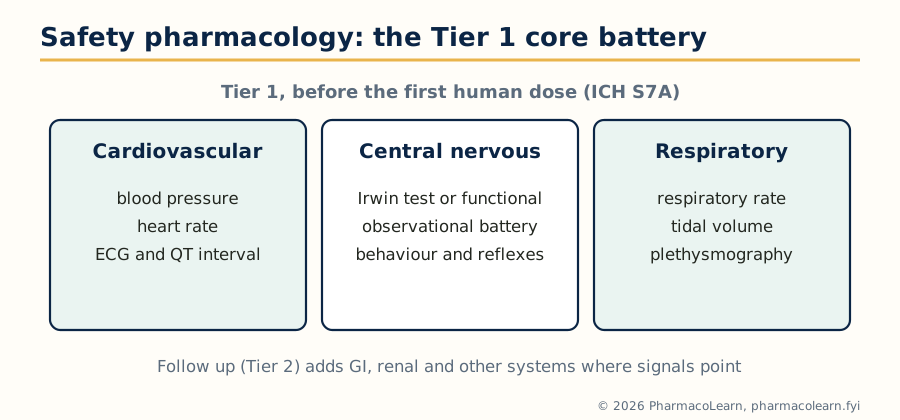 Figure: The Tier 1 core battery: cardiovascular, central nervous and respiratory function are examined for every new drug before the first human dose.
4.6 The hERG assay and the QT story
The hERG assay is the in vitro centrepiece of cardiovascular safety pharmacology. hERG (human ether-a-go-go related gene) potassium channels carry the rapid delayed rectifier current, IKr, that repolarises the heart's ventricles after each beat. A drug that blocks this channel delays repolarisation, lengthens the QT interval on the ECG, and can trigger torsades de pointes, a potentially fatal arrhythmia. The non antiarrhythmic drugs terfenadine and cisapride were withdrawn from the market for exactly this mechanism, and the lesson was written into ICH S7B: the hERG assay, in which the drug's block of the channel current is measured in cells expressing the channel (commonly by patch clamp electrophysiology), is run alongside an in vivo QT study, and the two together judge the risk before and during clinical development. A hERG margin is usually expressed by comparing the concentration that blocks the channel with the free plasma concentration expected in patients: the wider the margin, the safer the reading.
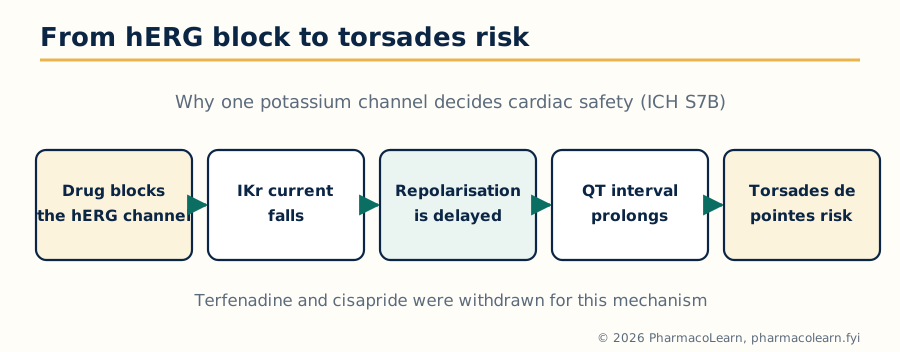 Figure: One blocked potassium channel, four steps later a lethal arrhythmia risk: the mechanism that made the hERG assay a gate in drug development.
4.7 Tier 2: follow up and supplemental studies
Tier 2 studies are not automatic; they are triggered by what Tier 1 and the toxicity studies suggest, or by the drug's class and target population.
- Gastrointestinal: gastric emptying and intestinal transit (charcoal meal), gastric secretion and pH.
- Renal: urine volume and composition, electrolytes, glomerular filtration, in conscious animals over collection periods.
- Other systems as needed: autonomic function, skeletal muscle and neuromuscular transmission, immune and endocrine functions, blood and haemostasis parameters.
The tiered logic is the concept to carry away: a defined core for every drug, then depth where the signals point, exactly the follow up and supplemental studies of ICH S7A under the syllabus's tier names.
4.8 Safety pharmacology and toxicology side by side
| Feature | Safety pharmacology | General toxicology |
|---|---|---|
| Question | Does it disturb vital functions | Does it injure organs |
| Typical design | Single dose, functional endpoints, exposures near and above therapeutic | Repeated dose, structural and clinical pathology endpoints, up to maximum tolerated dose |
| Core systems | Cardiovascular, CNS, respiratory | All organs by histopathology |
| Guideline home | ICH S7A and S7B | OECD test guidelines, ICH M3(R2) |
| Timing | Core battery before first human dose | Staged with the clinical programme |
Unit 5: Toxicokinetics and Alternative Methods to Animal Toxicity Testing
5.1 Toxicokinetics: measuring exposure inside the toxicity study
Pharmacokinetics asks what exposure a dose produces in a patient. Toxicokinetics, its twin under ICH S3A, asks the same question inside a toxicity study: what systemic exposure, measured as the area under the plasma concentration time curve (AUC) and the peak concentration (Cmax), did the animals actually experience at each dose level. The distinction between dose and exposure is the whole point. Two species given the same mg/kg dose may absorb, metabolise and clear the drug so differently that their blood exposures differ tenfold; comparing their toxicity by dose is then meaningless, while comparing by exposure is science.
5.2 Toxicokinetic evaluation in preclinical studies
In practice, toxicokinetic evaluation is woven into the studies of Unit 2 rather than run separately. Blood samples are taken from the main study animals where the species is large enough, or from dedicated satellite groups in rodent studies, so that bleeding does not distort the toxicity endpoints. Sampling is scheduled on the first day and near the end of dosing to detect change over time, and the assay must be a validated bioanalytical method for the drug (and major metabolites where relevant) in that species' plasma. The report expresses exposure per dose, per sex and per species, notes accumulation or its absence, and flags nonlinearity: exposure rising more, or less, than in proportion to dose.
Toxicokinetic sampling inside a repeated dose toxicity study

  Day 1:   dose, then timed blood samples from satellite animals
           gives Cmax, Tmax and AUC for the first dose
  Middle:  trough samples show accumulation or induction
  Last day: full sampling again after repeated dosing
           gives steady state exposure at each dose level
        |
  Exposure by dose, sex and species is tabulated
        |
  Animal AUC at the NOAEL is compared with the human AUC
  at the proposed dose: the ratio is the safety margin
5.3 Saturation kinetics: when more dose stops meaning more exposure
Saturation kinetics describes what happens when a process of absorption, metabolism or excretion reaches its maximum rate and cannot go faster. Below saturation, exposure rises in proportion to dose (first order behaviour). Above it, the clearing enzyme or transporter is working flat out (zero order behaviour), so each further increment of dose produces a disproportionate rise in blood concentration and a lengthening half life. The toxicological consequences are direct and heavily examined:
- A NOAEL set in the saturated region may not scale: small dose increases above it can produce large exposure jumps.
- High dose groups in a toxicity study may all sit at the same saturated exposure, collapsing the dose response the study was designed to measure.
- Species differ in capacity, so the dose at which saturation occurs differs, one more reason dose comparisons mislead and exposure comparisons do not.
Toxicokinetic data are how saturation is detected: if doubling the dose quadruples the AUC, the study is in saturated territory and the interpretation must say so.
5.4 Importance and applications of toxicokinetic studies
The applications follow from the exposure principle. Toxicokinetics interprets the toxicity study: a negative study is only reassuring if exposure demonstrably exceeded the human exposure, and a positive finding is quantified against it. It builds the safety margin: the ratio of animal AUC at the NOAEL to the predicted human AUC at the therapeutic dose is the number on which first in human starting doses and dose escalation are argued. It guides dose selection for the longer studies, exposing saturation and accumulation before a two year study is locked into useless dose levels. It explains species differences and helps choose the most human relevant species for the definitive studies. And it satisfies a formal regulatory expectation under ICH S3A and M3(R2) that exposure data accompany the pivotal toxicity studies in an IND and marketing dossier.
5.5 Why alternative methods are needed
The final topic of the syllabus looks beyond the animal studies it has taught. Pressure to replace them comes from three directions at once: ethics, expressed since 1959 in the 3Rs of replacement, reduction and refinement; science, because animal results predict human toxicity imperfectly and some human specific injuries are missed by every animal species; and regulation and economics, because validated alternatives are faster and cheaper and are increasingly written into law and guideline, with some sectors, such as cosmetics in the European Union, under full animal testing bans. Unit 5 of Screening Methods I introduced the 3Rs and extrapolation; this unit completes the picture at the level of toxicity testing itself.
5.6 In vitro and in silico alternatives
Replacement has advanced furthest exactly where the endpoint is local or cellular:
- Skin corrosion and irritation: reconstructed human epidermis models (OECD TG 431 and 439) now classify substances without rabbits.
- Eye irritation: the bovine corneal opacity and permeability test (TG 437), the isolated chicken eye test (TG 438) and reconstructed corneal epithelium models (TG 492) cover much of the TG 405 territory in defined approaches.
- Genotoxicity: the Ames test and the in vitro chromosomal assays of Unit 3 are themselves replacements of an earlier animal era, and cell based methods continue to grow.
- Skin sensitization: the adverse outcome pathway for sensitization has been broken into chemical and cell based key event assays (TG 442C, 442D and 442E), combined in defined approaches that can classify without the guinea pig or the mouse.
- In silico methods: (quantitative) structure activity relationship models, expert rule based systems and read across from tested analogues estimate toxicity from structure, and are accepted for some endpoints, notably the assessment of mutagenic impurities under ICH M7.
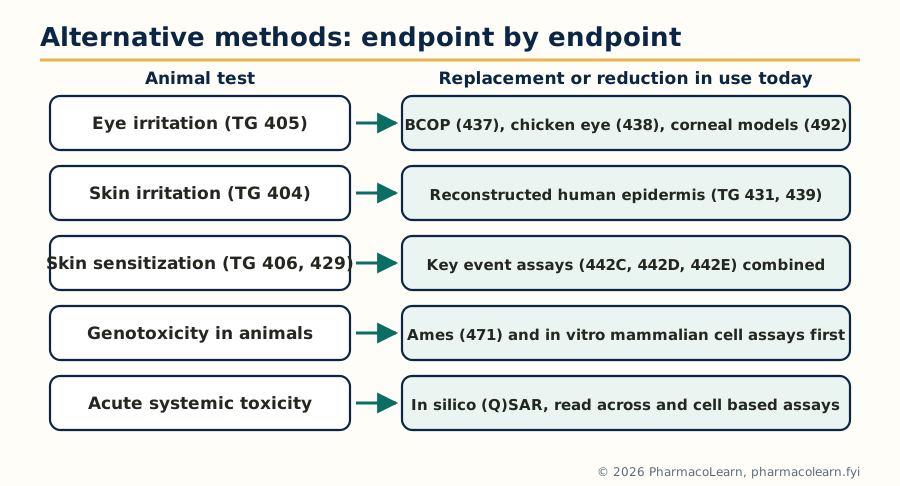 Figure: Replacement advances endpoint by endpoint: the local tolerance tests have largely fallen, and systemic endpoints are following.
5.7 What alternatives cannot yet do, and the road ahead
No in vitro system yet reproduces the integrated whole animal: absorption, metabolism, immune interaction and months of dosing across communicating organs. Chronic toxicity, carcinogenicity and reproductive toxicity therefore remain animal based at present, and regulators accept alternatives endpoint by endpoint, only after formal validation shows the new method predicts the old one's result (and, increasingly, the human result) reliably. The direction of travel is nevertheless unmistakable: integrated approaches to testing and assessment combine in silico predictions, in vitro key event data and targeted in vivo work into weight of evidence conclusions, and each validated replacement permanently retires an animal test. The student should leave this subject able to run the classical system and to see clearly where it is going.
Frequently Asked Questions
Q: What is the difference between MPL202T and MPL103T? A: MPL103T (Semester 1) teaches pharmacological screening: laboratory animals, bioassay, and the efficacy models used to show that a drug works. MPL202T (Semester 2) teaches toxicological screening: the regulatory toxicity studies, under OECD guidelines and GLP, that show whether a drug is safe enough to test in humans, ending with the IND enabling package, safety pharmacology and toxicokinetics.
Q: What are the four types of toxicology named in the PCI syllabus? A: General toxicology, which profiles the overall adverse effects of a substance; mechanistic toxicology, which explains how the injury happens at the molecular level; regulatory toxicology, which designs and judges studies to satisfy licensing authorities; and descriptive toxicology, which describes toxicity in practical terms for existing substances, poisoning treatment and hazard communication.
Q: Which OECD guidelines cover acute oral toxicity, and how do they differ? A: TG 420 (Fixed Dose Procedure) classifies by evident toxicity at fixed doses of 5, 50, 300 and 2000 mg/kg without using death as the endpoint; TG 423 (Acute Toxic Class Method) steps groups of three animals through the same fixed doses to place the substance in a hazard class; TG 425 (Up and Down Procedure) doses single animals sequentially with doses adjusted by a constant factor to estimate an LD50 with few animals. The classical LD50 guideline, TG 401, was deleted.
Q: What is the difference between sub-acute, sub-chronic and chronic toxicity studies? A: In the OECD framework used by the syllabus: sub-acute studies are the 28 day repeated dose studies (TG 407 oral, 410 dermal, 412 inhalation); sub-chronic studies are the 90 day studies (TG 408 oral in rodents, 409 in the non-rodent, 411 dermal, 413 inhalation); and chronic studies run for about 12 months or longer (TG 452), with TG 453 combining chronic toxicity and carcinogenicity in one design.
Q: Why is test item characterization compulsory in a regulatory toxicity study? A: Because the study compares groups that are meant to differ only in the dose of one defined substance. Characterization proves the identity and purity of that substance, its stability in storage and in the dosing vehicle, and, through dose formulation analysis, that each group actually received its intended dose. Without it, a toxicity finding cannot be attributed to the drug with confidence, and the study fails GLP expectations.
Q: What are segments I, II and III in reproductive toxicology? A: Segment I studies fertility and early embryonic development, dosing both sexes before and during mating and reading conception and implantation. Segment II is the teratogenicity or embryofoetal development study, dosing through organogenesis and examining foetuses for malformations, classically in rat and rabbit. Segment III studies pre and postnatal development, dosing the mother through lactation and following the offspring's survival, growth, development and reproductive capacity.
Q: How does the Ames test work, and why is S9 included? A: The Ames test (TG 471) exposes histidine dependent Salmonella typhimurium strains (with E. coli strains in the standard set) to the substance on minimal medium; only bacteria that undergo reverse mutation regain the ability to make histidine and form colonies, so colonies count mutations. The S9 rat liver fraction is included in parallel incubations because many mutagens are created by metabolism, and the parent substance alone would test negative.
Q: What studies are needed for an IND submission? A: The standard package contains the primary pharmacology and dose ranging data, the safety pharmacology core battery, the genotoxicity battery (Ames, an in vitro mammalian test and an in vivo test), repeated dose toxicity studies in a rodent and a non-rodent species of duration supporting the planned trial, toxicokinetic exposure data, and local tolerance data for the clinical route. Reproductive toxicity and carcinogenicity studies are staged later in the programme under ICH M3(R2).
Q: What is the hERG assay and why does it matter? A: The hERG assay measures block of the hERG potassium channel, which carries the IKr current that repolarises the ventricles. Block delays repolarisation, prolongs the QT interval and can cause torsades de pointes, the mechanism behind the withdrawal of drugs such as terfenadine and cisapride. Together with an in vivo QT study, under ICH S7B, it judges cardiac electrical risk before and during clinical development.
Q: What is saturation kinetics and why does it matter in toxicology? A: Saturation kinetics occurs when a metabolic or transport process reaches its maximum rate, so exposure stops rising in proportion to dose and instead climbs disproportionately, with a lengthening half life. It matters because dose based comparisons between species and dose levels break down in the saturated region, NOAEL interpretation changes, and only the exposure data from toxicokinetics reveal that the study has entered it.
Complete MPL202T notes, all 5 units in one PDF, free to keep.
Other M.Pharm subjects: MPH101T · MPC101T · MPL101T · MPH102T · MPH103T · MPH104T · MPL102T · MPL103T · MPL104T · MPC102T · MPC103T · MPC104T · MPH201T · MPH202T · MPH203T · MPH204T · MPC201T · MPC202T · MPC203T · MPC204T · MPL201T · MPL202T · MPL203T · MPL204T · MRA101T · MRA102T · MRA103T · MRA104T · MRM301T · MPG101T · MPG102T · MPG103T · MPG201T · MPG202T · MPG203T · MPG104T · MPG204T · MRA201T · MRA202T · MRA203T · MRA204T · M.Pharm