
Pharmaceutical Jurisprudence — Pharm D Year 3
Notes for Pharmaceutical Jurisprudence, Pharm D Year 3, organised unit by unit following the PCI Pharm D syllabus. 12 units, 20 diagrams.
Note: pharmacy laws, rules, schedules and penalties are amended from time to time. Verify the current text from the official gazette or the regulator's current notification before relying on any provision stated here.
Syllabus: Pharm D Year 3 syllabus
Units in this subject
- Unit 1: Pharmaceutical Legislations: Overview
- Unit 2: Professional Ethics
- Unit 3: Drugs and Cosmetics Act and Rules
- Unit 4: Pharmacy Act
- Unit 5: Medicinal and Toilet Preparations Act
- Unit 6: Narcotic Drugs and Psychotropic Substances Act
- Unit 7: Drugs and Magic Remedies
- Unit 8: Essential Commodities and Drug Price Control
- Unit 9: Drug Price Control Order and National Drug Policy
- Unit 10: Prevention of Cruelty to Animals Act
- Unit 11: Patents and Designs Act
- Unit 12: Prescription and Nonprescription Products
Unit 1: Pharmaceutical Legislations: Overview
Syllabus scope
This unit covers brief review of pharmaceutical legislation and the legal framework of pharmacy.
Core explanation
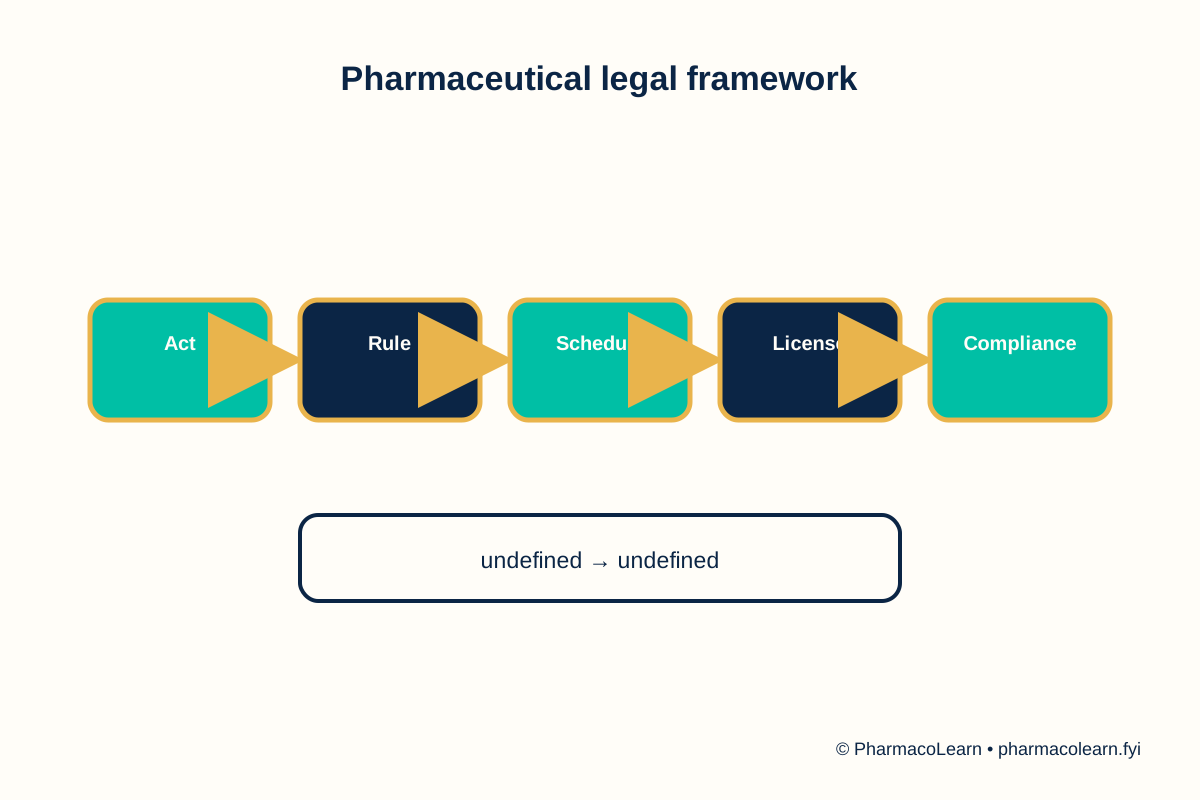
Pharmaceutical legislation protects public health by controlling who may practice, what may be manufactured or sold, how products are labeled, how quality is assessed, and how medicines are distributed. Jurisprudence studies the relationship between pharmacy practice, statutory duties, professional ethics and enforcement. A law may create an authority, define an offence, prescribe a licensing pathway, establish a standard or provide a remedy. Rules and notifications explain how an Act is applied, while official guidance may describe procedure without replacing the law.
Balanced study checklist
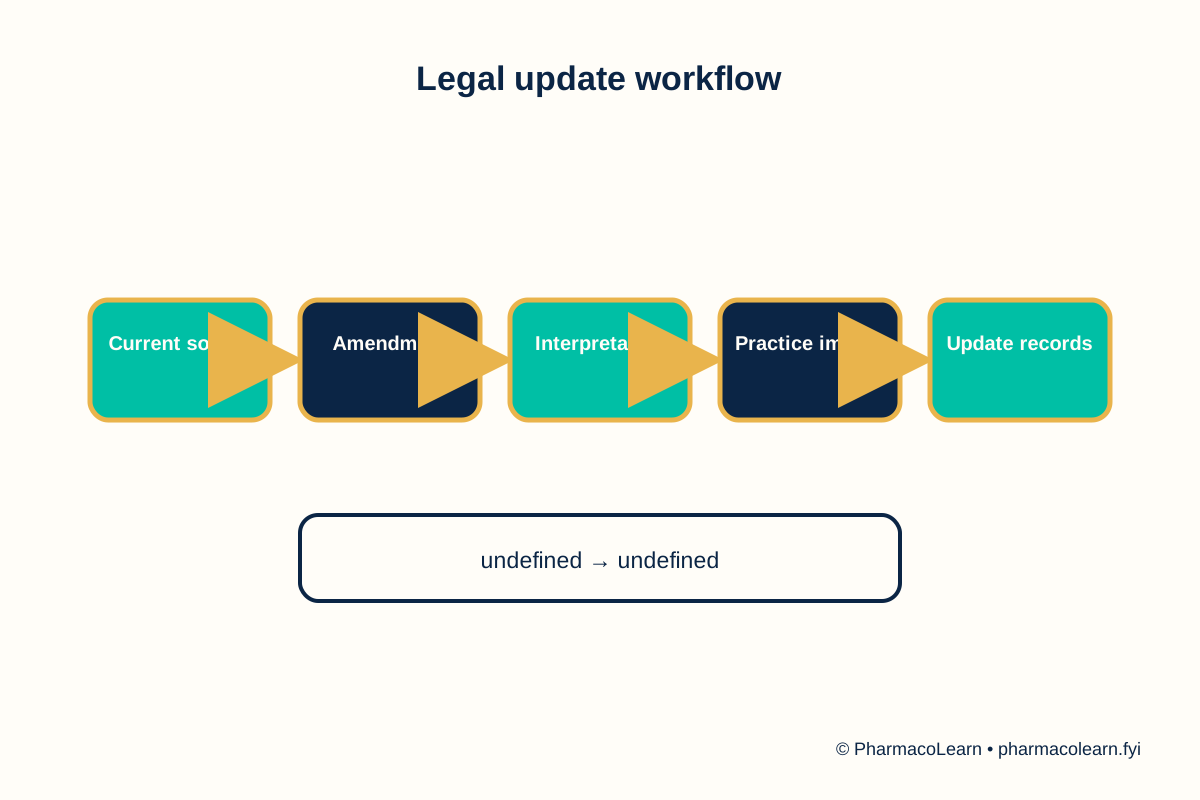
Key study points: - Identify the purpose and scope of each law. - Distinguish Act, rule, schedule, notification, license, order and guideline. - Separate professional duty from criminal or civil liability. - Check the current text, amendments and jurisdiction before relying on a provision. - Preserve records that demonstrate lawful practice.
Exam and practice framework
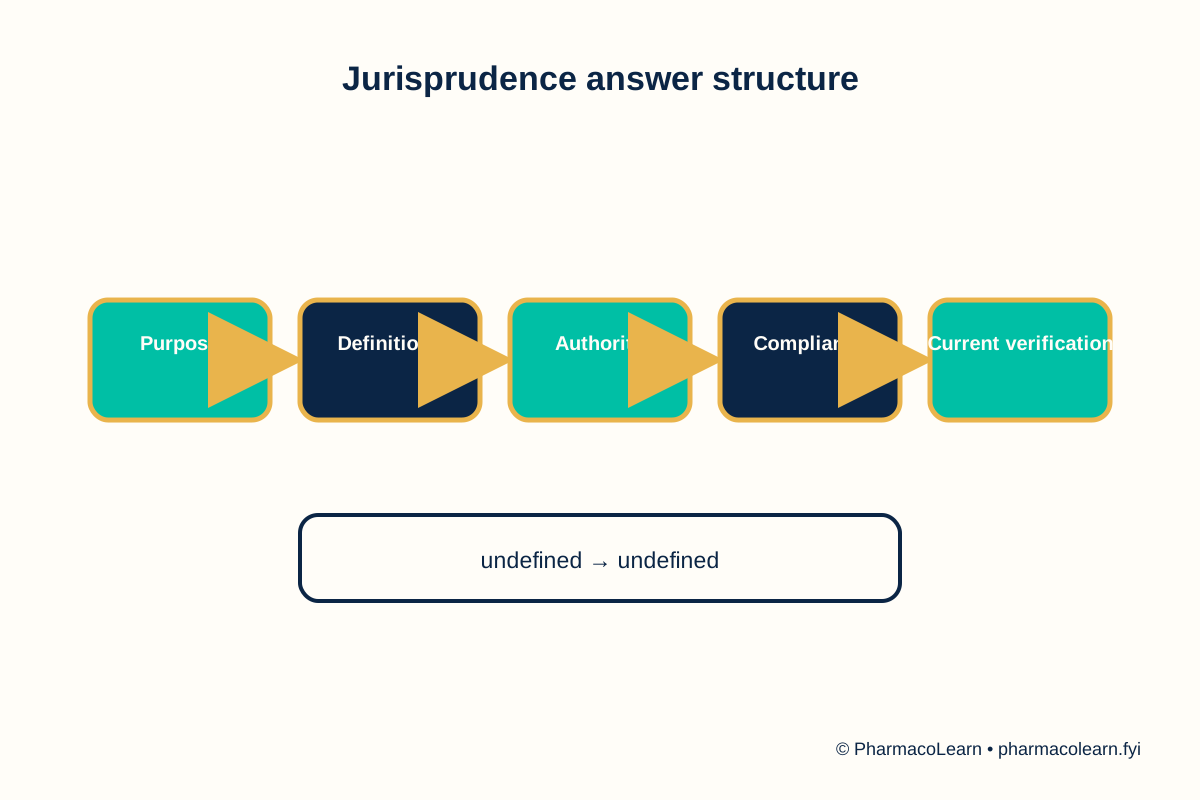
- State the purpose of the law or rule.
- Define the regulated activity or product.
- Identify the responsible authority or professional duty.
- Explain the compliance process.
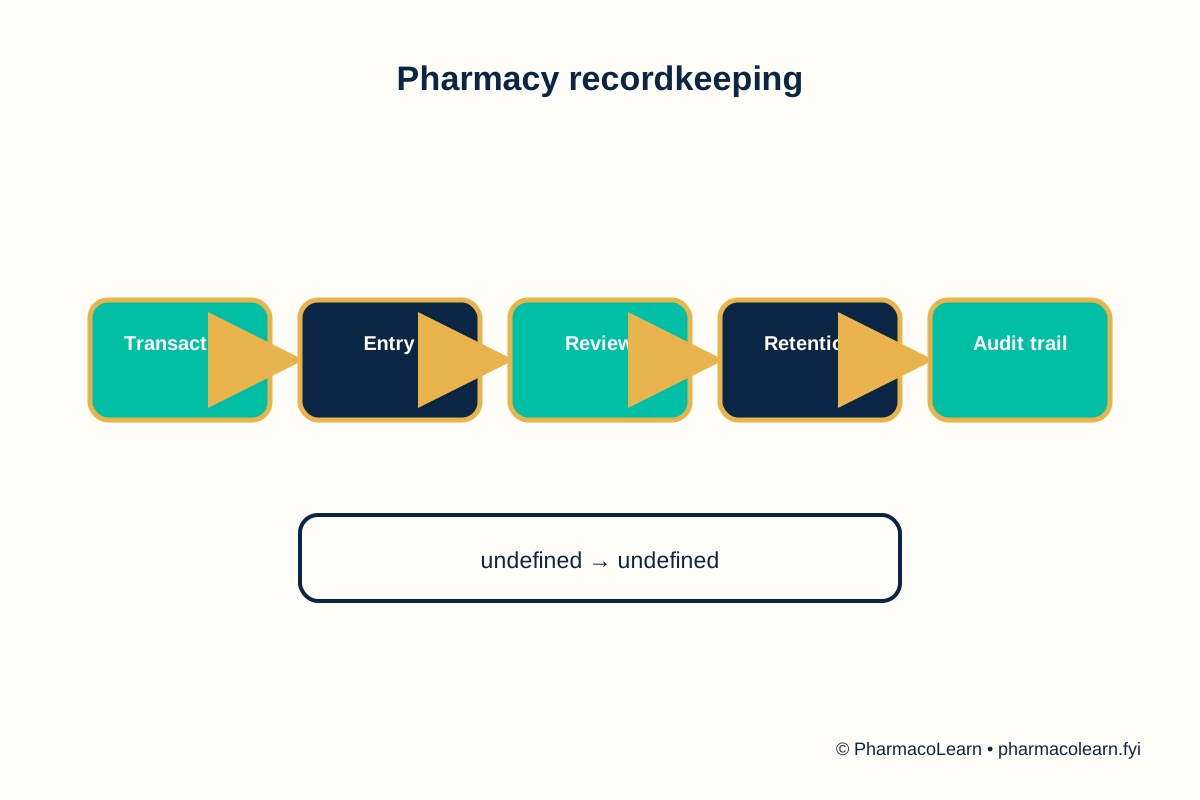
- List records, licenses or safeguards.
- Describe the consequence of noncompliance without inventing a penalty.
- Mark current provisions that require verification.
FAQs and takeaways
- Why verify current law? Acts, rules, schedules, orders, forms and authorities can change.
- Is a syllabus summary enough for practice? No. It is a study boundary, not legal advice.
- What is the main takeaway? Identify the applicable law, confirm the current provision, document compliance and seek qualified legal or regulatory guidance when uncertain.
Current schedules, amendments, state-specific requirements, forms, fees, penalties and operative notifications are deliberately not reproduced here. Consult the current official text at India Code and the relevant regulator before professional use.
Legal mechanism and worked example
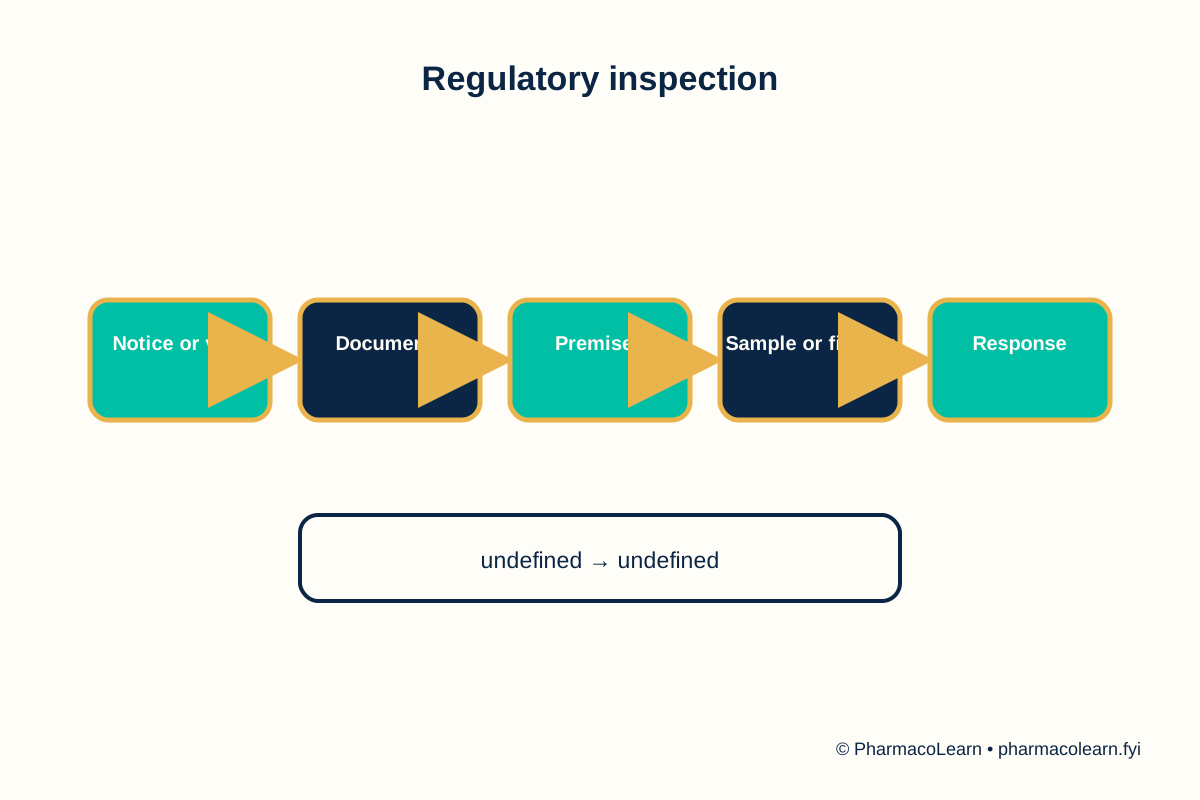
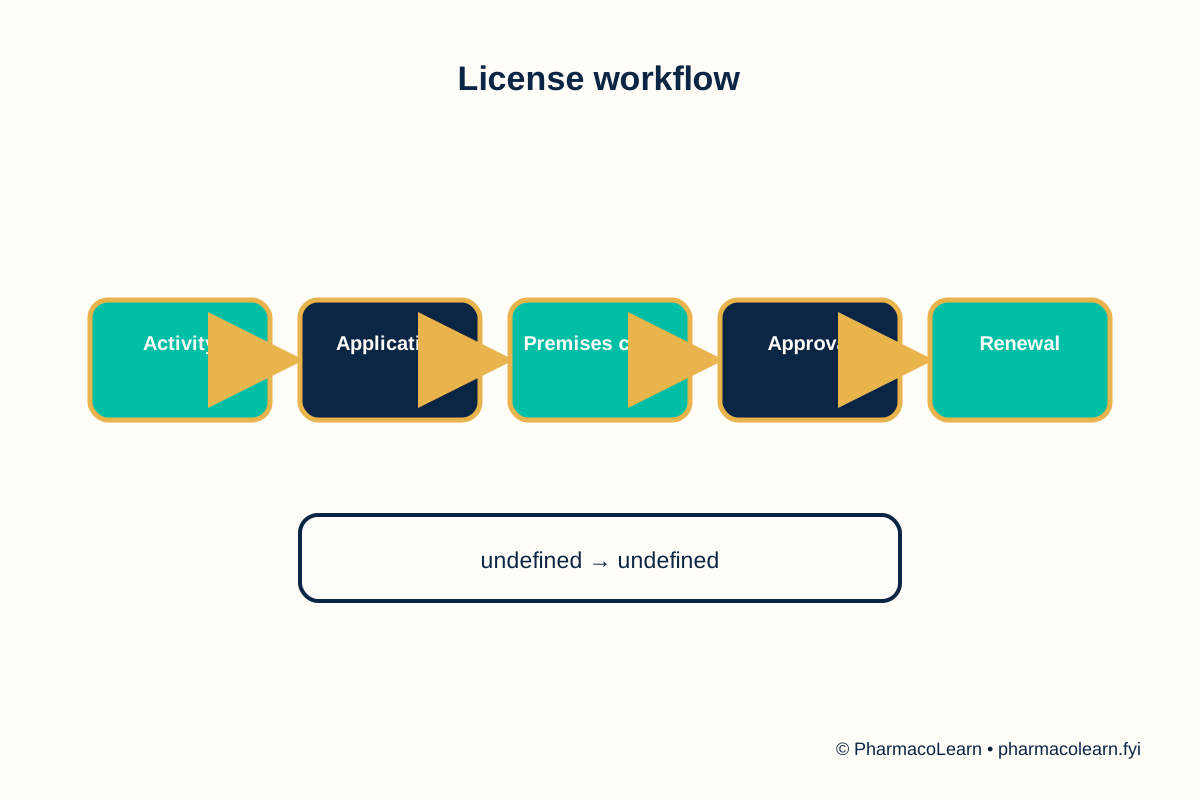
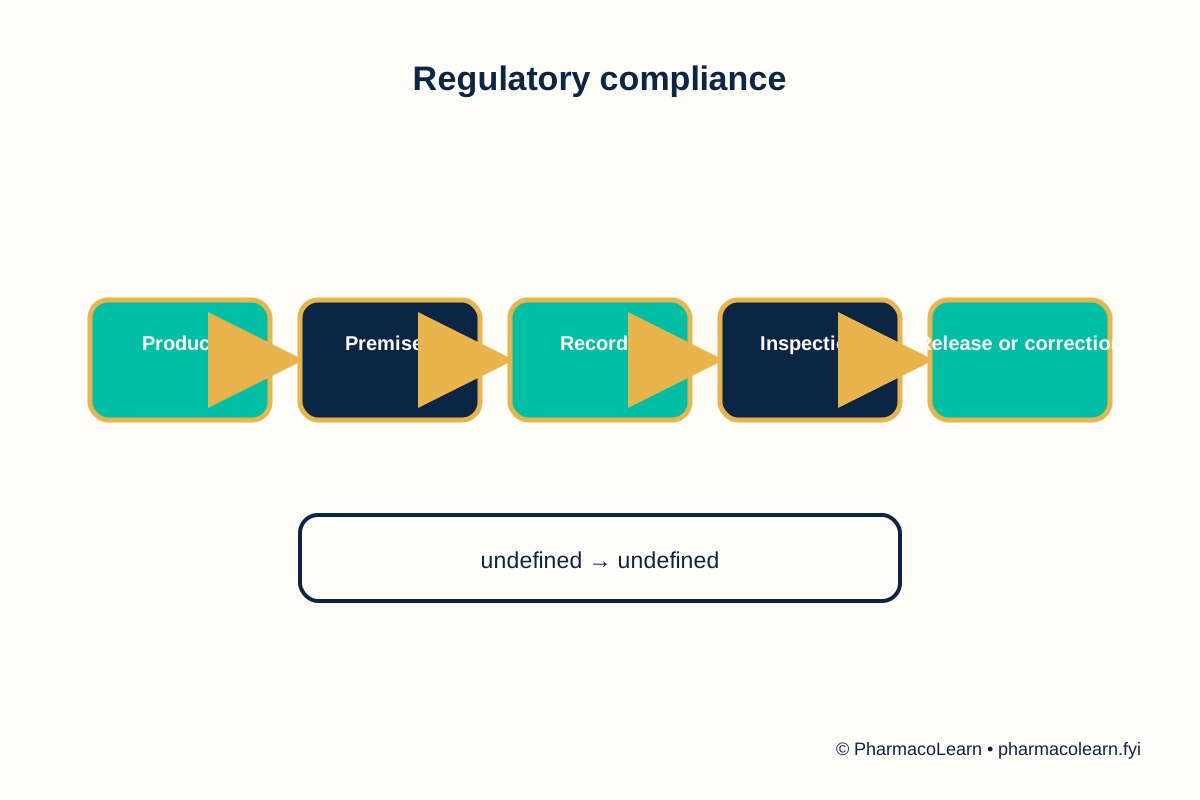
The legal mechanism is scope, authority, duty, evidence, inspection, and remedy. A pharmacist first identifies the activity, locates the operative provision, confirms the responsible authority, preserves records, and follows the lawful process. For example, when a premises changes its regulated activity, the pharmacist checks whether a new licence or amendment is required, stops any unsupported activity, and documents the advice received.
Clinical and practice correlation
A missing licence, inaccurate label, or incomplete record can delay safe supply and expose patients to substandard care. Legal compliance is therefore part of medication safety, not paperwork alone.
References: PharmacoLearn Year 3 syllabus; Pharmacy Council of India, Pharm.D. Regulations 2008; current official Indian legislation, rules, notifications and regulator guidance; standard pharmaceutical jurisprudence text.
Use official sources and record the date checked.
Always verify current law.
Unit 2: Professional Ethics
Syllabus scope
This unit covers principles and significance of professional ethics and the PCI code of pharmaceutical ethics.
Core explanation
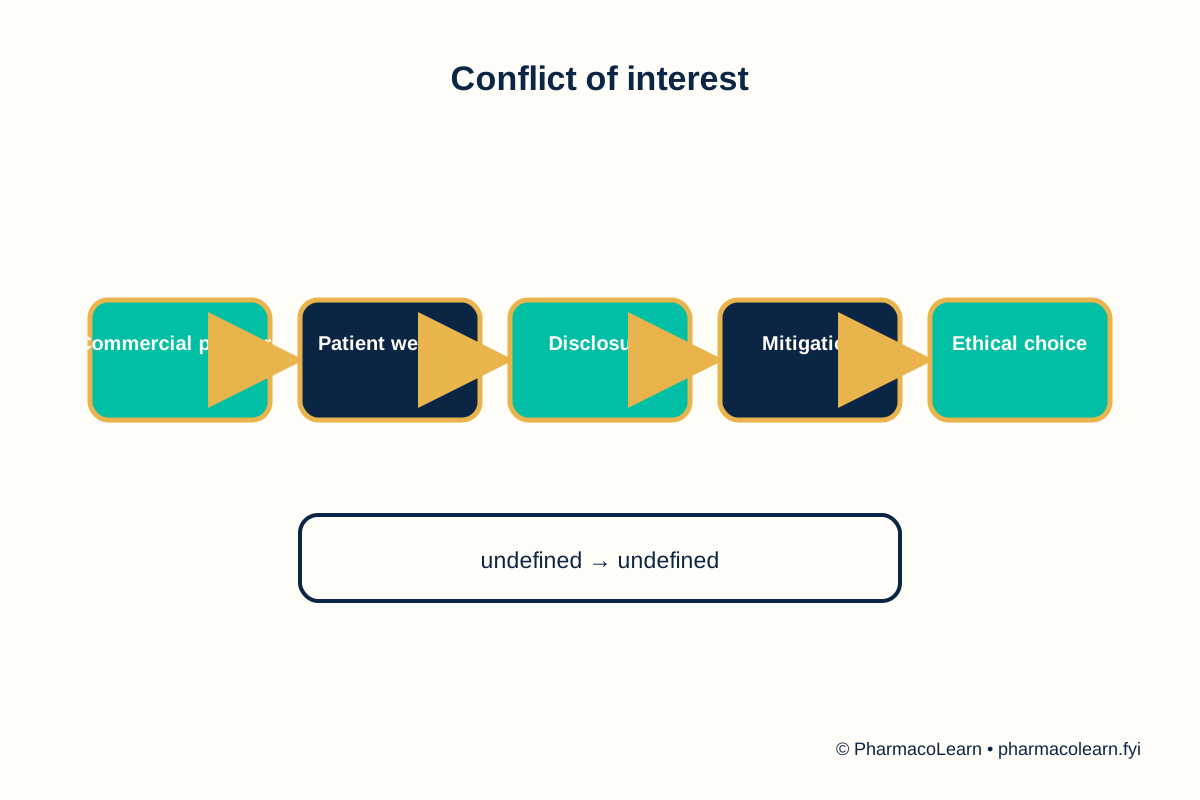
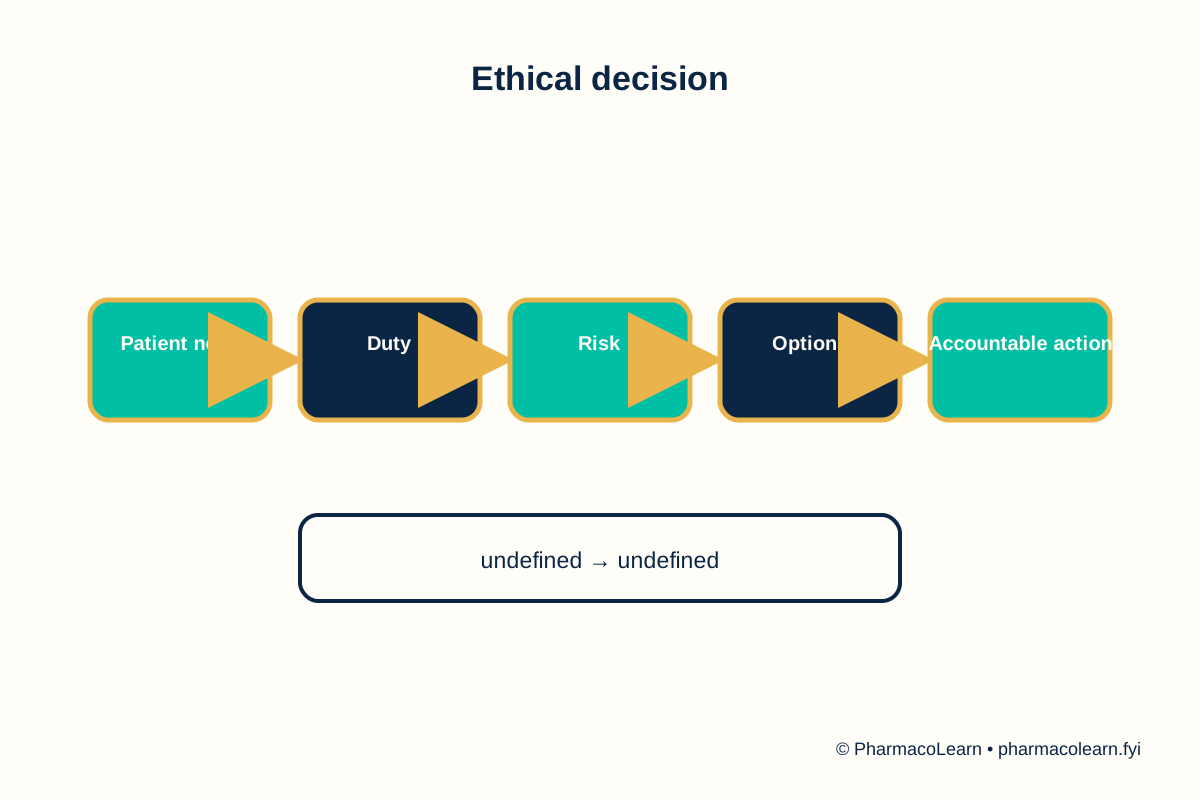
Professional ethics guide conduct where a legal rule may not answer every practical question. The pharmacist's central duties are patient welfare, competence, confidentiality, honesty, respect, non-discrimination, informed communication and accountability. Ethical practice also requires recognizing conflicts of interest and refusing unsafe or deceptive conduct.
Balanced study checklist
Ethics checklist: - Put patient safety before commercial pressure. - Maintain competence and seek help when outside scope. - Protect confidential information. - Give truthful, understandable information. - Avoid discriminatory or coercive behavior. - Document significant interventions and errors. - Cooperate with lawful inspection and professional review. - Report suspected harm through appropriate channels.
A conflict may arise when a patient requests an unsafe medicine, a commercial incentive encourages unnecessary supply, or a colleague asks for an inaccurate record. Ethical reasoning asks who may be harmed, what duties apply, what facts are missing, what safer alternatives exist and how the decision can be justified.
Exam and practice framework
- State the purpose of the law or rule.
- Define the regulated activity or product.
- Identify the responsible authority or professional duty.
- Explain the compliance process.
- List records, licenses or safeguards.
- Describe the consequence of noncompliance without inventing a penalty.
- Mark current provisions that require verification.
FAQs and takeaways
- Why verify current law? Acts, rules, schedules, orders, forms and authorities can change.
- Is a syllabus summary enough for practice? No. It is a study boundary, not legal advice.
- What is the main takeaway? Identify the applicable law, confirm the current provision, document compliance and seek qualified legal or regulatory guidance when uncertain.
Current schedules, amendments, state-specific requirements, forms, fees, penalties and operative notifications are deliberately not reproduced here. Consult the current official text at India Code and the relevant regulator before professional use.
Ethical mechanism and worked example
Ethical reasoning moves from facts to duties, possible harms, competing interests, alternatives, decision, and documentation. If a patient requests an unsafe supply, the pharmacist verifies the request, explains the risk, offers a lawful alternative or referral, and records the intervention without humiliating the patient.
Clinical and practice correlation
Confidentiality, truthful counselling, competence, and non-discrimination directly affect adherence, trust, and patient safety. Ethical duties remain important when no single rule gives a complete answer.
References: PharmacoLearn Year 3 syllabus; Pharmacy Council of India, Pharm.D. Regulations 2008; current official Indian legislation, rules, notifications and regulator guidance; standard pharmaceutical jurisprudence text.
Ethics requires reflection, documentation and accountability.
Unit 3: Drugs and Cosmetics Act and Rules
Syllabus scope
This unit covers objectives, legal definitions, schedules, sale, import, labeling, packaging, indigenous systems, DTAB, DCC, CDL, government analyst and drug inspector.
Core explanation
The Drugs and Cosmetics framework regulates drugs and cosmetics through definitions, standards, manufacture, import, sale, distribution, labeling, inspection, sampling and enforcement. Its schedules classify products and impose requirements that may concern prescription control, standards, storage, records, labeling, manufacturing practice, clinical investigation or special categories. Students must learn the purpose of a schedule and locate the current text rather than memorize an outdated list.
Balanced study checklist
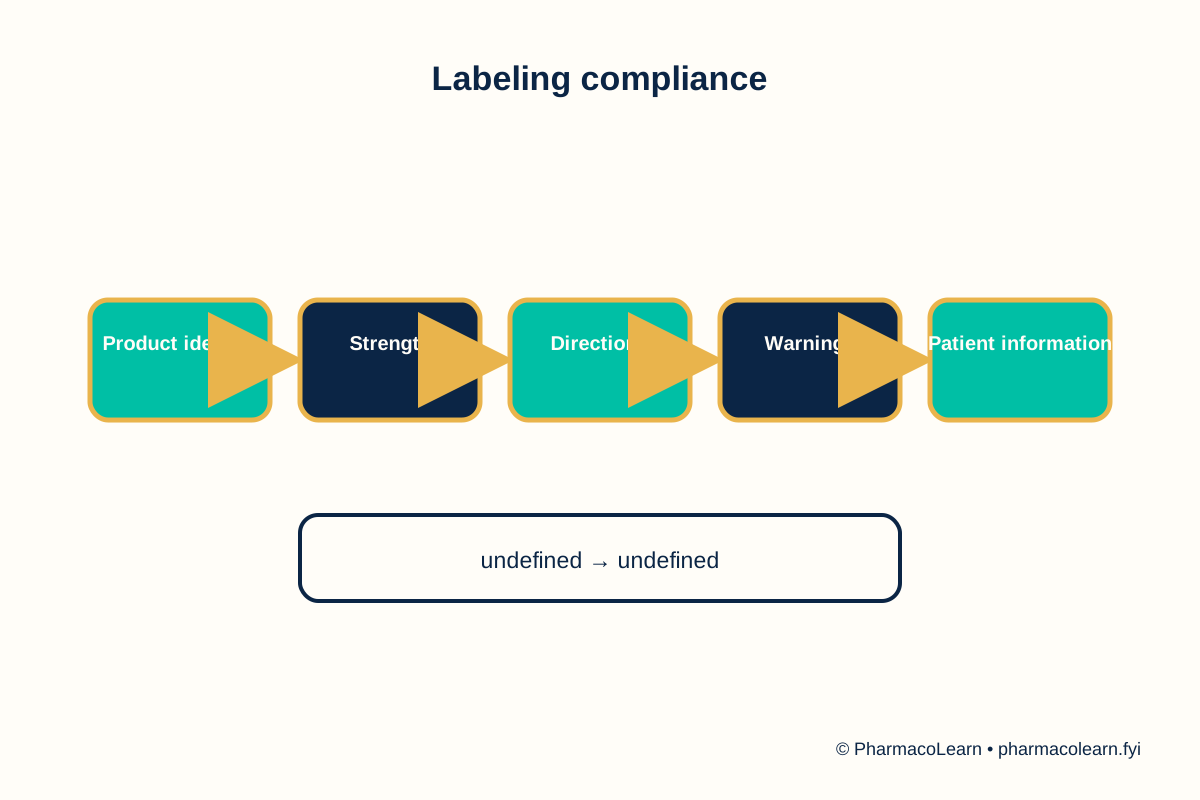
Compliance checklist: - Verify product identity, batch, expiry and source. - Check whether the premises and activity require a license. - Store products under required conditions. - Preserve purchase, sale, batch and recall records. - Follow labeling and packaging requirements. - Cooperate with authorized sampling and inspection. - Do not make unsupported therapeutic claims. - Escalate suspected substandard or counterfeit products.
Regulatory bodies and officers have defined functions. The pharmacist should understand the roles of technical advisory bodies, central and state control structures, laboratories, government analysts and drug inspectors without assuming that every administrative detail remains unchanged.
Exam and practice framework
- State the purpose of the law or rule.
- Define the regulated activity or product.
- Identify the responsible authority or professional duty.
- Explain the compliance process.
- List records, licenses or safeguards.
- Describe the consequence of noncompliance without inventing a penalty.
- Mark current provisions that require verification.
FAQs and takeaways
- Why verify current law? Acts, rules, schedules, orders, forms and authorities can change.
- Is a syllabus summary enough for practice? No. It is a study boundary, not legal advice.
- What is the main takeaway? Identify the applicable law, confirm the current provision, document compliance and seek qualified legal or regulatory guidance when uncertain.
Current schedules, amendments, state-specific requirements, forms, fees, penalties and operative notifications are deliberately not reproduced here. Consult the current official text at India Code and CDSCO before professional use.
Regulatory mechanism and worked example
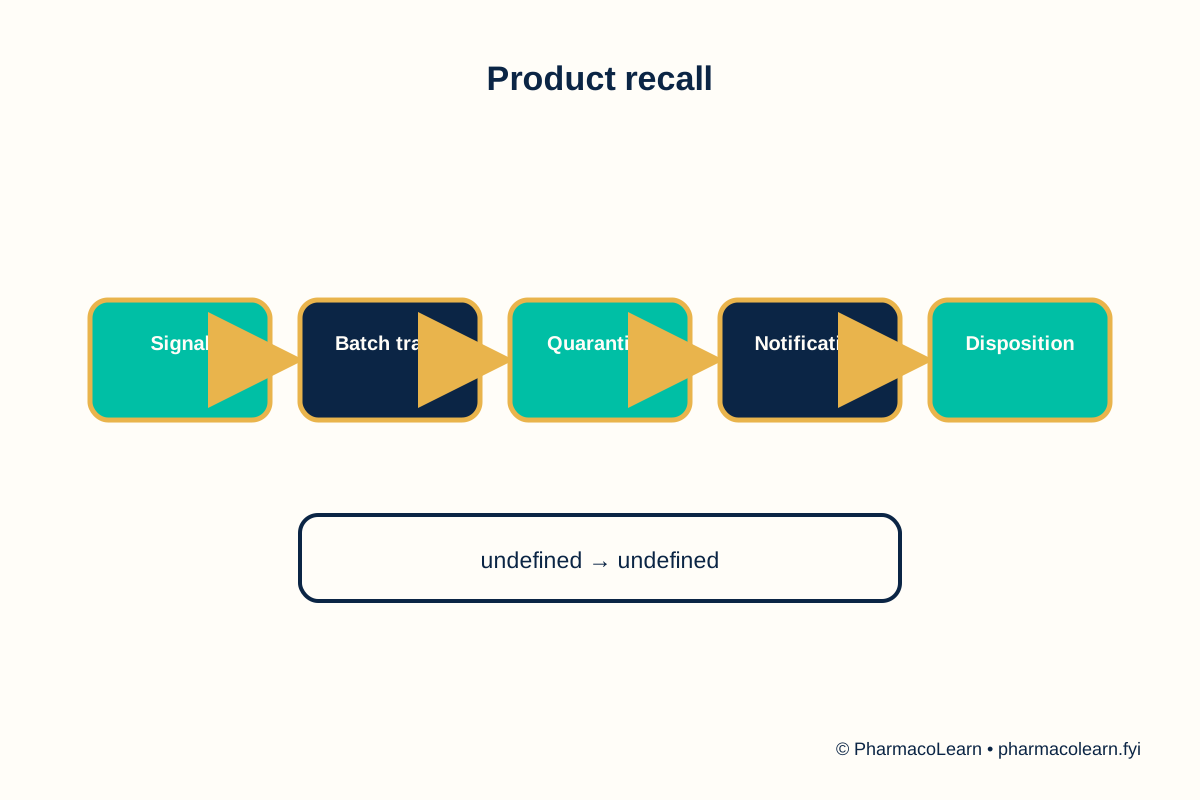
The framework works through definitions, standards, licences, records, inspection, sampling, laboratory analysis, notice, adjudication, and appeal or remedy. If a received batch has damaged packaging or an uncertain source, the pharmacist quarantines it, preserves invoices and batch details, informs the responsible person, and follows the approved recall or reporting route.
Clinical and practice correlation
Storage, labelling, traceability, and recall controls prevent patients from receiving contaminated, counterfeit, expired, or misidentified products.
References: PharmacoLearn Year 3 syllabus; Pharmacy Council of India, Pharm.D. Regulations 2008; current official Indian legislation, rules, notifications and regulator guidance; standard pharmaceutical jurisprudence text.
Never rely on an outdated schedule or notification.
Unit 4: Pharmacy Act
Syllabus scope
This unit covers objectives, definitions, councils, registration, procedure and Education Regulations.
Core explanation
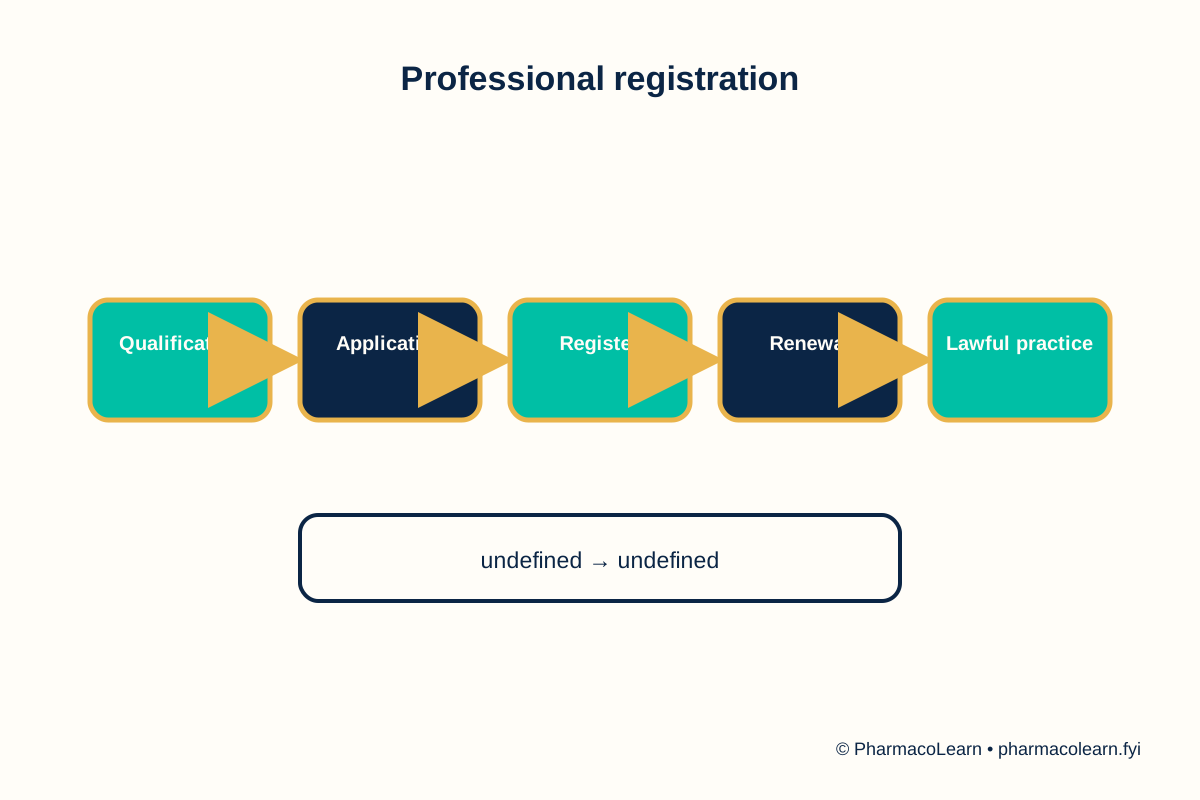
The Pharmacy Act establishes the professional registration framework and supports standards for pharmacy education and practice. Registration is not merely a formality. It links professional identity with qualification, lawful practice, disciplinary responsibility and public trust. Central and state councils have distinct functions under the current framework.
Balanced study checklist
Study checklist: - Recognize the purpose of registration. - Distinguish qualification from registration. - Understand the role of central and state bodies. - Keep registration details and renewal obligations current. - Practice within professional competence. - Cooperate with disciplinary procedures. - Verify current Education Regulations and amendments.
A pharmacist should not represent unregistered practice as lawful or allow professional credentials to be misused. Employment, supervision, ownership and dispensing requirements may involve additional rules. Exact eligibility, registration and renewal provisions must be checked against the current official law and the relevant state authority.
Exam and practice framework
- State the purpose of the law or rule.
- Define the regulated activity or product.
- Identify the responsible authority or professional duty.
- Explain the compliance process.
- List records, licenses or safeguards.
- Describe the consequence of noncompliance without inventing a penalty.
- Mark current provisions that require verification.
FAQs and takeaways
- Why verify current law? Acts, rules, schedules, orders, forms and authorities can change.
- Is a syllabus summary enough for practice? No. It is a study boundary, not legal advice.
- What is the main takeaway? Identify the applicable law, confirm the current provision, document compliance and seek qualified legal or regulatory guidance when uncertain.
Current schedules, amendments, state-specific requirements, forms, fees, penalties and operative notifications are deliberately not reproduced here. Consult the current official text at India Code and the relevant State Pharmacy Council before professional use.
Registration mechanism and worked example
The professional framework links recognized qualification, registration, lawful practice, records, and disciplinary accountability. If a pharmacist changes state, name, workplace, or registration detail, the pharmacist checks the applicable council process, submits accurate documents, and preserves confirmation rather than assuming that an old certificate is sufficient.
Clinical and practice correlation
Verified professional identity supports supervision, accountability, and safe dispensing. Misrepresented credentials can place patients at risk and weaken the chain of responsibility.
References: PharmacoLearn Year 3 syllabus; Pharmacy Council of India, Pharm.D. Regulations 2008; current official Indian legislation, rules, notifications and regulator guidance; standard pharmaceutical jurisprudence text.
Registration status should be verified before practice.
Unit 5: Medicinal and Toilet Preparations Act
Syllabus scope
This unit covers objectives, definitions, licensing, bonded and non-bonded laboratories, warehousing and manufacture of traditional, homoeopathic, proprietary and other preparations.
Core explanation
This legislation historically addressed excise and control issues for medicinal and toilet preparations containing alcohol or narcotic substances. The subject requires understanding of licensing, bonded and non-bonded premises, manufacture, storage, records, warehousing and authorized use. Because taxation and regulatory arrangements can change, current status and replacement provisions must be verified before treating historical descriptions as operative law.
Balanced study checklist
Study framework: - Define the preparation category under the applicable law. - Identify the premises and license involved. - Understand bond, storage and movement controls. - Separate manufacture from sale and distribution. - Maintain records and permit inspection. - Verify provisions for indigenous, homoeopathic and proprietary products. - Check whether another current statute or notification now governs the activity.
Exam and practice framework
- State the purpose of the law or rule.
- Define the regulated activity or product.
- Identify the responsible authority or professional duty.
- Explain the compliance process.
- List records, licenses or safeguards.
- Describe the consequence of noncompliance without inventing a penalty.
- Mark current provisions that require verification.
FAQs and takeaways
- Why verify current law? Acts, rules, schedules, orders, forms and authorities can change.
- Is a syllabus summary enough for practice? No. It is a study boundary, not legal advice.
- What is the main takeaway? Identify the applicable law, confirm the current provision, document compliance and seek qualified legal or regulatory guidance when uncertain.
Current schedules, amendments, state-specific requirements, forms, fees, penalties and operative notifications are deliberately not reproduced here. Consult the current official text at India Code and the relevant tax or regulatory authority before professional use.
Control mechanism and worked example
Control operates through product definition, licensed premises, approved manufacture, storage, movement, records, and inspection. For a preparation whose legal status is uncertain, the pharmacist identifies its ingredients and intended use, checks the current controlling law, and pauses manufacture or supply until the authority or qualified adviser confirms the route.
Clinical and practice correlation
Uncontrolled alcohol- or narcotic-containing preparations can create dose variability, contamination, diversion, and patient harm. Historical teaching must be separated from current operative requirements.
References: PharmacoLearn Year 3 syllabus; Pharmacy Council of India, Pharm.D. Regulations 2008; current official Indian legislation, rules, notifications and regulator guidance; standard pharmaceutical jurisprudence text.
Historical provisions require current legal confirmation.
Unit 6: Narcotic Drugs and Psychotropic Substances Act
Syllabus scope
This unit covers objectives, definitions, consultative structures, national fund, prohibition, control, regulation and schedules.
Core explanation
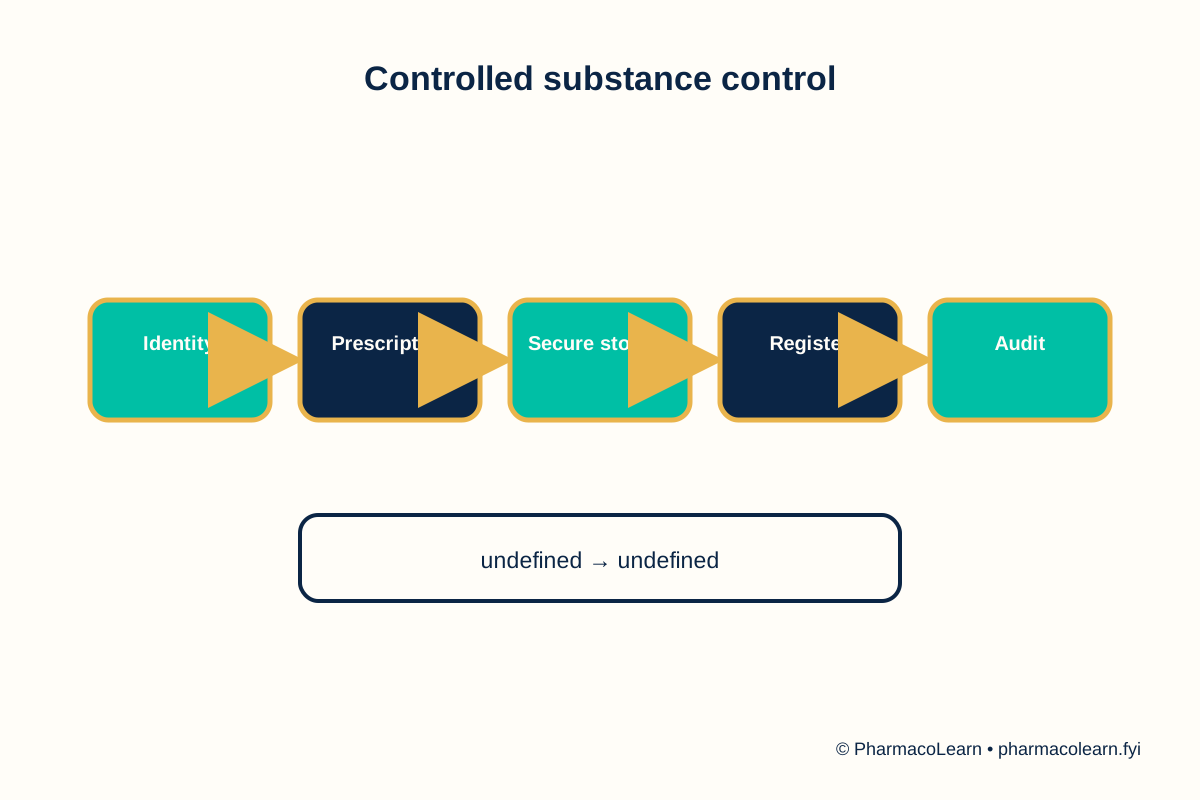
Controlled substances are regulated through strict controls on cultivation, manufacture, possession, sale, transport, storage, prescription, record keeping and disposal. The legal system distinguishes substances, activities, authorities, permissions and offences. A pharmacist must never infer legality from medical usefulness alone.
Balanced study checklist
Controlled-substance checklist: - Verify the exact substance and current schedule. - Confirm prescriber, patient, quantity and form. - Use the required prescription and register. - Store securely with restricted access. - Maintain receipt, issue, balance and disposal records. - Investigate discrepancies immediately. - Follow reporting, inspection and destruction procedures. - Do not transfer or refill outside the lawful process.
Penalties and procedural requirements are high stakes. Current schedules, forms, record-retention periods and state-specific requirements must be verified from official sources before practice or publication.
Exam and practice framework
- State the purpose of the law or rule.
- Define the regulated activity or product.
- Identify the responsible authority or professional duty.
- Explain the compliance process.
- List records, licenses or safeguards.
- Describe the consequence of noncompliance without inventing a penalty.
- Mark current provisions that require verification.
FAQs and takeaways
- Why verify current law? Acts, rules, schedules, orders, forms and authorities can change.
- Is a syllabus summary enough for practice? No. It is a study boundary, not legal advice.
- What is the main takeaway? Identify the applicable law, confirm the current provision, document compliance and seek qualified legal or regulatory guidance when uncertain.
Current schedules, amendments, state-specific requirements, forms, fees, penalties and operative notifications are deliberately not reproduced here. Consult the current official text at India Code and the relevant narcotics authority before professional use.
Controlled-substance mechanism and worked example
Control depends on substance identity, schedule, authorized purpose, prescriber and patient requirements, secure custody, records, reconciliation, inspection, and lawful disposal. If the physical balance does not match the register, the pharmacist secures stock, stops unexplained issue, recounts with an authorized witness, documents the discrepancy, and escalates immediately.
Clinical and practice correlation
Accurate controlled-medicine records prevent diversion while preserving access for legitimate pain, seizure, anesthesia, and palliative care.
References: PharmacoLearn Year 3 syllabus; Pharmacy Council of India, Pharm.D. Regulations 2008; current official Indian legislation, rules, notifications and regulator guidance; standard pharmaceutical jurisprudence text.
Controlled-substance records must be complete and contemporaneous.
Unit 7: Drugs and Magic Remedies
Syllabus scope
This unit covers salient features of the Act and Rules.
Core explanation
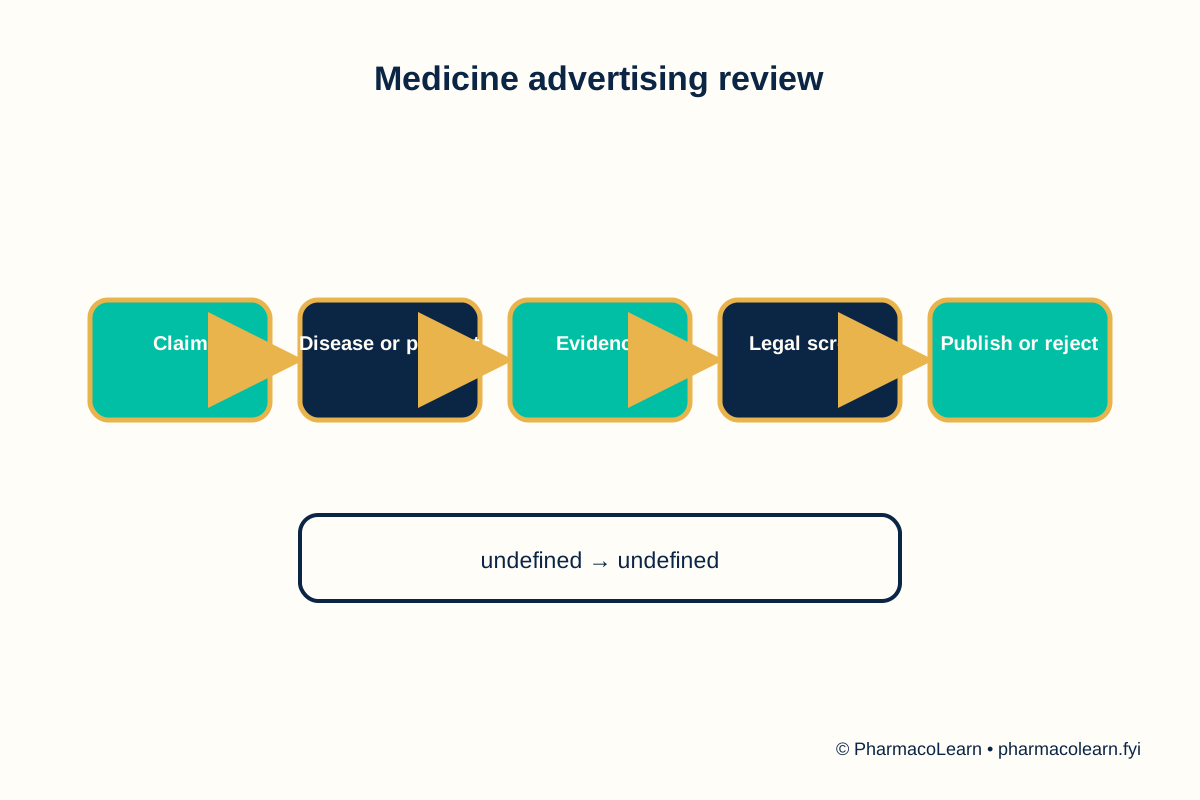
The Drugs and Magic Remedies framework addresses advertising and claims for specified diseases, conditions, products and remedies. It protects the public from misleading claims, exaggerated promises, magical cures and advertisements that may encourage unsafe self-treatment. The pharmacist should distinguish educational information from promotional communication and confirm that claims are evidence based and legally permitted.
Balanced study checklist
Advertising review checklist: - Is the claim truthful and supported? - Does it imply guaranteed cure or prevention? - Does it target a serious disease or vulnerable group? - Does it use testimonials or authority in a misleading way? - Does it encourage delay of diagnosis or proven treatment? - Is the product category regulated differently? - Has current legal review been completed?
A disclaimer does not automatically cure a prohibited or misleading claim. Online posts, labels, posters, messages and verbal promotion may create risk. Current prohibited categories and exemptions must be checked against the latest law and rules.
Exam and practice framework
- State the purpose of the law or rule.
- Define the regulated activity or product.
- Identify the responsible authority or professional duty.
- Explain the compliance process.
- List records, licenses or safeguards.
- Describe the consequence of noncompliance without inventing a penalty.
- Mark current provisions that require verification.
FAQs and takeaways
- Why verify current law? Acts, rules, schedules, orders, forms and authorities can change.
- Is a syllabus summary enough for practice? No. It is a study boundary, not legal advice.
- What is the main takeaway? Identify the applicable law, confirm the current provision, document compliance and seek qualified legal or regulatory guidance when uncertain.
Current schedules, amendments, state-specific requirements, forms, fees, penalties and operative notifications are deliberately not reproduced here. Consult the current official text at India Code and the relevant authority before professional use.
Advertising-control mechanism and worked example
The law controls communication by identifying prohibited or restricted claims, product categories, disease references, exemptions, and responsibility for publication. If a poster claims guaranteed cure for a serious condition, the pharmacist pauses publication, checks the current provision, removes unsupported language, and routes the material for legal and regulatory review.
Clinical and practice correlation
Misleading claims can delay diagnosis, encourage unsafe self-treatment, and exploit vulnerable patients. Evidence-based counselling is safer than promotional certainty.
References: PharmacoLearn Year 3 syllabus; Pharmacy Council of India, Pharm.D. Regulations 2008; current official Indian legislation, rules, notifications and regulator guidance; standard pharmaceutical jurisprudence text.
Review every public claim before publication.
Unit 8: Essential Commodities and Drug Price Control
Syllabus scope
This unit covers essential commodities framework relevant to medicines and price control.
Core explanation
Price control aims to protect access while maintaining lawful supply and quality. The pharmacist must distinguish a controlled ceiling price, retail price, trade margin, tax component, pack size and a voluntary market price. The applicable order may change, so current notifications and official price lists are essential.
Balanced study checklist
Price-compliance checklist: - Identify the exact formulation, strength and pack size. - Check whether it falls under the current controlled list. - Verify the printed price and permitted changes. - Preserve purchase invoices and price records. - Avoid charging above the lawful maximum. - Display or communicate price transparently. - Handle revised prices and old stock according to current directions. - Refer disputes to the appropriate authority or organization.
The pharmacist should also consider availability, substitution rules, patient affordability and continuity of treatment. Price compliance does not permit substitution that changes strength, dosage form or therapeutic identity without lawful and clinical justification.
Exam and practice framework
- State the purpose of the law or rule.
- Define the regulated activity or product.
- Identify the responsible authority or professional duty.
- Explain the compliance process.
- List records, licenses or safeguards.
- Describe the consequence of noncompliance without inventing a penalty.
- Mark current provisions that require verification.
FAQs and takeaways
- Why verify current law? Acts, rules, schedules, orders, forms and authorities can change.
- Is a syllabus summary enough for practice? No. It is a study boundary, not legal advice.
- What is the main takeaway? Identify the applicable law, confirm the current provision, document compliance and seek qualified legal or regulatory guidance when uncertain.
Current schedules, amendments, state-specific requirements, forms, fees, penalties and operative notifications are deliberately not reproduced here. Consult the current official order and NPPA sources before professional use.
Price-control mechanism and worked example
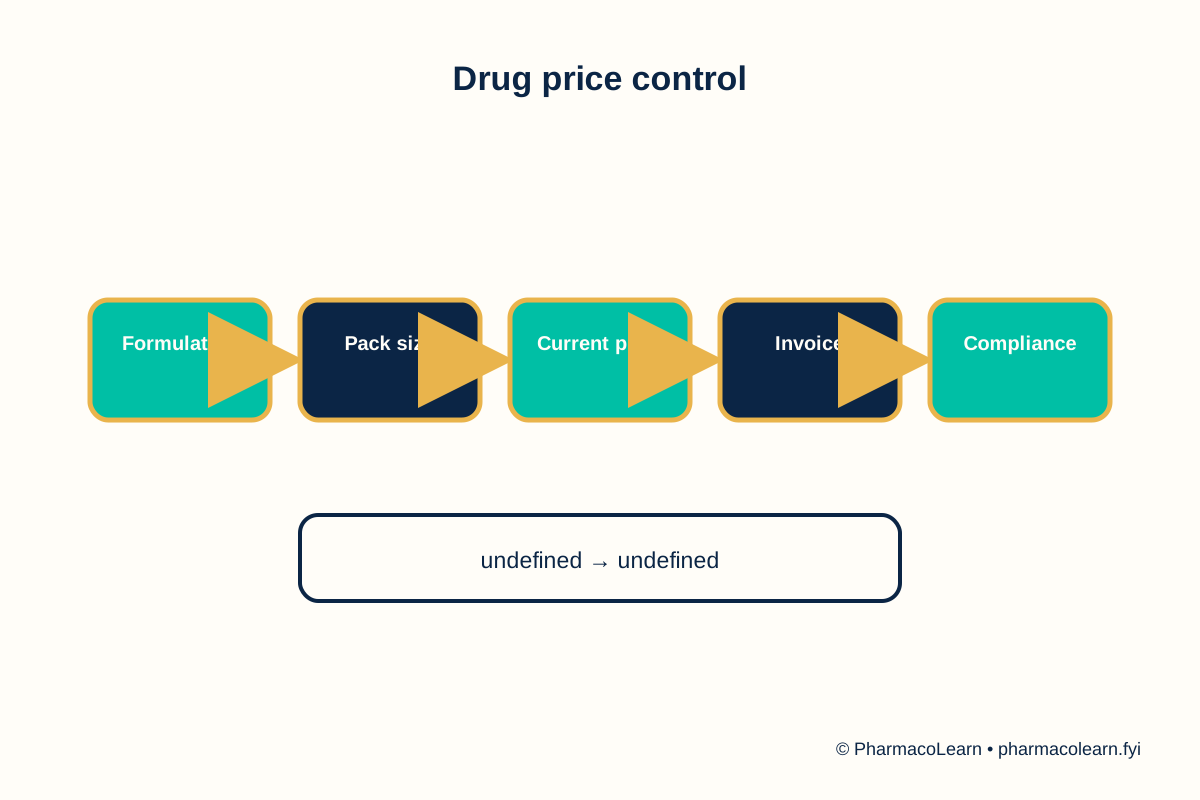
Price control works through product and pack identification, controlled-list status, notified price calculation, display, invoice records, and enforcement. If the printed price differs from the current official information, the pharmacist preserves the pack and invoice, checks the exact strength and pack size, and refers the discrepancy through the approved route rather than guessing.
Clinical and practice correlation
Price transparency supports continuity and affordability. It does not authorize an unapproved substitution that changes strength, dosage form, or therapeutic identity.
References: PharmacoLearn Year 3 syllabus; Pharmacy Council of India, Pharm.D. Regulations 2008; current official Indian legislation, rules, notifications and regulator guidance; standard pharmaceutical jurisprudence text.
Check the current official price source.
Unit 9: Drug Price Control Order and National Drug Policy
Syllabus scope
This unit covers current price control and national policy concepts.
Core explanation
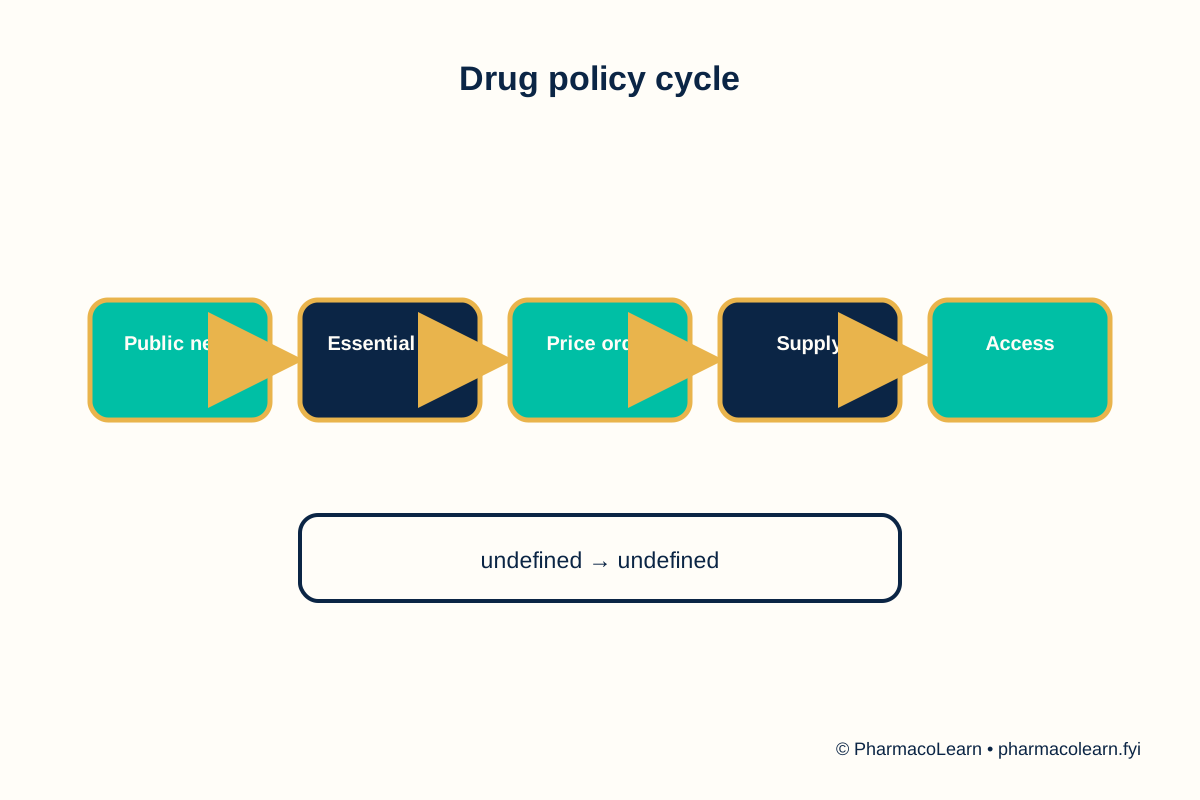
Drug price policy balances affordability, availability, quality, innovation and sustainable supply. A price-control order can specify how ceiling prices are calculated, how manufacturers revise prices, how retailers display prices and how overcharging is handled. The exact formula, list and procedural requirement must be checked in the current order.
Balanced study checklist
Revision checklist: - Confirm the current policy and order version. - Check formulation and pack equivalence. - Verify permitted annual or notified revision. - Keep invoices and purchase records. - Explain a price discrepancy without making unsupported accusations. - Protect continuity when a low-price product is unavailable. - Do not confuse discount, margin and ceiling price.
National policy can also affect essential medicines, procurement, generic use, public supply and rational drug use. Policy language is not a substitute for the current operative notification. Mark historical syllabus examples separately from current legal requirements.
Exam and practice framework
- State the purpose of the law or rule.
- Define the regulated activity or product.
- Identify the responsible authority or professional duty.
- Explain the compliance process.
- List records, licenses or safeguards.
- Describe the consequence of noncompliance without inventing a penalty.
- Mark current provisions that require verification.
FAQs and takeaways
- Why verify current law? Acts, rules, schedules, orders, forms and authorities can change.
- Is a syllabus summary enough for practice? No. It is a study boundary, not legal advice.
- What is the main takeaway? Identify the applicable law, confirm the current provision, document compliance and seek qualified legal or regulatory guidance when uncertain.
Current schedules, amendments, state-specific requirements, forms, fees, penalties and operative notifications are deliberately not reproduced here. Consult the current official order and NPPA sources before professional use.
Policy mechanism and worked example
Policy becomes operational through a notified order, product classification, price calculation, permitted revision, records, display, and enforcement. If a manufacturer or outlet reports a price change, the pharmacist checks the exact formulation, strength, pack, effective date, and current official notice before updating records or communicating a conclusion.
Clinical and practice correlation
Price policy affects access and supply, but affordability decisions must also protect quality, availability, and correct therapeutic identity.
References: PharmacoLearn Year 3 syllabus; Pharmacy Council of India, Pharm.D. Regulations 2008; current official Indian legislation, rules, notifications and regulator guidance; standard pharmaceutical jurisprudence text.
Separate policy history from operative requirements.
Unit 10: Prevention of Cruelty to Animals Act
Syllabus scope
This unit covers objectives and principles relating to animals used in research.
Core explanation
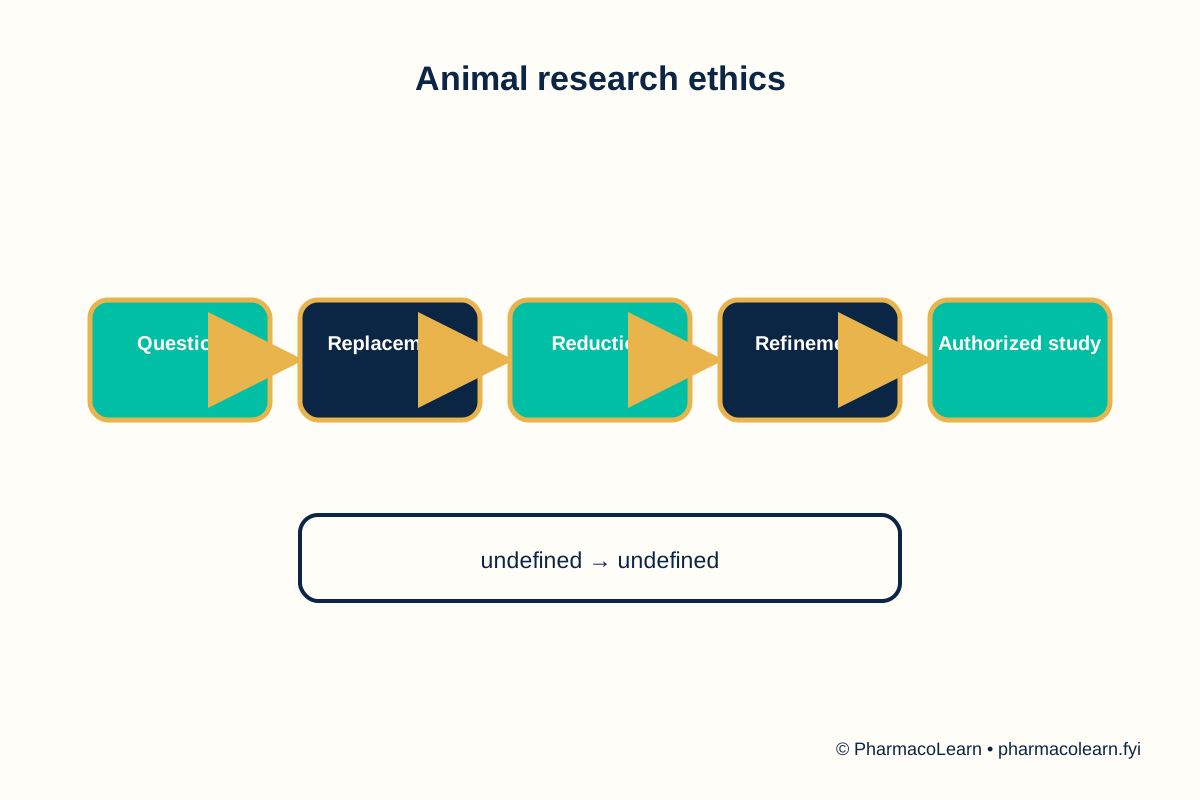
Animal research law and ethics seek to prevent unnecessary suffering and require justification, supervision, humane procedures and authorized oversight. Pharmacy students should understand that an experiment must have a scientific purpose, a defined protocol, trained personnel, appropriate housing, pain control and humane endpoints. Replacement, reduction and refinement are core principles.
Balanced study checklist
Ethical checklist: - Can a non-animal method answer the question? - Is the number of animals scientifically justified? - Are procedures minimized and refined? - Is anesthesia or analgesia appropriate? - Are humane endpoints defined? - Is the facility and protocol authorized? - Are records, welfare observations and adverse events documented? - Is disposal or euthanasia humane and compliant?
Current institutional and national committee requirements must be verified. Students should not infer permission to perform an experiment from a syllabus listing alone.
Exam and practice framework
- State the purpose of the law or rule.
- Define the regulated activity or product.
- Identify the responsible authority or professional duty.
- Explain the compliance process.
- List records, licenses or safeguards.
- Describe the consequence of noncompliance without inventing a penalty.
- Mark current provisions that require verification.
FAQs and takeaways
- Why verify current law? Acts, rules, schedules, orders, forms and authorities can change.
- Is a syllabus summary enough for practice? No. It is a study boundary, not legal advice.
- What is the main takeaway? Identify the applicable law, confirm the current provision, document compliance and seek qualified legal or regulatory guidance when uncertain.
Current schedules, amendments, state-specific requirements, forms, fees, penalties and operative notifications are deliberately not reproduced here. Consult the current official animal-welfare and research oversight sources before professional use.
Animal-welfare mechanism and worked example
Oversight works through scientific justification, replacement, reduction, refinement, approved protocol, trained personnel, housing, pain control, humane endpoints, records, inspection, and reporting. If a proposed experiment lacks a defined humane endpoint, the pharmacist or researcher pauses the work and requests committee review before animals are used.
Clinical and practice correlation
Animal welfare protects scientific validity as well as living beings. Uncontrolled pain, poor housing, or unrecorded distress can invalidate results and create ethical harm.
References: PharmacoLearn Year 3 syllabus; Pharmacy Council of India, Pharm.D. Regulations 2008; current official Indian legislation, rules, notifications and regulator guidance; standard pharmaceutical jurisprudence text.
Authorization must precede animal work.
Unit 11: Patents and Designs Act
Syllabus scope
This unit covers patent and design concepts relevant to pharmaceuticals.
Core explanation
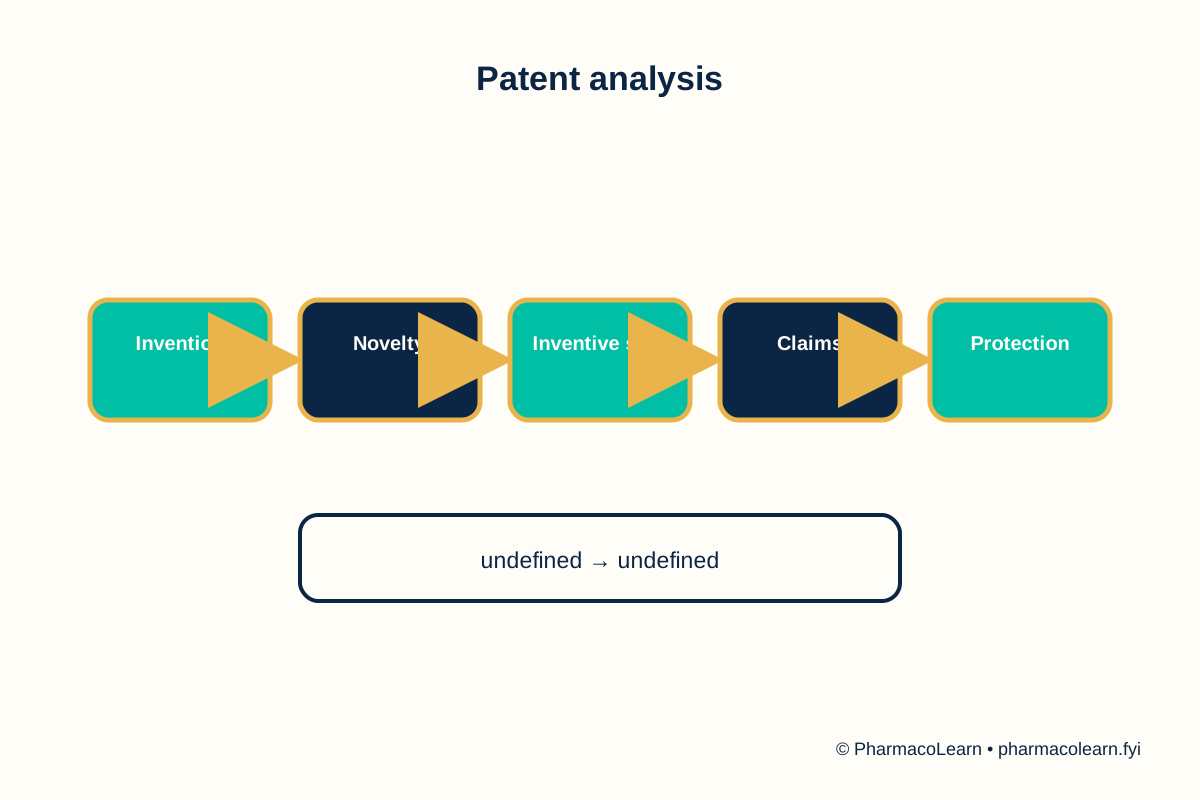
Intellectual-property law protects qualifying inventions and designs while balancing private rights with public interest. A patent analysis asks whether the subject matter is patentable, novel, involves an inventive step, is industrially applicable and is not excluded by law. Pharmaceutical work may involve compounds, formulations, processes, uses, devices, software or biotechnology, each with distinct issues.
Balanced study checklist
Study checklist: - Distinguish patent from trademark, copyright and design protection. - Check novelty and prior art. - Identify the inventive concept and claims. - Separate process, product and formulation questions. - Consider disclosure, ownership and inventorship. - Respect confidentiality before filing. - Avoid assuming that a granted foreign right automatically applies locally. - Refer legal opinions to qualified professionals.
Patent law changes through amendments and case law. This educational summary does not determine freedom to operate or infringement.
Exam and practice framework
- State the purpose of the law or rule.
- Define the regulated activity or product.
- Identify the responsible authority or professional duty.
- Explain the compliance process.
- List records, licenses or safeguards.
- Describe the consequence of noncompliance without inventing a penalty.
- Mark current provisions that require verification.
FAQs and takeaways
- Why verify current law? Acts, rules, schedules, orders, forms and authorities can change.
- Is a syllabus summary enough for practice? No. It is a study boundary, not legal advice.
- What is the main takeaway? Identify the applicable law, confirm the current provision, document compliance and seek qualified legal or regulatory guidance when uncertain.
Current schedules, amendments, state-specific requirements, forms, fees, penalties and operative notifications are deliberately not reproduced here. Consult the current official patent and design sources before professional use.
Patent mechanism and worked example
Protection depends on eligible subject matter, disclosure, novelty, inventive step, industrial applicability, claims, ownership, filing, examination, and maintenance. Before sharing a novel formulation publicly, the team records inventorship, preserves confidentiality, searches prior art, and obtains qualified advice on filing strategy.
Clinical and practice correlation
Clear ownership and confidentiality support innovation while preventing accidental loss of rights. Patent status does not prove safety, efficacy, freedom to operate, or permission to make a medicine.
References: PharmacoLearn Year 3 syllabus; Pharmacy Council of India, Pharm.D. Regulations 2008; current official Indian legislation, rules, notifications and regulator guidance; standard pharmaceutical jurisprudence text.
Obtain qualified advice on infringement questions.
Unit 12: Prescription and Nonprescription Products
Syllabus scope
This unit covers prescription and nonprescription categories, legal and professional supply responsibilities.
Core explanation
Prescription and nonprescription classification determines how a product may be supplied, labeled, advertised and counseled. The pharmacist must still assess safety for every supply. Nonprescription status does not mean risk free. A prescription medicine may require clarification, while a nonprescription request may require referral rather than sale.
Balanced study checklist
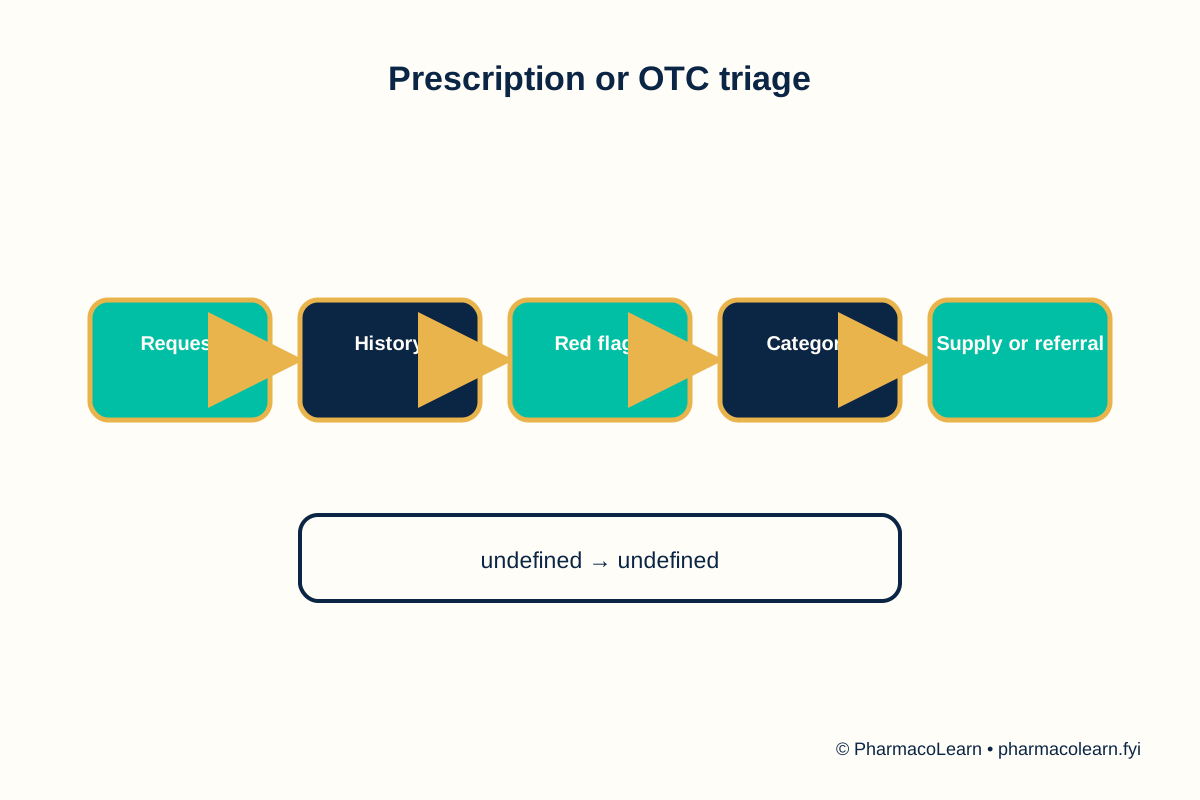
Supply checklist: - Confirm patient, symptom or diagnosis and duration. - Check age, pregnancy, allergy, disease and current medicines. - Screen duplication, interaction and contraindication. - Identify red flags and treatment failure. - Select the correct product, strength and quantity. - Explain directions, duration, expected response and warnings. - Document where required and arrange follow-up.
The pharmacist should not use a brand or commercial request as a substitute for clinical assessment. Current classification, labeling and sale requirements must be checked against operative law.
Exam and practice framework
- State the purpose of the law or rule.
- Define the regulated activity or product.
- Identify the responsible authority or professional duty.
- Explain the compliance process.
- List records, licenses or safeguards.
- Describe the consequence of noncompliance without inventing a penalty.
- Mark current provisions that require verification.
FAQs and takeaways
- Why verify current law? Acts, rules, schedules, orders, forms and authorities can change.
- Is a syllabus summary enough for practice? No. It is a study boundary, not legal advice.
- What is the main takeaway? Identify the applicable law, confirm the current provision, document compliance and seek qualified legal or regulatory guidance when uncertain.
Current schedules, amendments, state-specific requirements, forms, fees, penalties and operative notifications are deliberately not reproduced here. Consult the current official classification and regulator sources before professional use.
Supply mechanism and worked example
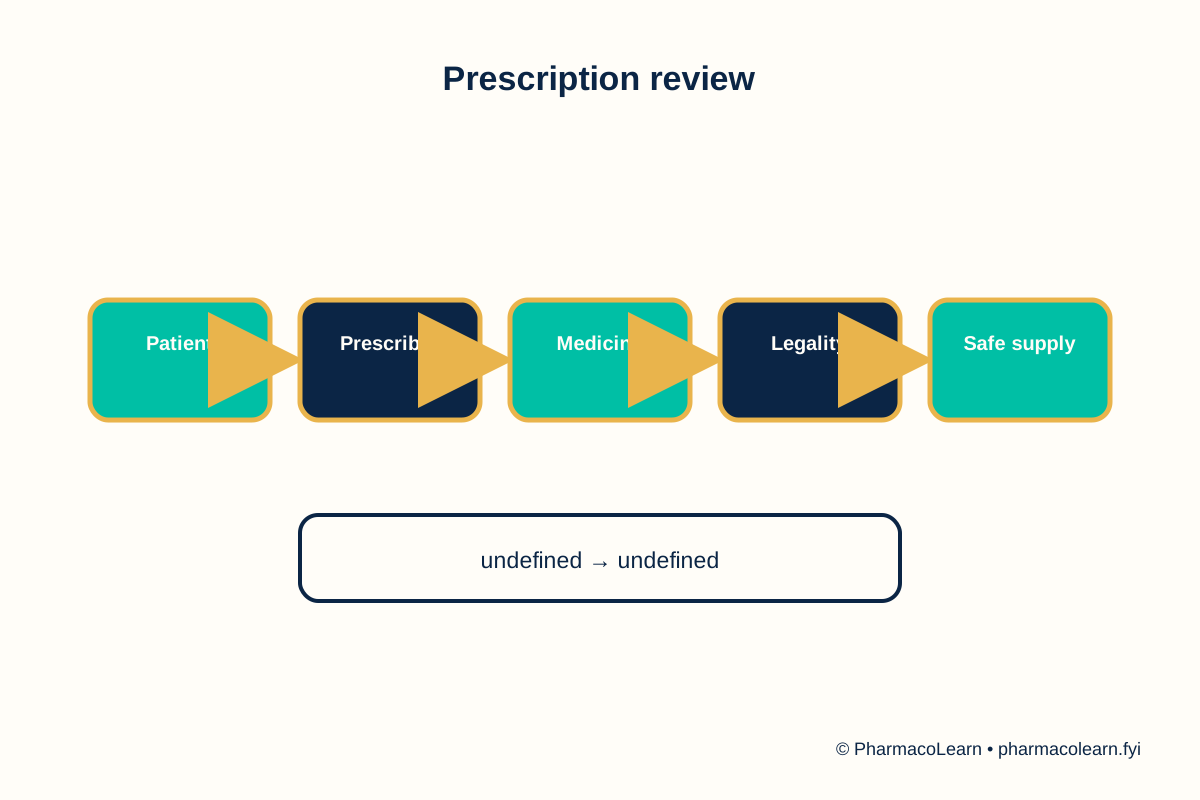
Safe supply requires product identification, patient assessment, legal category, prescription validity where applicable, interaction and contraindication review, directions, warnings, records, and referral. If a person requests an over-the-counter product for persistent bleeding, the pharmacist screens red flags and refers for medical assessment instead of treating nonprescription status as permission to supply without evaluation.
Clinical and practice correlation
Prescription classification changes the legal route of supply, not the pharmacist’s duty to assess benefit, harm, adherence, and referral needs.
References: PharmacoLearn Year 3 syllabus; Pharmacy Council of India, Pharm.D. Regulations 2008; current official Indian legislation, rules, notifications and regulator guidance; standard pharmaceutical jurisprudence text.
Counseling remains necessary for nonprescription products.
Diagrams
Other Year 3 subjects: Pharmacology II · Pharmaceutical Analysis · Pharmacotherapeutics II · Pharmaceutical Jurisprudence · Medicinal Chemistry · Pharm D Year 3, Pharmaceutical Formulations · Year 3 · Pharm D