
Pharm D Year 3, Pharmaceutical Formulations — Pharm D Year 3
Notes for Pharm D Year 3, Pharmaceutical Formulations, Pharm D Year 3, organised unit by unit following the PCI Pharm D syllabus. 7 units, 20 diagrams.
Syllabus: Pharm D Year 3 syllabus
Practicals: Pharm D Year 3, Pharmaceutical Formulations practicals
Units in this subject
- Unit 1: Pharmaceutical Dosage Forms
- Unit 2: Tablets
- Unit 3: Capsules
- Unit 4: Liquid Oral Preparations
- Unit 5: Parenterals
- Unit 6: Ophthalmic Preparations, Semisolids and Suppositories
- Unit 7: Controlled and Novel Drug Delivery Systems
Unit 1: Pharmaceutical Dosage Forms
Expanded formulation reasoning
Study framework and FAQ
Patient-use checklist
Evaluation checklist: identity, assay, content uniformity, release, stability, packaging and usability. Record the specification and method version.
Examination point
Exam point: explain why the same active ingredient may require different dosage forms for route, onset, stability, release or adherence. Link each design choice to a measurable quality attribute.
Patient counseling includes route, dose, storage, package integrity, measuring device, missed-dose advice and signs of product deterioration. A formulation is successful only when the patient can use it correctly and consistently.
Study framework: connect active-ingredient properties, route, excipient function, process, critical quality attribute, packaging and patient use. FAQ: why can a chemically stable product still fail? Physical instability, poor dose uniformity, microbial contamination or delivery failure can make it unsuitable.
+## Expanded formulation reasoning
Preformulation identifies the properties that constrain dosage-form design. Solubility can vary with pH, salt form, polymorph and particle size. Hygroscopicity can change flow and stability. Crystal form can alter dissolution. Compatibility studies identify chemical reaction, adsorption, eutectic behavior or moisture transfer between active ingredient and excipient. The formulation scientist then selects a route and performance target.
Critical quality attributes may include identity, assay, content uniformity, dissolution, disintegration, sterility, endotoxin, viscosity, particle size, release rate, pH, osmolality, microbial quality and container integrity. Critical process parameters such as mixing, granulation endpoint, compression force, temperature, drying, filling or sterilization affect those attributes. Risk assessment links material and process variation to patient impact.
Packaging is part of the dosage form. Moisture, oxygen, light, adsorption, leachables, child resistance and dose delivery can determine shelf life and safe use. A pharmacist should not transfer a product to a different container without considering stability and labeling. Modified-release and sterile systems require especially careful handling.
Syllabus scope
This unit covers concept and classification of pharmaceutical dosage forms.
Core theory
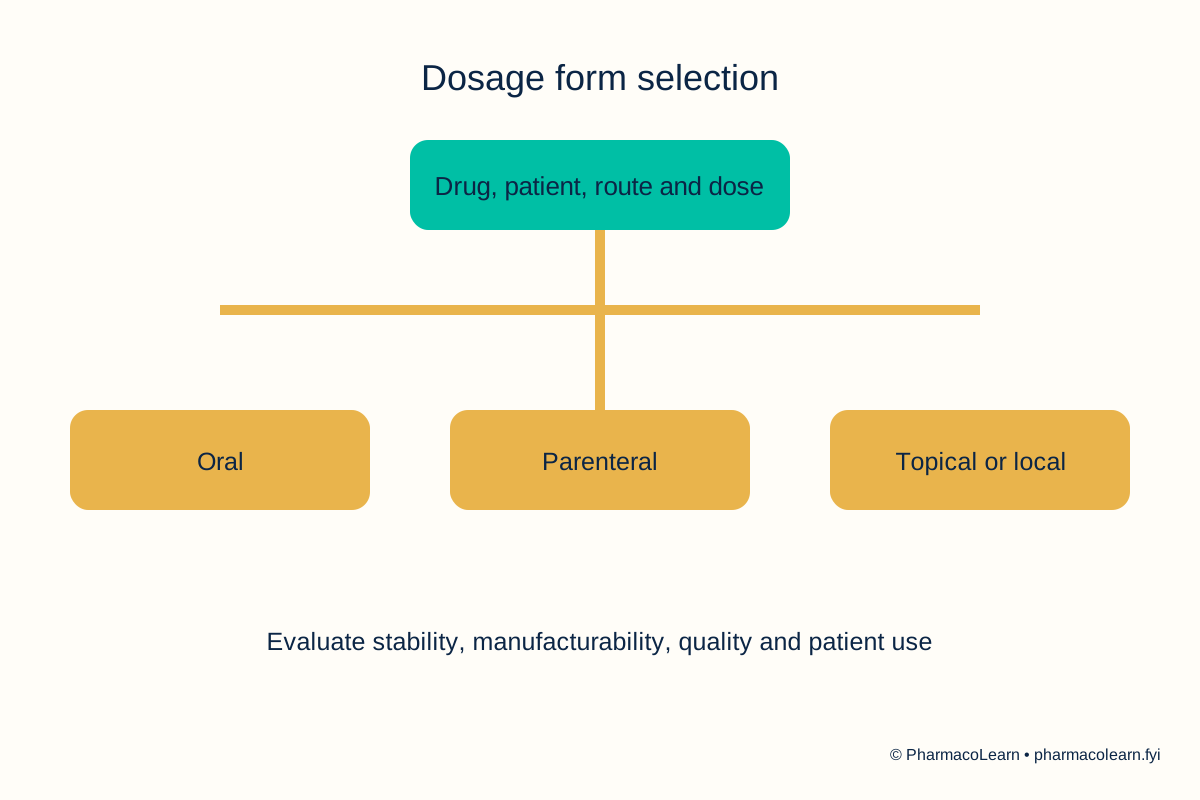
A dosage form is the physical presentation that delivers an active ingredient with excipients suitable for administration, stability, performance and patient use. Classification may be by route, physical state, release pattern, sterility, site of action or manufacturing process. Tablets, capsules, liquids, semisolids, parenterals, ophthalmics, rectals, transdermals, buccals, nasal systems and implants each impose different requirements.
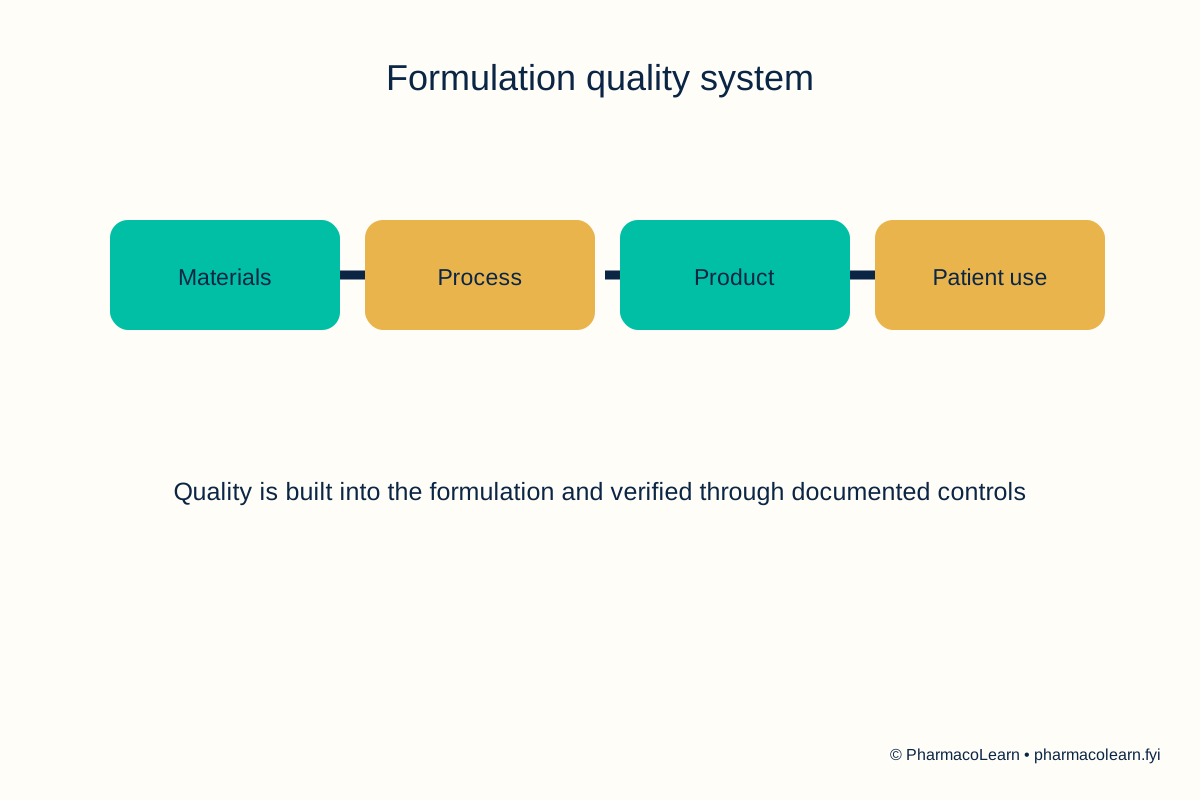
Formulation and evaluation workflow
- Define route, target site, dose and release objective.
- Characterize active ingredient and excipient compatibility.
- Select formulation and manufacturing process.
- Establish in-process controls and critical quality attributes.
- Evaluate finished product performance and stability.
- Select protective packaging and patient instructions.
Pharmacist focus
The pharmacist checks identity, strength, dosage form, storage, administration technique, package integrity, stability, quality defects and patient-specific suitability. Exact tests, limits and acceptance criteria must be verified against the current pharmacopoeia, approved product information and applicable regulatory guidance.
Tips, FAQs and takeaways
- Why is dosage-form selection important? It controls delivery, stability, adherence and therapeutic performance.
- Why evaluate both chemical and physical stability? A product can retain assay while failing to redisperse, dissolve, remain sterile or maintain dose uniformity.
- What is the main takeaway? Formulation quality is demonstrated by controlled manufacture, meaningful evaluation and correct patient use.
References: PharmacoLearn Year 3 syllabus; Pharmacy Council of India, Pharm.D. Regulations 2008; Aulton, Pharmaceutics; Remington, The Science and Practice of Pharmacy; current pharmacopoeial and regulatory guidance.
A formulation decision is acceptable only when the route, dose, release objective, quality test, package and patient instruction agree. Review the product in context. The final review asks whether the patient receives the intended amount at the intended site for the intended duration, with acceptable stability and safety. Always align formulation, evaluation and patient use. Verify always. Document formulation risks and controls. Review before release.
Unit 2: Tablets
Expanded formulation reasoning
Study framework and FAQ
Patient-use checklist
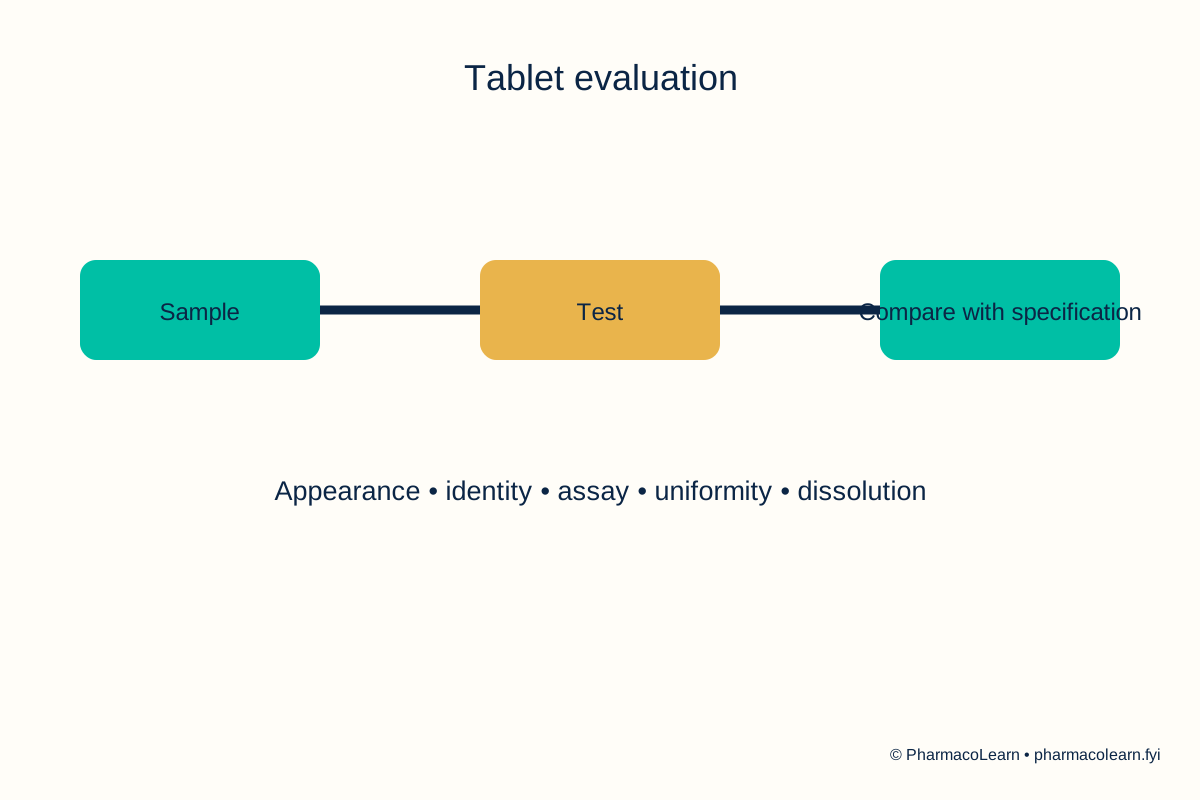
Evaluation checklist: appearance, dimensions, weight, strength, friability, disintegration, dissolution, content uniformity, coating and stability.
Examination point
Exam point: distinguish hardness from mechanical robustness, disintegration from dissolution, and coating appearance from validated release performance.
Tablet defects should be investigated systematically. Review blend uniformity, moisture, granulation, lubrication, tooling, compression, coating and packaging before changing the formula. Do not release a batch based on appearance alone.
Study framework: compare direct compression, wet granulation and dry granulation by powder requirement, moisture exposure, process control and tablet performance. FAQ: why is dissolution important? It links the dosage form to availability of drug for absorption.
+## Expanded formulation reasoning
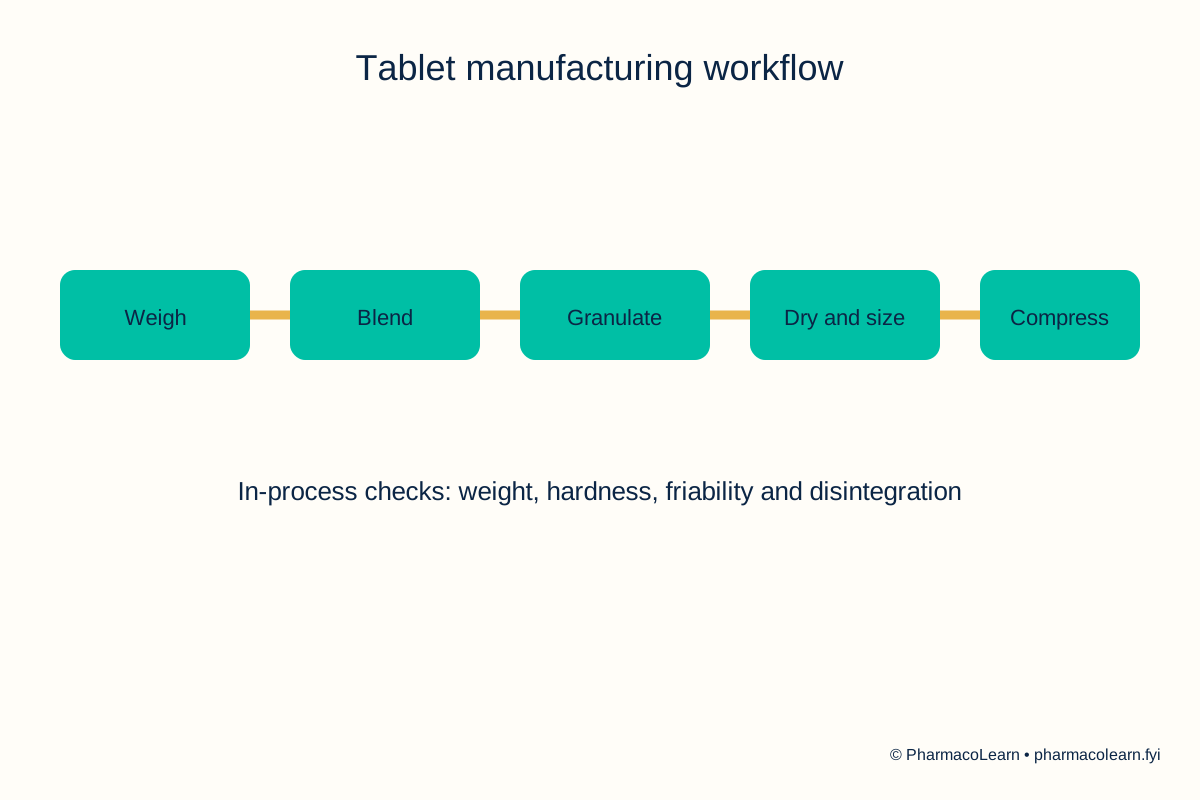
Powder properties determine tablet quality. Flow affects die filling and weight uniformity. Compressibility and compactibility affect strength and friability. Lubricant can reduce ejection force but excess or prolonged mixing may reduce wetting and dissolution. Granulation changes particle size, density, porosity and flow. Drying must achieve a controlled moisture state without degrading the active ingredient.
Compression defects include capping, lamination, sticking, picking, chipping, mottling and weight variation. Investigation should examine powder properties, tooling, compression force, speed, lubrication, moisture and machine condition. Disintegration is not the same as dissolution. A tablet can break apart but release drug slowly, or dissolve while failing a mechanical requirement.
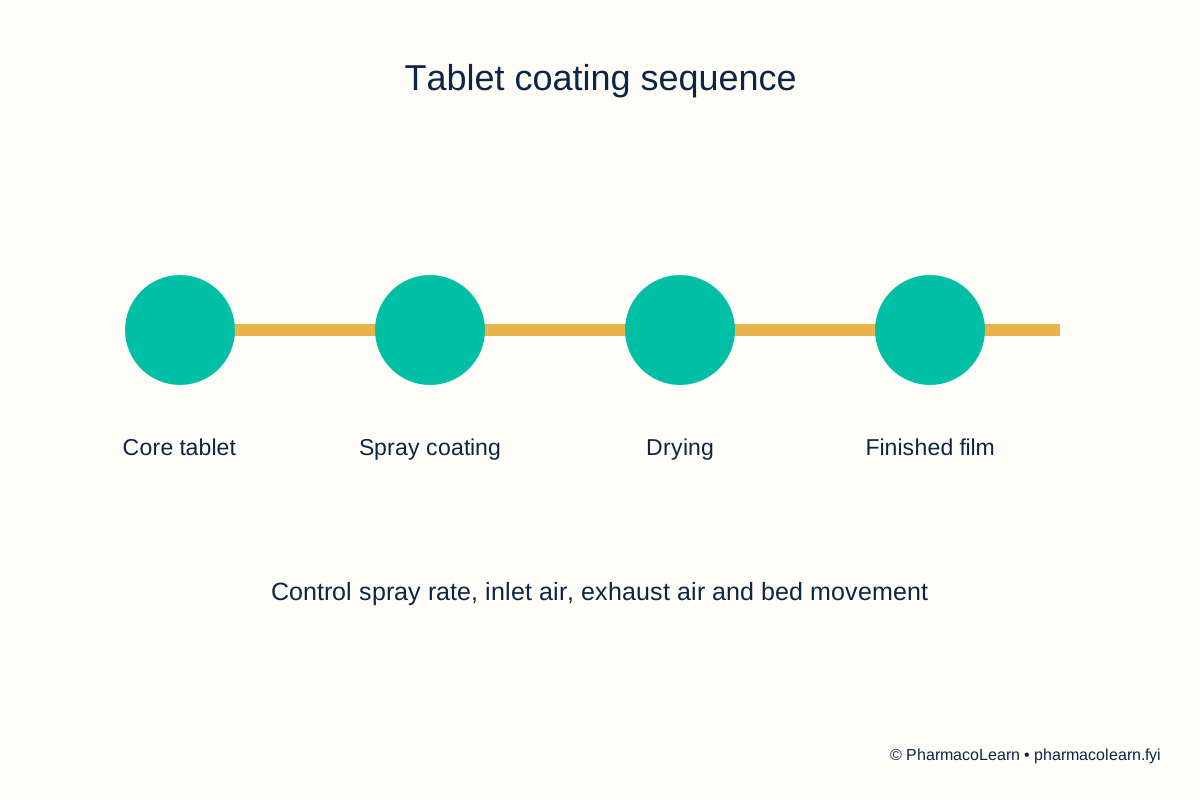
Coating requires controlled spray, drying, atomization, bed movement and weight gain. Defects may reflect overwetting, poor adhesion, spray distribution, core weakness or improper drying. Enteric or modified-release coating requires a validated dissolution profile. The pharmacist checks whether a tablet may be crushed, split or chewed based on its design.
Syllabus scope
This unit covers tablet formulation, excipients, granulation, quality control, evaluation, coating and coated-tablet tests.
Core theory
Tablets are solid dosage forms made by compression or other controlled processes. Excipients may provide diluent, binder, disintegrant, lubricant, glidant, color, flavor or modified-release function. Direct compression requires suitable flow and compactibility. Wet or dry granulation improves handling and content uniformity when powder properties are inadequate. Compression produces a coherent unit, but excessive force can slow disintegration or create defects.
Formulation and evaluation workflow
- Define route, target site, dose and release objective.
- Characterize active ingredient and excipient compatibility.
- Select formulation and manufacturing process.
- Establish in-process controls and critical quality attributes.
- Evaluate finished product performance and stability.
- Select protective packaging and patient instructions.
Pharmacist focus
The pharmacist checks identity, strength, dosage form, storage, administration technique, package integrity, stability, quality defects and patient-specific suitability. Exact tests, limits and acceptance criteria must be verified against the current pharmacopoeia, approved product information and applicable regulatory guidance.
Tips, FAQs and takeaways
- Why is dosage-form selection important? It controls delivery, stability, adherence and therapeutic performance.
- Why evaluate both chemical and physical stability? A product can retain assay while failing to redisperse, dissolve, remain sterile or maintain dose uniformity.
- What is the main takeaway? Formulation quality is demonstrated by controlled manufacture, meaningful evaluation and correct patient use.
References: PharmacoLearn Year 3 syllabus; Pharmacy Council of India, Pharm.D. Regulations 2008; Aulton, Pharmaceutics; Remington, The Science and Practice of Pharmacy; current pharmacopoeial and regulatory guidance.
A tablet specification should connect powder properties, process parameters, finished-product tests and stability. Review the batch in context. The final review asks whether compression and coating produce consistent dose, release, strength, stability and safe patient handling throughout shelf life. Always align process, test and patient use. Verify always. Document compression and coating controls. Review before release.
Unit 3: Capsules
Expanded formulation reasoning
Study framework and FAQ
Patient-use checklist
Evaluation checklist: shell, fill, weight, integrity, leakage, disintegration, dissolution, microbial quality and stability.
Examination point
Exam point: distinguish shell integrity from fill uniformity and explain how moisture migration can change capsule performance.
Capsule counseling includes swallowing, storage, shell appearance and whether opening or sprinkling is permitted. This depends on the formulation and should follow approved instructions rather than assumption.
Study framework: compare hard and soft capsules by shell, fill, manufacture, moisture, leakage, evaluation and storage. FAQ: why can shell and fill interact? Moisture or chemical migration can change both the capsule and the medicine.
+## Expanded formulation reasoning
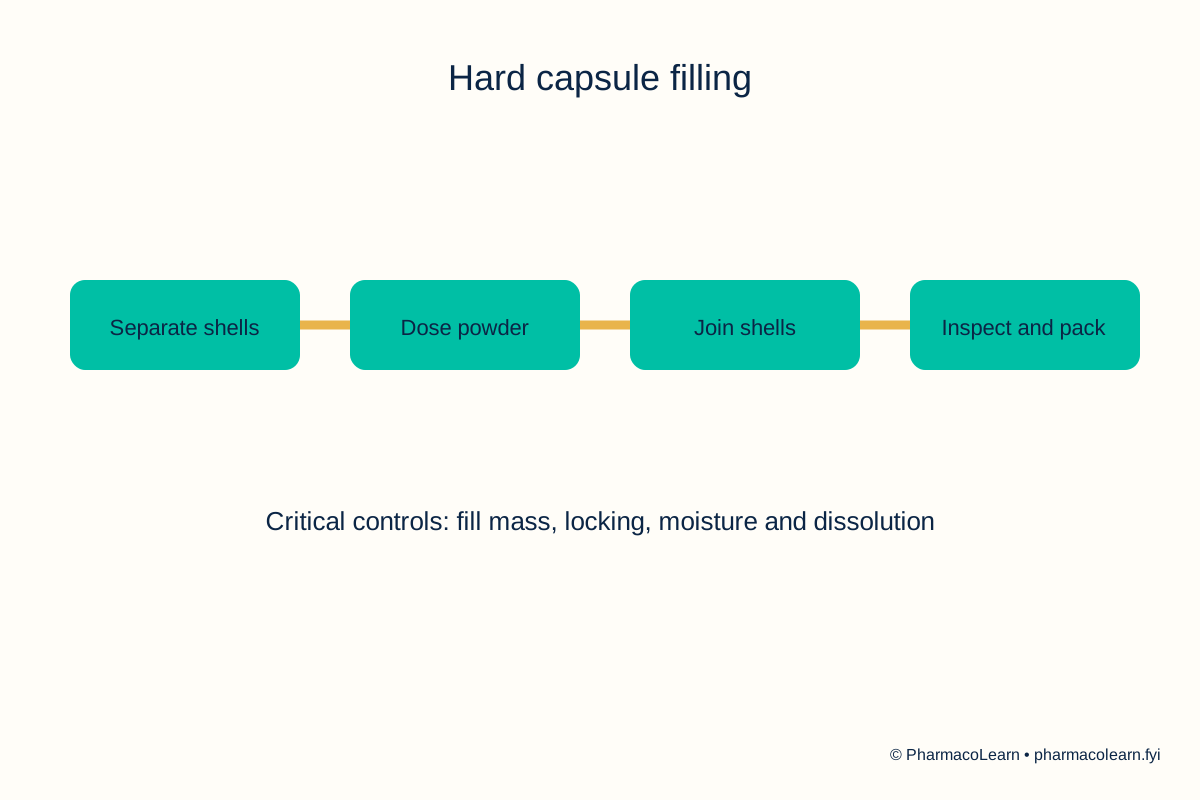
Hard capsule filling depends on powder flow, density, segregation, electrostatic behavior and machine adjustment. Dosage uniformity can fail when the active ingredient is low dose, cohesive or poorly blended. Granules or pellets can improve flow and distribution. Shell moisture must remain within a suitable range. Excess dryness causes brittleness, while excess humidity causes softness and deformation.
Soft gelatin capsules require control of gelatin or polymer composition, plasticizer, water, fill viscosity, seam formation and drying. The fill can migrate into the shell or extract components from it. Oxidation, leakage and shell cross-linking can alter release. Packaging should protect against humidity, heat and light, and storage advice should reflect the validated product.
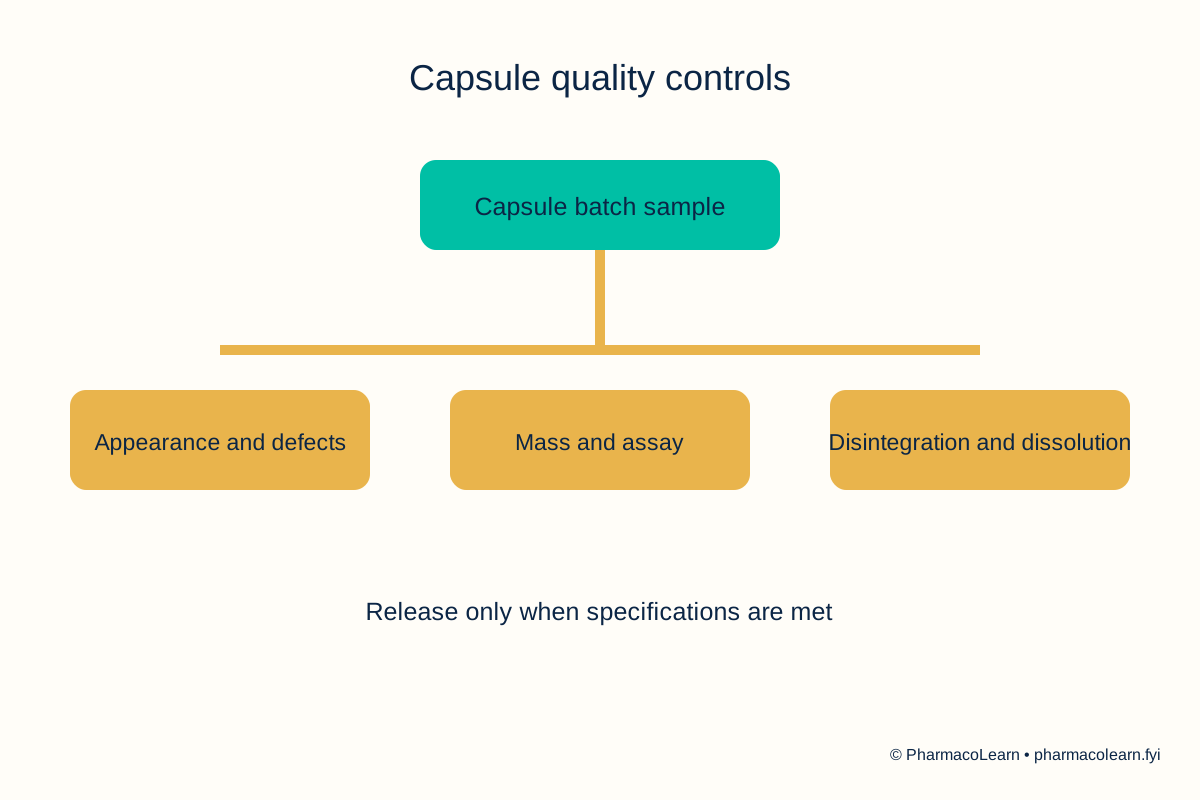
Capsule evaluation includes appearance, fill or shell integrity, weight, assay, content uniformity, disintegration, dissolution, microbial quality and stability. A pharmacist should recognize damaged shells, unusual odor, leakage, sticking, swelling or altered appearance as quality signals rather than cosmetic issues.
Syllabus scope
This unit covers hard and soft gelatin capsules, shell materials, production, filling, finishing and quality control.
Core theory
Hard capsules consist of two shell parts filled with powder, granules, pellets or suitable units. Shell performance depends on gelatin or alternative polymer, moisture, plasticizer where present, colorant and storage. Filling requires powder flow, dose uniformity, machine control and protection from segregation. Soft capsules are one-piece shells containing liquid, semisolid or selected fills, with plasticizer controlling flexibility and moisture.
Formulation and evaluation workflow
- Define route, target site, dose and release objective.
- Characterize active ingredient and excipient compatibility.
- Select formulation and manufacturing process.
- Establish in-process controls and critical quality attributes.
- Evaluate finished product performance and stability.
- Select protective packaging and patient instructions.
Pharmacist focus
The pharmacist checks identity, strength, dosage form, storage, administration technique, package integrity, stability, quality defects and patient-specific suitability. Exact tests, limits and acceptance criteria must be verified against the current pharmacopoeia, approved product information and applicable regulatory guidance.
Tips, FAQs and takeaways
- Why is dosage-form selection important? It controls delivery, stability, adherence and therapeutic performance.
- Why evaluate both chemical and physical stability? A product can retain assay while failing to redisperse, dissolve, remain sterile or maintain dose uniformity.
- What is the main takeaway? Formulation quality is demonstrated by controlled manufacture, meaningful evaluation and correct patient use.
References: PharmacoLearn Year 3 syllabus; Pharmacy Council of India, Pharm.D. Regulations 2008; Aulton, Pharmaceutics; Remington, The Science and Practice of Pharmacy; current pharmacopoeial and regulatory guidance.
A capsule specification should connect shell, fill, moisture, integrity, release and storage. Review the shell in context. The final review asks whether shell and fill remain compatible, uniform, intact, stable and suitable for swallowing or administration throughout storage. Always align shell, fill and patient use. Verify always. Document shell and fill controls. Review before release.
Unit 4: Liquid Oral Preparations
Expanded formulation reasoning
Study framework and FAQ
Patient-use checklist
Evaluation checklist: pH, viscosity, particle or droplet size, redispersibility, phase behavior, assay, microbial quality and stability.
Examination point
Exam point: distinguish solution, suspension and emulsion and describe the physical instability each system can exhibit.
Liquid counseling includes shaking, measuring, storage, microbial limits, taste, dose interval and signs of physical change. A caregiver should demonstrate the measuring device when a child receives the product.
Study framework: compare solution, suspension and emulsion by phase, stabilizer, physical instability, evaluation and counseling. FAQ: why shake a suspension? Sedimentation can create a nonuniform concentration if the vehicle is not redispersed.
+## Expanded formulation reasoning
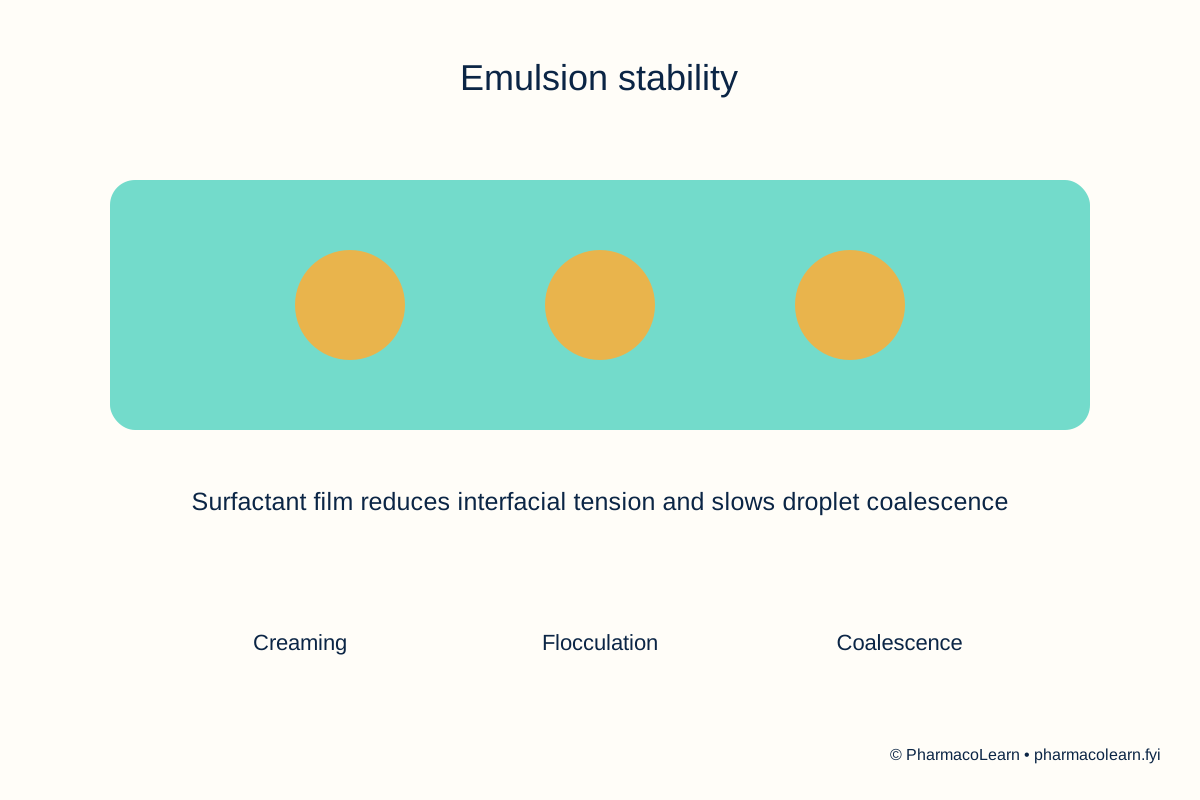
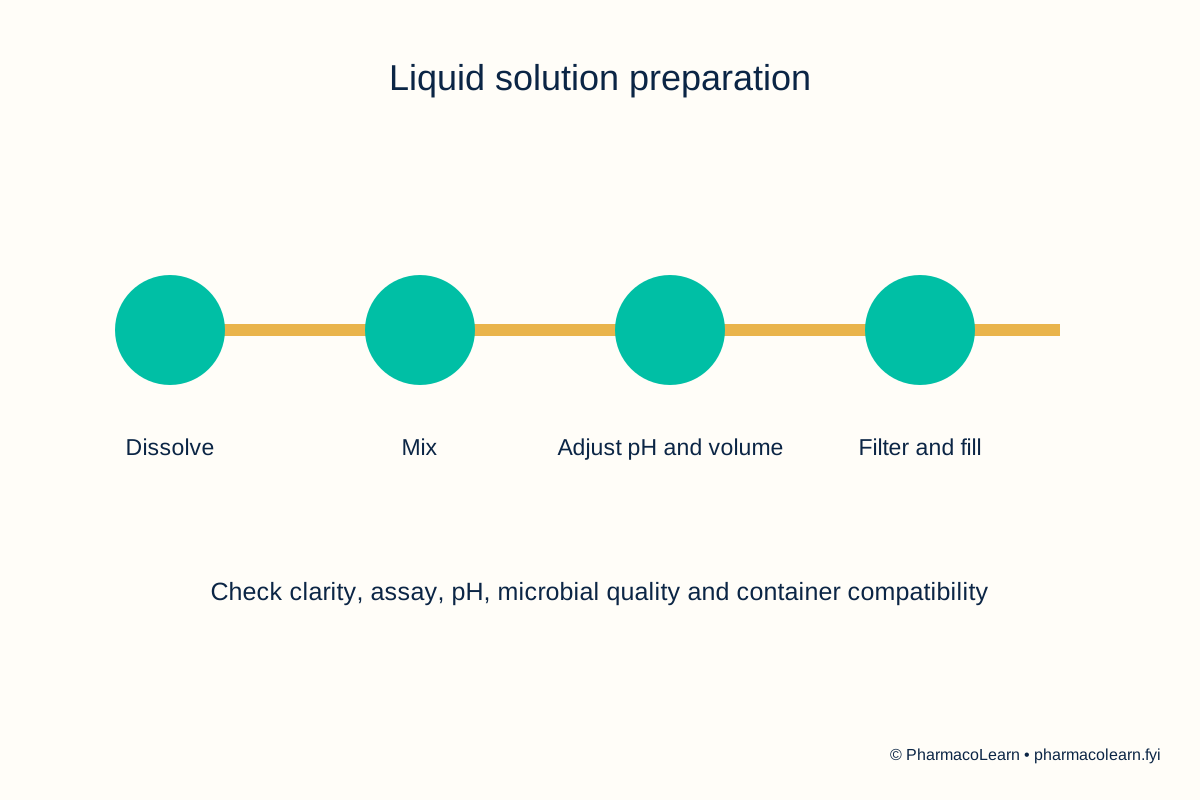
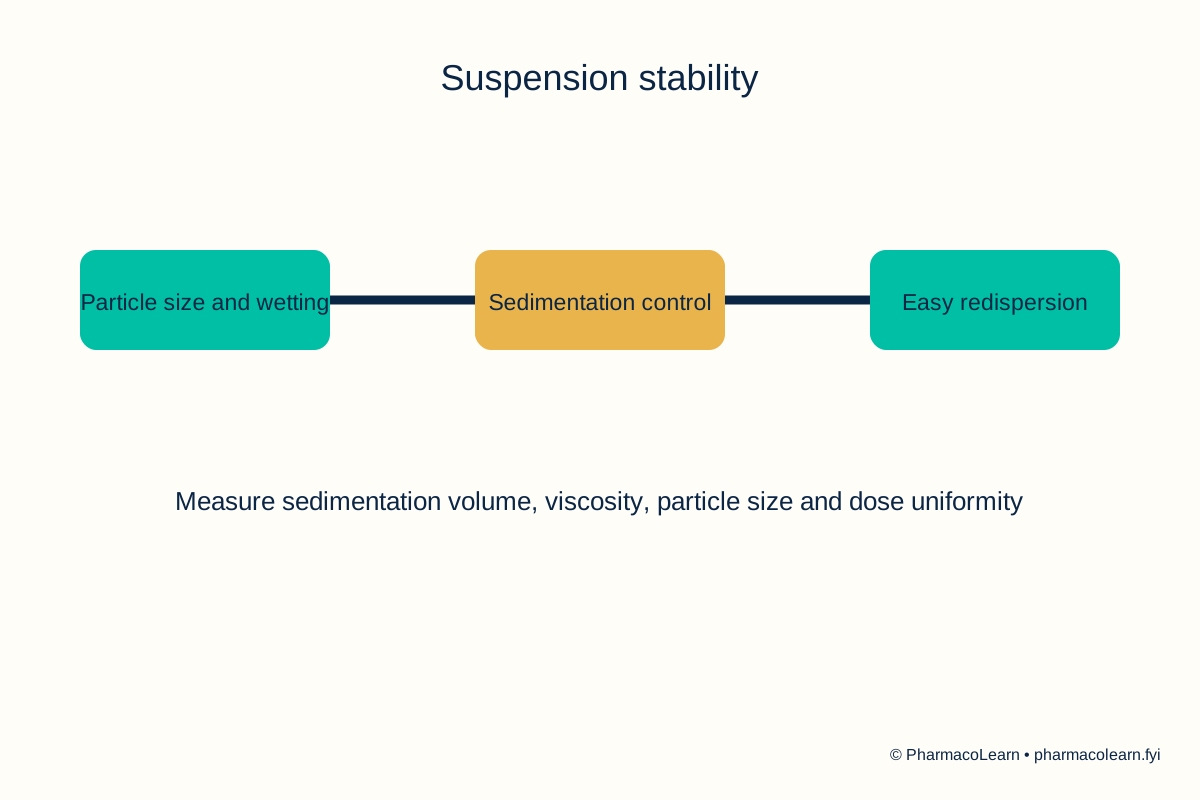
Solutions require complete solubilization and chemical stability. A pH adjustment may improve solubility but can increase irritation or degradation. Suspensions require control of particle size, wetting, sedimentation, flocculation, viscosity and redispersibility. A flocculated system settles rapidly but forms a loose sediment, while a deflocculated system may settle slowly and form a compact cake. The correct balance depends on intended use and dosing.
Emulsions require an oil phase, aqueous phase, emulsifier and process that produces the intended droplet distribution. Creaming may be reversible, while cracking or phase inversion may be irreversible. Preservative partitioning, pH, container adsorption and microbial contamination influence stability. Evaluation should include globule size, phase separation, viscosity, pH, assay, microbial quality, redispersibility and temperature or centrifugation stress where validated.
Patient instructions are a quality control step. A suspension must be shaken as directed and measured with a suitable device. A product that changes color, odor, phase or texture should be reviewed rather than used automatically.
Syllabus scope
This unit covers solutions, suspensions, emulsions, formulation, evaluation and stability.
Core theory
Liquid oral dosage forms include solutions, suspensions and emulsions. Solutions are homogeneous molecular dispersions. Suspensions contain insoluble particles that must redisperse and deliver a uniform dose. Emulsions contain two immiscible phases stabilized by an emulsifier. Formulation considers solubility, pH, buffer, preservative, viscosity, taste, density, sedimentation, flocculation, droplet size and container compatibility.
Formulation and evaluation workflow
- Define route, target site, dose and release objective.
- Characterize active ingredient and excipient compatibility.
- Select formulation and manufacturing process.
- Establish in-process controls and critical quality attributes.
- Evaluate finished product performance and stability.
- Select protective packaging and patient instructions.
Pharmacist focus
The pharmacist checks identity, strength, dosage form, storage, administration technique, package integrity, stability, quality defects and patient-specific suitability. Exact tests, limits and acceptance criteria must be verified against the current pharmacopoeia, approved product information and applicable regulatory guidance.
Tips, FAQs and takeaways
- Why is dosage-form selection important? It controls delivery, stability, adherence and therapeutic performance.
- Why evaluate both chemical and physical stability? A product can retain assay while failing to redisperse, dissolve, remain sterile or maintain dose uniformity.
- What is the main takeaway? Formulation quality is demonstrated by controlled manufacture, meaningful evaluation and correct patient use.
References: PharmacoLearn Year 3 syllabus; Pharmacy Council of India, Pharm.D. Regulations 2008; Aulton, Pharmaceutics; Remington, The Science and Practice of Pharmacy; current pharmacopoeial and regulatory guidance.
A liquid specification should connect phases, rheology, pH, microbial quality, dose uniformity and stability. Review the phases in context. The final review asks whether each measured dose remains uniform after storage, shaking, pouring and repeated opening under the labeled conditions. Always align vehicle, dose and patient use. Verify always. Document phase and dose controls. Review before release.
Unit 5: Parenterals
Expanded formulation reasoning
Study framework and FAQ
Patient-use checklist
Evaluation checklist: sterility, endotoxin, particles, clarity, fill volume, container closure, assay, pH, compatibility and stability.
Examination point
Exam point: distinguish sterility, endotoxin control, particulate control and container closure integrity. They address different risks.
Parenteral review includes product name, route, concentration, diluent, compatibility, container, expiry, storage, appearance, sterility assurance and administration record. Any uncertainty requires a controlled check before administration.
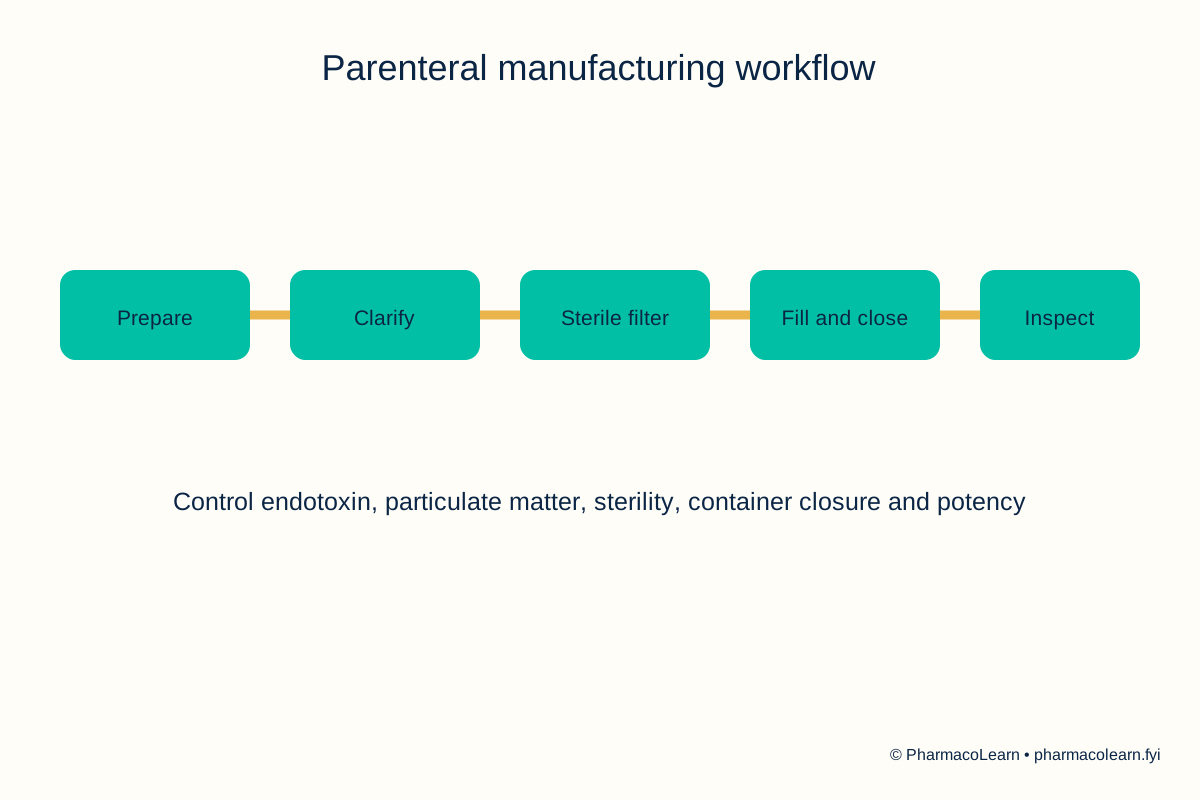
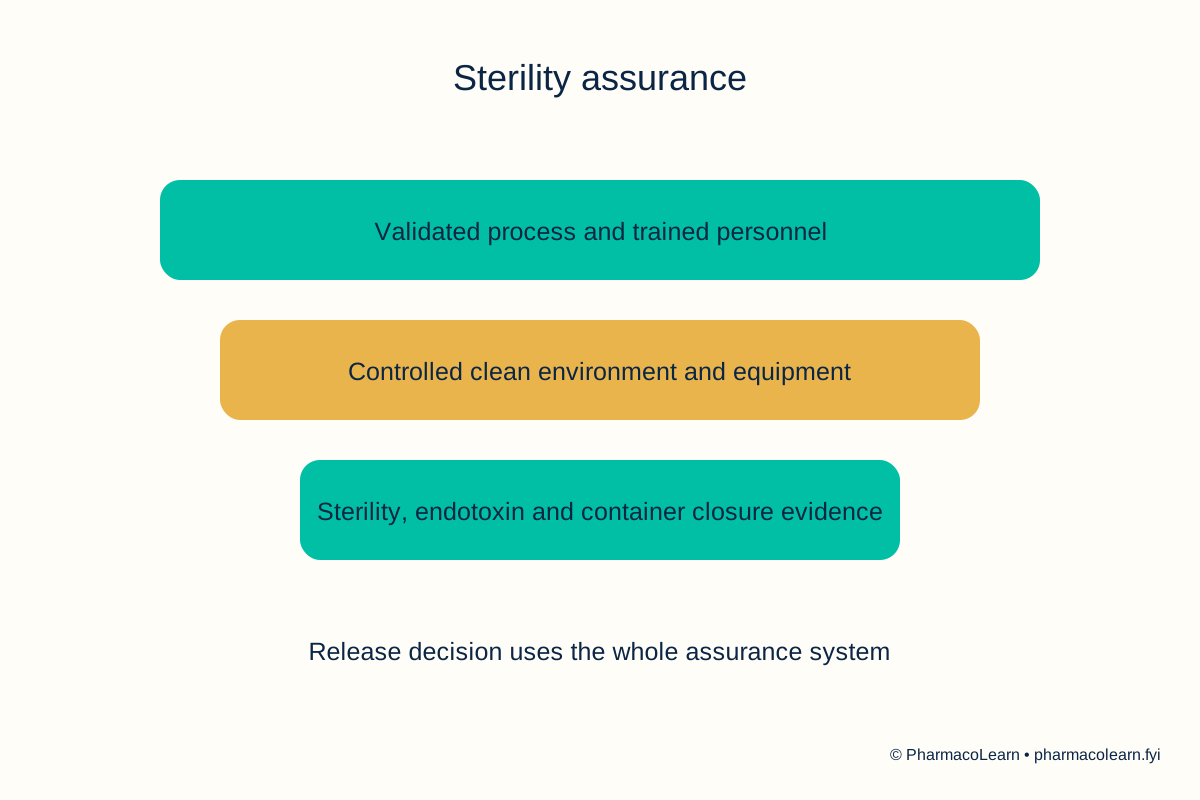
Study framework: connect route, sterility, endotoxin, particulate control, container closure, sterilization, stability and administration. FAQ: why is a sterility test not enough? It samples units and cannot replace validated process control.
+## Expanded formulation reasoning
Parenteral formulation begins with route and patient tolerance. Intravenous products must be suitable for direct or diluted administration as labeled. Intramuscular and subcutaneous products have different volume, viscosity and tissue requirements. pH and osmolality influence pain, hemolysis and tolerability. Excipients must be safe for the route and concentration. Preservatives are not permitted in every presentation or route.
Container closure integrity prevents microbial ingress and loss of product. Extractables and leachables may arise from glass, rubber, plastic, adhesives or processing equipment. Particulate matter can be intrinsic or extrinsic and requires investigation. Sterility testing is one element of a sterility assurance system and cannot compensate for poor aseptic process control. Endotoxin can cause fever, hypotension and severe inflammatory response even when viable microbes are absent.
A pharmacist checks label, route, concentration, diluent, compatibility, expiry, storage, appearance, container and administration rate. Any cracked container, leak, particulate, unexpected discoloration or temperature excursion is a critical concern.
Syllabus scope
This unit covers introduction, containers, official tests, large and small volume parenterals and sterilization.
Core theory
Parenterals are sterile preparations administered by injection or infusion and therefore require stringent control of sterility, endotoxin, particulate matter, potency, compatibility, container closure and visible defects. Small and large volume products differ in intended use and administration context. Containers may be glass, polymer or specialized systems, selected for protection, extractables, leachables, permeability and compatibility.
Formulation and evaluation workflow
- Define route, target site, dose and release objective.
- Characterize active ingredient and excipient compatibility.
- Select formulation and manufacturing process.
- Establish in-process controls and critical quality attributes.
- Evaluate finished product performance and stability.
- Select protective packaging and patient instructions.
Pharmacist focus
The pharmacist checks identity, strength, dosage form, storage, administration technique, package integrity, stability, quality defects and patient-specific suitability. Exact tests, limits and acceptance criteria must be verified against the current pharmacopoeia, approved product information and applicable regulatory guidance.
Tips, FAQs and takeaways
- Why is dosage-form selection important? It controls delivery, stability, adherence and therapeutic performance.
- Why evaluate both chemical and physical stability? A product can retain assay while failing to redisperse, dissolve, remain sterile or maintain dose uniformity.
- What is the main takeaway? Formulation quality is demonstrated by controlled manufacture, meaningful evaluation and correct patient use.
References: PharmacoLearn Year 3 syllabus; Pharmacy Council of India, Pharm.D. Regulations 2008; Aulton, Pharmaceutics; Remington, The Science and Practice of Pharmacy; current pharmacopoeial and regulatory guidance.
A parenteral specification should connect sterility assurance, container, particulate control, endotoxin and administration. Review the container in context. The final review asks whether the product remains sterile, endotoxin controlled, particle controlled, compatible and accurately labeled from manufacture through administration. Always align sterility, label and patient use. Verify always. Document sterility and container controls. Review before release.
Unit 6: Ophthalmic Preparations, Semisolids and Suppositories
Expanded formulation reasoning
Study framework and FAQ
Patient-use checklist
Evaluation checklist: sterility where relevant, appearance, spreadability, release, weight, content uniformity, melting or softening, packaging and stability.
Examination point
Exam point: distinguish ocular, topical and rectal barriers and explain why base, residence time and technique change exposure.
Ophthalmic and topical counseling includes hand hygiene, clean application, avoidance of contamination, storage and the difference between expected transient discomfort and warning symptoms. Suppository counseling should be private, clear and respectful.
Study framework: compare ophthalmic, ointment, jelly and suppository systems by site, barrier, base, release, quality and patient technique. FAQ: why is technique a quality attribute? The intended dose may never reach the target if administration is incorrect.
+## Expanded formulation reasoning
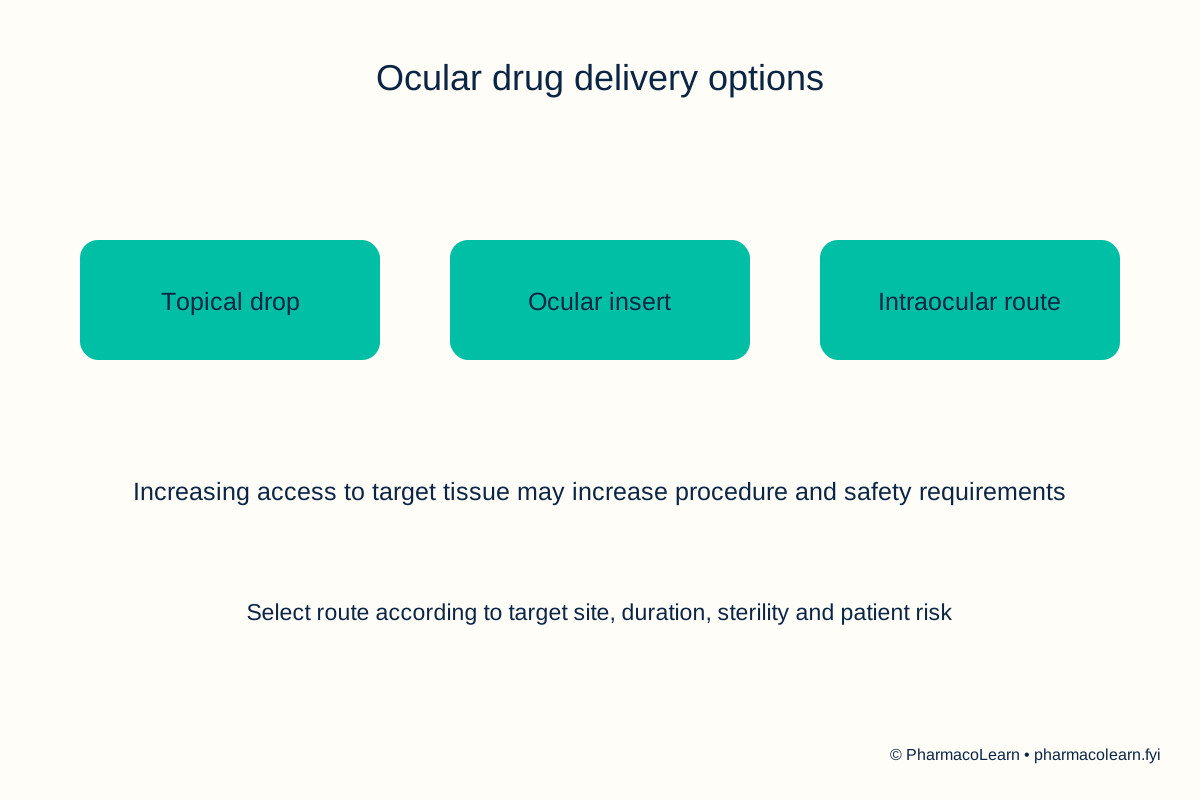
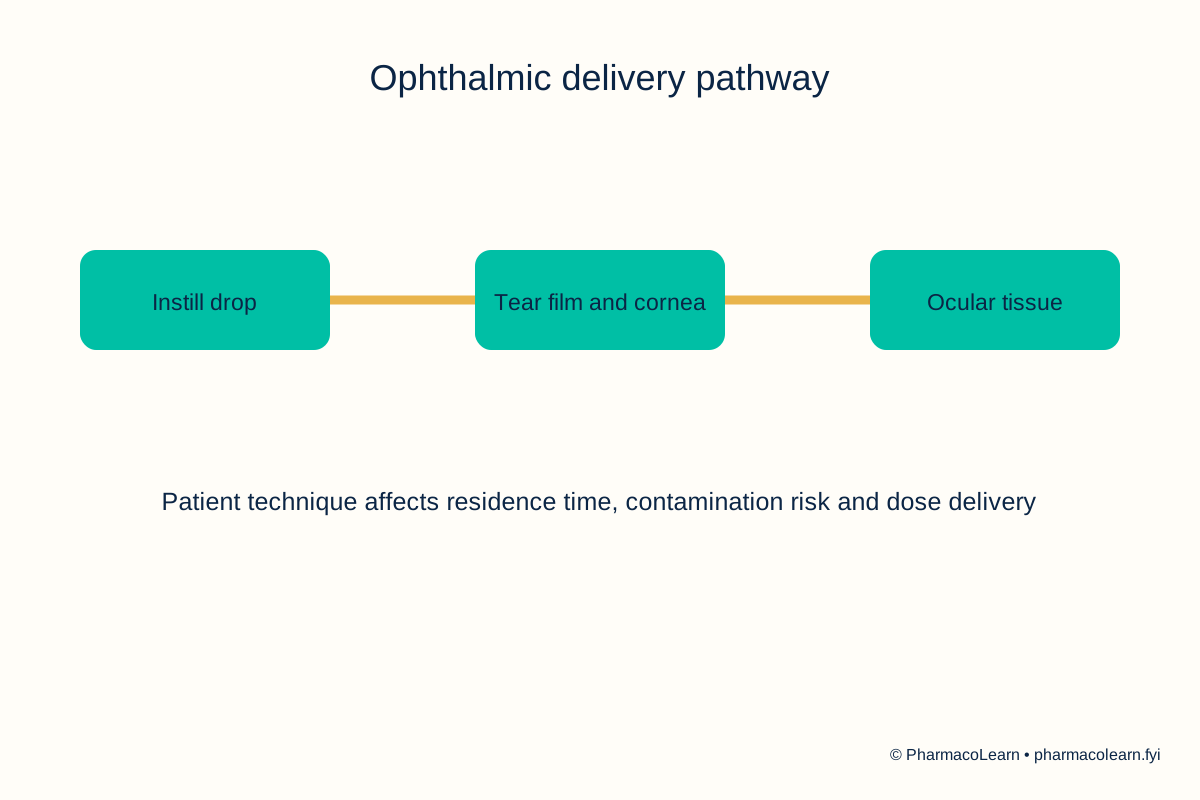
Ophthalmic delivery is limited by blinking, tear drainage, corneal barrier and nasolacrimal loss. Viscosity enhancers, gels, ointments, suspensions, emulsions and inserts can increase residence time but may blur vision or affect comfort. Sterility and preservative compatibility are essential. Patients should wash hands, avoid touching the tip, separate products when instructed and use punctal occlusion if appropriate.
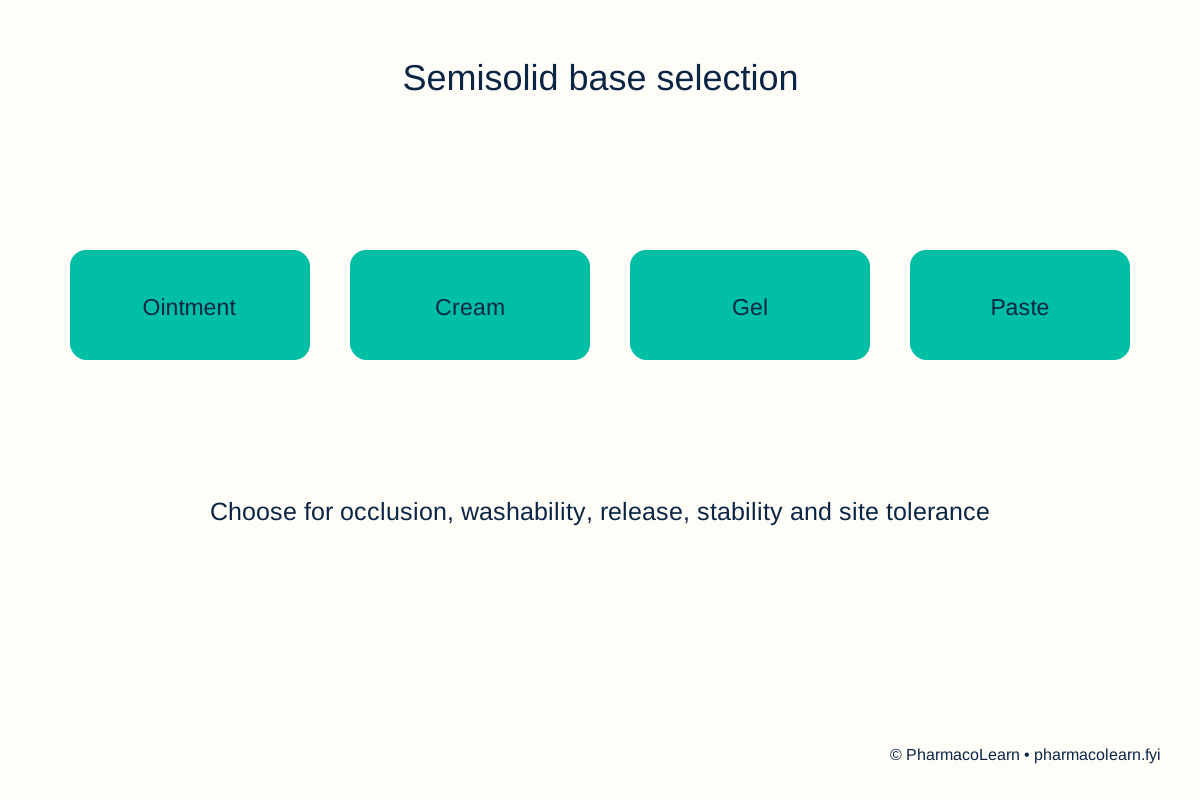
Skin delivery depends on stratum corneum, hydration, site, age, inflammation, vehicle, occlusion and contact time. Ointment bases can be hydrocarbon, absorption, water-removable or water-soluble, with different washability and release. Jellies require uniform gel structure, suitable pH, spreadability, microbial control and drug release.
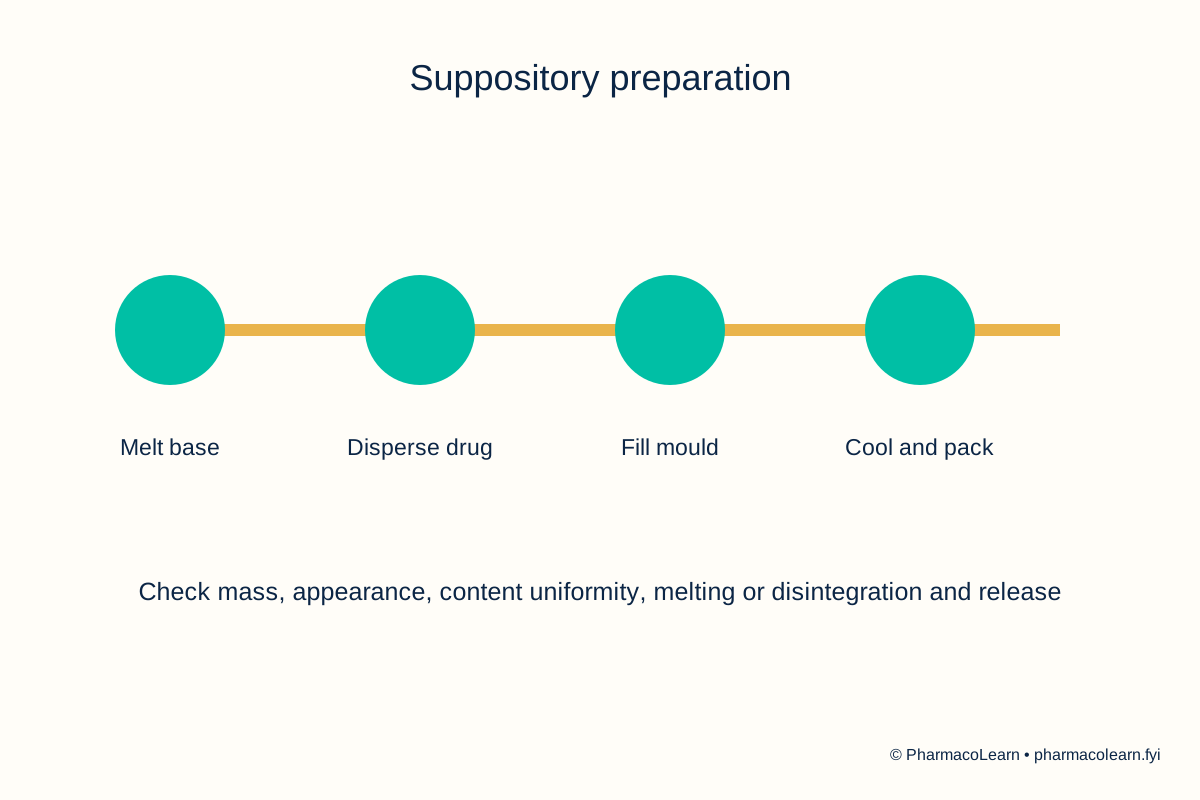
Suppository bases may melt, soften or dissolve. Preparation requires uniform mixing, mold calibration, controlled cooling and suitable packaging. Evaluation includes appearance, weight variation, content uniformity, melting or softening, disintegration, dissolution and stability. Patient counseling should explain route, storage and what to do if leakage or discomfort occurs.
Syllabus scope
This unit covers ophthalmic preparations, skin absorption, packaging, ointments, jellies, suppositories, preparation, types and packaging.
Core theory
Ophthalmic preparations require sterility, appropriate particle control, acceptable pH and tonicity where relevant, preservative strategy, container performance and patient-safe administration. The eye has barriers that limit absorption, so formulation, viscosity, residence time and drop size affect exposure. Skin absorption depends on barrier condition, hydration, site, molecular properties, vehicle, occlusion and contact time.
Formulation and evaluation workflow
- Define route, target site, dose and release objective.
- Characterize active ingredient and excipient compatibility.
- Select formulation and manufacturing process.
- Establish in-process controls and critical quality attributes.
- Evaluate finished product performance and stability.
- Select protective packaging and patient instructions.
Pharmacist focus
The pharmacist checks identity, strength, dosage form, storage, administration technique, package integrity, stability, quality defects and patient-specific suitability. Exact tests, limits and acceptance criteria must be verified against the current pharmacopoeia, approved product information and applicable regulatory guidance.
Tips, FAQs and takeaways
- Why is dosage-form selection important? It controls delivery, stability, adherence and therapeutic performance.
- Why evaluate both chemical and physical stability? A product can retain assay while failing to redisperse, dissolve, remain sterile or maintain dose uniformity.
- What is the main takeaway? Formulation quality is demonstrated by controlled manufacture, meaningful evaluation and correct patient use.
References: PharmacoLearn Year 3 syllabus; Pharmacy Council of India, Pharm.D. Regulations 2008; Aulton, Pharmaceutics; Remington, The Science and Practice of Pharmacy; current pharmacopoeial and regulatory guidance.
A semisolid or ophthalmic specification should connect barrier, vehicle, release, sterility or microbial control and technique. Review the route in context. The final review asks whether the preparation remains safe, uniform, stable, compatible with its site and correctly administered without contamination. Always align site, base and patient use. Verify always. Document route and base controls. Review before release.
Unit 7: Controlled and Novel Drug Delivery Systems
Expanded formulation reasoning
Study framework and FAQ
Patient-use checklist
Evaluation checklist: release profile, dose uniformity, device performance, adhesion, particle or matrix properties, sterility where relevant and long-term stability.
Examination point
Exam point: distinguish controlled release from targeted delivery and explain why device performance and patient handling are essential.
Novel delivery systems require device-specific counseling. Explain adhesion, placement, removal, storage, disposal and what not to do. A patient should know that changing the physical form can change exposure and safety.
Study framework: compare matrix, reservoir, transdermal, buccal, nasal, implant and ocular systems by barrier, release mechanism, device and safety. FAQ: why not crush modified-release products? It can destroy rate control and release too much drug at once.
+## Expanded formulation reasoning
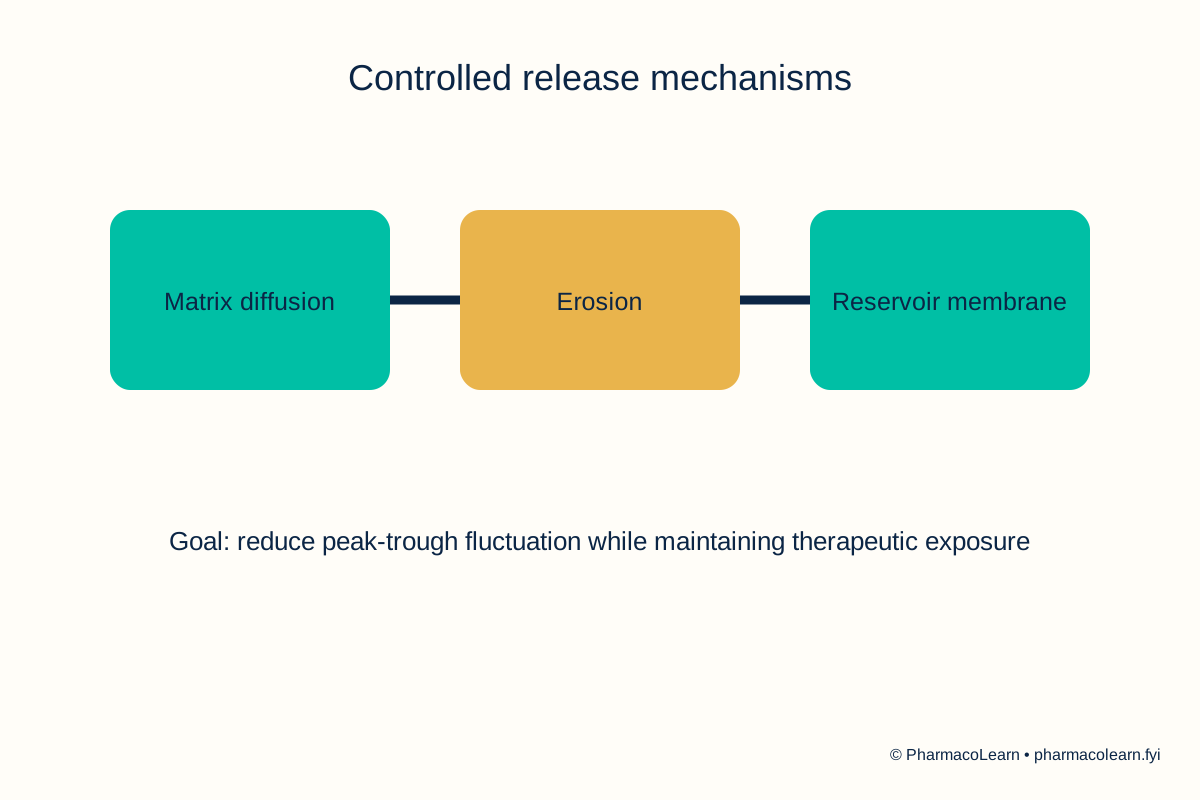
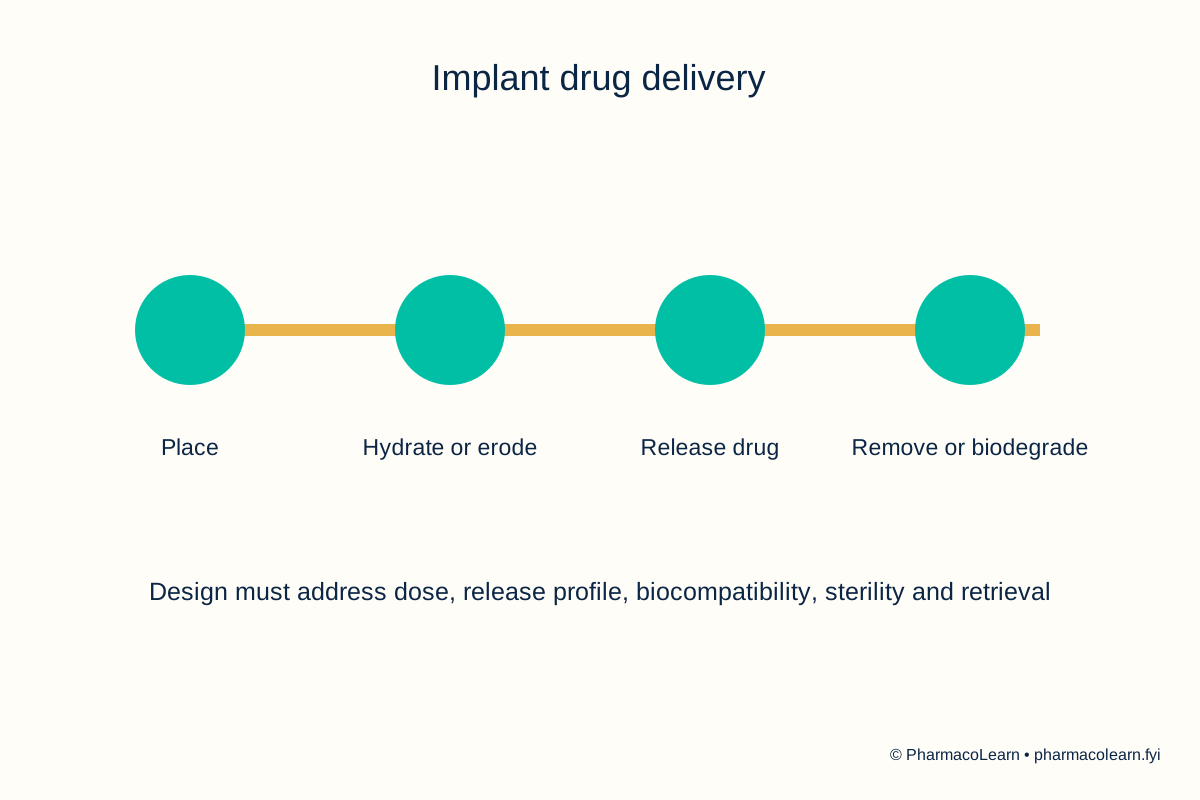
Controlled release may follow diffusion, dissolution, erosion, swelling, osmotic pressure, degradation or a combination. A matrix system distributes drug through a polymer, while a reservoir system separates drug from the environment with a rate-controlling barrier. The release profile must be evaluated under relevant conditions and should not be assumed from the word sustained alone.
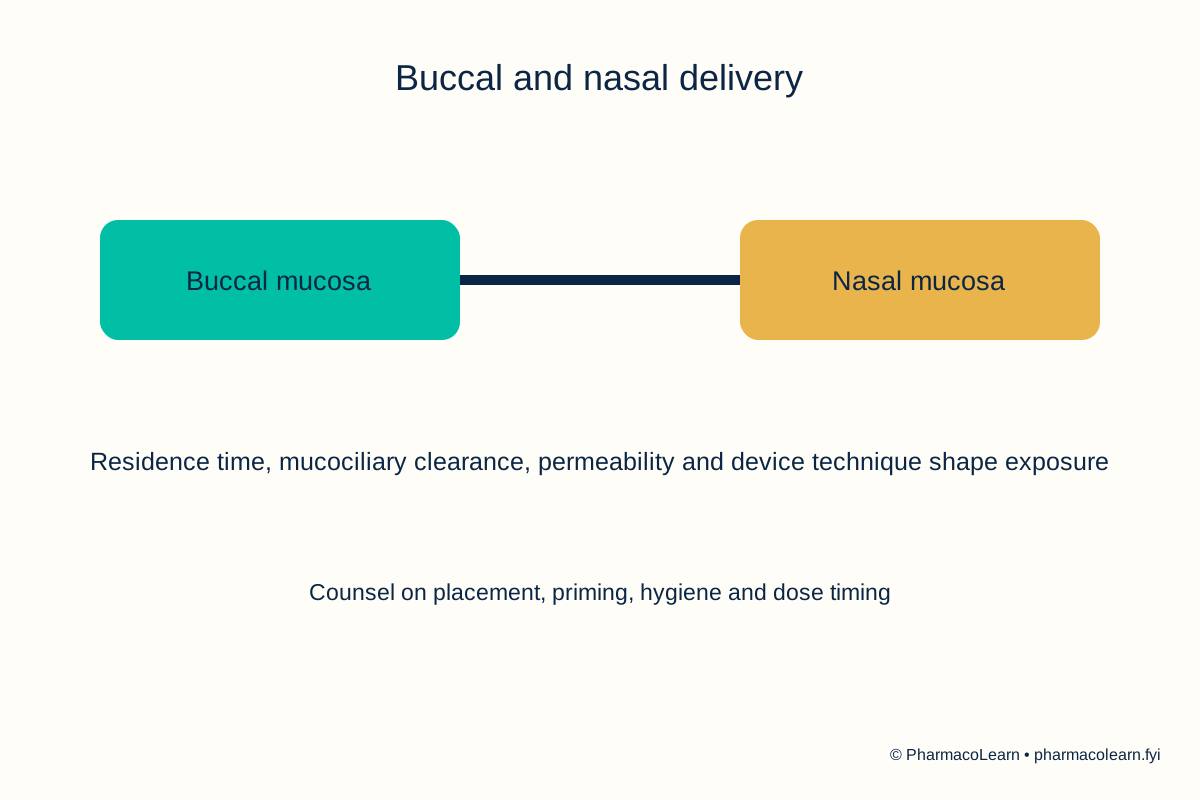
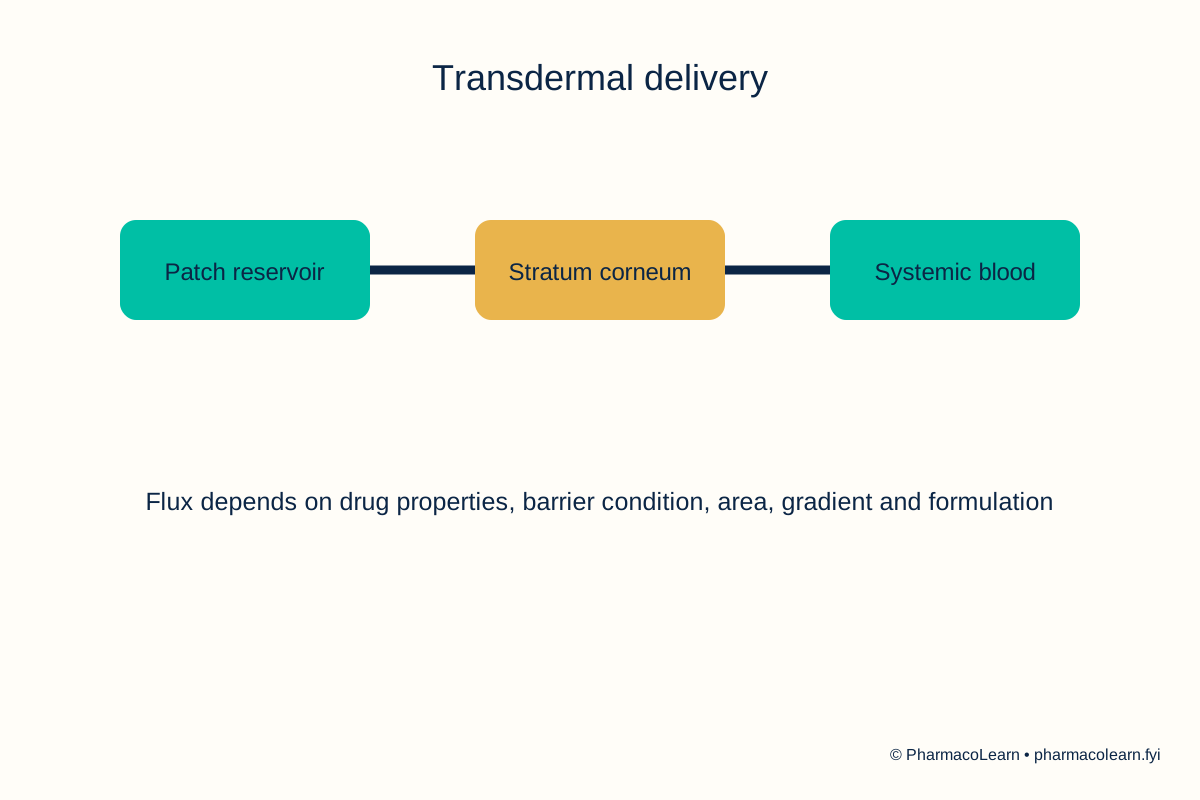
Transdermal systems require a potent drug, skin permeability, adhesion and controlled flux. Buccal and nasal systems depend on residence time, mucus, enzymatic activity and clearance. Implants require biocompatibility, sterility, insertion and long-term safety. Ocular systems must improve residence without compromising vision or causing irritation. Parenteral depots require control of particle, polymer, injection and release behavior.
The pharmacist must counsel that modified-release, enteric, implant, patch, depot and device-based products are not interchangeable with immediate-release products. Crushing, cutting, heating, puncturing or transferring can cause dose dumping, loss of protection or device failure. Evaluation includes dose uniformity, release, stability, sterility where relevant, adhesion, extractables, usability and clinical performance.
Syllabus scope
This unit covers controlled and novel delivery with parenteral, transdermal, buccal, rectal, nasal, implant and ocular examples.
Core theory
Controlled delivery aims to regulate release over time or at a site. Novel systems may use reservoirs, matrices, membranes, biodegradable polymers, vesicles, particles, mucoadhesive systems or osmotic mechanisms. The design must account for dose, therapeutic window, release kinetics, absorption barrier, clearance, device integrity and patient use.
Formulation and evaluation workflow
- Define route, target site, dose and release objective.
- Characterize active ingredient and excipient compatibility.
- Select formulation and manufacturing process.
- Establish in-process controls and critical quality attributes.
- Evaluate finished product performance and stability.
- Select protective packaging and patient instructions.
Pharmacist focus
The pharmacist checks identity, strength, dosage form, storage, administration technique, package integrity, stability, quality defects and patient-specific suitability. Exact tests, limits and acceptance criteria must be verified against the current pharmacopoeia, approved product information and applicable regulatory guidance.
Tips, FAQs and takeaways
- Why is dosage-form selection important? It controls delivery, stability, adherence and therapeutic performance.
- Why evaluate both chemical and physical stability? A product can retain assay while failing to redisperse, dissolve, remain sterile or maintain dose uniformity.
- What is the main takeaway? Formulation quality is demonstrated by controlled manufacture, meaningful evaluation and correct patient use.
References: PharmacoLearn Year 3 syllabus; Pharmacy Council of India, Pharm.D. Regulations 2008; Aulton, Pharmaceutics; Remington, The Science and Practice of Pharmacy; current pharmacopoeial and regulatory guidance.
A novel-delivery specification should connect device, release, dose, stability, usability and long-term safety. Review the device in context. The final review asks whether release, delivery, device handling, stability, patient usability and long-term safety support the intended clinical outcome. Always align device, release and patient use. Verify always. Document release and device controls. Review before release.
Diagrams
Other Year 3 subjects: Pharmacology II · Pharmaceutical Analysis · Pharmacotherapeutics II · Pharmaceutical Jurisprudence · Medicinal Chemistry · Pharm D Year 3, Pharmaceutical Formulations · Year 3 · Pharm D