
MPG201T — Medicinal Plant Biotechnology
4 hrs/week, 4 credits, 60 hours, 100 marks. Notes follow the M.Pharm syllabus, unit by unit.
MPG201T Medicinal Plant Biotechnology notes for M.Pharm Pharmacognosy Semester 2: molecular biology and recombinant DNA, tissue culture and micropropagation, immobilization and secondary metabolite production, bioreactors, transgenic plants and fermentation, with free unit wise PDF downloads on PharmacoLearn.
Units in this subject
- Unit 1 — Introduction to Plant Biotechnology
- Unit 2 — Different Tissue Culture Techniques
- Unit 3 — Immobilisation Techniques and Secondary Metabolite Production
- Unit 4 — Biotransformation and Transgenesis
- Unit 5 — Fermentation Technology
Download MPG201T PDF Notes
Free PDFs for this subject, one per unit:
Medicinal Plant Biotechnology, subject code MPG201T, is the first core theory subject of M.Pharm Pharmacognosy, Semester 2. It carries 4 credits and 60 hours of theory, taught at 4 hours per week, for 100 marks. Its scope, as the syllabus states it, is to explore the knowledge of biotechnology and its application in the improvement of quality of medicinal plants: to know genetic engineering in medicinal plants for higher yield of phytopharmaceuticals, and to use biotechnological techniques for obtaining and improving the quality of natural products and medicinal plants. The subject is unusual in the semester because its five units are not of equal length, and the notes follow the printed hours honestly. Unit 1 (12 hours) introduces plant biotechnology and the genetic and molecular biology beneath it: DNA, RNA and protein, the genetic code, regulation of gene expression, genome structure, cell signaling and recombinant DNA technology. Unit 2 (15 hours) teaches the tissue culture techniques themselves: organogenesis and embryogenesis, synthetic seed, somaclonal variation, protoplast fusion, hairy root and multiple shoot cultures, micropropagation, sterilization methods and gene transfer. Unit 3 (15 hours) turns culture into production: immobilization, cloning of plant cells, secondary metabolism in tissue cultures, and the use of precursors and elicitors. Unit 4 (13 hours) covers biotransformation, bioreactors and the retention of biosynthetic potential, transgenic plants, gene identification, localization and sequencing, and PCR in plant genome analysis. Unit 5 (5 hours) is a short closing unit on fermentation technology: its applications, ergot alkaloids, single cell proteins and enzymes of pharmaceutical interest. One idea holds the subject together: a medicinal plant is both a medicine factory and a genetic system, and biotechnology is the set of tools for running that factory in a dish, in a fermenter or in an improved plant, under control, instead of depending on whatever the field season happens to deliver.
Unit 1: Introduction to Plant Biotechnology
1.1 Historical perspectives
Plant biotechnology grew out of a simple question: can a piece of a plant, or even a single plant cell, be persuaded to live and grow outside the plant, in a vessel, on food the scientist chooses? The theoretical foundation is totipotency, the idea, proposed at the start of the twentieth century by Gottlieb Haberlandt, that a living plant cell carries the full genetic information of the plant and can, under the right conditions, regenerate a whole plant. Haberlandt attempted to culture isolated cells and failed to keep them dividing, but the concept he stated became the charter of the whole field. Through the following decades the missing pieces were found one by one. Plant growth regulators were characterised, first the auxins and then the cytokinins, and with them came control: the classical finding that the balance between auxin and cytokinin in the medium directs development, a high cytokinin to auxin balance favouring shoot formation and a high auxin to cytokinin balance favouring root formation, with balanced levels holding cells in undifferentiated callus growth. Defined nutrient media were developed, of which the Murashige and Skoog medium became the most widely used general medium for plant tissue culture. Sterile technique matured, so that cultures could be kept free of the bacteria and fungi that otherwise outgrow slow plant cells within days.
The second half of the century added the molecular half of the subject. The structure of DNA was established, the genetic code was worked out, restriction enzymes and ligases made it possible to cut and join DNA deliberately, and recombinant DNA technology was born. Plants joined the genetic engineering era through their natural genetic engineer, the soil bacterium Agrobacterium tumefaciens, which transfers a segment of its own plasmid DNA into the plant genome as part of its normal infection cycle; once that mechanism was understood, the tumour forming genes could be removed and genes of interest put in their place. Protoplast culture, cell fusion, haploid culture from anthers, and the first transgenic plants followed, and by the time the polymerase chain reaction arrived, the plant scientist held the complete toolkit this subject teaches: grow the cells, choose the cells, change the cells, and read their genes. In pharmacognosy the history matters because each technique solved a drug problem: culture answered scarcity, selection answered variability, and gene transfer answered the limits of conventional breeding.
1.2 Prospects for development of plant biotechnology as a source of medicinal agents
The prospects named in the syllabus rest on the weaknesses of the conventional supply of medicinal agents from plants. Field supply is seasonal, geographically limited, slow for perennial and tree drugs, vulnerable to over collection, and chemically variable with soil, climate and harvest time. Some valuable producers are rare, slow growing or difficult to cultivate at all, so that demand for the drug can threaten the species itself. Biotechnology attacks each weakness at a different point, and an examination answer should map prospect to weakness rather than list techniques at random.
Cell and tissue culture offers production independent of season and geography, under controlled conditions, from a small starting sample of the plant, with the possibility of directing the culture toward the wanted constituent by medium design, precursor feeding and elicitation, the programme of Unit 3. Micropropagation offers rapid multiplication of elite, disease free planting material, so that cultivation itself starts from uniform, verified stock, the programme of Unit 2. Genetic improvement, by selection in culture, by somaclonal variation and by deliberate gene transfer, offers plants and cell lines that yield more of the active constituent, resist disease, or produce a constituent profile the wild plant does not. Hairy root cultures offer fast growing, genetically stable production systems for root derived drugs. Fermentation and bioreactor scale up offer the industrial form of all of these: contained, reproducible, documentable production of the kind the pharmaceutical industry already understands from microbial technology. The honest limit must travel with the prospects: many plant cell cultures grow slowly, produce less than the intact plant, or lose productivity over time, which is why Units 3 and 4 spend so much attention on elicitors, immobilization and retention of biosynthetic potential. The prospect is real, but it is earned culture by culture, not assumed.
1.3 Applications in pharmacy and allied fields
In pharmacy the applications follow the syllabus objectives directly. First, production of phytopharmaceuticals and secondary metabolites in culture, for drugs whose field supply is scarce, slow or variable, treated fully in Unit 3. Second, improvement of medicinal plants themselves: micropropagated uniform planting material, disease free stock, and, through gene transfer and selection, improved varieties with better constituent profiles. Third, biotransformation: cultured cells used as enzymatic reagents to convert a supplied substrate into a more valuable product, treated in Unit 4. Fourth, conservation and germplasm work: slow growth storage, synthetic seed and culture collections hold rare medicinal germplasm that field collection would endanger. Fifth, research service to pharmacognosy itself: cultures provide clean, defined material for biosynthetic pathway studies, for tracing how a constituent is built, and for screening new producers without consuming wild populations.
In allied fields the same toolkit serves agriculture, horticulture and forestry, in rapid multiplication of ornamentals, fruit and timber species, in production of virus free stock, in embryo rescue and wide hybridisation through protoplast fusion, in haploid breeding, and in the development of crops with engineered resistance and quality traits. It also serves basic science, because a culture is a controllable experimental system for studying differentiation, gene regulation and metabolism, which is why the molecular foundations occupy the rest of this unit. The examination point is that the pharmacy applications are not a separate technology: they are the general plant biotechnology toolkit pointed at drug problems.
1.4 Genetic and molecular biology as applied to pharmacognosy
Pharmacognosy asks of a plant three questions: is it the right plant, what does it contain, and how does it make what it contains? Molecular biology gives each question a deeper instrument. Identity can be tested at the DNA level when morphology and chemistry are ambiguous, because the genome is present in every part and at every season. Content can be understood as the output of genes: every phytoconstituent is made by a pathway of enzymes, every enzyme is encoded by a gene, and differences in yield between plants are, at root, differences in genes and in how those genes are switched on and off. Manufacture can be engineered at the same level, by moving pathway genes, blocking competing branches, or transferring a pathway into a faster growing host or culture. That is the sense of the syllabus phrase: genetic and molecular biology as applied to pharmacognosy is the study of the drug plant as an information system, DNA storing the instructions, RNA carrying and regulating them, and proteins, as enzymes, doing the chemical work the pharmacognosist measures. The sections that follow teach that system in the order the syllabus lists it: replication of DNA, RNA and protein, the genetic code, regulation of expression, genome structure, signaling, and finally the recombinant technology that lets the scientist rewrite the instructions deliberately.
1.5 Study of DNA, RNA and protein: replication and the flow of information
DNA, deoxyribonucleic acid, is the hereditary material: a double helix of two antiparallel strands, each a chain of nucleotides built from a sugar, a phosphate and one of four bases, adenine, thymine, guanine and cytosine, with adenine pairing to thymine and guanine to cytosine across the strands. That complementarity is the whole secret of heredity, because each strand carries the information needed to rebuild the other. Replication is semiconservative: the helix is unwound, each parental strand serves as template for a new complementary strand, and each daughter molecule keeps one old strand and one new. The machinery should be known in outline: helicase unwinds, primase lays a short RNA primer, DNA polymerase extends the new strand only in the 5 prime to 3 prime direction, so one strand is made continuously and the other in short fragments later joined by ligase, and proofreading functions correct errors as synthesis proceeds.
Transcription copies one gene, on one strand, into RNA. RNA differs from DNA in its sugar, ribose, in using uracil in place of thymine, and in being usually single stranded. RNA polymerase binds at a promoter, unwinds a short stretch and builds the RNA complementary to the template strand; in eukaryotes the first transcript is processed, a cap and a tail are added and introns are spliced out, to give mature messenger RNA. Plants add their own features, notably RNA processing and gene silencing mechanisms of great importance in transgenic work. Translation then reads the messenger at the ribosome: transfer RNAs bring amino acids, each recognising a three base codon through its anticodon, and the ribosome joins the amino acids into the protein chain in the order the codons dictate. Replication, transcription and translation, DNA to DNA, DNA to RNA, RNA to protein, are the central flow of information on which every later topic stands, and the flow diagram below fixes it.
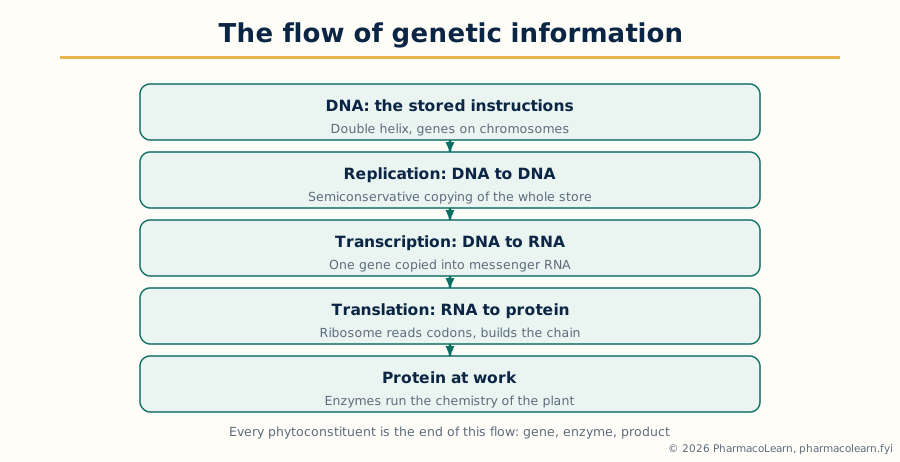 Figure: The flow of genetic information. Replication copies the whole store, transcription copies one gene into RNA, and translation builds the protein, usually an enzyme, that performs the chemistry of the plant.
1.6 The genetic code
The genetic code is the dictionary between codons and amino acids: 64 three base codons, of which 61 specify the twenty standard amino acids and three act as stop signals, with AUG serving as the usual start codon and also specifying methionine. Its properties are the examinable content, and each property has a practical consequence. The code is triplet and non overlapping, read in a fixed frame from the start codon, so an inserted or deleted base shifts the frame and garbles everything after it. It is degenerate: most amino acids are specified by more than one codon, so many base changes are silent. It is specific and nearly universal across life, which is precisely why recombinant technology works: a gene moved between organisms is still read in the same language, subject to the codon preference differences that molecular biologists manage when a gene expresses poorly in a foreign host. It contains punctuation, the start and stop codons that open and close the message. For the pharmacognosist the code is what connects a DNA sequence, read in Unit 4, to the enzyme it encodes, and the enzyme to the constituent the drug assay measures.
1.7 Regulation of gene expression
A plant cell contains the genes for roots, leaves, flowers and defence chemistry in every nucleus, yet expresses only a fraction of them in any cell at any time. Regulation of gene expression is the system of switches that decides which genes are on, how strongly, and for how long, and it is the molecular explanation of facts the pharmacognosist already knows: that a constituent is made in the root but not the leaf, in the young plant but not the old, or only after the plant is attacked. Regulation operates at several levels. At the gene level, transcription factors bind promoters and regulatory sequences and permit or prevent transcription, responding to developmental programmes, to light and hormones, and to stress signals. Chromatin state matters: genes packaged tightly are inaccessible and silent, and chemical marks on DNA and its packaging proteins can hold a gene in an on or off state. After transcription, processing, stability and translation of the messenger add further control points, and small RNAs can silence specific messengers, a mechanism plants use heavily and transgenic science borrows for deliberate gene silencing. The tissue culture consequences are direct and should be stated: dedifferentiated callus often stops making the constituents of the specialised tissue it came from, because the genes are switched off out of their normal context, and much of Units 3 and 4, elicitation, differentiation into roots and shoots, selection of high producing lines, is in reality applied regulation of gene expression.
1.8 Structure and complexity of genome
The genome is the complete DNA content of the organism, and its structure in plants has features an examination answer should place correctly. Nuclear DNA is organised into chromosomes, linear molecules of DNA packaged with proteins, in a set characteristic of the species; many medicinal plants are polyploid, carrying multiple sets, which complicates breeding and analysis. Only a small fraction of a large plant genome typically codes for protein: genes, each with coding regions interrupted in eukaryotes by introns, regulatory regions before and after, sit within large amounts of non coding DNA, including repetitive sequences and transposable elements that can move and create variation. Plants carry two further genomes outside the nucleus: the chloroplast genome and the mitochondrial genome, each a small circular DNA inherited usually from the mother in flowering plants. The chloroplast genome matters commercially as a transformation target, because a gene placed there can be present in very many copies per cell and is contained by maternal inheritance. Genome complexity explains practical difficulties: large, repetitive, polyploid genomes are harder to sequence, map and engineer than compact ones, and the gene hunting methods of Unit 4 are designed around that complexity. Complexity also explains richness: gene families, duplicated pathway genes and regulatory variety are the raw material from which the chemical diversity of medicinal plants is built.
1.9 Cell signaling
Cell signaling is how a cell receives information, from hormones, light, wounding and invading microbes, and converts it into a change in gene expression and metabolism. The standard sequence should be known: a signal molecule, the ligand, binds a receptor, at the cell surface or inside the cell; the activated receptor triggers an intracellular relay, often a chain of protein kinases passing a phosphate signal from one to the next, sometimes with small second messenger molecules carrying the signal inside the cell; the relay reaches transcription factors, which switch the appropriate genes on or off; and the cell responds, by growing, differentiating, or switching on defence chemistry. In plants the classical signaling molecules include the growth regulators of tissue culture itself, auxins and cytokinins, together with gibberellins, abscisic acid, ethylene, jasmonates and salicylic acid. Two syllabus connections give this section its weight. First, tissue culture is applied signaling: the auxin to cytokinin balance of Section 1.1 works because it speaks to the receptors and relays that steer development. Second, defence signaling is the mechanism behind elicitation in Unit 3: jasmonate signaling is a principal switch for secondary metabolite pathways, which is why jasmonate type elicitors wake those pathways in culture. Signaling is therefore not a digression into general biology; it is the wiring diagram between the medium the scientist prepares and the chemistry the culture performs.
1.10 Recombinant DNA technology
Recombinant DNA technology is the deliberate construction of new DNA combinations in vitro and their introduction into a living host. Its toolkit is standard and should be listed with the job each tool does. Restriction endonucleases cut DNA at specific short recognition sequences, generating defined ends. DNA ligase joins DNA fragments. Vectors, most simply plasmids, are small DNA molecules that carry inserted DNA into a host and are maintained and copied there; a useful vector carries an origin of replication, a selectable marker so that only cells taking up the vector survive selection, and cloning sites where foreign DNA can be inserted. Host cells, classically bacteria for copying and storing DNA, receive the vector by transformation. From these tools the standard workflow is built: isolate the gene or DNA fragment, cut vector and fragment compatibly, join them, introduce the recombinant molecule into the host, select the cells that carry it, and verify the insert, by size, by sequence or by the PCR methods of Unit 4. Libraries of DNA fragments, genomic and complementary DNA libraries made from messenger RNA, hold a whole genome or a whole expressed gene set in clonable form for gene hunting. The workflow below states the sequence as a text flow.
Isolate the DNA and identify the fragment or gene wanted
        |
Cut fragment and vector with compatible restriction enzymes
        |
Join the fragment into the vector with DNA ligase
        |
Introduce the recombinant vector into host cells
        |
Select the cells that carry the vector on its marker
        |
Verify the insert and multiply the chosen clone
        |
Use the cloned DNA: study it, sequence it, or express it
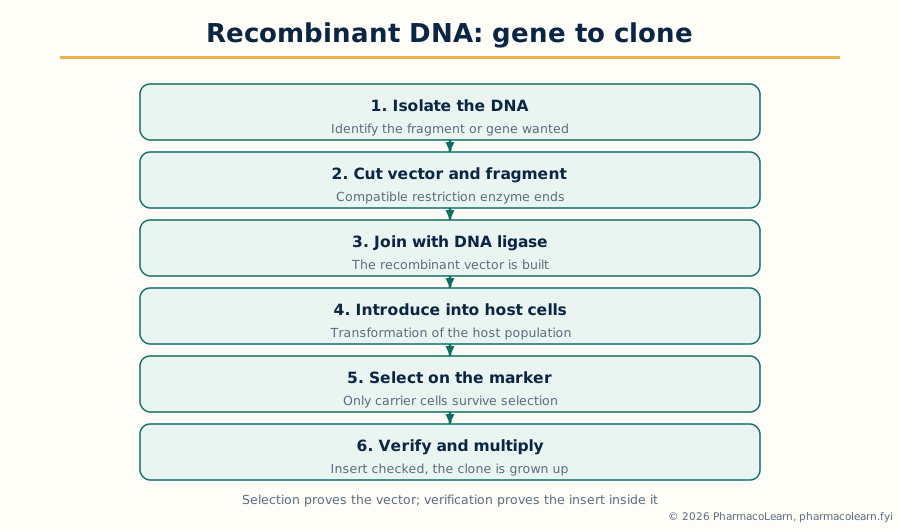 Figure: The recombinant DNA workflow. Selection proves the vector is present; verification proves the right insert is inside it, and both proofs are required.
In plants the technology meets its special delivery systems, Agrobacterium mediated transfer and direct DNA delivery, taught in Unit 2, and its special purposes: adding a pathway gene to raise yield, silencing a gene to remove an unwanted constituent or a competing branch, and inserting reporter and marker genes that let the scientist follow expression. Recombinant technology also underlies the reading tools, sequencing and PCR, that Unit 4 applies to the plant genome. With it, Unit 1 closes: the student has the history, the prospects, the applications, and the molecular grammar, DNA, RNA, protein, code, regulation, genome, signaling and recombinant construction, that the culture techniques of Unit 2 put to work.
Unit 2: Different Tissue Culture Techniques
2.1 Tissue culture techniques: the culture types
Plant tissue culture is the aseptic culture of plant cells, tissues and organs on a defined nutrient medium under controlled conditions of light, temperature and humidity, exploiting the totipotency of Unit 1. Every technique in this unit is a variation on one set up: an explant, the starting piece of plant, is surface sterilised, placed on or in a sterile medium supplying water, mineral salts, a carbon source, vitamins and growth regulators, and incubated while the scientist steers what it becomes. The medium most widely used as the general base is the Murashige and Skoog medium; the steering is done mainly by the auxin and cytokinin balance of Section 1.1. The culture types should be known as a family, because examination questions move between them.
Callus culture is the culture of an undifferentiated, disorganised mass of dividing cells, usually induced on solid medium with growth regulators, and subcultured by transferring pieces to fresh medium. Cell suspension culture takes callus, preferably friable callus that breaks apart easily, into agitated liquid medium, giving a dispersed population of single cells and small aggregates that can be sampled, scaled and treated uniformly like a microbial culture. Organ culture maintains a defined organ, a root tip, a shoot tip, an embryo, in vitro with its organisation intact. Protoplast culture strips the cell wall enzymatically to give naked cells that can fuse and can take up DNA. Haploid culture, from anthers or microspores, gives plants with a single set of chromosomes, valuable in breeding. Meristem culture uses the tiny, usually virus free shoot apex to recover clean plants from infected stock. The comparison below collects the family, and the diagram after it places the types on one map.
| Culture type | Starting material | Organisation | Main uses in this subject |
|---|---|---|---|
| Callus | Explant on solid medium | Undifferentiated mass | Starting point for most work, metabolite studies |
| Suspension | Friable callus in liquid | Dispersed cells and aggregates | Scale up, bioreactors, metabolite production |
| Organ (root, shoot) | Excised organ | Organised, differentiated | Hairy roots, shoot cultures, metabolite production |
| Protoplast | Wall free isolated cells | Single naked cells | Fusion, hybridisation, direct gene transfer |
| Meristem and shoot tip | Apical meristem | Organised apex | Virus free plants, micropropagation |
| Anther and microspore | Pollen bearing organs | Haploid regenerants | Breeding, homozygous lines |
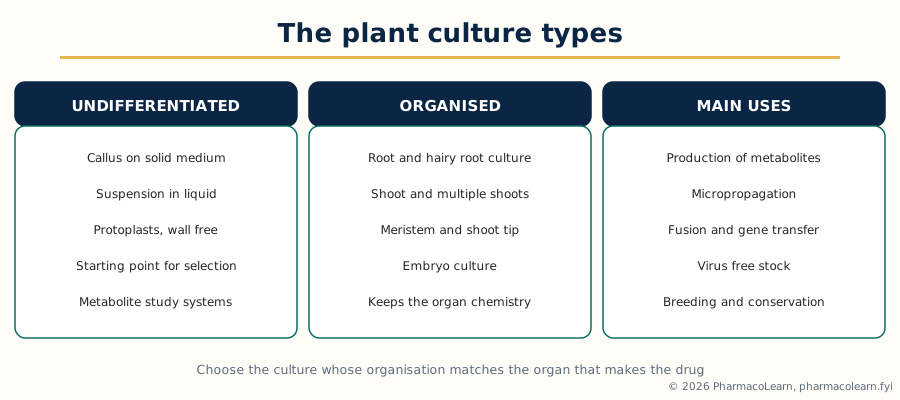 Figure: The culture types of Unit 2. The undifferentiated cultures serve production and study; the organised cultures serve propagation and product profiles that need differentiated tissue.
2.2 Organogenesis
Organogenesis is the formation of organs, shoots or roots, from cultured cells or tissues. It proceeds by two routes that must be distinguished. In direct organogenesis the organ forms straight from the explant tissue without an intervening callus phase, as when a shoot tip or nodal segment produces shoots. In indirect organogenesis the explant first forms callus, and organs are then induced from the callus by changing the growth regulator balance. The steering rule is the classical one of Unit 1: a cytokinin rich balance drives shoot bud formation, an auxin rich balance drives root formation, and a regenerating culture is commonly moved through the two in sequence, shoots first on a cytokinin led medium, then excised shoots rooted on an auxin led medium. Organogenesis is the engine of micropropagation in Section 2.9 and of regeneration after gene transfer in Section 2.11, because a transferred gene is useless until the transformed cell can be grown back into a plant. Its risk is the shadow of Section 2.5: the longer cells spend as callus in the indirect route, the more variation accumulates, so propagation work prefers direct routes and short callus phases, while variation seeking work deliberately uses the indirect route.
2.3 Embryogenesis
Embryogenesis in culture is somatic embryogenesis: the formation, from somatic (non reproductive) cells, of embryo like structures that pass through recognisable stages and can germinate into whole plants, having both a shoot and a root pole in one body, unlike an organogenic shoot which must be rooted separately. Somatic embryos arise directly from explant cells or indirectly from callus or suspension cells, typically after exposure to an auxin led induction medium followed by transfer to conditions that allow embryo maturation. Their teaching value is threefold. They are single cell in origin in the well run systems, so a plant regenerated from one embryo is a true clone of one cell, which matters for transformation and selection work. They are produced in very large numbers in liquid culture, which suits scale. And they are the raw material of synthetic seed in the next section: an embryo is exactly the unit a seed contains. Somatic embryogenesis also serves as a model system for studying development and gene regulation, connecting this technique back to Unit 1.
2.4 Synthetic seed
A synthetic seed, also called an artificial seed, is a somatic embryo, or in extended use another propagule such as a shoot bud, encapsulated in a protective coating that lets it be handled, stored and sown like a true seed. The standard construction is a bead of hydrogel, classically formed from sodium alginate gelled with a calcium salt solution, containing the embryo together with nutrients and protectants in the gel matrix, which acts as an artificial endosperm and seed coat in one. The advantages claimed for the technology should be listed with their conditions. It gives clonal propagules of plants that do not set seed, set seed poorly, or do not breed true from seed, which covers many medicinal hybrids and sterile clones. It allows direct sowing of elite genotypes and easier exchange and transport of germplasm in a small, clean package. Its limits are equally standard: somatic embryos must be of high quality and synchronised, the beads protect only briefly, storage life is short compared with true seed, and conversion of bead to plant in the field remains less reliable than in sterile culture. Examination answers should present synthetic seed as embryogenesis plus packaging: the biology is Section 2.3, and the bead is an engineering answer to handling that biology.
2.5 Somaclonal variation
Somaclonal variation is the variation, genetic and epigenetic, that appears among plants regenerated from culture, and among cultured cell lines themselves. Its causes follow from the culture process: the stress of dedifferentiation and rapid division, growth regulator exposure, and prolonged time in culture disturb chromosome number and structure, activate normally silent elements, and alter the chemical marking of DNA, so that regenerated plants may differ from the parent in growth, form, or constituent profile. The syllabus copies print this topic as "monoclonal variation", a misprint recorded in the verification file; the tissue culture term, used here, is somaclonal variation. The phenomenon is double edged and must be judged by purpose. For micropropagation and for production cultures it is a defect: the whole promise of clonal work is fidelity, and variation is managed down by direct regeneration routes, short culture periods, and verification of the product. For improvement work it is a resource: culture acts as a variation generator and a sieve at once, because selection can be applied to millions of cells in a dish, for salt or disease resistance, or, closest to this subject, for high producing cell lines whose raised constituent content can then be stabilised and scaled in Unit 3. A good answer therefore never calls somaclonal variation simply good or bad; it states the aim of the work and judges the variation against it.
2.6 Protoplast fusion
A protoplast is a plant cell from which the wall has been removed, classically by digestion with cellulase and pectinase type enzymes in an osmoticum that stops the naked cell bursting. Freed of the wall, protoplasts of different plants can be fused, by chemical fusogens such as polyethylene glycol or by an electric pulse method, to give a hybrid cell carrying the nuclei and cytoplasms of both parents: somatic hybridisation. Its applications define its place in the syllabus. It crosses barriers that sexual crossing cannot: unrelated species, sterile partners and combinations where pollen or seed fail, so new combinations of traits, including constituent pathways, can be assembled. It transfers cytoplasmic traits, such as cytoplasmic male sterility and some resistances carried in chloroplasts or mitochondria, in ways breeding cannot. Asymmetric fusion and cybrid production refine the tool, keeping most of one genome with a sample of the other. The honest limits: regeneration from fused protoplasts is difficult in many species, hybrids may be sterile or unstable, and the technique is demanding. Protoplasts also serve gene transfer, since DNA crosses a naked membrane more readily than a walled one, which links this section to Section 2.11.
2.7 Hairy root cultures and their applications
Hairy root culture begins with a natural genetic engineering event. The soil bacterium Agrobacterium rhizogenes infects wounded plant tissue and transfers part of its plasmid into the plant genome; the transferred genes redirect the tissue to produce masses of fast growing, highly branched roots, the hairy root phenotype, and to synthesise opine compounds the bacterium uses. In culture, roots induced this way are excised and grown in liquid medium without growth regulators, because the transferred genes make them self sufficient in growth control. Their properties read like a specification written for secondary metabolite production, which is why the syllabus gives them prominence. They grow fast for plant tissue, often faster than suspension cells. They are genetically and biochemically stable over long periods, where suspensions drift. They are differentiated organs, so they keep the root specific pathways that callus switches off, answering the regulation problem of Section 1.7. And they are hormone independent, simplifying medium and scale up. Their applications follow: production of root derived medicinal constituents, study of root metabolism and biosynthesis, biotransformation, and, with foreign genes added through the same bacterial route, production of improved or novel profiles. Scale up needs bioreactors adapted to a tangled root mass rather than free cells, the design problem of Unit 4. The path below states the production sequence.
Wound the plant tissue and infect with Agrobacterium rhizogenes
        |
Transferred genes induce hairy roots at the wound site
        |
Excise roots; clear the bacteria; confirm the transformed line
        |
Grow the root line in liquid medium, no growth regulators
        |
Select and maintain the stable, high producing line
        |
Harvest roots or medium for the root derived constituents
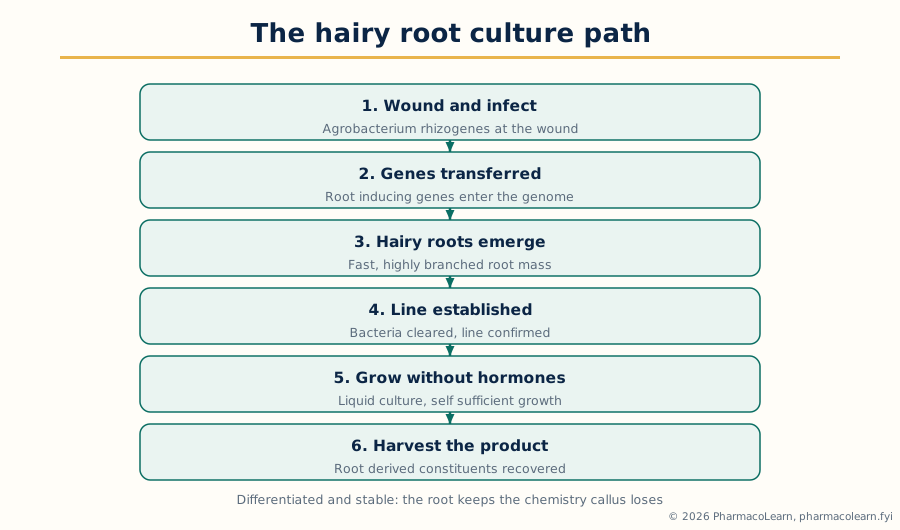 Figure: The hairy root path. The bacterium does the gene transfer once; the resulting root line then grows fast, without added hormones, and keeps the root chemistry that undifferentiated cultures lose.
2.8 Multiple shoot cultures and their applications
A multiple shoot culture is an organised shoot culture in which a shoot tip or nodal explant, under a cytokinin led medium, produces not one lengthening shoot but a multiplying cluster of shoots, each of which can be separated and subcultured to repeat the cycle. Shoot cultures sit at the differentiated end of the culture family: like hairy roots they keep organised tissue and therefore keep constituent pathways that belong to shoots and leaves, and they are genetically steadier than callus. Their applications are twofold. In propagation they are the working system of micropropagation, Section 2.9, because each cycle multiplies plant numbers geometrically from verified mother stock. In production they serve as a culture system for shoot and leaf derived constituents, grown in liquid or temporary immersion systems at scale, with the differentiated profile a suspension cannot offer. Together with hairy roots they teach the unit principle: choose the culture whose organisation matches the organ that makes the drug, root cultures for root drugs, shoot cultures for aerial part drugs, and undifferentiated cells where the pathway survives dedifferentiation or where cells alone are the experimental object.
2.9 Micropropagation of medicinal and aromatic plants
Micropropagation is the rapid clonal multiplication of plants in vitro, and for medicinal and aromatic plants it answers concrete supply problems: elite high yielding mother plants can be multiplied without limit of season; species that are seed shy, sterile, slow or over collected from the wild can be raised in numbers for cultivation instead of collection; and planting material can be delivered disease free, including virus free where meristem culture is used to clean infected stock. The standard stages should be known as a numbered sequence, because examination questions ask for the stages by name. Stage one, establishment: a suitable explant, commonly a shoot tip or nodal segment from a verified mother plant, is surface sterilised and established in sterile culture. Stage two, multiplication: shoots are multiplied, usually as multiple shoot clusters of Section 2.8, through repeated subculture cycles. Stage three, rooting: separated shoots are rooted, on an auxin led medium in vitro or, in some systems, ex vitro during acclimatisation. Stage four, acclimatisation or hardening: plantlets, raised on sugar in humid sterile air, are weaned to soil, normal humidity and photosynthesis in graded steps, the stage at which losses are highest if it is rushed. Quality control runs across the stages: mother stock is authenticated and indexed for disease, and clonal fidelity is respected by favouring direct shoot routes over callus routes, per Section 2.5. The stages are drawn below.
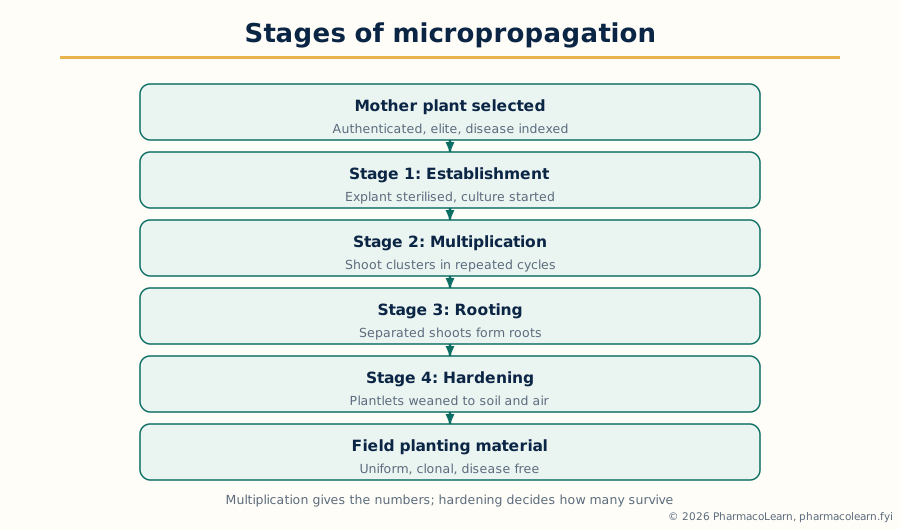 Figure: The four stages of micropropagation. Multiplication gives the numbers; acclimatisation decides how many of those numbers survive as plants.
Select and authenticate the elite mother plant; index for disease
        |
Stage 1: surface sterilise the explant and establish it in culture
        |
Stage 2: multiply shoots in repeated subculture cycles
        |
Stage 3: separate shoots and root them
        |
Stage 4: harden the plantlets and transfer them to soil
        |
Field planting material: uniform, clonal and disease free
2.10 Sterilization methods involved in tissue culture
Sterility is the working condition of everything in this unit, because plant cells grow slowly and rich media grow microbes fast: one contaminated vessel is lost, and contamination in a production culture is a batch failure. Sterilization methods divide by what is being sterilised, and the division is the examinable structure. Instruments and vessels are sterilised by dry heat in a hot air oven or by moist heat in an autoclave, steam under pressure, the workhorse method for media, water and heat stable equipment. Culture media are autoclaved after preparation, with heat sensitive components, some growth regulators, vitamins and antibiotics, instead sterilised by membrane filtration and added aseptically to the cooled sterile base medium. Work surfaces and transfer areas are disinfected with alcohol and by ultraviolet light in laminar airflow cabinets, which protect the work with a continuous flow of filtered air; the air itself is sterilised by filtration. The explant, which arrives carrying a microbial load on its surface, is surface sterilised, classically by a sequence of detergent washing, alcohol, and a chemical sterilant such as sodium hypochlorite or mercuric chloride solution, followed by repeated rinses in sterile water, timed to kill surface microbes without killing the tissue. The operator is part of the system: aseptic technique, flaming of instrument tips, minimal exposure of open vessels, and quarantine and inspection of new cultures complete the method. Each method has its failure mode, and examination answers gain by naming one: autoclaving degrades heat labile ingredients, surface sterilants damage delicate explants at excess exposure, and filtration protects only what passes through it sterile technique, which is why the methods are used in combination, not alone.
2.11 Gene transfer in plants and their applications
Gene transfer is the delivery of chosen DNA into plant cells followed by regeneration of plants carrying and expressing it, the applied summit of Unit 1 and the entry to transgenesis in Unit 4. The methods divide into indirect and direct. The indirect, biological method uses Agrobacterium tumefaciens: the disarmed tumour inducing plasmid, its disease genes removed, carries the gene of interest between its transfer DNA borders, the bacterium transfers that segment into the plant cell, and it integrates into the plant genome. It is efficient, tends to give clean, low copy insertions, and works best in dicotyledonous plants, though its range has been widened by technique. Direct methods deliver DNA physically or chemically: particle bombardment, the gene gun, shoots microscopic particles coated with DNA into cells and works across species and into chloroplasts; electroporation pulses protoplasts so DNA enters through temporary pores; microinjection places DNA directly; and polyethylene glycol mediated uptake serves protoplast systems. Whichever the route, the workflow after delivery is common: the transferred DNA carries a selectable marker, transformed cells are selected, shoots are regenerated by organogenesis or embryogenesis, and the resulting plants are verified for the presence, copy state and expression of the gene, the verification methods of Unit 4. Applications in medicinal plants should be stated in the syllabus terms: raising the yield of a phytopharmaceutical by adding or strengthening pathway genes, suppressing a competing branch or an unwanted constituent by silencing, conferring disease and stress resistance that stabilises field yield, and creating production systems, including hairy roots carrying added genes, that make what the unmodified plant cannot. The comparison of the two biological and physical leads is tabulated below.
| Feature | Agrobacterium mediated transfer | Particle bombardment |
|---|---|---|
| Delivery agent | Living bacterium with a disarmed plasmid | DNA coated microscopic particles |
| Insertion pattern | Usually low copy, defined borders | Often multiple copies, random sites |
| Host range | Best in dicots, widened by technique | Very wide, including monocots |
| Special strength | Clean events, large DNA segments | Chloroplast transformation, no host dependence |
| Main limits | Host range and bacterial clearing | Copy number control, tissue damage |
Unit 3: Immobilisation Techniques and Secondary Metabolite Production
3.1 Immobilization techniques of plant cells
Immobilization is the confinement of living plant cells in or on a support so that they stay in place while medium flows around or past them, separating, in engineering terms, the catalyst, the cells, from the product stream. The techniques should be known by family, with the working principle of each. Entrapment, the most used family, encloses cells inside a gel bead or matrix formed around them under mild conditions, classically calcium alginate beads, with agar, agarose, carrageenan and polyacrylamide gels also in the standard repertoire. Adsorption and attachment bind cells to the surface of a support, such as foam, fibres or mesh, by natural adhesion. Encapsulation encloses cells in a membrane bound capsule, a special form of entrapment with a distinct boundary. Covalent binding attaches cells chemically to a support and is the least gentle of the families, so it is least favoured for living plant cells. Whichever family is chosen, the material must satisfy the same conditions: non toxic to cells, porous enough for nutrients, substrates and products to diffuse freely, mechanically stable in a reactor, and cheap and sterilisable at scale. The families are collected in the diagram below.
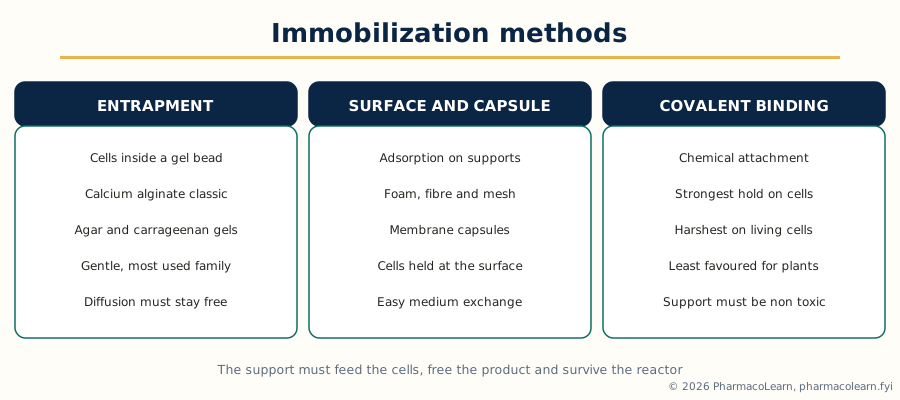 Figure: The immobilization families. Entrapment dominates plant cell work because it is gentle: the gel forms around living cells under conditions they survive.
3.2 Application of immobilization on secondary metabolite production
The application to secondary metabolite production is the reason the technique earns half a unit, and its advantages should be argued, not merely listed. Immobilised cells can be held at high density in a reactor, far denser than free suspensions tolerate, so the producing biomass per volume rises. The cells are protected from the shear forces of stirred systems, a real limit for large, fragile plant cells. Growth and production can be separated: cells are grown first, then held in a production phase under conditions optimised for the metabolite rather than for growth, for as long as they remain productive, and the same cells can be reused over successive production cycles, which free batch culture cannot do. Where the product is released into the medium, it can be drawn off continuously and recovered from a cell free stream, simplifying downstream processing and, by removing the product, relieving feedback restraint on the pathway. Immobilization also suits biotransformation and precursor conversion work, where the cells act as a reusable enzymatic bed. The disadvantages complete the answer: diffusion through the gel can starve the bead centre of oxygen and nutrients, growth inside beads can break them, the system adds cost and complexity, and products stored inside the cells rather than released gain little from the arrangement. The technique therefore succeeds selectively, for released products, long production runs and shear sensitive lines, and the examination skill is matching those conditions to a case.
3.3 Cloning of plant cells: different methods of cloning
Cloning of plant cells means deriving a population, a cell line, from a single cell or a small uniform group of cells, so that the line is genetically as uniform as culture allows and its properties can be attributed to that origin. The standard methods should be listed with how each secures the single cell origin. In the plating method, a suspension is spread at low density on solid medium so that separated cells or tiny aggregates grow into discrete colonies, each colony being a clone that can be picked and grown on. In the nurse culture and feeder layer methods, single cells that refuse to divide alone are grown over, or separated by a membrane from, a layer of actively growing cells that condition the medium with the factors sparse cells need. Microdroplet and microchamber methods isolate single cells in tiny volumes under observation, so the single cell origin is verified by sight rather than assumed. Cell sorting and selective enrichment complete the practical set, separating cells by size, density or a selectable property before plating. In the wider sense of the unit, cloning also reaches the plant level of Unit 2: a cloned cell line regenerated through embryogenesis gives cloned plants, and micropropagation is cloning practised on shoots. The common purpose across methods is selection: once clones exist separately, each can be assayed for the constituent wanted, and the best becomes the production line, which is the bridge to Section 3.5.
3.4 Applications, advantages and disadvantages of plant cell cloning
The applications of plant cell cloning follow from uniformity plus selection. Cloned lines are the material of metabolite production, because a screened high producing clone gives a reproducible starting point for scale up. They serve biosynthetic and regulation studies, because results from a uniform line can be compared across experiments. They preserve valuable genotypes found in culture, including productive variants thrown up by somaclonal variation, by holding them as defined lines, and, regenerated, they deliver uniform plants for research and production plots. The advantages should be stated plainly: uniformity and reproducibility of the biological material; the power to select at the level of millions of cells for a trait that could never be screened plant by plant in a field; speed, relative to breeding cycles; and containment, since lines are held and tested in the laboratory before any plant is released. The disadvantages are the honest counterweight, and several echo earlier sections: cultured cells drift, cloned lines can lose productivity or accumulate variation over long subculture, the very instability of Section 2.5 working against the uniformity cloning promises; many lines produce less than the parent plant because differentiation dependent genes are off; single cell cloning is technically demanding, with low plating efficiency in many species; and a line selected in a flask still has to prove itself at reactor scale. The balanced verdict an examiner rewards is that cloning is the indispensable selection instrument of the subject, whose products must be stabilised and re verified continuously, not a one time guarantee.
3.5 Secondary metabolism in tissue cultures, with emphasis on production of medicinal agents
Secondary metabolites are the compounds a plant makes beyond the needs of basic growth: the alkaloids, glycosides, terpenoids, phenolics and other families that pharmacognosy exists to study and that form most plant derived medicines. In the intact plant they serve defence and signaling roles, are often made in specialised tissues, stored in specialised structures, and switched on by the regulation systems of Unit 1. Tissue culture asks whether that chemistry can be run in vitro, and the unit answer has a structure every student should hold. First, the general finding: cultured cells retain the genetic capacity for secondary metabolism, callus and suspension cultures of many medicinal species do produce their characteristic constituents, and organised cultures, hairy roots and shoots of Unit 2, usually reproduce the parent profile more faithfully because differentiation is preserved. Second, the general problem: undifferentiated cultures frequently produce much less than the plant, or stop producing, because the pathway genes need the tissue context, the storage structures, or the signals that culture lacks; growth and production also compete, fast growing cultures often making least product, so production is commonly a two phase affair, a growth phase building biomass and a production phase, with changed medium and conditions, building metabolite. Third, the strategies that raise production, which organise the rest of the unit: select high producing cell lines by the cloning and screening of Sections 3.3 and 3.4; restore differentiation through root or shoot culture; feed precursors and apply elicitors, Section 3.6; immobilise and run extended production, Sections 3.1 and 3.2; and engineer the pathway itself by gene transfer, Unit 4. The standard textbook examples prove the principle qualitatively: shikonin production from cultured Lithospermum cells became the classical demonstration that a plant cell culture could supply a commercial medicinal pigment, and culture production or enhancement has been taught through examples such as ajmalicine from Catharanthus cultures, rosmarinic acid from Coleus cultures and taxol type diterpenes from Taxus cultures, each presented in the texts as a system improved by line selection, medium design and elicitation rather than as a fixed yield. The production flow below states the working sequence.
Establish callus from the authenticated medicinal plant
        |
Raise a suspension culture and clone single cell lines
        |
Screen the clones and select the high producing line
        |
Growth phase: build biomass under growth conditions
        |
Production phase: changed medium, precursors, elicitors
        |
Harvest cells or medium; extract and assay the metabolite
        |
Feed results back: reselect lines, adjust the production phase
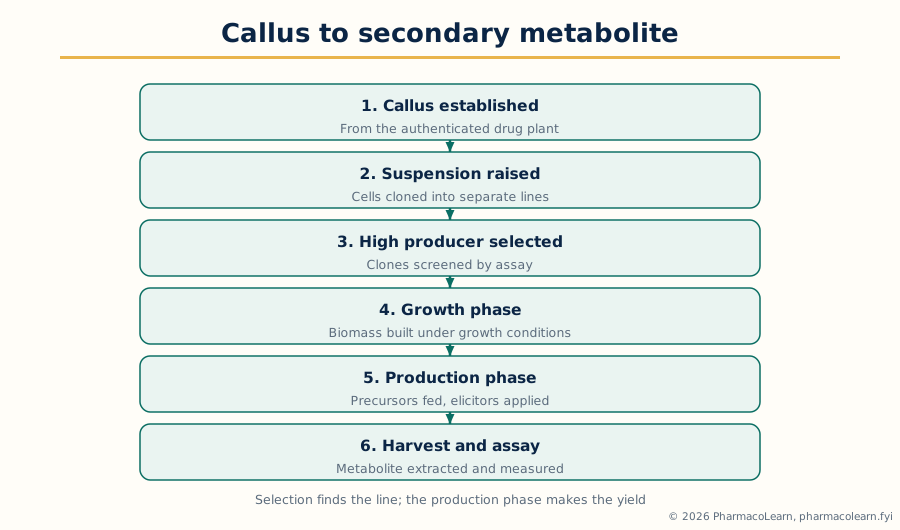 Figure: From callus to metabolite. Selection finds the producing line; the separate production phase, with precursors and elicitors, is where the yield is actually made.
3.6 Precursors and elicitors on production of secondary metabolites
Precursors and elicitors are the two chemical levers of the production phase, and they work by different logic, a distinction the syllabus phrase invites and examiners test. A precursor is a building block of the product pathway, an intermediate or a near intermediate, fed to the culture so the pathway runs faster or further than its own supply allows: amino acid precursors feed alkaloid pathways, acetate and mevalonate units feed terpenoid pathways, and phenylalanine type precursors feed phenylpropanoid products. Precursor feeding succeeds when the fed step is genuinely limiting and the culture can take up and use the compound, and it fails instructively when the true limit lies elsewhere, in enzyme level or storage. An elicitor is a signal, not a building block: a substance or treatment that mimics attack or stress and switches on the defence chemistry of which most secondary metabolites are a part. Elicitors divide into biotic elicitors, of microbial or plant origin, such as fungal cell wall preparations, yeast extract and the signaling molecules of the jasmonate family, and abiotic elicitors, such as ultraviolet light, heavy metal salts and physical stresses in the standard lists. Timing and dose decide success: elicitors are usually applied to a grown culture at the start of the production phase, and excess simply damages cells. Used together, the two levers state the unit in one sentence: precursors supply the bricks, elicitors issue the order to build, and line selection, immobilization and differentiation decide whether the factory receiving them can answer. The comparison is tabulated below.
| Feature | Precursor | Elicitor |
|---|---|---|
| Nature | Pathway building block or intermediate | Signal that mimics stress or attack |
| Mechanism | Relieves a supply limit inside the pathway | Switches pathway genes on through signaling |
| Examples of the class | Amino acids for alkaloids, phenylalanine for phenylpropanoids | Fungal preparations, yeast extract, jasmonates, UV |
| Applied | During the production phase, fed to the medium | At the start of the production phase, in small dose |
| Fails when | The real limit is enzyme level, uptake or storage | The dose injures cells, or the line cannot respond |
Unit 4: Biotransformation and Transgenesis
4.1 Biotransformation
Biotransformation is the use of living cells, here cultured plant cells, to carry out a specific chemical conversion on a supplied substrate, the cell acting as a selective enzymatic reagent. Plant cells perform the reaction types of a well stocked enzymatic bench: hydroxylation, glycosylation, oxidation and reduction, hydrolysis, methylation and related modifications, often with a regio and stereo selectivity that ordinary chemistry reaches only with difficulty. The pharmaceutical logic should be stated as the syllabus frames it, conversion of a lower value or inactive precursor into a higher value product in one biological step. The classical textbook illustration is the conversion work of Digitalis cell cultures on supplied cardenolide substrates, modifying the molecule at positions chemistry handles poorly, taught in every standard text as the model of plant cell biotransformation. Biotransformation differs from production in Section 3.5 in one clean line: in production the cell builds the product from simple nutrients through its whole pathway, while in biotransformation the scientist supplies a late, complex substrate and the cell performs one or a few steps. Its practical conditions follow: the substrate must reach the cells and not poison them, immobilised cells of Unit 3 make an especially convenient reusable catalyst bed for the purpose, product recovery is from cells or medium according to where the product accumulates, and the economics work where the step is hard chemically, the substrate is cheap, or the product value is high. Its limits are equally plain: conversions can be slow, substrate loading is modest, and side reactions by other cell enzymes can complicate purification.
4.2 Bioreactors for pilot and large scale cultures of plant cells
A bioreactor is the vessel system in which a culture is grown at scale under monitored, controlled conditions, and plant cell bioreactors are adaptations of microbial fermentation hardware to a more difficult tenant. Plant cells are large, aggregate readily, are damaged by shear, grow slowly, and demand oxygen without tolerating the violent aeration microbes accept; reactor choice is therefore dominated by gentle mixing and aeration. The main types should be known with their working character. The stirred tank reactor, borrowed from microbial work, mixes with an impeller and sparges air; it is versatile and well instrumented but its shear is the highest of the family, managed by low speeds and adapted impellers. The airlift reactor has no impeller: rising air in a central draft tube circulates the liquid, giving low, even shear and good oxygen transfer for suspensions, and it is the type most associated with plant cell scale up. Bubble column reactors are the simplest aerated columns, gentle and cheap, with less control. Specialised forms serve organised cultures: temporary immersion and mist or trickle bed systems bathe shoots and hairy roots periodically or continuously in medium without drowning or shredding them, since a root mass or shoot cluster cannot be stirred like a suspension. Pilot scale work proves the culture in such a reactor at intermediate size, establishing the inoculum train, the feeding and harvest schedule, and the control of the standard variables, temperature, pH, dissolved oxygen and sterility, before large scale commits money and months to a slow growing culture. The types are compared in the diagram below.
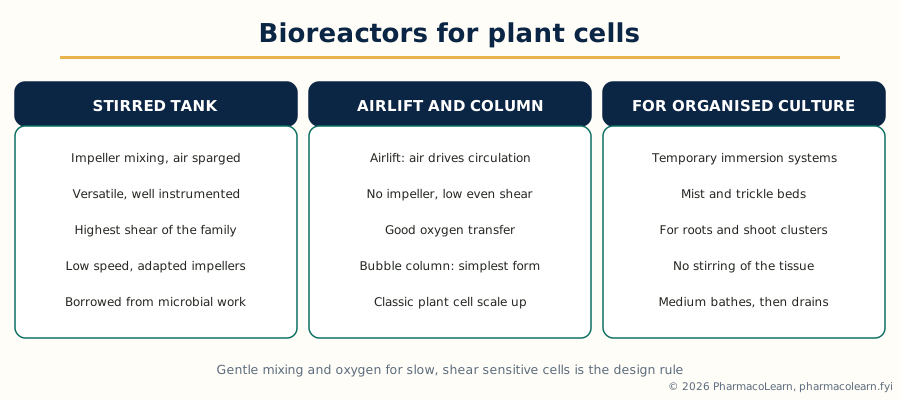 Figure: Bioreactor types for plant cells. The design question is always the same: deliver oxygen and mixing to slow, shear sensitive cells without injuring them.
4.3 Retention of biosynthetic potential in cell culture
Retention of biosynthetic potential is the keeping, by a cultured line, of its ability to make the constituents it was selected to make, across subcultures and across scale up. The syllabus joins it to bioreactors deliberately, because the commonest industrial disappointment of the subject is a line that produced well in flasks and fades in the reactor or after months of transfer. The causes of loss collect the lessons of the whole course: somaclonal and epigenetic drift under culture conditions, Sections 2.5 and 3.4; selection pressure running the wrong way, since fast growing low producing cells outgrow slow high producers in every transfer, so routine subculture silently selects against production; loss of differentiation in lines whose pathway needs it; and stress or changed conditions at scale. The retention strategies answer cause by cause. Preserve master lines at an early, verified stage, by slow growth storage or cryopreservation where established, and restart working lines from the master rather than transferring indefinitely. Screen and reselect periodically, assaying the line, not assuming it. Keep selection pressure honest by subculturing from producing material and by monitoring constituent content as a routine culture parameter beside growth. Favour stable systems, hairy roots and organised cultures, for pathways prone to fade. And treat the passage from flask to pilot reactor as a retention test in itself, Section 4.2, verifying production at each scale before proceeding. Retention is therefore a management discipline laid over the biology: the genome holds the potential, and the culture system either keeps the conditions under which it is expressed or loses it by degrees.
4.4 Transgenic plants
A transgenic plant is a plant whose genome carries, stably integrated, DNA introduced by the gene transfer methods of Section 2.11, inherited by its progeny and expressed as a new or altered trait; the whole enterprise is transgenesis. The construction logic should be known in outline: the gene of interest is assembled in a vector with a promoter to drive its expression in the right tissue and at the right strength, a terminator, and a selectable marker; transfer follows by the Agrobacterium or direct routes; transformed cells are selected and regenerated; and the plants are verified and characterised, presence and structure of the insert, its expression, and the trait, before any use. In medicinal plant work the trait targets follow the syllabus objectives: higher yield of a phytopharmaceutical through added or strengthened pathway genes; a cleaner profile through silencing of a gene making an unwanted constituent or diverting a shared precursor; resistance to disease, pests or stress that stabilises production in the field; and production of valuable proteins and other products in plant systems. Transgenic hairy roots, carrying both the root inducing genes and added pathway genes, are a laboratory production form of the same idea. The cautions complete a balanced answer: expression varies with insertion site and copy number and can be silenced in later generations, containment and regulatory assessment govern any release, and a transgenic line, like a culture line, must be verified continuously. The methods compared visually below are the delivery half of transgenesis; the verification half is the next two sections.
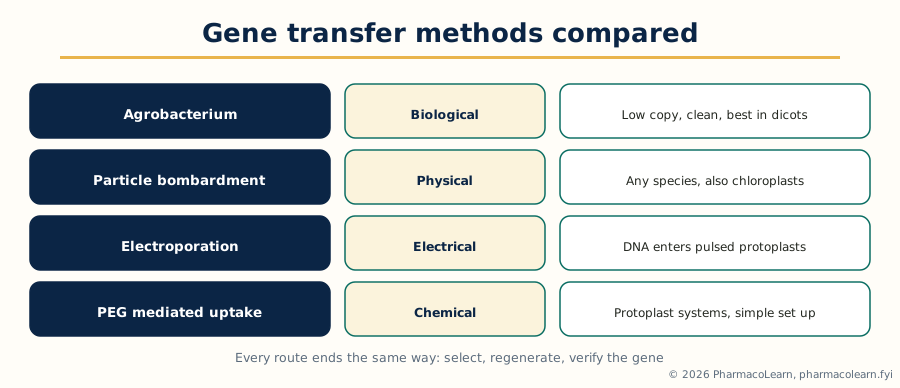 Figure: Transformation methods compared. Every route ends at the same obligations: select the transformed cells, regenerate the plant, and verify the gene and its expression.
4.5 Methods used in gene identification, localization and sequencing of genes
Before a gene can be transferred, improved or even discussed precisely, it must be found, placed and read, and this section teaches the three verbs of the syllabus in order. Identification asks which DNA is the gene for a trait or enzyme. The classical routes complement each other: screen a DNA library with a probe, a labelled piece of related DNA that hybridises to its match; use the protein, purifying the enzyme and working back from its amino acid sequence to the gene; use a mutant or a differing line and find the DNA that differs; or amplify the gene directly by PCR from a known related sequence, Section 4.6. Hybridisation, the binding of complementary single strands, is the working principle under most of these, in colony and plaque screening and in the blot techniques that detect a specific DNA or RNA in a mixture. Localization asks where the gene sits: on which chromosome and at what position, established by genetic mapping, the measurement of recombination distances between the gene and known markers, and by physical methods, hybridisation of a labelled probe directly to chromosome preparations, which shows the site by sight. Sequencing asks for the exact base order, read by the standard chain termination method and its automated descendants, in which synthesis is stopped base by base and the fragment sizes reveal the sequence. Once read, a sequence is compared against databases of known genes: resemblance to a characterised enzyme gene from another species is often the first functional identification of a newly read medicinal plant gene. The three verbs chain together in practice: identify a candidate, localise and clone it in full, sequence it, and only then does the gene become a tool the rest of the subject can use.
4.6 Application of PCR in plant genome analysis
The polymerase chain reaction, PCR, is the in vitro amplification of a chosen DNA segment: a cycle of heating to separate the strands, cooling to let two short primer sequences bind at the two ends of the target, and extension by a heat stable DNA polymerase, repeated many times so the segment between the primers doubles each cycle and becomes abundant enough to detect, clone or sequence. Its applications in plant genome analysis, the syllabus phrase, should be given as a working list tied to this subject. Detection and verification: confirming that a transferred gene is present in a regenerated plant, the routine verification of Sections 2.11 and 4.4. Identification work: amplifying a gene or a diagnostic region from a medicinal plant for cloning and sequencing, Section 4.5. Identity and relationship studies: PCR with primers for variable regions, and PCR based marker methods that reveal differences between plants without prior sequence knowledge, are used to distinguish species, varieties and chemotypes, to check the authenticity of drug material and the fidelity of micropropagated lines, and to build the marker data that genetic mapping and localization consume. Expression study: PCR performed on DNA copied from RNA reports whether a pathway gene is switched on in a tissue or a culture, connecting genome analysis back to the regulation questions of Units 1 and 3. Genome survey at scale: amplification across many loci supports diversity assessment of medicinal plant collections and germplasm, guiding conservation and parent selection. The common thread to state in closing is economy: PCR turns an invisible trace of DNA into a workable quantity, which is why it appears at every stage of genome analysis, from the first screen of a transformant to the authentication of the drug plant itself.
Unit 5: Fermentation Technology
5.1 Application of fermentation technology
Fermentation technology, in the broad pharmaceutical sense used by this unit, is the controlled large scale culture of organisms, classically microorganisms, and their use as producers of useful compounds: the organism is grown in a fermenter on a chosen medium under monitored conditions, and the product is recovered from the broth or the biomass. Its applications across pharmacy are the frame for the three named products that follow: antibiotics and other microbial medicines historically defined the industry; organic acids, solvents and amino acids serve as industrial and pharmaceutical intermediates; vitamins and steroids transformations serve drug manufacture; and the products this unit names, ergot alkaloids, single cell proteins and enzymes, represent its medicinal, nutritional and catalytic faces. Plant biotechnology meets fermentation at two points already taught: the plant cell bioreactor of Unit 4 is fermentation hardware and thinking applied to plant cells, and conversely the microbial fermenter is the scale model every culture technology imitates, with its inoculum train, sterilised medium, controlled aeration, pH and temperature, timed harvest and downstream recovery. The general flow below states that shared sequence in its classical microbial form.
Prepare and sterilise the medium and the fermenter
        |
Build the inoculum from the verified production strain
        |
Inoculate and run the fermentation under controlled conditions
        |
Monitor growth and product formation through the run
        |
Harvest at peak product; separate biomass from broth
        |
Recover and purify the product from broth or biomass
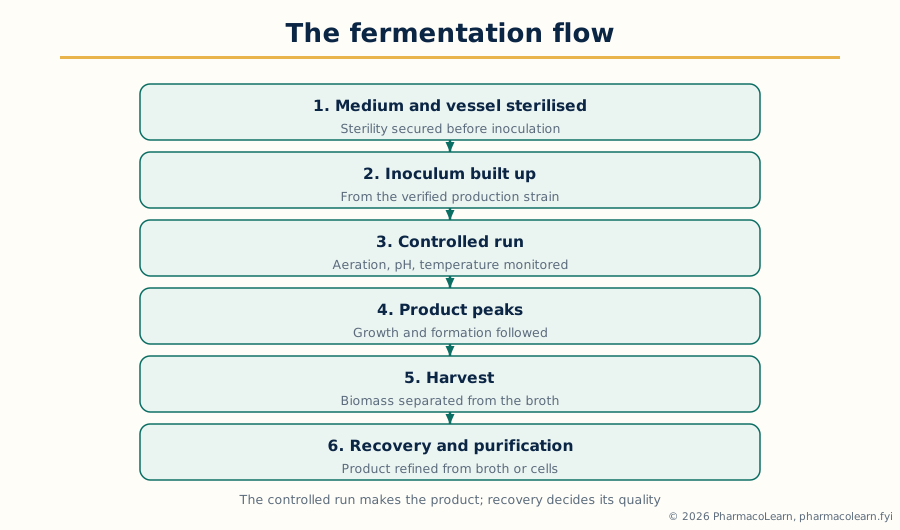 Figure: The fermentation flow. The controlled run in the middle is where the product is made; sterilisation before it and recovery after it decide whether that product reaches the market.
5.2 Production of ergot alkaloids
Ergot is the sclerotium of the fungus Claviceps purpurea, which parasitises rye and other grasses, and its alkaloids, built on the lysergic acid nucleus, include compounds of established obstetric and migraine medicine, ergometrine and ergotamine being the classical named examples of the pharmacopoeias. Fermentation production exists because field ergot is the least controllable of drug supplies: yield and alkaloid profile depend on the host crop, the fungal strain and the weather, and the sclerotia carry a variable mixture of wanted and toxic alkaloids. In fermentative production a selected high producing strain of the fungus is grown in submerged culture on a suitable medium under controlled conditions, the alkaloids are formed during the run, and the products are recovered from the culture and purified, with strain improvement, medium design and process control replacing the field variables. The teaching points are the contrast and the caution: the contrast, fermentation converts an erratic parasitic harvest into a contained, improvable process, the same argument Unit 1 made for plant cell culture; the caution, the ergot alkaloids are potent and toxic in overdose, ergotism being the classical poisoning of contaminated grain, so production, handling and assay are matters of strict control. Ergot is also the bridge example of the unit: a drug of a lower plant, a fungus, produced by the fermentation technology this subject shares with pharmaceutical microbiology.
5.3 Single cell proteins
Single cell protein, SCP, is the dried biomass of microorganisms, bacteria, yeasts, fungi or algae, grown at scale and used as a protein source, the name referring to the single celled or filamentous microbial producer rather than to any single protein. Production follows the fermentation flow of Section 5.1 with its own emphases: a fast growing, protein rich, non pathogenic producer is grown on a cheap and abundant substrate, historically including molasses, whey, and hydrocarbon or alcohol feedstocks in the classical processes, the biomass is harvested, washed, treated to reduce its nucleic acid content, and dried. The pharmaceutical and allied interest should be stated accurately: SCP serves mainly as food and feed protein, supplementing conventional agriculture from substrates and land it does not compete for, and within this subject it teaches the scale economics of microbial culture in their purest form, where the product is the cell itself. Its quality questions are also its examination points: nucleic acid content must be controlled because excess dietary nucleic acid burdens purine metabolism; the producer must be free of toxins and pathogens; and the biomass must be digestible and acceptable. Spirulina type algal biomass, familiar from the nutraceutical study of Semester 1, is the algal face of the same idea. SCP therefore closes the loop of the unit: fermentation can deliver a defined molecule, as with ergot, or the producing cell itself, as here.
5.4 Enzymes of pharmaceutical interest
Enzymes of pharmaceutical interest are produced by fermentation because microbial culture is the practical source of enzyme protein in quantity, purity and reproducibility: a selected producer strain is fermented, and the enzyme is recovered from the broth if it is secreted, or from the harvested cells if it is intracellular, then purified, stabilised and standardised by its activity, the measure in which enzymes are always sold and used. The classes of interest should be grouped by their pharmaceutical role. Digestive and replacement enzymes, such as amylases, proteases and lipases of microbial and other origin, serve in digestive preparations and in processing. Therapeutic enzymes used as drugs in their own right, with the classical teaching examples drawn from microbial and plant sources together, include the thrombolytic and anti inflammatory enzymes of the standard texts. Analytical and diagnostic enzymes serve the laboratory, in the reagent systems that measure glucose and other analytes. Industrial and processing enzymes serve manufacture, in food, textile and pharmaceutical processing, and as the catalysts of the biotransformation steps that industry prefers to harsh chemistry. Two quality ideas govern the whole group and close the subject fittingly: an enzyme product is standardised by activity under stated conditions, not by weight alone, and its production strain, fermentation and recovery must be controlled so that activity, purity and safety arrive together, the same discipline of verified starting material, controlled process and tested product that runs from the medicinal plant field of Semester 1 through every culture and fermenter of this subject.
Frequently Asked Questions
Q: What is MPG201T in M.Pharm Pharmacognosy? MPG201T is Medicinal Plant Biotechnology, the first theory subject of M.Pharm Pharmacognosy Semester 2 under the PCI syllabus. It carries 4 credits and 60 hours, taught at 4 hours per week for 100 marks. Its unit hours are not uniform: Unit 1 carries 12 hours, Units 2 and 3 carry 15 hours each, Unit 4 carries 13 hours and Unit 5 carries 5 hours.
Q: What is totipotency and why does it matter in plant tissue culture? Totipotency is the capacity of a living plant cell to regenerate a whole plant, because it carries the complete genome of the organism. It is the foundation of tissue culture: explants, callus, protoplasts and single cloned cells can all, under the right medium and growth regulator conditions, be grown back into complete plants.
Q: What are the stages of micropropagation? Stage 1 is establishment of a surface sterilised explant from an authenticated mother plant in sterile culture. Stage 2 is multiplication of shoots through repeated subculture. Stage 3 is rooting of the separated shoots. Stage 4 is acclimatisation or hardening, in which the plantlets are weaned to soil and normal humidity. Disease indexing and clonal fidelity checks run across all stages.
Q: How do organogenesis and somatic embryogenesis differ? In organogenesis, shoots or roots form separately, and a shoot must still be rooted before it is a plant. In somatic embryogenesis, somatic cells form embryo like structures with both shoot and root poles in one body, which can germinate directly into a plant. Somatic embryos are also the propagule used inside synthetic seeds.
Q: What are hairy root cultures and what are their advantages? Hairy root cultures are roots induced by transfer of Agrobacterium rhizogenes genes into plant tissue, grown in liquid culture without added growth regulators. They grow fast for plant tissue, are genetically and biochemically stable, remain differentiated so they keep root specific metabolite pathways, and suit production of root derived medicinal constituents.
Q: What is somaclonal variation? Somaclonal variation is the genetic and epigenetic variation arising among cells and regenerated plants during culture, caused by the stress of dedifferentiation, growth regulators and prolonged culture. It is a defect in propagation work, where clonal fidelity is required, and a resource in improvement work, where it generates variants from which high producing lines can be selected.
Q: How do precursors and elicitors increase secondary metabolite production? A precursor is a pathway building block fed to the culture to relieve a supply limit, such as an amino acid fed to an alkaloid pathway. An elicitor is a signal that mimics stress or microbial attack, such as a fungal preparation or a jasmonate, and switches the defence related metabolite pathways on. Precursors supply material; elicitors issue the order to produce.
Q: What is cell immobilization and when is it useful? Immobilization confines living plant cells in or on a support, most often by entrapment in a gel such as calcium alginate, while medium flows around them. It is useful where the product is released into the medium, where long production runs and cell reuse are wanted, and where fragile cells need protection from shear, provided diffusion through the matrix does not limit the cells.
Q: What is the role of PCR in plant genome analysis in this subject? PCR amplifies a chosen DNA segment in vitro using two primers and a heat stable DNA polymerase. In plant genome analysis it verifies transferred genes in regenerated plants, amplifies genes and diagnostic regions for cloning and sequencing, supports identity and fidelity studies of species, varieties and micropropagated lines, and, applied to RNA copies, reports whether a pathway gene is switched on.
Q: Are the MPG201T unit wise PDFs free to download on PharmacoLearn? Yes. PharmacoLearn provides the MPG201T notes as free unit wise PDF downloads, one PDF for each of the five units, with the frequently asked questions appended to the Unit 5 PDF. The same page carries the complete notes for M.Pharm Pharmacognosy Semester 2 students.
Complete MPG201T notes, all 5 units in one PDF, free to keep.
Other M.Pharm subjects: MPH101T · MPC101T · MPL101T · MPH102T · MPH103T · MPH104T · MPL102T · MPL103T · MPL104T · MPC102T · MPC103T · MPC104T · MPH201T · MPH202T · MPH203T · MPH204T · MPC201T · MPC202T · MPC203T · MPC204T · MPL201T · MPL202T · MPL203T · MPL204T · MRA101T · MRA102T · MRA103T · MRA104T · MRM301T · MPG101T · MPG102T · MPG103T · MPG201T · MPG202T · MPG203T · MPG104T · MPG204T · MRA201T · MRA202T · MRA203T · MRA204T · M.Pharm