
MPP202T — Pharmacotherapeutics II
4 hrs/week, 4 credits, 60 hours, 100 marks. Notes follow the M.Pharm syllabus, unit by unit.
MPP202T Pharmacotherapeutics II notes for M.Pharm Pharmacy Practice Semester 2: epilepsy, Parkinson disease, stroke, psychiatric and renal disorders, infectious diseases, gynaecological disorders and cancer chemotherapy, with free unit wise PDF downloads on PharmacoLearn.
Units in this subject
- Unit 1 — Nervous System
- Unit 2 — Psychiatric Disorders and Renal System
- Unit 3 — Infectious Diseases, First Part
- Unit 4 — Infectious Diseases, Second Part, and Gynecological Disorders
- Unit 5 — Oncology
Download MPP202T PDF Notes
Free PDFs for this subject, one per unit:
Pharmacotherapeutics II, subject code MPP202T, is the second core theory subject of M.Pharm Pharmacy Practice, Semester 2, and the direct continuation of Pharmacotherapeutics-I (MPP102T) from Semester 1. It carries 4 credits and 60 hours of theory, taught at 4 hours per week, for 100 marks, and its five units are of equal length at 12 hours each in the PCI scheme. A code caution belongs at the head of the page: several copies of the PCI course of study table misprint this subject as MPP102T, duplicating the Semester 1 code; the correct code is MPP202T, as printed by Jamia Hamdard, Nitte, PTU, the RGPV Semester 2 unit text and the medipdf subject list, and MPP202T is used throughout these notes. Its scope, as the syllabus states it, is to enable students to understand the different treatment approaches in managing various disease conditions, and to impart skills in optimizing drug therapy by individualizing the treatment plan through evidence based medicine. Its objectives follow: to describe the rationale for drug therapy, to summarize the therapeutic approach for various disease conditions with reference to the latest evidence, to discuss clinical controversies and evidence based medicine, to prepare individualized therapeutic plans based on diagnosis, and to identify the patient specific parameters relevant in initiating and monitoring therapy. The subject head over the whole syllabus defines the method of every section: etiopathogenesis and pharmacotherapy of diseases of the following systems. The units follow the syllabus order: Unit 1 nervous system, Unit 2 psychiatric disorders and renal system, Units 3 and 4 infectious diseases with gynecological disorders closing Unit 4, and Unit 5 oncology. Every disease is therefore taught in the same order as in Part I: what it is, what causes it, how it develops, how it presents, how it is recognised, and how its drug therapy works in principle. One discipline runs through the whole subject: these notes teach diseases and their drug therapy at standard textbook level, naming the standard drug classes and their roles and describing stepped management qualitatively. No doses or dose schedules are stated, and no patient specific advice is given. Drug therapy is always individualised on diagnosis, severity, comorbidity and response, which is the habit this subject exists to teach.
Unit 1: Nervous System
1.1 The pharmacotherapeutics method, continued
The method of this subject is the method of Part I, applied to a new set of systems, and it is restated here because the nervous system, psychiatric and infectious topics test it in new ways. The method begins with etiopathogenesis: the causes of the disease and the mechanism by which those causes produce the disordered physiology, because rational drug therapy is therapy aimed at a mechanism. In this subject the mechanisms are often balances that have tipped: excitation against inhibition in epilepsy, dopamine against acetylcholine in Parkinson disease, transmitter excess or deficit in the psychiatric disorders, perfusion against demand in stroke, and host defence against microbial growth in the infectious units. The second stage is presentation and diagnosis: the symptoms, signs and investigations that establish which disease is present, how severe it is, and what else will condition therapy, including other diseases, other medicines, organ function, allergy and adherence. The third stage is the therapeutic plan itself, built in the stepped pattern most conditions in this subject follow: non drug measures and treatment of causes first and throughout, then drug therapy started with the class or classes the mechanism and the evidence put first, then review against stated goals, then addition, substitution or escalation where the response is inadequate, with long term therapy, prevention of complications and monitoring for adverse effects planned from the start rather than added later. Two cautions run through the whole subject. Many of its drug classes act on the brain and carry dependence, withdrawal and interaction burdens that must be planned for, not discovered. And in the infectious units the patient is not the only unit of concern: every antimicrobial choice also acts on the microbial population and on future patients, which is why rational use opens those units.
The pharmacotherapeutics method used in every section
  Etiopathogenesis: cause and mechanism of the disease
        |
        v
  Presentation and diagnosis: severity, comorbidity,
  organ function, other medicines, allergy, adherence
        |
        v
  Plan: non drug measures and causes treated throughout,
  first drug classes matched to the mechanism
        |
        v
  Review against goals: response, adverse effects,
  clinical and laboratory indices over time
        |
        v
  Adjust: add, substitute or escalate in steps,
  prevent complications, plan long term monitoring
1.2 Epilepsy
Epilepsy is a chronic disorder of the brain characterised by an enduring predisposition to generate epileptic seizures, which are transient episodes of abnormal, excessive or synchronous neuronal activity producing changes in awareness, movement, sensation or behaviour. A single seizure is not epilepsy: seizures provoked by fever in young children, by metabolic disturbance, by alcohol withdrawal or by acute brain injury are acute symptomatic events, and the diagnosis of epilepsy rests on recurrence risk and on the pattern over time. The aetiology is classified by cause: structural causes such as cortical malformation, head injury, stroke, tumour and hippocampal sclerosis; genetic causes, prominent in the childhood onset syndromes; infectious causes, including the parasitic and viral infections of Unit 4; metabolic causes; immune causes; and a large group in which no cause is found. The pathophysiology is an imbalance between excitation and inhibition in a neuronal network: excitatory glutamatergic transmission and voltage gated sodium and calcium currents that sustain firing outweigh inhibitory GABAergic restraint, a focus of hyperexcitable neurons recruits its neighbours, and the seizure is the clinical shape of that synchronous discharge spreading or generalising. Seizures classify by onset: focal seizures begin in one hemisphere and may preserve or impair awareness, with motor, sensory, autonomic or psychic features pointing to the site of origin, and may evolve to bilateral convulsive seizures; generalised seizures engage both hemispheres from the start and include tonic clonic, absence, myoclonic, tonic and atonic forms; combined and unknown onset forms complete the scheme. Presentation follows the type: the generalised tonic clonic seizure with loss of consciousness, tonic stiffening, clonic jerking, tongue biting and incontinence and a postictal phase of confusion and sleep is the form the public recognises, while absence seizures are brief staring spells in a child and focal seizures may be no more than a rising epigastric sensation, a smell that is not there, or rhythmic jerking of one hand. Diagnosis is first a witness history, which outweighs every test, supported by electroencephalography showing epileptiform activity, brain imaging seeking a structural cause, and blood tests excluding metabolic provocation; the differential diagnosis of transient loss of consciousness, syncope and psychogenic non epileptic events above all, must be settled before lifelong therapy is built on the label.
Pharmacotherapy aims at complete seizure freedom without intolerable adverse effects, and its first principle is that the drug is chosen for the seizure type and syndrome, not for epilepsy in the abstract, because some classes that control focal seizures aggravate absence and myoclonic seizures. Antiseizure medicines act by a small set of mechanisms that map onto the pathophysiology: blockade of voltage gated sodium channels stabilising the inactive state and limiting sustained firing, the mechanism of carbamazepine, phenytoin, lamotrigine and lacosamide among others; enhancement of GABAergic inhibition, by benzodiazepines, barbiturates, vigabatrin and tiagabine; blockade of calcium channels, ethosuximide acting on the thalamic currents of absence seizures; and mixed or novel mechanisms, valproate acting broadly across several targets, levetiracetam acting on synaptic vesicle protein, and perampanel antagonising glutamate receptors. Broad spectrum agents, valproate, lamotrigine and levetiracetam prominent among them, serve where the syndrome is generalised or unsettled, while narrower agents serve focal epilepsy. Treatment begins with a single drug, monotherapy, reviewed against seizure frequency and tolerability, and substitution precedes addition where the first drug fails; rational polytherapy combining complementary mechanisms follows in resistant epilepsy under specialist care, alongside the non drug options of epilepsy surgery for a resectable focal cause, vagus nerve stimulation and dietary therapy in defined settings. Status epilepticus, continuous or rapidly repeating seizures without recovery, is the emergency of the topic, treated in hospital by a staged sequence of benzodiazepine therapy, then a loading antiseizure medicine, then anaesthetic infusion under critical care. Counselling is pharmacotherapy in this subject: adherence above all, since missed therapy is the commonest cause of breakthrough seizures; the teratogenicity of valproate and the enzyme inducing agents and the folate and contraception planning that accompany prescribing to women of childbearing potential; enzyme induction and inhibition interactions, which reach contraceptives, anticoagulants and many other medicines; gradual withdrawal only under supervision after sustained freedom, never abrupt cessation; and safety advice on driving, bathing, heights and supervision proportionate to seizure control.
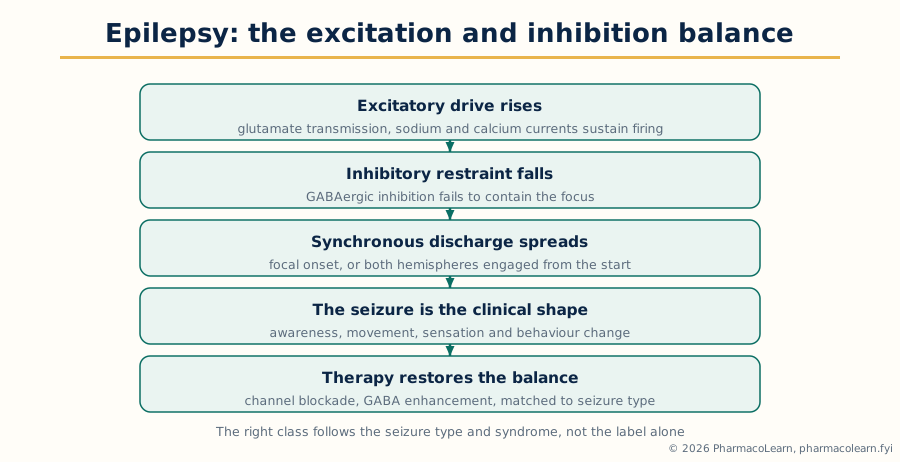 Figure: Epilepsy as a tipped balance. Antiseizure classes restore the balance, and the right class follows the seizure type.
1.3 Parkinson disease
Parkinson disease is a progressive neurodegenerative disorder whose core pathology is the loss of dopaminergic neurons of the substantia nigra pars compacta, with Lewy bodies, aggregates rich in alpha synuclein, as its pathological signature in surviving neurons. Its cause is incompletely understood and is taught as a convergence: ageing as the strongest risk factor, genetic forms in a minority, environmental exposures including certain pesticides, and protective associations such as caffeine intake noted in epidemiology, over a long prodromal phase in which non motor features precede the motor diagnosis by years. The pathophysiology is a striatal transmitter imbalance: dopamine depletion in the putamen removes the normal dopaminergic modulation of the basal ganglia circuits, the direct and indirect pathways fall out of balance, thalamic drive to cortex is excessively inhibited, and movement becomes small, slow and hard to initiate, while relatively preserved cholinergic activity in the striatum contributes the tremor, which is why the two classical drug strategies are to restore dopaminergic transmission and to restrain cholinergic excess. Degeneration is not confined to the nigra: autonomic, limbic and cortical involvement explains the non motor burden, constipation, urinary symptoms, orthostatic hypotension, depression, sleep disturbance and, late, dementia and psychosis. Presentation is classically asymmetric at onset: rest tremor, bradykinesia as the defining feature without which the diagnosis is not made, rigidity, and postural instability appearing later, with a shuffling, festinating gait, reduced arm swing, masked facies and soft, monotonous speech; drug induced parkinsonism, from the dopamine blocking agents of Section 2.5, and the atypical parkinsonian syndromes must be distinguished from it, since their course and treatment differ. Diagnosis is clinical, supported by a clear and sustained response to dopaminergic therapy, with imaging reserved for atypical features, and red flags of early falls, poor levodopa response, prominent early autonomic failure or dementia redirecting the diagnosis.
Pharmacotherapy replaces or mimics the missing dopamine and is symptomatic: no class is proven to slow the underlying degeneration, and examinations reward that honesty. Levodopa, the dopamine precursor that crosses the blood brain barrier where dopamine itself cannot, given always with a peripheral decarboxylase inhibitor that prevents its breakdown outside the brain, is the most effective symptomatic therapy and the benchmark against which the other classes are judged; its long term complications define the advanced disease, wearing off as each dose effect shortens, unpredictable on and off fluctuations, and dyskinesias, involuntary movements at peak effect. Dopamine agonists mimic dopamine at its receptors and carry a longer, smoother action, used early in younger patients and as adjuncts later, with somnolence, ankle oedema, hallucinations and the impulse control disorders, gambling, hypersexuality and compulsive shopping, as their distinctive counselling burden. Monoamine oxidase B inhibitors slow central dopamine breakdown and serve early mild disease and wearing off. Catechol O methyltransferase inhibitors block peripheral levodopa breakdown and extend its effect in fluctuation. Amantadine serves dyskinesia and mild early symptoms. Anticholinergic agents retain a narrow place for tremor in younger patients, limited by confusion, urinary retention, constipation and glaucoma risk, and are avoided in older patients. Advanced therapies for disabling fluctuation include infusion and intestinal gel delivery of dopaminergic therapy, apomorphine by injection or infusion, and deep brain stimulation in selected patients. Management throughout treats the whole disease: exercise and physiotherapy, speech and swallowing review, treatment of depression, constipation, sleep disturbance and orthostatic symptoms, and review of medicines that block dopamine or worsen confusion, because in this condition the prescription list is part of the pathology.
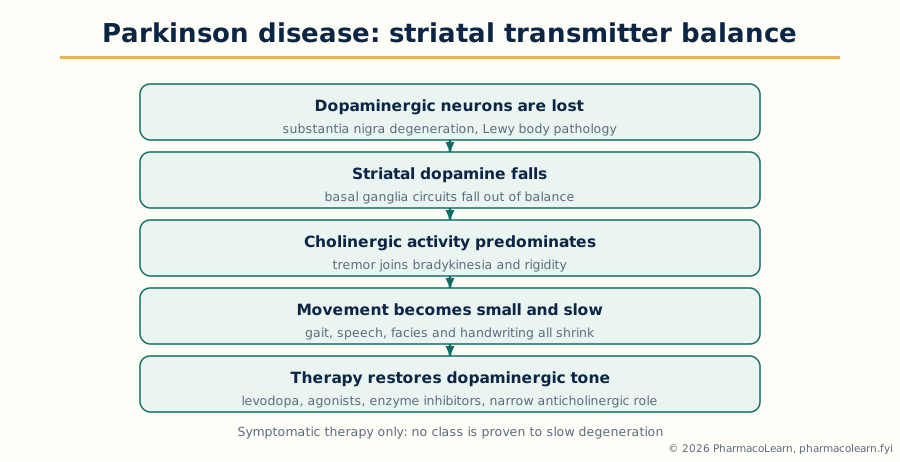 Figure: The striatal balance. Dopaminergic therapy restores tone, anticholinergic therapy restrains the other side in a narrow role.
1.4 Stroke
Stroke is an acute focal neurological deficit of vascular cause, lasting because brain tissue has been injured, and it divides into two diseases with opposite treatments, which is why the division governs the whole topic. Ischaemic stroke, the large majority, follows occlusion of a cerebral artery, by thrombosis on an atherosclerotic plaque in a large artery, by embolism from the heart, atrial fibrillation the cardinal source, or from the carotid arteries, or by small vessel disease occluding a penetrating artery and producing a lacunar infarct. Haemorrhagic stroke follows rupture of a cerebral vessel, intracerebral haemorrhage from chronic hypertension damaging small deep vessels or from amyloid angiopathy in older patients, and subarachnoid haemorrhage from a ruptured aneurysm presenting as a thunderclap headache. The pathophysiology of ischaemia is a perfusion gradient: a core of tissue below the flow level needed for survival infarcts rapidly, surrounded by the penumbra, tissue that is electrically silent but still viable and salvageable if flow is restored in time, while excitotoxic glutamate release, calcium entry, free radical injury and inflammation extend the damage over the hours that follow; in haemorrhage the injury is the haematoma itself, raised intracranial pressure and, in subarachnoid bleeding, delayed vasospasm. Presentation is sudden and focal: weakness or numbness of face, arm or leg, speech disturbance, visual loss, ataxia and, in haemorrhage, headache and vomiting with reduced consciousness; transient ischaemic attack is the same mechanism with symptoms resolving without infarction, and is a warning event demanding urgent secondary prevention, not reassurance. Diagnosis in the acute phase is imaging first: urgent brain scanning separates infarct from haemorrhage and excludes mimics such as hypoglycaemia, seizure and tumour, and vascular and cardiac investigation then seeks the mechanism, rhythm monitoring for atrial fibrillation, carotid imaging and echocardiography among them, because prevention is mechanism specific.
Pharmacotherapy divides by phase. In acute ischaemic stroke the aim is reperfusion: thrombolytic therapy dissolving the occluding clot in eligible patients assessed in a specialist pathway, mechanical thrombectomy retrieving clot from a large vessel occlusion in selected patients, and early antiplatelet therapy with aspirin once haemorrhage is excluded; anticoagulation is not acute infarct therapy, and blood pressure is managed cautiously under protocol because the penumbra depends on perfusion. In acute haemorrhagic stroke the aims reverse: stop the bleeding and protect the brain, with urgent reversal of anticoagulation where present, careful blood pressure control under protocol, neurosurgical assessment and nimodipine in subarachnoid haemorrhage against vasospasm as its specific measure. Secondary prevention is the long pharmacotherapy of the topic and is built from the mechanism: antiplatelet therapy for non cardioembolic ischaemic stroke, dual therapy for a limited early period in defined minor stroke and high risk transient attack under guideline direction, then single agent therapy long term; anticoagulation for atrial fibrillation, the heparins and warfarin tradition now largely succeeded by the direct oral anticoagulants in most patients, begun after the infarct at a timing set by its size and haemorrhage risk; high intensity statin therapy for atherosclerotic disease; treatment of hypertension as the single most important long term measure once the acute phase has passed, with the classes of Part I; diabetes and smoking addressed as in Part I; and carotid intervention for significant symptomatic stenosis in selected patients. Rehabilitation, swallowing assessment, prevention of venous thromboembolism and of aspiration, and treatment of post stroke depression and spasticity complete the plan.
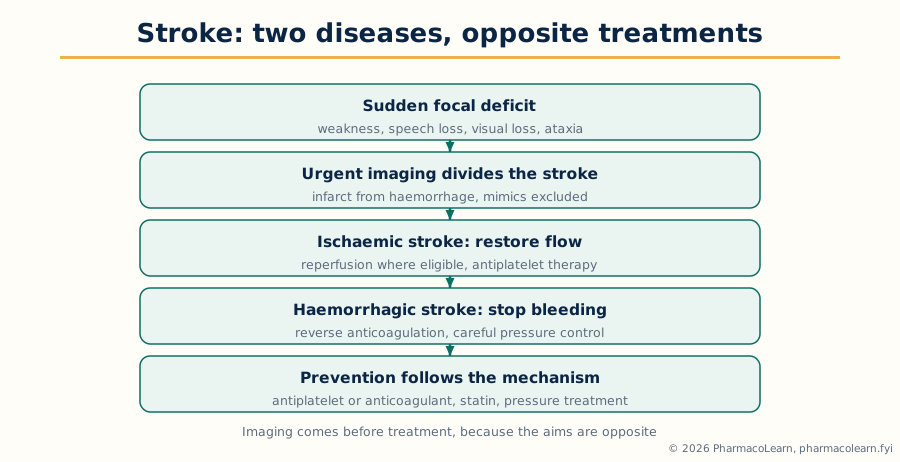 Figure: Two diseases, opposite treatments. Imaging divides them before any therapy is chosen.
1.5 Headache
Headache is pain arising from the pain sensitive structures of the head, the vessels, meninges, muscles and nerves, the brain parenchyma itself being insensitive, and its pharmacotherapeutics begins with the division into primary headaches, in which the headache is the disease, and secondary headaches, in which it is the symptom of a cause that must be found. The secondary causes that must never be missed frame every assessment: subarachnoid haemorrhage, meningitis and encephalitis of Unit 4, raised intracranial pressure from tumour or thrombosis of the cerebral veins, giant cell arteritis in older patients, acute glaucoma of Part I, uncontrolled hypertension and medication overuse itself. Their warning pattern is the red flag history: thunderclap onset, fever with neck stiffness, new headache in later life, progressive pattern, headache with focal signs, papilloedema, seizure, immune suppression or pregnancy, and any such feature converts the consultation from symptomatic treatment to investigation. Migraine, the primary headache that dominates pharmacotherapy teaching, is a disorder of brain excitability and trigeminovascular activation: cortical spreading depression underlies the aura of transient focal symptoms, most often visual, and activation of the trigeminal system with release of calcitonin gene related peptide and other mediators produces vasodilation, neurogenic inflammation and the throbbing, usually unilateral pain with nausea, vomiting and sensitivity to light, sound and smell that defines the attack; triggers include hormonal change, missed meals, sleep disturbance, stress and its release, and specific foods and alcohol in susceptible patients. Tension type headache, the commonest headache of all, is a pressing, bilateral, non disabling pain linked to pericranial muscle tenderness and central sensitisation in its chronic form. Cluster headache is the severe, strictly unilateral pain around the eye with autonomic features, tearing, nasal congestion and restlessness, occurring in clusters of attacks, most often in men, and is separated here because its acute and preventive therapies are distinctive.
| Feature | Migraine | Tension type headache | Cluster headache |
|---|---|---|---|
| Site and character | Often unilateral, throbbing | Bilateral, pressing | Strictly unilateral, around the eye, severe |
| Accompaniments | Nausea, light and sound sensitivity, aura in some | Few accompaniments | Tearing, nasal congestion, restlessness |
| Course | Attacks lasting hours to days | Episodic or chronic, non disabling pattern | Attacks in clusters over weeks |
Diagnosis of the primary headaches is clinical, from a structured history of onset, site, character, duration, associated features, triggers and medicine use; imaging is for red flags and atypical patterns, not for the typical migraineur, and a headache diary is the practical instrument that settles pattern, triggers and overuse. Pharmacotherapy of migraine divides, as gout did in Part I, into two questions that must never be merged: treating the attack, and preventing attacks. Acute treatment is stepped: simple analgesia with paracetamol or a non steroidal anti inflammatory drug taken early in the attack, with an antiemetic where nausea and gastric stasis impair absorption; then the migraine specific triptans, serotonin receptor agonists that constrict the dilated cranial vessels and block trigeminal mediator release, contraindicated in ischaemic heart disease and stroke by their vasoconstrictor action; and the newer non vasoconstrictor acute classes, the gepants antagonising the calcitonin gene related peptide receptor and the ditans acting on a serotonin receptor subtype without vasoconstriction, serving patients in whom triptans fail or are unsafe. Preventive therapy is offered where attacks are frequent, disabling or poorly controlled, and is judged over months, not attacks: the established oral classes are beta blockers, the antiseizure medicines topiramate and valproate, the latter carrying the teratogenicity caution of Section 1.2, amitriptyline, and candesartan among the renin angiotensin agents, while the calcitonin gene related peptide monoclonal antibodies and preventive gepants are the modern targeted option for patients failing the older classes, and botulinum toxin serves defined chronic migraine under specialist care. Cluster headache is treated acutely with high flow oxygen and a rapidly acting triptan preparation and prevented during the cluster principally with verapamil under cardiac monitoring. Medication overuse headache closes the topic and is its pharmacist centrepiece: frequent use of acute headache medicines, triptans, combination analgesics and opioids above all, perpetuates and chronifies headache, and its treatment is education, withdrawal of the overused medicine with a bridge plan, and prevention, a cure that begins with recognising that the treatment has become the cause.
1.6 Alzheimer disease
Alzheimer disease is the commonest cause of dementia, a progressive neurodegenerative disorder in which memory and then all cognitive domains fail as neurons and synapses are lost, and it is taught here as the exemplar of the dementias, with vascular dementia, dementia with Lewy bodies and frontotemporal dementia as the comparison set. Its pathology carries two signature lesions: extracellular amyloid plaques formed from amyloid beta peptide cleaved abnormally from its precursor protein, and intracellular neurofibrillary tangles of hyperphosphorylated tau protein, with loss of cholinergic neurons of the basal forebrain an early and therapeutically important feature, since acetylcholine underpins attention and memory encoding. Risk is dominated by age, with genetic risk carried by the apolipoprotein E variants and rare deterministic mutations in the familial early onset forms, and vascular and lifestyle factors, hypertension, diabetes, smoking, inactivity and low cognitive engagement, shaping incidence at population level. The clinical course is insidious: early failure of episodic memory, losing recent events while remote memory survives, then language, visuospatial and executive failure, disorientation, and in later stages behavioural and psychological symptoms, agitation, apathy, wandering, sleep reversal and psychosis, with dependence for all daily activities at the end. Diagnosis is a clinical synthesis of history from patient and informant, cognitive testing, exclusion of reversible causes by blood tests including thyroid function and vitamin B12, and brain imaging, with specialist biomarker assessment in atypical and early onset cases; the reversible mimics, depression presenting as pseudodementia, delirium, hypothyroidism of Part I and drug effects from the anticholinergic and sedative burden of the medicine list, must be excluded first, and reviewing that list is again a pharmacist act.
Pharmacotherapy is modest and must be presented honestly: the established classes improve symptoms for a time and do not halt the underlying degeneration. Cholinesterase inhibitors, donepezil, rivastigmine and galantamine, increase cholinergic transmission by blocking acetylcholine breakdown and serve mild to moderate disease, with gastrointestinal effects, bradycardia and syncope risk as their cautions and a cholinergic rationale that forbids casual co prescription of strongly anticholinergic medicines. Memantine, an NMDA receptor antagonist moderating glutamatergic excitotoxicity, serves moderate to severe disease and may be combined with a cholinesterase inhibitor. The anti amyloid monoclonal antibodies are the first class aimed at the pathology itself, offered in some health systems to carefully selected early patients under specialist programmes with imaging monitoring for their distinctive brain swelling and bleeding risks; their place is presented here as emerging and selective, not as standard therapy for established dementia. Much of the real pharmacotherapy of the topic is subtraction and symptom care: deprescribing anticholinergics and sedatives that worsen cognition, treating depression, pain, constipation and sleep disturbance that present as behaviour, reserving antipsychotic medicines for severe behavioural symptoms with risk, time limited and reviewed, because of their stroke and mortality warnings in dementia, and supporting carers, whose health determines how long home care survives. Vascular risk factor treatment protects the vascular contribution that so often coexists.
1.7 Neuralgias and pain pathways and pain management
Pain is an unpleasant sensory and emotional experience associated with actual or potential tissue damage, and this closing Unit 1 head teaches first the pathways, then the neuralgias as its named clinical patterns, then the general management framework that Units 3 to 5 will reuse for cancer pain. Nociceptive pain begins in peripheral nociceptors responding to mechanical, thermal and chemical stimuli, intensified by the inflammatory mediators of Part I; signals travel in fast myelinated fibres carrying sharp, localised pain and slow unmyelinated fibres carrying dull, diffuse pain, synapse in the dorsal horn where transmission is modulated by descending pathways from the brainstem using serotonin, noradrenaline and endogenous opioids, and ascend to thalamus and cortex where pain is perceived and given emotional colour. Neuropathic pain is different in kind: pain arising from a lesion or disease of the somatosensory system itself, generated by ectopic firing in damaged nerves, peripheral and central sensitisation, and loss of inhibitory control, described by patients as burning, shooting, electric or stabbing, with allodynia, pain from a stimulus that should not hurt, as its signature sign. The neuralgias are the named neuropathic syndromes: trigeminal neuralgia, paroxysms of severe electric pain in a trigeminal division triggered by touch, chewing or a breeze, most often from vascular compression of the nerve root and sometimes secondary to multiple sclerosis or tumour; postherpetic neuralgia, persistent burning pain in the dermatome of a healed shingles eruption, commonest in older and immune suppressed patients and preventable in part by vaccination and early antiviral treatment of the acute eruption; painful diabetic neuropathy, the length dependent burning and lancinating pain of feet and legs in long standing diabetes; and occipital and glossopharyngeal neuralgias completing the named set. Diagnosis is by the pain history and its descriptors, distribution in a nerve or dermatomal territory, sensory examination, and investigation for the underlying lesion where the pattern demands it; pain assessment itself, site, character, intensity on a scale the patient can use, timing, aggravating and relieving factors and effect on sleep, mood and function, is the diagnostic foundation of all pain management.
Pharmacotherapy follows the pain type, and confusing the two ladders is the examination trap. Nociceptive pain is treated on the analgesic ladder principle in its general form: non opioid analgesia first, paracetamol and non steroidal anti inflammatory drugs matched to inflammatory contribution and to the gastrointestinal, renal and cardiovascular cautions of Part I; then opioid therapy for moderate to severe pain uncontrolled by those measures, weak and then strong opioids in the classical language, always with a laxative planned against opioid constipation, an antiemetic available, and review against function rather than pain score alone; with adjuvants for specific pains, corticosteroids for raised pressure and inflammatory compression, antispasmodics for colic, and the bone pain measures of Unit 5. Neuropathic pain does not answer reliably to that ladder, opioids included, and its first line classes are the adjuvants borrowed from Sections 1.2 and 2.2: tricyclic antidepressants, the serotonin and noradrenaline reuptake inhibitor duloxetine, and the gabapentinoids gabapentin and pregabalin binding calcium channel subunits and reducing transmitter release, with topical lidocaine and capsaicin preparations for localised peripheral pain, tramadol and strong opioids reserved and specialist guided, and carbamazepine holding a specific first place in trigeminal neuralgia, where its sodium channel blockade matches the paroxysmal mechanism. Non drug measures are co therapy, not garnish: physiotherapy and activity pacing, psychological therapy for the mood and catastrophising that amplify chronic pain, and interventional procedures and neurosurgery, microvascular decompression for trigeminal neuralgia among them, in selected refractory cases. The pharmacist duties that close the unit are safety duties: opioid stewardship, dependence and diversion awareness, interaction and sedation review, naloxone awareness in high risk co prescription, and the standing question of whether long term opioids are still earning their place.
Pain management: match the ladder to the pain type
  Assess: type, site, character, intensity,
  effect on sleep, mood and function
        |
        v
  Nociceptive pain: paracetamol and NSAID first,
  opioid steps where severity demands, laxative
  and antiemetic planned, review against function
        |
        v
  Neuropathic pain: adjuvant classes first,
  tricyclic, duloxetine or gabapentinoid,
  topical agents for localised pain
        |
        v
  Review: benefit against harm, dependence
  and interactions watched, plan adjusted
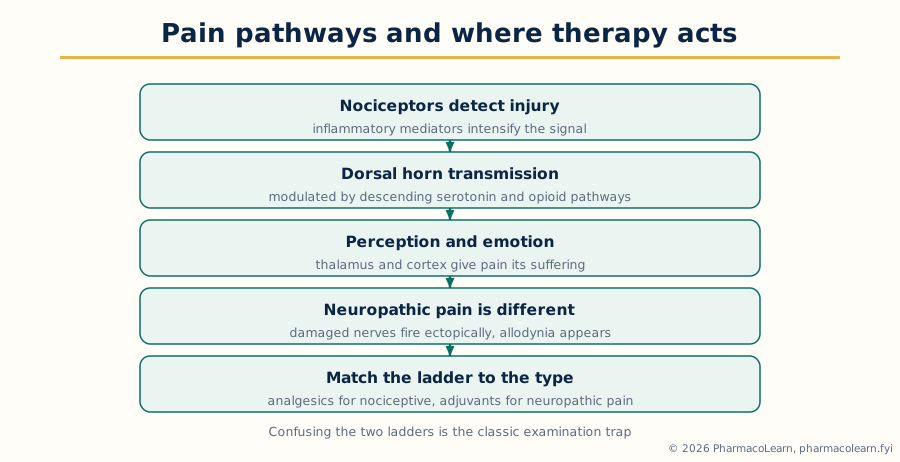 Figure: Pathways and ladders. Nociceptive and neuropathic pain travel differently and are treated differently.
Unit 2: Psychiatric Disorders and Renal System
2.1 Schizophrenia
Schizophrenia is a chronic psychotic disorder characterised by distortions of thought, perception, emotion and behaviour in clear consciousness, with onset typically in late adolescence or early adult life and a course of acute episodes over a background of persisting functional impairment in many patients. Its aetiology is neurodevelopmental and multifactorial: strong genetic contribution, prenatal and perinatal adversity, and environmental risks including cannabis use in adolescence, urban upbringing, migration and childhood trauma, converging on abnormal brain development and connectivity. Its pharmacology rests on the dopamine hypothesis in its modern form: excess dopaminergic activity in mesolimbic pathways driving the positive symptoms, and deficient dopaminergic function in prefrontal cortex contributing the negative and cognitive symptoms, with glutamatergic and serotonergic dysfunction woven into current accounts; the hypothesis is incomplete, but every established antipsychotic acts on dopamine receptors, which is why it still organises teaching. Symptoms divide for examination into positive symptoms, delusions, hallucinations most characteristically auditory, formal thought disorder and disorganised behaviour, added to normal experience; negative symptoms, flat affect, poverty of speech, anhedonia, avolition and social withdrawal, subtracted from it and the stronger predictor of poor function; and cognitive symptoms of attention, working memory and executive function. Diagnosis is clinical, from the characteristic symptoms sustained over time with functional decline, after exclusion of organic causes and substance induced states of Section 2.5, and its differential includes the mood disorders with psychosis of the next section.
Pharmacotherapy is antipsychotic therapy, and its classes divide by generation with a trade of harms that must be stated plainly. First generation or typical antipsychotics block dopamine D2 receptors strongly and control positive symptoms reliably, at the cost of extrapyramidal effects, acute dystonia, parkinsonism indistinguishable from Section 1.3 except by its drug cause, akathisia, and with chronic use tardive dyskinesia, together with prolactin elevation and its sexual, menstrual and bone consequences. Second generation or atypical antipsychotics combine D2 blockade with serotonin receptor antagonism and carry lower extrapyramidal liability, at the cost of metabolic harm, weight gain, diabetes and lipid disturbance most marked with some agents, sedation, and agent specific cautions such as the blood monitoring programme that clozapine demands for agranulocytosis. Clozapine alone holds proven efficacy in treatment resistant schizophrenia, defined by failure of adequate trials of other antipsychotics, and is reserved to specialist service with mandatory monitoring for that reason. Long acting injectable preparations answer the central practical problem of the illness, covert non adherence and relapse, and are offered as a positive choice, not a punishment. Management is a programme, not a prescription: acute episodes treated with an antipsychotic chosen on previous response and tolerability, maintenance therapy continued because relapse prevention is its strongest evidence, anticholinergic medicines only for established extrapyramidal effects and reviewed, metabolic monitoring as routine, psychological therapy and family intervention alongside, smoking and substance use addressed, and physical health owned jointly, since cardiovascular disease, not suicide alone, is the large cause of the shortened life of this population.
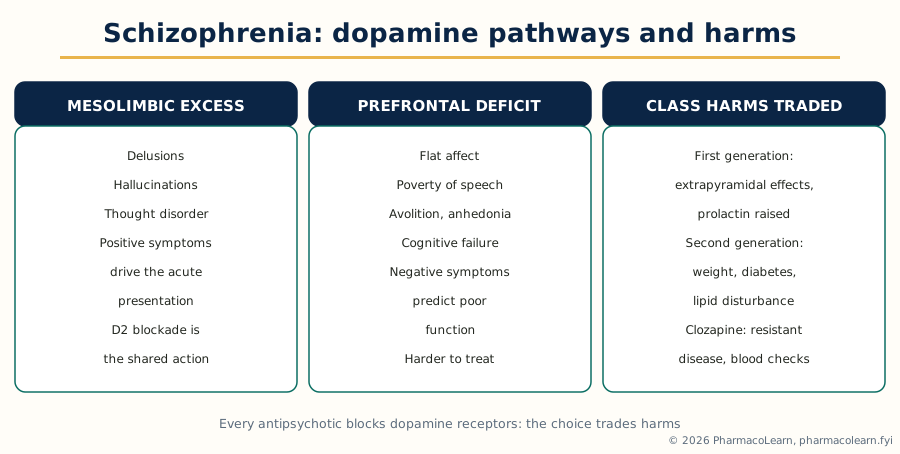 Figure: Dopamine in two directions. Positive and negative symptoms sit in different pathways, and class choice trades harms.
2.2 Depression
Depression, major depressive disorder in the formal name, is a mood disorder defined by persistent low mood or loss of interest and pleasure, anhedonia, sustained over weeks with a cluster of accompanying symptoms and functional impairment, distinguished from ordinary sadness by duration, pervasiveness and that impairment. Its aetiology is biopsychosocial: genetic vulnerability, early adversity and current stress, personality and medical illness, hypothyroidism and chronic disease among them, and medicines of Section 2.5, converging on disturbed monoamine neurotransmission, serotonin, noradrenaline and dopamine, stress axis overactivity and impaired neuroplasticity; the monoamine account is the framework the drug classes are built on, presented in modern teaching as a partial explanation rather than the whole disease. Presentation combines psychological symptoms, low mood, anhedonia, guilt and worthlessness, poor concentration and thoughts of death and suicide, with somatic symptoms, disturbed sleep with early waking, appetite and weight change, loss of energy and libido and unexplained aches; psychotic depression adds mood congruent delusions and hallucinations and is a severity marker demanding combined treatment. Diagnosis is clinical, graded by severity and symptom count, with suicide risk assessed directly and without embarrassment at every presentation, bipolar disorder excluded by a history of mania or hypomania before antidepressant therapy is started, because antidepressants can destabilise untreated bipolar illness, and physical causes and substance use reviewed.
Pharmacotherapy is one arm of a stepped programme in which psychological therapy holds an equal place, talking therapies first or alongside in milder illness and combined treatment in moderate to severe disease. The antidepressant classes are matched to patient factors more than to efficacy differences, since their average efficacy is similar and their harm profiles differ. Selective serotonin reuptake inhibitors are the usual first line class: effective, comparatively safe in overdose and generally tolerated, with early nausea and activation, sexual dysfunction, hyponatraemia in older patients and discontinuation symptoms on abrupt stopping as their teaching cautions, and the serotonin syndrome of Section 2.5 as their dangerous interaction. Serotonin and noradrenaline reuptake inhibitors add noradrenergic action, serve pain syndromes of Section 1.7 as well, and carry blood pressure and discontinuation cautions. Tricyclic antidepressants are effective older agents limited by anticholinergic burden, cardiac conduction effects and lethality in overdose, reserved accordingly. Monoamine oxidase inhibitors are specialist agents whose dietary tyramine and drug interaction discipline is a classical examination topic. Mirtazapine serves where sedation and appetite stimulation are wanted and sexual effects are to be avoided; other agents, including the melatonergic and multimodal drugs, fill defined niches. Treatment is continued for a sustained period after remission because early stopping is the commonest cause of relapse, response is reviewed over weeks not days, switching, augmentation and combination are specialist stepped options in resistant depression, and electroconvulsive therapy remains the most effective treatment for severe, psychotic or life threatening depression. The pharmacist contribution is adherence through the delayed onset, which patients abandon in the gap between side effects arriving and benefit following, interaction vigilance for serotonergic and QT prolonging combinations, and direct enquiry about suicidal thinking where concern exists.
2.3 Anxiety disorders
The anxiety disorders are a family of conditions in which anxiety, the anticipatory response to perceived threat, becomes excessive, persistent and disabling: generalised anxiety disorder, free floating worry across many domains with muscle tension, restlessness, poor concentration and disturbed sleep; panic disorder, recurrent unexpected panic attacks of intense fear with palpitations, breathlessness, chest pain and fear of dying, followed by avoidance; phobias, specific and social, fear cued by defined objects or scrutiny; obsessive compulsive disorder, intrusive unwanted thoughts and the compulsive rituals performed to neutralise them; and post traumatic stress disorder, re experiencing, avoidance and hyperarousal after trauma. Their aetiology blends genetic and temperamental vulnerability, early experience, and dysregulation of the fear circuitry centred on the amygdala with serotonergic and noradrenergic modulation, the transmitter systems the drug classes address. Presentation overlaps heavily with physical disease, palpitations suggesting cardiac disease, breathlessness respiratory disease, and the diagnostic work is double: recognise the anxiety pattern and exclude the physical mimics, thyrotoxicosis of Part I, phaeochromocytoma and substance and caffeine effects among them, without endless reinvestigation that itself feeds the anxiety. Diagnosis is by the characteristic pattern and duration for each disorder, graded by severity and avoidance, since avoidance is the mechanism by which anxiety disorders shrink a life.
Pharmacotherapy is again one arm of care, cognitive behavioural therapy being the psychological treatment with the strongest evidence across the family and the first offer in phobias and obsessive compulsive disorder. Selective serotonin reuptake inhibitors are the first line drug class across generalised anxiety, panic disorder and obsessive compulsive disorder, with serotonin and noradrenaline reuptake inhibitors as the alternative class, both requiring the same patience and discontinuation care as in depression, and obsessive compulsive disorder characteristically needing longer and more determined trials. Benzodiazepines enhance GABAergic inhibition and relieve anxiety rapidly, and their place is deliberately narrow: short term use in crisis and severe acute symptoms only, because tolerance, dependence, withdrawal seizures on abrupt cessation, falls and cognitive harm in older people, and interference with psychological therapy all argue against maintenance use; the prescribing discipline of this class, agreed duration, no repeat without review, gradual reduction in established users, is a standing pharmacist duty. Buspirone serves generalised anxiety without dependence liability but with slow onset. Beta blockers serve performance anxiety by blocking its peripheral adrenergic symptoms and treat no core anxiety disorder. Pregabalin, licensed for generalised anxiety in some settings, carries its own dependence caution. Sleep, caffeine, alcohol self medication and the benzodiazepine like hypnotics of the next section are reviewed in every plan.
2.4 Sleep disorders
Sleep disorders present to pharmacotherapeutics chiefly as insomnia, difficulty initiating or maintaining sleep or early waking with daytime consequence, sustained beyond an acute disturbance and not explained by inadequate opportunity for sleep. Insomnia is classified by its company: primary insomnia as a conditioned hyperarousal disorder, perpetuated by worry about sleep and by compensating behaviours that entrench it, and secondary insomnia riding on depression and anxiety of the preceding sections, pain of Section 1.7, respiratory and cardiac disease, restless legs, sleep apnoea, and the medicine list itself, stimulants, corticosteroids, beta blockers and decongestants among the culprits. Obstructive sleep apnoea, repeated upper airway collapse in sleep with snoring, witnessed pauses and unrefreshing sleep and daytime sleepiness, is the sleep disorder with the largest physical consequences, cardiovascular and metabolic, and its treatment is mechanical, continuous positive airway pressure, with weight management, not hypnotic; a hypnotic prescribed into undiagnosed apnoea worsens the night it was meant to mend. Diagnosis of insomnia is a sleep history and diary, screening for apnoea, mood and medical causes, and review of substances including caffeine, alcohol and nicotine, whose evening use fragments the sleep their users then medicate.
Pharmacotherapy of insomnia begins with its non drug core, which is also its most effective long term treatment: sleep hygiene education and cognitive behavioural therapy for insomnia, stimulus control and sleep restriction among its techniques, offered before or alongside any hypnotic. Hypnotic medicines are short term, lowest exposure, reviewed support for acute and severe insomnia, not a maintenance strategy: the benzodiazepine hypnotics and the related Z drugs acting at the same receptor complex, zolpidem, zopiclone and their relatives, shorten sleep latency at the cost of tolerance, dependence, rebound insomnia on stopping, falls and fractures and next day impairment in older patients most of all. Melatonin and its receptor agonists serve defined niches, circadian disorders and older patients in some guidance. Sedating antihistamines and sedative antidepressants used off this indication carry anticholinergic and next day burdens that limit them. The pharmacist pattern across the unit repeats deliberately: in anxiety and sleep alike, the sedative classes relieve tonight and mortgage tomorrow, and the professional skill is holding their use short, tapered and reviewed while the durable treatments take hold.
2.5 Drug induced psychiatric disorders
Medicines disturb mind as reliably as they disturb lung, liver and blood in Part I, and this head collects the patterns an examination expects to be recognised from a drug timeline. Drug induced psychosis and mania follow dopaminergic and stimulant exposure: corticosteroids, whose psychiatric effects range from euphoria and insomnia through mania to psychosis and depression on withdrawal and are the commonest inpatient culprit; dopaminergic therapy of Section 1.3 producing hallucinations and delusions in Parkinson disease; stimulants including amphetamines and cocaine producing a paranoid psychosis mimicking schizophrenia; cannabis and the synthetic cannabinoids; and withdrawal states, delirium tremens of alcohol withdrawal at their head. Drug induced depression is reported with corticosteroids again, with interferon based therapy classically, with some hormonal and cardiovascular agents in older teaching whose evidence is now read more cautiously, and the examination discipline is to weigh the association honestly rather than recite lists. Serotonin syndrome is the dangerous serotonergic excess state: agitation, confusion, hyperthermia, sweating, tremor, hyperreflexia and clonus following initiation, increase or combination of serotonergic medicines, selective serotonin reuptake inhibitors with monoamine oxidase inhibitors, tramadol, triptans or linezolid among the combinations, and it is a medical emergency treated by stopping every serotonergic agent, supportive and cooling care and specialist therapy. Neuroleptic malignant syndrome is its dopaminergic mirror: rigidity, hyperthermia, autonomic instability and altered consciousness after dopamine blockade or abrupt dopaminergic withdrawal, treated by stopping the blocker, supportive critical care and specific therapy under specialist direction. The extrapyramidal and metabolic harms of Section 2.1, anticholinergic delirium in older patients from the accumulated burden of bladder, bowel, eye and sleep medicines, and benzodiazepine and Z drug dependence complete the survey. Management across all patterns is one sequence: suspect the drug from the timeline, stop or reduce the culprit where safe, treat the syndrome supportively and specifically, document and report the reaction, and rebuild the prescription without the cause, because the commonest error in this topic is treating a drug induced state with a second drug while the first continues.
2.6 Acute renal failure
Acute renal failure, taught in current usage as acute kidney injury, is an abrupt decline in kidney function over hours to days, with falling urine output and accumulation of urea, creatinine, potassium and acid, staged by the size of that change. Its causes divide by site in the classical scheme that still organises management. Pre renal failure is underperfusion: volume depletion from bleeding, vomiting, diarrhoea and burns, reduced cardiac output in heart failure and shock of every cause, and the pharmacological underperfusion produced when renin angiotensin blockade and non steroidal anti inflammatory drugs together remove the compensations of a kidney already short of flow, the interaction at the heart of Section 2.9. Intrinsic renal failure is injury within the kidney: acute tubular necrosis from prolonged ischaemia or nephrotoxins, acute interstitial nephritis, glomerulonephritis and vascular injury. Post renal failure is obstruction, prostatic enlargement, stone, malignancy and blocked catheter, the cause that must never be missed because it is the most simply reversed. Presentation is often silent until blood tests declare it, or declares itself by oliguria, breathlessness from fluid overload and acidosis, nausea and encephalopathy in advanced uraemia, and the dangerous electrolyte face of hyperkalaemia with its cardiac effects. Diagnosis reads the trend of creatinine and urine output, separates the three sites by history, examination, bladder assessment and ultrasound excluding obstruction, urine and blood tests seeking intrinsic causes, and review of every medicine and recent contrast study against the timeline.
Pharmacotherapy is chiefly supportive and subtractive, and its principles are examinable precisely because there is no drug that restores injured tubules. Treat the cause: restore perfusion with fluids where depletion is the mechanism and stop where overload forbids them, relieve obstruction, treat sepsis of Unit 3 and glomerular disease specifically. Stop or adjust the nephrotoxic and renally cleared medicines, renin angiotensin agents and metformin among those withheld in the acute illness by standard sick day practice, and review every dose against the reduced clearance. Manage the complications in order of danger: hyperkalaemia by its emergency sequence of cardiac protection, intracellular shift and potassium removal; fluid overload by restriction and loop diuretics where residual function answers; acidosis and uraemic complications by medical therapy and, where refractory, by the dialysis of Section 2.8. Diuretics do not convert or cure intrinsic injury and are not given for that purpose. Recovery is monitored by the returning urine output and falling creatinine, medicines are reintroduced in step with it, and an episode of acute injury is recorded permanently as a risk marker for the chronic disease of the next section.
2.7 Chronic renal failure
Chronic renal failure, chronic kidney disease in current usage, is kidney damage or reduced filtration sustained over months, staged by filtration level and by albuminuria, and progressive in most of its causes toward kidney failure requiring replacement therapy. Its causes are the chronic diseases of the syllabus so far: diabetes first, hypertension and glomerulonephritis next, with polycystic kidney disease, chronic obstruction and reflux, analgesic and other drug injury of Section 2.9, and the cardiovascular diseases with which it shares both causes and consequences. The pathophysiology is loss of functioning nephrons with compensatory hyperfiltration in those remaining, which sustains total function while accelerating their own sclerosis, a self perpetuating cycle that proteinuria marks and worsens; and as function falls, every excretory and endocrine duty of the kidney fails in sequence: sodium and water retention with hypertension and oedema, potassium and acid retention, phosphate retention with secondary hyperparathyroidism and renal bone disease, erythropoietin deficiency with the anaemia of chronic disease, vitamin D activation failure, and accumulation of uraemic toxins affecting heart, brain, blood and immunity. Presentation is silent for most of the course, found on testing in diabetes and hypertension care, and late disease brings fatigue, breathlessness, itch, nausea, restless legs and encephalopathy; cardiovascular death, not uraemia, is the commonest end of the condition, which is why its management is cardiovascular management too. Diagnosis establishes chronicity, cause, stage and rate of progression, and the complications screen of blood count, calcium, phosphate, parathyroid hormone, potassium and bicarbonate that monitoring then repeats.
Pharmacotherapy pursues three aims: slow progression, treat complications, and prepare for replacement. Progression is slowed by blood pressure control with renin angiotensin blockade as the preferred backbone where proteinuria is present, its kidney protective effect beyond pressure lowering mirroring Part I, by glycaemic control in diabetes, by the SGLT2 inhibitor class whose kidney protection now stands alongside its diabetes and heart failure roles, by salt restriction, smoking cessation and lipid therapy, and by removal of nephrotoxic exposures. Anaemia is treated by correcting iron deficiency and then erythropoiesis stimulating agents under specialist programmes with blood pressure and thrombosis cautions. Mineral and bone disorder is treated by dietary phosphate restriction, phosphate binders taken with food, vitamin D sterols and calcimimetics matched to the parathyroid pattern. Acidosis is corrected with oral bicarbonate in defined practice, potassium managed by diet, binders and review of renin angiotensin and potassium sparing therapy, and every prescription dose reviewed against filtration, the daily arithmetic of renal pharmacy. Vaccination, cardiovascular protection and timely referral for dialysis and transplant planning, with vessels preserved for future access by avoiding needless venepuncture in the chosen arm, complete the plan.
| Feature | Acute renal failure | Chronic renal failure |
|---|---|---|
| Onset | Hours to days | Months, sustained |
| Dominant causes | Underperfusion, tubular injury, obstruction | Diabetes, hypertension, glomerular disease, drug injury |
| Drug task | Stop nephrotoxins, adjust doses, treat complications | Slow progression, treat anaemia and bone disorder, review every dose |
| Replacement | Only for refractory complications | Planned dialysis or transplantation in kidney failure |
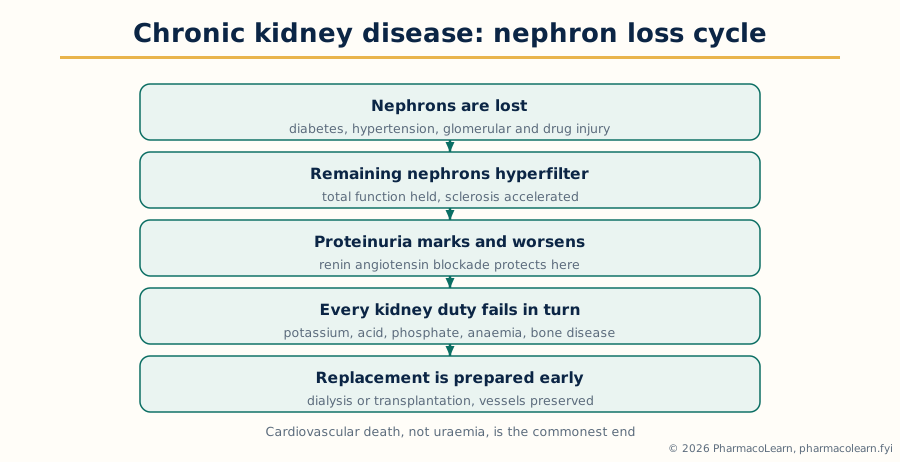 Figure: The nephron loss cycle. Hyperfiltration holds function while accelerating the loss it compensates for.
2.8 Renal dialysis
Renal dialysis is the artificial replacement of the kidney filtration functions that Section 2.7 loses: removal of accumulated small solutes, potassium, acid and water across a semipermeable membrane by diffusion and ultrafiltration, offered when kidney failure produces refractory fluid overload, hyperkalaemia, acidosis, uraemic symptoms or pericarditis, and as planned maintenance therapy in established kidney failure alongside transplantation, which remains the replacement of choice for eligible patients. Haemodialysis passes blood through an extracorporeal dialyser against dialysis fluid, in sessions in a centre or at home, requiring durable vascular access, an arteriovenous fistula created surgically as the preferred access, a graft, or a central venous catheter carrying the highest infection risk; anticoagulation of the circuit, management of intradialytic hypotension from fluid removal, and the disequilibrium of rapid early solute shifts are its therapy problems. Peritoneal dialysis uses the peritoneum as the membrane, dialysis fluid dwelling in the abdomen and exchanged by the patient at home in continuous ambulatory or automated overnight patterns, preserving residual function and independence at the cost of peritonitis risk, glucose absorption from the fluid and eventual membrane failure. Pharmacotherapy around dialysis is a specialty of its own: medicines are removed by dialysis according to their size, protein binding, volume of distribution and water solubility, so dialysis drug dosing asks of every prescription whether the membrane clears it and whether a post dialysis supplement or intradialytic timing is required; the phosphate binders, erythropoiesis agents and vitamin D therapy of Section 2.7 continue as core therapy; heparin exposure brings its thrombocytopenia risk of Part I into view; and transplant pharmacotherapy, immunosuppression balanced against infection and malignancy, waits at the end of the pathway for those who receive a kidney. The pharmacist role is reconciliation across a population taking many medicines with no renal reserve: every new prescription in a dialysis patient is a dosing decision.
2.9 Drug induced renal disease
The kidney concentrates, secretes and is perfused by the drugs it clears, and drug induced renal disease is correspondingly rich in mechanisms, classified for examination by the site and pattern of injury. Haemodynamic injury is the pre renal pattern of Section 2.6 produced pharmacologically: non steroidal anti inflammatory drugs removing prostaglandin mediated afferent dilation, renin angiotensin agents removing efferent tone, calcineurin inhibitors constricting the afferent vessel, and the triple combination of a diuretic with both of the first two classes as the classic prescribing trap in older patients. Acute tubular injury follows direct tubular toxins: aminoglycoside antibiotics accumulating in proximal tubular cells, amphotericin, cisplatin, and contrast media in susceptible patients, with injury declared days into exposure and prevention built on hydration, exposure minimisation and level and function monitoring. Acute interstitial nephritis is the allergic pattern: fever, rash, eosinophilia and sterile pyuria appearing days to weeks into therapy, proton pump inhibitors and beta lactam antibiotics and non steroidal agents prominent among modern culprits, treated by withdrawal and corticosteroids in defined cases, and missed diagnoses scar into chronic disease. Glomerular and vascular patterns include membranous disease, podocyte injury, thrombotic microangiopathy and cholesterol embolisation after vascular instrumentation and anticoagulation. Obstructive patterns arise inside the tubule from crystals, aciclovir, sulfonamides, methotrexate and stone forming metabolic effects, prevented by hydration and urinary alkalinisation where the chemistry allows, and chronic patterns close the list: analgesic nephropathy of historical combination analgesic abuse, lithium associated chronic injury with its diabetes insipidus, and calcineurin inhibitor chronic fibrosis in transplant patients. Management is the constant sequence of this subject: timeline, withdrawal, support, monitoring of recovery, documentation that survives the admission, and counselling where the culprit is an over the counter analgesic the patient never thought to mention.
Unit 3: Infectious Diseases, First Part
3.1 General guidelines for the rational use of antibiotics and surgical prophylaxis
Antimicrobial therapy differs from every therapy so far in this subject because its target evolves, its benefit is shared and its harm is communal: resistance selected in one patient is inherited by the next. The rational use guidelines that open the infectious units are therefore stated as principles from which every later section draws. Confirm that infection is present and bacterial before an antibacterial is started, since viral illness, colonisation and non infective inflammation are its great mimics and none of them is an indication. Identify the likely source and the likely organisms from the site, the patient and local resistance patterns, and take cultures and specimens before the first dose wherever the illness allows, because therapy chosen blind stays blind. Choose the agent on the narrowest spectrum that covers the likely organisms, its tissue penetration to the site, allergy history, organ function, pregnancy and interacting medicines, and local formulary guidance built on local resistance data. Give it by the route, and for the duration, that the severity demands, reviewing intravenous therapy for oral switch as the patient recovers, since prolonged courses select resistance and invite Clostridioides difficile and fungal overgrowth without adding cure. Review at a defined point against cultures and response: narrow, stop or change on evidence, the stewardship review that turns an empirical start into a rational course. Document indication, agent, review date and planned duration on the prescription itself. Allergy is recorded precisely, since a false penicillin label condemns patients to broader, costlier and less effective therapy for life, and delabelling assessment is stewardship work.
Rational antibiotic use, the stewardship sequence
  Confirm bacterial infection, find the source,
  judge severity, record true allergy
        |
        v
  Specimens and cultures first where possible,
  then empirical therapy from local guidance,
  narrowest spectrum covering likely organisms
        |
        v
  Review against cultures and response:
  narrow the spectrum, switch route when
  recovering, stop where infection is excluded
        |
        v
  Fixed review date and planned duration
  documented, course completed or stopped
  on evidence, never drifted
Surgical prophylaxis is rational use in its most disciplined form: a single perioperative antibacterial cover, in most procedures, for operations in which wound infection is likely or its consequences grave, chosen against the organisms expected from the operative site, timed so tissue levels are present at incision, repeated only for long operations or major blood loss under protocol, and stopped at wound closure rather than continued as a course, because continued prophylaxis adds resistance and Clostridioides risk without protecting the wound. The principles of the general sections that follow are constant: source control, drainage of pus, removal of infected devices and debridement, is treatment no antibiotic replaces.
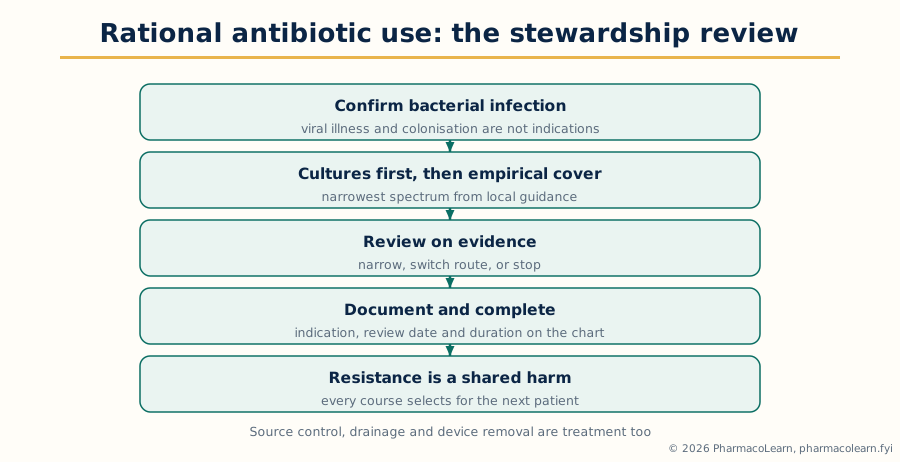 Figure: The stewardship review. An empirical start becomes a rational course only when it is reviewed on evidence.
3.2 Urinary tract infections
Urinary tract infection is bacterial infection of the urinary tract, classified by site into lower tract infection, cystitis of the bladder, and upper tract infection, pyelonephritis of the kidney, and by host into uncomplicated infection in a healthy non pregnant woman and complicated infection in men, pregnancy, obstruction, stones, catheters, diabetes and immune suppression, a classification that decides investigation, agent and duration together. Escherichia coli ascending from the perineum through the urethra causes the large majority, with other coliforms, Proteus associated with stones, enterococci and Staphylococcus saprophyticus in young women completing the usual set; catheter associated infection adds hospital organisms and biofilm biology. The defences the organism overcomes are urine flow, bladder emptying, mucosal immunity and the acidity and osmolality of urine, which is why obstruction, residual urine and catheterisation dominate the risk factors. Cystitis presents with dysuria, frequency, urgency, suprapubic discomfort and cloudy or blood stained urine without fever; pyelonephritis adds loin pain, fever, rigors and vomiting and may progress to the septicemia of Section 3.8. Asymptomatic bacteriuria, bacteria in the urine of a patient without symptoms, is not infection for treatment purposes except in pregnancy and before defined urological procedures, and treating it is the commonest irrational act in this topic. Diagnosis is clinical in typical cystitis, supported by urine dipstick and culture where the picture is atypical, recurrent, in pregnancy, in men or where treatment fails, with imaging reserved for obstruction and complicated disease.
Pharmacotherapy follows the classification. Uncomplicated cystitis is treated with a short course of a urinary antibacterial chosen from local guidance, nitrofurantoin and fosfomycin and trimethoprim among the standard options by local resistance, with simple analgesia and hydration advice, and no routine post treatment culture where symptoms resolve. Pyelonephritis requires a systemic agent with tissue penetration, broader cover, assessment for sepsis and admission where vomiting, pregnancy, comorbidity or severity demands it, and review against culture. Complicated and catheter associated infection is treated only when symptomatic, with the catheter removed or changed, the obstruction relieved and culture directed therapy. Recurrent infection prompts review of behavioural and anatomical causes, vaginal oestrogen in postmenopausal women where appropriate, and prophylactic strategies, continuous or postcoital antibacterial prophylaxis or self start therapy, under guidance and stewardship review. Cranberry products and hydration are adjuncts of limited evidence and are never substitutes for assessment of complicated disease.
3.3 Respiratory tract infections
Respiratory tract infection spans the upper tract, rhinosinusitis, pharyngitis and otitis media, and the lower tract, bronchitis, bronchiolitis and pneumonia, and its first pharmacotherapeutic act is the viral and bacterial separation, since most upper tract infection and acute bronchitis are viral and self limiting and antibacterial therapy for them is irrational use in its commonest community form. Pneumonia is the serious centre of the topic: infection of the lung parenchyma by Streptococcus pneumoniae as the leading bacterial cause, Haemophilus influenzae, atypical organisms including Mycoplasma and Legionella, respiratory viruses including influenza of Unit 4, and aspiration and hospital acquired organisms in their settings. Its pathophysiology is alveolar filling by inflammatory exudate as organisms inhaled or aspirated overcome mucociliary and immune defence, producing consolidation, impaired gas exchange and the systemic inflammatory response. Presentation divides by pattern: cough, fever, breathlessness, pleuritic pain and purulent sputum with crackles and consolidation signs in typical pneumonia, a drier, more insidious course in atypical infection, and severity graded by confusion, respiratory rate, blood pressure and age in the standard assessments that decide home care, admission and critical care. Diagnosis combines examination and oxygen saturation with chest imaging confirming consolidation, sputum and blood cultures, viral testing in season, and severity scoring; pharyngitis assessment separates streptococcal disease, the rheumatic fever precursor of Unit 4, from viral sore throat by its clinical pattern.
Pharmacotherapy of pneumonia is empirical antibacterial therapy started promptly in proportion to severity, chosen from local guidance by setting and severity, an oral agent such as amoxicillin for mild community disease, combination or broader therapy including atypical cover as severity rises, hospital acquired pneumonia treated against hospital organisms and local resistance, with oxygen, fluids and sepsis care alongside, review for oral switch, and a defined course lengthened only on evidence. Prevention is pharmacotherapy too: influenza, pneumococcal and other respiratory vaccination in risk groups, and smoking cessation. Sinusitis is managed supportively with analgesia and saline measures, antibacterials reserved for persistent, severe or worsening bacterial patterns; otitis media likewise settles in most children with analgesia and observation, antibacterials for defined age, severity and bilateral patterns under guidance. Acute bronchitis receives no antibacterial in the uncomplicated patient, and its cough is treated by time and honest explanation, the consultation skill this section exists to teach.
3.4 Gastroenteritis
Gastroenteritis is inflammation of the stomach and intestine producing diarrhoea with or without vomiting, abdominal pain and fever, and it links back to the diarrhoea principles of Part I, now read from the infectious side. Its causes are chiefly viral, norovirus and rotavirus prominent, self limiting and highly transmissible, and bacterial, Salmonella, Campylobacter, Shigella, enterotoxigenic and enterohaemorrhagic Escherichia coli, Vibrio cholerae and Clostridioides difficile after antibacterial therapy, with parasites including Giardia completing the set. Mechanisms repeat Part I from the organism side: toxin mediated secretion, cholera toxin driving the profuse pure secretory diarrhoea that kills by volume, mucosal invasion producing dysentery with blood, pus and fever, and osmotic and malabsorptive patterns. Presentation is judged first by dehydration, the governing danger in children and older patients, then by the dysentery pattern, severity, outbreak context and host risk. Diagnosis is clinical in most episodes, stool culture and multiplex testing reserved for dysentery, severe or prolonged illness, outbreaks, travel and immune suppression, and public health notification where the organism demands it.
Pharmacotherapy is rehydration first and drugs a distant second, exactly as Part I taught: oral rehydration solution exploiting glucose coupled sodium absorption, intravenous replacement where oral therapy fails or shock threatens. Antibacterials are withheld in most viral and mild bacterial illness, reserved for dysentery patterns, cholera, identified pathogens requiring therapy, severe disease and vulnerable hosts, because they prolong carriage in some infections and precipitate haemolytic uraemic syndrome risk in enterohaemorrhagic infection; Clostridioides difficile infection is treated by stopping the provoking antibacterial and giving its targeted oral therapy under guidance. Antimotility agents have a narrow place in afebrile non bloody diarrhoea in adults and no place in dysentery or in young children. Antiemetics serve fluid tolerance in defined settings. Prevention is hygiene, safe food and water, rotavirus vaccination in childhood, and outbreak infection control, norovirus closing wards by its transmissibility.
3.5 Tuberculosis
Tuberculosis is chronic infection by Mycobacterium tuberculosis, an acid fast bacillus whose waxy cell wall underlies its staining, its environmental toughness and much of its drug behaviour. Infection spreads by inhaled droplets from pulmonary disease, establishes a primary focus with hilar nodes, and is then contained by cell mediated immunity in the granuloma, whose caseous centre shelters dormant bacilli as latent infection, or progresses, at once in the young and immune suppressed or years later by reactivation, to active disease. Pulmonary tuberculosis, the infectious and emblematic form, destroys lung by caseous necrosis and cavitation, cavities discharging bacilli into airways and sputum; extrapulmonary disease reaches lymph nodes, pleura, bone, genitourinary tract, meninges of Section 4.1 and, in miliary spread, every organ. Presentation of pulmonary disease is a chronic cough, sputum and haemoptysis, with fever, night sweats and weight loss, the constitutional triad examinations expect, evolving over weeks in a patient with exposure, origin, contact, immune suppression including HIV of Unit 4, diabetes or previous incomplete therapy among the risk factors. Diagnosis is microbiological and urgent for infection control: sputum microscopy for acid fast bacilli, culture as the reference standard, rapid molecular testing that also flags rifampicin resistance, chest imaging showing upper lobe infiltrates and cavitation, and HIV testing offered to every patient; latent infection is identified by tuberculin or interferon gamma testing in contacts and before immunosuppressive therapy.
Pharmacotherapy is combination therapy for months, and its structure is the topic. Active drug susceptible disease is treated with a standard multi drug regimen in two phases in its classical form: an intensive phase combining isoniazid, rifampicin, pyrazinamide and ethambutol, followed by a continuation phase of isoniazid and rifampicin, the combination serving three purposes at once, rapid killing of multiplying bacilli, sterilisation of dormant persisters, pyrazinamide and rifampicin carrying that role, and prevention of resistance, since a bacillus resistant to one drug is killed by the others. Each first line agent carries a signature caution that monitoring is built on: isoniazid hepatitis and peripheral neuropathy prevented by pyridoxine in at risk patients, rifampicin hepatitis, orange discolouration of urine and tears, and enzyme induction reaching contraceptives, anticoagulants, antiretrovirals and many other medicines, ethambutol ocular toxicity with visual monitoring, pyrazinamide hepatitis and arthralgia. Drug resistant disease, multidrug resistant and extensively resistant tuberculosis, requires specialist regimens built from second line agents and newer drugs, longer and harder, and is prevented by the adherence architecture of the standard programme: fixed dose combinations, directly observed or video supported therapy in defined settings, public health supervision, contact tracing and treatment of latent infection in contacts and high risk groups. HIV coinfection is managed jointly, antiretroviral timing and rifampicin interactions planned together, and cure is verified microbiologically, not assumed.
3.6 Malaria
Malaria is infection by Plasmodium parasites transmitted by the bite of female Anopheles mosquitoes, with five species infecting humans: Plasmodium falciparum causing the great majority of deaths, Plasmodium vivax and Plasmodium ovale forming dormant liver hypnozoites that relapse months or years later, Plasmodium malariae running a chronic low grade course, and Plasmodium knowlesi as a zoonotic fifth. The life cycle explains both disease and therapy: sporozoites injected with the bite invade hepatocytes and multiply silently in the liver phase, merozoites then invade red cells and multiply in cycles whose synchronous rupture releases parasite material and produces the periodic fever, while falciparum infected cells adhere to endothelium and sequester in brain, placenta and other organs, producing the severe disease of cerebral malaria, severe anaemia, acidosis, hypoglycaemia and kidney failure. Presentation in the non immune traveller is fever in or after the endemic area, with chills, rigors, sweating, headache and myalgia in cycles that cannot be relied on for diagnosis, and any fever in a returned traveller is malaria until excluded the same day. Diagnosis is parasitological and urgent: microscopic examination of thick and thin blood films speciating the parasite and estimating its density, supported by rapid antigen tests where microscopy is unavailable, with repeat films where suspicion survives a negative first test.
Pharmacotherapy is species and severity specific, and is specialist guided in non endemic settings. Uncomplicated falciparum malaria is treated with an artemisinin based combination therapy, pairing a rapidly acting artemisinin derivative that clears parasites faster than any older class with a longer acting partner drug that removes the remainder and protects against resistance. Severe falciparum malaria is a medical emergency treated with parenteral artesunate, supportive critical care, and exchange of the failing organs of Section 3.8, followed by a complete oral course when the patient can swallow. Non falciparum malaria is treated with chloroquine where the species and region remain sensitive, or an artemisinin combination, and vivax and ovale infection adds radical cure of the liver hypnozoites by primaquine or tafenoquine after glucose 6 phosphate dehydrogenase testing, because those agents haemolyse deficient red cells, the Part I haemolysis mechanism returning as a prescribing gate. Quinine retains defined places with its hypoglycaemia and cinchonism cautions. Prevention completes the topic: mosquito avoidance, chemoprophylaxis chosen by destination resistance for the traveller and continued after return by its schedule, intermittent preventive treatment in pregnancy and childhood in endemic programmes, and the malaria vaccines now entering endemic childhood programmes, presented as partial protection alongside, never instead of, the older measures.
3.7 Bacterial endocarditis
Bacterial endocarditis, infective endocarditis in current usage, is infection of the endocardial surface of the heart, usually of a valve, native or prosthetic, by microorganisms circulating in the blood, forming vegetations of platelets, fibrin, organisms and inflammatory cells that destroy valve tissue and embolise to distant organs. Its substrate is a susceptible surface and a bacteraemia to seed it: damaged or rheumatic valves of Section 4.3, congenital lesions, prosthetic valves and implanted devices, degenerative valve disease of older patients, and the right sided valves of people who inject drugs; its organisms divide by tempo, Staphylococcus aureus acute and destructive on normal valves, viridans streptococci subacute on damaged valves after dental bacteraemia, enterococci from genitourinary and gut sources, coagulase negative staphylococci on prosthetic material, and culture negative disease from fastidious organisms and prior antibacterials. Presentation follows that tempo: subacute disease as weeks of fever, malaise, weight loss and a new or changed murmur with the peripheral stigmata of immune and embolic phenomena, splinter haemorrhages, Roth spots, Osler nodes and Janeway lesions in the classical teaching set, and acute disease as fulminant sepsis with valve destruction and heart failure. Diagnosis rests on the Duke criteria in their modern form, combining repeated blood cultures taken before antibacterials, echocardiography seeking vegetations, abscess and new regurgitation, transthoracic first and transoesophageal where suspicion survives, and the clinical phenomena, because therapy is long and surgery is major and the diagnosis must be secure.
Pharmacotherapy is prolonged, bactericidal, intravenous antibacterial therapy in hospital, begun empirically after cultures in the acutely ill against staphylococci, streptococci and enterococci by local guidance, then narrowed to the cultured organism and its sensitivities for a course measured in weeks from the first negative culture, with combination synergy, an aminoglycoside partner in defined streptococcal and enterococcal regimens, used selectively against its kidney and ear toxicities of Section 2.9. Prosthetic valve and staphylococcal regimens add their specific agents under specialist direction. Surgery is co therapy, not failure: valve replacement or repair for heart failure from valve destruction, uncontrolled infection and abscess, and prevention of embolism in defined large vegetations. Prophylaxis has narrowed in modern guidance to antibacterial cover for the highest risk patients at defined dental and other procedures, a deliberate stewardship retreat from the broad prophylaxis of older teaching, and dental hygiene in at risk patients is prevention of equal standing.
3.8 Septicemia
Septicemia, taught in current usage within the sepsis family, is the presence and effect of microorganisms and their products in the bloodstream producing a dysregulated host response with organ dysfunction: sepsis as infection with that dysfunction, septic shock as its circulatory failure state requiring vasopressor support with persisting cellular and metabolic abnormality. It is a syndrome, not a single infection, and its sources are the infections of this and the next unit: pneumonia first, then urinary, abdominal, skin and soft tissue, device and line infection, meningitis and endocarditis, with Gram negative, Gram positive and fungal organisms all represented and the immune suppressed and very young and old at greatest risk. The pathophysiology is the host response itself: microbial patterns trigger cytokine release, endothelial injury and capillary leak, vasodilation and maldistributed flow, activation of coagulation toward disseminated intravascular coagulation of Part I, and mitochondrial and organ dysfunction in brain, kidney, lung, liver and heart together. Presentation is fever or hypothermia with tachycardia, tachypnoea, hypotension and altered mentation, warm vasodilated shock early and cold hypodynamic shock late, with lactate rising as the marker of tissue hypoperfusion and severity. Diagnosis is recognition under time pressure: cultures of blood and source before antibacterials where this does not delay them, lactate and organ function measurement, severity scoring, and an active hunt for the source and for any focus needing drainage or removal.
Pharmacotherapy is the sepsis bundle delivered as one act: broad spectrum intravenous antibacterials covering the likely source and local resistance, given promptly after cultures in the shocked patient, fluid resuscitation against the leak and vasodilation, vasopressor therapy, noradrenaline first, where fluids do not restore perfusion, oxygen and ventilatory support, source control by surgery, drainage or device removal as urgently as any drug, and organ support including the dialysis of Section 2.8. Therapy is then de escalated on cultures and response with the discipline of Section 3.1, stress ulcer and thrombosis prophylaxis and glucose control support the critical care, corticosteroids hold a defined place in refractory shock under protocol, and every hour of the early phase is taught as carrying outcome weight, which is why sepsis recognition by ward pharmacists reviewing fever, new confusion and rising early warning scores is part of this subject.
Unit 4: Infectious Diseases, Second Part, and Gynecological Disorders
4.1 Meningitis
Meningitis is inflammation of the meninges, the membranes surrounding brain and spinal cord, most seriously by bacterial infection of the cerebrospinal fluid in the subarachnoid space. Bacterial causes divide by age and host: Streptococcus pneumoniae and Neisseria meningitidis across older children and adults, group B streptococci, Escherichia coli and Listeria in the newborn period, Listeria again in older and immune suppressed adults, and Haemophilus influenzae type b now uncommon where vaccination holds; viral meningitis, enteroviruses and herpes simplex prominent, is commoner, usually benign and self limiting, except herpes encephalitis, which is a brain emergency of its own. Organisms reach the meninges by blood from nasopharyngeal colonisation or by direct extension, multiply in a space poor in antibody and complement, and the inflammatory response to their components, not the organisms alone, produces raised intracranial pressure, cerebral oedema, vascular injury and the neurological damage that survivors carry. Presentation is the classical triad in its complete form in a minority: fever, neck stiffness and altered consciousness, with headache, photophobia, vomiting, and in meningococcal disease the non blanching purpuric rash of accompanying septicemia; infants present non specifically with poor feeding, irritability and a bulging fontanelle. Diagnosis is lumbar puncture where safe, cerebrospinal fluid showing the bacterial pattern of turbid fluid, high neutrophil count, high protein and low glucose against viral and tuberculous contrasts, with Gram stain, culture and molecular testing, and blood cultures and scanning sequenced so that imaging never delays antibacterial therapy in the deteriorating patient.
Pharmacotherapy begins before the diagnosis is complete, because delay costs brain: empirical intravenous antibacterials covering the likely organisms for the age and host, a third generation cephalosporin as the usual backbone with additions for Listeria risk and local resistance under guidance, given as soon as bacterial meningitis is seriously suspected. Adjunctive corticosteroid therapy with the first antibacterial doses reduces hearing loss and neurological injury in defined bacterial causes and settings and is protocol guided. Herpes encephalitis cover with aciclovir is added wherever encephalitis is in the picture until excluded. Supportive care manages pressure, seizures of Section 1.2, fluid and electrolyte disturbance including the syndrome of inappropriate antidiuretic hormone secretion, and critical care where consciousness falls. Prevention is vaccination, pneumococcal, meningococcal and Haemophilus programmes, and chemoprophylaxis of close contacts in meningococcal disease under public health direction, with the exposed household treated as part of the case.
4.2 HIV and opportunistic infections
Human immunodeficiency virus infection is chronic infection by a retrovirus that integrates into the genome of its target cells, the CD4 T lymphocytes whose progressive destruction is the disease: untreated infection passes through acute seroconversion illness, a long clinically latent phase of slow immune decline, and advanced disease, AIDS in the staging language, defined by the opportunistic illnesses that a competent immune system prevents. Transmission is sexual, by blood including shared injecting equipment, and vertical from mother to child in pregnancy, birth and breastfeeding, and not by casual contact, a fact counselling must state without hedging. The opportunistic infections are taught as a pattern matched to immune depth: Pneumocystis pneumonia as the emblematic AIDS defining lung infection, toxoplasma encephalitis, cryptococcal meningitis extending Section 4.1, cytomegalovirus retinitis and colitis, disseminated Mycobacterium avium disease, oesophageal candidiasis of Section 4.7, and tuberculosis of Section 3.5 at any immune level, together with the malignancies of immune failure, Kaposi sarcoma and lymphomas bridging to Unit 5. Diagnosis is by HIV antibody and antigen testing with consent and counselling, confirmed and staged by viral load and CD4 count and screened for coinfections including hepatitis and tuberculosis; every positive test is also the start of partner, prevention and retention care.
Pharmacotherapy is antiretroviral therapy, combination treatment that suppresses viral replication to undetectable levels, restores immune function and, so suppressed, prevents sexual transmission, the treatment as prevention principle. Regimens combine agents from classes attacking successive steps of the viral life cycle, nucleoside reverse transcriptase inhibitors as the backbone pair, with an integrase strand transfer inhibitor as the usual modern anchor class, or a non nucleoside reverse transcriptase inhibitor or a boosted protease inhibitor in defined roles; the Unit 5 chemotherapy logic of combination against resistance applies here exactly. Therapy is lifelong, adherence is its whole effectiveness, and its teaching burdens are interactions, the boosted regimens above all inhibiting drug metabolism widely, immune reconstitution inflammatory syndrome as recovering immunity unmasks occult infection, and metabolic and bone and kidney monitoring by agent. Opportunistic infections are prevented by prophylaxis at defined immune depths under guidance, treated specifically when established, Pneumocystis therapy and its corticosteroid adjunct in hypoxic disease the standard example, and prevention extends to pre exposure and post exposure prophylaxis for the uninfected at risk and to antiretroviral cover preventing vertical transmission. Vaccination of the immune suppressed follows its own careful rules, live vaccines avoided at low immunity.
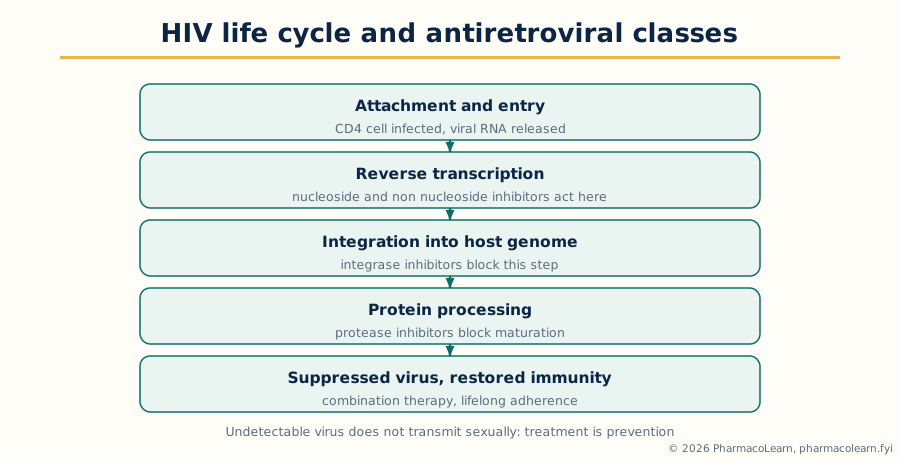 Figure: The HIV life cycle as a class map. Combination therapy blocks successive steps so resistance cannot escape.
4.3 Rheumatic fever
Rheumatic fever is an immune mediated multisystem illness following group A streptococcal pharyngitis, in which antibodies and T cells raised against streptococcal antigens cross react with host tissues, molecular mimicry, injuring heart, joints, skin and brain after a latent interval; it is therefore a post infective immune disease, not an infection of those organs, and no streptococci are found in the inflamed joint or valve. Its burden falls on children and young adults in crowded, low income settings, and its importance is its cardiac sequel: acute carditis involving endocardium, myocardium and pericardium heals by scarring and deforming the valves, mitral first, producing rheumatic heart disease, the chronic stenosis and regurgitation that fills cardiology and endocarditis risk lists for life, female patients carrying much of its burden including in pregnancy. Presentation is organised by the Jones criteria in their modern form: major manifestations of carditis, a migratory polyarthritis of large joints that answers strikingly to anti inflammatory therapy, Sydenham chorea, erythema marginatum and subcutaneous nodules, with minor manifestations of fever, raised inflammatory markers, arthralgia and conduction prolongation, all requiring evidence of preceding streptococcal infection. Diagnosis is that criteria synthesis with echocardiography detecting subclinical carditis, and its mimics, viral arthritis, reactive arthritis and infective endocarditis among them, excluded.
Pharmacotherapy has three distinct acts. Eradicate the streptococcus: a full course of penicillin class therapy on diagnosis, even though the fever itself is immune, to remove carriage and antigen drive, with macrolide alternatives in true allergy. Suppress the inflammation: aspirin and the non steroidal class for arthritis and mild carditis, corticosteroids for severe carditis with heart failure under specialist direction, carbamazepine or other agents for disabling chorea in defined cases, and heart failure therapy of Part I where valves fail acutely. Prevent recurrence, the act that changes the lifetime outcome: long term secondary prophylaxis with regular penicillin, intramuscular benzathine penicillin as the most reliable form, oral therapy where injections are refused against its adherence weakness, continued for years scaled to cardiac involvement under guidance, because every recurrence adds valve damage. Primary prevention closes the loop back to Section 3.3: adequate antibacterial treatment of streptococcal pharyngitis in at risk populations, and the social determinants, crowding and access, named honestly as the disease true causes.
4.4 Dengue fever
Dengue fever is acute infection by dengue viruses, four related serotypes transmitted by Aedes mosquitoes, ranging from undifferentiated fever through classical dengue to severe dengue with plasma leakage, haemorrhage and organ impairment. Its pathophysiology turns on two mechanisms: direct viral and immune injury, and antibody dependent enhancement, in which antibodies from a previous infection by one serotype bind a second serotype without neutralising it and escort it into cells, worsening the second illness, which is why severe dengue concentrates in second infections and why its vaccine use is restricted by prior infection status. Capillary leak is the dangerous physiology: in the critical phase around defervescence, plasma leaves the circulation into pleural and peritoneal spaces, haematocrit rises as volume falls, platelets drop and bleeding ranges from skin and mucosal oozing to major haemorrhage, and shock follows leak unreplaced. Presentation divides into phases for examination: the febrile phase of high fever, severe headache, retro orbital pain, muscle and joint pains earning its breakbone name, flushing and rash; the critical phase of warning signs, abdominal pain, persistent vomiting, mucosal bleeding, lethargy and rising haematocrit with falling platelets; and recovery with reabsorption and a convalescent rash. Diagnosis is clinical and epidemiological in season and endemic settings, supported by viral antigen and molecular testing early and antibody testing later, full blood counts tracking the leak, and ultrasound showing its fluid collections; malaria of Section 3.6 and leptospirosis and typhoid are its standing differentials.
Pharmacotherapy is supportive, and its restraint is the teaching point: there is no antiviral of established benefit, and management is fluid therapy matched to phase and leak, oral hydration in uncomplicated fever, intravenous crystalloid titrated carefully in warning sign and shock states, and blood products for significant haemorrhage under guidance, with monitoring of haematocrit, platelets, perfusion and urine output as the treatment chart. Paracetamol is the antipyretic and analgesic of choice; non steroidal anti inflammatory drugs and aspirin are avoided for their platelet and bleeding effects, and intramuscular injections and unnecessary invasive procedures are avoided in the thrombocytopenic phase. Corticosteroids and prophylactic platelet transfusion without bleeding are not standard care. Prevention is vector control, personal protection in Aedes daytime biting hours, and the vaccines now licensed with serostatus restrictions following the enhancement lesson above.
4.5 H1N1
H1N1 in the syllabus names influenza A H1N1, and its teaching is the influenza teaching of this subject: acute infection by influenza A viruses whose surface haemagglutinin and neuraminidase antigens define subtypes and whose antigenic drift drives seasonal epidemics and shift drives pandemics, the 2009 pandemic virus being an H1N1 lineage now circulating seasonally. The virus infects respiratory epithelium, destroys mucociliary defence and provokes the abrupt systemic illness that distinguishes influenza from the common cold: sudden fever, headache, myalgia, prostration and dry cough with sore throat, over days, with recovery in most and danger concentrated in pregnancy, chronic heart, lung and metabolic disease, immune suppression and the extremes of age. Its complications are primary viral pneumonia progressing to respiratory failure, secondary bacterial pneumonia, staphylococcal superinfection classically, exacerbations of asthma and COPD of Part I, myocarditis and the decompensation of every chronic disease it visits. Diagnosis in season is clinical, confirmed by molecular testing from respiratory samples where the result changes management, isolation or outbreak control, and severity is judged by oxygen saturation, respiratory rate and the sepsis assessments of Section 3.8 where pneumonia supervenes.
Pharmacotherapy centres on the neuraminidase inhibitors, oseltamivir orally and zanamivir and peramivir in defined settings, which block viral release from infected cells: their benefit is greatest started early in illness and in hospitalised, severe and high risk patients treatment is not withheld for delay, under current guidance, while the healthy mild case is managed supportively with antipyretics, fluids and rest and honest advice on course. The older adamantane class is obsolete against circulating resistance and survives as a stewardship history lesson. Antibacterials treat only the bacterial complications, by Section 3.3 principles, and are not influenza therapy. Prevention is annual vaccination matched to circulating strains, offered first to the risk groups and health workers, infection control and isolation in outbreaks, and antiviral prophylaxis in defined exposed high risk and outbreak settings under public health direction.
4.6 Helminthiasis
Helminthiasis is infection by parasitic worms, divided for therapy into the nematodes or roundworms, Ascaris, hookworms, Enterobius, Strongyloides and the filarial worms; the cestodes or tapeworms, Taenia species, the larval cyst diseases of hydatid and neurocysticercosis; and the trematodes or flukes, schistosomes and liver and lung flukes. Their burdens are chronic and nutritional as much as acute: intestinal worms competing for nutrition and, in hookworm, taking blood directly to produce iron deficiency anaemia of Part I, larval migration through lung and tissue, obstruction by heavy Ascaris loads, and the tissue diseases, lymphatic filariasis with elephantiasis, onchocerciasis with river blindness, schistosomiasis with bladder and liver fibrosis and bladder cancer risk bridging to Unit 5. Presentation follows the worm: perianal itch at night in enterobiasis, abdominal symptoms and passage of worms in ascariasis, ground itch and anaemia in hookworm, and often silence found on stool examination or eosinophilia on a blood count, eosinophilia being the laboratory signature of tissue helminths. Diagnosis is by stool microscopy for ova and parasites, concentration methods and repeat samples, serology and imaging for tissue disease, and species identification because therapy is species shaped.
Pharmacotherapy uses the anthelmintic classes by worm group. The benzimidazoles, albendazole and mebendazole, bind parasite tubulin and starve the worm of glucose uptake, and cover the common intestinal nematodes and, in prolonged specialist courses, the larval cyst diseases, where killing cysts in brain or eye is preceded by corticosteroid cover against the inflammatory response to dying parasites and by specialist assessment, a caution examinations prize. Praziquantel, increasing calcium permeability of the worm tegument, is the therapy of schistosomiasis and most fluke and tapeworm infections. Ivermectin, paralysing invertebrate muscle through its chloride channels, serves strongyloidiasis, onchocerciasis and filarial programmes, and diethylcarbamazine serves lymphatic filariasis where onchocerciasis coinfection does not forbid it. Public health pharmacotherapy is half the topic: mass drug administration programmes delivering single encounter therapy to whole at risk communities for filariasis, schistosomiasis and soil transmitted helminths, with sanitation, footwear, safe water and meat inspection as the non drug prevention that ends reinfection.
4.7 Fungal infections
Fungal infections divide by depth: superficial infections of skin, hair, nails and mucosa; subcutaneous infections after traumatic implantation; and invasive systemic infections of the immune suppressed, which carry the mortality and the pharmacology of the topic. The superficial set repeats Part I skin teaching from the organism side: dermatophyte tinea of body, groin, feet and scalp, nail onychomycosis, and mucosal candidiasis, oral and vaginal, and pityriasis versicolor. The invasive set is a roll of the opportunist world shared with Section 4.2: invasive candidiasis and candidaemia in critical care and line infection, invasive aspergillosis of the neutropenic lung, mucormycosis invading sinuses and brain in diabetic and immune suppressed patients with surgical urgency, cryptococcal meningitis of Section 4.1, and the endemic mycoses of geography. Pathophysiology follows host defence: intact skin and flora exclude the superficial organisms to their niches, while neutropenia, corticosteroids, transplantation, HIV and broad antibacterial therapy open the body to moulds and yeasts that a competent immune system destroys unnoticed. Presentation of invasive disease is fever unresponsive to antibacterials in the at risk host, pulmonary infiltrates and sinus pain and eschar in mucormycosis demanding immediate action, and diagnosis is culture and microscopy from sterile sites, fungal biomarkers and antigen tests, imaging and tissue histology, pursued aggressively because therapy delayed is therapy denied in mould disease.
Pharmacotherapy is built from four systemic classes whose targets are the fungal cell structures human cells lack. The polyene amphotericin B binds ergosterol in the fungal membrane and remains the broadest fungicidal agent, in lipid formulations that soften its signature kidney and infusion toxicities of Section 2.9. The azoles inhibit ergosterol synthesis at its demethylase step and divide into the older agents, fluconazole serving candidiasis and cryptococcal maintenance with a clean interaction free reputation it does not deserve, since azoles inhibit human metabolic enzymes and interact widely, and itraconazole, voriconazole serving invasive aspergillosis as a standard first therapy, posaconazole and isavuconazole extending mould cover and prophylaxis. The echinocandins block glucan synthesis in the fungal wall and serve invasive candidiasis with excellent tolerability. Flucytosine serves cryptococcal induction in combination, never alone against resistance. Superficial disease is treated topically where it is limited, allylamines and azoles, and systemically for scalp, nail and widespread disease, terbinafine the standard for dermatophyte nails. Prophylaxis in defined transplant and haematology settings, resistance surveillance in Candida species, and therapeutic drug monitoring for the mould azoles complete the specialist picture.
4.8 Dysmenorrhea
Dysmenorrhea is painful menstruation, classified as primary, pain with normal pelvic anatomy beginning in adolescence after ovulatory cycles establish, and secondary, pain caused by pelvic pathology, endometriosis first, with adenomyosis, fibroids, pelvic inflammatory disease and intrauterine devices in the set. Primary dysmenorrhea has a clean prostaglandin pathophysiology that Part I prepared: in the late luteal phase and menstruation, endometrial prostaglandin production, driven by progesterone withdrawal, produces intense myometrial contraction, vasoconstriction and ischaemia of the uterus, with prostaglandin effects spilling systemically as nausea, diarrhoea, headache and faintness; pain is therefore worst as flow begins and eases as the endometrium sheds. Presentation of the primary form is cramping lower abdominal pain radiating to back and thighs with the systemic accompaniments, in a young patient with normal examination and a history from soon after menarche; secondary disease declares itself by later onset, progressive course, dyspareunia, infertility, abnormal bleeding or a pelvic mass, any of which converts the consultation to investigation by examination, testing for infection and imaging, laparoscopy settling endometriosis. Diagnosis of the primary form is clinical after that red flag separation.
Pharmacotherapy of primary dysmenorrhea is a direct application of prostaglandin biology: non steroidal anti inflammatory drugs inhibiting prostaglandin synthesis are first line, started at the onset of pain or flow and taken regularly through the painful days rather than as single rescue doses, with the gastrointestinal and renal cautions of Part I and choice among the class by response and tolerability. Combined hormonal contraception suppressing ovulation and thinning the endometrium is the second pillar, serving patients who also need contraception or in whom non steroidal therapy fails, with progestogen only and intrauterine hormonal options in defined roles. Simple analgesia, heat, exercise and transcutaneous nerve stimulation support the drug core honestly as adjuncts. Secondary dysmenorrhea is treated by treating its cause: endometriosis by the hormonal suppression ladder of combined therapy, progestogens, gonadotropin releasing hormone analogues and antagonists with add back protection, and surgery, infection by its antibacterials, fibroids by their own pathway, with analgesia bridging and never substituting for the diagnosis.
4.9 Hormone replacement therapy
Hormone replacement therapy, taught in current usage also as menopausal hormone therapy, is the replacement of oestrogen, with progestogen protection where the uterus is present, for the symptoms and consequences of the menopause, the permanent cessation of ovarian function whose oestrogen withdrawal produces vasomotor symptoms, hot flushes and night sweats, genitourinary syndrome of dryness and urinary symptoms, sleep and mood disturbance, and accelerated bone loss toward the osteoporosis of Part I. Its pharmacotherapeutics is a balance taught honestly in both directions. Benefits are strongest for vasomotor symptom relief, where it is the most effective therapy, for genitourinary symptoms, where low dose local vaginal oestrogen serves with minimal systemic exposure, and for bone protection and fracture reduction while taken, with favourable timing evidence when started in younger postmenopausal patients close to the menopause. Risks are class and route shaped: combined therapy carries a small increase in breast cancer risk with duration in the trial and observational record, oral oestrogen increases venous thromboembolism and stroke risk through first pass hepatic effects on clotting, transdermal routes avoiding much of that thrombotic signal, and unopposed oestrogen in a woman with a uterus causes endometrial hyperplasia and cancer, which is the absolute rule that progestogen accompanies systemic oestrogen wherever a uterus remains.
Diagnosis and assessment precede therapy: confirm the menopausal pattern clinically in the usual age range, reserving hormone testing for early or atypical cases, exclude other causes of the symptoms, and assess breast, cardiovascular, thrombotic and endometrial risk and patient preference, since therapy is elective and preference sensitive. Pharmacotherapy is then individualised: systemic therapy for vasomotor symptoms at the lowest exposure controlling them, reviewed regularly and revisited as symptoms naturally remit; local therapy alone where symptoms are genitourinary only; progestogen by oral, transdermal combined or intrauterine routes; tibolone and tissue selective alternatives in defined niches; and non hormonal options, certain antidepressant class agents, gabapentinoids and the neurokinin antagonist class, for women in whom hormones are contraindicated or declined, after breast cancer among them, whose care is specialist shared. Osteoporosis prevention by hormone therapy is weighed against the dedicated bone classes of Part I and is not its usual modern indication where those serve better. Counselling states the balance numerically only from current guidance in the consultation itself; these notes teach the structure of that balance, which does not date.
Unit 5: Oncology
5.1 General principles of cancer chemotherapy
Cancer is uncontrolled growth of abnormal cells that invade surrounding tissue and spread to distant sites, metastasis, arising from accumulated genetic damage to growth control: oncogenes activated, tumour suppressor genes lost, repair pathways failed, over years of carcinogen exposure, inherited susceptibility, infection and chance, with hallmarks of sustained proliferation, evasion of growth suppression and cell death, angiogenesis, immune evasion and metabolic reprogramming as its organising description. Chemotherapy is drug treatment of cancer with cytotoxic and related agents, and its general principles govern every site specific section that follows. Cytotoxic agents injure dividing cells, by damaging DNA directly as the alkylating agents and platinum compounds do, by masquerading as building blocks and corrupting DNA and RNA synthesis as the antimetabolites do, by poisoning the mitotic spindle as the vinca alkaloids destabilising and the taxanes stabilising microtubules do, by trapping the topoisomerase enzymes that manage DNA topology as anthracyclines and their relatives do, anthracyclines adding free radical injury that explains their cardiac toxicity, and by hormonal manipulation, targeted small molecules and immunotherapy, which are chemotherapy in the wide teaching sense and dominate the site sections below. Because cytotoxic injury is proportional to division, therapy is given in cycles with recovery intervals for normal marrow and gut, in combinations of agents with different mechanisms and non overlapping toxicities that raise cure and suppress resistance exactly as in tuberculosis and HIV, and with intent declared before the first dose: curative, adjuvant after surgery to destroy micrometastases, neoadjuvant before surgery to shrink and assess, concurrent with radiotherapy for synergy, or palliative for symptom control and time, because intent decides how much toxicity is a fair price.
Cancer chemotherapy: from intent to cycle review
  Diagnose and stage, declare the intent:
  curative, adjuvant, neoadjuvant,
  concurrent or palliative
        |
        v
  Choose combination on mechanism, evidence
  and organ function, different toxicities
  paired, resistance suppressed
        |
        v
  Give in cycles, support through the
  expected marrow and gut injury,
  antiemetic cover planned in advance
        |
        v
  Review response, toxicity and the
  patient's goals, continue, adjust
  or change intent honestly
Response and toxicity are the two ledgers of every cycle. Response is assessed clinically and by imaging and tumour markers where valid, complete and partial response, stable and progressive disease in the standard language, and resistance, primary or acquired by selection of resistant clones, efflux pumps, repair upregulation and target mutation, is planned against by combination and by switching class at progression. Toxicity divides into the shared and the signature: shared toxicities of marrow suppression with its infection, bleeding and anaemia nadirs, nausea and vomiting of Section 5.6, alopecia, mucositis, diarrhoea and fatigue, infertility and second malignancy as late prices; and signature toxicities that monitoring is built around, anthracycline cardiomyopathy, cisplatin kidney, ear and nerve injury, vincristine neuropathy and constipation, bleomycin lung fibrosis of Part I, methotrexate liver, kidney and marrow injury rescued by folinic acid in its protocols, and the extravasation necrosis of vesicant agents as the administration emergency. Pharmacist practice in oncology is verification practice: protocol, body size and organ function checked, interactions hunted, antiemetic and growth factor support confirmed, and patient education on fever in the neutropenic window as an emergency instruction, not advice.
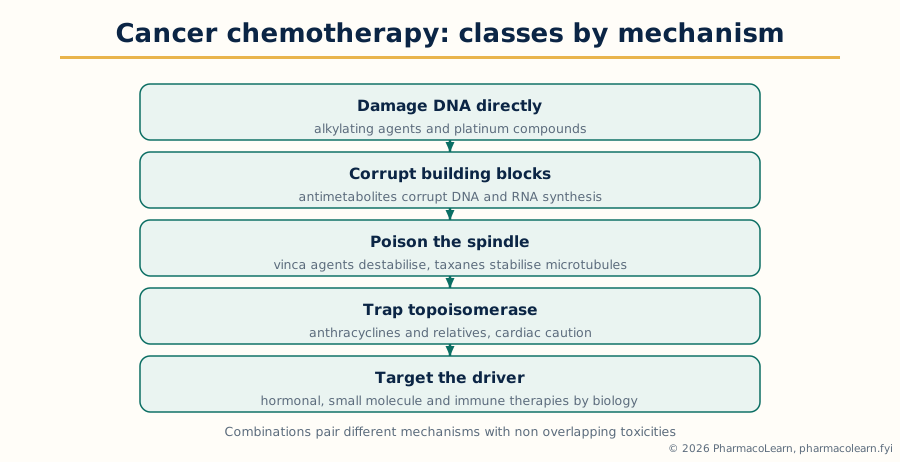 Figure: Classes by mechanism. Combinations pair different mechanisms with non overlapping toxicities.
5.2 Breast cancer
Breast cancer is the commonest cancer of women worldwide in the teaching record, arising chiefly in the ductal epithelium of the breast, and its pharmacotherapy is the model of biology directed treatment, because the tumour receptor pattern divides it into diseases treated differently. Risk factors are hormonal and reproductive, early menarche, late menopause, nulliparity and late first pregnancy, hormone replacement of Section 4.9 among them, family history and the inherited BRCA mutations, alcohol, obesity after the menopause and radiation exposure. Tumours classify by expression of oestrogen and progesterone receptors, by amplification of the HER2 growth factor receptor, and by proliferation rate: hormone receptor positive disease driven by oestrogen signalling, HER2 positive disease driven by that receptor and aggressive untreated, and triple negative disease with neither target and the fewest drug options. Presentation is a breast lump, skin or nipple change, nipple discharge or an axillary node, or a screening detected lesion; staging by imaging and sentinel node assessment, and metastatic survey where indicated, divides early from advanced disease and curative from palliative intent. Diagnosis is triple assessment: clinical, imaging and core biopsy, the biopsy carrying the receptor pattern on which all systemic therapy depends.
Pharmacotherapy follows the pattern and the stage together. Endocrine therapy is the backbone of hormone receptor positive disease: tamoxifen, a selective oestrogen receptor modulator blocking the receptor in breast while acting as agonist in uterus and bone, with venous thrombosis and endometrial cautions; aromatase inhibitors blocking peripheral oestrogen synthesis in postmenopausal patients, with bone loss and arthralgia as their price; ovarian suppression added in higher risk premenopausal disease; and the cyclin dependent kinase inhibitors combined with endocrine therapy in advanced and defined early disease, with fulvestrant degrading the receptor in later lines. HER2 positive disease is transformed by HER2 directed therapy: trastuzumab and the monoclonal and conjugate and small molecule family that followed it, combined with chemotherapy in early disease and sequenced in advanced disease, with cardiac monitoring as its signature duty since HER2 blockade and anthracyclines injure the same heart. Chemotherapy serves triple negative disease, high risk and node positive disease and HER2 combinations: anthracycline and taxane containing regimens in the classical backbone, with immunotherapy added in defined triple negative settings and PARP inhibitors for the BRCA mutated. Surgery and radiotherapy are the local partners, systemic therapy given before or after them by stage, and bone protection and survivorship care, endocrine adherence over years being the adherence challenge of this section, complete the plan.
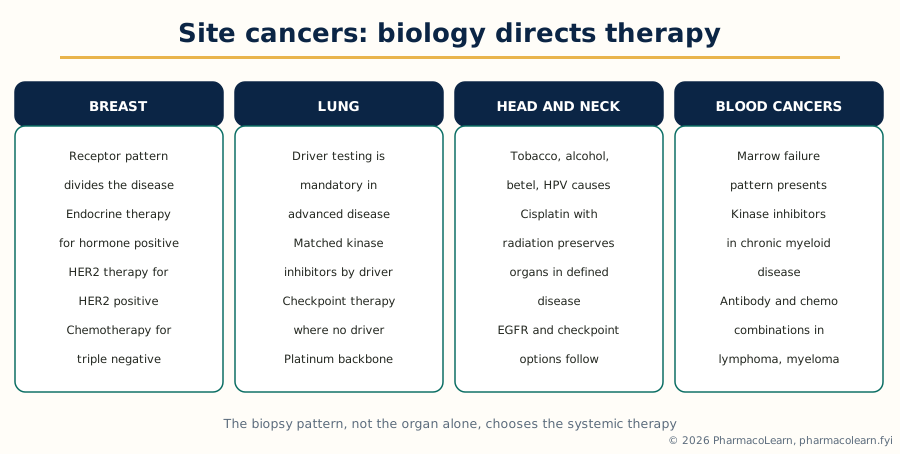 Figure: Biology directs therapy. The biopsy and molecular pattern, not the organ alone, chooses systemic treatment.
5.3 Lung cancer
Lung cancer is the leading cause of cancer death in the teaching record, caused overwhelmingly by tobacco smoking, with occupational exposures including asbestos, indoor and outdoor air pollution, and radon completing the causes, and it divides into two families with different biology and therapy. Non small cell lung cancer, the large majority, comprises adenocarcinoma, now commonest and the form of never smokers, squamous cell carcinoma tied closest to smoking, and large cell carcinoma. Small cell lung cancer is a neuroendocrine, rapidly doubling, early metastasising disease divided simply into limited and extensive stage and treated as systemic from diagnosis. Presentation is cough, haemoptysis, breathlessness, chest pain, recurrent infection behind an obstruction, weight loss and the paraneoplastic syndromes, syndrome of inappropriate antidiuretic hormone secretion and hypercalcaemia prominent, with metastases to brain, bone, liver and adrenal declaring advanced disease. Diagnosis is by imaging, biopsy or cytology with molecular profiling of non small cell tumours as a mandatory step in advanced disease, and staging that decides resectability, because surgery cures only the early minority and every other patient is a systemic therapy patient.
Pharmacotherapy of non small cell disease is the showcase of targeted therapy. Tumours are tested for driver alterations, and each found driver has its matched class: EGFR mutation with its tyrosine kinase inhibitors across generations matched to resistance mutations, ALK and ROS1 rearrangements with their inhibitors, and KRAS, BRAF, MET, RET and NTRK alterations with theirs in smaller groups; patients without a driver receive chemotherapy, platinum doublet combinations as the classical backbone, with immunotherapy, checkpoint inhibitors blocking the PD1 and PDL1 axis that releases T cell attack on the tumour, alone or combined with chemotherapy by tumour PD L1 expression and stage, and antiangiogenic agents in defined combinations. Early disease adds adjuvant and neoadjuvant systemic therapy around surgery in modern practice. Small cell disease is treated with platinum and etoposide chemotherapy combined with immunotherapy in extensive stage and with concurrent radiotherapy in limited stage, responds dramatically and relapses almost universally, and is the starkest teaching example of chemosensitivity without cure in advanced disease. Palliative radiotherapy, pleural and airway symptom care and smoking cessation at every stage, cessation improving even advanced outcomes, complete the section.
5.4 Head and neck cancer
Head and neck cancers are the squamous cell cancers of the oral cavity, pharynx, larynx and related sites, caused classically by tobacco and alcohol acting synergistically, by betel quid and areca nut in the populations where they are chewed, and, for oropharyngeal cancer in rising proportion, by human papillomavirus infection, whose tumours carry a distinctly better prognosis and a younger patient. Presentation follows site: a non healing oral ulcer or patch, persistent hoarseness as the larynx warning that must always trigger referral, dysphagia and odynophagia, a neck mass as first sign in nodal spread, ear pain referred from pharynx and throat. Diagnosis is by examination including flexible endoscopy, biopsy, HPV testing of oropharyngeal tumours, and imaging for stage and planning, with dental, nutrition, speech and swallowing assessment before treatment because every modality injures those functions. Staging divides early disease, curable by a single local modality, from locally advanced disease needing combined treatment, and metastatic disease treated systemically.
Pharmacotherapy holds three defined places. Concurrent chemoradiation is the organ preserving and post operative standard in defined locally advanced disease: cisplatin given with radiotherapy as a radiosensitiser, its kidney, ear, nerve and emetic burdens of Section 5.1 accepted for a cure directed gain, with carboplatin based and cetuximab combinations, the EGFR antibody serving patients unfit for cisplatin, as alternatives. Induction chemotherapy before definitive local treatment serves defined presentations under specialist selection. Recurrent and metastatic disease is treated with platinum based combinations with fluorouracil in the classical regimen, cetuximab combinations, and checkpoint immunotherapy as first or later line by pattern, the modern sequence improving a historically bleak outlook. Supportive care is unusually heavy in this section and is pharmacotherapy too: feeding support through mucositis, pain of Section 1.7, antifungal vigilance of Section 4.7, thyroid replacement after neck irradiation, and alcohol and tobacco cessation without which second primaries harvest the survivors.
5.5 Hematological malignancies
The hematological malignancies are cancers of blood forming and lymphoid tissue: the leukaemias of marrow and blood, acute lymphoblastic and acute myeloid, chronic myeloid and chronic lymphocytic; the lymphomas, Hodgkin and non Hodgkin, of lymph nodes and lymphoid organs; multiple myeloma of plasma cells; and the myeloproliferative and myelodysplastic family around them. Their presentations rhyme because the marrow fails or overflows: anaemia, infection from absent or dysfunctional white cells, bleeding from thrombocytopenia, lymph node enlargement, splenomegaly, bone pain and lytic lesions in myeloma, and B symptoms of fever, drenching sweats and weight loss in lymphoma. Diagnosis is by blood count and film, marrow examination, flow cytometry immunophenotyping, cytogenetics and molecular testing that now classify and direct therapy together, imaging and staging for lymphoma, and protein studies for myeloma; these are the cancers in which the laboratory is the staging department.
Pharmacotherapy is the triumph and the textbook of modern targeted and combination therapy, and each disease carries one teaching exemplar. Chronic myeloid leukaemia, driven by the BCR ABL fusion kinase, is controlled for decades in most patients by its tyrosine kinase inhibitors, imatinib and its successors matched to resistance and tolerance, the founding proof that a molecular target can convert a fatal leukaemia into a chronic condition. Acute leukaemias are treated with intensive multi agent chemotherapy in phases, induction, consolidation and, in lymphoblastic disease, prolonged maintenance on the tuberculosis pattern, with targeted additions by mutation, stem cell transplantation as consolidation for high risk disease, and differentiation therapy in acute promyelocytic leukaemia, where retinoic acid and arsenic force the malignant clone to mature, as the most elegant mechanism in oncology. Hodgkin lymphoma is cured in most patients by its classical combination chemotherapy with radiotherapy in early disease and antibody and checkpoint therapy in relapse; non Hodgkin lymphoma divides by aggressiveness, anti CD20 antibody rituximab combined with chemotherapy as the B cell backbone, cellular therapies including CAR T cells in defined relapses. Multiple myeloma, incurable but increasingly controlled, is built from proteasome inhibitors, immunomodulatory agents and anti CD38 antibodies in combinations sequenced across relapses, with transplantation in eligible patients and bone and infection protection throughout. Tumour lysis syndrome, the metabolic emergency of rapid malignant cell death releasing potassium, phosphate and uric acid into a failing kidney, prevented by hydration and urate lowering therapy and treated as Section 2.6 in the worst case, is the safety lesson of the section.
5.6 Management of nausea and vomiting
Nausea and vomiting in oncology divide into chemotherapy induced, radiotherapy induced, anticipatory, and the nausea of advanced disease itself, and the chemotherapy induced form is classified by timing: acute within the first day of treatment, delayed over the days that follow, breakthrough despite prophylaxis, refractory across cycles, and anticipatory, a conditioned response to the sights and smells of treatment in patients whose earlier cycles were badly controlled, prevented only by controlling those cycles well. The physiology is a set of emetic pathways that the drug classes map one to one: serotonin released from gut enterochromaffin cells by cytotoxic injury activating vagal and central serotonin receptors and driving acute emesis; substance P acting at neurokinin receptors centrally and driving delayed emesis; dopamine, histamine, acetylcholine and cannabinoid pathways serving vestibular, cortical and advanced disease nausea. Chemotherapy agents are graded by emetogenic potential, high, moderate, low and minimal, and prophylaxis is prescribed by that grade before the cycle, not after vomiting starts, which is the single rule of the section.
Pharmacotherapy combines classes by phase and grade. Serotonin receptor antagonists are the foundation for acute emesis; neurokinin receptor antagonists add the delayed phase cover that transformed highly emetogenic regimens; dexamethasone is combined across both phases for its central antiemetic contribution; and olanzapine in combination serves highly emetogenic and breakthrough settings in modern guidance, the four class combination being the full prophylaxis of the highest grade. Breakthrough treatment adds a class not already used, reviews hydration, obstruction, brain metastasis, opioids and other causes of Section 5.7, and refractory failure redesigns the next cycle rather than repeating a failed plan. Non chemotherapy nausea in advanced disease is treated by cause and mechanism: dopamine antagonists for chemical and drug induced nausea, antihistamine and anticholinergic agents for vestibular and obstruction patterns, prokinetics for gastric stasis, corticosteroids for raised pressure and liver stretch, and octreotide and decompression measures in malignant bowel obstruction under palliative direction. The pharmacist owns the pre cycle antiemetic check, because prophylaxis omitted cannot be recovered retrospectively.
5.7 Palliative care
Palliative care is the active total care of patients whose disease is not responsive to curative treatment, affirming life, regarding dying as a normal process, integrating physical, psychological, social and spiritual care, and offered alongside disease directed therapy from the diagnosis of advanced illness in modern practice, not only in its last days; Unit 5 ends here because every oncology plan in this subject eventually asks what treatment is for. Its pharmacotherapy is symptom pharmacotherapy of the highest precision, and its core symptoms repeat the whole syllabus in miniature. Pain is treated on the ladder of Section 1.7 in its cancer form: oral morphine as the standard strong opioid, titrated against pain and function with laxatives always and antiemetics as needed, opioid rotation and alternative routes, subcutaneous infusion where swallowing fails, for intolerance or uncontrolled toxicity, adjuvants for neuropathic and bone pain including bisphosphonates of Part I, and radiotherapy as an analgesic for bone metastasis. Breathlessness is treated by its causes where reversible, by opioids at symptom directed exposure, oxygen only where hypoxaemia makes it a drug and not a comfort object, and positioning and airflow measures. Nausea follows Section 5.6, delirium is assessed for reversible drug and metabolic causes before any sedative, antipsychotics serving hyperactive delirium with risk, constipation is prevented rather than rescued, and secretions, agitation and anxiety in the last days are treated by the anticipatory medicines prescribed in advance in good services, the just in case medicines whose presence prevents crisis calls.
The prescribing philosophy is as examinable as any class list: regular review with deprescribing of every medicine whose purpose has expired, statins, preventive agents and tight control medicines relaxed as prognosis shortens, because pill burden is a symptom too; routes simplified; families taught what each medicine is for and what dying usually looks like; and goals of care discussed, documented and revisited, including resuscitation and place of care decisions, as clinical acts equal to any prescription. Palliative care in this syllabus is not confined to cancer in principle, its heart failure, lung and dementia applications echoing Part I and Unit 1, but its pharmacotherapy is taught here, at the end of the oncology unit, as the discipline that returns every drug decision to the patient it serves.
Frequently Asked Questions
Q: What is the pharmacotherapeutics method this subject teaches for every disease? Begin with etiopathogenesis, then presentation and diagnosis including severity, comorbidity, organ function, other medicines and adherence, then an individualised plan in steps: non drug measures and treatment of causes throughout, first drug classes matched to the mechanism, review against stated goals using clinical and laboratory indices, and adjustment by addition, substitution or escalation, with long term monitoring planned from the start. See Section 1.1.
Q: How are antiseizure medicines chosen, and what counselling does epilepsy therapy require? The medicine is chosen for the seizure type and syndrome, since some classes that control focal seizures aggravate absence and myoclonic seizures. Mechanisms include sodium channel blockade, enhancement of GABAergic inhibition, calcium channel blockade for absence seizures and mixed mechanisms, with broad spectrum agents where the syndrome is generalised or unsettled. Treatment starts as monotherapy, substitution precedes addition, and counselling covers adherence, teratogenicity and enzyme interaction planning, gradual supervised withdrawal only, and safety advice. See Section 1.2.
Q: What are the drug strategies in Parkinson disease, and what limits levodopa over time? Therapy is symptomatic: levodopa with a peripheral decarboxylase inhibitor is the most effective agent, dopamine agonists mimic dopamine, monoamine oxidase B and catechol O methyltransferase inhibitors prolong dopamine or levodopa action, amantadine serves dyskinesia, and anticholinergics hold a narrow tremor role in younger patients. Long term levodopa use is limited by wearing off, on and off fluctuations and dyskinesias, which advanced infusion therapies and deep brain stimulation address in selected patients. See Section 1.3.
Q: Why does stroke pharmacotherapy divide so sharply, and what is built on the division? Ischaemic stroke follows arterial occlusion and haemorrhagic stroke follows vessel rupture, and their acute treatments are opposite in aim: reperfusion, antiplatelet therapy and mechanism specific prevention after ischaemia, against bleeding control, anticoagulant reversal and pressure management after haemorrhage, which is why urgent imaging precedes treatment. Secondary prevention is built from the mechanism: antiplatelet therapy for non cardioembolic disease, anticoagulation for atrial fibrillation, statin therapy, and blood pressure treatment as the most important long term measure. See Section 1.4.
Q: How do the antidepressant and antipsychotic classes trade their harms? Antidepressants share similar average efficacy and are chosen on harm profile and patient factors: selective serotonin reuptake inhibitors first line for tolerability and safety in overdose, serotonin and noradrenaline agents adding pain and blood pressure considerations, tricyclics limited by anticholinergic and cardiac effects and overdose lethality. Antipsychotics divide the same way: first generation agents carry extrapyramidal and prolactin harms, second generation agents carry metabolic harms, and clozapine alone serves resistant schizophrenia under mandatory blood monitoring. See Sections 2.1 and 2.2.
Q: What are the principles of managing acute and chronic renal failure with drugs? Acute injury is managed supportively: treat the cause, restore perfusion where depletion is the mechanism, relieve obstruction, stop or adjust nephrotoxic and renally cleared medicines, and treat hyperkalaemia, overload and acidosis in order of danger, with dialysis for refractory complications. Chronic disease is managed to slow progression with renin angiotensin blockade where proteinuria is present, glycaemic and pressure control and SGLT2 inhibitor therapy, and to treat anaemia, mineral and bone disorder and acidosis, with every dose reviewed against filtration. See Sections 2.6 and 2.7.
Q: What are the rules of rational antibiotic use, and how does surgical prophylaxis express them? Confirm bacterial infection, find the source, take cultures first where possible, choose the narrowest spectrum covering likely organisms from local guidance, review against cultures for narrowing, oral switch and stopping, and document indication, review date and duration. Surgical prophylaxis is the same discipline compressed: cover only where infection is likely or grave, against expected site organisms, timed for incision, and stopped at closure rather than continued as a course. See Section 3.1.
Q: Why is tuberculosis treated with combinations for months, and what does each first line agent demand in monitoring? Combination therapy kills multiplying bacilli rapidly, sterilises dormant persisters and prevents resistance, in an intensive phase followed by a continuation phase. Isoniazid demands liver and neuropathy vigilance with pyridoxine in at risk patients, rifampicin demands liver vigilance and interaction review for its enzyme induction, ethambutol demands visual monitoring, and pyrazinamide demands liver vigilance. Adherence support and public health supervision protect both the patient and the regimen. See Section 3.5.
Q: How is HIV treated in principle, and how are its opportunistic infections handled? Antiretroviral therapy combines classes attacking successive life cycle steps, nucleoside backbone with an integrase inhibitor as the usual modern anchor, suppressing viral load, restoring immunity and preventing transmission when suppressed; it is lifelong and adherence is its effectiveness. Opportunistic infections are prevented by prophylaxis at defined immune depths and treated specifically when established, with interactions and immune reconstitution planned for. See Section 4.2.
Q: What are the general principles of cancer chemotherapy, and how is its nausea prevented? Cytotoxic classes injure dividing cells by distinct mechanisms and are combined, in cycles with recovery intervals, with intent declared in advance, curative, adjuvant, neoadjuvant, concurrent or palliative, because intent decides acceptable toxicity; response and signature toxicities are reviewed every cycle. Chemotherapy induced nausea is prevented by grade before the cycle: serotonin antagonists for acute emesis, neurokinin antagonists for the delayed phase, dexamethasone across phases and olanzapine in the fullest combinations, never by waiting for vomiting to start. See Sections 5.1 and 5.6.
Complete MPP202T notes, all 5 units in one PDF, free to keep.
Other M.Pharm subjects: MPH101T · MPC101T · MPL101T · MPH102T · MPH103T · MPH104T · MPL102T · MPL103T · MPL104T · MPC102T · MPC103T · MPC104T · MPH201T · MPH202T · MPH203T · MPH204T · MPC201T · MPC202T · MPC203T · MPC204T · MPL201T · MPL202T · MPL203T · MPL204T · MRA101T · MRA102T · MRA103T · MRA104T · MRM301T · MPG101T · MPG102T · MPG103T · MPG201T · MPG202T · MPG203T · MPG104T · MPG204T · MRA201T · MRA202T · MRA203T · MRA204T · MPP101T · MPP102T · MPP103T · MPP104T · MPP201T · MPP202T · M.Pharm