
Preparation of Vasaka Syrup IP
1. Aim
To prepare a supervised teaching-lab sample of Vasaka Syrup IP from a verified formula and record its ingredient calculation, final volume, and appearance. The applicable Indian Pharmacopoeia edition and monograph requirements must be specified in your college lab manual and instructor's method sheet. [1, 2]
2. Requirements
Vasaka liquid extract, glycerin, and a verified syrup vehicle; clean measuring devices, beaker, stirring rod, funnel, filter if required, calibrated final container, label, and batch record. Wear a laboratory coat, eye protection, and gloves suitable for the supplied materials. The extract identity and grade, formula quantities, target volume, vehicle specification, filter, container, and storage conditions must be specified in your college lab manual and instructor's method sheet. The extract's alcohol content and local flammability precautions must be specified in your college lab manual and instructor's method sheet; keep it away from an open flame until these are established. [2, 3]
3. Theory
This preparation combines a measured liquid plant extract with glycerin and a sweet syrup vehicle. The East Point College of Pharmacy manual identifies these three components and describes mixing the extract with glycerin before bringing the product to final volume with syrup. Glycerin contributes to the liquid vehicle, while the syrup supplies sweetness and viscosity. The composition of a botanical extract can depend on its source and manufacturing method, so its identity and quality must be checked against the locally approved specification. [2, 3]
The manual attributes the preparation to IP, but the original monograph was not available for direct comparison. Do not treat the teaching formula as proof of current compendial compliance. Cloudiness, sediment, or separation should be recorded, not silently removed. The sample is for teaching only, not patient use. [2, 3]
4. Procedure
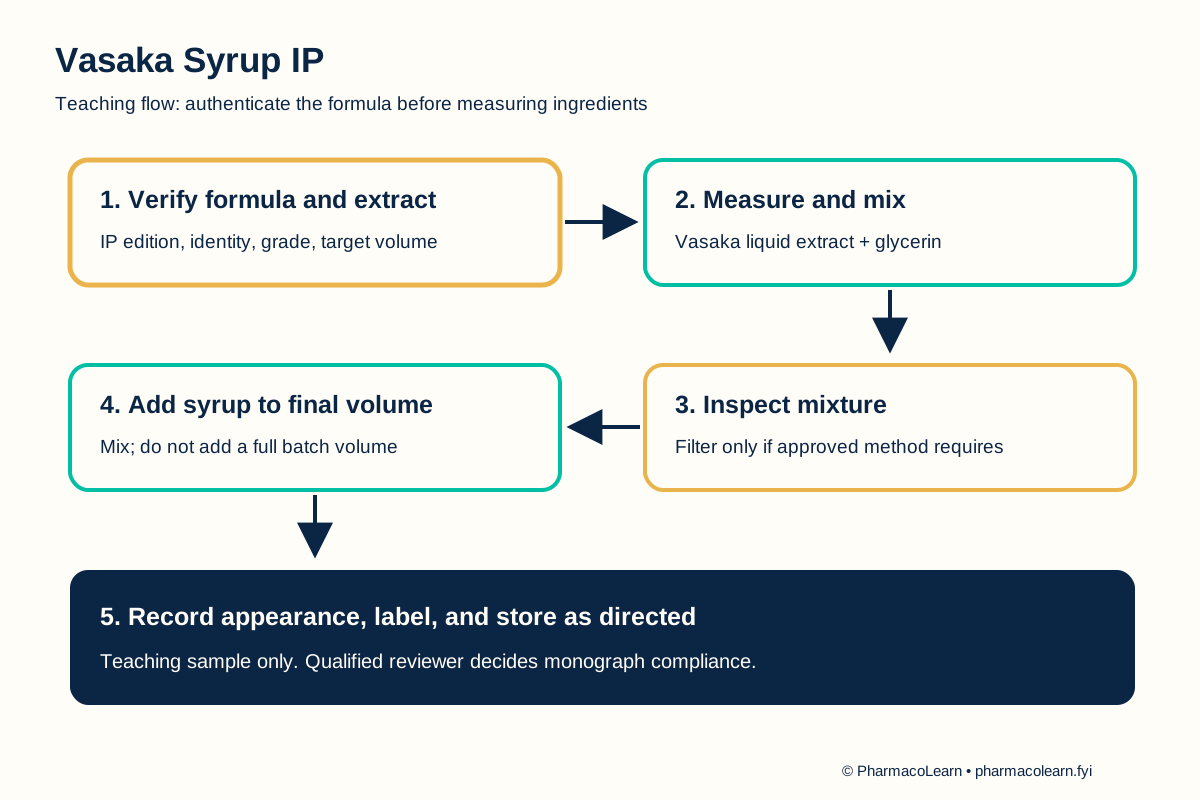
- Obtain the instructor-approved formula, extract specification, syrup vehicle specification, target final volume, and safety directions. Record the source edition and batch identifier here until supplied. Do not start if the extract or formula is unidentified. [2, 3]
- Clean the work area and measuring equipment. Check the ingredient labels and expiry or acceptance status according to the local procedure. Wear the required protective equipment. [3]
- Calculate each liquid ingredient from the authenticated master formula and assigned final volume. The master volume, ingredient amounts, and scale factor must be specified in your college lab manual and instructor's method sheet. Have the calculation checked before measuring. [2, 3]
- Measure the specified volume of Vasaka liquid extract and place it in a clean beaker. Add the specified glycerin and stir until the liquids appear uniformly mixed. Record actual measured volumes. [2]
- Inspect for visible undissolved material. Filter only if the approved method requires it, using its specified medium; the need for filtration and method must be specified in your college lab manual and instructor's method sheet. Do not assume a filter will remove all quality defects. [2, 3]
- Transfer the mixture to a calibrated container. Rinse the beaker with a small portion of syrup if permitted by the formula. Add the syrup vehicle to the assigned final volume and mix thoroughly. The actual final volume must be recorded here. [2]
- Record color, clarity or sediment, odor if the local method requires it, and any separation. Do not taste the preparation. The acceptance criteria are to be recorded from the assigned current monograph or approved college method in the student record. [3]
- Label the container with the teaching-sample identity, batch record, date, and not for patient use. Follow local storage and disposal directions, which must be specified in your college lab manual and instructor's method sheet. [3]
5. Calculation, graph, or images as appropriate
| Item | Master formula or target | Calculated amount | Actual record |
|---|---|---|---|
| Vasaka liquid extract | Use authenticated formula | Record here | Record here |
| Glycerin | Use authenticated formula | Record here | Record here |
| Syrup vehicle | Sufficient to final volume | Record here | Record here |
| Final volume | Use authenticated formula | Record here | Record here |
| Appearance and sediment | Local criteria record from the assigned current monograph or approved college method | Not applicable | Record here |
Worked scaling method: If a verified master formula uses E mL of extract and G mL of glycerin to produce V mL of syrup, an assigned v mL batch needs extract = E × v/V and glycerin = G × v/V. Add syrup to v mL rather than adding v mL of syrup. The authenticated E, G, V, assigned v, and numeric answers must be specified in your college lab manual and instructor's method sheet. This proportional example assumes the approved formula permits direct scaling. [2]
6. Result
Verified formula, measured extract and glycerin, actual final volume, appearance, and any deviations: Record here. State whether the approved teaching specification was met. Do not report IP compliance or dispense the sample without independent verification of the applicable monograph and quality requirements. [2, 3]
7. References
- Pharmacy Council of India. Pharm.D. Regulations, 2008, Appendix A. Lists Syrup Vasaka IP in the Pharmaceutics practical syllabus.
- East Point College of Pharmacy. Pharmaceutics Practical Manual, Experiment 3: Syrup of Vasaka IP. Supplies the teaching ingredient list and admixture sequence; its IP attribution requires monograph verification.
- United States Pharmacopeia. General Chapter 795: Pharmaceutical Compounding, Nonsterile Preparations. General quality framework, not an IP formula.
Back to Pharmaceutics Practicals · All Pharm D Practicals · Pharm D
Theory notes: Pharmaceutics