
Study of Strong Solution of Ferric Chloride BPC
1. Aim
To analyze the historical preparation stages and working-formula calculation for Strong Solution of Ferric Chloride BPC, using an authenticated source and an instructor-supplied sealed sample or trace of observations. The BPC edition, safe preparation method, and required quality checks must be specified in your college lab manual and instructor's method sheet. [1, 2]
2. Requirements
An authenticated formula sheet, calculator, batch record, process diagram, and sealed instructor-supplied sample or image. The East Point College of Pharmacy manual names iron, concentrated hydrochloric acid, concentrated nitric acid, and purified water. The actual grades, concentrations, quantities, target volume, vessel, controls, and analytical tests must be specified in your college lab manual and instructor's method sheet. Handling these acids or their reaction products requires a trained instructor, suitable fume control, splash protection, acid-compatible gloves, lab coat, and a written emergency and waste procedure. [2, 3, 4]
3. Theory
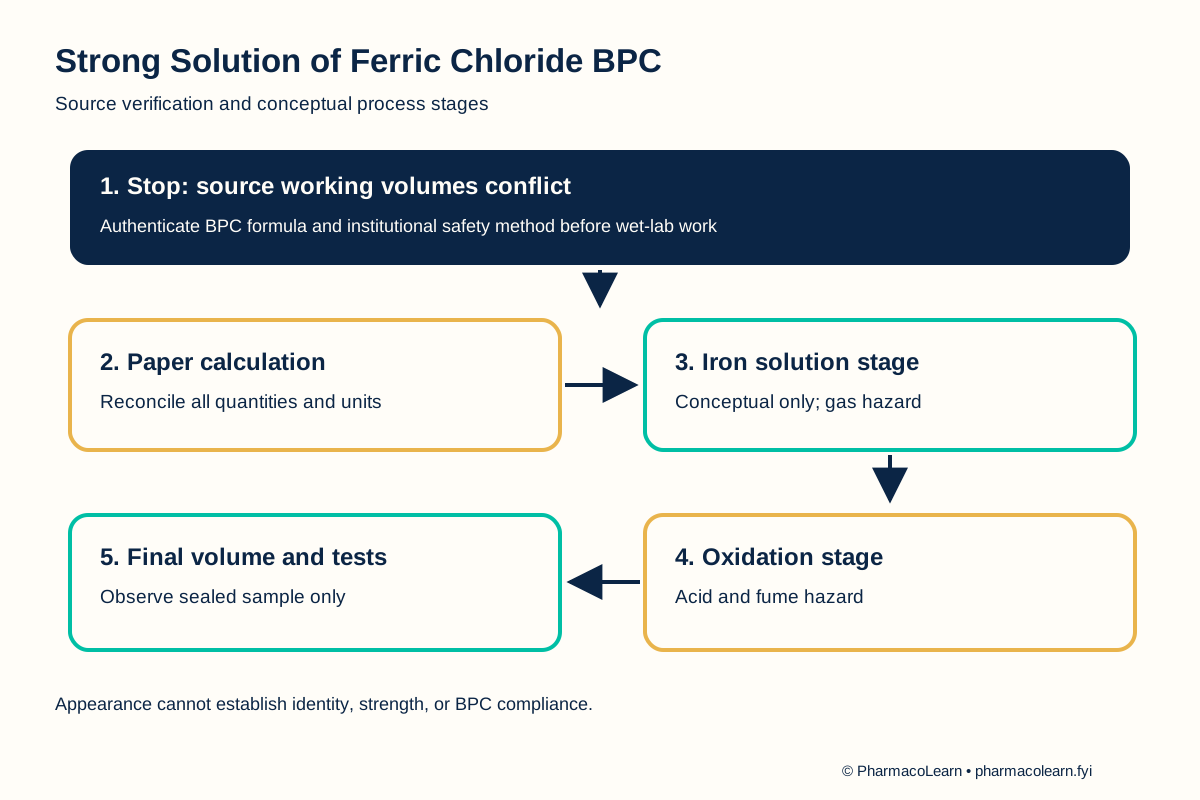
The college manual describes an iron and acid stage followed by an oxidation stage that yields a ferric chloride solution. This sequence can produce flammable hydrogen and harmful acid or nitrogen-oxide fumes. The finished liquid is not characterized by color alone; identity and strength require the tests specified by the authenticated BPC method. No reaction scheme or molecular structure is needed to understand the process sequence. [2, 3, 4]
The manual's working formula gives a hydrochloric-acid volume greater than its stated final batch volume. Its step quantities also do not reconcile clearly with that final volume. These errors make the worksheet unsuitable as an operational protocol. An authenticated monograph and a separate institutional procedure are essential before any wet-lab preparation. A classroom calculation or sealed-sample observation does not establish patient suitability. [2]
4. Procedure
- Obtain the authenticated BPC formula and edition, target final volume, complete safety-controlled method, and required tests. Record these here until confirmed. Do not carry out the source manual's wet-lab recipe while its volume conflict remains unresolved. [2, 3, 4]
- From the authenticated formula, list each ingredient with its unit. Compare every stated ingredient volume with the final volume and flag any inconsistency. Record the college manual's inconsistency in the batch sheet. [2]
- Calculate the working amounts from the verified master formula. Keep acid concentration, volume, and iron mass explicit, and have a second person check the arithmetic. The actual values must be recorded here. [2]
- Label the conceptual stages on the supplied process diagram: initial iron-containing solution, clarification, oxidation, final-volume adjustment, and testing. The operational order, temperatures, ventilation, and endpoints belong to the institution's written method; follow that method before any work. [2, 3, 4]
- Observe an instructor-supplied sealed sample or approved image without opening, smelling, or transferring the solution. Record visible color, clarity, and any sediment. These observations do not replace analytical tests. [3]
- List the BPC acceptance tests required to establish identity and concentration once the monograph is available. Until then, mark each test and result your college lab manual and instructor's method sheet. [2, 3]
- Submit the calculation, discrepancy note, process diagram, and observation table. Label any teaching material not for patient use. Local sample storage and disposal must be specified in your college lab manual and instructor's method sheet. [3, 4]
5. Calculation, graph, or images as appropriate
| Record item | Authenticated master value or criterion | Scaled or observed value |
|---|---|---|
| Iron mass | Use authenticated formula or method | Record here |
| Hydrochloric acid grade and amount | Use authenticated formula or method | Record here |
| Nitric acid grade and amount | Use authenticated formula or method | Record here |
| Purified water to final volume | Use authenticated formula or method | Record here |
| Sealed-sample appearance | Criteria record from the assigned current monograph or approved college method | Record here |
| Identity and concentration tests | Use authenticated formula or method | Record here |
Worked scaling method: If an authenticated master formula lists M grams of iron for V mL of finished solution, a target v mL batch would require M × v/V grams. For a batch one-tenth of the master volume, this is M/10. The actual M, V, v, and numerical result must be recorded here. Each acid must be scaled only after its grade and concentration are confirmed. The college manual's conflicting hydrochloric-acid amount cannot be repaired by this arithmetic. [2]
6. Result
Report whether the BPC source was authenticated, the formula discrepancy, calculated quantities, sealed-sample observations, and leave missing test results blank in the student record. State that no wet-lab preparation was performed from the inconsistent teaching worksheet. Do not claim BPC compliance or clinical suitability. [2, 3]
7. References
- Pharmacy Council of India. Pharm.D. Regulations, 2008, Appendix A. Lists Strong solution of ferric chloride BPC after Solution of cresol with soap IP.
- East Point College of Pharmacy. Pharmaceutics Practical Manual, Experiment 12: Strong Solution of Ferric Chloride BPC. Lists the teaching stages but has a working-volume conflict.
- National Library of Medicine, PubChem. Nitric Acid: Safety and Hazards. Documents corrosive and oxidizing hazards.
- National Library of Medicine, PubChem. Ferric Chloride: Safety and Hazards. Documents hazards of the product solution.
Back to Pharmaceutics Practicals · All Pharm D Practicals · Pharm D
Theory notes: Pharmaceutics