
Study of Solution of Cresol with Soap IP
1. Aim
To explain the formulation principle of Solution of Cresol with Soap IP and complete a supervised calculation and observation record using an authenticated formula or instructor-supplied sample. The applicable IP monograph, ingredient specifications, and local handling authorization must be specified in your college lab manual and instructor's method sheet. [1, 2]
2. Requirements
For the paper and observation exercise: an authenticated formula sheet, calculator, batch record, sealed instructor-supplied sample or image, and a labeled waste plan. The East Point College of Pharmacy manual names cresol, vegetable oil, potassium hydroxide, and purified water for its historical preparation. Their exact grades, proportions, oil specification, target volume, test methods, and container must be specified in your college lab manual and instructor's method sheet. Any handling of cresol or potassium hydroxide requires trained supervision, suitable ventilation, chemical-resistant gloves, eye and face protection, a lab coat, and immediate access to the institution's spill and first-aid procedure. [2, 3, 4]
3. Theory
Cresol has limited solubility in water. Soap molecules can help disperse or solubilize cresol in an aqueous preparation. The college manual describes forming soap from vegetable oil and an alkali, then incorporating cresol and adjusting the mixture to a finished volume. The oil identity and degree of soap formation influence the result, so they belong in the approved formula and quality record. A visually uniform sample does not establish cresol concentration or disinfectant performance. [2]
Cresols can be absorbed through skin and can cause burns and systemic harm. Potassium hydroxide is corrosive. This preparation is a surface-disinfectant exercise, not a preparation for skin, mouth, or internal use. The historical recipe is not enough to establish current IP compliance or a safe classroom handling method. [2, 3, 4]
4. Procedure
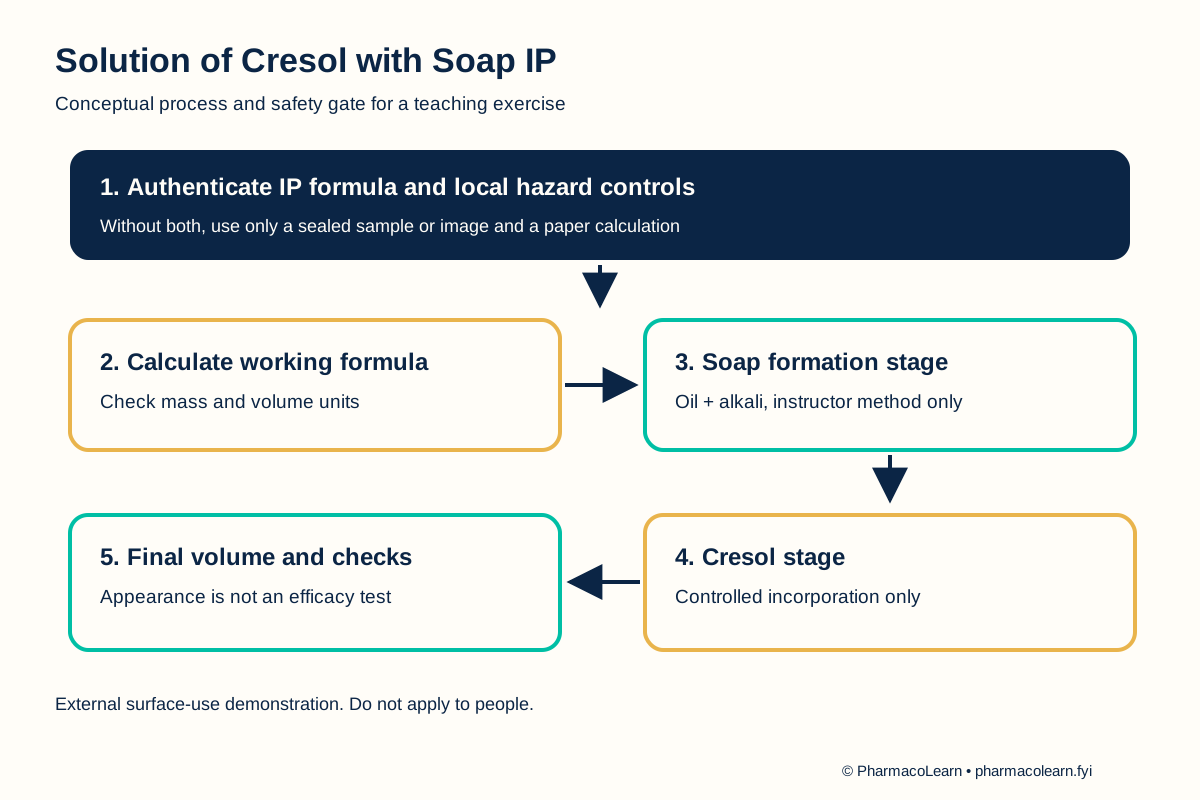
- Obtain the authenticated IP formula and edition, written institutional hazard assessment, specified oil, target volume, and analytical acceptance criteria. Record them on the batch sheet when supplied. If any essential item is absent, use a sealed sample or image and complete the paper exercise only. [2, 3, 4]
- Read the source formula and identify which material supplies cresol, which materials form soap, and which component brings the preparation to final volume. Record the actual ingredient identities in the student record. [2]
- Calculate the working quantities from the authenticated master formula. Keep mass and volume units distinct and have the calculation independently checked. The formula values and batch size must be specified in your college lab manual and instructor's method sheet. [2]
- On a process diagram, mark the stages of soap preparation, controlled incorporation of cresol, adjustment to final volume, and quality inspection. Any real mixing, heating, addition order, temperature, and endpoint require the separate written laboratory method and trained staff. These settings must be specified in your college lab manual and instructor's method sheet. [2, 3, 4]
- Observe only the sealed instructor-supplied sample or approved image. Record visible color, clarity, and any layering or sediment. Do not open or smell the sample for this exercise. [3]
- Compare the recorded observations with the authenticated acceptance criteria. If concentration or performance tests are required, list them here rather than inferring results from appearance. [2, 3]
- Label the record and any teaching sample external surface-use demonstration, not for patient use. Follow the institution's disposal procedure; the local method must be specified in your college lab manual and instructor's method sheet. [3, 4]
5. Calculation, graph, or images as appropriate
| Record item | Authenticated master formula or criterion | Scaled or observed value |
|---|---|---|
| Cresol identity and amount | Use authenticated formula | Record here |
| Vegetable oil and alkali | Use authenticated formula | Record here |
| Purified water to final volume | Use authenticated formula | Record here |
| Color, clarity, and separation | Criteria record from the assigned current monograph or approved college method | Record here |
| Required concentration or performance test | Use authenticated formula | Record here |
Worked scaling method: If the authenticated formula specifies C mL of cresol for V mL of finished solution, a target v mL batch would require C × v/V mL of the same specified cresol grade. For a batch one-tenth of the authenticated master volume, this equals C/10. The actual C, V, v, and result must be recorded here. Scale the alkali in its stated mass unit. This calculation is a paper exercise and does not authorize preparation. [2]
6. Result
Report the verified formula status, calculated working quantities, observed sealed-sample appearance, and unmet test requirements here. State whether the activity was limited to paper and observation. Do not claim IP compliance or disinfectant efficacy from visual inspection. [2, 3]
7. References
- Pharmacy Council of India. Pharm.D. Regulations, 2008, Appendix A. Lists Solution of cresol with soap IP in the Pharmaceutics practical syllabus.
- East Point College of Pharmacy. Pharmaceutics Practical Manual, Experiment 11: Cresol with Soap Solution. Describes the historical ingredients and soap-based formulation concept; IP attribution requires direct monograph verification.
- Agency for Toxic Substances and Disease Registry. Cresols: ToxFAQs. Describes skin and systemic hazards of cresols.
- National Library of Medicine, PubChem. Potassium Hydroxide: Safety and Hazards. Documents corrosive hazards of the alkali named in the source recipe.
Back to Pharmaceutics Practicals · All Pharm D Practicals · Pharm D
Theory notes: Pharmaceutics