
Preparation of Orange Syrup
1. Aim
To prepare a teaching-lab sample of Orange Syrup by mixing a verified orange tincture with a syrup vehicle, then record the calculation, appearance, and final volume. The approved source formula and ingredient specifications must be specified in your college lab manual and instructor's method sheet. [1, 2]
2. Requirements
Orange tincture and a verified syrup vehicle; calibrated pipette or measuring device, clean beaker, stirring rod, funnel, specified filter if needed, calibrated final container, label, and batch sheet. Wear a laboratory coat, eye protection, and gloves appropriate to the ingredients. The tincture identity and alcohol content, syrup specification, target volume, filtration method, container, and storage instructions must be specified in your college lab manual and instructor's method sheet. Because an orange tincture may contain alcohol, keep the work away from flames and heat until its composition and local controls are confirmed. [2, 3]
3. Theory
Orange Syrup is a flavored, non-medicated vehicle. The East Point College of Pharmacy manual describes orange tincture as the flavor source and syrup as the sweet base. Its teaching formula uses a measured amount of tincture and enough syrup to reach a specified final volume. A tincture and aqueous syrup may not remain equally clear after mixing, so the finished appearance must be observed rather than assumed. Check the supplied tincture label and approved method for its alcohol and volatile-flavor content; record those details here. [2]
The manual gives a formula, but the syllabus does not identify a pharmacopoeial edition for Orange Syrup. Do not label a classroom sample as a particular compendial product without an authenticated monograph. A pleasant color or odor does not establish identity, stability, or suitability for patient use. [1, 2, 3]
4. Procedure
- Obtain the instructor-approved formula, target final volume, orange tincture specification, and syrup vehicle specification. Record the source edition or local formula identifier here until supplied. [2, 3]
- Clean the work area and equipment. Check the container and ingredient labels, wear the specified protective equipment, and remove ignition sources if the tincture contains alcohol. [2, 3]
- Calculate the required tincture quantity from the verified master formula and assigned final volume. Record the formula units and have the calculation checked. The assigned volume and accepted formula must be specified in your college lab manual and instructor's method sheet. [2]
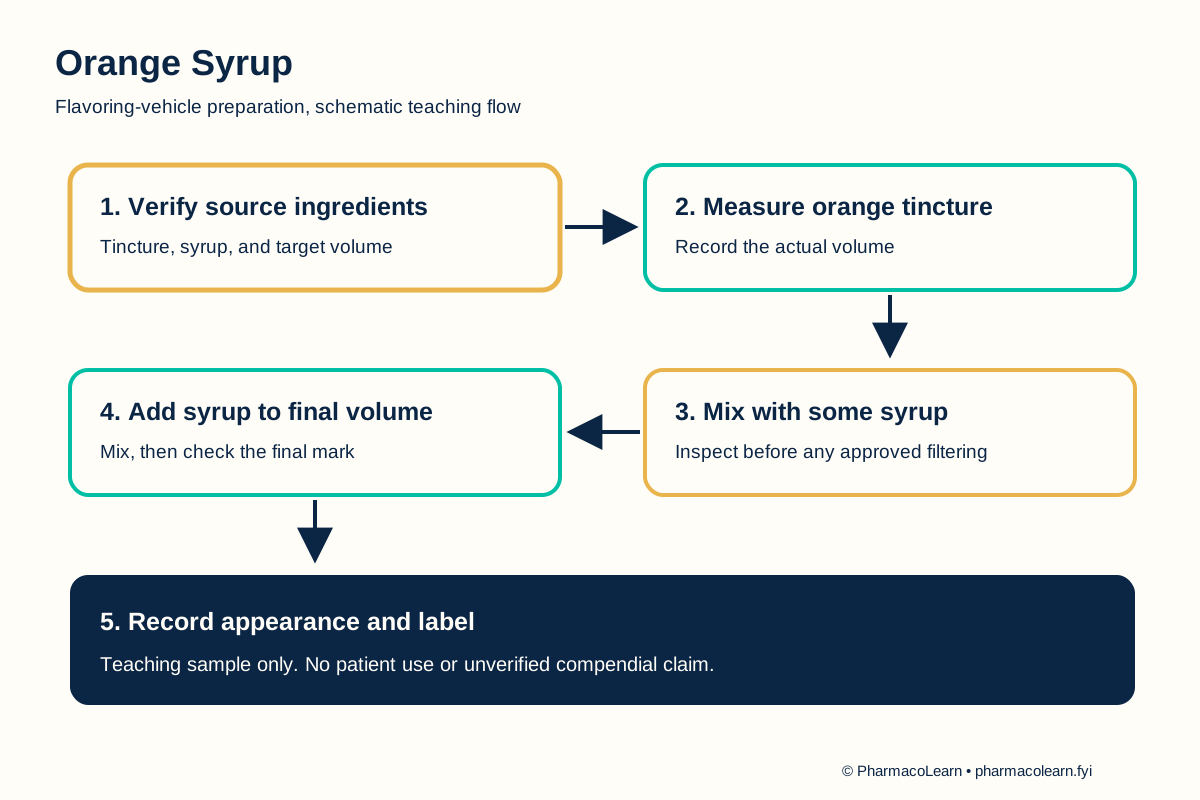
- Measure the tincture with a calibrated device into a clean beaker. Add a portion of the syrup vehicle and stir to distribute the flavor uniformly. Record actual volumes. [2]
- Observe the mixture for cloudiness or visible particles. If the local method calls for filtration, pass it through the specified medium. The filter choice and acceptance criterion are to be recorded from the assigned current monograph or approved college method in the student record. Do not claim a filtered product is clear without inspecting it. [2, 3]
- Transfer the mixture to a calibrated final container. Rinse with a little syrup only if the approved method permits, then add syrup to the assigned final volume and mix. Record the actual final volume. [2]
- Note color, clarity, visible particles, and odor only as the local method permits. Do not taste a laboratory sample. The appearance limits are to be recorded from the assigned current monograph or approved college method in the student record. [3]
- Label the container with the preparation name, batch record, date, and teaching sample, not for patient use. Close it as specified. Storage and disposal details must be specified in your college lab manual and instructor's method sheet. [3]
5. Calculation, graph, or images as appropriate
| Record item | Master or target value | Calculated amount | Actual observation |
|---|---|---|---|
| Orange tincture | Use authenticated formula | Record here | Record here |
| Syrup vehicle | Sufficient to final volume | Record here | Record here |
| Final volume | Use authenticated formula | Record here | Record here |
| Appearance after mixing | Local criteria record from the assigned current monograph or approved college method | Not applicable | Record here |
Worked scaling example from the college manual: Its teaching formula lists 50 mL of orange tincture in 1000 mL of finished syrup. For a 20 mL classroom batch, tincture = (50 mL ÷ 1000 mL) × 20 mL = 1 mL. Add the verified syrup vehicle to a final volume of 20 mL, rather than adding 20 mL of syrup. The local approved formula, assigned batch volume, and actual measured quantities must be recorded here. This calculation does not establish a current compendial specification. [2]
6. Result
The approved formula, measured tincture, final volume, appearance, and deviations must be recorded here. State whether the classroom sample met the instructor's criteria. Do not infer suitability for dispensing from appearance alone. [2, 3]
7. References
- Pharmacy Council of India. Pharm.D. Regulations, 2008, Appendix A. Lists Orange Syrup after the four named syrups in the Pharmaceutics practical syllabus.
- East Point College of Pharmacy. Pharmaceutics Practical Manual, Experiment 5: Orange Syrup. Gives the teaching formula and mixing sequence.
- United States Pharmacopeia. General Chapter 795: Pharmaceutical Compounding, Nonsterile Preparations. General quality framework for nonsterile compounding, not an Orange Syrup formula.
Back to Pharmaceutics Practicals · All Pharm D Practicals · Pharm D
Theory notes: Pharmaceutics