
← Pharmaceutical Organic Chemistry practicals | Pharm.D. Year 1 Practicals
Systematic Qualitative Analysis of Phenols
1. Aim
To examine a coded organic sample for a phenolic group using a controlled ferric chloride comparison and a second approved observation. This is the phenols class explicitly named in PCI Pharmaceutical Organic Chemistry practical section II. The sample identity and local confirmation method are specified in your college lab manual and instructor's method sheet. [1]
2. Requirements
Coded sample, neutral ferric chloride test reagent, solvent approved for the sample, known phenol positive control, suitable negative control, blank, clean tubes or spot plate, droppers, observation sheet, coat, gloves, eye protection, and a designated waste vessel. Reagent concentration, sample quantity, solvent, control identity, and any derivative preparation are specified in your college lab manual and instructor's method sheet in the local method. [2, 3]
3. Theory
Phenols contain a hydroxyl group attached to an aromatic ring. Many phenols form coloured complexes with iron(III), which makes neutral ferric chloride a useful screening test. The colour may be violet, blue, green, or red-brown depending on the substance and conditions. Enolizable compounds can also react, so a colour is supporting evidence rather than proof of a phenol. Solubility, acidity, controls, and an approved derivative or instrumental comparison strengthen the classification. A negative colour test does not exclude every phenol. [2, 3]
4. Procedure
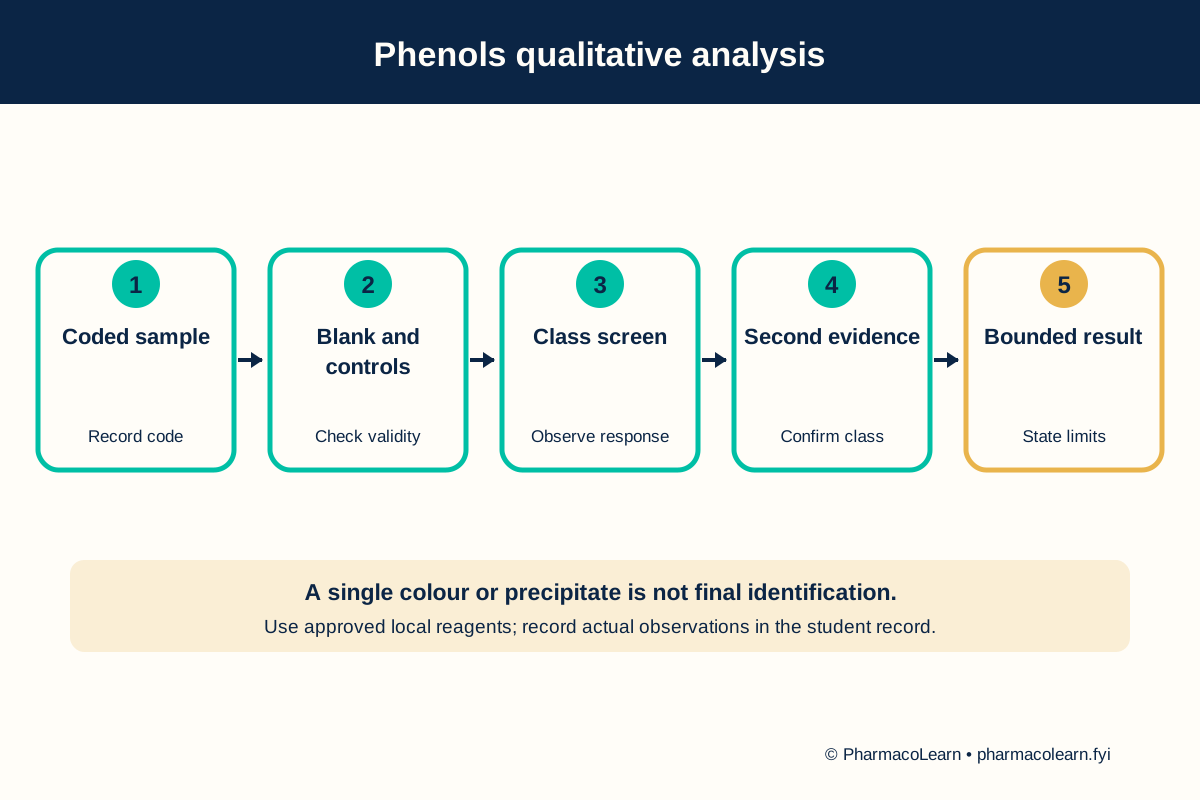
- Record code, appearance, physical state, and any permitted solubility information without smelling or tasting the sample.
- Prepare a reagent blank, known phenol control, and appropriate negative control under supervision.
- Place separately labelled portions of the sample and controls in clean vessels. The approved amounts and solvent are specified in your college lab manual and instructor's method sheet.
- Add the neutral ferric chloride reagent as directed. Record initial colour and any change against the controls.
- Check whether the blank or negative control also changes colour. If so, treat the run as inconclusive.
- Review a second authorized observation, derivative result, or instrumental record. The method and acceptance criterion are to be recorded from the instructor-approved demonstration protocol or dataset in the student record.
- State the supported class inference and limits; segregate iron-containing waste and clean the bench.
5. Calculation, graph, or images as appropriate
| Observation | Actual laboratory record |
|---|---|
| Blank colour | Record here |
| Known phenol control | Record here |
| Negative control | Record here |
| Unknown colour change | Record here |
| Second confirmation | Record here |
Pre-assumed observations for interpretation only: the blank stays yellow, the known phenol turns violet, the negative control stays yellow, and the coded sample turns violet. This pattern supports a phenolic group but does not identify a specific compound. A real second test and actual sample record must be recorded here. No numerical calculation is indicated for this qualitative classification. Record actual controls and the unknown in separate rows before making a result statement.
6. Result
Report the functional-group conclusion only to the level supported by the actual test pattern and a second authorized check. If controls fail or evidence conflicts, report an inconclusive result. The real specimen result must be recorded here. Safety note: Handle unknowns and iron(III) reagent under teaching-lab supervision. Avoid skin and eye contact, and do not use bromine or concentrated-acid tests without a separate approved risk assessment.
7. References
- Pharmacy Council of India, Pharm.D. Regulations, 2008.
- California State University, Bakersfield, Qualitative Organic Analysis.
- University of Colorado Boulder, Identification of Phenols by Ferric Chloride.
- East Point College of Pharmacy, Pharmaceutical Organic Chemistry Practical Manual.
Back to Pharmaceutical Organic Chemistry practicals | Pharm.D. Year 1 Practicals · All Pharm D Practicals · Pharm D
Theory notes: Pharmaceutical Organic Chemistry