
← Pharmaceutical Organic Chemistry practicals | Pharm.D. Year 1 Practicals
Preparation of Aniline from Nitrobenzene by Reduction
1. Aim
To study reduction of nitrobenzene to aniline, document product isolation, and calculate a conditional percentage yield. This is the aniline option in PCI Pharmaceutical Organic Chemistry synthesis item I.9, which also lists meta-phenylenediamine from meta-dinitrobenzene. The course's selected option and approved reduction method are to be recorded from the instructor-approved demonstration protocol or dataset in the student record. [1, 2]
2. Requirements
For a supervised demonstration, the approved nitrobenzene sample, specified reducing system, reaction and separation apparatus, balance, temperature monitor, fume hood, suitable gloves, coat, eye protection, and separate hazardous-waste containers are required. A deidentified instructor-provided dataset can replace chemical handling. The reducing agent, acid or catalyst, concentrations, volumes, heating conditions, purification method, and identity test are to be recorded from the instructor-approved demonstration protocol or dataset in the student record. [2, 3]
3. Theory
Reduction changes the aromatic nitro group of nitrobenzene into the amino group of aniline. The aromatic ring remains the same. The transformation is useful because a nitro group can be introduced and then converted into an amine for later synthesis. The ideal molar relation is one mole of nitrobenzene to one mole of aniline. [2]
Unreacted nitrobenzene and reaction byproducts can contaminate a crude sample. University of Wisconsin teaching material notes purification after reduction, so a mass or odour observation is not proof of aniline identity or purity. A locally approved assay or characterization result must accompany a meaningful product report. Both nitrobenzene and aniline can be absorbed through skin and affect the blood; no smell or touch test is appropriate. [2, 3, 4]
4. Procedure
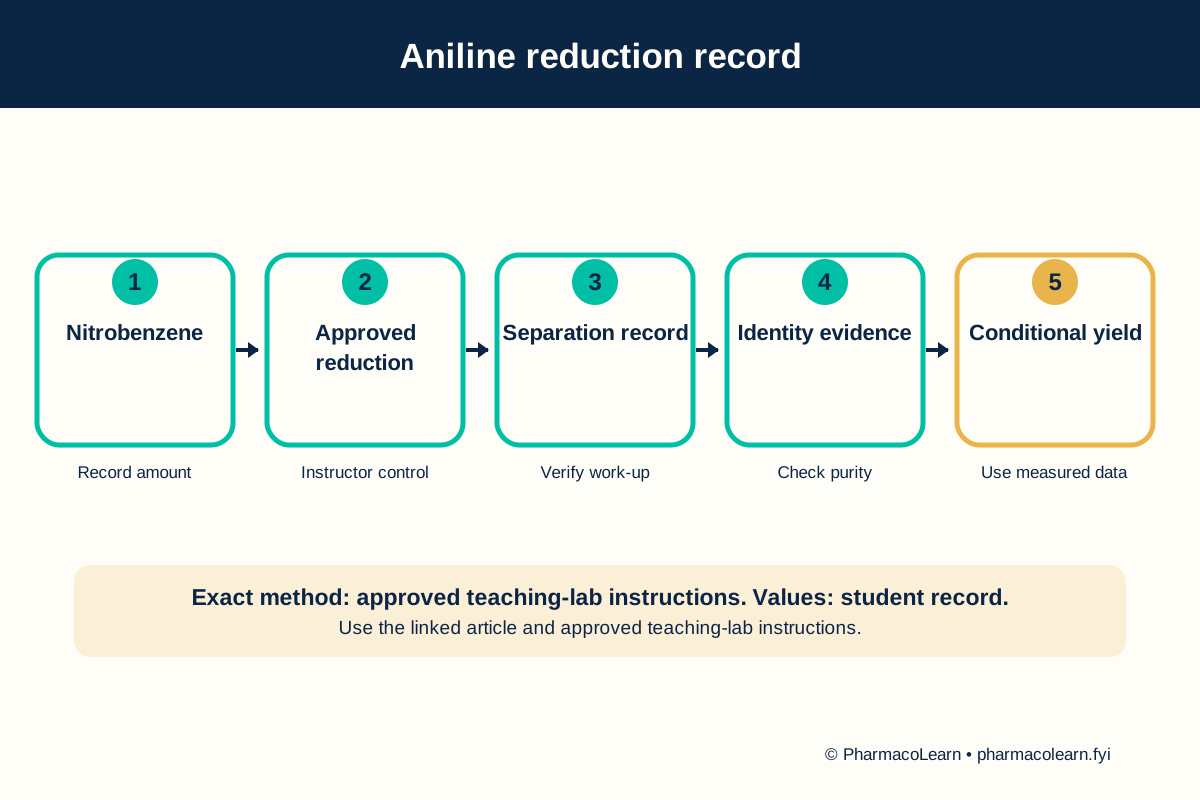
- Confirm that aniline is the chosen PCI option. Review the authorized demonstration or dataset protocol, safety data, and waste plan with the instructor. [1, 2]
- Record the actual nitrobenzene amount and the selected reduction method. Exact reagent identities, quantities, and limits are to be recorded from the instructor-approved demonstration protocol or dataset in the student record. [2]
- For an authorized demonstration, observe the instructor-controlled reaction under the specified hood and temperature controls. Record time, temperature, and visible changes from the verified laboratory log. [2]
- Follow the approved work-up record for separation of aniline from residual nitrobenzene and the reducing system. Distillation or extraction details must be recorded from the instructor-approved demonstration protocol or dataset in the student record as synthesis conditions under the approved laboratory method. [2]
- Record the purified fraction's measured amount and the assigned identity or purity evidence. Do not infer purity from colour or smell. [2, 3]
- If using a supplied dataset, identify its source and distinguish recorded measurements from assumptions. [2]
- Calculate theoretical and percentage yield only after confirming the limiting starting material, product identity, and actual isolated mass. [2]
5. Calculation, graph, or images as appropriate
| Observation | Actual teaching record |
|---|---|
| Nitrobenzene amount | Record here |
| Reduction method and controls | Record here |
| Separation and purity evidence | Record here |
| Aniline amount | Record here |
Pre-assumed values for arithmetic only, not a reaction recipe: Assume 0.500 g nitrobenzene is limiting and a hypothetical purified aniline mass is 0.250 g. Nitrobenzene has molar mass 123.11 g/mol and aniline 93.13 g/mol. Starting amount = 0.500 ÷ 123.11 = 0.00406 mol. Theoretical aniline mass = 0.00406 × 93.13 = 0.378 g. Percentage yield = 0.250 ÷ 0.378 × 100 = 66.1%, after rounding. Actual results must be recorded here. [4, 5]
6. Result
Report aniline yield and identity only from a verified supervised record or supplied dataset. The actual result must be recorded here. Safety note: This is a teaching-lab demonstration or data exercise. Avoid skin and vapour exposure, use a hood and suitable protective equipment, and route metal-containing and organic residues to designated hazardous waste. [2, 3, 4]
7. References
- Pharmacy Council of India. Pharm.D. Regulations, 2008, Pharmaceutical Organic Chemistry practical list.
- University of Wisconsin-Madison, Department of Chemistry. Sulfanilamide synthesis teaching handout, discussion of nitrobenzene reduction to aniline.
- Centers for Disease Control and Prevention, NIOSH. Pocket Guide to Chemical Hazards: Nitrobenzene.
- Centers for Disease Control and Prevention, NIOSH. Pocket Guide to Chemical Hazards: Aniline.
- National Library of Medicine, PubChem. Nitrobenzene and Aniline.
Back to Pharmaceutical Organic Chemistry practicals | Pharm.D. Year 1 Practicals · All Pharm D Practicals · Pharm D
Theory notes: Pharmaceutical Organic Chemistry