
Therapeutic Incompatibility: Aspirin and Probenecid
1. Aim
To recognize and document a therapeutic incompatibility in a historical aspirin and probenecid prescription, then refer the case for a prescriber decision. This is a written case review. No medicine is dispensed or changed. [1, 2]
2. Requirements
Use the PCI syllabus, the East Point College of Pharmacy case, the current probenecid product label, a blank interaction review form, and a calculator. An actual patient medication list, indication, dose schedule, kidney history, allergies, and cardiovascular reason for aspirin must be recorded here. No tablets or reagents are needed. [1, 2, 3]
3. Theory
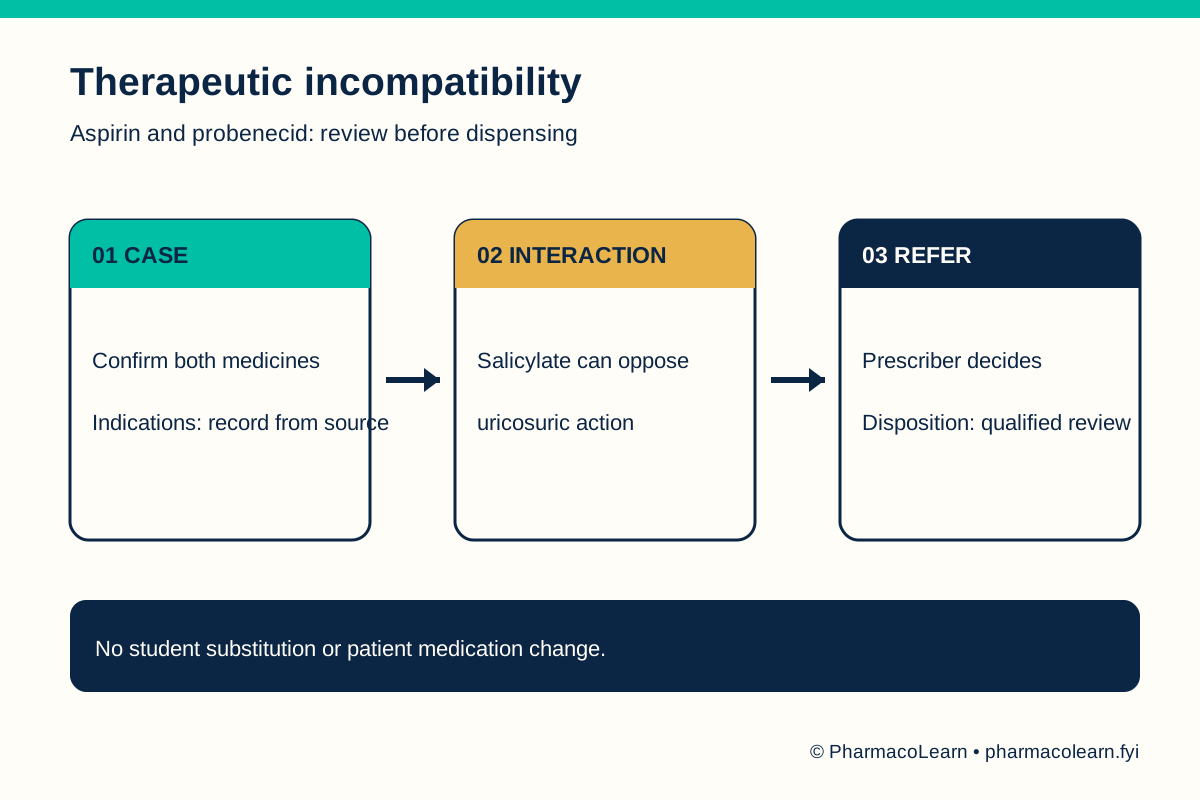
Therapeutic incompatibility occurs when a combination undermines the intended treatment or creates an unacceptable clinical conflict. The manual uses aspirin with probenecid in a gout case. The current probenecid label states that salicylates can antagonize its uricosuric action and warns against their use together. This is a drug-effect conflict, not evidence that the tablets react chemically in a container. [2, 3]
The manual proposes replacing aspirin with ibuprofen. That is not an automatic correction. The patient's reason for aspirin and the suitability of any alternative must be checked by the prescriber. Aspirin may have a cardiovascular indication, and abruptly stopping a prescribed medicine can cause harm. The chosen analgesic, dose, interactions, kidney status, and treatment plan must be specified in your college lab manual and instructor's method sheet. This practical ends at a documented referral and follow-up, not an independent substitution. [2, 3, 4]
4. Procedure
- Read the historical case and confirm the medicines named. Record that it is a teaching case unless an authenticated patient chart has been supplied. [2]
- State each intended role: aspirin is listed for pain relief and probenecid for urate lowering in the manual. The actual patient's indications must be recorded here. [2]
- Check the current probenecid label for salicylate interaction language. Record the precise concern as reduced uricosuric action, without assuming a clinical outcome in a particular patient. [3]
- Inspect the medication history for other salicylates and for the reason aspirin is used. If the record is absent, enter Record here. [3, 4]
- Put the order on review hold and contact the supervising pharmacist or prescriber through the approved local process. Do not discontinue aspirin or replace it with ibuprofen independently. [2, 3, 4]
- Record the communication time in the student record. The prescriber's decision and any monitoring plan are determined by the prescriber and recorded in the student record. This page proposes no correction, decides no disposition, and stops, substitutes, or dispenses no medicine. [3]
- Close the teaching record only when the instructor confirms that the interaction and disposition have been stated accurately. [1, 3]
5. Calculation, graph, or images as appropriate
| Review field | Historical case or source | Patient-specific entry |
|---|---|---|
| Medicine pair | Aspirin and probenecid [2] | Confirmed list Record here |
| Interaction | Salicylates antagonize probenecid's uricosuric action [3] | Clinical significance Record here |
| Reason for aspirin | Pain relief in manual [2] | Actual indication Record here |
| Proposed substitution | Ibuprofen in manual [2] | Prescriber choice Record here |
| Disposition | Review required | Decision and follow-up Record here |
Worked document check: The case has two medicines, so there is 2 × 1 ÷ 2 = one unique medicine pair to screen. The pair is aspirin with probenecid. The calculation establishes the scope of this case review; it does not grade the interaction, recommend a dose, or select a replacement. [2, 3]
6. Result
Record a potential therapeutic incompatibility and refer the prescription. Report the verified label warning separately from the patient-specific decision. The patient-specific decision is made by the prescriber and recorded in the student record. This page proposes no correction, decides no disposition, and stops, substitutes, or dispenses no medicine. No medicine is prepared, dispensed, stopped, or substituted in this exercise. [3, 4]
7. References
- Pharmacy Council of India. Pharm.D. Regulations, 2008, Pharmaceutics practical list. Lists therapeutic incompatibility.
- East Point College of Pharmacy. Pharmaceutics Practical Manual, Experiment 30. Supplies the historical aspirin and probenecid case.
- National Library of Medicine, DailyMed. Probenecid tablet, product label. Describes salicylate antagonism.
- National Library of Medicine, MedlinePlus. Probenecid drug information. Lists medication review precautions.
Back to Pharmaceutics Practicals · All Pharm D Practicals · Pharm D
Theory notes: Pharmaceutics