
← Pharmaceutical Microbiology Practicals
Study of Motility Characters
1. Aim
To distinguish true directional microbial motility from Brownian movement using an instructor-approved record or low-risk wet mount. Organism and method are specified in your college lab manual and instructor's method sheet.
2. Requirements
Approved low-risk culture or recorded video, microscope, wet-mount materials, motility-control records, slide container, protective equipment, and disinfectant. Live-culture approval, suspension amount, and observation time are specified in your college lab manual and instructor's method sheet.
3. Theory
Motility is movement produced by the organism, while Brownian movement is random jostling in a liquid. A cell that changes position relative to nearby cells and the field may be motile; a cell vibrating in place is not sufficient evidence. Wet mounts can dry or be distorted by currents, causing false interpretations. Motility agar or video records offer alternate evidence if the local protocol uses them. Culture identity and biosafety classification must be confirmed before a live mount.
4. Procedure
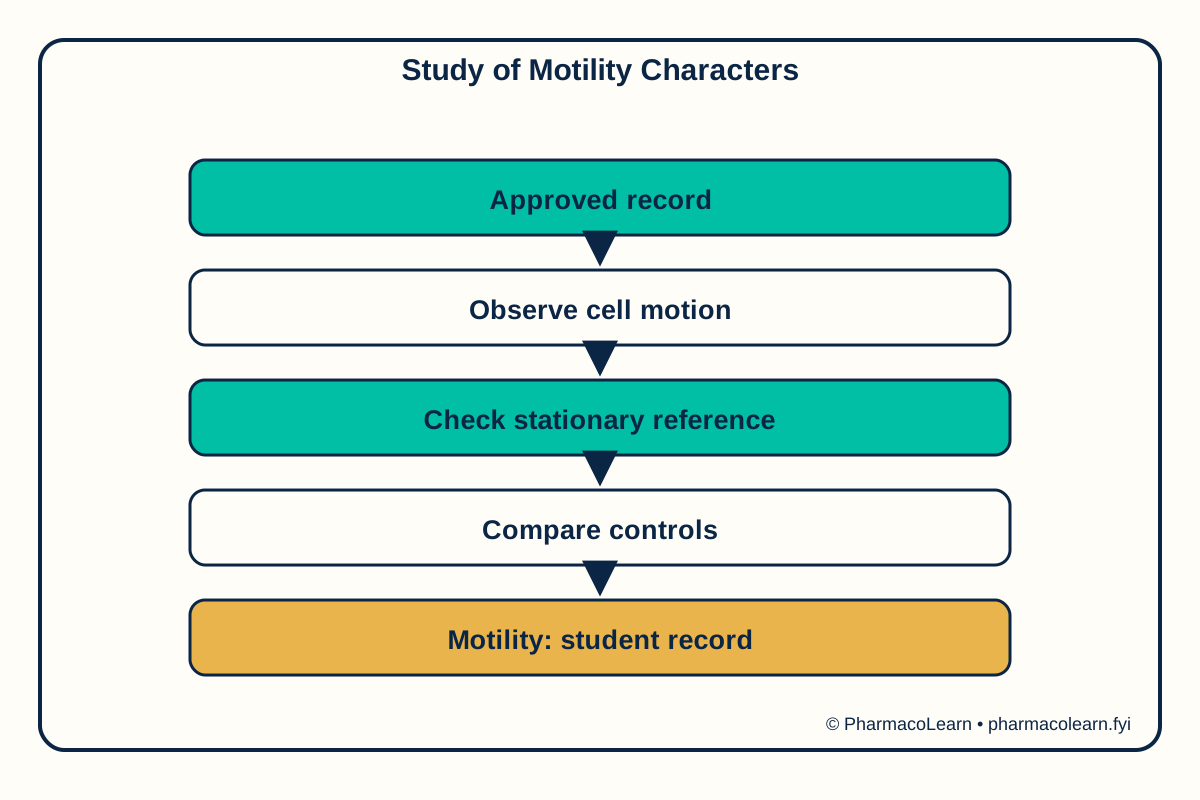
- Confirm the approved organism, risk level, observation method, and controls; record missing details as unresolved and consult the approved local method.
- Use an instructor-supplied video or have trained staff prepare a verified low-risk wet mount.
- Focus on a field with individual cells and a stationary reference point.
- Record whether cells traverse the field, merely vibrate, drift together, or cannot be resolved.
- Compare with motile and nonmotile control records before stating a conclusion.
5. Calculation, graph, or images as appropriate
| Observation | Actual teaching record |
|---|---|
| Organism or video code | Record here |
| Method and control | Record here |
| Movement relative to field | Record here |
| Possible currents or artifacts | Record here |
| Replicate observations | Record here |
| Motility conclusion | Record here |
No numerical motility rate is fabricated. Assumed observations for practice only: an assumed cell crosses the field while nearby particles remain stationary, whereas an assumed control vibrates in place. These invented observations illustrate the distinction. Actual motility must be recorded here.
6. Result
Record actual observations here when the verified method and record are available. Safety note: Do not prepare a live mount from an unknown environmental or clinical sample. Follow the teaching laboratory risk assessment and dispose of all slides safely.
7. References
- Pharmacy Council of India, Pharm.D. Regulations, 2008.
- Hillsborough College, Bacterial Motility Wet Mount.
- American Society for Microbiology, Biosafety Guidelines for Teaching Laboratories.
Back to Pharmaceutical Microbiology Practicals · All Pharm D Practicals · Pharm D
Theory notes: Pharmaceutical Microbiology