
← Pharmaceutical Inorganic Chemistry Practicals
Modified Limit Tests for Chlorides and Sulphates in Sodium Bicarbonate
1. Aim
To study the modified chloride and sulphate comparisons needed for a sodium bicarbonate sample and record two separate decisions. This is the combined PCI Pharmaceutical Inorganic Chemistry exercise 1(f), not two additional syllabus entries. Follow the approved current monograph and your instructor's method sheet for the procedure. [1]
2. Requirements
Sodium bicarbonate sample, current monograph, verified chloride and sulphate reference solutions, approved acid, silver nitrate and barium-containing reagents, matched cylinders, pH check if specified, pipettes, timer, coat, gloves, eye protection, hood, and segregated silver and barium waste containers are needed. Follow your college lab manual and instructor's method sheet for sample masses, acid amounts, reagent concentrations, final volumes, and viewing times. [2]
3. Theory
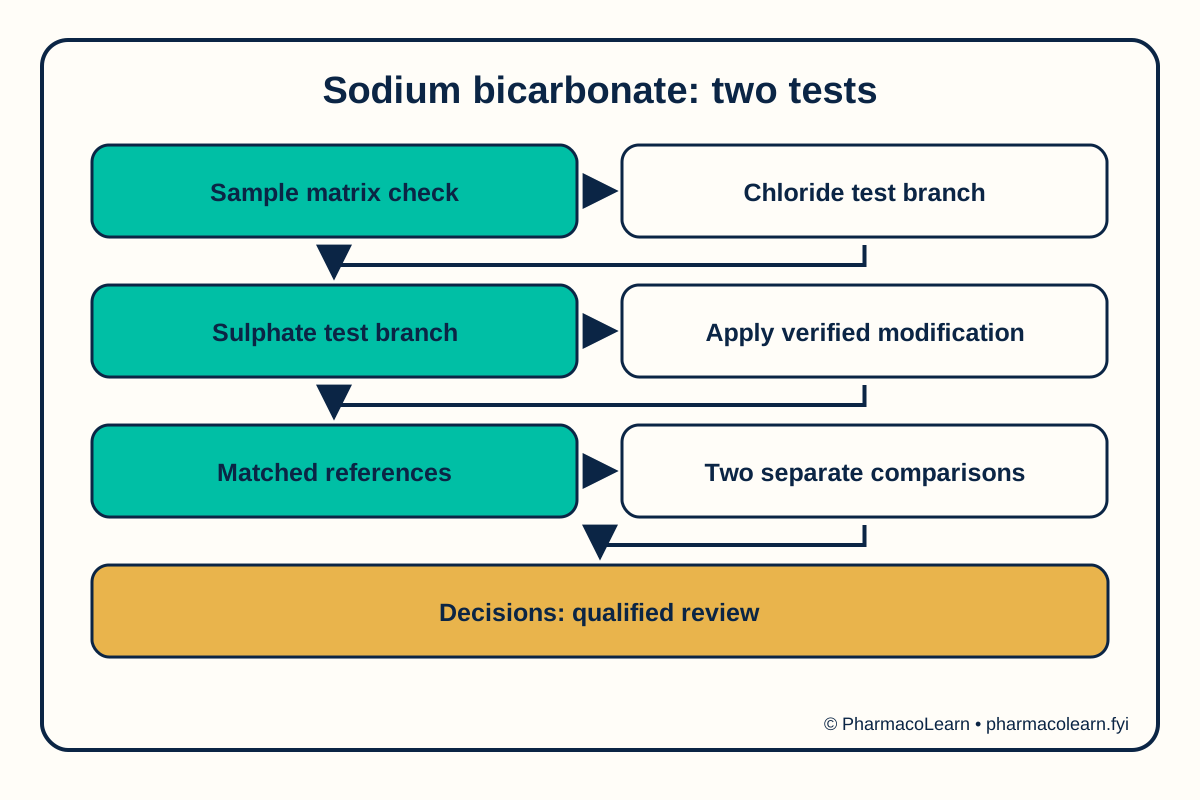
Sodium bicarbonate can interfere with ordinary precipitate comparisons: acidification may release carbon dioxide bubbles and change the clarity or pH of the test mixture. A modified preparation accounts for the matrix before chloride is compared through silver chloride opalescence and sulphate through barium sulphate turbidity. These are two analyte-specific outcomes within one PCI exercise. The East Point manual names a special sodium bicarbonate procedure, but the controlling monograph must settle the exact sample treatment and matched standards. Bubbles from bicarbonate are not evidence of either impurity. [2]
4. Procedure
- Identify the sodium bicarbonate monograph and approved modified test preparation; missing details must be recorded here.
- Label separate chloride and sulphate test, standard, and blank sets.
- Prepare the sample matrix and approved acid pretreatment exactly as instructed, allowing any expected carbon dioxide release to finish safely.
- Prepare each impurity standard in matched medium and final volume.
- Run chloride comparison with the approved silver reagent and sulphate comparison with the approved barium reagent.
- Check blanks and compare opalescence or turbidity only after each method-specific development time.
- Record two separate conditional results and route silver and barium wastes to their designated containers.
5. Calculation, graph, or images as appropriate
| Observation | Actual teaching record |
|---|---|
| Sample pretreatment | Record here |
| Chloride blank and standard | Record here |
| Chloride test appearance | Record here |
| Sulphate blank and standard | Record here |
| Sulphate test appearance | Record here |
| Two separate decisions | Record here |
Assumed observations for practice only: after valid pretreatment, the chloride test is less opalescent than its standard and the sulphate test is more turbid than its standard. Under assumed verified no-greater-than-standard rules, chloride passes and sulphate does not. Neither conclusion is an actual sample result; the monograph remains Record here. This is a comparison exercise, so no invented numerical concentration is used.
6. Result
Report the actual comparison only after confirming the method, matched standard, blank, and specified acceptance criterion. If the method, standard, blank, or criterion is missing, make no pass/fail claim. The real pass/fail decision is made by the qualified reviewer against the assigned current monograph or approved method and recorded in the student record. This page decides nothing: it does not pass, fail, identify, or release any sample. Safety note: Acidifying bicarbonate releases gas, so never seal the vessel. Silver and barium reagents require teaching-lab supervision, eye protection, and separate waste streams.
7. References
- Pharmacy Council of India, Pharm.D. Regulations, 2008.
- East Point College of Pharmacy, Inorganic Chemistry Manual.
- Centurion University, Handbook of Inorganic Impurities.
Back to Pharmaceutical Inorganic Chemistry Practicals · All Pharm D Practicals · Pharm D
Theory notes: Pharmaceutical Inorganic Chemistry