
← Pharmaceutical Inorganic Chemistry Practicals
Limit Test for Arsenic: Document-Based Comparison
1. Aim
To interpret a supplied classical arsenic limit-test record while identifying the hazards and limitations of the historical method. This is PCI Pharmaceutical Inorganic Chemistry exercise 1(e). No arsine gas is generated in this article. The current monograph and laboratory method are specified in your college lab manual and instructor's method sheet. [1]
2. Requirements
The PCI list, East Point Gutzeit-method description, supplied deidentified test and reference stain images, blank, time and batch record, current product standard, observation sheet, and instructor are needed. No arsenic compound, acid, metal reductant, mercuric test paper, or gas apparatus is used in this document exercise. Any live method is outside this article and requires a separate approved method with trained specialists. [2]
3. Theory
The classical Gutzeit test converts arsenic in a sample into arsine gas and develops a stain on a reactive paper. The stain is compared with a standard prepared under matched conditions. Stain intensity can be affected by interferences and apparatus details, and it is not an exact arsenic concentration. Arsine is highly toxic; mercury-containing paper adds waste hazards. Modern product decisions depend on the applicable monograph and validated elemental-impurity methods. The historical comparison is useful for understanding an analytical principle but is not a general instruction to produce arsine. [2]
4. Procedure
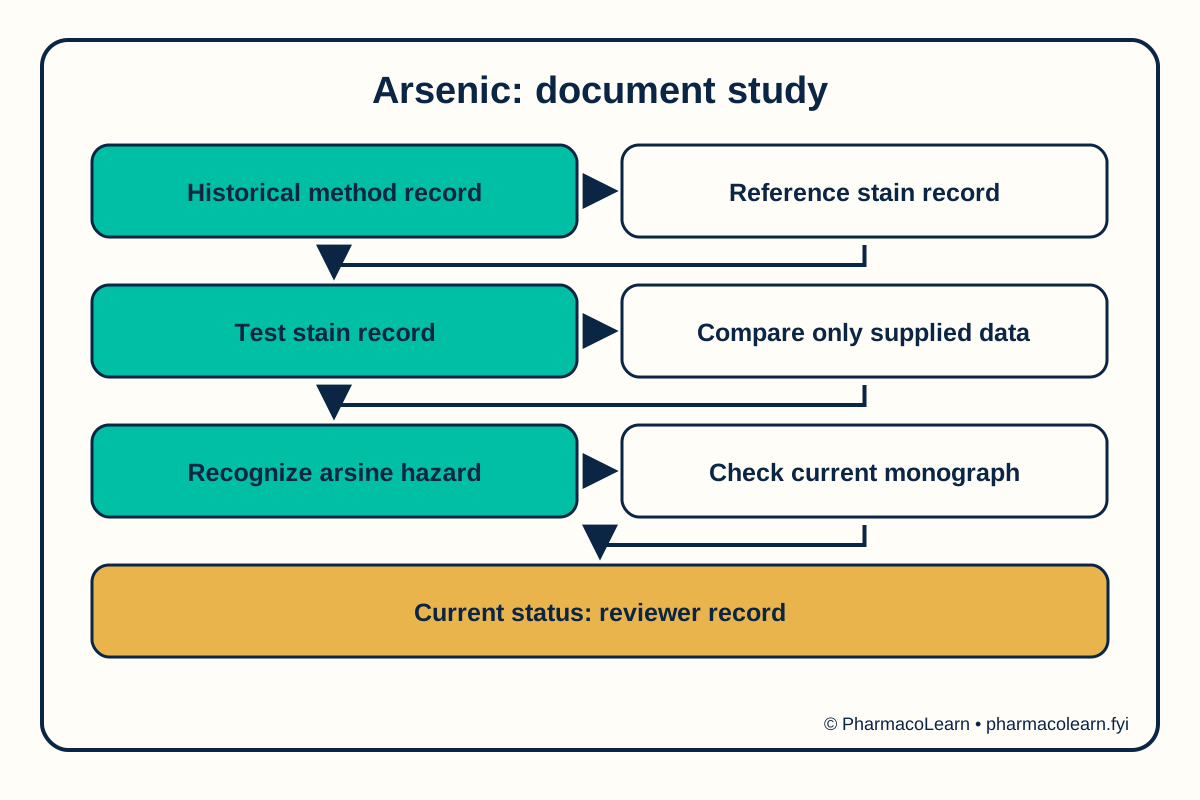
- Read the PCI exercise title and the classical Gutzeit description with the instructor.
- Obtain only the written or photographed dataset, never an active apparatus or suspect reagent.
- Record sample, standard, and blank identifiers plus exposure time and viewing conditions. Missing data must be recorded here.
- Compare the documented stain areas and intensities against the validated reference.
- Check whether the blank has a stain or the images show damage that makes comparison invalid.
- State the conditional historical comparison and separately identify the current product method needed for release.
- Submit the observation and hazard record for instructor review.
5. Calculation, graph, or images as appropriate
| Observation | Actual teaching record |
|---|---|
| Dataset and monograph | Record here |
| Blank stain | Record here |
| Reference stain | Record here |
| Test stain | Record here |
| Historical comparison | Record here |
| Current method status | Record here |
Assumed observations for practice only: a blank is unstained and a test stain is lighter than a matched standard. Under an assumed validated no-darker-than-standard rule, the historical comparison passes. No actual arsenic content or modern product compliance follows; this teaching comparison makes no product-release decision. This is a comparison exercise, so no invented numerical concentration is used.
6. Result
Report the actual comparison only after confirming the method, matched standard, blank, and specified acceptance criterion. If the method, standard, blank, or criterion is missing, make no pass/fail claim. The real pass/fail decision is made by the qualified reviewer against the assigned current monograph or approved method and recorded in the student record. This page decides nothing: it does not pass, fail, identify, or release any sample. Safety note: Arsine gas can be lethal and mercury reagents are hazardous. Do not assemble the apparatus, generate gas, or handle test papers from this article. This is a supervised document study.
7. References
- Pharmacy Council of India, Pharm.D. Regulations, 2008.
- East Point College of Pharmacy, Inorganic Chemistry Manual.
- CDC/NIOSH, Arsine Emergency Response Card.
- United States Pharmacopeia, Elemental Impurities Procedures.
Back to Pharmaceutical Inorganic Chemistry Practicals · All Pharm D Practicals · Pharm D
Theory notes: Pharmaceutical Inorganic Chemistry