
← Pharmaceutical Inorganic Chemistry Practicals
Limit Test for Iron
1. Aim
To compare the colour from iron in a test preparation with the colour from a matched iron standard. This is PCI Pharmaceutical Inorganic Chemistry limit-test exercise 1(c). The material-specific limit and approved method are to be recorded from the assigned current monograph or approved college method in the student record. [1]
2. Requirements
Assigned sample, verified iron standard, approved citric acid and thioglycolic acid reagents, ammonia solution, suitable water, matched comparison cylinders, pipettes, timer, coat, gloves, eye protection, hood, and waste vessel. Standard concentration, sample mass, reagent strengths and volumes, development time, and acceptance criterion are to be recorded from the assigned current monograph or approved college method in the student record. [2]
3. Theory
In the classical comparison, thioglycolic acid helps put iron into a form that produces a pink-to-purple complex in alkaline solution. Citric acid helps keep iron in solution while ammonia establishes the needed conditions. A test colour darker than the matched standard does not meet a no-more-intense-than-standard rule. Reagent purity, matrix colour, pH, and viewing conditions matter. This is a limit comparison for the specified material, not a general measurement of iron in every sample. [2]
4. Procedure
- Identify the current monograph and approved iron comparison method. Record the permitted limit or record it from the assigned approved source.
- Label blank, standard, and test cylinders and inspect them for contamination.
- Prepare the material test solution and standard at their specified volumes.
- Add the approved citric acid and thioglycolic acid reagents to both preparations in the same order.
- Adjust alkalinity with the approved ammonia method and allow matched colour-development times. Exact pH and quantities are specified in your college lab manual and instructor's method sheet.
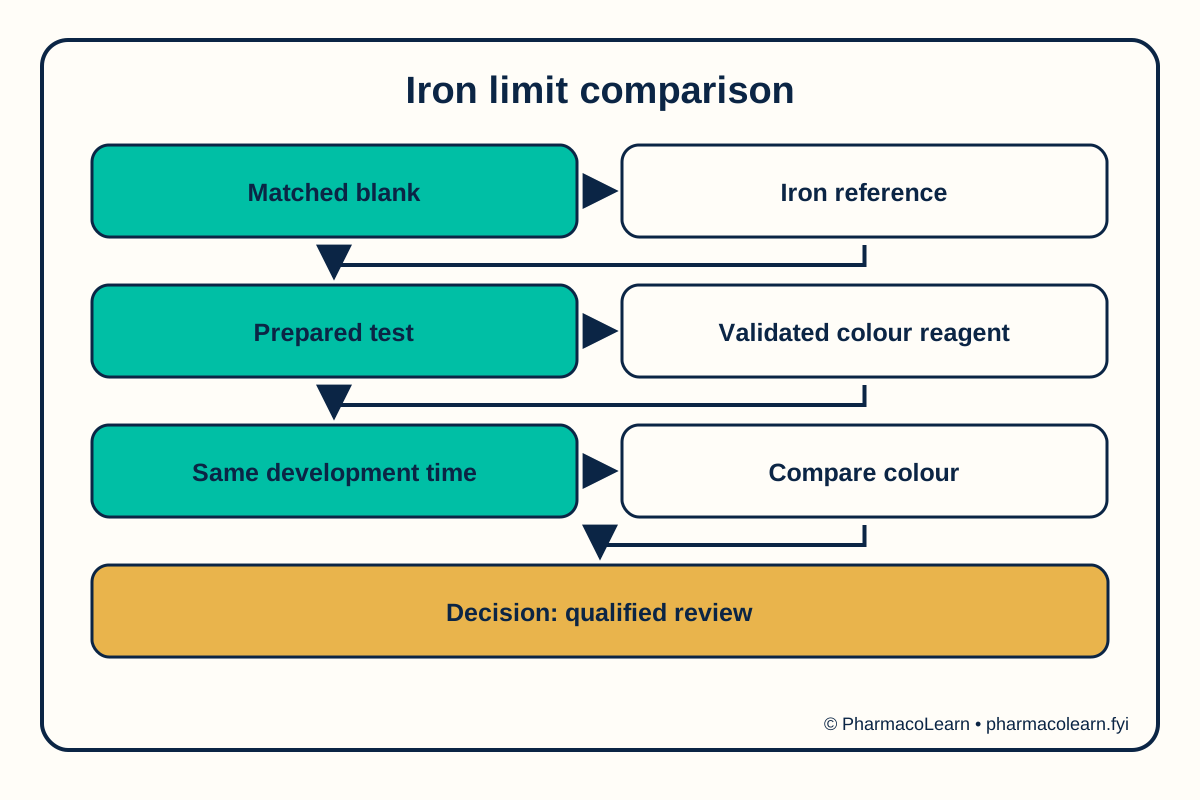
- Compare colours against the specified background; check blank and any native sample colour.
- Record less, equal, or greater intensity and a conditional decision; segregate reagent waste.
5. Calculation, graph, or images as appropriate
| Observation | Actual teaching record |
|---|---|
| Monograph and standard | Record here |
| Blank and native sample colour | Record here |
| Reference colour | Record here |
| Test colour | Record here |
| Comparison decision | Record here |
Assumed observations for practice only: the blank is colourless, the reference is pale purple, and the test is visibly darker purple. Under an assumed verified rule requiring test colour no more intense than the reference, this example does not pass. The real sample and limit must be recorded from the assigned current monograph or approved college method in the student record. This is a comparison exercise, so no invented numerical concentration is used.
6. Result
Report the actual comparison only after confirming the method, matched standard, blank, and specified acceptance criterion. If the method, standard, blank, or criterion is missing, make no pass/fail claim. The real pass/fail decision is made by the qualified reviewer against the assigned current monograph or approved method and recorded in the student record. This page decides nothing: it does not pass, fail, identify, or release any sample. Safety note: Thioglycolic acid and ammonia require a hood, eye protection, gloves, and instructor supervision. Do not identify the result by smelling the mixture.
7. References
- Pharmacy Council of India, Pharm.D. Regulations, 2008.
- East Point College of Pharmacy, Inorganic Chemistry Manual.
- Centurion University, Handbook of Inorganic Impurities.
Back to Pharmaceutical Inorganic Chemistry Practicals · All Pharm D Practicals · Pharm D
Theory notes: Pharmaceutical Inorganic Chemistry