
← Pharmaceutical Inorganic Chemistry Practicals
Limit Test for Heavy Metals: Historical Comparison Study
1. Aim
To study the classical heavy-metals limit comparison from the PCI list using a verified teaching record, and explain why it is not a modern universal release test. This is PCI Pharmaceutical Inorganic Chemistry exercise 1(d). The local teaching method and current product standard are specified in your college lab manual and instructor's method sheet. [1]
2. Requirements
PCI list, East Point historical method record, supplied paired sample and lead-reference images or instructor dataset, current elemental-impurity standard, observation sheet, and instructor are required. No hydrogen sulphide, sodium sulphide, lead standard, or unknown sample is handled in this document-based exercise. Any live method, quantities, and waste plan require separate approval and are specified in your college lab manual and instructor's method sheet. [2]
3. Theory
The older group test forms coloured metal sulphides and compares the result with a lead-based reference. Its visual response is broad and depends on which metals are present, solution pH, and the sample matrix. It cannot give an element-by-element result. Modern elemental-impurity evaluation instead identifies relevant elements and exposure limits through risk-based standards and validated procedures. Therefore, a historical pass or fail in this classroom comparison must not be stated as a modern product-release conclusion. [2]
4. Procedure
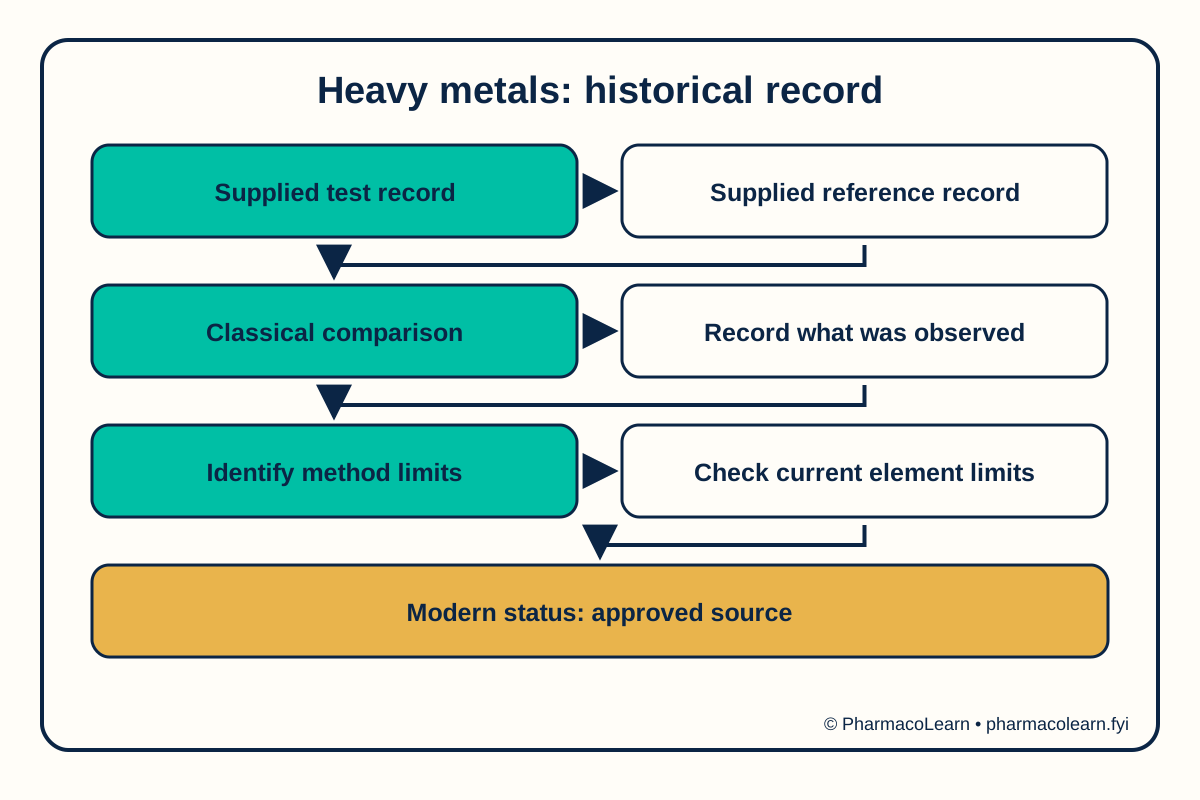
- Read the PCI exercise title and the East Point historical method description with the instructor.
- Record the supplied dataset identifier and confirm that the sample and lead reference were prepared under one documented method.
- Check that the blank and observation time are included; missing conditions must be recorded here.
- Compare the supplied test and reference colour or darkness using the stated viewing conditions.
- Record whether the assumed historical rule would classify the test as less, equal, or greater.
- Review the current elemental-impurity requirement for the named product; do not transfer the historical result to it.
- Submit the comparison and explain what element-specific information is missing.
5. Calculation, graph, or images as appropriate
| Observation | Actual teaching record |
|---|---|
| Dataset and historical method | Record here |
| Blank | Record here |
| Lead reference image | Record here |
| Test image | Record here |
| Historical comparison | Record here |
| Current standard check | Record here |
Assumed observations for practice only: the supplied test image is lighter than a matched lead-reference image. This would satisfy an assumed historical no-darker-than-reference comparison, provided the blank and method are valid. It does not establish compliance with current element-specific requirements. This teaching comparison makes no actual product-release decision. This is a comparison exercise, so no invented numerical concentration is used.
6. Result
Report the actual comparison only after confirming the method, matched standard, blank, and specified acceptance criterion. If the method, standard, blank, or criterion is missing, make no pass/fail claim. The real pass/fail decision is made by the qualified reviewer against the assigned current monograph or approved method and recorded in the student record. This page decides nothing: it does not pass, fail, identify, or release any sample. Safety note: Do not generate hydrogen sulphide or handle lead for this paper exercise. A qualified laboratory must authorize any live testing and hazardous-waste controls.
7. References
- Pharmacy Council of India, Pharm.D. Regulations, 2008.
- East Point College of Pharmacy, Inorganic Chemistry Manual.
- United States Pharmacopeia, Elemental Impurities Procedures.
- ICH, Q3D Elemental Impurities.
Back to Pharmaceutical Inorganic Chemistry Practicals · All Pharm D Practicals · Pharm D
Theory notes: Pharmaceutical Inorganic Chemistry