
← Human Anatomy and Physiology Practicals
Determination of ABO and RhD blood group
1. Aim
To use a supervised forward-grouping demonstration to distinguish the ABO and RhD reaction patterns of an instructor-supplied teaching sample. [1, 2]
2. Requirements
An instructor-approved simulated blood-typing kit or a prepared, coded teaching specimen; labelled test card, tile, or reaction wells; anti-A, anti-B, and anti-D reagents appropriate to that material; separate mixing sticks or tips; timer; good lighting; recording sheet; gloves and eye protection; and the correct waste containers. The sample type, reagent brand, control material, reaction format, quantities, timing, and disposal route are specified in the local kit instructions and your instructor's method sheet. No student self-collection is required. [1, 2, 3]
3. Theory
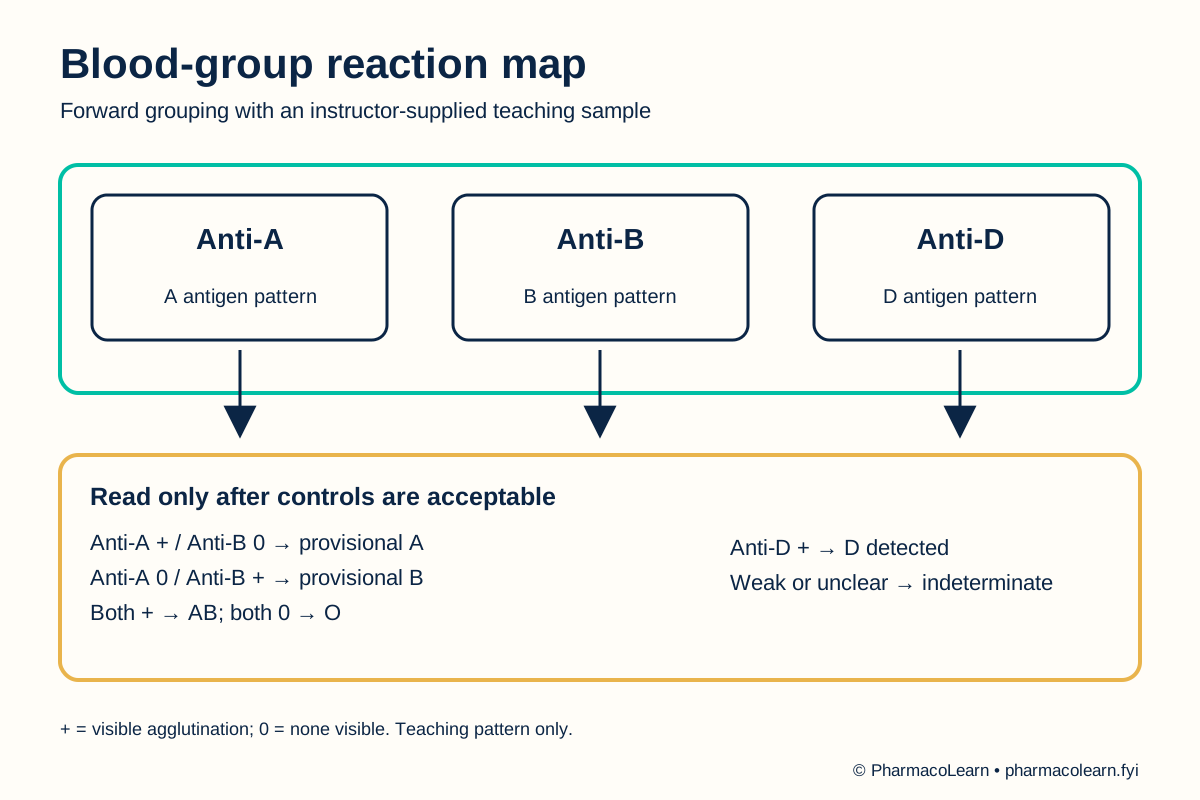
Forward grouping tests red cells with known antibodies. Visible agglutination with anti-A indicates detectable A antigen; a reaction with anti-B indicates detectable B antigen. The combination of these two reactions gives a provisional ABO pattern. Anti-D tests for detectable RhD antigen. A negative or weak-looking reaction needs the appropriate controls and confirmation, so a classroom card cannot establish a person's transfusion-ready blood type. Clinical laboratories also use reverse grouping, controls, identity checks, and discrepancy resolution. [1, 2]
4. Procedure
- The instructor selects an approved teaching sample or simulation. Confirm that the material is meant for the chosen card and reagents. If it contains human blood, handle it only under the laboratory's approved biosafety procedure. The sample type and approval are specified in your college lab manual and instructor's method sheet. [2, 3]
- Check the kit instructions and reagent labels, including expiry and storage. Mark three separate reaction areas A, B, and D. Arrange a separate mixing tool for each area so reagents cannot cross-contaminate. The exact kit setup is specified in your college lab manual and instructor's method sheet. [1, 2]
- Under instructor direction, place the teaching sample and the appropriate anti-A reagent in area A, sample and anti-B in area B, and sample and anti-D in area D. Follow the kit's stated quantities and order: follow your college lab manual and your instructor's method sheet for quantities, editions, and instruments. Do not improvise drops or dilutions. [1, 2]
- Mix each area with its own tool. Observe under adequate light for the kit's specified period, without allowing one reaction area to run into another. Mixing movement and read time are specified in your college lab manual and instructor's method sheet. [1, 2]
- Record each reaction as clear agglutination, no visible agglutination, or indeterminate. Record the result of the kit's required positive and negative controls here, following the kit instructions. If any control fails or a reaction is weak or uncertain, report indeterminate and ask the instructor to investigate. [1]
- Use the pattern table below only after acceptable controls. Dispose of the card, sample, and tools through the local route. Remove gloves and wash hands. Never use this teaching result to label a donor, patient, or transfusion product. [1, 3]
5. Calculation, graph, or images as appropriate
No numerical calculation is required. Read the reaction pattern; + means clear agglutination and 0 means none. These are teaching examples, not actual sample results. [1]
| Anti-A | Anti-B | Provisional ABO pattern |
|---|---|---|
| + | 0 | A |
| 0 | + | B |
| + | + | AB |
| 0 | 0 | O |
For RhD, a clear anti-D reaction suggests D positive. No anti-D reaction is recorded as D not detected in this demonstration until controls and any required confirmatory method are complete. [1]
Worked reading example: If anti-A is +, anti-B is 0, and anti-D is + with acceptable controls, write provisional A, D positive. If a control is unacceptable, write indeterminate regardless of the apparent pattern. Record the actual observed pattern and control outcomes here.
6. Result
Observed anti-A: Record here; anti-B: Record here; anti-D: Record here; controls: Record here. Provisional teaching pattern: Record here. This demonstration is not a clinical blood-group report. [1]
7. References
- World Health Organization, Regional Office for the Eastern Mediterranean. Blood Grouping Reagents: Preparation and Application Methods. 1993. ABO forward-grouping reactions, controls, and RhD typing principles.
- Northern Virginia Community College. NAS 162 Campus Lab, Exercise V, Part III. 2009. Teaching-lab blood-group exercise and simulated sample option.
- World Health Organization. Guidelines on Drawing Blood: Capillary Sampling. 2010. Blood exposure and sharps precautions when human material is used.
- Pharmacy Council of India. Pharm.D. Regulations, 2008, Appendix A. Syllabus authority for blood group determination.
Back to Human Anatomy and Physiology Practicals · All Pharm D Practicals · Pharm D
Theory notes: Human Anatomy and Physiology