
Pharm D Year 4, 4.6 Clinical Toxicology — Pharm D Year 4
Notes for Pharm D Year 4, 4.6 Clinical Toxicology, Pharm D Year 4, organised unit by unit following the PCI Pharm D syllabus. 12 units, 20 diagrams.
Syllabus: Pharm D Year 4 syllabus
Units in this subject
- Unit 1: General Principles in Poisoning
- Unit 2: Antidotes and Clinical Applications
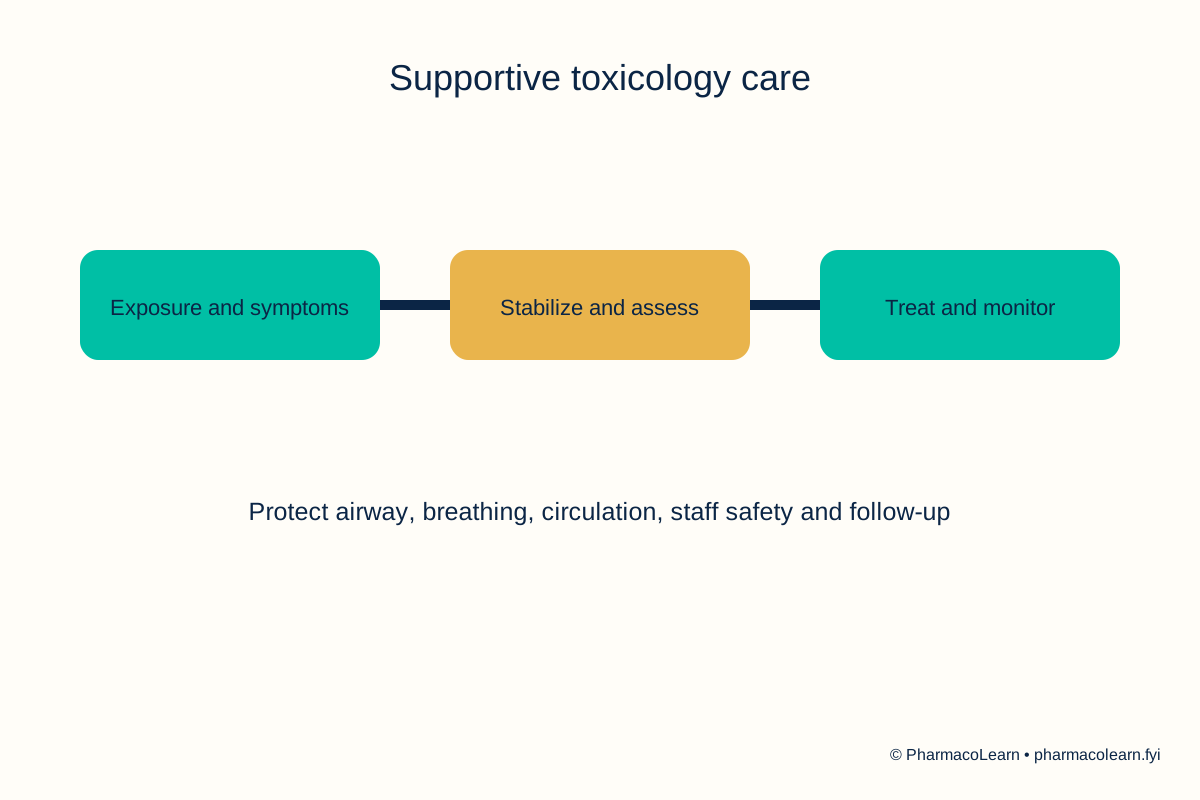
- Unit 3: Supportive Care in Clinical Toxicology
- Unit 4: Gut Decontamination
- Unit 5: Elimination Enhancement
- Unit 6: Toxicokinetics
- Unit 7: Acute Pesticide, Opioid and Psychotropic Poisoning
- Unit 8: Alcohols, Analgesics, Hydrocarbons, Caustics and Radiation
- Unit 9: Chronic Heavy-Metal Poisoning
- Unit 10: Venomous Snake Bites
- Unit 11: Plant, Mushroom, Mycotoxin and Food Poisoning
- Unit 12: Envenomation and Substance Abuse
Unit 1: General Principles in Poisoning
Syllabus scope
This unit covers general principles involved in the management of poisoning.
Immediate priorities
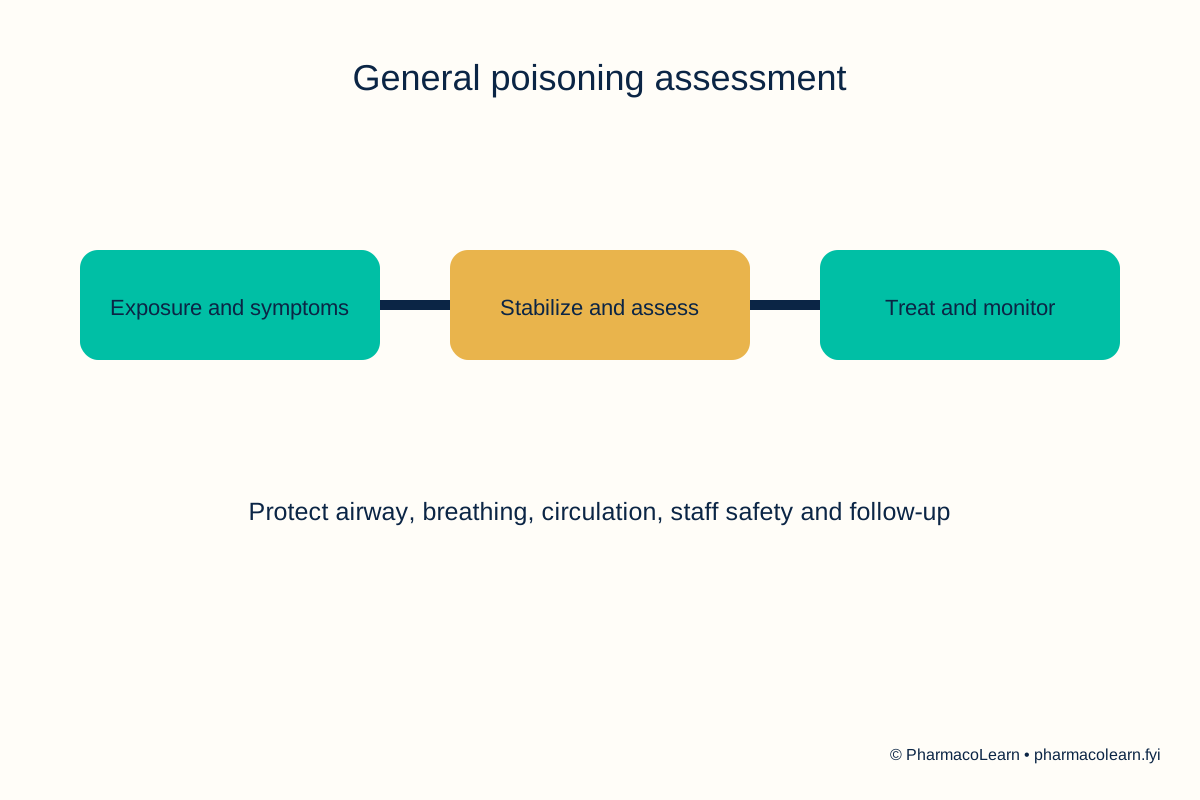
Poisoning management begins with patient safety, resuscitation, exposure identification, focused examination, and prevention of further absorption. Stabilization takes priority over a complete history. Assess airway, breathing, circulation, consciousness, seizures, glucose, temperature, and severe pain or agitation.
Toxicology sequence
- Protect rescuers and remove ongoing exposure.
- Stabilize airway, breathing, and circulation.
- Obtain substance, amount, route, time, formulation, co-exposures, age, weight, illness, and medicines.
- Identify a toxidrome and perform targeted examination.
- Check appropriate glucose, electrolytes, renal and liver tests, electrocardiography, and other investigations.
- Contact an authorized poison-information service.
- Use supportive care, antidote, decontamination, or elimination enhancement only when indicated.
- Observe, reassess, document, and arrange follow-up.
The dose makes the poison, but formulation, route, patient factors, repeated exposure, and co-ingestion alter risk. A normal early appearance does not exclude delayed toxicity.
Clinical correlation
Never induce vomiting without authoritative direction. Avoid an intervention that worsens aspiration, injury, or absorption. Observation periods and referral thresholds must be obtained from the current poison-center, emergency, or institutional protocol applicable to the exposure.
Worked example
A drowsy patient arrives with an unknown ingestion. The pharmacist supports emergency assessment, checks glucose and airway risk, preserves packaging, and contacts poison information. The pharmacist does not guess the product from colour alone.
FAQs
What comes first, identification or resuscitation? Resuscitation and stabilization.
Why is formulation important? Modified-release or concentrated products can change timing and severity.
Takeaways
- Stabilize first and protect staff.
- Obtain a structured exposure history.
- Use expert toxicology advice for uncertain cases.
Integrated practice note
Poisoning care is time sensitive and information intensive. Preserve containers, photographs, prescriptions, and witness accounts when safe, but do not delay resuscitation. Document what is known, what is suspected, and what remains unknown. Reassessment is essential because absorption, metabolism, redistribution, and co-ingestion can change the clinical picture after arrival.
Use a structured handover so time, dose, treatment, response, and pending risks remain visible across shifts.
References
- PharmacoLearn, Pharm D Year 4 syllabus: https://pharmacolearn.fyi/syllabus/pharm-d/year-4/
- Pharmacy Council of India, Pharm.D. Regulations, 2008.
- Goldfrank’s Toxicologic Emergencies, latest available edition.
Unit 2: Antidotes and Clinical Applications
Syllabus scope
This unit covers antidotes and their clinical applications.
Antidote principles
Antidotes act by binding a toxin, restoring a blocked pathway, competing at a receptor, correcting a metabolic consequence, or enhancing removal. They are not substitutes for airway, breathing, circulation, monitoring, and supportive treatment.
Antidote decision sequence
- Confirm a plausible toxin and clinically important syndrome.
- Assess severity and time sensitivity.
- Check contraindications, dose, route, preparation, and monitoring.
- Administer through the emergency protocol.
- Reassess response and adverse effects.
- Continue observation because redistribution or recurrence may occur.
Examples include receptor antagonism for selected opioid toxicity, acetylcholine-pathway treatment for cholinergic poisoning, binding agents for selected metals, and pathway correction for specific metabolic toxins. The correct product, dose, repeat plan, and local availability must be confirmed from the current poison-center or institutional protocol.
Clinical correlation
An antidote may reverse a visible sign while the underlying exposure continues. Naloxone can restore breathing but may wear off before an opioid with longer action. Repeated assessment is essential.
Worked example
A patient with opioid-type respiratory depression receives emergency antidote treatment under protocol and improves. The team continues airway and respiratory monitoring because recurrent depression is possible and withdrawal or agitation may occur.
FAQs
Is every suspected poisoning treated with an antidote? No. Many cases rely mainly on supportive care.
Why can antidotes cause harm? They have pharmacological effects, may precipitate withdrawal, and can be misused when the diagnosis is wrong.
Takeaways
- Match antidote to toxin and syndrome.
- Continue supportive care and monitoring.
- Follow current poison-centre and institutional protocols.
Integrated practice note
Antidote preparation requires the same precision as any high-risk medicine. Check patient identity, indication, product, concentration, dose, route, compatibility, monitoring, and repeat criteria. Keep airway and cardiovascular support ready. Record the time, response, adverse effects, and reason for continuation or stopping so the next clinician can understand the decision. Recheck the indication after every clinical change.
References
- PharmacoLearn, Pharm D Year 4 syllabus: https://pharmacolearn.fyi/syllabus/pharm-d/year-4/
- Pharmacy Council of India, Pharm.D. Regulations, 2008.
- Olson, Poisoning and Drug Overdose, latest available edition.
Unit 3: Supportive Care in Clinical Toxicology
Syllabus scope
This unit covers supportive care in clinical toxicology.
Supportive treatment
Supportive care maintains physiology while the toxin is metabolized or removed. It may include oxygenation, ventilation, circulation support, glucose correction, temperature control, seizure treatment, rhythm management, fluids, renal support, and nursing observation.
Monitoring sequence
- Establish baseline vital signs, consciousness, glucose, ECG, and relevant tests.
- Identify the organ system most at risk.
- Treat immediate physiological threats.
- Repeat assessments at defined intervals.
- Escalate when symptoms progress or a delayed toxin is possible.
Avoid assuming that agitation is psychiatric, coma is simply sedation, or hypotension has only one cause. Toxidromes guide assessment but can overlap after mixed ingestion.
Clinical correlation
Respiratory depression, severe hyperthermia, shock, malignant arrhythmia, severe acidosis, seizures, and altered consciousness are emergencies. The pharmacist should identify medicine-related contributors and ensure preparation, compatibility, dose, and monitoring are clear.
Worked example
After an unknown overdose, a patient is hypotensive and confused. The team supports circulation, checks glucose and ECG, identifies possible co-ingestants, and contacts poison information. A normal initial laboratory result does not end observation.
FAQs
Why is supportive care so important? Many toxins have no specific antidote.
Should activated charcoal replace monitoring? No. It is an intervention for selected situations, not a substitute for clinical care.
Takeaways
- Maintain physiology while defining the toxin.
- Reassess because toxicity can evolve.
- Treat the patient’s syndrome, not only the product label.
Integrated practice note
Supportive care should have explicit targets. For example, document the airway plan, oxygenation or ventilation goal, haemodynamic response, seizure control, temperature, urine output, and repeat investigations. Toxicology patients may deteriorate after a quiet interval, so observation responsibility and escalation criteria must be clear at every handover and reassessment.
References
- PharmacoLearn, Pharm D Year 4 syllabus: https://pharmacolearn.fyi/syllabus/pharm-d/year-4/
- Pharmacy Council of India, Pharm.D. Regulations, 2008.
- Goldfrank’s Toxicologic Emergencies, latest available edition.
Unit 4: Gut Decontamination
Syllabus scope
This unit covers gut decontamination.
Methods and selection
Decontamination aims to reduce absorption after ingestion. Activated charcoal adsorbs many substances in the gastrointestinal tract, but effectiveness depends on toxin, dose, timing, formulation, and ability to protect the airway. Gastric lavage and whole-bowel irrigation have narrow indications and potential harm. Syrup-induced vomiting is not a routine treatment.
Decision sequence
- Identify substance, amount, time, formulation, and symptoms.
- Assess airway protection, aspiration risk, bowel function, and contraindications.
- Determine whether the toxin binds to the proposed agent.
- Consider expected benefit against delay and harm.
- Use an approved protocol and monitor.
Clinical correlation
Caustics, hydrocarbons, and patients with reduced consciousness create aspiration or injury concerns. Modified-release products may require specialist advice. Do not administer an oral decontaminant to an unprotected airway.
Worked example
A fully alert patient presents soon after a potentially adsorbable ingestion. The pharmacist contacts poison information and supports protocol-based assessment. The team confirms the patient can protect the airway and that the toxin is suitable before considering charcoal.
FAQs
Is charcoal useful for every poison? No. Some substances bind poorly or create unacceptable risk.
Why is timing relevant? Absorption and gastric emptying change with time and formulation.
Takeaways
- Decontamination is selective, not automatic.
- Airway safety comes first.
- Use poison-centre guidance for uncertain exposures.
Integrated practice note
Decontamination is a risk-benefit decision. The pharmacist should check whether the substance is adsorbable, whether the patient can protect the airway, whether bowel motility is intact, and whether the intervention could delay definitive care. A negative answer to any critical safety condition should trigger specialist advice rather than an improvised procedure.
References
- PharmacoLearn, Pharm D Year 4 syllabus: https://pharmacolearn.fyi/syllabus/pharm-d/year-4/
- Pharmacy Council of India, Pharm.D. Regulations, 2008.
- Olson, Poisoning and Drug Overdose, latest available edition.
Unit 5: Elimination Enhancement
Syllabus scope
This unit covers methods that enhance elimination of absorbed toxins.
Principles
Enhanced elimination may use repeated charcoal in selected poisonings, urinary manipulation in specific circumstances, haemodialysis, haemoperfusion, or other extracorporeal support. Benefit depends on toxin volume of distribution, protein binding, molecular size, water solubility, clearance, severity, and available expertise.
Decision sequence
- Confirm a toxin and clinically significant exposure.
- Assess natural clearance and expected course.
- Determine whether the toxin is removable by the proposed method.
- Balance benefit against procedure, electrolyte, fluid, and access risks.
- Coordinate with toxicology and critical-care specialists.
- Monitor toxin effects and treatment complications.
Clinical correlation
A procedure that removes drug from plasma may have limited effect if the toxin rapidly redistributes from tissues. The pharmacist should provide dose, formulation, timing, concentration, and interaction information to the treating team.
Worked example
A patient has severe toxicity from a substance that is small, water soluble, poorly protein bound, and present in a removable compartment. The team considers extracorporeal treatment, but the decision still depends on clinical severity and local capability.
FAQs
Does a high concentration automatically require dialysis? No. Removability and clinical need must both be considered.
Can repeated charcoal cause harm? Yes, especially aspiration, constipation, obstruction, and electrolyte problems.
Takeaways
- Match method to toxin properties and severity.
- Consider redistribution and procedural harm.
- Use specialist toxicology advice.
Integrated practice note
Elimination enhancement should be discussed with the team in terms of expected benefit, time to effect, access, monitoring, and complications. A concentration alone does not determine the decision. The patient’s symptoms, organ function, toxin properties, natural course, and available expertise must be considered together and documented.
References
- PharmacoLearn, Pharm D Year 4 syllabus: https://pharmacolearn.fyi/syllabus/pharm-d/year-4/
- Pharmacy Council of India, Pharm.D. Regulations, 2008.
- Goldfrank’s Toxicologic Emergencies, latest available edition.
Unit 6: Toxicokinetics
Syllabus scope
This unit covers toxicokinetics.
Difference from routine pharmacokinetics
At toxic doses, absorption, distribution, metabolism, and elimination may change because pathways become saturated, gastrointestinal motility changes, organ perfusion fails, or metabolites accumulate. A therapeutic linear model may therefore underestimate exposure or duration.
Toxicokinetic reasoning
- Establish dose, formulation, route, time, and repeated exposure.
- Consider absorption delays and bezoar or modified-release effects.
- Estimate distribution and tissue storage.
- Identify saturable metabolism or transport.
- Assess renal, hepatic, respiratory, and extracorporeal clearance.
- Predict delayed peaks or prolonged toxicity.
- Reassess with clinical and laboratory trends.
Clinical correlation
A declining early concentration does not guarantee safety if redistribution or delayed absorption occurs. Serum concentration must be interpreted with symptoms, time, assay, and treatment.
Worked example
After a large ingestion, concentration falls slowly despite supportive care. The team considers saturation or delayed absorption, reviews formulation, and continues monitoring rather than assuming a normal half-life.
FAQs
Can overdose kinetics be linear? Sometimes, but it should not be assumed.
Why can a delayed peak occur? Slowed gastric emptying, formulation, concretions, or altered motility can delay absorption.
Takeaways
- Toxic doses can change every pharmacokinetic step.
- Clinical trajectory matters as much as one concentration.
- Plan for delayed or prolonged effects.
Integrated practice note
Toxicokinetic interpretation is a moving process. Repeat concentrations may be needed when absorption is delayed, metabolism is saturated, treatment changes clearance, or symptoms do not match the first result. Record dose and sample time precisely. If the model is uncertain, communicate a range of possible courses and use clinical monitoring rather than false precision.
References
- PharmacoLearn, Pharm D Year 4 syllabus: https://pharmacolearn.fyi/syllabus/pharm-d/year-4/
- Pharmacy Council of India, Pharm.D. Regulations, 2008.
- Rowland and Tozer, Clinical Pharmacokinetics and Pharmacodynamics, latest available edition.
Unit 7: Acute Pesticide, Opioid and Psychotropic Poisoning
Syllabus scope
This unit covers organophosphorus compounds, carbamates, organochlorines, pyrethroids, opiate overdose, antidepressants, barbiturates, and benzodiazepines.
Pesticides
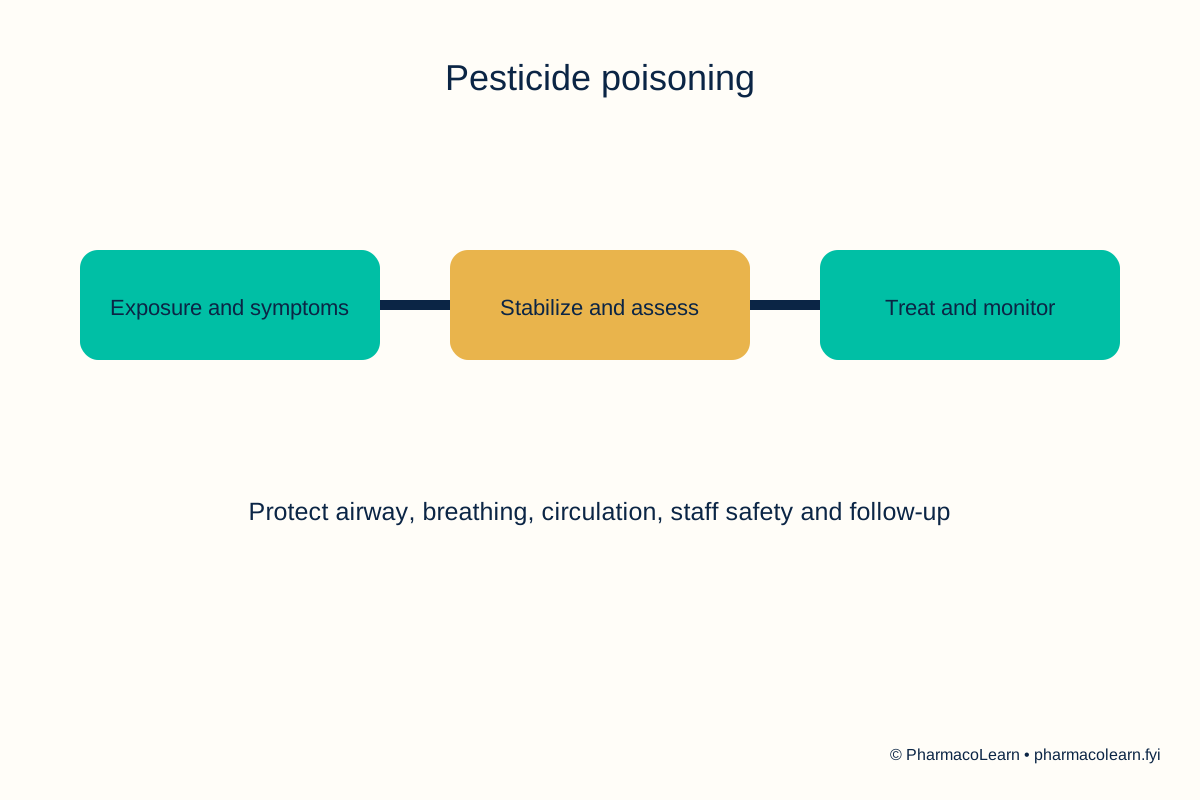
Organophosphorus compounds inhibit acetylcholinesterase, causing accumulation of acetylcholine at muscarinic, nicotinic, and central receptors. Salivation, lacrimation, bronchial secretions, bronchospasm, bradycardia, vomiting, diarrhoea, fasciculations, weakness, seizures, and coma may occur. Carbamates reversibly inhibit the same enzyme. Organochlorines can produce neurological excitation and seizures. Pyrethroids commonly cause sensory irritation, paresthesia, or neurological symptoms, but severe cases require medical assessment.
Opioids and sedatives
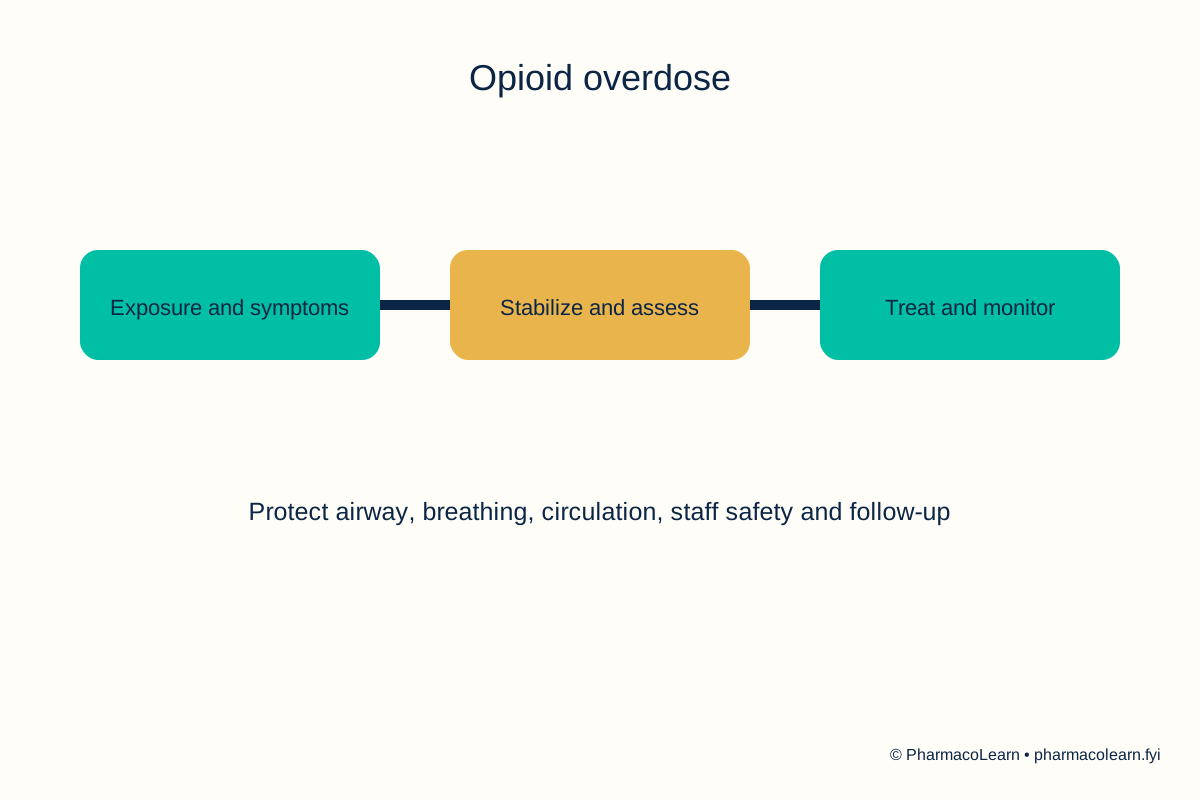
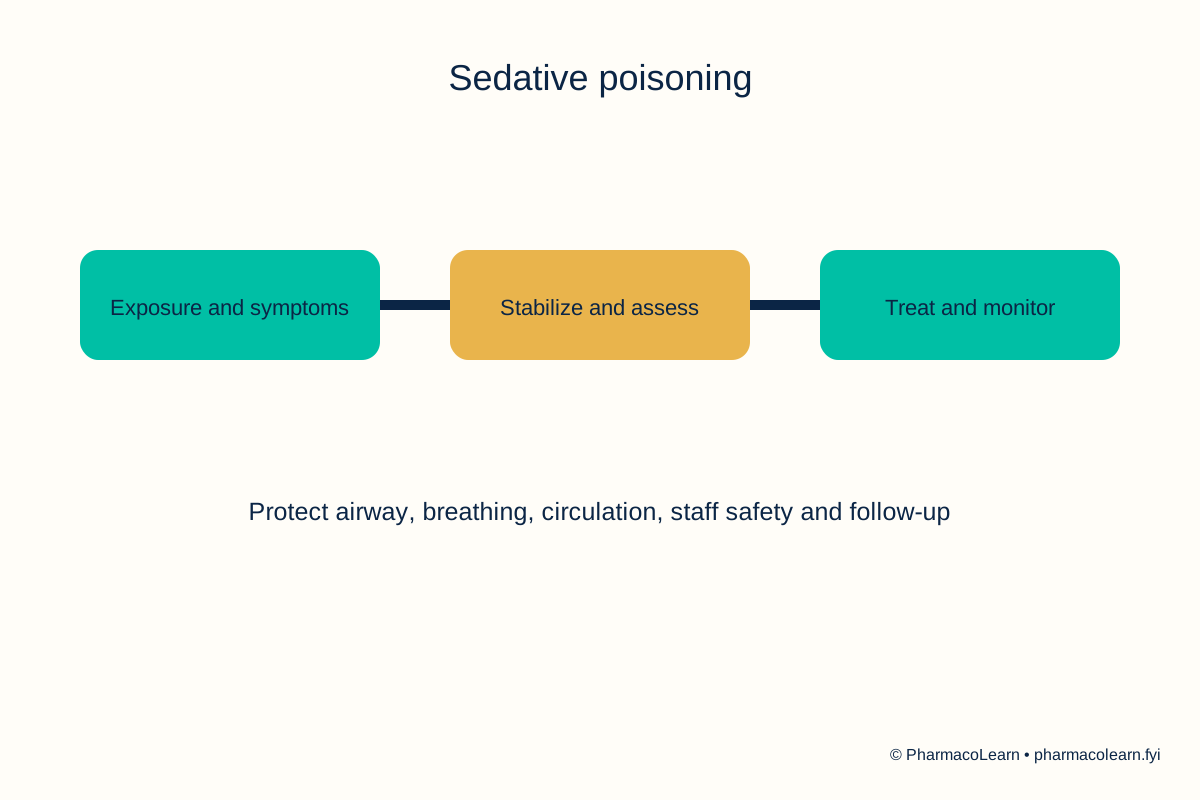
Opioids activate mu receptors and suppress respiratory drive. The key emergency is inadequate ventilation, not simply sleepiness. Benzodiazepines enhance GABA-A effects; barbiturates increase inhibitory neurotransmission and can cause respiratory and cardiovascular depression. Antidepressant toxicity varies by class; some cause seizures, arrhythmia, serotonin excess, or anticholinergic features.
Management sequence
- Protect airway and support ventilation.
- Check glucose and ECG.
- Identify toxidrome and exposure.
- Use specific antidote only when indicated and monitored.
- Treat seizures, shock, arrhythmia, hyperthermia, and aspiration.
- Observe for recurrence.
Worked example
A patient has pinpoint pupils and slow breathing after an unknown tablet. The pharmacist supports immediate airway and emergency assessment, helps identify the product, and communicates the risk of recurrent respiratory depression. The finding is not dismissed as uncomplicated sleep.
FAQs
What is the priority in organophosphate poisoning? Airway, breathing, secretions, and urgent antidote protocol.
Does a sedative overdose always need a reversal agent? No. Supportive care and monitored assessment are central, and reversal can cause harm.
Takeaways
- Recognize toxidromes but expect overlap.
- Respiratory failure and seizures are emergencies.
- Use poison-centre protocols and observe for recurrence.
Integrated practice note
Toxidromes are pattern-recognition tools, not definitive diagnoses. Mixed ingestion can produce opposing signs, and early findings may be incomplete. Check the environment, history, ECG, glucose, temperature, and respiratory status repeatedly. In pesticide or sedative exposure, protect staff from secondary contamination and use appropriate personal protective measures.
References
- PharmacoLearn, Pharm D Year 4 syllabus: https://pharmacolearn.fyi/syllabus/pharm-d/year-4/
- Pharmacy Council of India, Pharm.D. Regulations, 2008.
- Goldfrank’s Toxicologic Emergencies, latest available edition.
Unit 8: Alcohols, Analgesics, Hydrocarbons, Caustics and Radiation
Syllabus scope
This unit covers ethanol, methanol, paracetamol, salicylates, NSAIDs, petroleum products, polyethylene glycol, caustics, and radiation poisoning.
Important mechanisms
Methanol is metabolized to toxic acids that can cause visual injury and metabolic acidosis. Ethanol can cause central nervous system depression, hypoglycaemia, and aspiration. Paracetamol toxicity involves depletion of protective stores and accumulation of a reactive metabolite that injures the liver. Salicylates disturb acid-base balance and cellular metabolism. NSAIDs may cause gastrointestinal, renal, neurological, and metabolic effects.
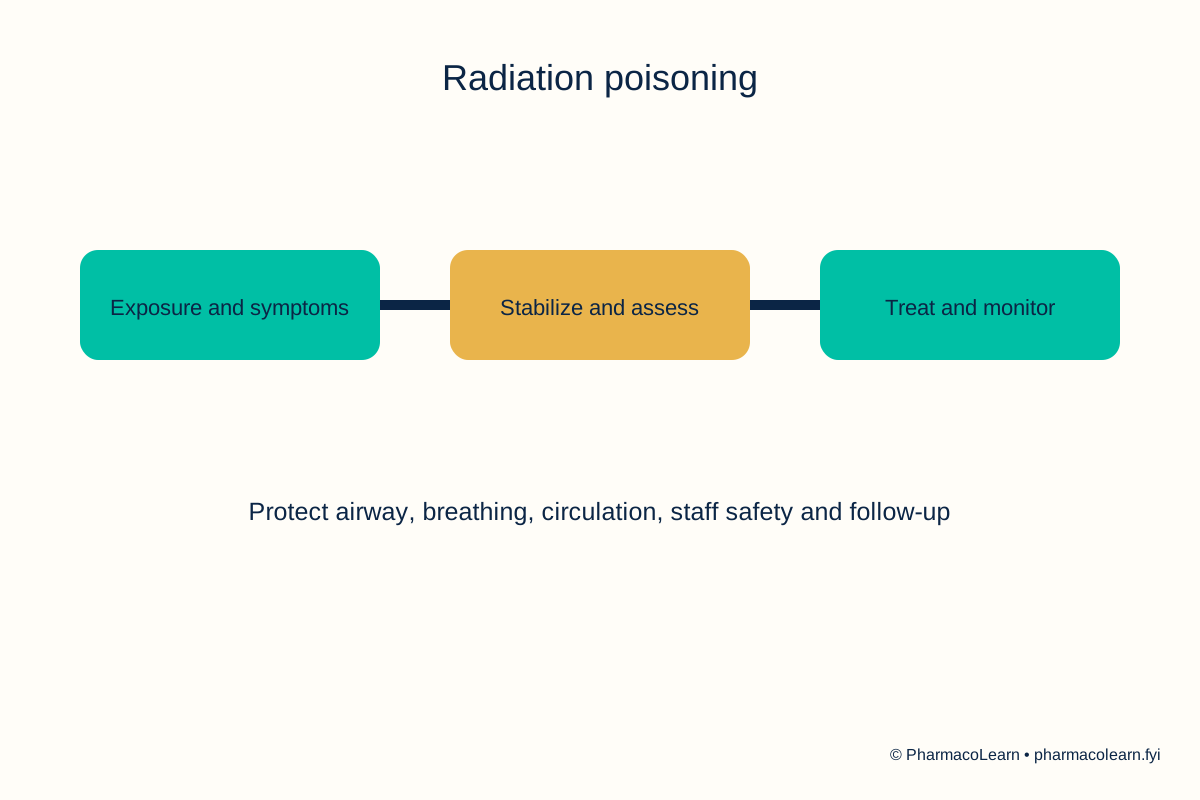
Hydrocarbon aspiration can cause chemical pneumonitis. Caustics injure tissues on contact, and attempts to neutralize them may generate heat. Radiation injury depends on dose, type, exposure, time, tissue, and contamination.
Management sequence
- Stabilize and identify the agent and formulation.
- Check glucose, acid-base status, renal and liver tests, ECG, and agent-specific markers.
- Use timely antidote or pathway treatment when indicated.
- Avoid aspiration-provoking or corrosive interventions.
- Monitor for delayed organ injury.
Worked example
A patient reports an uncertain paracetamol ingestion time. The pharmacist treats the history as time-sensitive, obtains the product and dose estimate, supports urgent concentration testing and protocol-based assessment, and does not wait for symptoms because early liver injury may be silent.
FAQs
Why is methanol dangerous even before severe symptoms? Toxic metabolites may develop after a delay.
Why avoid neutralization after caustic ingestion? It can worsen tissue injury and create heat.
Takeaways
- Time-sensitive antidote decisions depend on agent, dose, and timing.
- Hydrocarbon aspiration and caustic injury need special caution.
- Monitor for delayed metabolic or organ toxicity.
Integrated practice note
In time-dependent poisonings, the pharmacist should establish the most reliable exposure time and product strength available, while clearly labeling uncertainty. Treatment pathways may use a concentration, a nomogram, a symptom pattern, or a specialist decision. Never delay urgent care while searching for perfect historical detail.
References
- PharmacoLearn, Pharm D Year 4 syllabus: https://pharmacolearn.fyi/syllabus/pharm-d/year-4/
- Pharmacy Council of India, Pharm.D. Regulations, 2008.
- Olson, Poisoning and Drug Overdose, latest available edition.
Unit 9: Chronic Heavy-Metal Poisoning
Syllabus scope
This unit covers chronic poisoning by arsenic, lead, mercury, iron, and copper.
Exposure and injury
Heavy metals can bind proteins, inhibit enzymes, generate oxidative stress, disrupt haem synthesis, injure the nervous system, and damage kidneys or the gastrointestinal tract. Symptoms may be nonspecific and exposure can be occupational, environmental, medicinal, or accidental.
Assessment sequence
- Identify the metal, source, route, duration, and household or workplace risk.
- Assess neurological, gastrointestinal, renal, hepatic, haematological, and cardiovascular effects.
- Obtain appropriate validated testing and imaging when indicated.
- Remove the exposure source.
- Consider chelation only with toxicology guidance.
- Monitor treatment response and chelator toxicity.
Chelators form complexes that can enhance elimination, but they may redistribute metals, remove essential minerals, or injure organs. A laboratory result must be interpreted with specimen type, timing, exposure history, and clinical context.
Worked example
A child has a possible household exposure and abdominal symptoms. The pharmacist identifies the source, prevents further exposure, escalates for validated testing, and does not recommend an unapproved chelator based on a single unverified test.
FAQs
Does any detectable metal require chelation? No. Treatment depends on metal, concentration, symptoms, timing, and specialist guidance.
Why investigate the environment? Removing ongoing exposure is part of treatment.
Takeaways
- Confirm exposure with appropriate testing.
- Remove the source and assess organ effects.
- Use chelation only through specialist protocols.
Integrated practice note
Chronic metal exposure requires both clinical care and source control. Ask about work, water, food, household renovation, traditional products, containers, and other exposed people. Coordinate occupational or public-health assessment when appropriate. Do not use unvalidated tests or supplements as substitutes for confirmed exposure evaluation and evidence-based treatment.
References
- PharmacoLearn, Pharm D Year 4 syllabus: https://pharmacolearn.fyi/syllabus/pharm-d/year-4/
- Pharmacy Council of India, Pharm.D. Regulations, 2008.
- Goldfrank’s Toxicologic Emergencies, latest available edition.
Unit 10: Venomous Snake Bites
Syllabus scope
This unit covers venomous snake families, clinical effects, first aid, early manifestations, complications, and snake-bite injuries.
Venom effects
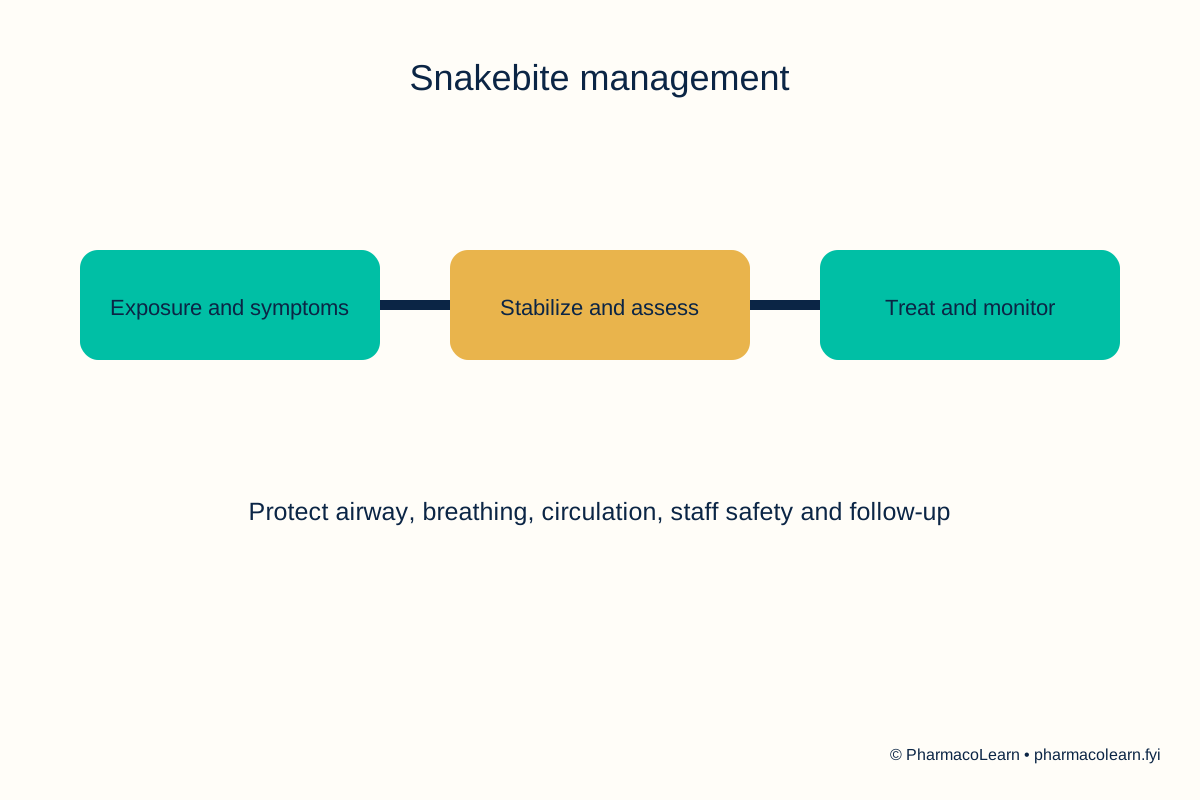
Snake venoms may produce neurotoxicity, coagulopathy, haemolysis, cytotoxic tissue injury, renal injury, or a combination. Clinical presentation depends on species, bite location, venom dose, time, and patient factors. A dry bite can occur, while early absence of signs does not guarantee safety.
Management sequence
- Move away from the snake and keep the patient still.
- Remove rings or constricting items and immobilize the limb appropriately.
- Arrange urgent transport to a capable facility.
- Assess airway, breathing, circulation, neurological function, swelling, and bleeding.
- Perform serial coagulation, renal, blood, and urine assessment as indicated.
- Use antivenom when clinically indicated through protocol.
- Treat respiratory failure, shock, bleeding, renal injury, and wound complications.
Do not cut, suck, burn, apply ice, or use a tight tourniquet. Do not handle the snake. A photograph from a safe distance may help but must not delay care.
Worked example
A patient has progressive ptosis after a suspected bite. The pharmacist identifies possible neurotoxicity, supports airway readiness, communicates the time and progression, and prepares protocol-based antivenom and supportive care without relying on a normal initial laboratory result.
FAQs
Should a tourniquet be applied? Follow the current local protocol; improvised tight tourniquets can cause harm.
Why are serial assessments needed? Venom effects can progress after arrival.
Takeaways
- Immobilize and transport urgently.
- Monitor for neurological, coagulation, renal, and tissue effects.
- Use antivenom and supportive care through trained protocols.
Integrated practice note
Snakebite documentation should include time, site, swelling progression, photographs when safe, neurological findings, bleeding, urine, laboratory trends, interventions, and response. Serial examination is important because venom effects can evolve. Wound care, rehabilitation, psychological support, and prevention counselling may remain relevant after the acute emergency.
References
- PharmacoLearn, Pharm D Year 4 syllabus: https://pharmacolearn.fyi/syllabus/pharm-d/year-4/
- Pharmacy Council of India, Pharm.D. Regulations, 2008.
- World Health Organization, snakebite envenoming guidance.
Unit 11: Plant, Mushroom, Mycotoxin and Food Poisoning
Syllabus scope
This unit covers mushroom poisoning, mycotoxins, and food poisonings.
Toxic exposures
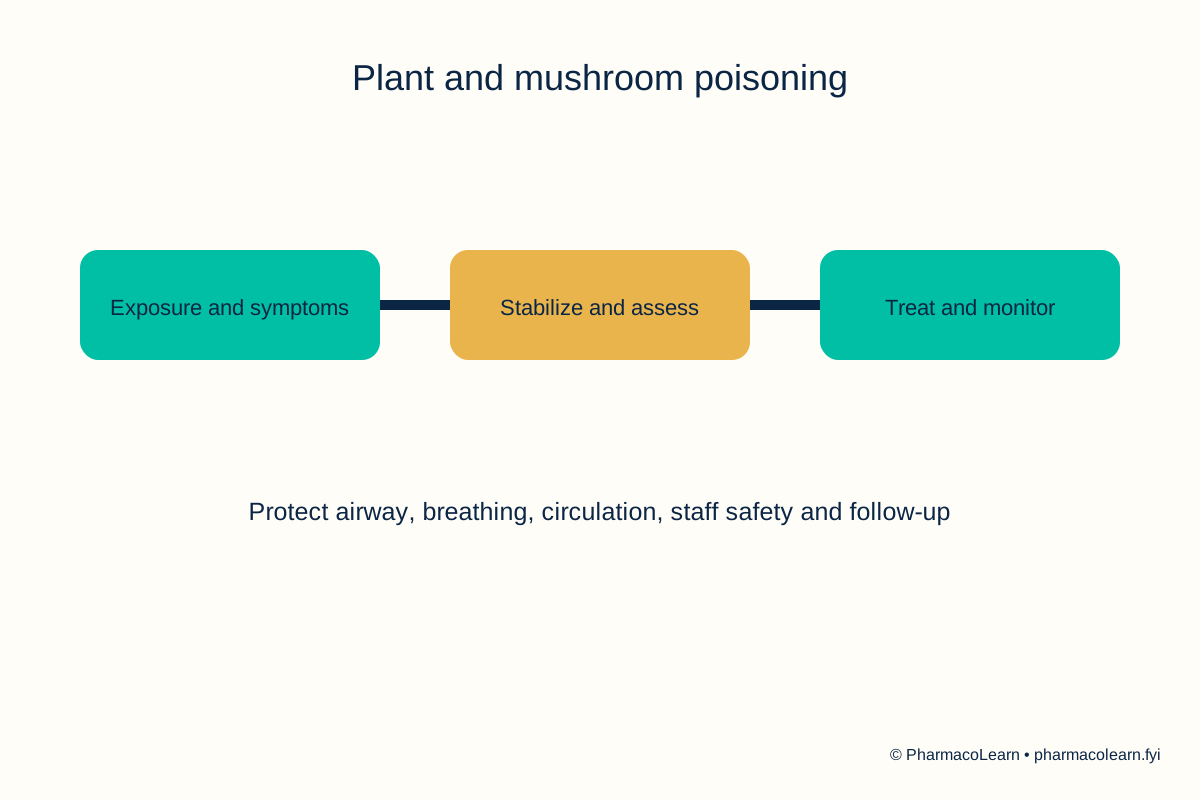
Plant and mushroom toxins can affect the gastrointestinal, neurological, hepatic, renal, cardiac, or autonomic systems. Some symptoms are delayed, and identification by appearance alone is unreliable. Mycotoxins may contaminate food or feed and can produce acute or chronic injury depending on type and dose.
Food poisoning may result from infection, preformed toxins, chemicals, allergens, or contaminated water. Multiple patients with similar symptoms suggest a common exposure but do not identify the agent.
Management sequence
- Stabilize the patient and assess hydration and consciousness.
- Record food, source, timing, amount, co-exposed people, and symptoms.
- Identify red flags such as bloody diarrhoea, severe dehydration, neurological signs, fever, jaundice, or persistent vomiting.
- Support fluids and electrolytes as clinically indicated.
- Contact toxicology or public-health services when a cluster or unusual toxin is suspected.
- Preserve samples or packaging through the approved route.
Worked example
Several people develop vomiting after a shared meal. The pharmacist supports urgent assessment of severe cases, records the common food and timing, and notifies the appropriate public-health route rather than recommending an identical medicine to every person.
FAQs
Can one symptom identify a mushroom toxin? No. History, identification, timing, and clinical pattern are needed.
When is food poisoning an emergency? Severe dehydration, altered consciousness, neurological symptoms, blood, shock, high-risk patient, or rapidly worsening illness.
Takeaways
- Treat the patient and investigate the exposure.
- Watch for delayed organ and neurological effects.
- Clusters require public-health coordination.
Integrated practice note
Food and plant exposures require careful history because patients may not know the ingredient or toxin. Preserve the original package, remaining food, or photograph through the approved chain. Ask about other exposed people and delayed symptoms. Hydration advice should account for age, renal or cardiac disease, ongoing losses, and severity rather than relying on one generic instruction.
References
- PharmacoLearn, Pharm D Year 4 syllabus: https://pharmacolearn.fyi/syllabus/pharm-d/year-4/
- Pharmacy Council of India, Pharm.D. Regulations, 2008.
- Goldfrank’s Toxicologic Emergencies, latest available edition.
Unit 12: Envenomation and Substance Abuse
Syllabus scope
This unit covers arthropod bites and stings, and signs, symptoms, and treatment of dependence involving amphetamine, opioids, central nervous system depressants, LSD, cannabis, and tobacco.
Envenomation
Arthropod venom can cause local pain, swelling, allergic reactions, autonomic symptoms, neurotoxicity, haemolysis, or tissue injury. Assess airway, breathing, circulation, rapidly progressive swelling, systemic symptoms, and anaphylaxis. Remove a visible stinger safely when appropriate and follow emergency allergy protocols.
Substance use and dependence
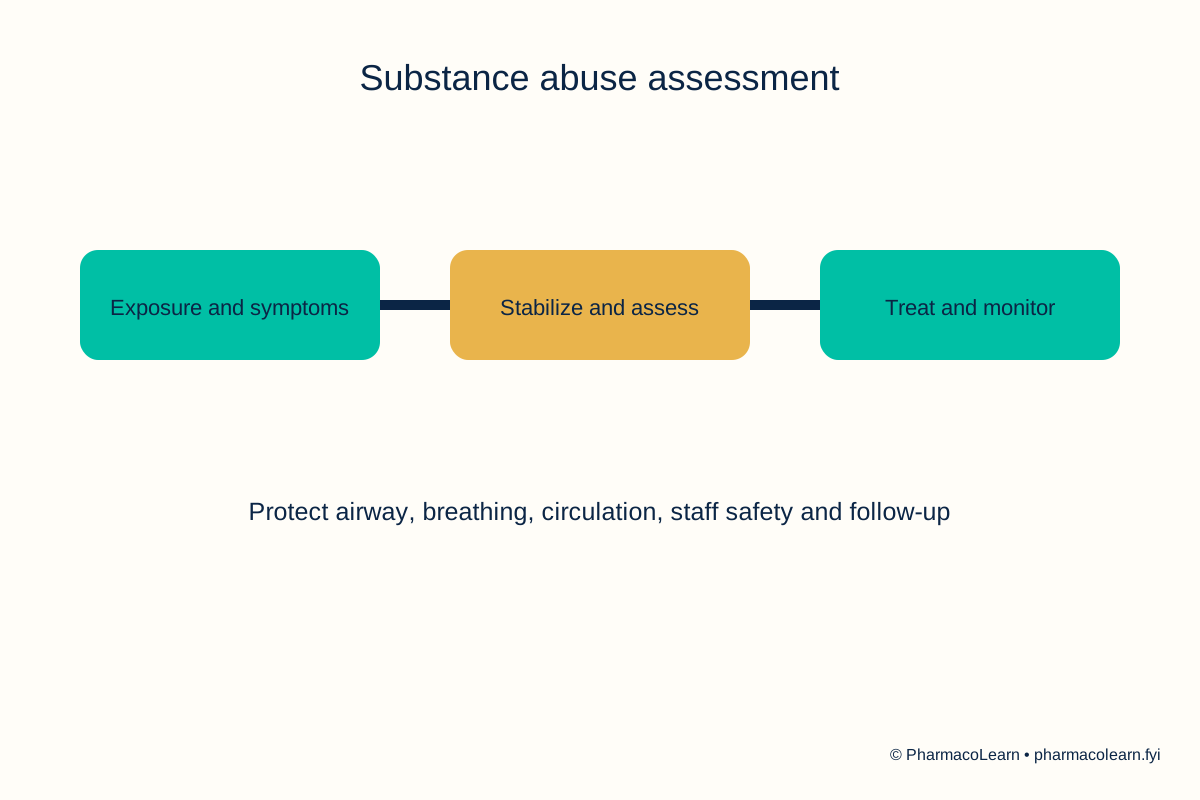
Dependence involves repeated use with impaired control, craving, continued use despite harm, tolerance, withdrawal, or functional disruption. Amphetamines increase monoamine signalling and may cause agitation, hyperthermia, hypertension, arrhythmia, psychosis, and seizures. Opioids cause euphoria, analgesia, respiratory depression, constipation, tolerance, and withdrawal. CNS depressants can cause sedation, respiratory depression, falls, and dangerous withdrawal. LSD alters perception and may produce panic or psychosis. Cannabis affects cognition, coordination, mood, and sometimes cardiovascular or vomiting syndromes. Tobacco dependence is driven mainly by nicotine reinforcement and withdrawal.
Clinical approach
- Assess immediate toxicity, suicide risk, withdrawal risk, and co-use.
- Stabilize airway, breathing, circulation, temperature, glucose, and mental state.
- Use a nonjudgmental history and motivational communication.
- Offer evidence-based treatment, harm reduction, referral, and follow-up.
- Screen for infectious, psychiatric, social, and family consequences.
Worked example
A patient using opioids presents drowsy but breathing. The pharmacist prioritizes respiratory assessment, emergency treatment, overdose education, and referral for dependence care. Stigma is avoided because it can reduce disclosure and future safety.
FAQs
Is dependence a moral failure? No. It is a health condition involving neurobiology, environment, and behaviour.
Should withdrawal always be managed at home? No. Severity, substance, co-use, pregnancy, medical illness, and support determine the appropriate setting.
Takeaways
- Treat acute toxicity before long-term counselling.
- Use nonjudgmental assessment and harm reduction.
- Address dependence, withdrawal, co-morbidity, and follow-up.
Integrated practice note
The pharmacist should offer practical harm reduction without judgment: overdose recognition, emergency access, safer storage, avoidance of dangerous combinations, and referral for dependence treatment. Acute stabilization and long-term recovery are connected but distinct goals. Consent, privacy, trauma-informed communication, and follow-up improve the chance that the patient will seek help again.
Document the patient’s preferences, consent, referrals, and agreed safety plan clearly for continuity.
References
- PharmacoLearn, Pharm D Year 4 syllabus: https://pharmacolearn.fyi/syllabus/pharm-d/year-4/
- Pharmacy Council of India, Pharm.D. Regulations, 2008.
- World Health Organization resources on substance use and dependence.
Diagrams
Other Year 4 subjects: Pharm D Year 4, 4.1 Pharmacotherapeutics III · Pharm D Year 4, 4.2 Hospital Pharmacy · Pharm D Year 4, 4.3 Clinical Pharmacy · Pharm D Year 4, 4.4 Biostatistics and Research Methodology · Pharm D Year 4, 4.5 Biopharmaceutics and Pharmacokinetics · Pharm D Year 4, 4.6 Clinical Toxicology · Year 4 · Pharm D