
Pharm D Year 4, 4.3 Clinical Pharmacy — Pharm D Year 4
Notes for Pharm D Year 4, 4.3 Clinical Pharmacy, Pharm D Year 4, organised unit by unit following the PCI Pharm D syllabus. 10 units, 20 diagrams.
Syllabus: Pharm D Year 4 syllabus
Practicals: Pharm D Year 4, 4.3 Clinical Pharmacy practicals
Units in this subject
- Unit 1: Definitions, Development and Scope of Clinical Pharmacy
- Unit 2: Daily Activities of a Clinical Pharmacist
- Unit 3: Patient Data Analysis and Clinical Terminology
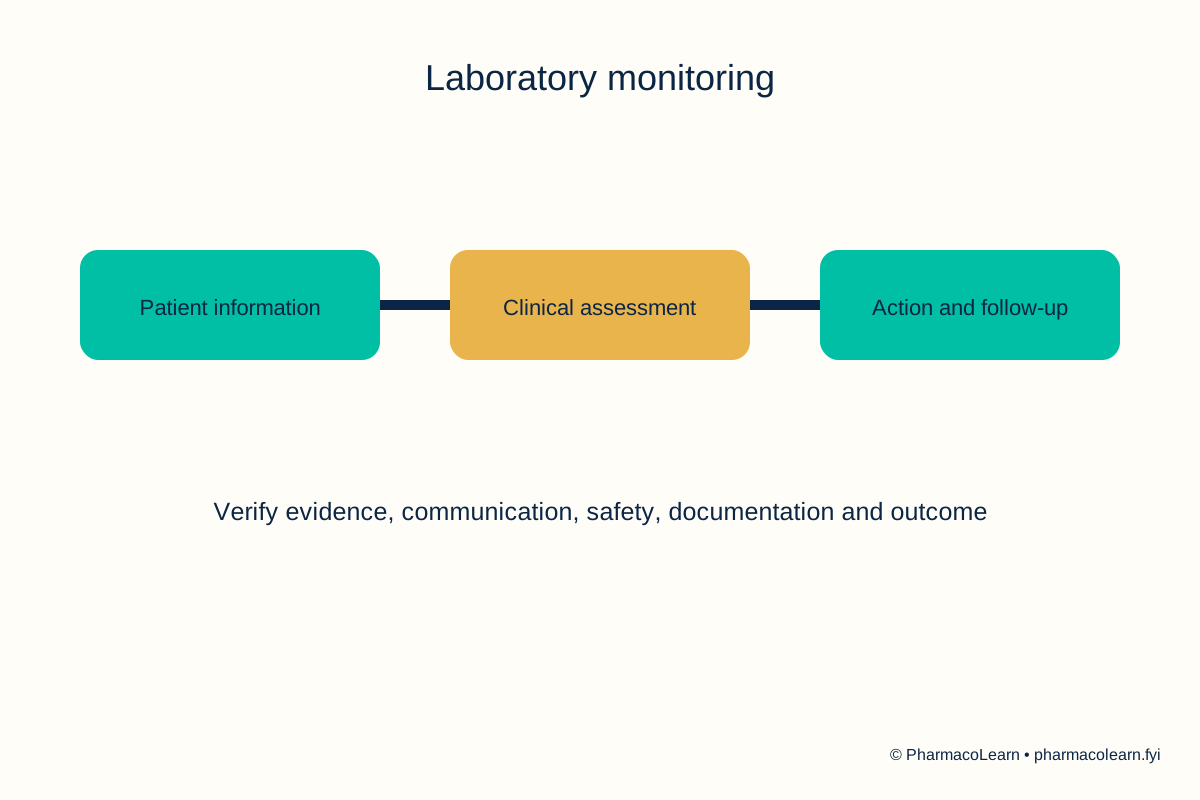
- Unit 4: Clinical Laboratory Tests and Interpretation
- Unit 5: Drug and Poison Information
- Unit 6: Pharmacovigilance and Adverse Drug Reactions
- Unit 7: Communication Skills and Patient Counselling
- Unit 8: Pharmaceutical Care Concepts
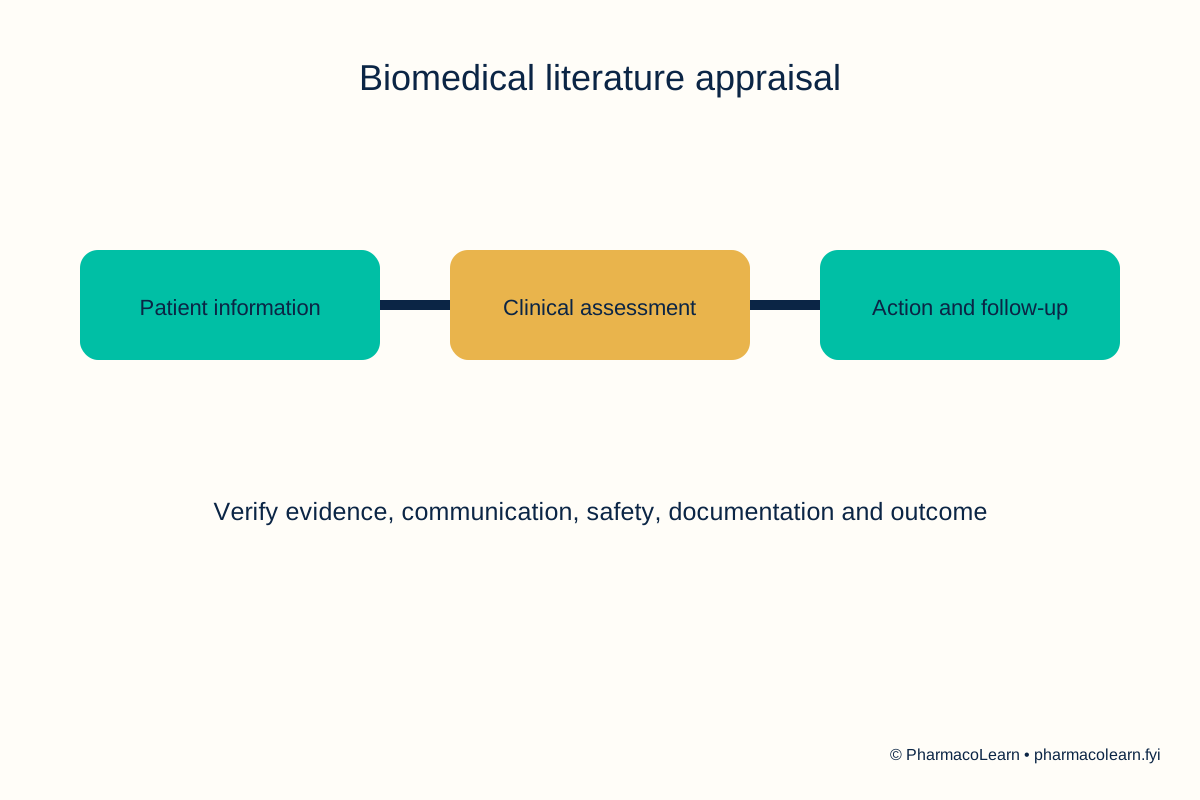
- Unit 9: Critical Evaluation of Biomedical Literature
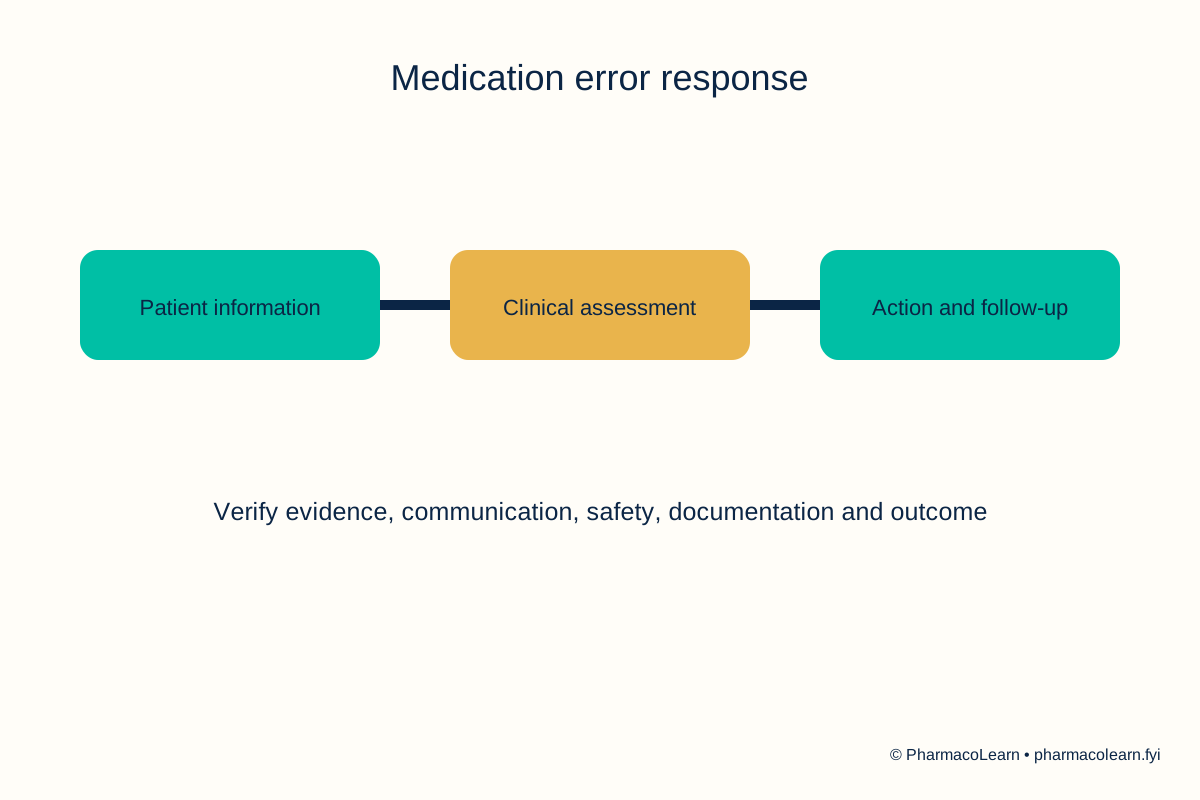
- Unit 10: Medication Errors
Unit 1: Definitions, Development and Scope of Clinical Pharmacy
Syllabus scope
Clinical pharmacy is a patient-centred discipline in which the pharmacist applies medicine expertise to optimize therapy, prevent harm, and support outcomes. It developed from a supply-focused role toward direct participation in medication review, monitoring, counselling, information, and quality improvement.
Core concepts
Clinical pharmacy does not replace diagnosis or prescribing. It adds structured evaluation of medicine need, effectiveness, safety, adherence, interactions, and patient understanding. The clinical pharmacist works with the patient and care team, using evidence and documented follow-up.
Clinical decision mechanism
- Identify the patient’s goals, diagnosis, medicines, risks, and practical circumstances.
- Define the medication-related question.
- Collect relevant clinical, laboratory, and medication-use information.
- Assess benefit, harm, appropriateness, adherence, and alternatives.
- Recommend or implement an intervention within scope.
- Monitor the result and communicate it to the care team.
Clinical correlation
The need for clinical pharmacy becomes clear when a patient has polypharmacy, renal impairment, high-risk medicines, multiple prescribers, or poor health literacy. A technically correct prescription can still fail if the patient cannot obtain, understand, or use it.
Worked example
A patient is prescribed a new medicine but cannot explain the purpose or timing. The clinical pharmacist identifies an information and adherence risk, provides plain-language counselling with teach-back, and documents follow-up. The intervention is clinical because it changes the probability of a safe therapeutic outcome.
FAQs
Is clinical pharmacy only for hospitals? No. It applies wherever medication decisions affect patient outcomes.
What distinguishes it from dispensing? Clinical pharmacy includes assessment, monitoring, intervention, and follow-up.
Takeaways
- Keep the patient and therapeutic outcome central.
- Combine medicine knowledge with clinical data and communication.
- Document interventions and reassess their effect.
Integrated practice note
Clinical pharmacy is most effective when the service is visible in patient outcomes. Useful measures may include resolved discrepancies, accepted recommendations, avoided adverse events, adherence improvement, patient understanding, and readmission-related medicine problems. Numbers should be interpreted with context. A smaller service that focuses on high-risk patients may create greater benefit than a larger service that records only low-impact contacts.
The scope also includes prevention. The pharmacist can identify risk before harm occurs, improve transitions, strengthen patient understanding, and help the team use evidence consistently. This preventive role should be documented with the same care as an intervention made after an adverse event.
References
- PharmacoLearn, Pharm D Year 4 syllabus: https://pharmacolearn.fyi/syllabus/pharm-d/year-4/
- Pharmacy Council of India, Pharm.D. Regulations, 2008.
- Cipolle, Strand and Morley, Pharmaceutical Care Practice, latest available edition.
Unit 2: Daily Activities of a Clinical Pharmacist
Syllabus scope
This unit covers medication chart review, clinical review, pharmacist interventions, ward-round participation, adverse drug reaction management, drug and poisons information, medication history, counselling, drug utilisation evaluation, drug utilisation review, and quality assurance of clinical pharmacy services.
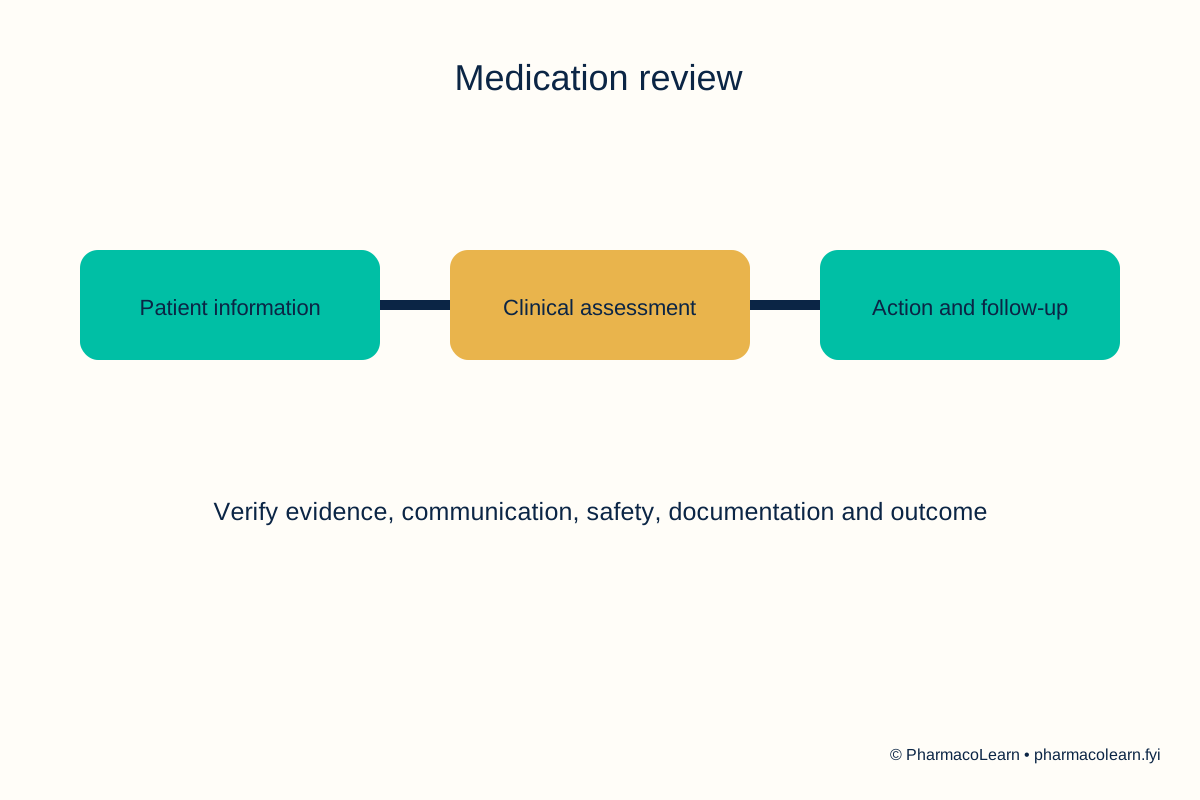
Medication review workflow
The pharmacist first verifies identity, diagnosis, allergies, current medicines, indication, dose, route, timing, duration, renal and hepatic function, laboratory trends, interactions, duplication, contraindications, and response. Review is prioritized by risk. A stable low-risk medicine may need less immediate attention than an anticoagulant in a patient with bleeding.
Intervention mechanism
- Detect a potential or actual medication-related problem.
- Confirm the relevant facts and urgency.
- Identify the cause and possible options.
- Communicate a specific recommendation.
- Record acceptance, rejection, or unresolved status.
- Monitor the patient and close the loop.
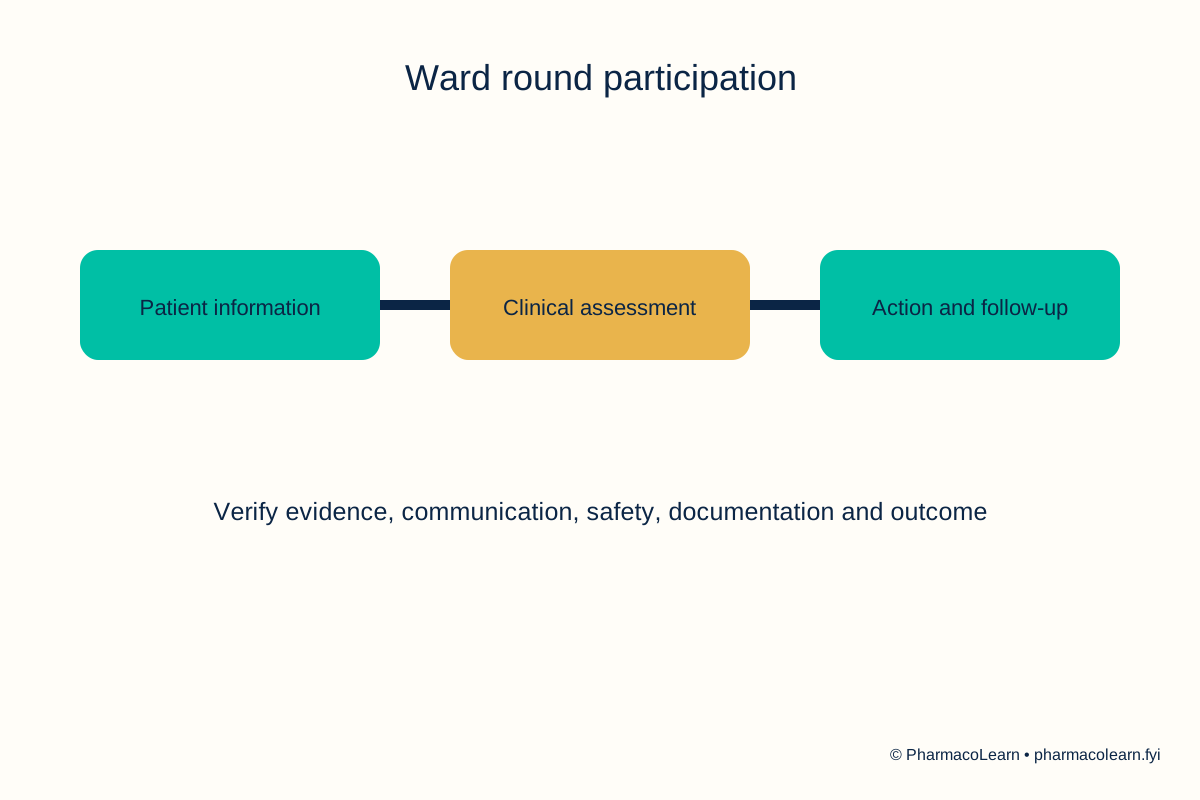
Ward rounds allow the pharmacist to connect the chart with the patient’s symptoms, examination, investigations, and treatment plan. Respectful questions can identify omissions or practical barriers without disrupting care.
Medication history and counselling
Medication history includes prescribed, over-the-counter, traditional, herbal, recreational, and recently stopped products. Ask about dose, frequency, route, actual use, missed doses, allergies, previous reactions, storage, affordability, and beliefs. Counselling should be individualized and use teach-back.
Drug utilisation evaluation and quality assurance
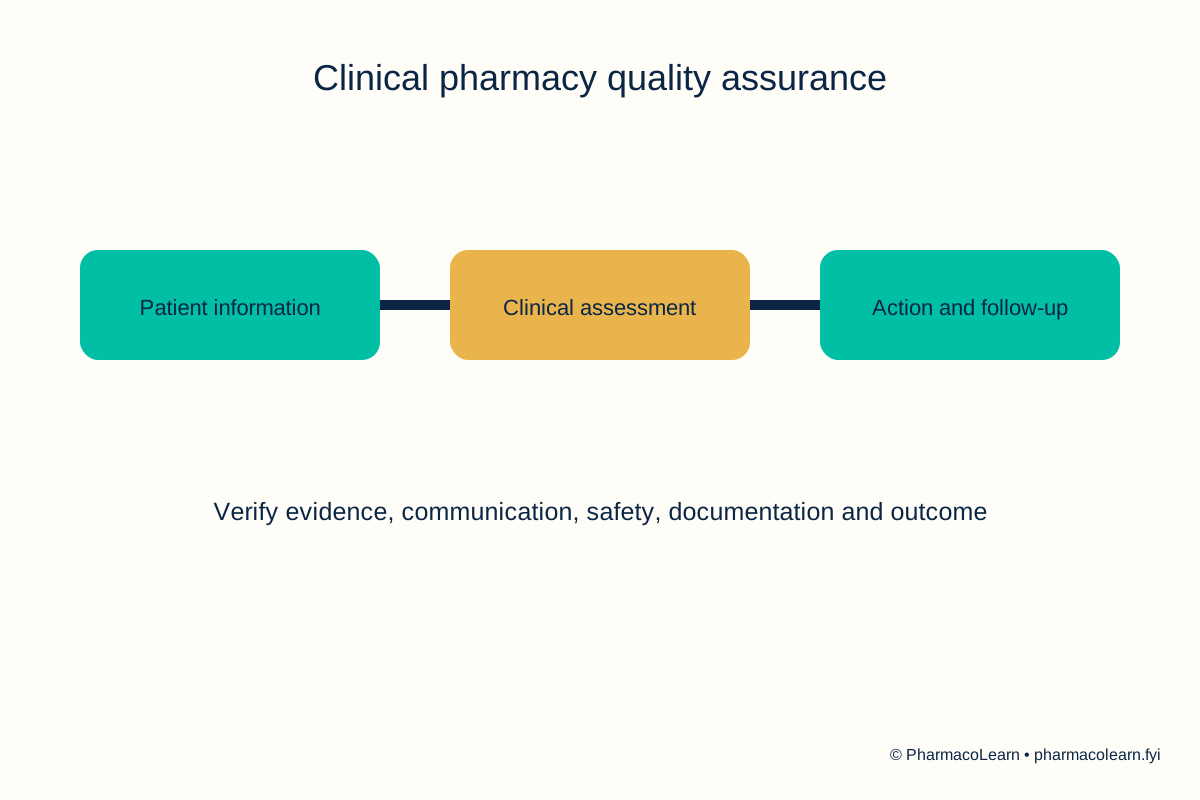
DUE examines whether medicine use meets defined criteria. DUR may be prospective, concurrent, or retrospective. Quality assurance adds a cycle of standard, measurement, analysis, intervention, and reassessment.
Worked example
An audit finds frequent antibiotics continued beyond documented review dates. The pharmacist verifies indications and cultures, discusses stop or review criteria, records interventions, and repeats the audit. The aim is safer, more effective use, not a target number of interventions.
FAQs
Should every chart receive the same depth of review? No. Risk-based prioritization improves safety.
Why document rejected interventions? It preserves the clinical record and supports learning.
Takeaways
- Use a structured medication-review sequence.
- Prioritize high-risk medicines and transitions.
- Link DUE findings to an intervention and repeat measurement.
Integrated practice note
Daily clinical work needs prioritization. Begin with unstable patients, high-alert medicines, transitions, allergies, severe organ impairment, and unresolved discrepancies. Use a consistent review template so important domains are not forgotten, but allow clinical judgement to change the order. At handover, communicate pending questions and monitoring needs. A recommendation that is not followed up can remain an unrecognized risk. The pharmacist should also record when no intervention is needed and why, because appropriate continuation is a clinical decision.
References
- PharmacoLearn, Pharm D Year 4 syllabus: https://pharmacolearn.fyi/syllabus/pharm-d/year-4/
- Pharmacy Council of India, Pharm.D. Regulations, 2008.
- ASHP Guidelines on a Standardized Method for Pharmaceutical Care.
Unit 3: Patient Data Analysis and Clinical Terminology
Syllabus scope
This unit covers the patient case history, its structure and use in evaluating drug therapy, and common medical abbreviations and clinical terms.
Case history structure
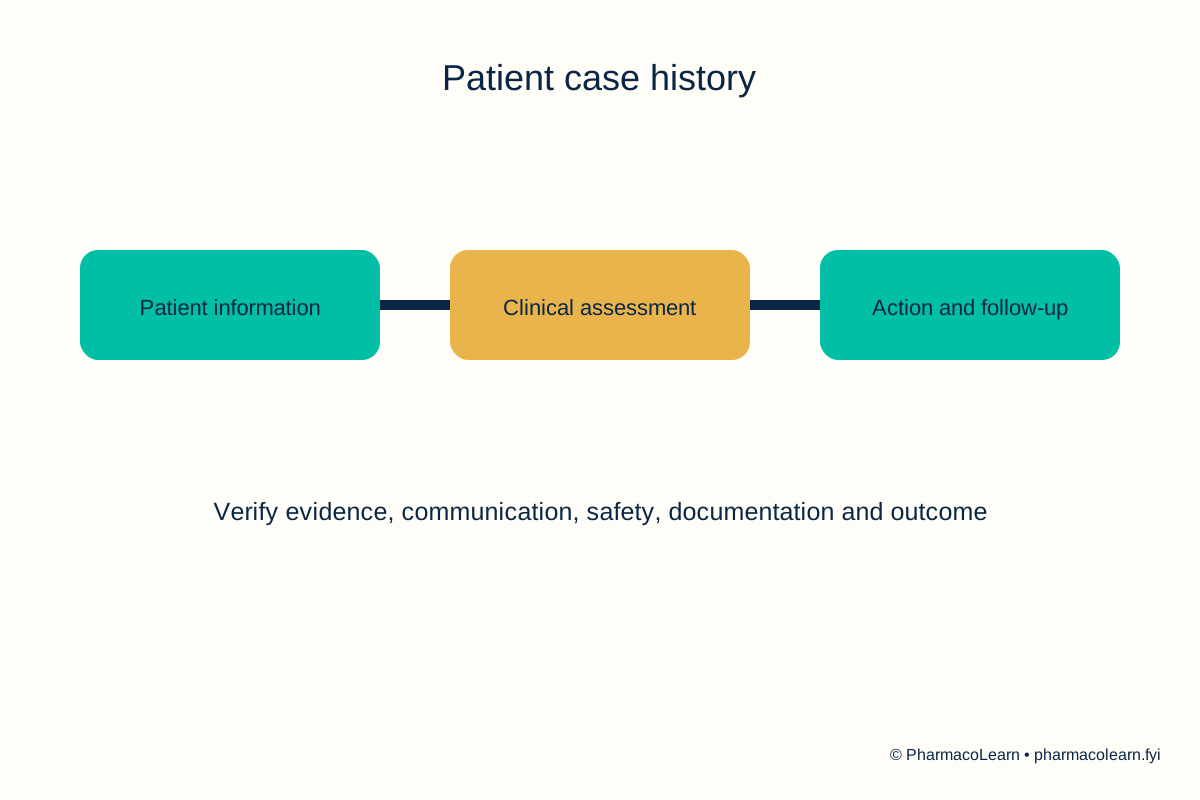
A useful case history includes identifiers, presenting concern, history of illness, diagnoses, allergies, past illness, family and social history, medicines, examination findings, investigations, assessment, treatment plan, response, and discharge needs. The pharmacist should separate patient-reported information, observed facts, laboratory results, and clinical interpretation.
Data-analysis mechanism
- Confirm the patient and source of every datum.
- Arrange information chronologically.
- Identify the active clinical problems.
- Map each medicine to an indication and therapeutic goal.
- Compare dose and route with organ function, age, weight, and response.
- Identify gaps, contradictions, and urgent risks.
- Communicate a prioritized assessment.
Terminology and abbreviations
Abbreviations can save time but create risk when ambiguous. A pharmacist should recognize common terms while following local approved abbreviation policy. Unclear directions should be clarified rather than interpreted from habit. Patient-facing instructions should use full words.
Clinical correlation
A single abnormal laboratory value does not automatically establish a medication problem. Trends, timing, symptoms, sample quality, disease state, and treatment goals matter. The pharmacist should avoid false precision and seek the responsible clinician when the interpretation affects urgent care.
Worked example
An admission note says the patient is “on insulin,” but does not specify product, concentration, device, dose, or timing. The pharmacist obtains the actual product and administration history before reconciliation. This prevents a dangerous assumption from becoming an order.
FAQs
Why record the source of information? Reliability may differ between the patient, caregiver, previous record, and dispensing history.
Why avoid ambiguous abbreviations? They can change the medicine, dose, route, or frequency.
Takeaways
- Build a chronological, source-aware case history.
- Link every medicine to an indication and outcome.
- Clarify ambiguous terms and never guess a high-risk instruction.
Integrated practice note
Good data analysis is transparent. Record what is known, what is inferred, what is missing, and what action is required to resolve the gap. This approach improves collaboration because another professional can understand the reasoning without repeating the entire history. It also protects the patient when records conflict during a transfer between wards or institutions.
References
- PharmacoLearn, Pharm D Year 4 syllabus: https://pharmacolearn.fyi/syllabus/pharm-d/year-4/
- Pharmacy Council of India, Pharm.D. Regulations, 2008.
- Bates’ Guide to Physical Examination and History Taking, latest available edition.
Unit 4: Clinical Laboratory Tests and Interpretation
Syllabus scope
This unit covers haematological, liver, renal, thyroid, cardiac, fluid and electrolyte, microbiological culture and sensitivity, and pulmonary function tests used to evaluate disease and monitor therapy.
Interpretation framework
Laboratory interpretation is a sequence, not a single-number lookup. Establish the clinical question, specimen and timing, reference context, trend, symptoms, medicines, organ function, and decision threshold. Reference intervals are not identical to treatment targets, and a result outside an interval is not automatically disease.
Monitoring mechanism
- Select a parameter linked to the medicine or disease.
- Obtain a baseline when appropriate.
- Repeat at a clinically meaningful time.
- Compare with baseline, trend, symptoms, and expected response.
- Recognize toxicity or treatment failure.
- Communicate and document an action.
Haematology can reveal anaemia, infection, inflammation, or cytopenia. Liver tests may show hepatocellular or cholestatic patterns. Renal markers influence dose selection and toxicity risk. Thyroid tests support diagnosis and monitoring of thyroid-directed therapy. Cardiac markers must be interpreted with timing and clinical presentation.
Fluid and electrolytes reflect intake, losses, hormones, renal function, and medicines. Culture and sensitivity results should be interpreted with specimen quality, likely pathogen, contamination, site, and susceptibility. Pulmonary function results require technique and clinical context.
Clinical correlation
A pharmacist should not change therapy from an isolated value without confirming identity, timing, symptoms, and trend. Sample haemolysis, delayed processing, and acute illness can distort interpretation.
Worked example
A patient on a renally cleared medicine has a new creatinine result. The pharmacist checks baseline, trend, weight, hydration, nephrotoxic co-medicines, and the dosing method used locally, then contacts the clinician if adjustment may be required. The calculation is patient specific; thresholds should be interpreted using the current laboratory and medicine-specific reference.
FAQs
Is a reference interval a therapeutic target? No. The intended target depends on the disease and treatment.
Why does timing matter? A result may represent a peak, trough, post-dose effect, acute illness, or delayed response.
Takeaways
- Interpret trends and clinical context.
- Link tests to a therapeutic decision.
- Check specimen quality, timing, medicines, and organ function.
Integrated practice note
Laboratory monitoring should have a planned response. Before ordering or reviewing a test, identify what decision it will change, when the result should be checked, who will review it, and how an urgent value will be communicated. Monitoring without ownership can create false reassurance. The pharmacist should also consider whether repeated testing adds value, burden, or cost.
References
- PharmacoLearn, Pharm D Year 4 syllabus: https://pharmacolearn.fyi/syllabus/pharm-d/year-4/
- Pharmacy Council of India, Pharm.D. Regulations, 2008.
- Tietz Fundamentals of Clinical Chemistry, latest available edition.
Unit 5: Drug and Poison Information
Syllabus scope
This unit covers drug-information resources, systematic answers, critical evaluation of literature, written and verbal reports, drug-information-centre organization, and poisons information.
Drug-information process
A drug-information answer begins with clarification of the requester, patient, urgency, exact question, desired outcome, and deadline. Search primary, secondary, and tertiary sources in a rational sequence. Evaluate relevance, authority, currency, methods, consistency, and applicability. Document the search and limitations.
Answer mechanism
- Receive and define the question.
- Gather patient-specific facts.
- Search the most appropriate sources.
- Appraise and reconcile evidence.
- Formulate a clear answer with uncertainty and recommendation.
- Communicate through the requested route.
- Record and follow up when needed.
Drug-information centre
A centre needs trained staff, current resources, information governance, secure records, service hours, quality standards, and escalation procedures. A verbal answer should be concise and safe. A written answer should identify the question, patient context, search date, sources, evidence summary, recommendation, limitations, and author or reviewer.
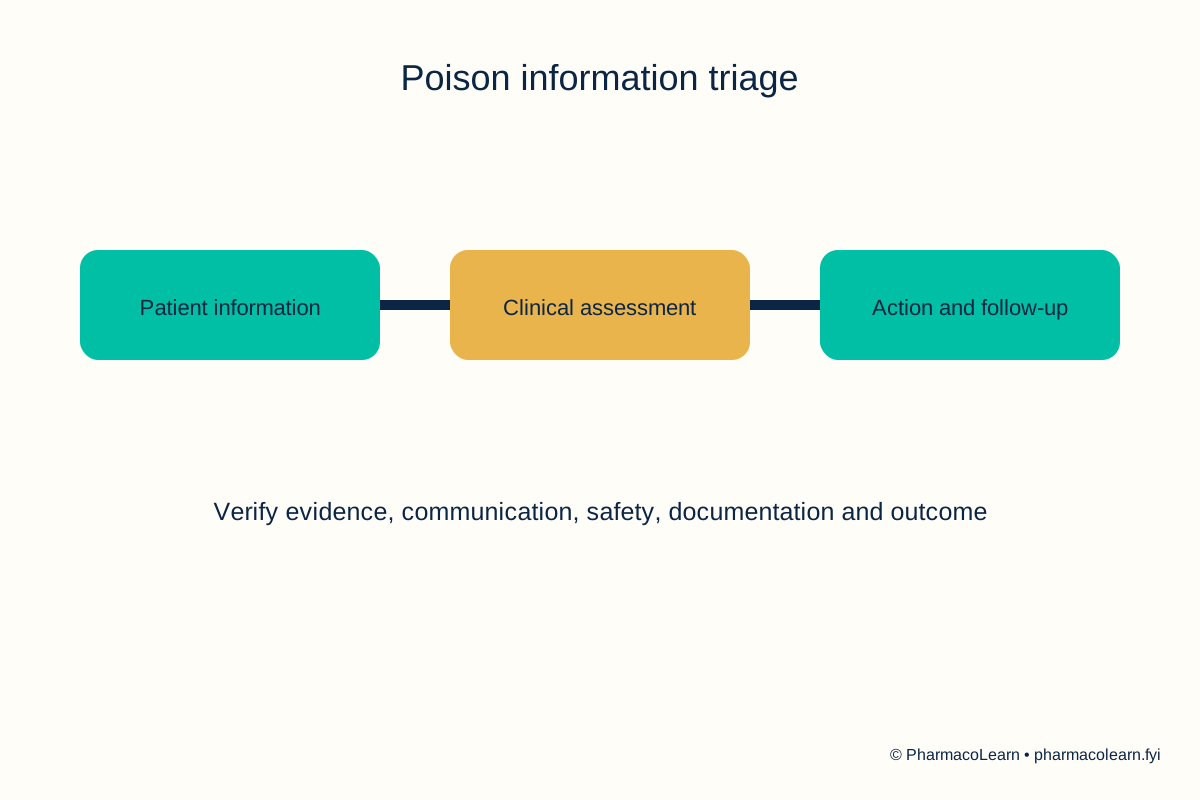
Poisons information
Poisoning questions require rapid triage: substance, amount, route, time, patient age and weight, symptoms, co-exposures, and immediate danger. Airway, breathing, circulation, consciousness, seizures, and severe symptoms take priority. Advice should come from an authorized poison-information system and local emergency pathway.
Clinical correlation
Do not recommend induced vomiting or an improvised antidote. Toxicology decisions depend on substance, dose, formulation, timing, symptoms, and patient factors.
Worked example
A caller asks whether a child who ingested an unknown liquid should be given milk. The pharmacist obtains the container, amount, time, symptoms, age and weight, and directs urgent poison-centre or emergency evaluation. The response is safe because it avoids an unsupported home remedy.
FAQs
Is a tertiary reference always enough? Not for every question. Complex, new, or patient-specific issues may require primary evidence or specialist advice.
What should be documented? The question, patient facts, sources, search date, answer, uncertainty, and follow-up.
Takeaways
- Define the question before searching.
- Match source depth to clinical risk.
- Give clear answers with limitations and escalation.
- Treat poisoning as a time-sensitive clinical problem.
Integrated practice note
A high-quality information answer is reproducible. Another pharmacist should be able to follow the search trail, understand why sources were selected, and see where uncertainty remains. Record the version or access date of electronic resources, especially when recommendations change. When the answer is urgent, communicate the immediate action first and complete the written record without delaying lifesaving care.
References
- PharmacoLearn, Pharm D Year 4 syllabus: https://pharmacolearn.fyi/syllabus/pharm-d/year-4/
- Pharmacy Council of India, Pharm.D. Regulations, 2008.
- Drug Information: A Guide for Pharmacists, latest available edition.
Unit 6: Pharmacovigilance and Adverse Drug Reactions
Syllabus scope
This unit covers the scope, definition, aims, classification, mechanisms, predisposing factors, causality assessment, reporting, evaluation, monitoring, prevention, management, and pharmacist role in adverse drug reactions.
Adverse drug reactions
An ADR is a harmful and unintended response associated with medicine use at normal doses. Reactions may be dose related, delayed, allergic, idiosyncratic, withdrawal related, or associated with treatment failure. Classification helps predict, prevent, and manage risk, but it does not replace clinical judgement.
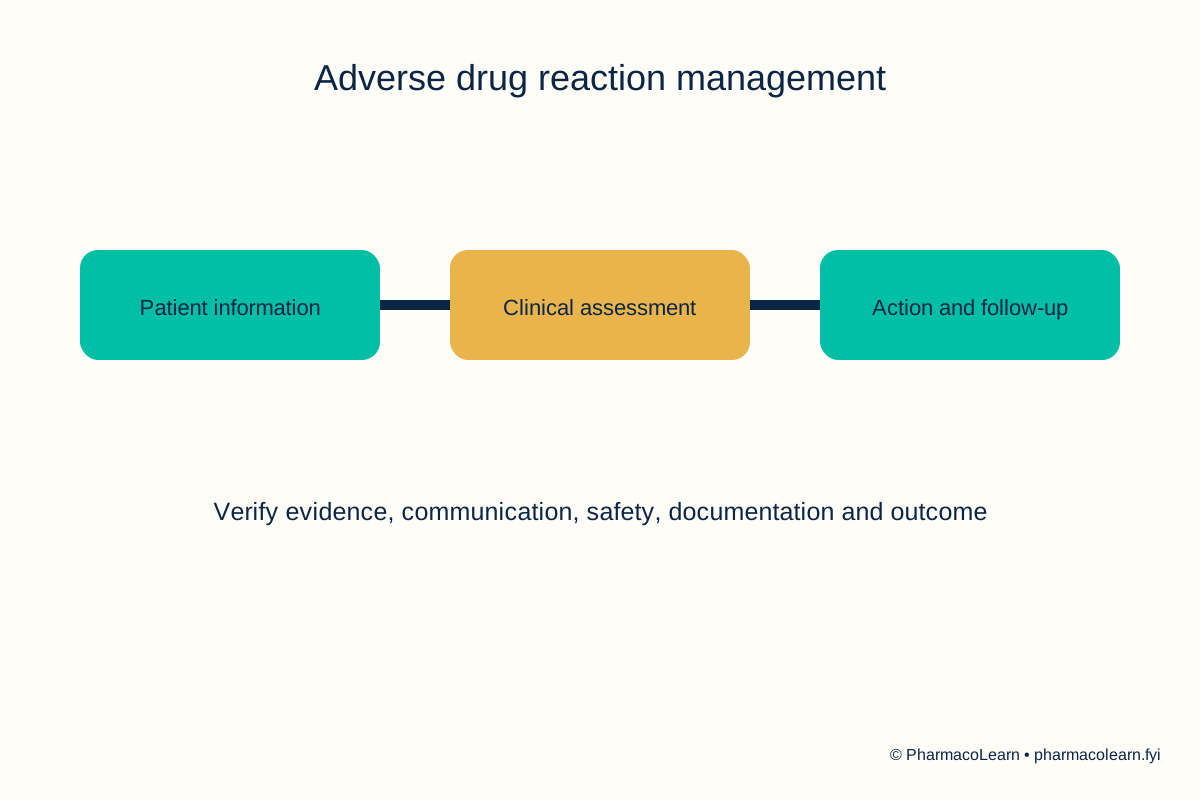
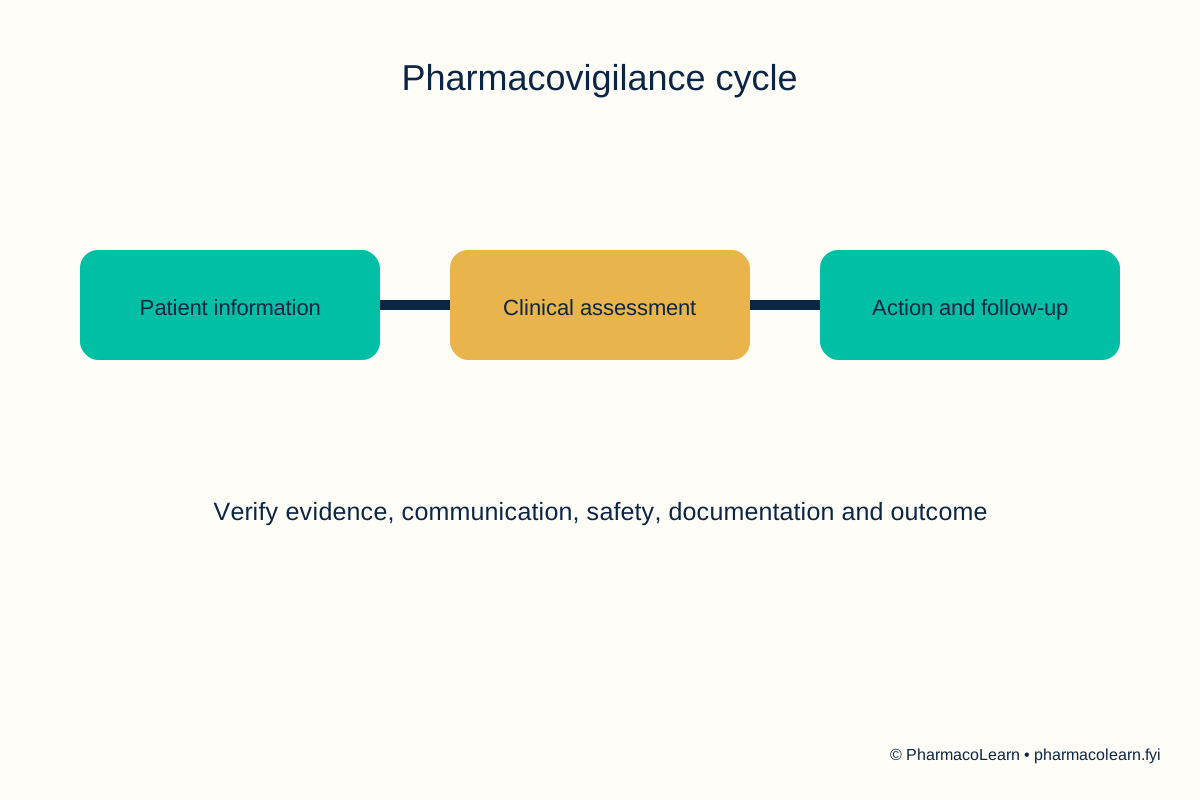
ADR-management mechanism
- Recognize a temporal and biological possibility.
- Assess severity, airway, breathing, circulation, and urgent symptoms.
- Stop, continue, or substitute the suspected medicine through an appropriate clinical decision.
- Treat the reaction and provide supportive care.
- Record the product, dose, batch where relevant, timing, symptoms, investigations, and outcome.
- Assess causality and alternative explanations.
- Report, prevent recurrence, and communicate the allergy or warning.
Predisposing factors include age, organ impairment, genetics, polypharmacy, previous reaction, dose, route, interaction, and acute illness. Causality tools can structure reasoning but are not proof. Dechallenge and rechallenge information must be interpreted cautiously.
Reporting and prevention
Under-reporting can be reduced by easy reporting routes, feedback, education, and a culture that separates learning from blame. A pharmacist should distinguish an ADR from a medication error, therapeutic failure, and disease symptom, while reporting when more than one category applies.
Clinical correlation
Anaphylaxis, severe skin reactions, organ failure, haemodynamic instability, and severe cytopenia require urgent medical management. Record suspected allergies precisely. “Allergy” without reaction description may cause unsafe avoidance or inappropriate substitution.
Worked example
A patient develops a rash after a new medicine. The pharmacist records timing, morphology, mucosal involvement, fever, previous exposure, concurrent medicines, and clinical status. A mild isolated rash and a blistering rash do not receive the same urgency.
FAQs
Does every event prove the medicine caused it? No. Causality requires temporal, biological, and alternative-cause assessment.
Why report a known reaction? Reporting adds safety data and may identify preventable patterns.
Takeaways
- Assess severity before paperwork.
- Document the reaction, not only the product name.
- Report suspected reactions and prevent re-exposure.
Integrated practice note
Pharmacovigilance is strengthened by good medication histories and clear patient education. Ask patients to report new symptoms, explain which symptoms require urgent care, and document the suspected reaction in accessible records. When a product or batch concern is possible, preserve packaging and follow the local reporting route. Do not allow an uncertain label to become a permanent allergy without clinical assessment.
References
- PharmacoLearn, Pharm D Year 4 syllabus: https://pharmacolearn.fyi/syllabus/pharm-d/year-4/
- Pharmacy Council of India, Pharm.D. Regulations, 2008.
- World Health Organization, pharmacovigilance indicators and reporting resources.
Unit 7: Communication Skills and Patient Counselling
Syllabus scope
This unit covers patient counselling, medication-history interviewing, and case presentation.
Communication principles
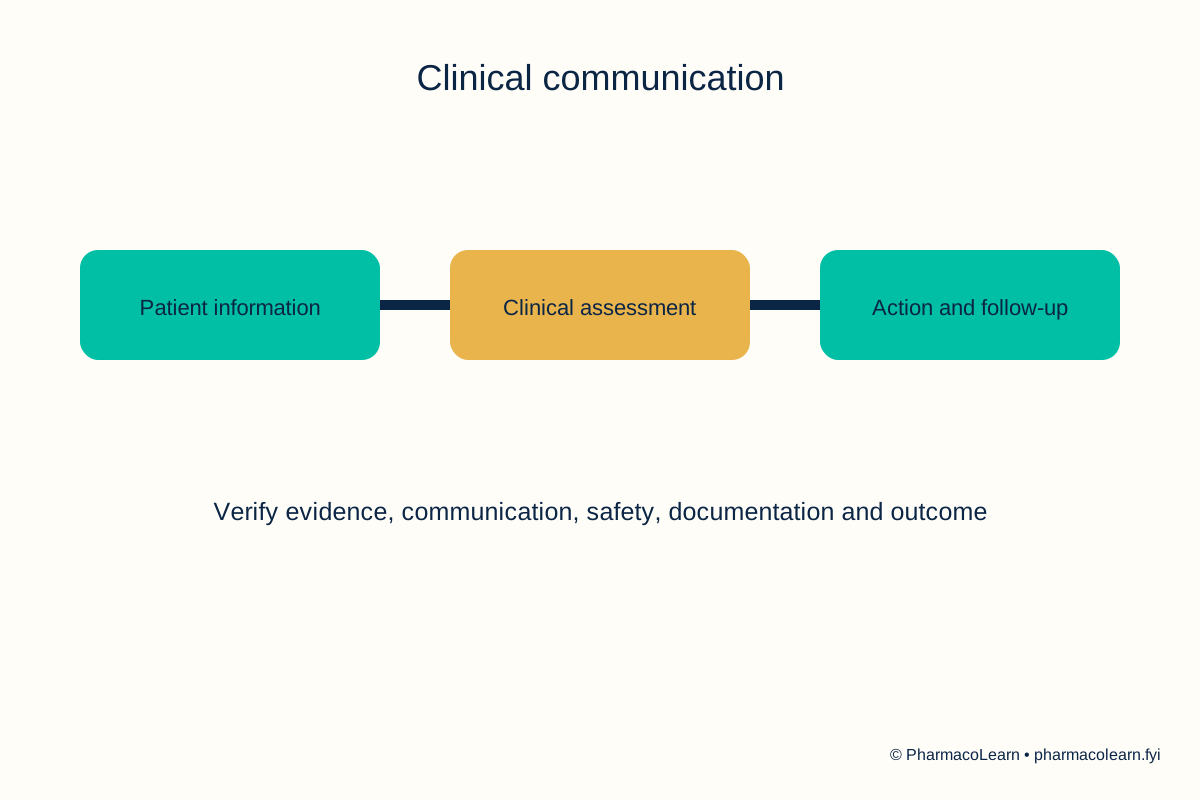
Effective communication is accurate, respectful, two-way, and adapted to language, culture, literacy, hearing, vision, cognition, and emotional state. Begin with an open question, listen without interruption, confirm the patient’s priorities, and use plain language.
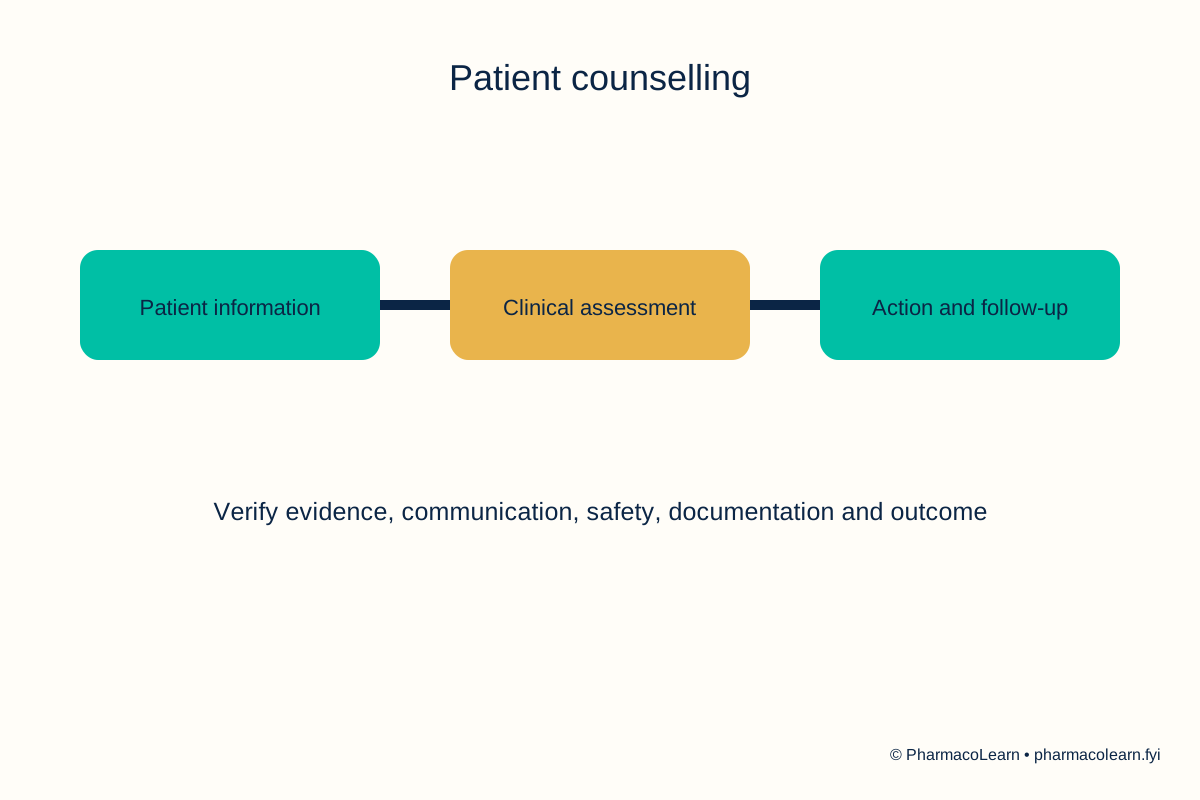
Counselling mechanism
- Establish privacy and rapport.
- Assess what the patient already knows and wants to know.
- Explain purpose, directions, expected benefit, important harms, storage, missed-dose action, and follow-up.
- Demonstrate devices or techniques when relevant.
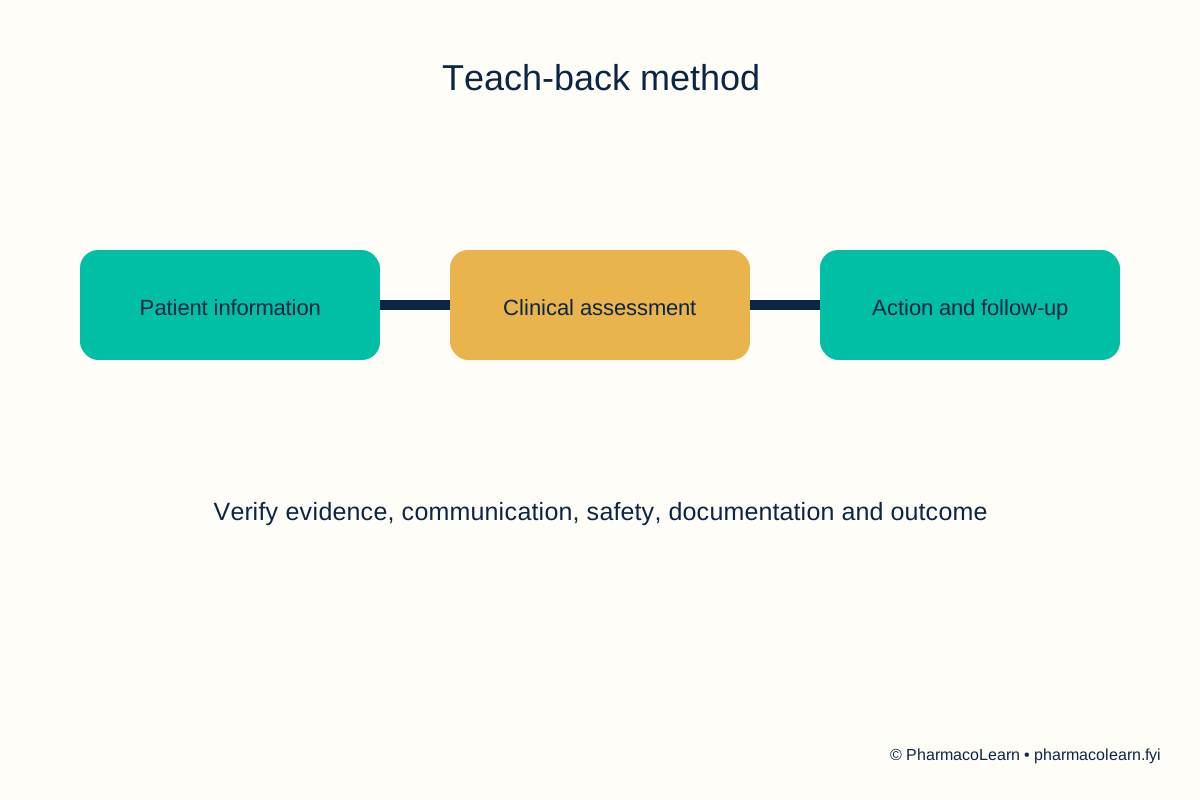
- Use teach-back.
- Invite questions and document the intervention.
Medication-history interviews should be nonjudgmental. Ask what the patient actually takes rather than what the label says. Include recent stopped medicines, samples, supplements, traditional products, and medicines used only when needed.
Case presentation
A case presentation should be concise, chronological, problem oriented, and relevant to the therapeutic question. Separate facts from interpretation and identify the specific recommendation or question for the team.
Clinical correlation
A patient who nods may not understand. Teach-back tests the explanation, not the patient. Use an interpreter rather than relying on a child or an untrained family member when language communication is inadequate.
Worked example
For a new inhaler, the pharmacist explains the purpose, demonstrates the steps, asks the patient to demonstrate, corrects technique, and arranges review. This is more reliable than asking, “Do you understand?”
FAQs
Why use teach-back? It reveals misunderstanding before it causes harm.
What should counselling prioritize? The information most likely to change safe and effective use.
Takeaways
- Use plain language and active listening.
- Ask about actual medicine use.
- Demonstrate, observe, correct, and document.
Integrated practice note
Counselling is a clinical intervention, not a speech delivered at the end of dispensing. Choose the most important messages for the patient’s immediate decisions, then confirm understanding through demonstration or teach-back. Ask permission before discussing sensitive topics, include caregivers only with appropriate consent, and adapt the plan when cost, access, dexterity, memory, or cultural beliefs affect use.
References
- PharmacoLearn, Pharm D Year 4 syllabus: https://pharmacolearn.fyi/syllabus/pharm-d/year-4/
- Pharmacy Council of India, Pharm.D. Regulations, 2008.
- Institute for Healthcare Improvement, communication and teach-back resources.
Unit 8: Pharmaceutical Care Concepts
Syllabus scope
Pharmaceutical care is the responsible provision of medicine-related care intended to achieve definite outcomes that improve a patient’s quality of life.
Care process
The pharmacist identifies medicine-related needs, develops a care plan, implements it with the patient and team, and follows outcomes. Problems may include untreated indication, unnecessary therapy, ineffective medicine, dose too low or high, adverse reaction, interaction, or nonadherence.
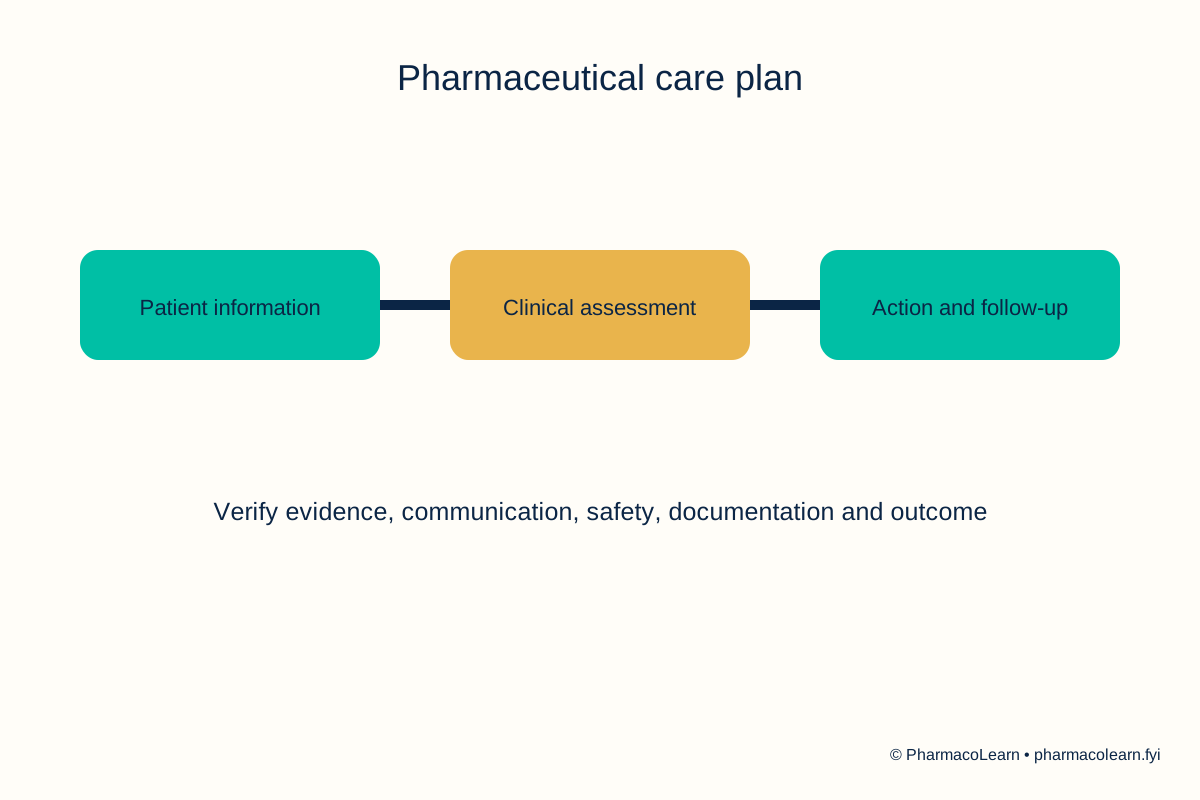
Care-plan mechanism
- Collect subjective, objective, assessment, and plan information.
- Identify actual and potential medicine-related problems.
- Prioritize urgency and patient goals.
- Define measurable therapeutic outcomes.
- Select intervention and responsibilities.
- Set follow-up timing and success criteria.
- Reassess and modify.
Clinical correlation
A care plan that lists medicines but no outcome is incomplete. For hypertension, the outcome may include blood pressure, adherence, dizziness, and cardiovascular-risk communication. For an antibiotic, outcome may include symptom improvement, microbiological response, duration, and adverse effects.
Worked example
A patient misses doses because of shift work. The pharmacist defines the barrier, discusses a feasible schedule with the prescriber, simplifies instructions, uses teach-back, and reviews adherence and control. The intervention is individualized rather than blaming the patient.
FAQs
Is pharmaceutical care only counselling? No. It includes assessment, planning, intervention, monitoring, and documentation.
Why define outcomes? Without outcomes, the team cannot tell whether care helped.
Takeaways
- Identify and prioritize medicine-related problems.
- Agree on measurable outcomes with the patient.
- Reassess and document the care cycle.
Integrated practice note
The care plan should be shared in language the patient can use. State the purpose of each important medicine, the expected time course, warning signs, and follow-up. A plan may include referral, adherence support, monitoring, lifestyle measures, and coordination with other professionals. Review whether the patient’s goals changed, because a technically effective therapy may no longer be appropriate when circumstances change.
References
- PharmacoLearn, Pharm D Year 4 syllabus: https://pharmacolearn.fyi/syllabus/pharm-d/year-4/
- Pharmacy Council of India, Pharm.D. Regulations, 2008.
- Cipolle, Strand and Morley, Pharmaceutical Care Practice, latest available edition.
Unit 9: Critical Evaluation of Biomedical Literature
Syllabus scope
This unit covers critical evaluation of biomedical literature relevant to medicine use and clinical decisions.
Appraisal framework
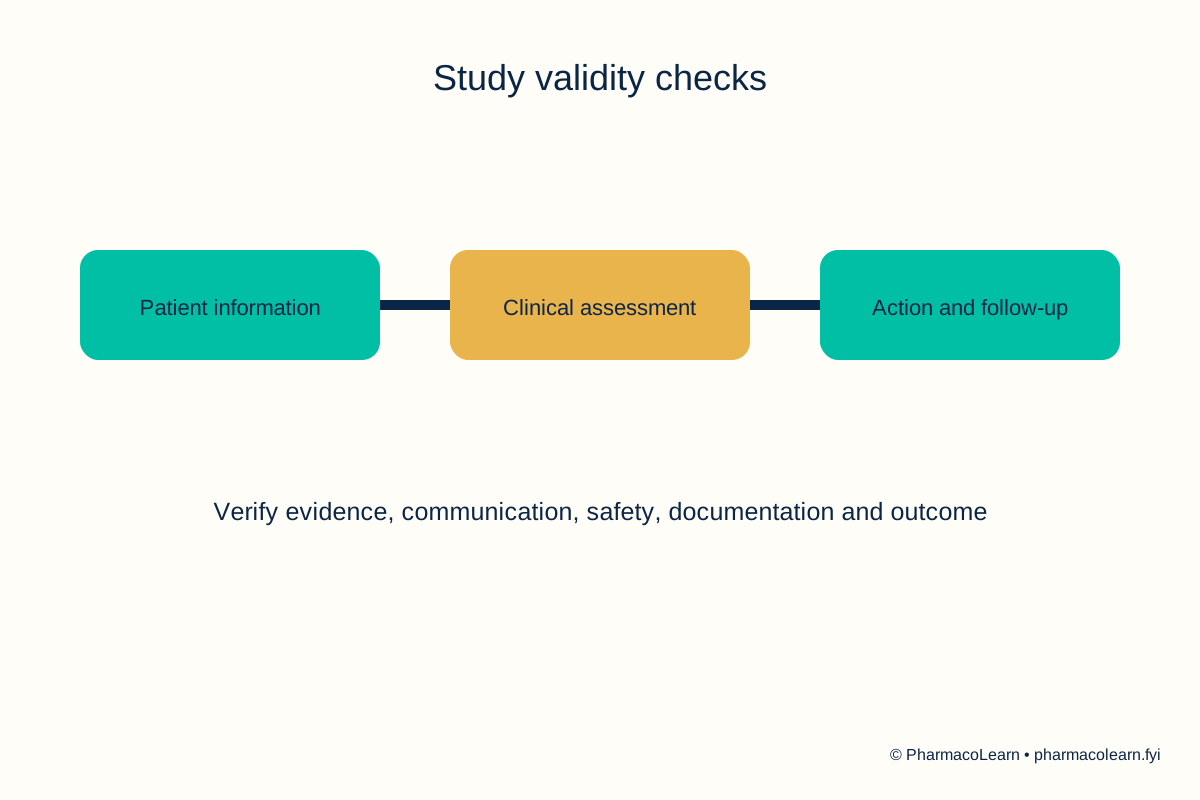
Start with a focused question and identify the design. Ask whether the methods answer the question, whether participants were selected appropriately, whether the intervention and comparison were defined, whether outcomes matter, whether bias or confounding is likely, and whether results are precise.
Appraisal mechanism
- Identify the research question and hypothesis.
- Check design, population, intervention, comparator, outcomes, and follow-up.
- Review allocation, blinding, missing data, and analysis.
- Assess effect size, confidence interval, and harms.
- Compare results with similar evidence.
- Decide applicability to the patient and setting.
Statistical significance does not equal clinical importance. A surrogate outcome may not predict a patient-important outcome. Industry funding does not automatically invalidate a study, but conflicts should be disclosed and methods examined carefully.
Clinical correlation
A pharmacist answering a drug-information question should not rely on the abstract alone. Important limitations, subgroup definitions, adverse effects, and follow-up may appear only in the full paper or supplement.
Worked example
A trial reports a relative risk reduction but omits absolute event rates in the headline. The pharmacist extracts control risk, treatment risk, absolute difference, confidence interval, duration, and harms before explaining the result.
FAQs
Is randomization enough to make a trial reliable? No. Allocation concealment, follow-up, outcome measurement, analysis, and applicability also matter.
Why inspect adverse effects? Benefit without harm context can mislead a patient or clinician.
Takeaways
- Appraise methods before accepting conclusions.
- Prefer patient-important outcomes and transparent harms.
- Translate results into absolute, applicable information.
Integrated practice note
When appraising a paper, write a short evidence summary that answers the clinical question rather than reproducing the abstract. State the population, intervention, comparator, outcome, follow-up, main effect, confidence interval, important harms, and limitations. Then explain whether the result applies to the patient in front of you. This protects against both overenthusiasm and unjustified dismissal.
References
- PharmacoLearn, Pharm D Year 4 syllabus: https://pharmacolearn.fyi/syllabus/pharm-d/year-4/
- Pharmacy Council of India, Pharm.D. Regulations, 2008.
- Guyatt et al., Users’ Guides to the Medical Literature, latest available edition.
Unit 10: Medication Errors
Syllabus scope
This unit covers medication errors and their prevention within clinical pharmacy practice.
Error concepts
A medication error is a preventable event that may cause or lead to inappropriate medicine use or patient harm while the medicine is under the control of a health professional, patient, or consumer. Errors can occur during prescribing, transcribing, dispensing, preparation, administration, monitoring, counselling, or transitions.
Error-prevention mechanism
- Protect the patient and provide immediate care.
- Preserve accurate facts about what happened.
- Inform the responsible team through the approved route.
- Assess actual and potential harm.
- Identify active and latent contributing conditions.
- Implement corrective and preventive action.
- Monitor whether the change reduces recurrence.
High-risk situations include look-alike or sound-alike products, concentrated electrolytes, insulin, anticoagulants, opioids, paediatric doses, interruptions, unclear abbreviations, and poor handover. Human factors such as fatigue, workload, confusing interfaces, and inadequate staffing should be considered.
Clinical correlation
A near miss is valuable safety information even when no harm occurred. A punitive response may suppress reporting. Just culture distinguishes human error, risky behaviour, and intentional disregard while maintaining accountability.
Worked example
A wrong-strength medicine is caught at the final check. The pharmacist corrects the supply, informs the team according to policy, records the near miss, and reviews shelf layout, barcode use, label design, and interruptions. The action targets the system as well as individual vigilance.
FAQs
Should every error be hidden if the patient was unharmed? No. Near misses can prevent future harm.
What is the first priority after an error? Patient safety and appropriate clinical assessment.
Takeaways
- Respond quickly and factually.
- Learn from near misses and actual events.
- Design safer systems instead of relying only on memory.
Integrated practice note
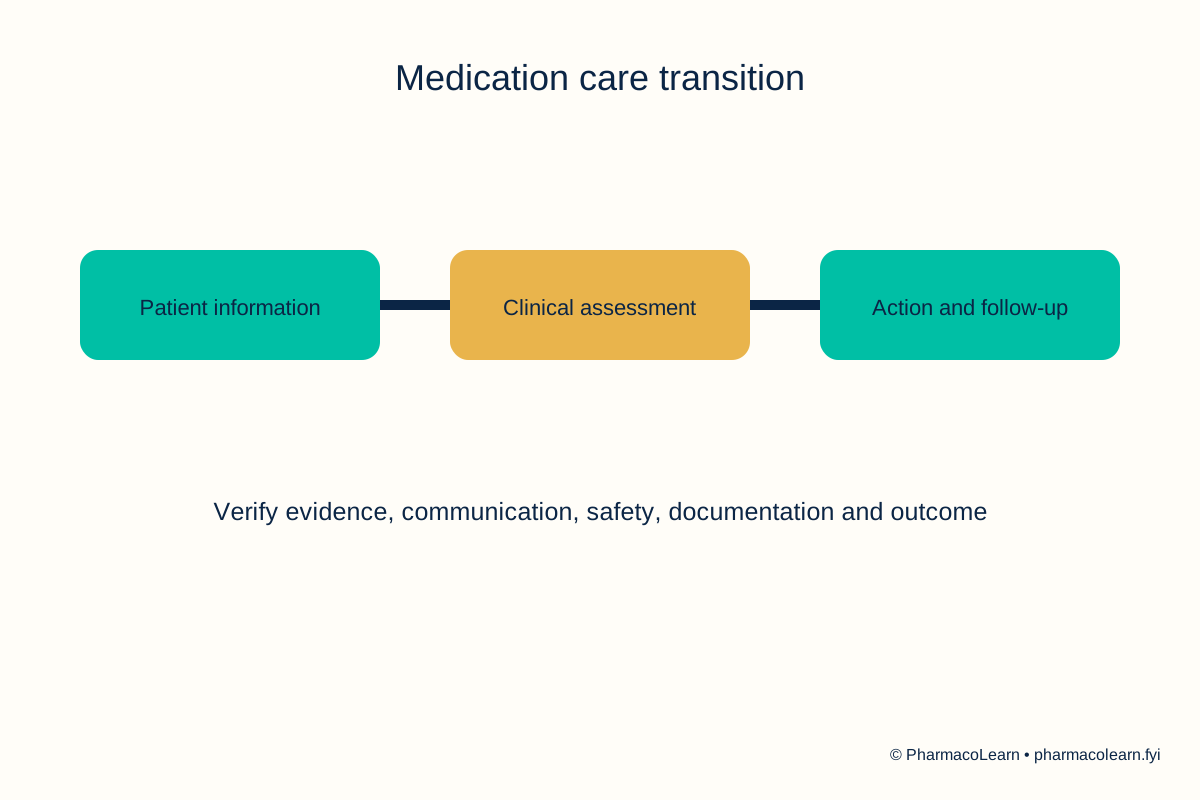
Medication safety improves when reporting is easy, feedback is timely, and changes are tested. Examples include standardizing concentrations, separating products, limiting dangerous abbreviations, improving electronic alerts, using independent checks for high-risk steps, and involving patients in verification. Every intervention should have an owner, a completion date, and a measure that can show whether the risk actually decreased.
References
Safety actions should be reviewed for measurable follow-up.
- PharmacoLearn, Pharm D Year 4 syllabus: https://pharmacolearn.fyi/syllabus/pharm-d/year-4/
- Pharmacy Council of India, Pharm.D. Regulations, 2008.
- World Health Organization, Medication Without Harm and patient-safety resources.
Diagrams
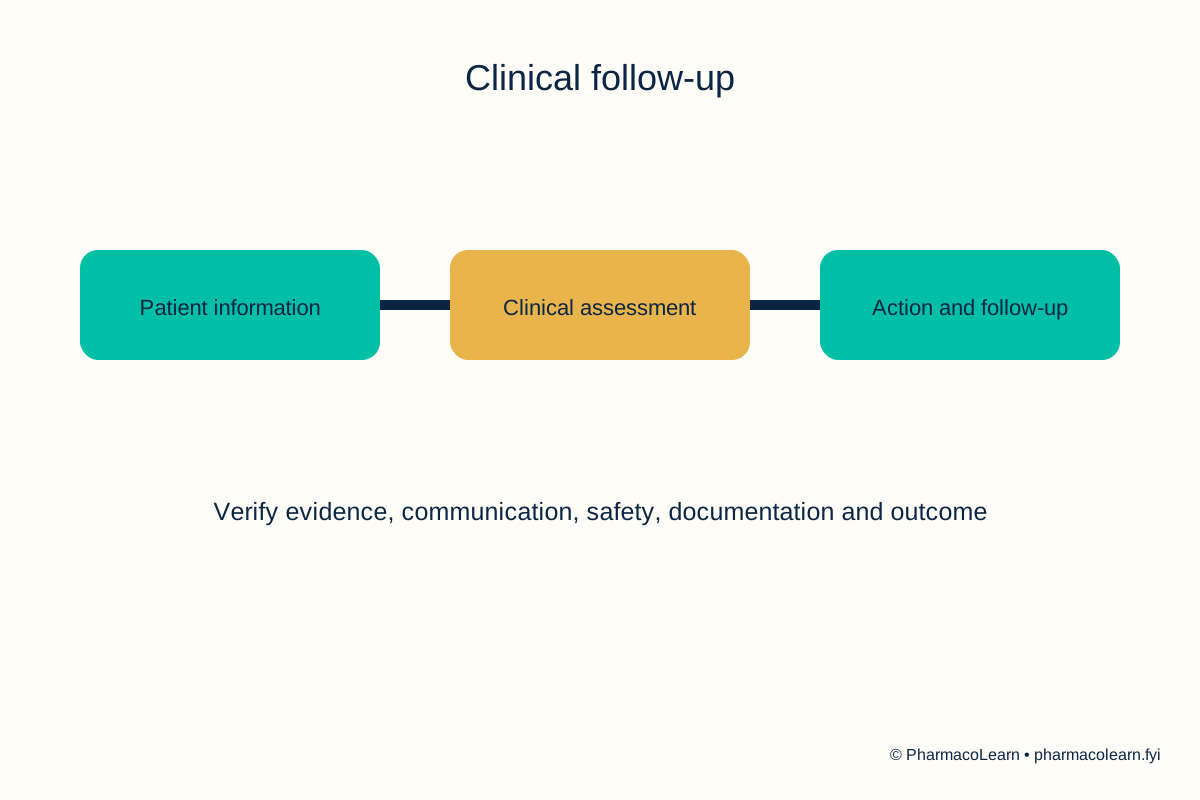
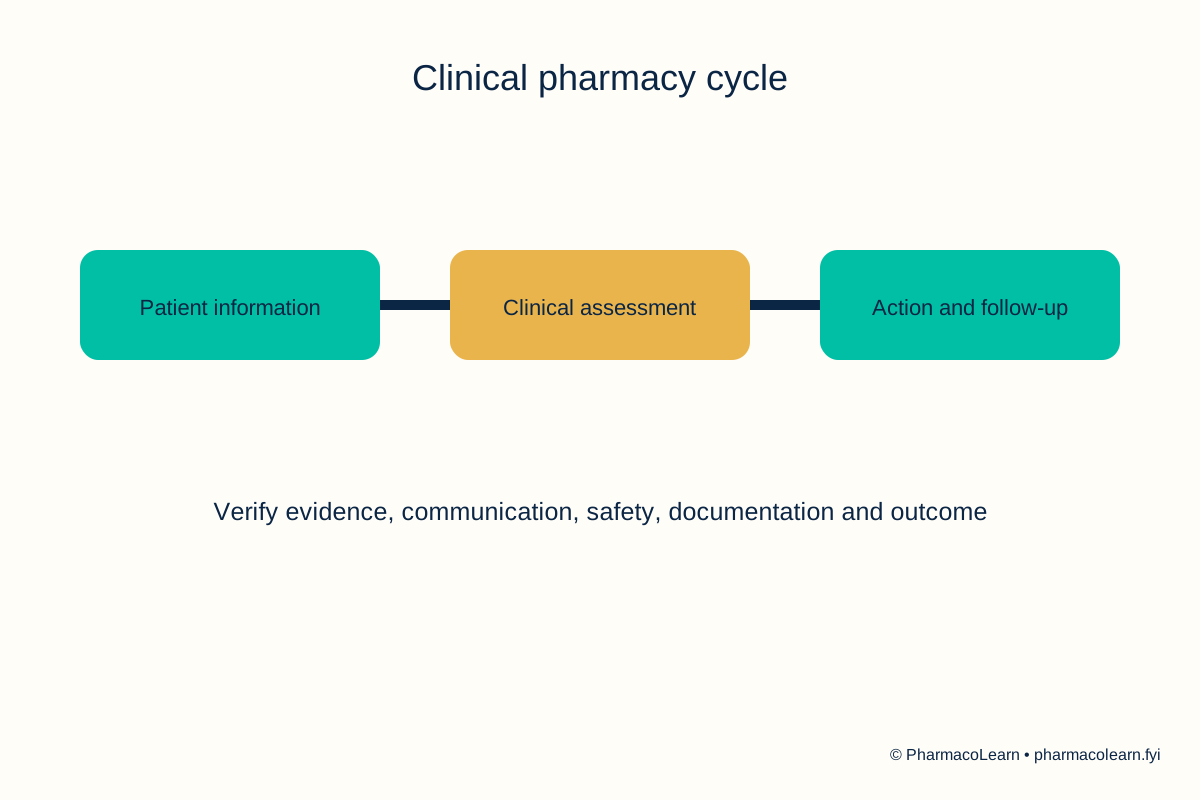
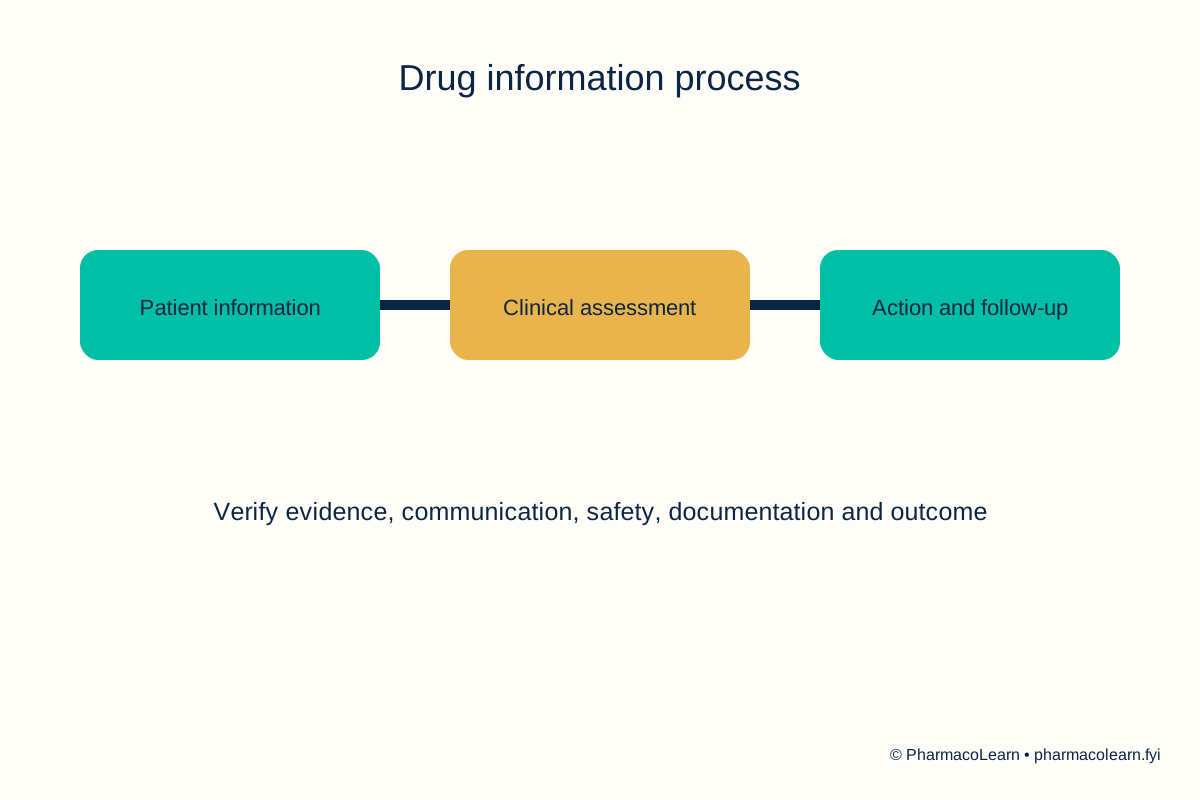
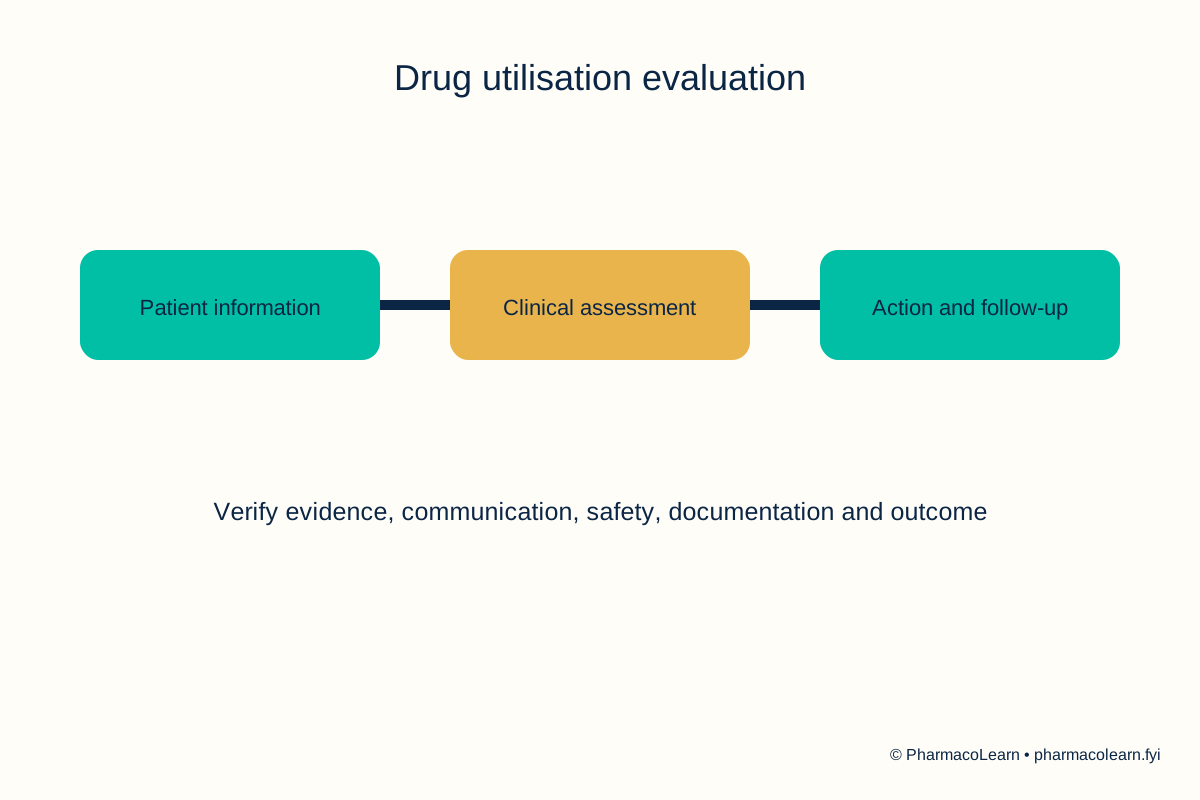
Other Year 4 subjects: Pharm D Year 4, 4.1 Pharmacotherapeutics III · Pharm D Year 4, 4.2 Hospital Pharmacy · Pharm D Year 4, 4.3 Clinical Pharmacy · Pharm D Year 4, 4.4 Biostatistics and Research Methodology · Pharm D Year 4, 4.5 Biopharmaceutics and Pharmacokinetics · Pharm D Year 4, 4.6 Clinical Toxicology · Year 4 · Pharm D