
← Pharmaceutical Analysis Practicals
Colourimetric Estimation of Sulpha Drugs Using BMR Reagent
1. Aim
To complete the Year 3 syllabus practical colourimetric estimation of sulpha drugs using Bratton-Marshall reagent (BMR) using an instructor-approved method or dataset. Actual analyte, measurements, and result must be entered in the student record.
2. Requirements
Instructor-approved sample and reference standard, validated method, instrument and calibration records, blank and controls, observation sheet, calculator or graphing aid, protective equipment, and chemical waste route. Confirm sample identity from its label and use the college method sheet for reagent quantities, concentrations, wavelengths, pH, and temperature. Acceptance criteria are to be recorded from the assigned current monograph or approved college method in the student record.
3. Theory
BMR means Bratton-Marshall reagent, the coupling reagent used in this colourimetric sulpha-drug method. The approved reagent grade, concentration, selected sulpha drug, and validated reaction conditions must follow the instructor's method sheet before any wet-lab work. Colourimetry relates absorbance of a coloured product to standards within a specified range, with blank and matrix checks.
4. Procedure
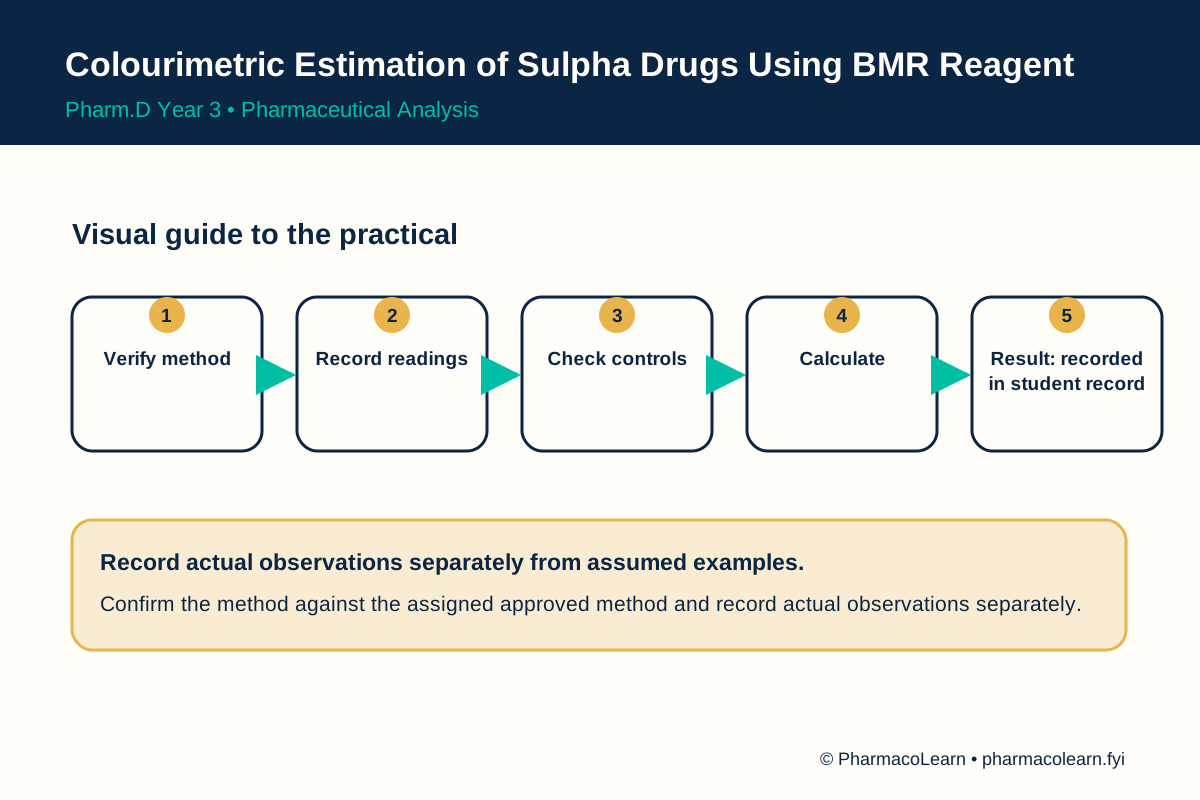
- Confirm sample identity, method version, hazards, instrument calibration, and required controls.
- Record raw standards, blanks, sample readings, units, and any preparation or dilution factors.
- Follow the verified laboratory method under instructor supervision, or analyze its supplied dataset.
- Confirm the approved BMR recipe and selected sulpha drug with the course laboratory. Review standard and sample absorbance records only after identity and reaction conditions are verified. Calculate with the approved calibration.
- Check the fit, control recovery, and measurement range before applying a formula.
- Report the calculation with units, method limitations, and unresolved details recorded in the student record.
5. Observation and calculation
| Student record field | Entry |
|---|---|
| Case or product | Record here |
| Method | Record here |
| Observation | Record here |
| Inference | Record here |
| Supervisor check | Record here |
| Outcome | Record here |
Assumed values for calculation practice only: Assumed blank-corrected absorbance is 0.40 for an assumed sample. This invented number cannot yield a sulpha-drug concentration without a verified BMR method and standard curve. Each invented input and output is assumed, not a reagent instruction or actual laboratory result.
6. Output or final result
Submit a labelled BMR identity and calibration, calculations where justified, and a conditional conclusion. Record the supervised outcome here.
Teaching-lab safety: Use instructor-supervised chemical handling and the approved disposal method. No assumed value here authorizes a preparation or analytical release decision.
This page is a supervised-activity guide; it does not report a completed case.
7. Sources
- PharmacoLearn Pharm.D Year 3 syllabus
- PCI Pharm.D Regulations and Syllabus
- East Point College of Pharmacy, Modern Pharmaceutical Analysis manual, BMR sulphanilamide exercise
- USP <857> Ultraviolet-Visible Spectroscopy
- USP <1226> Verification of Compendial Procedures
Back to Pharmaceutical Analysis Practicals · All Pharm D Practicals · Pharm D
Theory notes: Pharmaceutical Analysis