
Pharm D Year 5, 5.3 Clinical Pharmacokinetics and Pharmacotherapeutic Drug Monitoring — Pharm D Year 5
Notes for Pharm D Year 5, 5.3 Clinical Pharmacokinetics and Pharmacotherapeutic Drug Monitoring, Pharm D Year 5, organised unit by unit following the PCI Pharm D syllabus. 7 units, 20 diagrams.
Syllabus: Pharm D Year 5 syllabus
Units in this subject
- Unit 1: Clinical Pharmacokinetics
- Unit 2: Dosage-Regimen Design
- Unit 3: Pharmacokinetic Drug Interactions
- Unit 4: Therapeutic Drug Monitoring
- Unit 5: Dosage Adjustment in Renal and Hepatic Disease
- Unit 6: Population Pharmacokinetics and Bayesian Dosing
- Unit 7: Pharmacogenetics and Pharmacokinetic Pharmacodynamic Integration
Unit 1: Clinical Pharmacokinetics
Syllabus scope
This unit introduces clinical pharmacokinetics and its use in individualizing medicine therapy.
Clinical pharmacokinetics applies absorption, distribution, metabolism, and excretion principles to patient care. The purpose is not to calculate a number for its own sake. It is to select a regimen that achieves an appropriate exposure, monitor response and toxicity, and adapt when patient or medicine conditions change.
Core parameters
Clearance describes elimination capacity. Volume of distribution relates amount to concentration. The elimination rate constant links clearance and volume. Half-life describes the time for concentration to decline by half under the relevant model. Bioavailability describes the fraction reaching systemic circulation after a nonintravenous route.
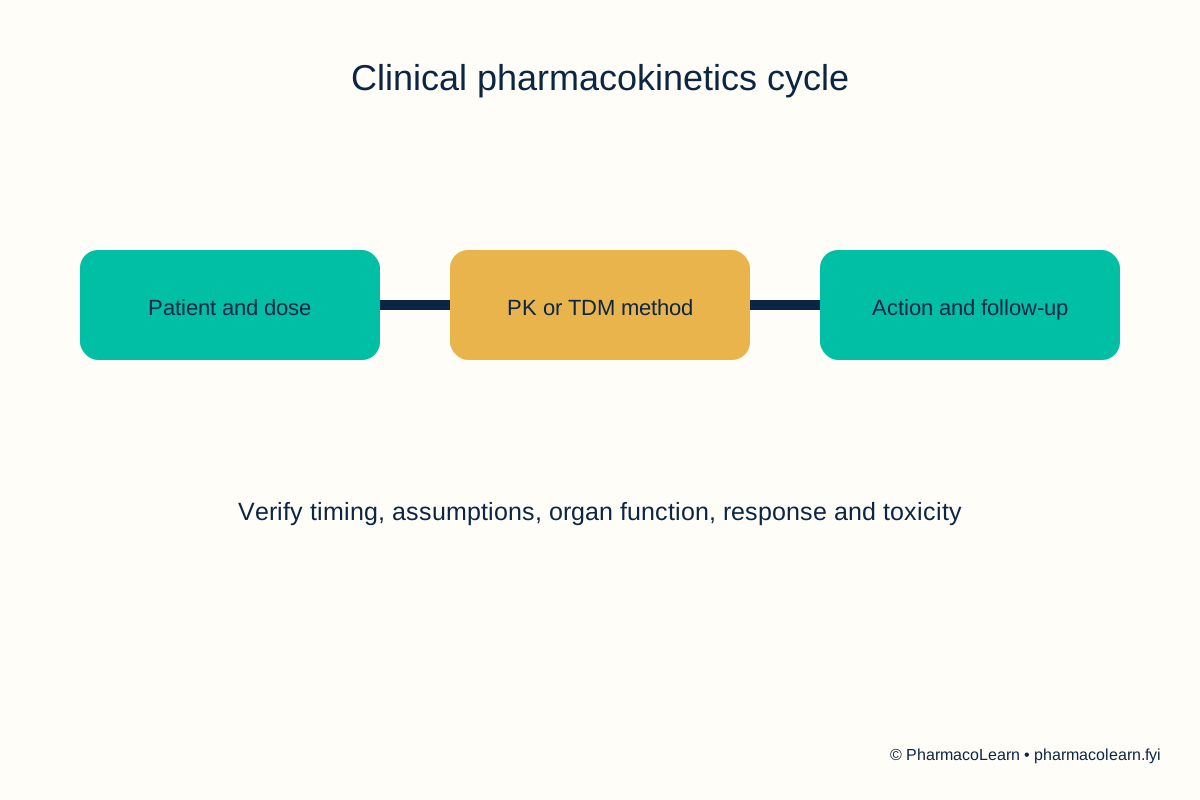
Clinical pharmacokinetic pathway
- Define the therapeutic target and relevant exposure measure.
- Estimate patient-specific parameters from weight, organ function, age, disease, or prior concentrations.
- Choose dose, route, interval, and formulation.
- Predict concentration and time course.
- Measure clinical response and toxicity.
- Use a correctly timed sample when TDM is appropriate.
- Revise the regimen and document assumptions.
Variability
Interpatient variability arises from genetics, age, weight, organ function, disease, interactions, adherence, formulation, and sampling. Intrapatient variability can follow acute illness, fluid shifts, nutrition, inflammation, or changing co-medications. A population average is a starting point, not a patient measurement.
Clinical correlation
The same dose can produce different concentrations in two patients, while the same concentration can produce different effects. Pharmacodynamic response, therapeutic window, disease severity, and toxicity risk must accompany pharmacokinetic reasoning.
Worked example
A patient has a higher concentration than expected after a stable dose. The pharmacist reviews timing, adherence, new medicines, renal or hepatic change, formulation, laboratory error, and illness before reducing the dose.
FAQs
Is a therapeutic concentration always effective? No. It is a guide that must be interpreted with response and toxicity.
Why document assumptions? The calculation may be wrong if the model or patient data are wrong.
Takeaways
- Use pharmacokinetics to support patient-specific decisions.
- Verify dose and sample timing.
- Combine exposure with clinical response and safety.
Integrated practice note
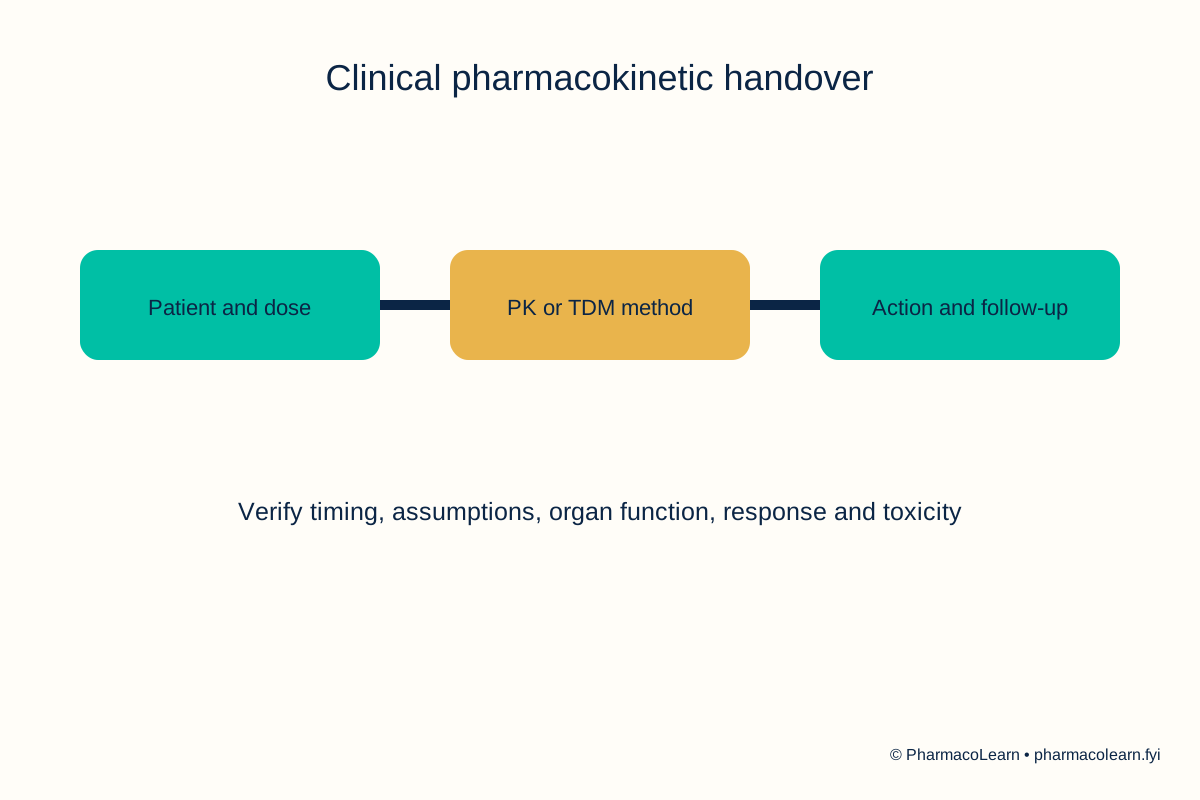
Clinical pharmacokinetic reasoning begins with the decision that needs to be made. Is the concern treatment failure, toxicity, a formulation change, a missed dose, an interaction, or an organ-function change? Each question may require a different sample, parameter, or action. A concentration report should therefore include dose, formulation, route, administration time, sample time, indication, patient status, and the decision requested.
Pharmacokinetic models are approximations. A patient with sepsis, oedema, burns, pregnancy, malnutrition, or rapidly changing kidney function may not fit the original population. Use a model as a structured starting point, monitor the patient, and revise the estimate when evidence changes. Document whether the calculation is based on measured, estimated, or assumed parameters.
Patient education is part of pharmacokinetic safety. Explain the dose schedule, missed-dose instruction, important toxicity signs, interactions to avoid, and why a blood sample must be timed. Invite the patient to report changes in medicines, diet, illness, hydration, or adherence before the next interpretation.
References
- PharmacoLearn, Pharm D Year 5 syllabus: https://pharmacolearn.fyi/syllabus/pharm-d/year-5/
- Pharmacy Council of India, Pharm.D. Regulations, 2008.
- Rowland and Tozer, Clinical Pharmacokinetics and Pharmacodynamics, latest available edition.
Unit 2: Dosage-Regimen Design
Syllabus scope
This unit covers nomograms and tabulations, conversion from intravenous to oral dosing, dose and interval selection, and dosing in elderly, paediatric, and obese patients.
Regimen design
A maintenance regimen replaces eliminated drug. A loading regimen reaches a target concentration more quickly. Dose depends on target concentration, volume, bioavailability, and route. Maintenance rate depends mainly on target concentration, clearance, and bioavailability. Interval changes fluctuation and time between doses.
Regimen pathway
- Define target concentration or exposure and therapeutic endpoint.
- Select model, volume, clearance, and bioavailability.
- Calculate loading dose when rapid effect is needed.
- Calculate maintenance dose or rate.
- Choose interval from half-life, peak-trough tolerance, formulation, and adherence.
- Check maximum dose, route, infusion rate, interactions, and patient factors.
- Monitor and revise.
Intravenous to oral conversion
Conversion requires consideration of oral bioavailability, absorption, first-pass metabolism, formulation, dose frequency, clinical stability, and therapeutic equivalence. A milligram-for-milligram switch is not automatically correct. Some medicines have different oral and intravenous salt, release, or dosing conventions.
Worked calculation
If a target average exposure requires an intravenous rate of 100 mg per day and the oral bioavailability is estimated at 0.5, the corresponding oral daily amount under a simple linear assumption is 100 divided by 0.5, or 200 mg per day. This is a starting calculation, not a final prescription. Verify the product, clinical indication, interaction, renal function, and therapeutic target.
Special populations
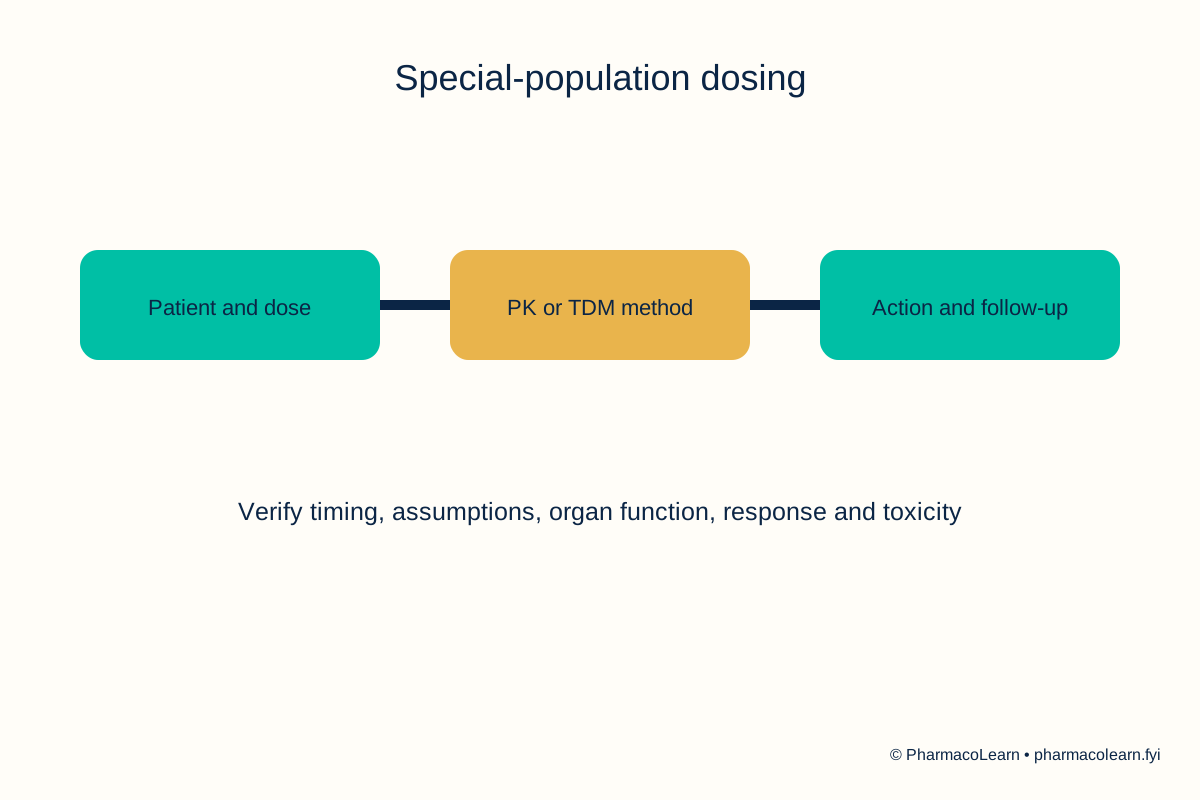
Older adults may have reduced renal function, altered body composition, polypharmacy, and increased sensitivity. Children require age, weight, development, formulation, and caregiver considerations. Obesity changes fat mass, lean mass, cardiac output, and clearance unpredictably. The correct weight scalar is medicine specific and must be confirmed from the medicine-specific method.
Clinical correlation
Nomograms simplify decisions but can mislead when the patient falls outside the population used to construct them. The pharmacist should identify the model and limitations.
FAQs
What is a loading dose for? To approach a target concentration rapidly.
Can an oral dose equal an intravenous dose? Only when bioavailability and product behavior justify it.
Takeaways
- Separate loading and maintenance logic.
- Account for bioavailability and interval.
- Use patient-specific weight and organ-function methods.
Integrated dosing note
The regimen should be checked against the clinical goal. A loading dose is useful when delay is harmful and the target and distribution estimate are sufficiently reliable. A maintenance regimen must replace elimination without accumulating beyond the therapeutic window. The interval should account for half-life, formulation, administration practicality, peak-related adverse effects, trough-related failure, and adherence.
For older adults, children, and people with obesity, the pharmacist should not copy a single weight rule across medicines. Verify the source method, units, maximum dose, organ function, and evidence population. When uncertainty is material, use closer monitoring and a conservative titration plan. A calculation is not permission to ignore clinical response.
For an intravenous to oral switch, confirm that the patient is absorbing oral medicines, can swallow, has no major gastrointestinal limitation, and is clinically stable. Check whether the oral formulation is immediate release, modified release, liquid, or a different salt. After conversion, set a review time and monitor response rather than assuming equivalent exposure.
Dose-regimen calculation framework
Separate the calculation into target, patient, medicine, and safety checks. For a loading dose, identify the target concentration, relevant volume of distribution, and bioavailability. For a maintenance dose, identify clearance, target concentration, interval or infusion rate, and bioavailability. Then check whether the patient is at steady state, whether the medicine follows linear kinetics, and whether the target is appropriate for the indication.
For example, if a model suggests a loading dose of 400 mg but the available product is supplied only as 250 mg units, the practical regimen may require a different number or formulation. The pharmacist should not round silently. Check maximum dose, infusion concentration, administration rate, formulation, organ function, and monitoring. If the target or model is uncertain, treat the result as provisional and confirm it before administration.
Nomograms and tables can reduce arithmetic errors but may embed assumptions about weight, clearance, age, or disease. Read the legend and source, use the correct units, and document the selected row or equation. After administration, assess actual response and toxicity because a mathematically correct dose can still be clinically wrong for an individual patient.
References
- PharmacoLearn, Pharm D Year 5 syllabus: https://pharmacolearn.fyi/syllabus/pharm-d/year-5/
- Pharmacy Council of India, Pharm.D. Regulations, 2008.
- Rowland and Tozer, Clinical Pharmacokinetics and Pharmacodynamics, latest available edition.
Unit 3: Pharmacokinetic Drug Interactions
Syllabus scope
This unit covers pharmacokinetic interactions, inhibition and induction of metabolism, and inhibition of biliary excretion.
Interaction mechanisms
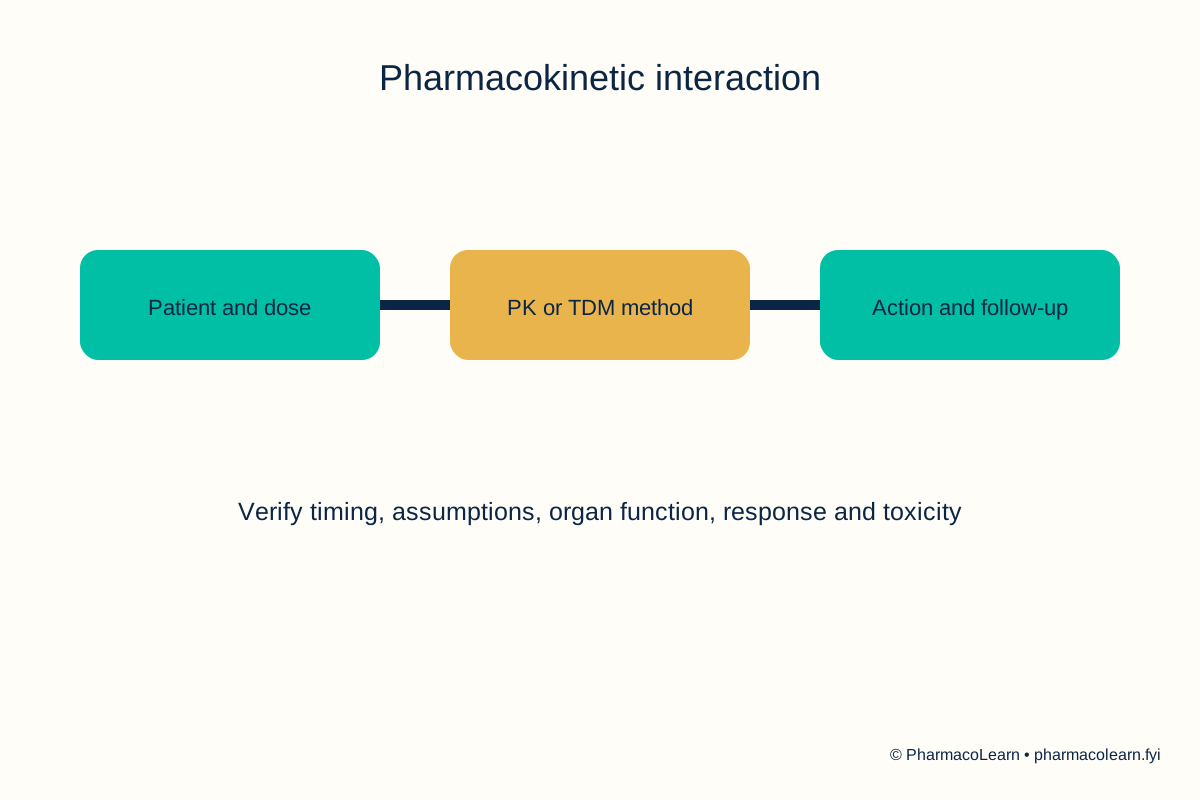
A pharmacokinetic interaction changes absorption, distribution, metabolism, or excretion. Absorption can be altered by pH, binding, motility, or transport. Distribution can change through protein binding or tissue transport. Metabolism can be inhibited or induced. Excretion can change through renal or biliary transport.
Interaction pathway
- Identify the victim medicine and exposure-response relationship.
- Identify the perpetrator medicine, dose, timing, and mechanism.
- Determine whether the effect changes concentration, active metabolite, or pharmacodynamic response.
- Assess onset, offset, magnitude, and patient vulnerability.
- Avoid, separate, substitute, adjust, or monitor as appropriate.
- Reassess after starting, stopping, or changing either medicine.
Inhibition often occurs faster than induction because it changes existing enzyme or transporter activity. Induction requires increased expression or activity and may persist after the inducer stops. The exact time course depends on the pathway and medicine.
Biliary excretion
Transporters move some medicines or metabolites into bile. Inhibition can increase systemic exposure or alter enterohepatic recycling. Disease and competing substances may also change biliary clearance.
Clinical correlation
An interaction database alert is a signal to evaluate, not a complete decision. Check dose, timing, route, renal and hepatic function, indication, therapeutic window, and alternative medicines.
Worked example
A strong enzyme inhibitor is started in a patient receiving a narrow-therapeutic-index substrate. The pharmacist identifies likely delayed exposure increase, contacts the prescriber, and arranges an alternative or monitoring plan. Simply separating administration times may not solve enzyme inhibition.
FAQs
Why can stopping an inducer remain important after discontinuation? Enzyme activity may return gradually.
Are all protein-binding interactions clinically important? No. Free concentration, clearance, tissue distribution, and pharmacodynamic response determine relevance.
Takeaways
- Identify mechanism, time course, magnitude, and vulnerability.
- Distinguish inhibition from induction.
- Monitor after both starting and stopping an interacting medicine.
Integrated interaction note
Interactions should be reviewed at transitions, not only when a new prescription is written. Ask what was started, stopped, increased, decreased, missed, or substituted and when the clinical change began. The pharmacist should distinguish concentration-mediated toxicity from a pharmacodynamic interaction that can occur without a major concentration change. For a narrow-therapeutic-index medicine, a plan may include avoidance, temporary hold, dose change, alternate therapy, clinical observation, laboratory testing, or correctly timed TDM.
When an inducer is stopped, the victim medicine may rise gradually. When an inhibitor is stopped, the effect may resolve according to inhibitor clearance and enzyme recovery. Explain this delayed risk to the patient and team. Interaction tools are useful only when the product, dose, route, indication, organ function, and timing are correct.
The patient’s medication list should include nonprescription products, supplements, traditional medicines, tobacco, alcohol, and recreational substances when clinically relevant. A new interaction can also result from stopping a food, supplement, or inducer. Document the mechanism, expected direction, onset, offset, and plan so the team can reassess the risk.
References
- PharmacoLearn, Pharm D Year 5 syllabus: https://pharmacolearn.fyi/syllabus/pharm-d/year-5/
- Pharmacy Council of India, Pharm.D. Regulations, 2008.
- Stockley’s Drug Interactions, latest available edition.
Unit 4: Therapeutic Drug Monitoring
Syllabus scope
This unit covers TDM, individualization, variability, indications, protocol, pharmacokinetic and pharmacodynamic correlation, and TDM in cardiovascular disease, seizure disorders, psychiatry, and transplantation.
TDM principles
TDM measures medicine concentration to support a dosing decision when exposure-response variability is meaningful, the therapeutic window is narrow, the concentration is measurable, and a reliable action follows. A number without a clinical question, dose history, or sampling time is weak evidence.
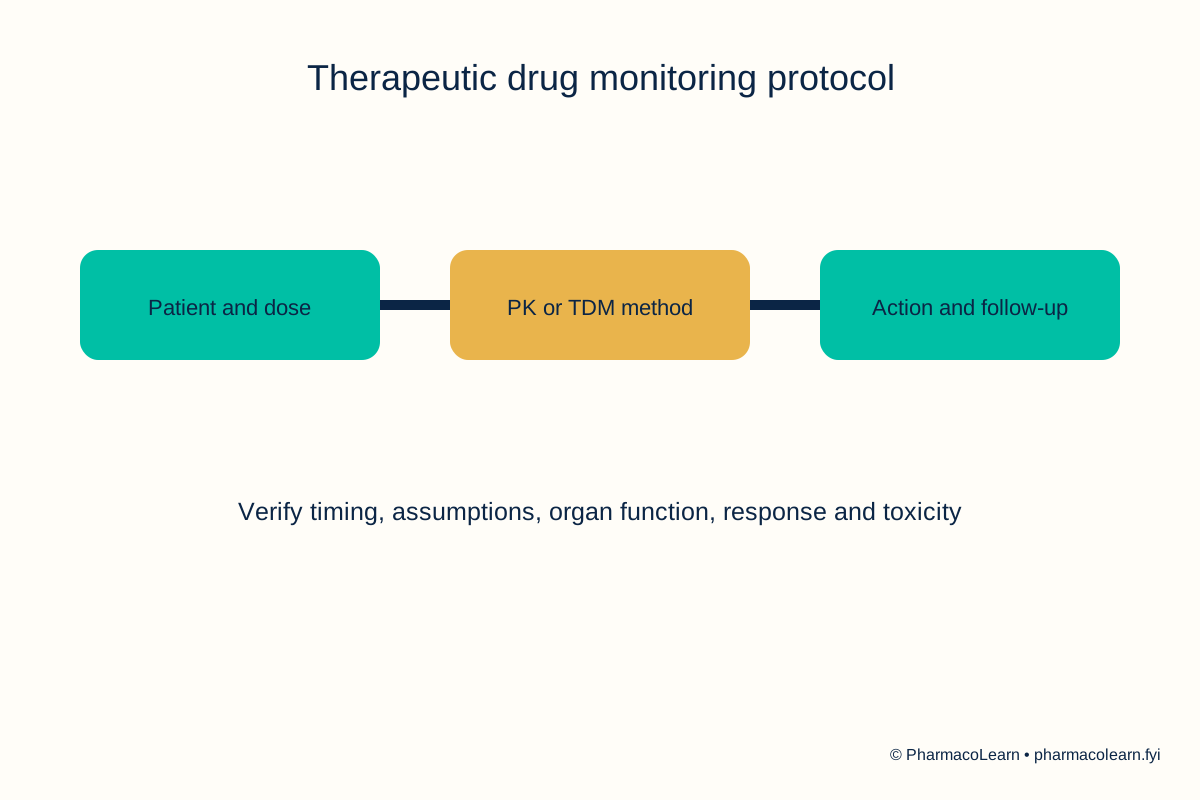
TDM protocol
- Confirm indication, dose, formulation, route, and administration history.
- Define the clinical target and reason for testing.
- Choose a steady-state or event-specific sampling time.
- Record last dose and exact sample time.
- Interpret concentration with symptoms, laboratory results, adherence, interactions, and organ function.
- Decide whether to maintain, adjust, hold, or repeat therapy.
- Document the rationale and follow-up.
Peak, trough, random, and post-distribution samples answer different questions. Reference ranges vary by medicine, assay, indication, timing, and guideline. Do not guess a range. Use the current medicine-specific source and local protocol.
Mechanism and clinical reasoning
TDM works by connecting a measured exposure to a clinical decision. The pharmacist first identifies the question, confirms dose and sampling history, interprets the concentration in its pharmacokinetic context, compares it with the patient’s response and toxicity, and then recommends continuation, adjustment, repeat sampling, or another action. The concentration is evidence for the decision, not the decision by itself.
Disease applications
Cardiovascular TDM may involve medicines where concentration, renal function, ECG, or clinical effect guides safety. Antiseizure monitoring must consider seizure control, toxicity, protein binding, interactions, and timing. Psychiatric TDM may help adherence, interaction, unusual response, or toxicity assessment. Transplant medicines require close exposure and rejection or toxicity monitoring.
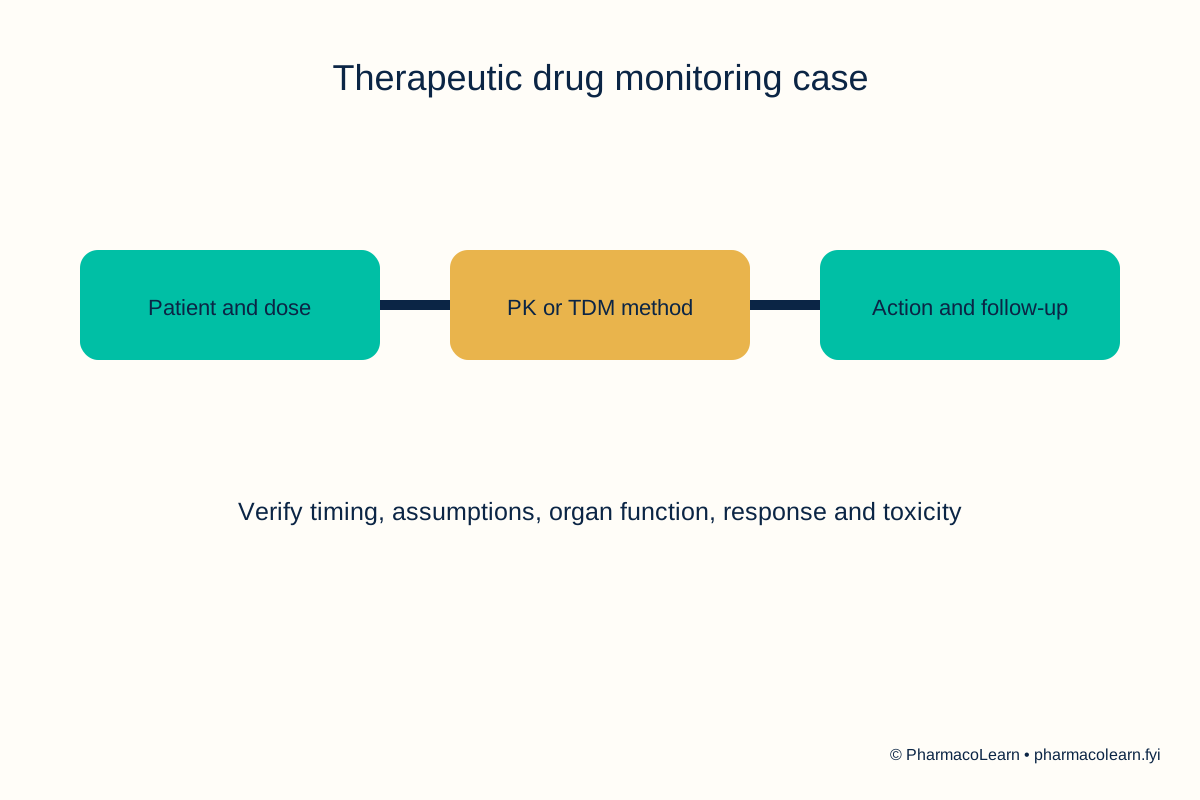
Worked TDM case
A trough sample is drawn two hours after a dose. It is not a valid trough. The pharmacist requests dose time, sample time, formulation, adherence, and clinical status before interpreting it or changing therapy.
Clinical correlation
Therapeutic ranges are population guides, not guarantees. A patient may respond below a range or experience toxicity within it.
FAQs
Does every medicine need TDM? No. It requires a useful exposure-response relationship and actionable result.
Why is timing critical? Concentration changes across the dosing interval and distribution phase.
Takeaways
- Start with a clinical question.
- Verify dose and sample timing.
- Interpret concentration with response and toxicity.
Integrated TDM note
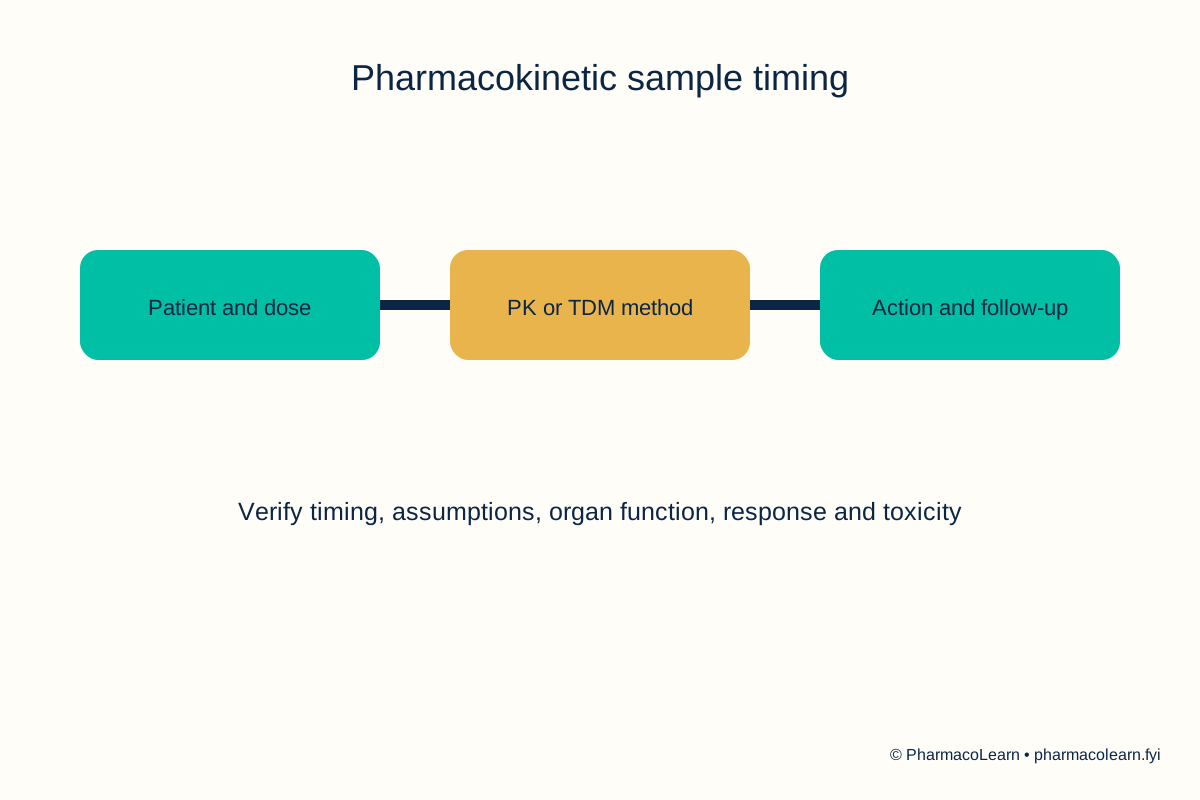
Before requesting TDM, write the question in one sentence. Examples include whether exposure is adequate after a dose change, whether toxicity is explained by accumulation, whether adherence is plausible, or whether an interaction changed clearance. Choose a sample that answers that question. A trough requires a true pre-dose sample, while a peak may require a defined post-dose interval and distribution phase.
Interpretation should include the assay method, units, target population, indication, albumin or binding state where relevant, renal and hepatic function, interacting medicines, symptoms, and the time course of response. Ranges and local protocols can differ, so use an authoritative current source rather than copying a range from memory.
The report should state whether the result was interpreted as a peak, trough, random, or post-distribution value. If timing is unknown, label the result limited and obtain better information rather than creating a false target comparison. TDM is successful when it changes a safe, clinically relevant decision.
TDM case framework
Consider a patient receiving a narrow-therapeutic-index medicine who develops a new symptom. First, identify whether the symptom could represent toxicity, disease progression, treatment failure, or an unrelated problem. Confirm the product, dose, route, schedule, formulation, recent changes, missed doses, and administration record. Check renal and hepatic function, albumin or other binding factors when relevant, interacting medicines, and the time course of symptoms.
Next, decide whether a concentration will answer the question. If yes, select the sampling time that matches the decision. For a trough, collect immediately before the next dose after the relevant steady-state or event condition. For a peak, use the defined post-dose interval and account for distribution. If a sample is collected at the wrong time, retain it in the record but avoid forcing it into a peak or trough category.
When the result arrives, check units, assay, reference context, dose and sample times, and clinical status. Compare exposure with the therapeutic goal, but do not use a range as an automatic prescription. A patient within a population range may still have toxicity, and a patient outside it may need continuation if benefit is clear and safety is acceptable. Decide whether to hold, reduce, increase, switch, repeat, or continue, and state the follow-up time.
TDM documentation should be understandable to the next clinician. Include the question, relevant history, sample interpretation, evidence source, recommendation, discussion, and monitoring plan. If a current range or protocol cannot be confirmed, obtain authoritative guidance before making a high-risk change.
References
- PharmacoLearn, Pharm D Year 5 syllabus: https://pharmacolearn.fyi/syllabus/pharm-d/year-5/
- Pharmacy Council of India, Pharm.D. Regulations, 2008.
- Burton, Principles of Clinical Pharmacology and Therapeutic Drug Monitoring, latest available edition.
Unit 5: Dosage Adjustment in Renal and Hepatic Disease
Syllabus scope
This unit covers renal impairment, pharmacokinetic considerations, dosage adjustment, GFR and creatinine clearance, uremia, extracorporeal removal, and hepatic disease.
Renal impairment
Renal disease can reduce filtration, secretion, metabolism, and excretion of parent drug or metabolites. Uremia can alter protein binding, distribution, transport, and pharmacodynamic sensitivity. A creatinine value should be interpreted with age, weight, sex, muscle mass, trend, and clinical context.
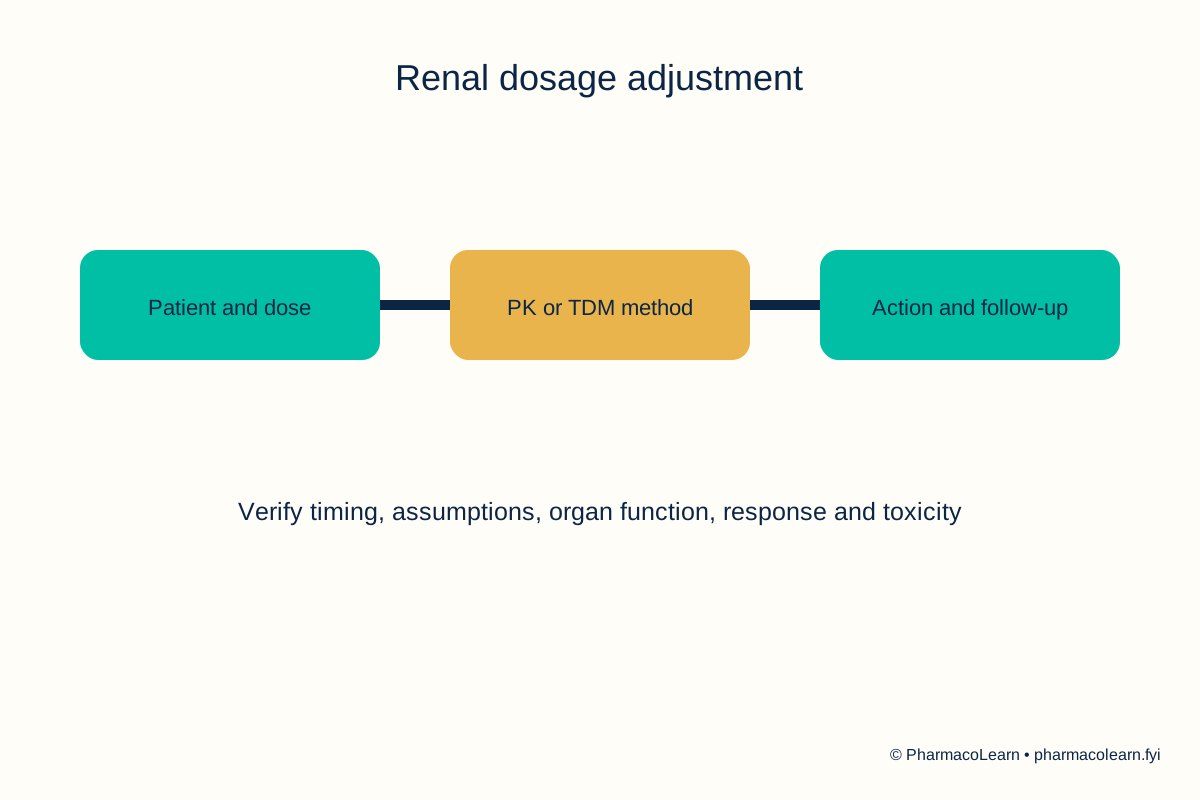
Renal-adjustment pathway
- Identify renal elimination and active or toxic metabolites.
- Estimate kidney function using the method appropriate to the medicine and patient.
- Decide whether to change dose, interval, route, or medicine.
- Consider loading dose separately from maintenance.
- Assess dialysis or extracorporeal removal.
- Monitor response, toxicity, and changing renal function.
Creatinine clearance and estimated GFR are related but not identical measures. The formula, body-weight choice, units, and laboratory method matter. Equation and threshold selection are patient and medicine specific and must be confirmed from the medicine-specific guidance.
Mechanism and clinical reasoning
Organ-function adjustment follows the path from physiology to exposure. Reduced filtration, secretion, metabolism, or dialysis removal changes clearance, which can increase exposure and accumulation. The pharmacist identifies the affected pathway, chooses an appropriate estimate, separates loading from maintenance logic, accounts for active metabolites and extracorporeal removal, and monitors response as organ function changes.
Hepatic disease
Liver disease can reduce metabolic capacity, change hepatic blood flow, alter protein binding, cause ascites, and increase sensitivity to central nervous system medicines. Enzyme markers alone do not quantify clearance. Use clinical disease severity, medicine extraction, active metabolites, and monitoring.
Extracorporeal removal
Dialysis removal depends on molecular size, water solubility, protein binding, volume of distribution, and clearance. A dose may need supplementation after a session for selected medicines.
Worked example
If renal function declines during therapy, the pharmacist checks trend and timing rather than using one historical estimate. For a renally cleared narrow-window medicine, the team may adjust dose or interval and obtain a correctly timed concentration.
Clinical correlation
Renal or hepatic deterioration can turn a previously tolerated regimen into an accumulation or treatment-failure problem. The pharmacist reviews current laboratory trends, fluid status, dialysis timing, active metabolites, interacting medicines, and clinical response, then communicates a documented adjustment and follow-up plan to the care team.
FAQs
Should loading dose always be reduced in renal disease? Not necessarily; it depends mainly on distribution and target, while maintenance depends more on clearance.
Can liver enzymes alone guide dosing? No.
Takeaways
- Separate loading and maintenance adjustment.
- Use a medicine-appropriate kidney-function method.
- Consider active metabolites and extracorporeal removal.
Integrated organ-function note
Renal and hepatic adjustment requires a complete medication review. Identify which medicines are cleared by the affected organ, whether metabolites accumulate, whether the patient has changing fluid status, and whether a laboratory estimate is reliable for this body composition. Reassess after an acute kidney injury, dialysis schedule change, decompensated liver disease, major surgery, or addition of an inhibitor.
For extracorporeal removal, document the procedure, timing, membrane or modality when relevant, drug properties, and whether supplemental dosing is evidence based. Do not automatically give a replacement dose after every session. The decision depends on drug removal, clinical status, residual function, and the next scheduled dose.
Renal estimates can be unstable during acute illness. A rising or falling serum creatinine may lag behind a rapid change in filtration, and low muscle mass can make creatinine appear reassuring. Use trends, urine output, clinical context, and medicine-specific guidance. When uncertainty is material and the medicine is high risk, increase monitoring and seek specialist input.
References
- PharmacoLearn, Pharm D Year 5 syllabus: https://pharmacolearn.fyi/syllabus/pharm-d/year-5/
- Pharmacy Council of India, Pharm.D. Regulations, 2008.
- Rowland and Tozer, Clinical Pharmacokinetics and Pharmacodynamics, latest available edition.
Unit 6: Population Pharmacokinetics and Bayesian Dosing
Syllabus scope
This unit covers population pharmacokinetics, Bayesian theory, adaptive dosing with feedback, and analysis of population pharmacokinetic data.
Population pharmacokinetics
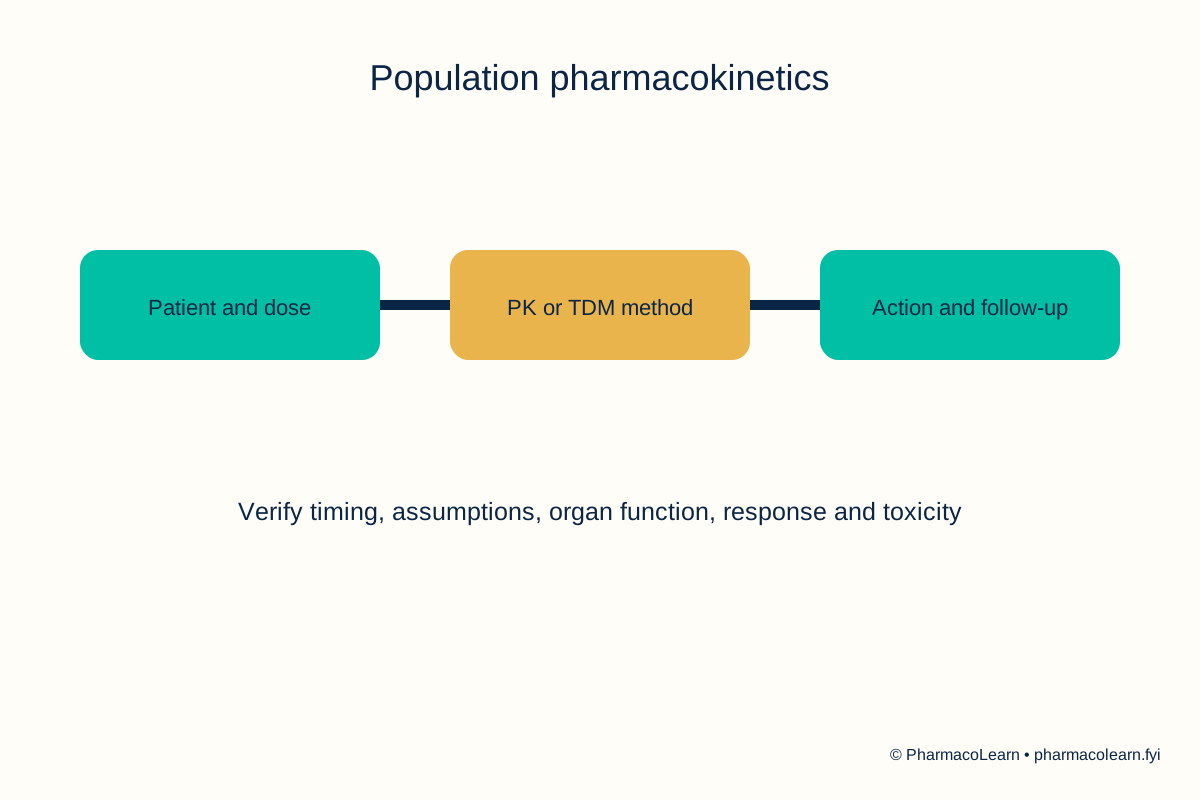
Population analysis estimates typical pharmacokinetic parameters and variability while identifying covariates such as weight, age, renal function, genotype, and interacting medicines. It can use sparse samples from routine care and quantify between-patient and residual variability.
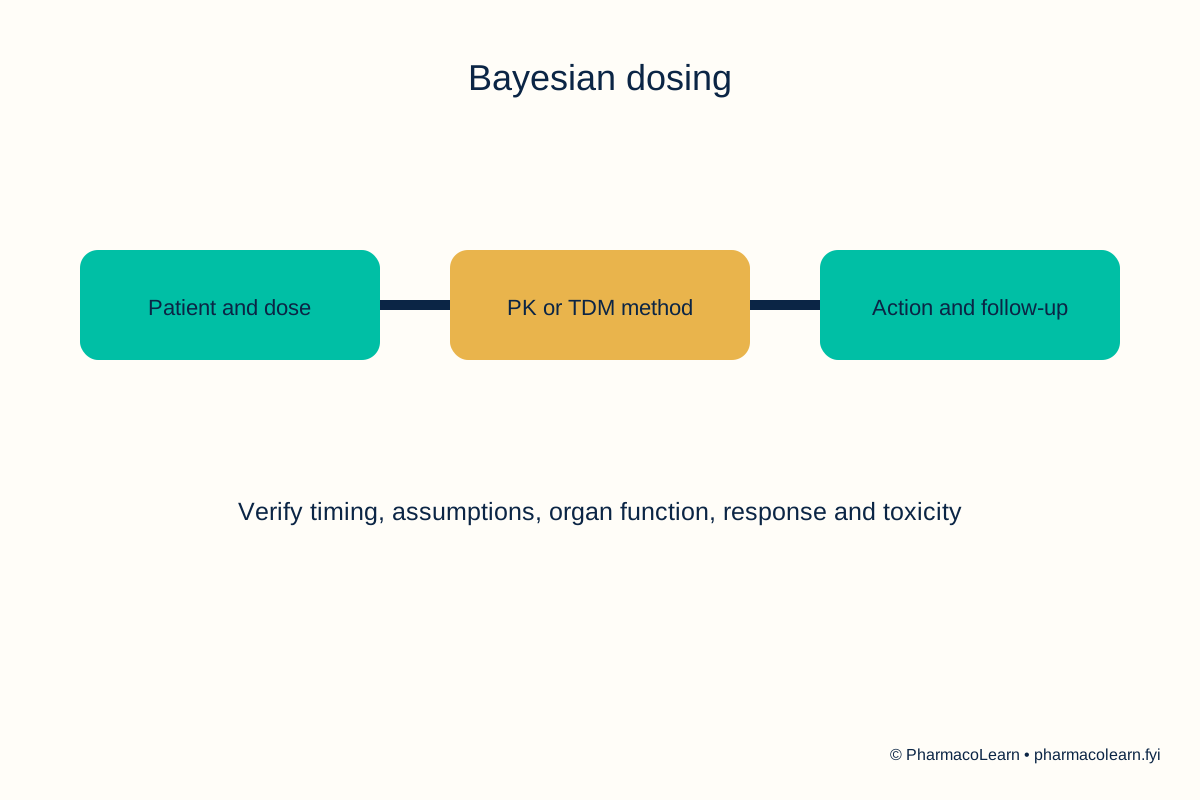
Bayesian dosing
Bayesian dosing combines a prior population model with patient-specific information to produce an individualized estimate. The prior may be updated by concentrations, dose history, timing, covariates, and response. The output is only as good as the model and data.
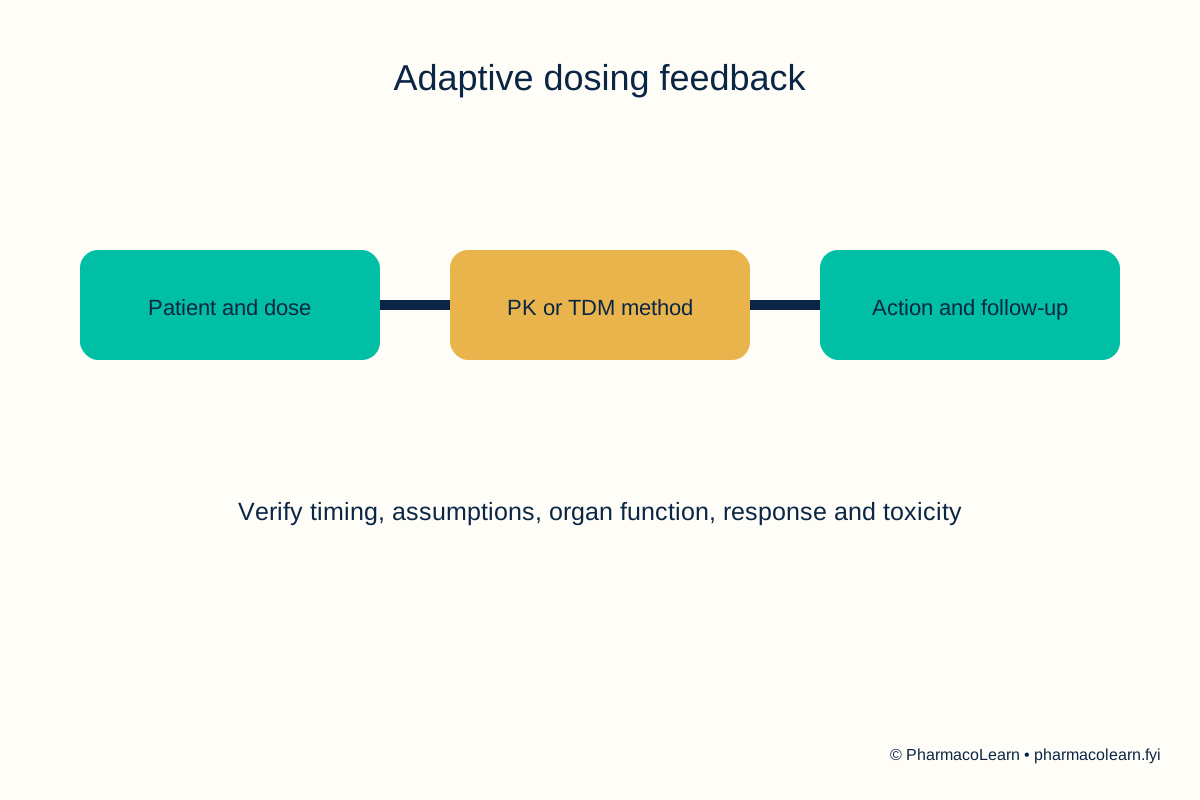
Adaptive dosing pathway
- Select an appropriate prior model and target.
- Confirm patient covariates and dose history.
- Obtain informative, correctly timed concentration data.
- Update the estimate using the model.
- Choose a dose that maximizes target attainment while limiting toxicity.
- Obtain feedback and update again when clinically needed.
Clinical correlation
Bayesian software should not be treated as an oracle. A wrong sampling time, undocumented missed dose, wrong formulation, or inappropriate population model can produce a precise but false estimate.
Worked example
A patient has a population-predicted clearance but one correctly timed concentration lower than expected. Bayesian updating may increase the estimated clearance, but the pharmacist first checks dose administration, sample timing, assay, and clinical status.
FAQs
Does one concentration always improve the estimate? Only if it is reliable and informative for the model.
What is feedback dosing? Dose adjustment followed by measurement and reassessment.
Takeaways
- Population models explain variability and covariates.
- Bayesian estimates combine prior and patient evidence.
- Data quality and model fit remain essential.
Integrated population-PK note
Population models are valuable when routine care provides sparse samples and patient variability is large. Covariates can explain part of the variability, but unexplained variability remains. A Bayesian result should be reviewed for plausible clearance, volume, residual error, dose history, sampling time, and model applicability. If the posterior estimate changes sharply after one sample, verify the sample and ask whether it is informative or inconsistent with the prior.
Adaptive dosing is a feedback loop. Give the selected dose, observe response or concentration, update the estimate, and decide whether another sample is needed. Record the target, model, covariates, prior, sample data, final estimate, and clinical action so another pharmacist can reproduce the reasoning.
Model diagnostics should be reviewed whenever possible. Implausible parameter estimates, large residuals, inconsistent dose history, or a sample outside the model’s intended range should trigger reassessment. Population pharmacokinetics supports decisions, but it does not remove the need for clinical examination, laboratory monitoring, adherence discussion, and shared decision-making.
References
- PharmacoLearn, Pharm D Year 5 syllabus: https://pharmacolearn.fyi/syllabus/pharm-d/year-5/
- Pharmacy Council of India, Pharm.D. Regulations, 2008.
- Ette and Williams, Pharmacometrics: The Science of Quantitative Pharmacology, latest available edition.
Unit 7: Pharmacogenetics and Pharmacokinetic Pharmacodynamic Integration
Syllabus scope
This unit covers genetic polymorphism in cytochrome P450 enzymes, drug transport and targets, and pharmacogenetic pharmacokinetic and pharmacodynamic considerations.
Genetic variability
Genetic variants can alter enzyme activity, transport, receptor response, immune recognition, or disease susceptibility. A person may have reduced, normal, increased, or uncertain function depending on genotype and phenotype. Environmental inhibitors, inducers, disease, and adherence can override a genotype-based prediction.
Pharmacogenetic pathway
- Identify a medicine and clinical decision for which testing is relevant.
- Determine whether a validated genotype or phenotype test is available.
- Translate result through the appropriate clinical guideline or label.
- Consider ancestry, family, co-medicines, organ function, and phenotype.
- Select medicine or dose and document interpretation.
- Explain implications, privacy, and future use to the patient.
Cytochrome P450 variation can change clearance and active-metabolite exposure. Transporter polymorphisms can alter absorption, distribution, or elimination. Pharmacodynamic variants can change target sensitivity or immune-mediated adverse reactions. Not every reported association is clinically actionable.
PK-PD correlation
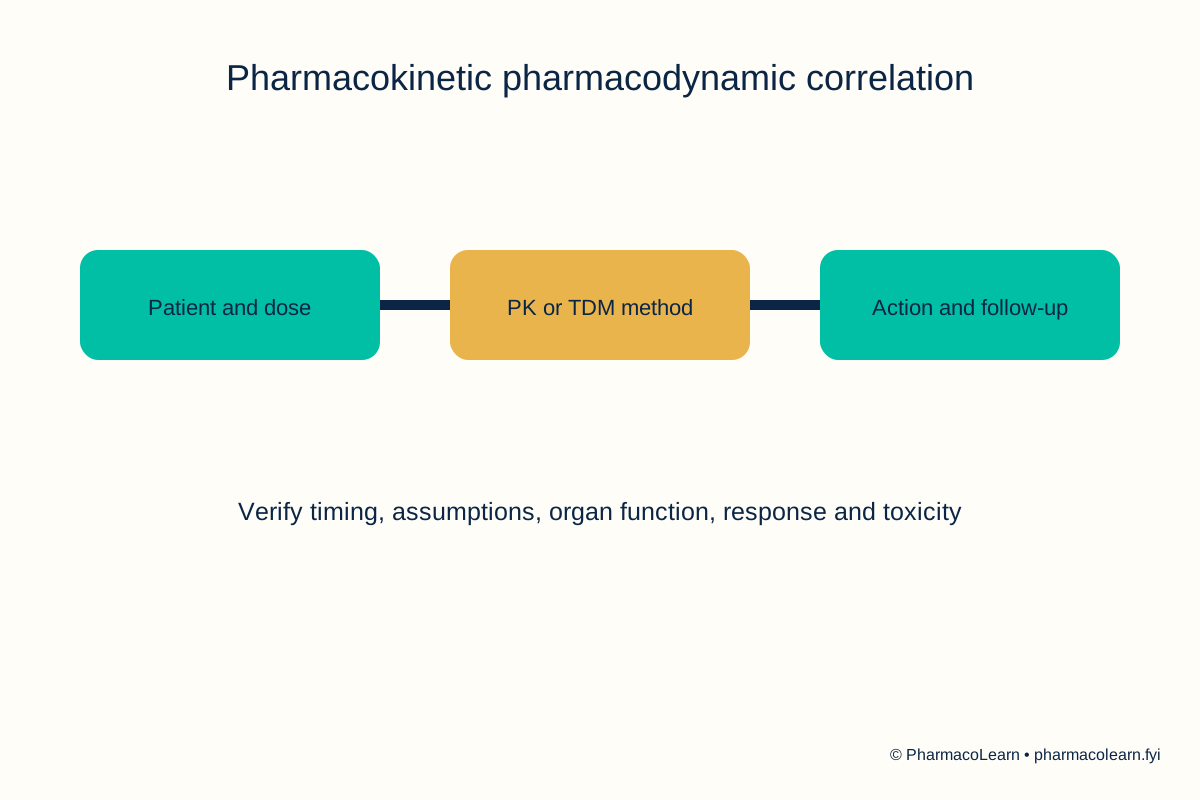
Pharmacokinetics links dose to concentration; pharmacodynamics links concentration to effect. Delay between concentration and effect can follow distribution, indirect mechanisms, or disease progression. Hysteresis, Emax, and exposure-response models may help describe the relationship, but the chosen model must fit the data.
Worked example
If a genotype predicts reduced activation of a prodrug, the pharmacist checks the medicine, guideline, test validity, interacting inhibitors, and clinical alternatives before recommending a change. Genotype alone is not a prescription.
Clinical correlation
Testing should have a clear action, validated interpretation, consent and privacy safeguards, and access to follow-up.
FAQs
Does genotype replace TDM? No. Measured exposure and response may still be needed.
Are pharmacogenetic results always permanent and useful? The genotype is stable, but clinical interpretation and available options can change.
Takeaways
- Interpret genetic results through validated clinical pathways.
- Integrate genotype, phenotype, interactions, and organ function.
- Connect concentration with effect and timing.
Integrated pharmacogenetic note
Pharmacogenetics is most useful when a validated result changes a defined action. Confirm the test identity, allele or phenotype interpretation, specimen quality, laboratory validity, and applicable clinical guideline. Consider interactions that phenocopy a genetic poor-metabolizer state, disease changes, renal or hepatic function, and the patient’s actual response. Protect genetic information and explain what the result does and does not predict.
Pharmacokinetic and pharmacodynamic integration also prevents simplistic interpretation. A concentration may be adequate while the target response is absent because of disease mechanism, adherence, tolerance, receptor variation, or delayed effect. Conversely, toxicity may occur at a concentration considered usual for another patient. Use exposure, effect, and safety together.
When a pharmacogenetic result is unavailable, do not infer genotype from race or appearance. Use validated clinical factors, careful monitoring, and an alternative test or treatment pathway when appropriate. Future evidence may refine gene-drug recommendations, so records should identify the source and date of interpretation.
References
- PharmacoLearn, Pharm D Year 5 syllabus: https://pharmacolearn.fyi/syllabus/pharm-d/year-5/
- Pharmacy Council of India, Pharm.D. Regulations, 2008.
- Principles of Pharmacogenetics and Pharmacogenomics, latest available edition.
Diagrams
Other Year 5 subjects: Pharm D Year 5, 5.1 Clinical Research · Pharm D Year 5, 5.2 Pharmacoepidemiology and Pharmacoeconomics · Pharm D Year 5, 5.3 Clinical Pharmacokinetics and Pharmacotherapeutic Drug Monitoring · Year 5 · Pharm D