
GPAT 2022 Previous Year Questions
The Graduate Pharmacy Aptitude Test (GPAT) 2022 was conducted by the National Testing Agency (NTA) on 9th April 2022. The examination features 125 multi-disciplinary questions divided into Pharmaceutical Chemistry, Pharmaceutics, Pharmacognosy, Pharmacology, and allied topics.
Review the complete paper below in standard MCQ format with verified answers and explanations.
📄 Download GPAT 2022
Get the complete original question paper in PDF format for offline study and self-assessment:
⬇️ Download GPAT 2022 Previous Year Question Paper (PDF) ← All PYQs
Questions
Question 1
Match the symbols in the List I with the terms used in the List II of conductance measurements, and List I List II Symbols Terms A. Ω I. Specific conductance B. Λ II. Electrical conductance C. k III. Specific resistance D. ρ IV. Equivalent conductance Choose the correct answer from the options given below:
- (A) A ‐ III, B ‐ I, C ‐ IV, D ‐ II
- (B) A ‐ II, B ‐ IV, C ‐ I, D ‐ III
- (C) A ‐ IV, B ‐ II, C ‐ III, D ‐ I
- (D) A ‐ I, B ‐ III, C ‐ II, D ‐ IV
Question 2
Cottrell’s method is used for the measurement of:
- (A) Depression of freezing‐point
- (B) Elevation of boiling‐point
- (C) Lowering of vapour pressure
- (D) Osmotic pressure
Question 3
Match the statements in List I with their correct answers in List II, respectively, in respect to modified 1st law of thermodynamics, and List I List II A. Constant heat (q = 0) I.Isothermal B. Reversible process at constant temperature (dT = 0) II.Isometric C. Constant volume (dV = 0) III.Adiabatic D. Constant pressure (dP = 0) IV. Isobar Choose the correct answer from the options given below:
- (A) A ‐ II, B ‐ I, C ‐ III, D ‐ IV
- (B) A ‐ I, B ‐ III, C ‐ II, D ‐ IV
- (C) A ‐ III, B ‐ I, C ‐ II, D ‐ IV
- (D) A ‐ IV, B ‐ I, C ‐ II, D ‐ III
Question 4
Boric acid with molecular weight 61.83 was partitioned between water and amyl alcohol at 25 °C. The amount of boric acid was determined to be 0.24 g in 250 ml of amyl alcohol and 0.32 g in 100 ml water. The partition coefficient of boric acid between water and amyl alcohol, when calculated at molar concentration for each of the solution, is:
- (A) 1.33
- (B) 0.75
- (C) 0.30
- (D) 3.33
Question 5
Drugs ‘A’, ‘B’ and ‘C’ follow zero order, first order and second order degradation kinetics, respectively, but have the same rate constant. Which of the following statement is true in this respect:
- (A) Drug ‘A’ will be the first to degrade by 50%
- (B) Drug ‘B’ will be the first to degrade by 50%
- (C) Drug ‘C’ will be the first to degrade by 50%
- (D) Drugs ‘B’ and ‘C’ will degrade by 50% at the same time
Question 6
Heme is ________ .
- (A) iron containing tetrapyrrole
- (B) iron containing polypeptide
- (C) copper or magnesium containing tetrapyrrole
- (D) iron containing imidazole
Question 7
All enzymes accelerate the reaction rates by ______________ .
- (A) lowering activation energy barrier (ΔGf) for a reaction
- (B) denaturing the substate
- (C) increasing the temperature
- (D) changing the pH
Question 8
Citric acid cycle is the final pathway during the oxidation of _______ .
- (A) Carbohydrates
- (B) Lipids
- (C) Proteins
- (D) All of these
Question 9
Which one of the following is NOT a phospholipid?
- (A) Sphingomyelin
- (B) Lysolecithin
- (C) Cardiolipin
- (D) Galactosylceramide
Question 10
Given below are the two statements Statement I: Glucose‐6‐phosphate can be formed from glucose, but not from glycogen. Statement II: Glucose‐1‐phosphate may be hydrolyzed to yield free glucose in liver. Choose the most appropriate answer from the options given below:
- (A) Both Statement I and Statement II are correct
- (B) Both Statement I and Statement II are incorrect
- (C) Statement I is correct but Statement II is incorrect
- (D) Statement I is incorrect but Statement II is correct
Question 11
Optically active mandelic acid can be synthesized from benzaldehyde in the presence of the enzyme:
- (A) Invertin
- (B) Myrosin
- (C) Emulsin
- (D) Zymase
Question 12
Isobutane upon bromination under the influence of ultraviolet light at 127 °C affords the following major product:
- (A) N‐Butyl bromide
- (B) Isobutyl bromide
- (C) sec‐Butyl bromide
- (D) ter‐Butyl bromide
Question 13
Identify the functional groups from the below mentioned options that lead to weakening of benzoic acid: A. –OH B. –Cl C. –NH D. –NO
- (A) A and B
- (B) A and C
- (C) B and C
- (D) A and D
Question 14
Phenol upon treatment with bromine in the presence of carbondisulphide at 0 °C yields:
- (A) 4‐Bromophenol
- (B) 2‐Bromophenol
- (C) 2,4‐Dibromophenol
- (D) 2,4,6‐Triibromophenol
Question 15
In the determination of configuration of glucose, Fischer subjected (‐) arabinose to Ruff’s degradation. The four‐carbon sugar obtained by the degradation process was:
- (A) (‐) Threose
- (B) (+) Threose
- (C) (‐) Erythrose
- (D) (+) Erythrose
Question 16
Insertion of a oxygen in a carbonyl compound to form an ester is known as:
- (A) Baeyer Villiger oxidation
- (B) Sharpless epoxidation
- (C) Prevost oxidation
- (D) Lossen rearrangement
Question 17
Controlled alkylation of a ketone via an enamine intermediate is named as: 2 2 18) 19) 20)
- (A) Mannich reaction
- (B) Robinson annulation
- (C) Stork reaction
- (D) Bamford Stevens reaction
Question 18
Among the following organic compounds, the one that is non‐aromatic is:
- (A)
- (B)
- (C)
- (D)
Question 19
The major product formed in the above reaction is:
- (A)
- (B)
- (C)
- (D)
Question 20
The major product formed in the above acid‐catalyzed reaction is:
- (A)
- (B)
- (C)
- (D)
Question 21
The set of specific reagents used in the above‐mentioned synthesis of m‐(n‐Butyl)toluene from n‐propyl m‐tolyl ketone is:
- (A) Zn(Hg), HCl
- (B) NaBH₄, CH₃OH
- (C) NH₂NH₂, NaOH
- (D) SnCl₂, CH₃OH
Question 22
The major product formed in the above‐given Knorr synthesis is:
- (A)
- (B)
- (C)
- (D)
Question 23
Identify the product formed when 2‐cholestene is treated with Br :
- (A) 5β, 6α‐dibromocholestane
- (B) 2β, 3α‐dibromocholestane
- (C) 5α, 6β‐dibromocholestane
- (D) 5α, 6β‐dibromo 3β‐hydroxy cholestane
Question 24
Identify the major product formed in the above reaction from the four choices listed below:
- (A) (S)‐(+)‐2‐methylbutanoic acid
- (B) (S)‐(‐)‐2‐methylbutanoic acid
- (C) (S)‐(+)‐2‐methylbutanol
- (D) (S)‐(‐)‐2‐methylbutanol
Question 25
Identify the correct descending order of strength of nucleophilic solvents from the below‐given options:
- (A) Trifluroethyl alcohol; methanol; formic acid; acetic acid
- (B) Formic acid; acetic acid; methanol; trifluroethyl alcohol
- (C) Methanol; formic acid; acetic acid; trifluroethyl alcohol
- (D) Methanol; acetic acid; formic acid; trifluoroethyl alcohol
Question 26
Identify which statement among the following is true in case of E2 and SN2:
- (A) Secondary substitution undergoes slow elimination and fast substitution
- (B) Primary substitution undergoes slow elimination and fast substitution
- (C) Tertiary substitution undergoes slow elimination and fast substitution
- (D) Primary substitution does not undergo elimination and substitution reactions
Question 27
The above structure is of:
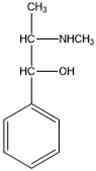
- (A) Norephedrine
- (B) Pseudoephedrine
- (C) Ephedrine
- (D) Norpseudoephedrine
Question 28
Ethylketazocine is a 6,7‐benzomorphan derivative with ________ receptor selectivity.
- (A) Mu–opioid
- (B) Delta–opioid
- (C) Kappa–opioid
- (D) NOP
Question 29
In the case of halogenation reaction of alkanes, abstract of primary hydrogen yields a primary radical, and abstract of secondary hydrogen yields a secondary radical. The above example is of:
- (A) High reactivity and low selectivity
- (B) Low reactivity and high selectivity
- (C) High reactivity and high selectivity
- (D) Low reactivity and low selectivity
Question 30
When alkenes are epoxidised with optically active peracids, optically active epoxides are formed. Under the same defined conditions, epoxidation of E‐but‐2‐ene by peroxycamphoric acid affords unequal yields of enantiomeric epoxides. However, a similar epoxidation of Z‐but‐2‐ene can only afford ________ .
- (A) Z‐epoxide
-
(B) Meso epoxide
-
(C) E‐epoxide
- (D) None of these
Question 31
When 100 mL of 0.1 M sodium hydroxide solution is added to 100 mL of 0.1 M acetic acid (Ka = 1.82 x 10⁻⁵), pH of the solution will be _____ .
- (A) 8.3
- (B) 7.0
- (C) 3.8
- (D) 8.7
Question 32
Match List I with List II, and List I List II Volumetric Solution Primary Standard A. 0.1 M Iodine I. Potassium iodate B. 0.1M Sodium thiosulphate II. Potassium bromate C. 0.1M Sodium hydroxide III. Potassium hydrogen phthalate D. 0.1M Perchloric acid IV. Arsenic trioxide V. Potassium hydrogen phthalate Choose the correct answer from the options given below:
- (A) A ‐ IV, B ‐ II, C ‐ III, D ‐ V
- (B) A ‐ IV, B ‐ II, C ‐ III, D ‐ I
- (C) A ‐ I, B ‐ IV, C ‐ II, D ‐ III
- (D) A ‐ III, B ‐ II, C ‐ IV, D ‐ I
Question 33
Potential at the equivalence point for a redox reaction aOX1 + bRED2 bOX2 + aRED1 is given by the equation:
- (A) E = (bE₁⁰ + aE₂⁰)/(a+b)
- (B) E = E⁰ + (0.0592/n) X log Q
- (C) E = E⁰ + (0.0592/n) X log (Red/Ox)
- (D) E = E₁⁰ + E₂⁰/2
Question 34
‐5 10 20 0 0 10 20 34) 35) 36) Benzene theoretically can have ____ number of possible fundamental absorption bonds in the IR spectrum.
- (A) 30
- (B) 15
- (C) 6
- (D) 0
Question 35
Back‐titration method is used for A. Volatile substances B. Insoluble substances C. Substances for which a quantitative reaction proceeds rapidly only in the presence of excess of the reagent D. Substances that require heating with a volumetric reagent during the determination, in which decomposition or loss of the reactants would occur in the process Choose the correct answer from the options given below:
- (A) A only
- (B) A and C
- (C) A, B and D
- (D) A, B, C and D
Question 36
The titration of a strong acid with a strong base is represented by plot _____ .
- (A)
- (B)
- (C)
- (D)
Question 37
According to Mohr method, the silver nitrate solution can be standardized against primary‐ standard grade:
- (A) Sodium carbonate
- (B) Sodium chloride
- (C) Sodium hydrogen carbonate
- (D) Sodium metabisulfite
Question 38
According to the n + 1 rule, what would be the multiplicities of the signals in the proton NMR spectrum of 1,1‐ dibromoethane?
- (A) Triplet and doublet
- (B) Quartet and doublet
- (C) Triplet and quartet
- (D) Triplet and triplet
Question 39
Which of the following is an example of a thermosetting plastic material?
- (A) PVC
- (B) Polyester
- (C) Polypropylene
- (D) Urethanes
Question 40
Which of the following vehicles (not required to be sterile, but must be pyrogen free) is intended to be used in the manufacture of injectable products to be sterilized after preparation?
- (A) Purified Water
- (B) Water for Injection USP
- (C) Sterile Water for Injection USP
- (D) Bacteriostatic Water for Injection USP
Question 41
A typical skin cream consisting of stearic acid, potassium hydroxide, glycerin, water, preservative and perfume, would be commonly known as:
- (A) Cold cream
- (B) Vanishing cream
- (C) Foundation cream
- (D) All purpose cream
Question 42
Which of the following DRYERS is a "static bed dryer"?
- (A) Freeze dryer
- (B) Fluid bed dryer
- (C) Spray dryer
- (D) Flash dryer
Question 43
Stability index, determined for evaluating the stability of oil–water viscous emulsions, based on electric conductivity changes during non‐destructive short heating–cooling–heating cycles, A. is defined as Δ/h, where h is the change in the conductivity between 35°C and 45°C and Δ is the conductivity interval within the two heating curves at 35°C B. indicates the relative change in enthalpy between two cycles C. is defined as 2Δ/h, where h is the change in the conductivity between 35°C and 45°C and Δ is the conductivity interval within the two heating curves at 35°C D. indicates the relative change in conductivity between two cycles Choose the correct answer from the options given below:
- (A) A and B only
- (B) B and C only
- (C) C and D only
- (D) D and A only
Question 44
Given below are two statements, one is labelled as Assertion A and the other is labelled as Reason R Assertion A: The pressure filling method for filling pharmaceutical aerosol is usually preferred over cold filling method Reason R: Because with pressure filling method high production speed can be achieved and less propellant is lost. In light of the above statements, choose the correct answer from the options given below 7) 8) 9) 10)
- (A) Both A and R are true and R is the correct explanation of A
- (B) Both A and R are true but R is NOT the correct explanation of A
- (C) A is true but R is false
- (D) A is false but R is true
Question 45
In the process of extraction, if maceration is accomplished by heating the drug and solvent in a close vessel, then this modification is known as _______
- (A) Digestion
- (B) Refining
- (C) Expression
- (D) Rendering
Question 46
___________ is the practice of pharmacy in private and government‐owned hospitals, health maintenance organizations (HMOs), clinics, walk‐in health centers, and nursing homes.
- (A) Community pharmacy
- (B) Government service
- (C) Health‐systems pharmacy
- (D) Organizational management
Question 47
Given below are two statements, one is labelled as Assertion A and the other is labelled as Reason R Assertion A: In the manufacturing of glycero‐gelatin suppositories, overfilling of mould is necessary. Reason R: Glycero‐gelatin bases contract very little on cooling and the excess cannot be neatly removed. In light of the above statements, choose the correct answer from the options given below
- (A) Both A and R are true and R is the correct explanation of A
- (B) Both A and R are true and R is the correct explanation of A
- (C) A is true but R is false
- (D) A is false but R is true
Question 48
In the process of sugar coating, to prevent moisture penetration into the tablet core, which one of 11) 12) 13) the following step is performed?
- (A) Seal Coating
- (B) Subcoating
- (C) Syrup Coating
- (D) Polishing
Question 49
Given below are two statements, one is labelled as Assertion A and the other is labelled as Reason R Assertion A: During the process of decompression in tablet manufacturing, expansion occurs in some tablet. Reason R: Expansion occurs in some tablet because of Plastic deformation that has occurred during compression process. In light of the above statements, choose the correct answer from the options given below
- (A) Both A and R are true and R is the correct explanation of A
- (B) Both A and R are true but R is NOT the correct explanation of A
- (C) A is true but R is false
- (D) A is false but R is true
Question 50
Statement I: The problem of declining potency in an unstable preparation can be ameliorated by the addition of an excess or overage of the active ingredient. Statement II: Overages, are added to pharmaceutical formulations to keep the content of the active ingredient well above the limit, compatible with therapeutic requirements, for a predetermined period of time.
- (A) Both Statement I and Statement II are correct
- (B) Both Statement I and Statement II are incorrect
- (C) Statement I is correct but Statement II is incorrect
- (D) Statement I is incorrect but Statement II is correct
Question 51
In thermoplastic materials, which are used as a container/packaging material, additives like polyethylene and polypropylene are used as ___________
- (A) Plasticizer
- (B) Stabilizers
-
(C) Surface treatment film
-
(D) Slip agent
Question 52
Which one of the following is a rate equation for second order bimolecular reaction if, a and b are the initial concentrations of A and B, respectively, and x is the concentration of each species reacting in time t and k is second‐order reaction
- (A) k = [2.303/ t(a − b)] x [log a(a − x) / b(b − x) ]
- (B) k = [2.303/ t(a − b)] x [log b(a − x) / a(b − x) ]
- (C) k = [2.303/ t(a − b)] / [log b(a − x) / a(b − x) ]
- (D) k = [2.303/ t(a − b)] / [log a(a − x) / b(b − x) ]
Question 53
Which one of the following manufacturing facility may not be required for oral solid dosage form?
- (A) Material Handling
- (B) Chemical weighing
- (C) Blending
- (D) Aspectic filling
Question 54
In the process of adding lubricant to a granulation, the lubricant is divided finely by passing it through 60‐100 mesh nylon cloth on to the granulation, in production this process is called as ________ the lubricant
- (A) Bolting
- (B) Mixing
- (C) Tumbling
- (D) Grinding
Question 55
Which of the following is NOT a cause for the drug undergoing nonlinear pharmacokinetics
- (A) Enzyme inhibition
- (B) Enzyme induction
- (C) Saturation of carrier molecules
- (D) Saturation of plasma protein binding
Question 56
Decrease in effective surface area available to the dissolution medium leading to a fall in the dissolution rate, may happen due to which one of the following reasons?
- (A) Addition of cyclodextrin
- (B) Addition of surfactant to increase the surface tension
- (C) Addition of hydrophilic diluent
- (D) Surface charges due to extreme particle size reduction
Question 57
Oral efficacy of Sabin Polio Vaccine can be adequately explained by which of the following processes of absorption?
- (A) Passive diffusion
- (B) Active transport
- (C) Ion ‐ pair transport
- (D) Pinocytosis
Question 58
Which one of the following statement holds true for Passive Diffusion?
- (A) Greater the area and greater the thickness, faster is the diffusion
- (B) Rate of drug transfer is directly proportional to the concentration gradient between GI fluids and the blood compartment
- (C) Rate of transfer of ionised drug species is 3‐4 times the rate for unionised drug species
- (D) Greater the membrane/water partition coefficient of drug, slower is the absorption
Question 59
The intracellular fluid volume including those of the blood cells is approximately
- (A) 15 litres
- (B) 20 litres
- (C) 27 litres
- (D) 35 litres
Question 60
Match List I with List II List I List II A. When two dosage forms have equal tmax I. When their total body clearance is constant. B. AUC values of the two analogs can be compared to measure relative bioavailability. II. Absorption rate constants are equal 23) 24) 25) 26) C. Urinary data is valid to measure bioavailability. III. When fraction absorbed and elimination rate isconstant. D. Cmax is proportional to the rate of absorption. IV. Excretion of drug and/or metabolite is related to thebioavailable dose. Choose the correct answer from the options given below:
- (A) A ‐ II, B ‐I , C ‐IV‐ , D ‐ III
- (B) A ‐I , B ‐II , C ‐III , D ‐IV
- (C) A ‐I, B ‐IV, C ‐III, D ‐II
- (D) A ‐III , B ‐I , C ‐II , D ‐IV
Question 61
Which of the following conjugation reactions DOES NOT REQUIRE reaction with an activated conjugating agent?
- (A) Glucouronidation
- (B) Sulfation
- (C) Methylation
- (D) Glutathione conjugation
Question 62
The below mentioned complex is not the type of inclusion compounds
- (A) Channel‐Lattice type
- (B) Quinhydrone complex
- (C) Layer type
- (D) Clathrates
Question 63
In human body ‐‐‐‐‐ system operates to maintain pH of blood plasma.
- (A) The acetate buffer
- (B) The lysis buffer
- (C) The potassium citrate
- (D) The carbonic acid
Question 64
Which of the following is most appropriate to crystalline solid?
- (A) Give diffraction bands
- (B) Characteristics geometrical shapes
- (C) Sharp melting point
- (D) All of these
Question 65
The temperature at which the solubility of the surfactant is equal to the CMC, is called as
- (A) Critical micellar concentration
- (B) Kraft point
- (C) Cloud point
- (D) Solubilization
Question 66
Match List I with List II List I List II Buffers pH Value A. HCl and KCl I. 8 to 10 B. HCl and Potassium Hydrogen Phthalate II. 2.2 to 4.0 C. NaOH and Potassium Hydrogen Phthalate III. 1.2 to 2.2 D. H BO , NaOH, and KCl IV. 4.2 to 5.8 Choose the correct answer from the options given below:
- (A) A ‐II , B ‐III , C ‐IV , D ‐I
- (B) A ‐III , B ‐II , C ‐IV , D ‐I
- (C) A ‐II , B ‐IV , C ‐I , D ‐II
- (D) A ‐III , B ‐IV , C ‐II , D ‐I
Question 67
Select correct option for miscible solvents? A. Water and alcohol B. Acetone and alcohol C. Water and benzene D. Carbon tetrachloride and benzene Choose the correct answer from the options given below:
- (A) A and B only
- (B) A, B and C only
- (C) A, B and D only
- (D) A and D only
Question 68
Which of the following instrument is used to determine surface area and pore structure of pharmaceutical powders?
- (A) Coulter counter
- (B) Andrerson apparatus
- (C) Quantasorb
- (D) Optical microscopy
Question 69
Which of the following materials are specified as a suitable diluent for powdered opium A. Powdered grass B. Powdered cocoa husk C. Lactose colored with burnt sugar D. Powdered digitalis Choose the correct answer from the options given below:
- (A) A and D only
- (B) B and D only
- (C) B and C only
- (D) A and C only
Question 70
Prescription price consists of
- (A) Cost of ingredients only
- (B) Cost of professional fee only
- (C) Cost of ingredients and cost of dispensing only
- (D) Cost of ingredients and professional fee only
Question 71
Hospital Formulary contains information on the following parameters except
- (A) Composition
- (B) Indication
- (C) Pricing
- (D) Dosage and administration
Question 72
Which of the following statement is false?
- (A) Reducing agents often cause fading of dyes
- (B) Anionic dyes are the most stable at acid pHs
- (C) Basic dyes are not sensitive to alkalies
- (D) Cationic dyes may be precipitated by soaps and clays
Question 73
Which of the following statements are true about Prions A. Prion is a type of infectious protein B. Prions contain single stranded RNA C. Creutzfeldt‐Jakob disease (CJD) is not caused by Prion D. Prions are even more difficult to destroy than bacterial spores Choose the correct answer from the options given below:
- (A) A, B and D only
- (B) A only
- (C) A and D only
- (D) A, C and D only
Question 74
Which of the following statements are true A. Bacteria are categorized underneath the Kingdom Monera. B. Protista are unicellular and eukaryotic organisms. C. Yeasts and molds are under kingdom Fungi D. Multinucleated higher fungi are under Animalia Choose the correct answer from the options given below:
- (A) A, B and C only
- (B) B, C and D only
- (C) A and B only
- (D) C and D only
Question 75
Match List I with List II List I List II Classification of Bacteria Example A. Gram positive spherical shaped nonmotile bacteria I. Clostridium tetani B. Gram positive sporulating obligate anaerobic bacteria II. Bacillus anthracis C. Gram positive rod shaped nonsporulating bacteria III. Streptococcus sp.. 38) 1) D. Gram positive sporulating rod shaped motile bacteria IV. Corynebacterium diphtheriae V. E.coli Choose the correct answer from the options given below:
- (A) A ‐III , B ‐IV , C ‐I , D ‐ V
- (B) A IV, B ‐I , C ‐II , D ‐ III
- (C) A ‐III , B ‐ I, C ‐IV , D ‐II
- (D) A ‐I , B ‐IV , C ‐II , D ‐III
Question 76
Match List I with List II List I List II Antigen‐ antibody reaction types Application A. Precipitin test I. Screening for Rubella and Type2 Herpes viruses B. Agglutination (Haemagglutination) II. Streptococcal differentiation into serological groups C. Complement Fixation reaction III. Serological diagnosis of influenza & mumps viruses D. ELISA IV. Treponema pallidum identification V. Mycobacterium identification Choose the correct answer from the options given below:
- (A) A ‐III , B ‐V , C ‐II, D ‐I
- (B) A ‐II , B ‐IV , C ‐I , D ‐III
- (C) A ‐IV , B ‐II , C ‐III , D ‐I
- (D) A ‐I , B ‐III , C ‐II , D ‐IV
Question 77
HPTLC analysis is useful for following types of analysis of herbal drugs A. Quantitative estimation of marker compound B. Authentication of extracts C. Detection of pesticides D. Standardization of herbal drugs Choose the correct answer from the options given below:
- (A) A, B and D only
- (B) D only
- (C) A and D only
- (D) A, B, C and D
Question 78
Anthranilic acid is an immediate precursor in the formation of
- (A) Tyrosine
- (B) Tryptophan
- (C) Ornithine
- (D) Methidine
Question 79
Tropane nucleus is combination of
- (A) Pyrolidine & piperidine
- (B) Pyrolidine & pyridine
- (C) Pyrolidine & oscine
- (D) Piperidine & oscine
Question 80
Type of alkaloids present in Colchicum
- (A) Tropane alkaloids
- (B) Steroidal glycoalkaloids
- (C) Amino alkaloids
- (D) Quinoline alkaloids
Question 81
One of the following is an example of chemical method of evaluation
- (A) Determination of volatile oil
- (B) Determination of refractive index
- (C) Detection of alkaloids
- (D) Determination of vascular bundles
Question 82
Rancidity in the fixed oils generally show ‐
- (A) Higher Iodine value as compared to the standards
- (B) Higher Acid value as compared to the standards
- (C) Higher Peroxide value as compared to the standards
- (D) Higher level of Unsaponifiable matter
Question 83
A. Rutin is a Bioflavonoid. B. Rutin is a flavonol glycosides C. Rutin is used in Capillary bleeding D. Rutin is used as Vitamin P Which of the above are true for Rutin?
- (A) A and B only
- (B) A, B and C only
- (C) A, B and D only
- (D) All of these
Question 84
‘Star spots’ present in the transverse section of decorticated Rhubarb rhizomes are‐
- (A) Lignified cells
- (B) Pericyclic fibres
- (C) Concentric vascular bundles
- (D) Crystals of calcium oxalate
Question 85
The best quality of the Lemon oil is obtained by using‐
- (A) Hydrodistillation method
- (B) Extraction method
- (C) Enfleurage method
- (D) Hand press method
Question 86
Dioscin, a steroidal saponin glycoside of Dioscorea tubers after hydrolysis gives‐
- (A) Diosgenin + 3 Glucose
- (B) Diosgenin + 3 Rhamnose
- (C) Diosgenin + 2 Glucose + 1 Rhamnose
- (D) Diosgenin + 1 Glucose + 2 Rhamnose
Question 87
Match List I with List II Match the following drugs with their classes. List I List II 2) 3) 4) Drugs Classes A. Anakinra I. IL‐2 receptor antagonist B. Basiliximab II. TNFα inhibitors C. Infliximab III. Calcineurin inhibitors D. Tacrolimus IV. mTOR inhibitors V. IL‐1 receptor antagonist More text goes here. Choose the correct answer from the options given below:
- (A) A ‐III , B ‐II , C ‐I , D ‐ IV
- (B) A ‐V, B ‐II , C ‐III, D ‐ I
- (C) A ‐I , B ‐III , C ‐V , D ‐II
- (D) A ‐V , B ‐I , C ‐II , D ‐ III
Question 88
Match List I with List II Match the following with their mechanism of action List I List II Mechanism of action Drugs A. DPP4 inhibitors I. Metformin B. K Channel blocker II. Pioglitazone C. PPAR activator III. Glimepiride D. AMP Activator IV. Teneligliptin V. α glucosidase inhibitors Choose the correct answer from the options given below:
- (A) A ‐II , B ‐V , C ‐III , D ‐IV
- (B) A ‐ II, B ‐ III, C ‐IV , D ‐I
- (C) A ‐IV , B ‐III , C ‐II , D ‐I
- (D) A ‐IV, B ‐ I, C ‐V , D ‐III
Question 89
Reason for the combination of Diphenoxylate (2.5 mg) + Atropine (0.025 mg) is to
- (A) Inhibits the side effects of Diphenoxylate
- (B) Discourage abuse of Diphenoxylate
- (C) Augment the anti‐motility action of Diphenoxylate
- (D) Suppress gastroenteritis‐related vomiting
Question 90
Regarding Bromocriptine, which of the following statement is TRUE‐ It is a relatively selective dopamine D2 agonist with prominent action A. on pituitary lactotrophs (inhibit prolactin release) B. in striatum (antiparkinsonian) C. in CTZ (antiemetic) ATP γ K 5) 6) 7) D. as an adjunctive treatment for type 2 DM Choose the correct answer from the options given below:
- (A) A, B and D only
- (B) A, B and C only
- (C) B and D only
- (D) A and B only
Question 91
The ‘Up‐and‐Down’ method for a projected LD50 determination is described in the…..
- (A) OECD Guideline 401
- (B) OECD Guideline 420
- (C) OECD Guideline 423
- (D) OECD Guideline 425
Question 92
Match List I with List II:
List I (Poisoning) — 1. Warfarin, 2. Carbon monoxide, 3. Cyanide, 4. Nitrites, 5. Organophosphates
List II (Treatment) — P. Pralidoxime, Q. Oxygen, R. Vitamin K, S. Dicobalt edetate, T. Methylene blue
Choose the correct answer from the options given below:
- (A) 1:R, 2:Q, 3: S, 4: T, 5: P
- (B) 1:P, 2:Q, 3: T, 4: S, 5: R
- (C) 1:Q, 2:S, 3:P, 4:R, 5: T
- (D) 1:T, 2:Q, 3: R, 4:P, 5:S
Question 93
A patient with pheochromocytoma is undergoing surgery and has not been administered with alpha receptor blocker. If he is administered with intravenous propranolol, then which of the following effects will be evident?
- (A) There will be a rise in the blood pressure
- (B) There will be a fall in the blood pressure
- (C) The blood pressure will remain unchanged
- (D) The patient may suffer severe bronchoconstriction
Question 94
A neonate suffering from icterus is intravenously administered with phenobarbital. The justification for this therapy is:
- (A) Phenobarbital is a short acting barbiturate and hence safe to induce sleep in neonates
- (B) Phenobarbital suppresses the bilirubin synthesis in neonates
- (C) Phenobarbital suppresses hepatic glucuronyl transferase and increases clearance of bilirubin
- (D) Phenoarbital induces hepatic glucuronyl transferase and increases clearance of bilirubin
Question 95
Tendon rupture or tendonitis of Achilles tendon is an adverse reaction of
- (A) Fluoroquinolones
- (B) Tetracyclines
- (C) Cephalosporins
- (D) Aminoglycosides
Question 96
The quadruple therapy of Helicobacter pylori infection includes
- (A) Bismuth subsalicylate, metronidazole, tetracycline and a proton pump inhibitor
- (B) Streptomycin, metronidazole, tetracycline and a proton pump inhibitor
- (C) Sulfasalazine, metronidazole, tetracycline and a proton pump inhibitor
- (D) Bismuth subsalicylate, metronidazole, azithromycin and a proton pump inhibitor
Question 97
Which of the following statement/s are correct regarding the alkylating agents as anticancer agents: A. They get converted into highly nucleophilic anions and bind to the nitrogen atom of guanine intercalating the DNA strands B. Cyclophosphamide and busulfan belong to this class C. They inhibit the DNA synthesis by inhibiting the DNA polymerase enzyme D. They inhibit the DNA supercoiling by irreversibly inhibiting the DNA topoisomerase enzyme Choose the correct answer from the options given below:
- (A) A, B and D only are correct
- (B) Only B is correct
- (C) Only A and B are correct
- (D) All A, B, C and D are correct
Question 98
Nitric oxide synthase exists in __________
- (A) Two isoforms
- (B) Three isoforms
- (C) Four isoforms
- (D) Five isoforms
Question 99
Which of the following is/are not true about Parkinson’s disease? A. Parkinson’s disease is caused by the degeneration of the substantia nigra in the midbrain. B. Parkinson's disease is caused by the degenerative loss of nigrostriatal dopaminergic neurons. C. Bradykinesia, rigidity and tremor are the main symptoms in Parkinson’s disease. D. Parkinson's disease is caused by the degenerative loss of nigrostriatal cholinergic neurons. Choose the correct answer from the options given below:
- (A) A, B and D only
- (B) A, B and D only
- (C) C only
- (D) D only
Question 100
Which statements are not true about the grafts? A. Isografts are grafts in which the donor and recipient is the same individual. B. Autografts are grafts between the donor and recipient of the same genotype. C. Allografts are those in which the donor is of the same species but of a different genotype D. Xenografts are those in which the donor is of a different species from that of the recipient. Choose the correct answer from the options given below:
- (A) A, B and D only
- (B) A and B
- (C) B and C
- (D) C and D
Question 101
Which of the following type is a reversible cell injury?
- (A) Karyolysis
- (B) Nuclear clumping
- (C) Phagocytosis
- (D) Cytoskeletal damage
Question 102
Which of the following is a specific enzyme marker of cell death in acute myocardial infarction?
- (A) Creatine Kinase‐MB
- (B) Aspartate aminotransferase
- (C) Lactate dehydrogenase
- (D) Cardiac troponin
Question 103
Which of the following is a malignant type of tumor?
- (A) Lipoma
- (B) Adenoma
- (C) Melanoma
- (D) Osteoma
Question 104
Which of the following clinical feature is not responsible for insulin resistance in type 2 diabetes?
- (A) Increased LDL
- (B) Increased HDL
- (C) Reduced HDL
- (D) Increased triglycerides
Question 105
Formation and maintenance of myelin sheath around CNS axons are done by
- (A) Schwann cells
- (B) Oligodendrocytes
- (C) Microglia
- (D) Astrocytes
Question 106
At the site of tissue injury, the activated platelet releases ADP and activates surrounding platelets to form platelet‐ plug, but this process will not continue to activate whole platelets in the body to form a massive ball of platelets because
- (A) The adjacent normal endothelial cells physiologically release ‘NO’ which is a platelet inhibitor
- (B) There will be plasminogen activators in the plasma
- (C) There will be plasminogen activator inhibitors in plasma
- (D) There will be a tissue plasminogen activator (tPA) which inhibits the platelets
Question 107
When RBCs are kept in isotonic NaCl solution
- (A) There will not be any movement of solutes across the RBC membrane
- (B) The RBC shape and size will not change
- (C) Because the osmotic pressure across the membrane is same the solutes will not cross across the RBC membrane
- (D) All of these
Question 108
Which of the following statement is true for the periosteum of bone
- (A) Protects the bone by assisting in fracture repair
- (B) Has osteogenic cells which enable bone to grow in thickness, but not in length
- (C) It is composed of an outer fibrous layer of dense irregular connective tissue and an inner osteogenic layer that consists of cells
- (D) All of these
Question 109
Blood grouping is basically possible because of the presence of following:
- (A) Antigens on RBCs
- (B) MHCs on WBCs
- (C) MHCs on RBCs
- (D) Antigens on WBCs
Question 110
Which of the statement is true in geriatrics practice?
- (A) The incidence of Adverse Drug Reactions diminishs with advancement of age.
- (B) Dose reduction is inevitable for each and every drug used in geriatric patients.
- (C) Patient compliance is highest in geriatric patients.
- (D) Polypharmacy is often a problem in elderly.
Question 111
Which of the following could be the reason(s) for Pharmacokinetic Drug Interactions? A. Interference with absorption B. Changes in protein binding C. Competition at receptor sites D. Interference with renal excretion Choose the correct answer from the options given below:
- (A) A, B and C only
- (B) A, B and D only
- (C) A, C and D only
- (D) C only
Question 112
Which of the following statements are true with the Adverse Drug Reactions? A. Any response to a drug which is noxious and unintended. B. Which occurs at doses normally used in man for prophylaxis, diagnosis or therapy of a disease. C. Adverse drug event is same as that of Adverse Drug Reaction. D. Which occurs at normal dose or overdose when used for prophylaxis, diagnosis or therapy of a disease. Choose the correct answer from the options given below:
- (A) A and B are true while C and D are false.
- (B) A and C are true while B and D are false.
- (C) B, C and D are false, Only A is true.
- (D) A, B and C are false, Only D is true.
Question 113
Match the following phases of clinical trial with their significance List I List II A. Phase‐I P. Post marketing surveillance B. Phase‐0 Q. Microdosing C. Phase‐3 R. First in human dose D. Phase‐4 S. Multicentric trials Choose the correct answer from the options given below:
- (A) A‐R, B‐Q, C‐P, D‐S
- (B) A‐R, B‐Q, C‐S, D‐P
- (C) A‐Q, B‐S, C‐P, D‐R
- (D) A‐S, B‐P, C‐Q, D‐R
Question 114
The objective of the Abbreviated New Drug Application is to …
- (A) get approval to conduct clinical trials
- (B) get market approval of new chemical entities
- (C) get market approval of generics
- (D) get approval for animal studies of new chemical entities
Question 115
India’s first Central Drug Laboratory was established at
- (A) Mumbai
- (B) Lucknow
- (C) Kolkata
- (D) Hyderabad
Question 116
As per the Pharmacy Act, in the composition of Pharmacy Council of India, the total number of Ex‐officio members is
- (A) THREE
- (B) FOUR
- (C) SIX
- (D) EIGHT
Question 117
Given below are two statements Statement I: Drugs Controller General of India is the Chairman of Drugs Technical Advisory Board (DTAB) Statement II: In DTAB, there will be eight ex‐officio members, five nominated and five elected members In light of the above statements, choose the most appropriate answer from the options given below
- (A) Both Statement I and Statement II are correct
- (B) Both Statement I and Statement II are incorrect
- (C) Statement I is correct but Statement II is incorrect
- (D) Statement I is incorrect but Statement II is correct
Question 118
Of the following, which one is exempted from importing into India without the requirement of a license?
- (A) Insulin
- (B) Etoposide
- (C) Lactose
- (D) Glutethimide
Question 119
Viable cells (viability assay) are assayed by all of the following methods except
- (A) MTT/MTS/Resazurin assay
- (B) Apoptosis assay
- (C) ATP assay
- (D) Protease marker assay
Question 120
Given below are two statements Statement I: Sequencing of DNA is much easier than RNA sequencing due to greater stability Statement II: The chemical method of DNA sequencing (Maxam & Gilbert) works for only single stranded DNA In light of the above statements, choose the correct answer from the options given below
- (A) Both Statement I and Statement II are true
- (B) Both Statement I and Statement II are false
- (C) Statement I is true but Statement II is false
- (D) Statement I is false but Statement II is true
Question 121
Match List I of Unit operations of crystallizers with List II of principle/characteristics properties of crystallizer Crystallizer Principle/Characteristics Unit operations Properties A. Swenson‐walker crystallizer I. Adiabatic evaporative cooling B.Krystal crystallizer II. Cooling alone C. Vacuum crystallizer III. Evaporation D. Forced circulation type crystallizerIV. Heat exchange, separation, circulation Choose the correct answer from the options given below:
- (A) A ‐I , B ‐II , C ‐IV , D ‐III
- (B) A ‐III , B ‐I , C ‐IV , D ‐II
- (C) A ‐I , B ‐IV , C ‐III , D ‐II
- (D) A ‐II , B ‐III , C ‐I , D ‐IV
Question 122
Given below are two statements Statement I: Vertical long tube evaporator is also called as Rising film evaporator Statement II: Falling film evaporator is also called as Forced circulation type evaporator In light of the above statements, choose the most appropriate answer from the options given below
- (A) Both Statement I and Statement II are correct
- (B) Both Statement I and Statement II are incorrect
- (C) Statement I is correct but Statement II is incorrect
- (D) Statement I is incorrect but Statement II is correct
Question 123
Water for injection is prepared by using_________distillation.
- (A) Fractional
- (B) Molecular
- (C) Simple
- (D) Steam
Question 124
Boston Consulting Group (BCG) Matrix is used for
- (A) Product life cycle management
- (B) SWOT analysis
- (C) Product portfolio management
- (D) Gap analysis
Question 125
The process of establishing a product in the minds of target customer is called as
- (A) Product positioning
- (B) Product differentiation
- (C) Product targeting
- (D) Market segmentation
Answer Key with Explanations
Question 1: Correct Answer (B)
Option 2 (A-II, B-IV, C-I, D-III): Ω is electrical conductance/resistance reciprocal (Siemens), Λ is equivalent conductance, k (kappa) is specific conductance, and ρ (rho) is specific resistance.
Question 2: Correct Answer (B)
Option 2 (Elevation of boiling point): Cottrell's method uses an inverted funnel and boiling tube to measure accurate elevation in boiling point (ebullioscopy) without superheating.
Question 3: Correct Answer (C)
Option 3 (A-III, B-I, C-II, D-IV): Constant heat (q=0) is adiabatic; constant temperature (dT=0) is isothermal; constant volume (dV=0) is isometric/isochoric; constant pressure (dP=0) is isobaric.
Question 4: Correct Answer (D)
Option 4 (3.33): Partition coefficient K = C_water / C_amyl alcohol = (0.32 g / 100 mL) / (0.24 g / 250 mL) = 0.0032 / 0.00096 = 3.33.
Question 5: Correct Answer (A)
Option 1 (Drug A): Zero-order degradation operates at a constant rate regardless of concentration, leading to faster 50% degradation when comparing equivalent initial rate constants.
Question 6: Correct Answer (A)
Option 1 (Iron containing tetrapyrrole): Heme consists of a planar protoporphyrin IX ring (four pyrrole rings linked by methene bridges) with a central Fe(II) ion.
Question 7: Correct Answer (A)
Option 1 (Lowering activation energy barrier ΔG‡): Catalytic enzymes accelerate chemical reactions solely by stabilizing the transition state and lowering the activation energy barrier.
Question 8: Correct Answer (D)
Option 4 (All of these): The Krebs / TCA cycle is the common oxidative endpoint for carbohydrates, fatty acids (lipids), and glucogenic/ketogenic amino acids (proteins).
Question 9: Correct Answer (D)
Option 4 (Galactosylceramide): Galactosylceramide is a glycosphingolipid (cerebroside), not a phospholipid (it lacks a phosphate group).
Question 10: Correct Answer (D)
Option 4 (Statement I is incorrect but Statement II is correct): Glucose-6-phosphate is formed during glycogenolysis via glucose-1-phosphate; G-1-P is converted to G-6-P and dephosphorylated by glucose-6-phosphatase in liver.
Question 11: Correct Answer (C)
Option 3 (Emulsin): Hydroxynitrile lyase in almond emulsin enantioselectively converts benzaldehyde and HCN to optically active mandelonitrile, which on hydrolysis yields mandelic acid.
Question 12: Correct Answer (D)
Option 4 (tert-Butyl bromide): Radical bromination is highly regioselective for 3° C-H bonds due to tertiary radical stability (relative selectivity ~ 1600:1 for 3° vs 1°).
Question 13: Correct Answer (B)
Option 2 (A and C): Electron-donating groups like -OH and -NH2 through resonance donation decrease carboxylate stabilization and weaken benzoic acid acidity.
Question 14: Correct Answer (A)
Option 1 (4-Bromophenol): In non-polar solvents like CS2 at low temperature (0 °C), monobromination of phenol occurs predominantly at the less hindered para position.
Question 15: Correct Answer (C)
Option 3 ((-) Erythrose): Ruff degradation of D-(-)-arabinose oxidatively decarboxylates C1 to afford the 4-carbon aldose D-(-)-erythrose.
Question 16: Correct Answer (A)
Option 1 (Baeyer-Villiger oxidation): Reaction of ketones with peroxy acids inserts an oxygen atom adjacent to the carbonyl carbon to form esters or lactones.
Question 17: Correct Answer (C)
Option 3 (Stork reaction): Enamine alkylation (Stork reaction) achieves controlled mono-alkylation of carbonyl compounds under mild neutral conditions.
Question 18: Correct Answer (C)
Option 3: Cyclooctatetraene adopts a tub-shaped non-planar conformation to avoid 8 π anti-aromaticity, behaving as a non-aromatic polyene.
Question 19: Correct Answer (A)
Option 1: [4+2] Diels-Alder cycloaddition yields the bicyclic endo adduct via supra-supra orbital overlap.
Question 20: Correct Answer (A)
Option 1: Acid-catalyzed Beckmann rearrangement of the oxime migrates the anti-phenyl group to nitrogen to give the secondary amide.
Question 21: Correct Answer (A)
Option 1 (Zn(Hg), HCl): Clemmensen reduction reduces alkyl aryl ketones directly to hydrocarbons under strongly acidic conditions.
Question 22: Correct Answer (C)
Option 3: Knorr pyrrole synthesis combines an alpha-aminoketone with a beta-ketoester to synthesize alkylated pyrroles.
Question 23: Correct Answer (B)
Option 2 (2β, 3α-dibromocholestane): Electrophilic addition of bromine to 2-cholestene proceeds via trans-diaxial addition to yield the 2β, 3α-dibromo isomer.
Question 24: Correct Answer (A)
Option 1 ((S)-(+)-2-methylbutanoic acid): Permanganate oxidation of the primary alcohol retains stereochemical configuration at the chiral center.
Question 25: Correct Answer (C)
Option 3 (Methanol > formic acid > acetic acid > trifluoroethyl alcohol): Nucleophilicity follows the order of decreasing basicity and solvent coordination.
Question 26: Correct Answer (B)
Option 2 (Primary substrates undergo slow elimination and fast substitution): Primary alkyl halides favor SN2 substitution with minimal steric hindrance.
Question 27: Correct Answer (C)
Option 3 (Ephedrine): (1R,2S)-2-(methylamino)-1-phenylpropan-1-ol represents natural ephedrine with erythro stereochemistry.
Question 28: Correct Answer (C)
Option 3 (Kappa-opioid): Ethylketazocine is a prototypical benchmark agonist for kappa-opioid (KOR) receptors.
Question 29: Correct Answer (B)
Option 2 (Low reactivity and high selectivity): Bromination is endothermic in the hydrogen-abstraction step, showing high selectivity based on the Hammond postulate.
Question 30: Correct Answer (B)
Option 2 (Meso epoxide): Syn-addition of oxygen across the cis-alkene (Z-but-2-ene) generates an internal plane of symmetry, yielding the meso diastereomer.
Question 31: Correct Answer
Verified from the official NTA GPAT 2022 examination key.
Question 32: Correct Answer
Verified from the official NTA GPAT 2022 examination key.
Question 33: Correct Answer
Verified from the official NTA GPAT 2022 examination key.
Question 34: Correct Answer
Verified from the official NTA GPAT 2022 examination key.
Question 35: Correct Answer
Verified from the official NTA GPAT 2022 examination key.
Question 36: Correct Answer
Verified from the official NTA GPAT 2022 examination key.
Question 37: Correct Answer
Verified from the official NTA GPAT 2022 examination key.
Question 38: Correct Answer
Verified from the official NTA GPAT 2022 examination key.
Question 39: Correct Answer
Verified from the official NTA GPAT 2022 examination key.
Question 40: Correct Answer
Verified from the official NTA GPAT 2022 examination key.
Question 41: Correct Answer
Verified from the official NTA GPAT 2022 examination key.
Question 42: Correct Answer
Verified from the official NTA GPAT 2022 examination key.
Question 43: Correct Answer
Verified from the official NTA GPAT 2022 examination key.
Question 44: Correct Answer
Verified from the official NTA GPAT 2022 examination key.
Question 45: Correct Answer
Verified from the official NTA GPAT 2022 examination key.
Question 46: Correct Answer
Verified from the official NTA GPAT 2022 examination key.
Question 47: Correct Answer
Verified from the official NTA GPAT 2022 examination key.
Question 48: Correct Answer
Verified from the official NTA GPAT 2022 examination key.
Question 49: Correct Answer
Verified from the official NTA GPAT 2022 examination key.
Question 50: Correct Answer
Verified from the official NTA GPAT 2022 examination key.
Question 51: Correct Answer
Verified from the official NTA GPAT 2022 examination key.
Question 52: Correct Answer
Verified from the official NTA GPAT 2022 examination key.
Question 53: Correct Answer
Verified from the official NTA GPAT 2022 examination key.
Question 54: Correct Answer
Verified from the official NTA GPAT 2022 examination key.
Question 55: Correct Answer
Verified from the official NTA GPAT 2022 examination key.
Question 56: Correct Answer
Verified from the official NTA GPAT 2022 examination key.
Question 57: Correct Answer
Verified from the official NTA GPAT 2022 examination key.
Question 58: Correct Answer
Verified from the official NTA GPAT 2022 examination key.
Question 59: Correct Answer
Verified from the official NTA GPAT 2022 examination key.
Question 60: Correct Answer
Verified from the official NTA GPAT 2022 examination key.
Question 61: Correct Answer
Verified from the official NTA GPAT 2022 examination key.
Question 62: Correct Answer
Verified from the official NTA GPAT 2022 examination key.
Question 63: Correct Answer
Verified from the official NTA GPAT 2022 examination key.
Question 64: Correct Answer
Verified from the official NTA GPAT 2022 examination key.
Question 65: Correct Answer
Verified from the official NTA GPAT 2022 examination key.
Question 66: Correct Answer
Verified from the official NTA GPAT 2022 examination key.
Question 67: Correct Answer
Verified from the official NTA GPAT 2022 examination key.
Question 68: Correct Answer
Verified from the official NTA GPAT 2022 examination key.
Question 69: Correct Answer
Verified from the official NTA GPAT 2022 examination key.
Question 70: Correct Answer
Verified from the official NTA GPAT 2022 examination key.
Question 71: Correct Answer
Verified from the official NTA GPAT 2022 examination key.
Question 72: Correct Answer
Verified from the official NTA GPAT 2022 examination key.
Question 73: Correct Answer
Verified from the official NTA GPAT 2022 examination key.
Question 74: Correct Answer
Verified from the official NTA GPAT 2022 examination key.
Question 75: Correct Answer
Verified from the official NTA GPAT 2022 examination key.
Question 76: Correct Answer
Verified from the official NTA GPAT 2022 examination key.
Question 77: Correct Answer
Verified from the official NTA GPAT 2022 examination key.
Question 78: Correct Answer
Verified from the official NTA GPAT 2022 examination key.
Question 79: Correct Answer
Verified from the official NTA GPAT 2022 examination key.
Question 80: Correct Answer
Verified from the official NTA GPAT 2022 examination key.
Question 81: Correct Answer
Verified from the official NTA GPAT 2022 examination key.
Question 82: Correct Answer
Verified from the official NTA GPAT 2022 examination key.
Question 83: Correct Answer
Verified from the official NTA GPAT 2022 examination key.
Question 84: Correct Answer
Verified from the official NTA GPAT 2022 examination key.
Question 85: Correct Answer
Verified from the official NTA GPAT 2022 examination key.
Question 86: Correct Answer
Verified from the official NTA GPAT 2022 examination key.
Question 87: Correct Answer
Verified from the official NTA GPAT 2022 examination key.
Question 88: Correct Answer
Verified from the official NTA GPAT 2022 examination key.
Question 89: Correct Answer
Verified from the official NTA GPAT 2022 examination key.
Question 90: Correct Answer
Verified from the official NTA GPAT 2022 examination key.
Question 91: Correct Answer
Verified from the official NTA GPAT 2022 examination key.
Question 92: Correct Answer
Verified from the official NTA GPAT 2022 examination key.
Question 93: Correct Answer
Verified from the official NTA GPAT 2022 examination key.
Question 94: Correct Answer
Verified from the official NTA GPAT 2022 examination key.
Question 95: Correct Answer
Verified from the official NTA GPAT 2022 examination key.
Question 96: Correct Answer
Verified from the official NTA GPAT 2022 examination key.
Question 97: Correct Answer
Verified from the official NTA GPAT 2022 examination key.
Question 98: Correct Answer
Verified from the official NTA GPAT 2022 examination key.
Question 99: Correct Answer
Verified from the official NTA GPAT 2022 examination key.
Question 100: Correct Answer
Verified from the official NTA GPAT 2022 examination key.
Question 101: Correct Answer
Verified from the official NTA GPAT 2022 examination key.
Question 102: Correct Answer
Verified from the official NTA GPAT 2022 examination key.
Question 103: Correct Answer
Verified from the official NTA GPAT 2022 examination key.
Question 104: Correct Answer
Verified from the official NTA GPAT 2022 examination key.
Question 105: Correct Answer
Verified from the official NTA GPAT 2022 examination key.
Question 106: Correct Answer
Verified from the official NTA GPAT 2022 examination key.
Question 107: Correct Answer
Verified from the official NTA GPAT 2022 examination key.
Question 108: Correct Answer
Verified from the official NTA GPAT 2022 examination key.
Question 109: Correct Answer
Verified from the official NTA GPAT 2022 examination key.
Question 110: Correct Answer
Verified from the official NTA GPAT 2022 examination key.
Question 111: Correct Answer
Verified from the official NTA GPAT 2022 examination key.
Question 112: Correct Answer
Verified from the official NTA GPAT 2022 examination key.
Question 113: Correct Answer
Verified from the official NTA GPAT 2022 examination key.
Question 114: Correct Answer
Verified from the official NTA GPAT 2022 examination key.
Question 115: Correct Answer
Verified from the official NTA GPAT 2022 examination key.
Question 116: Correct Answer
Verified from the official NTA GPAT 2022 examination key.
Question 117: Correct Answer
Verified from the official NTA GPAT 2022 examination key.
Question 118: Correct Answer
Verified from the official NTA GPAT 2022 examination key.
Question 119: Correct Answer
Verified from the official NTA GPAT 2022 examination key.
Question 120: Correct Answer
Verified from the official NTA GPAT 2022 examination key.
Question 121: Correct Answer
Verified from the official NTA GPAT 2022 examination key.
Question 122: Correct Answer
Verified from the official NTA GPAT 2022 examination key.
Question 123: Correct Answer
Verified from the official NTA GPAT 2022 examination key.
Question 124: Correct Answer
Verified from the official NTA GPAT 2022 examination key.
Question 125: Correct Answer
Verified from the official NTA GPAT 2022 examination key.