Daily Pharma News - 22 November 2026
Himachal Pradesh drug quality failure: 47 pharma companies fail tests repeatedly, 19 halt production
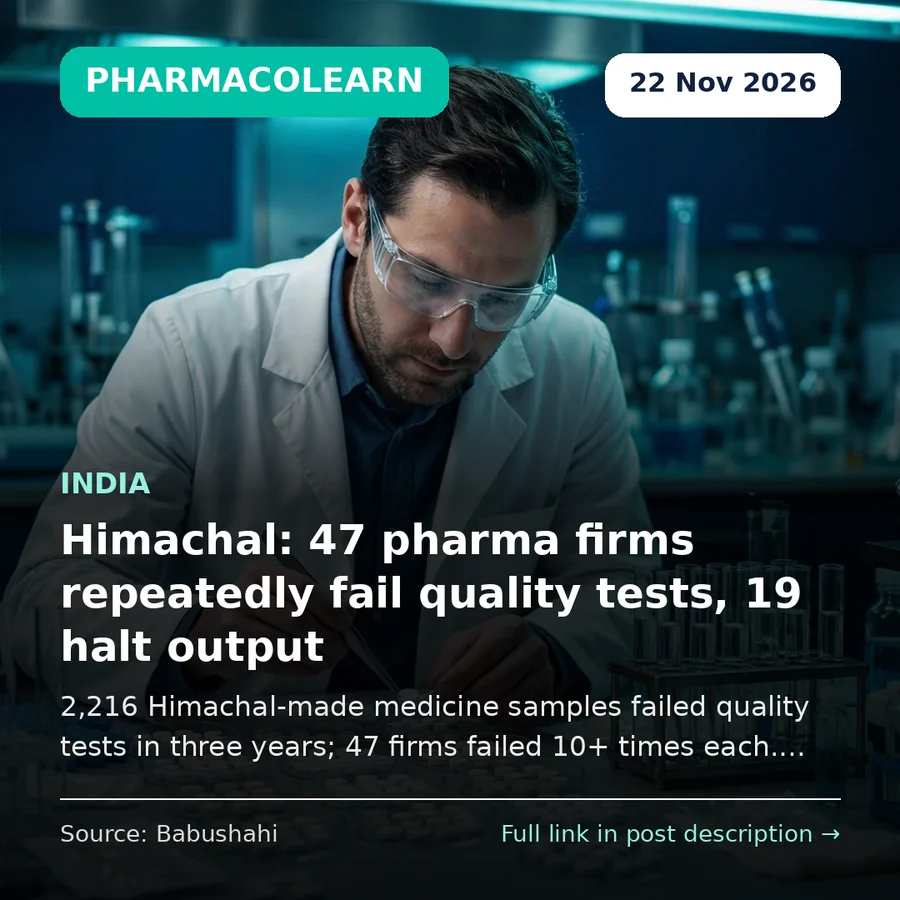
Himachal Pradesh, one of India's largest pharmaceutical manufacturing hubs, is facing serious questions over drug quality after 2,216 medicine samples made in the state failed quality tests over three years. According to the report, 47 pharmaceutical firms failed quality tests 10 or more times each, a pattern that points to repeated manufacturing and quality control problems rather than isolated batches.
Regulatory action has followed the findings. Three licences were revoked and 19 firms were told to halt production. For pharmacy students, this story is a direct lesson in good manufacturing practice, quality assurance and the role of state drug controllers in protecting patients. Drug quality is not only a factory issue. It decides whether a medicine works, whether it is safe, and whether patients and doctors can trust the product.
Maharashtra FDA supplement crackdown: Rs 1.38 crore stock seized, FSSAI licence made mandatory
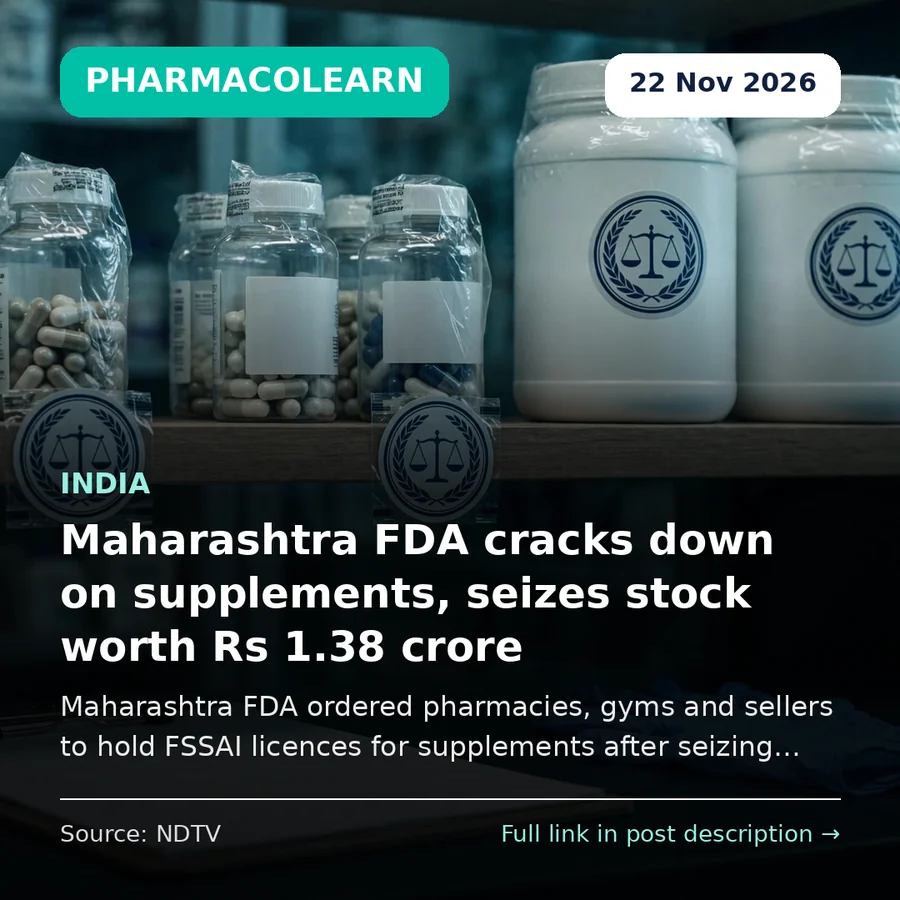
The Maharashtra Food and Drug Administration has cracked down on the sale of dietary supplements, seizing stock worth Rs 1.38 crore at 17 sites over suspected undeclared steroids. Pharmacies, gyms and other sellers have been ordered to hold Food Safety and Standards Authority of India licences for supplements, bringing these products firmly under food safety regulation.
Supplements are often sold as fitness and wellness products, but undeclared steroids and other hidden ingredients can carry serious health risks. Pharmacy students should note the regulatory overlap here. A product sold in a pharmacy is not automatically a drug, and the licence that applies depends on how the product is classified. Checking the label, the licence and the source of a supplement is part of responsible pharmacy practice.
Aragen Life Sciences Hyderabad expansion: Rs 150 crore CRDMO investment ahead of IPO
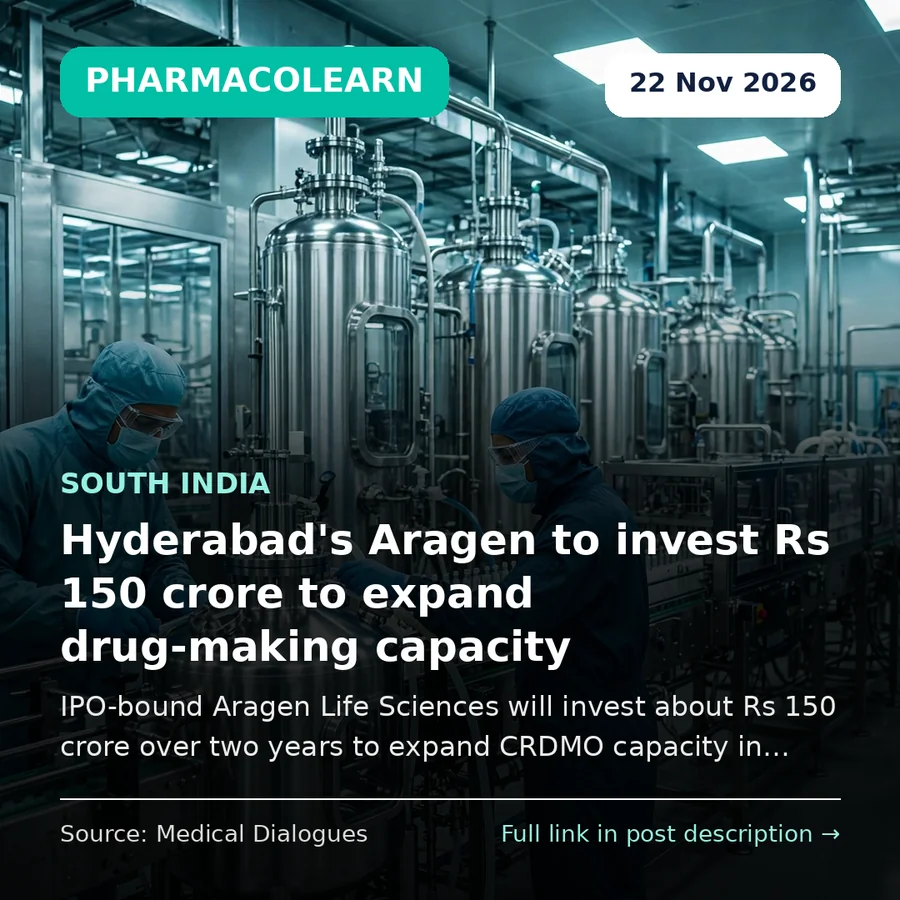
Hyderabad-based Aragen Life Sciences, an IPO-bound contract research, development and manufacturing organisation, will invest about Rs 150 crore over two years to expand its drug-making capacity. The expansion will raise small-molecule output to 650 kilolitres and biologics capacity to 8.5 kilolitres, strengthening its position as a CRDMO serving global pharmaceutical clients.
The investment reflects the continued growth of Hyderabad as a pharmaceutical and biotechnology hub in South India, and the rising demand for contract manufacturing and development services. For pharmacy students, the CRDMO model is worth understanding. Many modern medicines are developed and manufactured through partnerships between innovator companies and specialised service providers, and careers in this sector span research, manufacturing, quality control and regulatory affairs.
Fluorothiazinone for antibiotic-resistant Klebsiella pneumoniae: Russia's Gamaleya Centre reports progress

Russia's Gamaleya Centre says its drug Fluorothiazinone overcomes antibiotic resistance in Klebsiella pneumoniae and has helped hundreds of patients. Documents for wider use of the drug are now with Russia's Health Ministry, according to the report. Klebsiella pneumoniae is a clinically important pathogen that can cause pneumonia, urinary tract infections and bloodstream infections, and resistant strains are difficult to treat.
New approaches to antimicrobial resistance are urgently needed worldwide, and this story will interest students studying antibiotics, bacterial resistance mechanisms and drug development. The exact place of Fluorothiazinone in treatment will depend on further regulatory review and published clinical evidence, but the report highlights how research centres are searching for drugs that work when standard antibiotics fail.
FDA approves once-weekly Sogroya somapacitan-beco for children with Turner syndrome

The United States Food and Drug Administration has approved once-weekly somapacitan-beco, sold as Sogroya, for children aged 2.5 years and older with growth failure due to Turner syndrome. It is the first long-acting growth hormone approved for this use, offering families a weekly injection instead of daily growth hormone shots.
In the reported comparison, growth was 8.9 cm per year on the weekly treatment against 9.7 cm per year on daily injections. Turner syndrome is a chromosomal condition affecting girls and women that can cause short stature and other health problems. For pharmacy students, this approval is a useful example of long-acting formulation design, where changing the dosing schedule can improve convenience and adherence while keeping a close eye on comparative efficacy.
FDA accelerated approval for Nelkarmi neladalkib in ALK-positive non-small cell lung cancer

The United States Food and Drug Administration has granted accelerated approval to neladalkib, sold as Nelkarmi, for adults with advanced ALK-positive non-small cell lung cancer previously treated with an ALK inhibitor, with or without platinum chemotherapy. ALK-positive lung cancer is driven by a rearrangement in the anaplastic lymphoma kinase gene, and targeted ALK inhibitors are a central part of its treatment.
Accelerated approval allows a drug for a serious condition to reach patients earlier on the basis of early evidence, with further studies expected to confirm the benefit. Students studying oncology pharmacology should note how treatment is sequenced here. Nelkarmi is positioned for patients whose cancer has already been treated with an earlier ALK inhibitor, a common situation as resistance develops over time.
WHO antimicrobial resistance report: only 22 percent of countries fund and fully implement AMR action plans
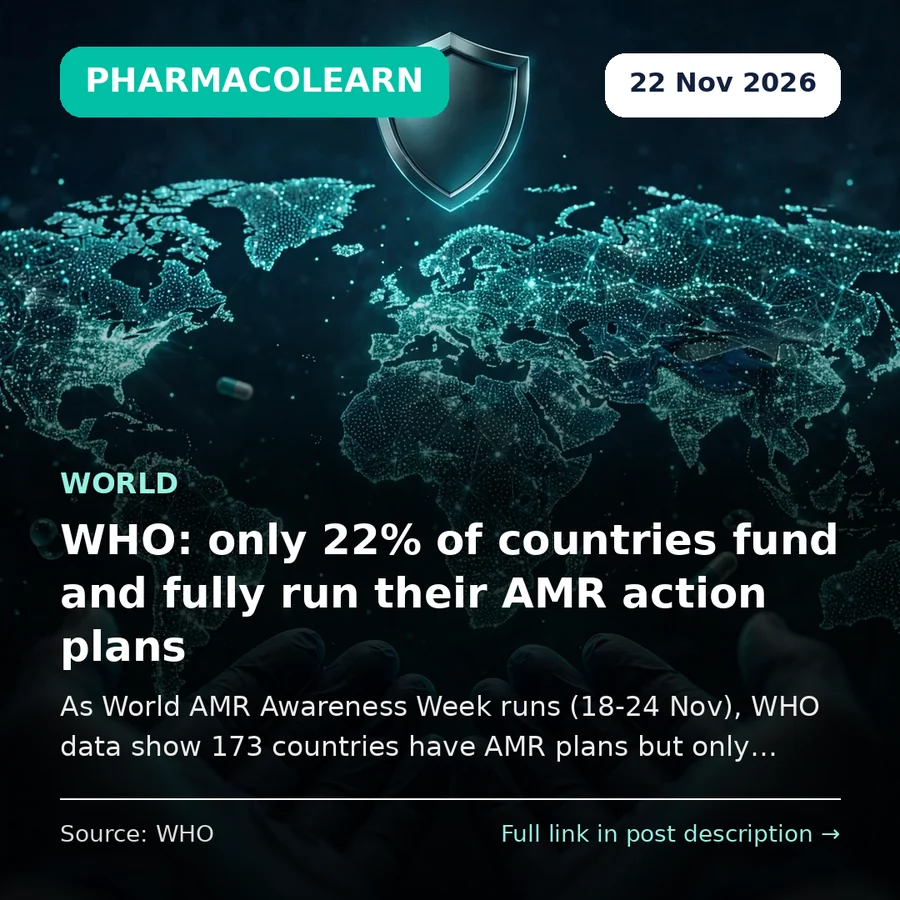
As World AMR Awareness Week runs from 18 to 24 November, World Health Organization data show that 173 countries now have antimicrobial resistance action plans, but only 22 percent fund and fully implement them. Only 36 percent of countries have laboratories able to test key resistant bacteria and fungi, leaving many patients without the testing needed to choose the right treatment.
Antimicrobial resistance is one of the most important topics in modern pharmacy, linking prescribing, dispensing, infection control, diagnostics and public health. A plan on paper is not enough. Without funding, laboratory capacity and stewardship in hospitals and communities, resistant infections will keep spreading. Pharmacy students have a direct role in this fight through rational antibiotic use, patient counselling and support for antimicrobial stewardship programmes.
Conclusion
Today's news connects the full span of pharmacy practice, from factory quality control in Himachal Pradesh and supplement regulation in Maharashtra to manufacturing investment in Hyderabad, new treatments for resistant infection and lung cancer, a more convenient growth hormone for children, and a global warning on antimicrobial resistance. The common thread is trust. Patients trust that medicines are well made, honestly labelled, correctly prescribed and still effective when they are needed. For pharmacy students, these seven stories show why regulation, quality assurance, research and responsible use of medicines matter every day, in India and around the world.
References
- Babushahi https://www.babushahi.com/full-news.php?id=230162
- NDTV https://www.ndtv.com/india-news/maharashtra-bars-sale-of-supplements-by-pharmacies-gyms-without-food-licence-12354851
- Medical Dialogues https://medicaldialogues.in/amp/news/industry/health-investments/aragen-to-invest-rs-150-crore-to-expand-crdmo-capacity-ahead-of-ipo-183678
- Izvestia https://iz.ru/en/node/2206116
- Contemporary Pediatrics https://www.contemporarypediatrics.com/view/fda-approves-once-weekly-somapacitan-for-children-with-turner-syndrome
- The Cancer Letter https://cancerletter.com/drugs-and-targets/20261120_11d/
- WHO https://www.who.int/mongolia/news/detail-global/16-11-2026-more-countries-have-antimicrobial-resistance-plans-but-patients-still-lack-testing-and-treatment