Daily Pharma News - 19 November 2026
Today's daily pharma news brings seven stories that matter for pharmacy students in India and around the world: a major easing of India's clinical trial rules, the launch of World AMR Awareness Week 2026, a USFDA warning for a Tamil Nadu sterile manufacturing plant, China's first AI-designed obesity drug entering regulatory review, a personalised cancer vaccine result from Russia, and two important USFDA drug approvals for rare and lung cancers. Read on for the details, the regulatory context, and why each story belongs in your exam preparation.
India Eases Clinical Trial Rules: Test Licence Replaced by Online Intimation Under NDCT Rules 2019
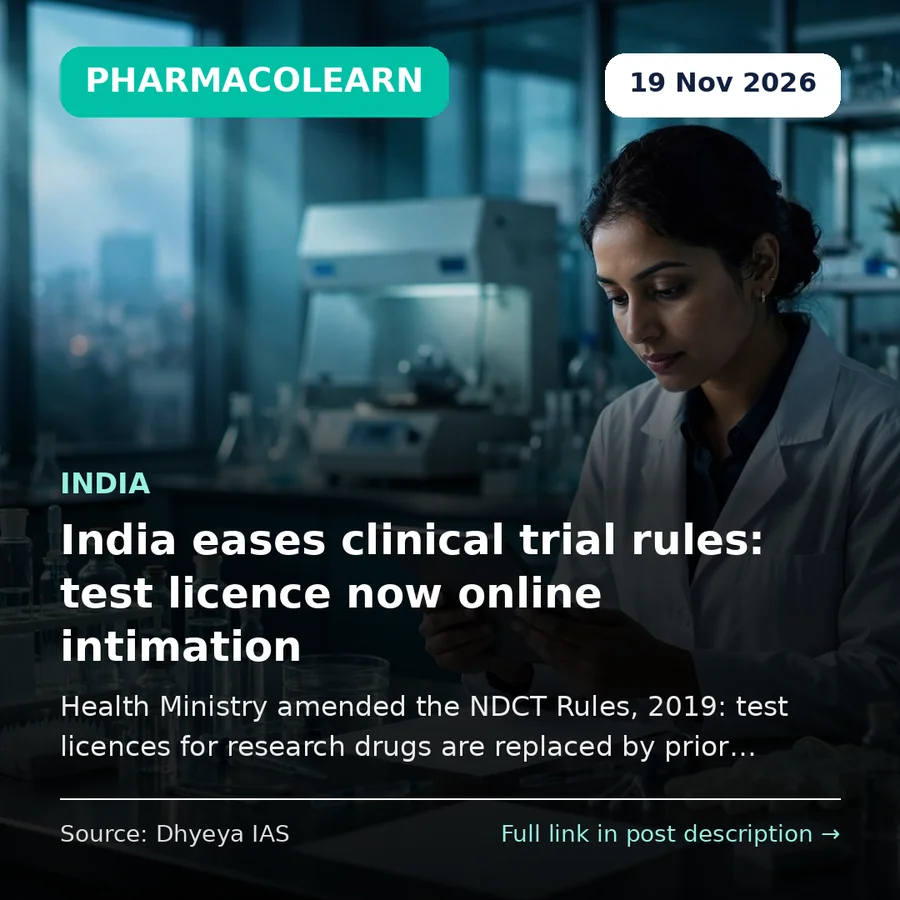
India has amended the New Drugs and Clinical Trials (NDCT) Rules, 2019, in a move that significantly simplifies how research drugs are handled in clinical trials. Under the new provisions, the earlier requirement of a test licence for research drugs has been replaced by a prior online intimation, and approval timelines have been cut from 90 days to 45 days. Low-risk bioavailability and bioequivalence (BA/BE) studies will no longer need prior approval at all.
For pharmacy students, this is a high-yield regulatory update. The NDCT Rules, 2019, framed under the Drugs and Cosmetics Act, 1940, govern clinical trials, new drug approvals, and the roles of the Central Drugs Standard Control Organisation (CDSCO) and the Drug Controller General of India (DCGI). Faster trial approvals could make India a more attractive destination for global clinical research, while the shift to online intimation reflects the government's wider push towards ease of doing business in the pharmaceutical sector. Expect questions on clinical trial regulation, BA/BE study requirements, and the NDCT framework in GPAT, NIPER JEE, and Drug Inspector examinations.
World AMR Awareness Week 2026 Launched: Health Ministry Calls for Responsible Antibiotic Use
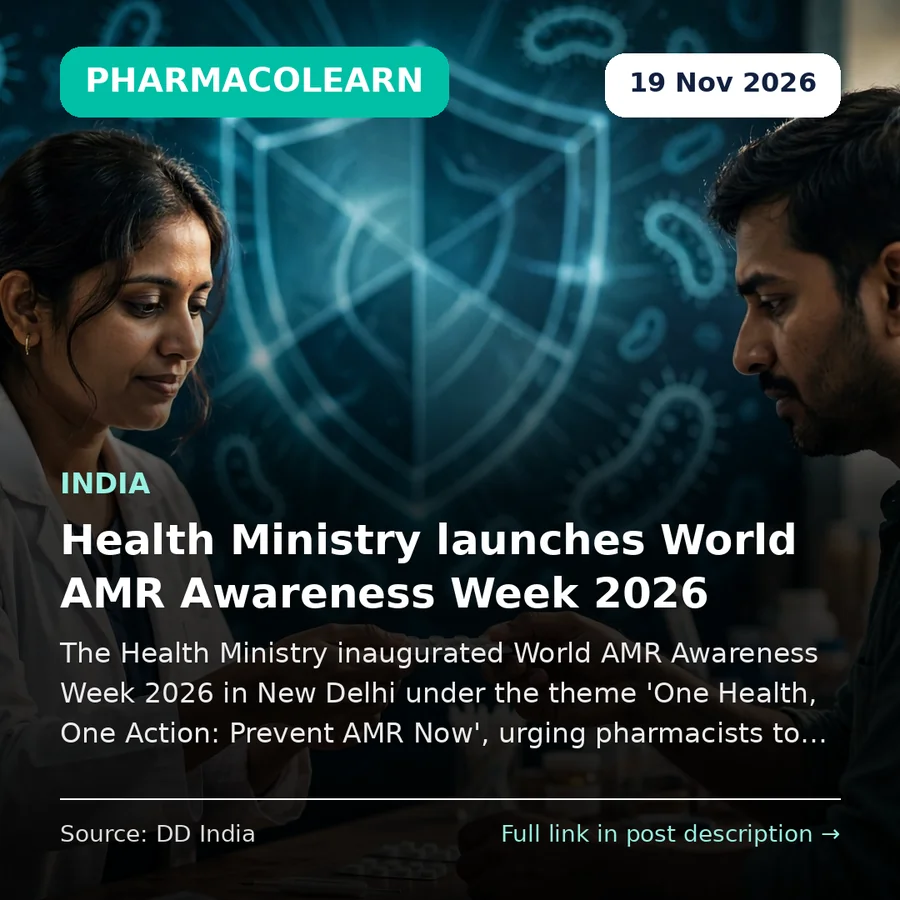
The Union Health Ministry has inaugurated World AMR Awareness Week 2026 in New Delhi, observed under the theme "One Health, One Action: Prevent AMR Now". The campaign urges pharmacists and other healthcare professionals to dispense antibiotics only against valid prescriptions and to counsel patients against self-medication and incomplete antibiotic courses.
Antimicrobial resistance (AMR) is one of the most important topics in pharmacology and pharmacy practice, and it features regularly in B.Pharm, Pharm D, and GPAT syllabi. India carries one of the world's highest burdens of antibiotic resistance, driven by over-the-counter sales, irrational fixed-dose combinations, and poor adherence to treatment courses. For students, this week is a reminder that the pharmacist is the last checkpoint before an antibiotic reaches a patient: verifying the prescription, checking the dose and duration, and explaining why the full course matters are core professional duties, not optional extras.
USFDA Flags Caplin Steriles' Tamil Nadu Plant with OAI Status After 10 Observations
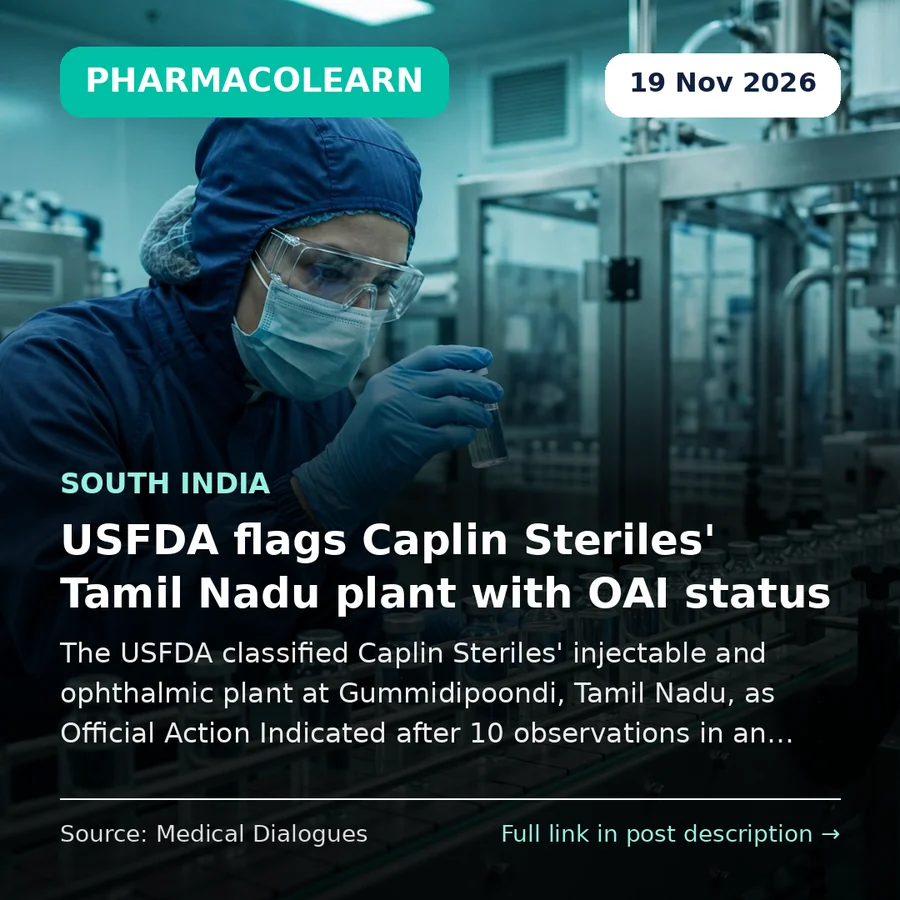
The United States Food and Drug Administration (USFDA) has classified the injectable and ophthalmic manufacturing facility of Caplin Steriles at Gummidipoondi, Tamil Nadu, as Official Action Indicated (OAI), following 10 observations recorded during an inspection in August. The company has stated that no material impact on its business is expected.
An OAI classification is a serious regulatory signal: it means the USFDA found objectionable conditions and may withhold approval of new drug applications from the site until corrective actions are verified. For pharmacy students, this story connects directly to current Good Manufacturing Practices (cGMP), sterile product manufacturing, and the role of regulatory inspections in pharmaceutical quality assurance. Tamil Nadu hosts a large cluster of India's sterile injectable and ophthalmic units, so USFDA outcomes at these plants matter for India's position as a leading exporter of generic medicines to the United States.
China NMPA Accepts IND for LET003, the First AI-Designed Antibody Drug for Obesity
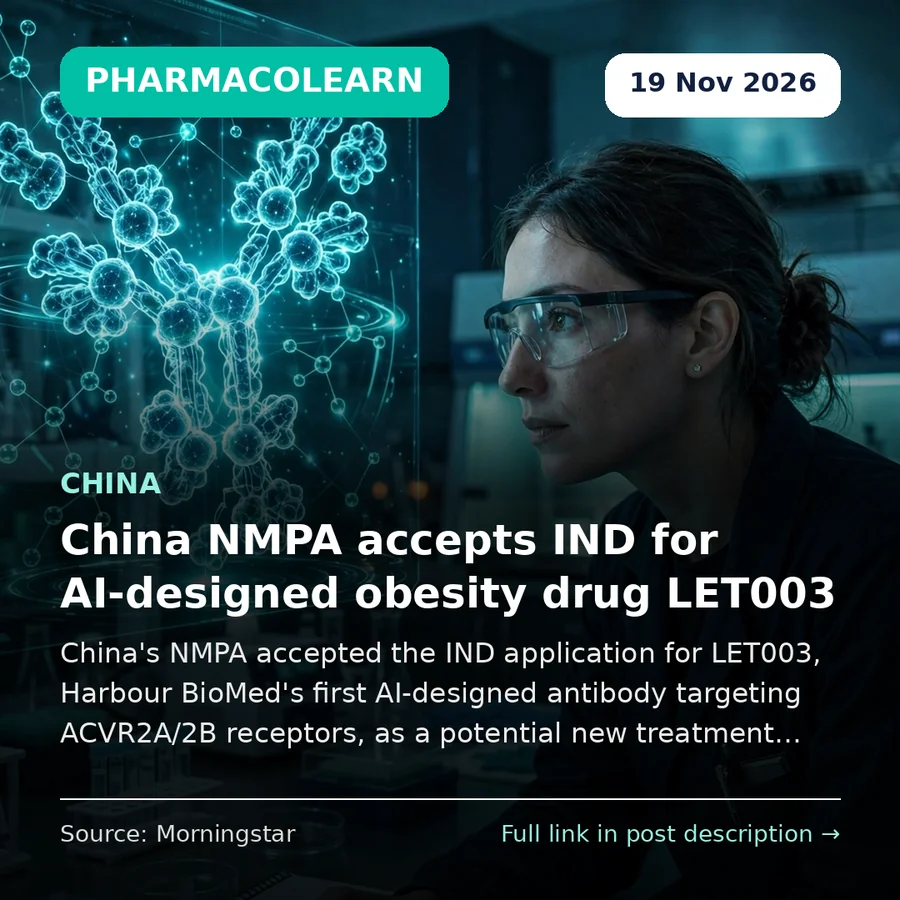
China's National Medical Products Administration (NMPA) has accepted the Investigational New Drug (IND) application for LET003, Harbour BioMed's first AI-enabled drug candidate. LET003 is an antibody targeting the ACVR2A/2B receptors, developed as a potential new treatment for overweight and obesity.
This is a landmark moment for artificial intelligence in drug discovery: an antibody designed with AI support has now formally entered the regulatory pipeline in China. The ACVR2A/2B pathway regulates muscle growth and fat metabolism, and targeting it represents a different approach from the GLP-1 receptor agonists that currently dominate obesity pharmacotherapy. Pharmacy students should note how AI is moving from a research curiosity into real regulatory filings, and how China's NMPA is emerging as a fast-moving regulator for novel biologics. Compare this with the USFDA and EMA pathways for IND and clinical trial applications when revising regulatory affairs.
Russia's Personalised Cancer Vaccine Neo-Onkovak Clears Metastases in First Melanoma Patient
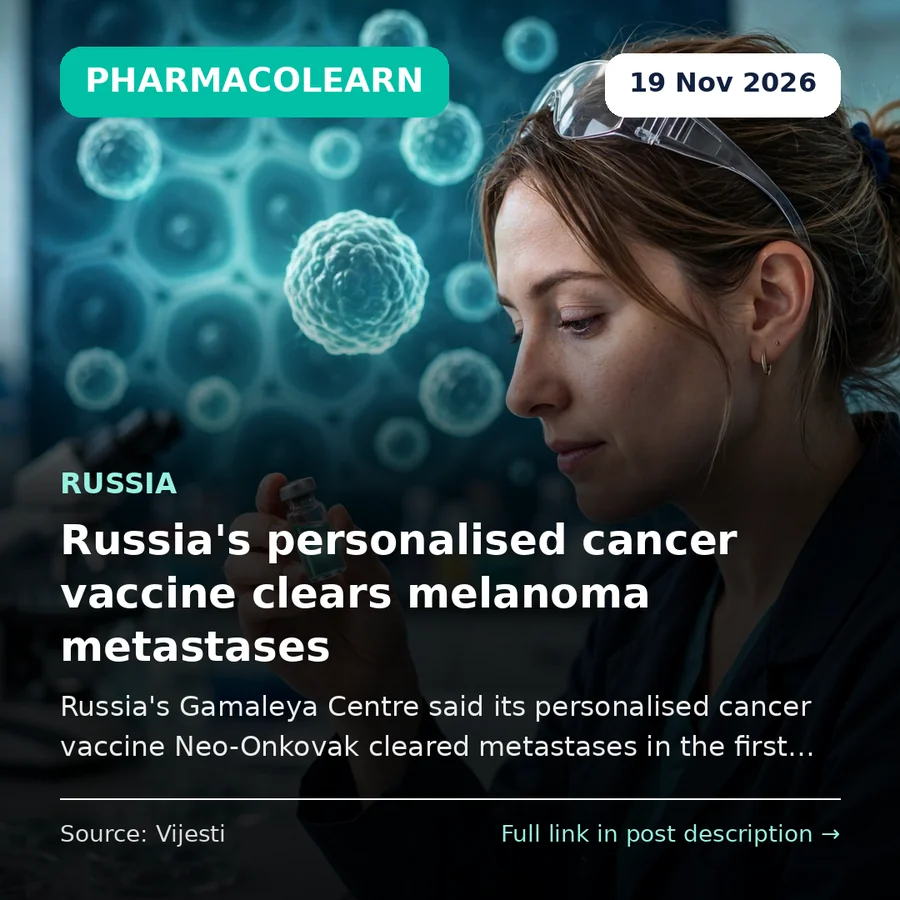
Russia's Gamaleya Centre has reported that its personalised cancer vaccine, Neo-Onkovak, cleared metastases in the first melanoma patient treated with it. The patient completed treatment in September and remains under monthly check-ups, according to the research team.
Personalised cancer vaccines are custom-made for each patient, typically designed around the unique mutations found in that person's tumour, and they aim to train the immune system to recognise and attack cancer cells. While this is a single-patient result and far from a proven therapy, it adds to the growing evidence that cancer immunotherapy is moving towards truly individualised treatment. For students, the story is a useful revision anchor for tumour immunology, cancer vaccines, and the difference between preventive vaccines and therapeutic cancer vaccines, a distinction examiners love to test.
FDA Approves Lembaz, First Drug Shown to Extend Life in Niemann-Pick Disease Type C
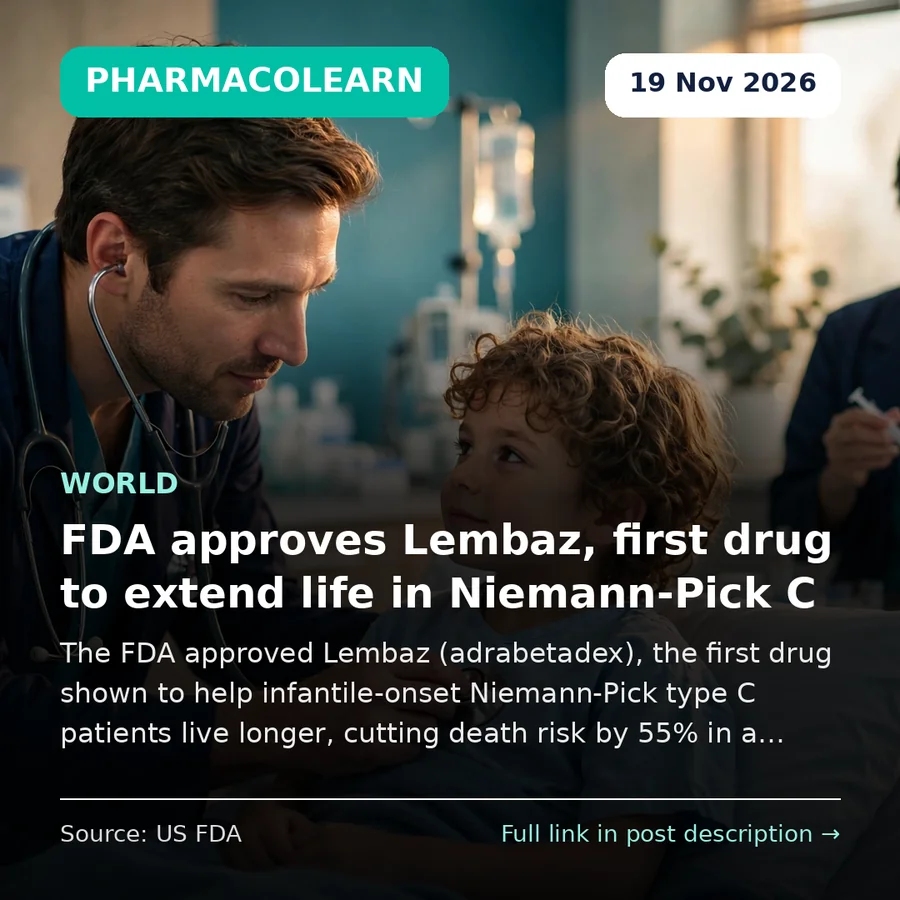
The USFDA has approved Lembaz (adrabetadex), the first drug shown to help patients with infantile-onset Niemann-Pick disease type C live longer. In a survival analysis of 36 patients, the drug cut the risk of death by 55 percent, a landmark result for an ultra-rare and fatal lysosomal storage disorder.
Niemann-Pick disease type C is caused by defective intracellular cholesterol transport, leading to progressive neurodegeneration in children, and until now there was no approved treatment shown to extend survival. Adrabetadex is a cyclodextrin-based therapy that helps mobilise trapped cholesterol from cells. This approval is a classic example of orphan drug development: small patient numbers, surrogate and survival endpoints, and regulatory flexibility for rare diseases. Pharmacy students should connect this story to lysosomal storage disorders, orphan drug legislation, and the pharmacology of cyclodextrins.
FDA Grants Accelerated Approval to Neladalkib (Nelkarmi) for ALK-Positive Lung Cancer
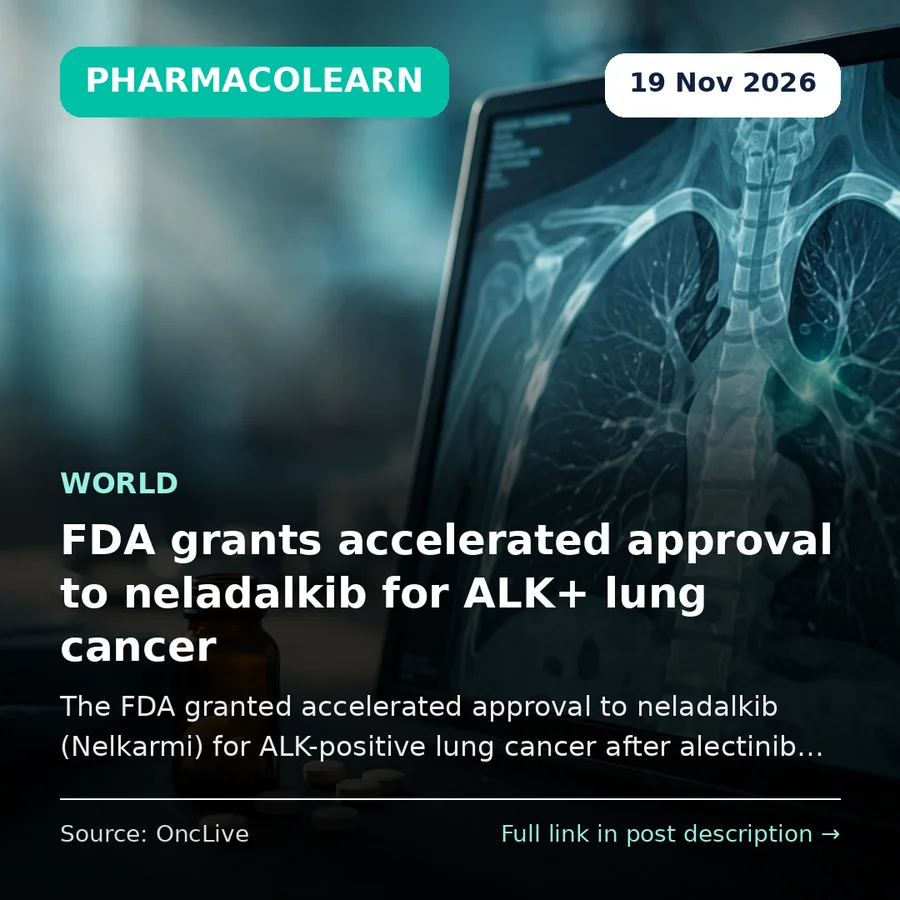
The USFDA has granted accelerated approval to neladalkib (brand name Nelkarmi) for locally advanced or metastatic ALK-positive non-small cell lung cancer (NSCLC), for patients whose disease progressed after alectinib or after two prior ALK tyrosine kinase inhibitors plus chemotherapy. In the ALKOVE-1 trial, the drug achieved a 49 percent response rate.
ALK-positive lung cancer is driven by rearrangements in the anaplastic lymphoma kinase gene, and ALK tyrosine kinase inhibitors (TKIs) such as crizotinib, alectinib, and lorlatinib have transformed its treatment. Neladalkib is a next-generation ALK TKI designed to work after resistance develops to earlier drugs, including against resistant mutations. The accelerated approval pathway allows earlier patient access based on response rate while confirmatory trials continue. For GPAT and pharmacology revision, this story ties together targeted cancer therapy, kinase inhibitor resistance, and the USFDA's accelerated approval mechanism.
Conclusion
Today's news captures the full sweep of modern pharmacy: regulation and manufacturing quality in India, the global fight against antimicrobial resistance, AI-designed biologics in China, personalised immunotherapy from Russia, and two USFDA approvals that show how targeted therapy is changing outcomes in rare and common cancers alike. For pharmacy students, the thread running through all seven stories is the same: regulators, researchers, and pharmacists working together to bring safer and more effective medicines to patients faster. Keep revising the frameworks behind the headlines — the NDCT Rules, cGMP, AMR stewardship, orphan drugs, and accelerated approval — and these stories will keep paying off in your examinations.
References
- Dhyeya IAS https://www.dhyeyaias.com/current-affairs/daily-pre-pare/view/new-drugs-and-clinical-trials-ndct-rules-2019
- DD India https://ddindia.co.in/2026/11/health-ministry-launches-world-amr-awareness-week-2026-calls-for-responsible-antibiotic-use/
- Medical Dialogues https://medicaldialogues.in/news/industry/pharma/caplin-steriles-gets-usfda-oai-classification-after-10-observations-at-tamil-nadu-facility-183545
- Morningstar https://www.morningstar.com/news/pr-newswire/20261118cn01188/harbour-biomed-announces-nmpa-acceptance-of-ind-application-for-its-first-ai-enabled-drug-candidate-let003-for-the-treatment-of-overweight-or-obesity
- Vijesti https://en.vijesti.me/news-b/science/836880/Russian-scientist%27s-cancer-vaccine-shows-results-in-melanoma-patient--metastases-cured
- US FDA https://www.fda.gov/news-events/press-announcements/fda-approves-first-drug-shown-help-patients-infantile-onset-niemann-pick-disease-type-c-live-longer
- OncLive https://www.onclive.com/view/fda-approves-neladalkib-for-locally-advanced-or-metastatic-alk-nsclc