Daily Pharma News - 18 November 2026
Today's pharma news brings a strong India focus, with cancer drug price regulation and a new lung cancer licensing deal leading the day, alongside promising antifungal research from Hyderabad, regulatory progress in China and Russia, and two landmark US FDA approvals. Here is what pharmacy students in India need to know.
NPPA cancer drug price monitoring: 137 anti-cancer drugs repriced under DPCO, states to report by 16 November 2026
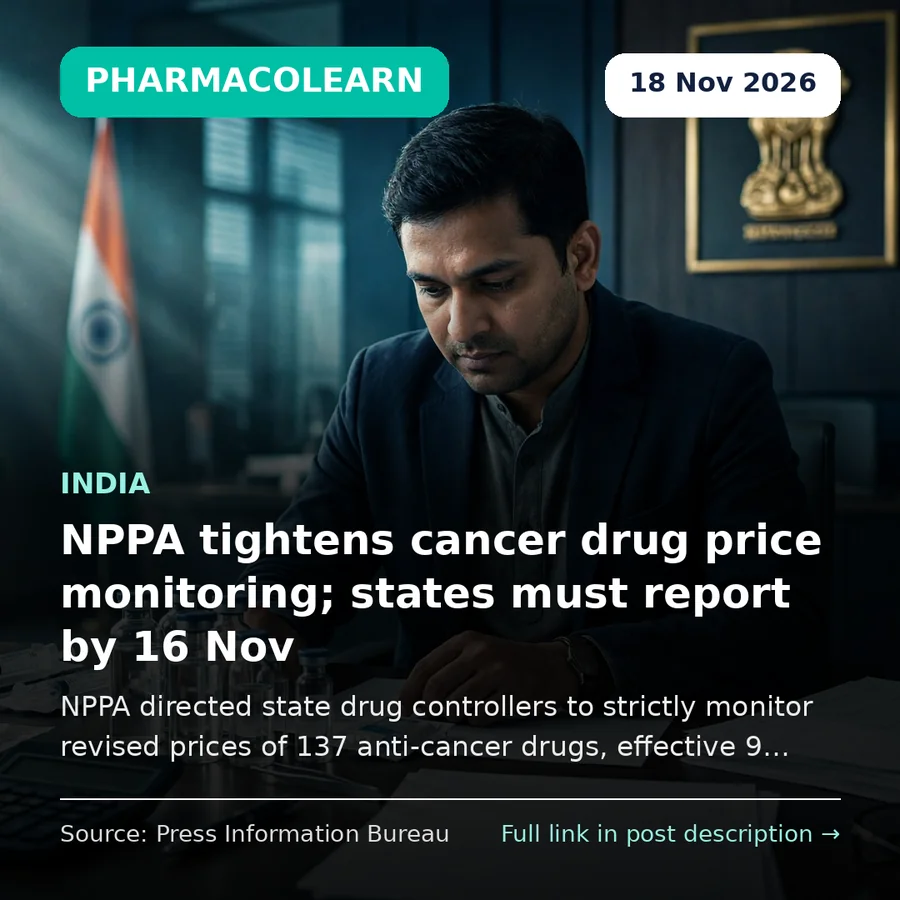
The National Pharmaceutical Pricing Authority (NPPA) has directed state drug controllers to strictly monitor the revised prices of 137 anti-cancer drugs, with the revised prices effective from 9 November 2026. A total of 1,364 formulations were repriced, and the move is expected to bring annual savings of around Rs 3,540 crore for patients. State drug controllers were asked to report compliance by 16 November, and violations may face action under the Drugs (Prices Control) Order (DPCO).
For pharmacy students, this is a live example of drug price regulation in India and how the NPPA uses the DPCO to keep essential medicines affordable. Cancer medicines are among the most expensive treatments in India, so price control of oncology drugs directly affects patient access and hospital pharmacy practice. Students preparing for GPAT, drug inspector, and pharmacist exams should note how price revision, monitoring, and enforcement work together as one system.
Mankind Pharma ensartinib licensing deal brings ALK-targeted lung cancer drug to India
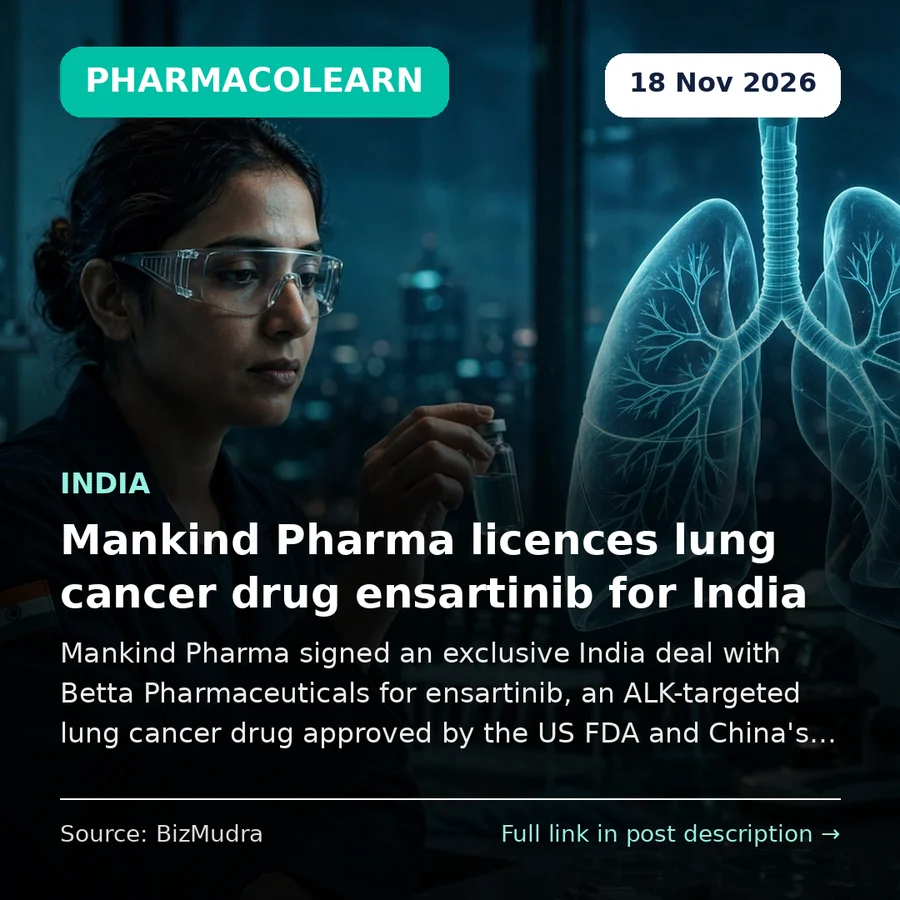
Mankind Pharma has signed an exclusive licensing agreement with Betta Pharmaceuticals to bring ensartinib to India. Ensartinib is an ALK-targeted therapy for lung cancer, already approved by the US FDA and by China's National Medical Products Administration (NMPA). The deal covers development, manufacture, and sale of the drug in India, subject to regulatory approvals.
This is a good case study in how new targeted cancer therapies reach Indian patients through licensing rather than fresh drug discovery. ALK-positive non-small cell lung cancer is a small but important subset of lung cancer, and targeted therapy has changed its treatment outlook. For students, the story connects pharmacology (ALK inhibition), regulatory affairs (approvals needed before launch), and the Indian pharmaceutical business model of in-licensing global molecules.
CSIR-CCMB Hyderabad research: new approach to disarm drug-resistant Candida albicans fungus
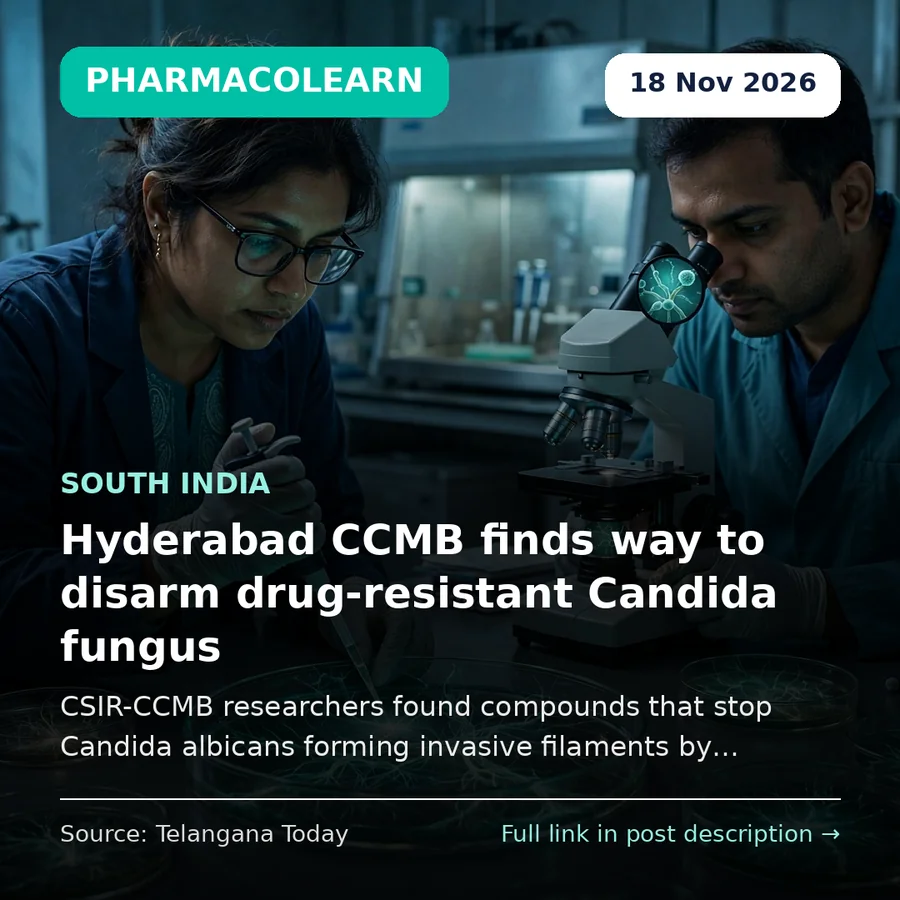
Researchers at the CSIR-Centre for Cellular and Molecular Biology (CCMB) in Hyderabad have found compounds that stop Candida albicans from forming invasive filaments by targeting glycolysis, without killing the fungus itself. A lead compound improved sensitivity to fluconazole and amphotericin B and improved survival in mouse models.
Antifungal resistance is a growing concern in Indian hospitals, where Candida infections affect immunocompromised patients and those in intensive care. The CCMB approach is notable because it disarms the fungus rather than killing it, which may reduce the pressure that drives drug resistance. This is also a useful example for students of how basic research on fungal metabolism can open new paths in antifungal drug development.
China NMPA accepts ivonescimab application for first-line biliary tract cancer treatment
China's National Medical Products Administration (NMPA) has accepted Akeso's supplemental application for ivonescimab in combination with chemotherapy as first-line treatment for advanced biliary tract cancer, and the application has been granted priority review. The filing is supported by the Phase III HARMONi-GI1 trial.
Biliary tract cancers are aggressive and difficult to treat, and treatment options beyond chemotherapy have been limited, so a first-line immunotherapy combination is a significant development. For Indian pharmacy students, the story is relevant in two ways: it shows how China's NMPA uses priority review to speed up oncology filings, and it adds to the growing evidence base for combination immunotherapy in gastrointestinal cancers that Indian clinicians and pharmacists will increasingly encounter.
Russia national health project backs 50 plus studies to develop 10 new medicines
Russia's national project "New Technologies for Saving Health" is supporting more than 50 studies aimed at developing at least 10 new medicines, 30 medical devices, and 10 new technologies. Ten vital medicines that were not previously manufactured in Russia were registered in the first half of 2026.
The project reflects a wider global trend of countries building domestic pharmaceutical capacity and reducing dependence on imports, a theme that also runs through India's own push for self-reliance in active pharmaceutical ingredients and drug manufacturing. For students, it is a reminder that national health policy, research funding, and drug availability are closely linked, and that regulators and governments shape which medicines reach patients.
FDA approves adrabetadex Lembaz, first drug to extend survival in infantile Niemann-Pick disease type C
The US Food and Drug Administration (FDA) has approved adrabetadex, marketed as Lembaz, to reduce the risk of death in patients with infantile-onset Niemann-Pick disease type C (NPC) weighing 7 kg or more. It is the first drug shown to extend life in this condition. Median survival was 8.5 years with the drug compared with 4.9 years without it, a 55 percent lower risk of death. The drug carries a boxed warning for hearing loss.
Niemann-Pick disease type C is a rare lysosomal storage disorder in which cholesterol and lipids accumulate in cells, causing progressive neurological damage, and infantile-onset disease has had no treatment that improves survival until now. For pharmacy students, this approval is a textbook example of orphan drug development and of how regulators weigh a serious benefit against a serious risk, with the boxed warning for hearing loss making monitoring an essential part of therapy.
FDA approves Cosentyx secukinumab, first anti-IL-17 biologic for polymyalgia rheumatica
The US FDA has approved secukinumab (Cosentyx) 150 mg for adults with polymyalgia rheumatica (PMR) who have failed or cannot tolerate corticosteroids. It is the first anti-IL-17 biologic approved for PMR. In the REPLENISH trial, the drug doubled sustained remission and helped spare steroid use.
Polymyalgia rheumatica causes pain and stiffness in the shoulders and hips, mainly in older adults, and long-term steroid treatment brings problems such as diabetes, osteoporosis, and weight gain. A steroid-sparing biologic is therefore an important advance, especially for elderly patients. Students should note the mechanism here: secukinumab blocks interleukin-17A, a cytokine involved in inflammation, and the approval shows how a drug first known for psoriasis and arthritis can find a new use in another inflammatory disease.
Conclusion
Today's news ties together three themes that matter for pharmacy students: affordability, innovation, and regulation. The NPPA price monitoring and the ensartinib licensing deal both shape how cancer medicines reach Indian patients, the CCMB antifungal research shows Indian science tackling drug resistance at its roots, and the FDA and NMPA decisions show regulators moving faster on rare diseases, cancer, and inflammatory conditions. Together, they are a reminder that pharmacy is not only about drug names and doses, but also about pricing, policy, research, and patient access, and students who follow these stories will be better prepared for exams, for clinical practice, and for the changing world of medicines.
References
- Press Information Bureau https://www.pib.gov.in/PressReleseDetailm.aspx?PRID=2335722®=48&lang=2
- BizMudra https://www.bizmudra.com/mankind-pharma-signs-india-licensing-deal-for-ensartinib/
- Telangana Today https://telanganatoday.com/hyderabad-researchers-find-way-to-disarm-drug-resistant-fungus
- Manila Times / PR Newswire https://beta.manilatimes.net/2026/11/17/tmt-newswire/pr-newswire/akeso-announces-nmpa-acceptance-of-snda-for-ivonescimab-in-combination-with-chemotherapy-for-first-line-biliary-tract-cancer/2471578
- Izvestia https://en.iz.ru/en/2203394/2026-11-17/developments-national-project-new-technologies-saving-health-were-presented-russia
- NeurologyLive https://www.neurologylive.com/view/fda-approves-adrabetadex-first-therapy-improve-survival-infantile-onset-niemann-pick-disease-type-c
- Novartis via TradingView https://www.tradingview.com/news/globenewswire:e534ef9da094b:0-novartis-cosentyx-becomes-first-and-only-fda-approved-anti-il-17-biologic-for-people-with-polymyalgia-rheumatica-pmr/