Daily Pharma News - 16 November 2026
India's first Zika vaccine nears Phase I human trials
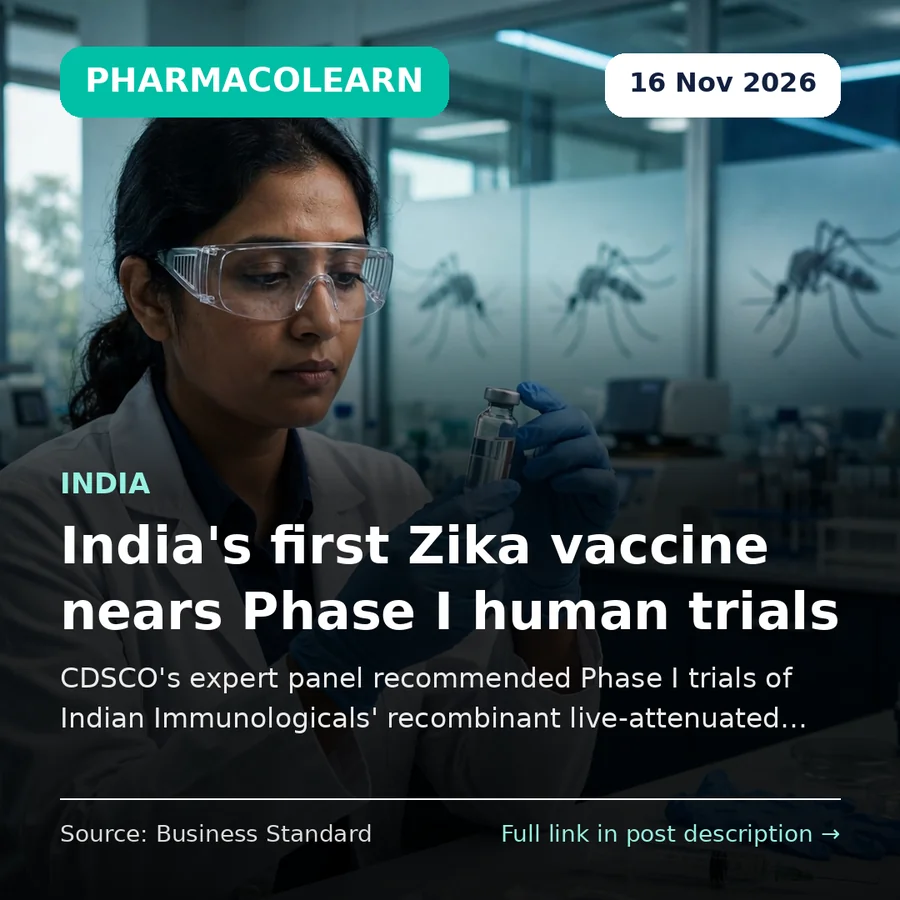
India has taken a major step towards the world's first Zika vaccine, with the Central Drugs Standard Control Organisation (CDSCO) expert panel recommending Phase I human trials of a recombinant live-attenuated Zika vaccine developed by Indian Immunologicals Ltd (IIL) in collaboration with Griffith University and the Indian Council of Medical Research (ICMR). The trial will enrol healthy adults aged 18 to 50 and will test the safety and immune response of the candidate vaccine. No Zika vaccine exists anywhere in the world yet, so a successful Indian candidate would be a landmark for global public health.
Zika virus, spread mainly by Aedes mosquitoes, is best known for causing severe birth defects, including microcephaly, when infection occurs during pregnancy. India has reported sporadic Zika cases in recent years, including clusters in Maharashtra and Karnataka, making a preventive vaccine a priority for the national immunisation research agenda. For pharmacy students, this story is a live case study in vaccine development: from recombinant live-attenuated platforms and preclinical data to the CDSCO expert committee review process and the design of a first-in-human Phase I trial. It also shows how Indian manufacturers such as IIL, better known for animal and human vaccines, are moving into novel viral vaccine research alongside academic and ICMR partners.
Govt health spending triples; out-of-pocket share falls to 42.7%
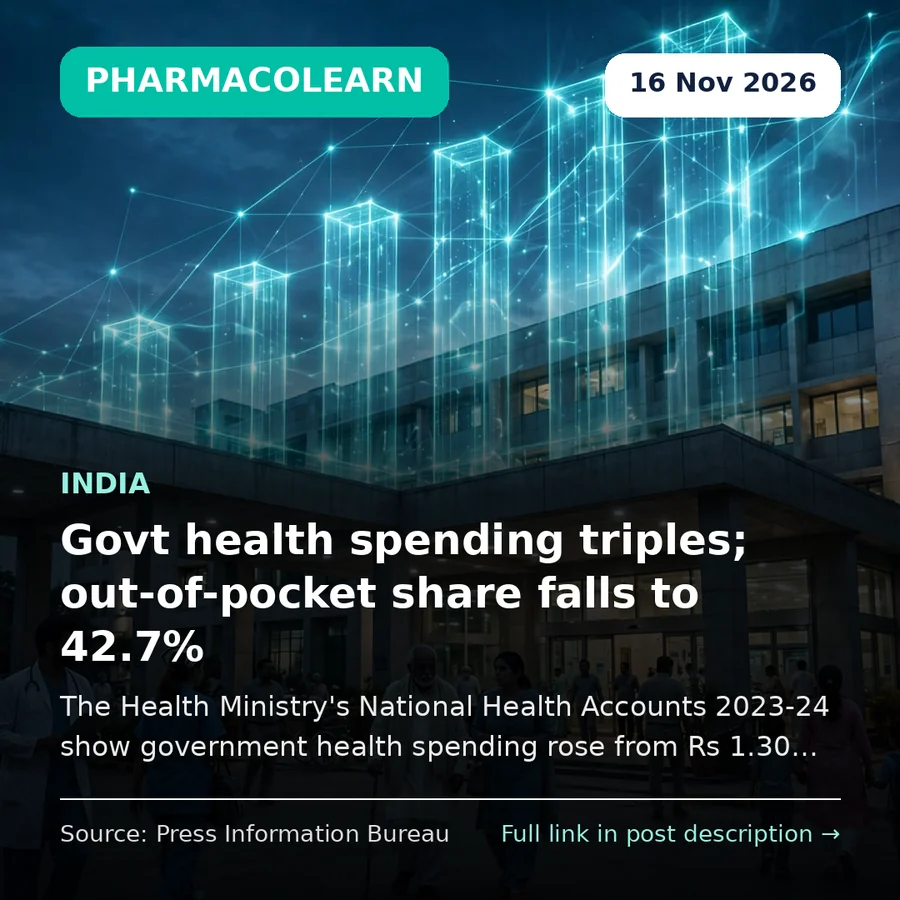
The Union Health Ministry's National Health Accounts 2023-24 show a striking shift in how India pays for healthcare. Government health expenditure rose from Rs 1.30 lakh crore in 2013-14 to Rs 4.14 lakh crore in 2023-24, while the share of total health spending borne directly by households out of pocket fell from 64.2 per cent to 42.7 per cent over the same period. The figures were released by the Press Information Bureau and reflect a decade of rising public investment through schemes such as Ayushman Bharat, the National Health Mission and expanded state health budgets.
For pharmacy students, the National Health Accounts are essential reading because they explain the economics behind drug access in India. A falling out-of-pocket share means more patients can afford prescribed medicines, which in turn shapes demand for essential drugs, generic medicines under the Pradhan Mantri Bhartiya Janaushadhi Pariyojana, and hospital pharmacy services. The data also matter for GPAT and Drug Inspector preparation, where questions on health policy, pharmacoeconomics and the financing of healthcare systems regularly appear. The trend is encouraging, but the 42.7 per cent out-of-pocket share also shows that medicine costs still weigh heavily on Indian households, keeping affordable generics and rational prescribing at the centre of pharmacy practice.
Kerala MDMA network busted: 3 held in Tamil Nadu garment-front raid
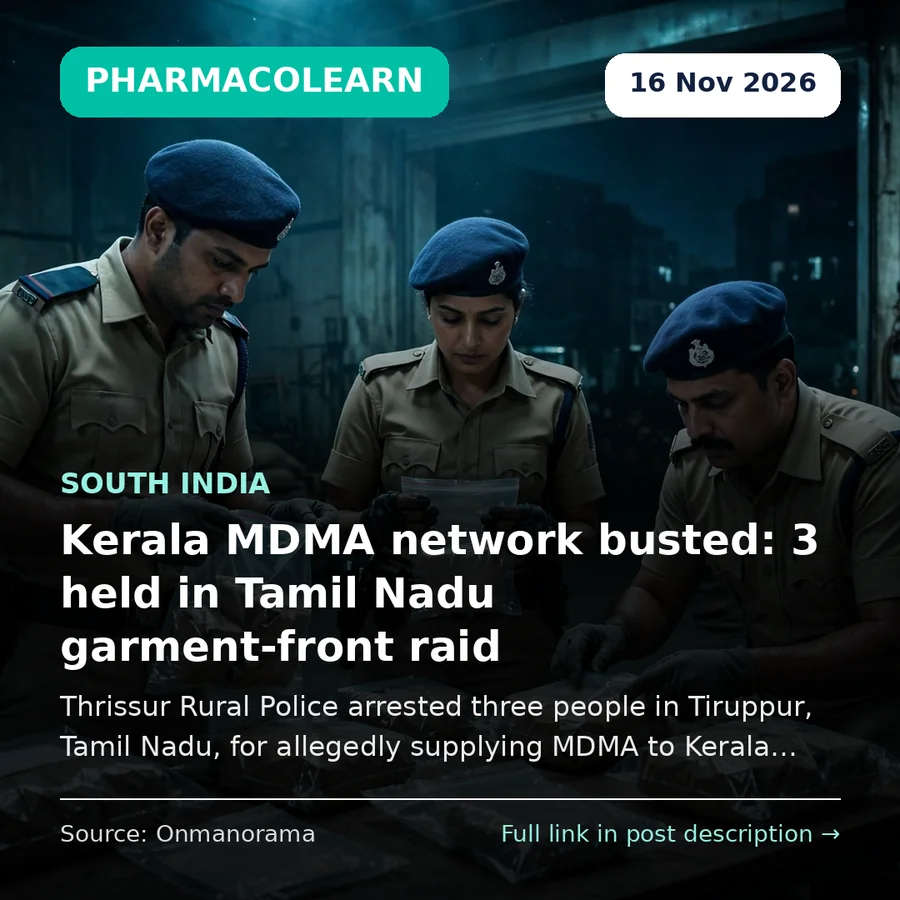
Thrissur Rural Police have arrested three people in Tiruppur, Tamil Nadu, for allegedly supplying MDMA to Kerala under the front of a garment export business, following a 39.39 gram seizure in Kaipamangalam on 12 November under Operation Toofan. The arrests expose how illicit drug networks use legitimate-looking businesses to move MDMA, a synthetic stimulant also known as ecstasy, across state borders into Kerala, where enforcement agencies have stepped up action against synthetic drug trafficking.
MDMA (3,4-methylenedioxymethamphetamine) is a controlled substance under the Narcotic Drugs and Psychotropic Substances (NDPS) Act, 1985, and its illegal manufacture, trafficking and possession carry severe penalties. For pharmacy students, this case is a reminder of the pharmacist's role in preventing drug abuse: recognising controlled substances, understanding the NDPS Act schedules, and appreciating why precursor chemicals and prescription drugs are tightly regulated. It also illustrates the public health side of substance abuse, since MDMA use carries risks of hyperthermia, hyponatraemia, cardiac arrhythmia and long-term neurotoxicity, making awareness and counselling part of the pharmacist's responsibility.
China adds 107 drugs to insurance list, first CAR-T covered
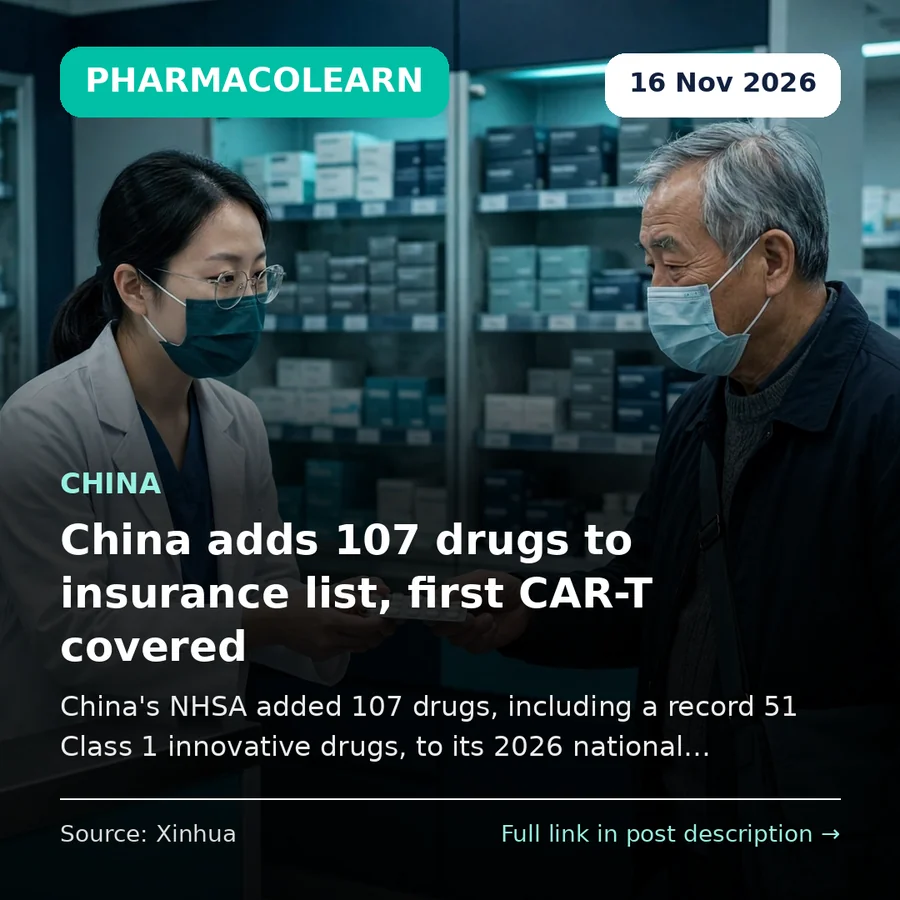
China's National Healthcare Security Administration (NHSA) has added 107 drugs, including a record 51 Class 1 innovative drugs, to its 2026 national reimbursement drug list, effective from 1 January 2027, taking the total to 3,331 drugs. The commercial insurance list also added 12 medicines, including the world's first CAR-T cell therapy for solid tumours. The update is the largest single expansion of innovative medicines in the history of China's national reimbursement negotiations, with new entries spanning oncology, rare diseases, diabetes and immunology.
For Indian pharmacy students, China's reimbursement decisions are worth studying because they shape global drug pricing, market access and the commercial prospects of new therapies. When a major market such as China covers a CAR-T therapy for solid tumours, it accelerates investment in cell therapy manufacturing, cold-chain logistics and hospital-based administration, all areas where pharmacists play a growing role. The record number of Class 1 innovative drugs also signals how quickly domestic Chinese pharmaceutical companies are moving from generics into original research, a shift with direct lessons for India's own innovation policy, price negotiation under the National Pharmaceutical Pricing Authority (NPPA), and the inclusion of high-cost therapies in schemes such as Ayushman Bharat.
Russia begins developing oral tablet insulin for diabetes
Russian scientists at the Dedov Endocrinology Research Centre have begun developing oral tablet insulin in collaboration with local drug firms, aiming to replace daily insulin injections for people with diabetes, with work on once-weekly insulin injections also under way. No trial timeline has been given, and the project is at an early research stage, but the announcement adds Russia to a small group of countries pursuing the long-sought goal of an insulin pill.
Oral insulin has been a challenge in pharmaceutical science for decades because insulin, a peptide hormone, is broken down by stomach acid and digestive enzymes and is poorly absorbed through the gut wall. Solving that problem requires advanced drug delivery technology such as protective coatings, absorption enhancers and nanoparticle carriers, all core topics in pharmaceutics and biopharmaceutics. For pharmacy students, the story is a useful revision point on insulin pharmacology, the barriers to oral peptide delivery, and why innovations such as once-weekly insulin analogues matter for adherence in a country like India, which has one of the world's largest diabetic populations. Any future oral insulin would transform diabetes management, but students should note it remains experimental and years from clinical use.
FDA declines Summit's ivonescimab for lung cancer over survival
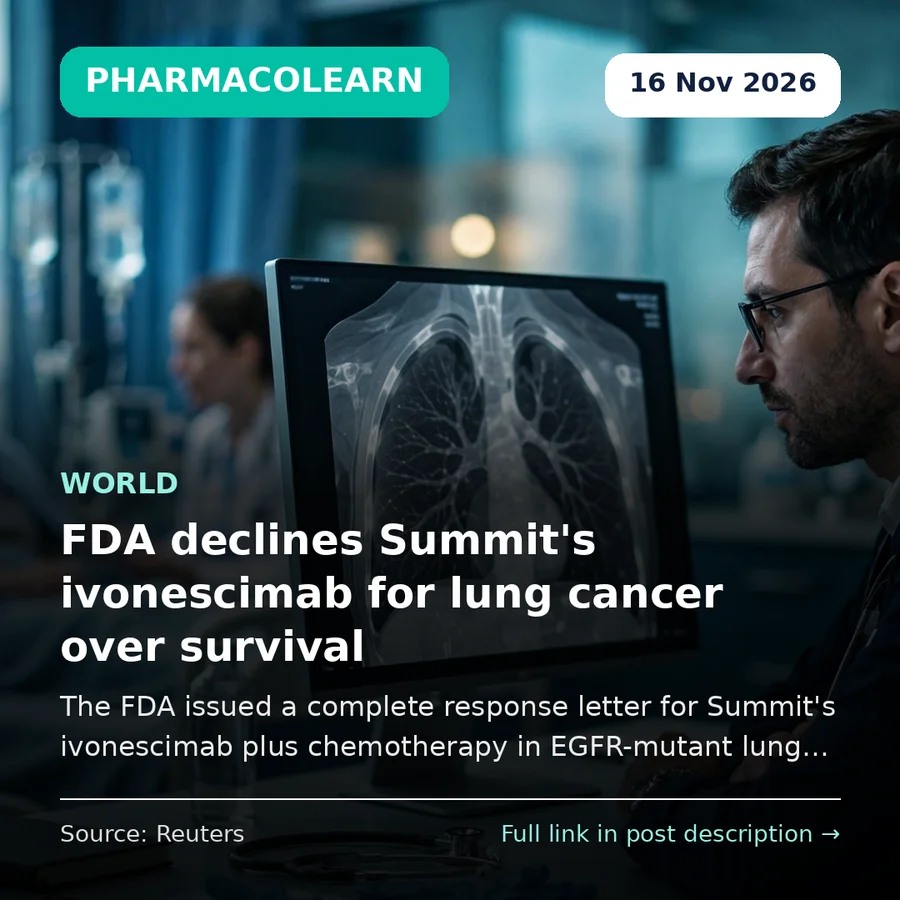
The United States Food and Drug Administration (FDA) has issued a complete response letter for Summit Therapeutics' ivonescimab in combination with chemotherapy for EGFR-mutant non-small cell lung cancer after prior tyrosine kinase inhibitor (TKI) therapy. The trial reduced the risk of disease progression by 48 per cent, but the FDA declined approval because the data showed no statistically significant improvement in overall survival, the key measure of whether a cancer drug helps patients live longer.
Ivonescimab is a bispecific antibody targeting both PD-1 and VEGF, designed to combine immunotherapy with anti-angiogenic action in a single molecule. The FDA decision is an important teaching case for pharmacy students on how regulators weigh surrogate endpoints such as progression-free survival against overall survival, and why a complete response letter is not a rejection of the drug itself but a request for more evidence, often from longer follow-up or a further trial. The story also connects directly to the pharmacology of EGFR-mutant lung cancer, where patients who progress on EGFR TKIs such as osimertinib have limited options, and to the wider debate on how cancer drugs are evaluated and priced.
FDA approves weekly Klygefa injection for myasthenia gravis
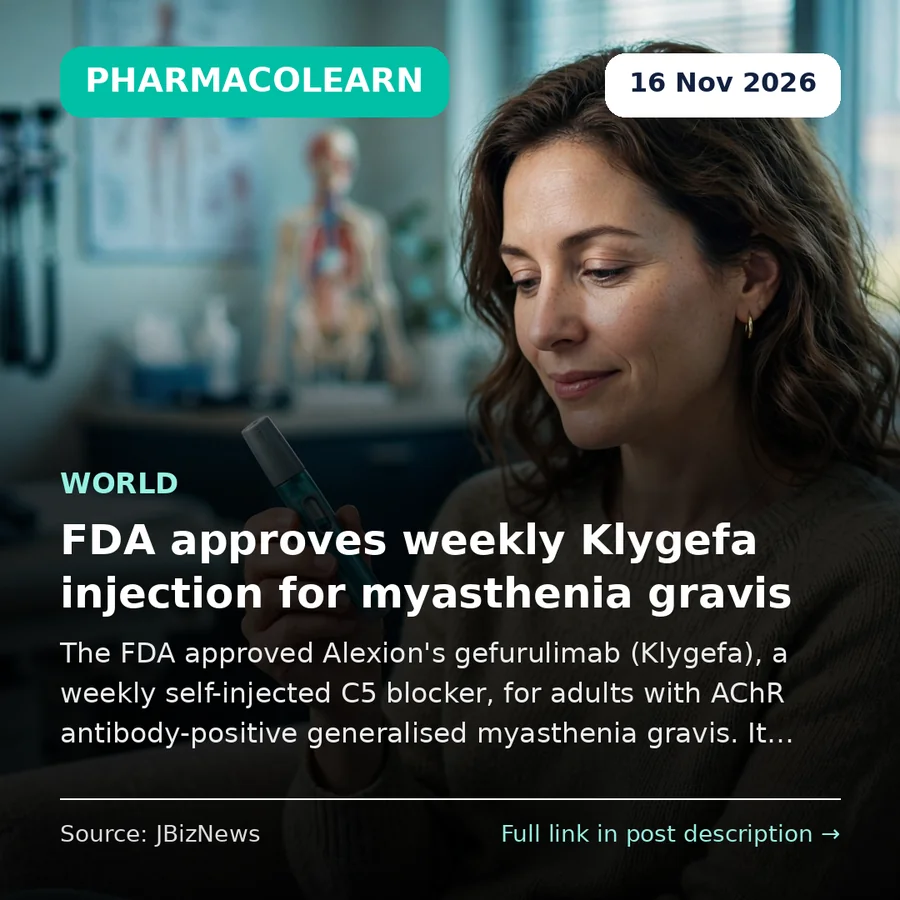
The FDA has approved Alexion's gefurulimab, marketed as Klygefa, a weekly self-injected complement C5 inhibitor for adults with acetylcholine receptor (AChR) antibody-positive generalised myasthenia gravis. The approval gives patients a convenient at-home option in a disease where treatment has traditionally required hospital-based infusions. Klygefa carries a boxed warning for meningococcal infection and is available only through a restricted Risk Evaluation and Mitigation Strategy (REMS) programme, with patients required to receive meningococcal vaccination before starting treatment.
Myasthenia gravis is an autoimmune disorder in which antibodies attack the acetylcholine receptors at the neuromuscular junction, causing fluctuating muscle weakness that can affect the eyes, swallowing, speech and breathing. Complement C5 inhibitors such as eculizumab, ravulizumab, zilucoplan and now gefurulimab work by blocking the complement cascade that damages the neuromuscular junction. For pharmacy students, Klygefa is a clear example of modern monoclonal antibody therapy, the role of complement in autoimmune disease, and the importance of REMS programmes and vaccination counselling for drugs carrying a meningococcal risk. The weekly self-injection format also highlights how formulation and delivery innovation can improve adherence and quality of life in chronic neurological disease.
Conclusion
Today's news captures the full sweep of modern pharmacy, from a first-in-the-world Zika vaccine trial in India and a major expansion of government health spending to a drug trafficking crackdown, China's record drug reimbursement update, early work on oral insulin, and two contrasting FDA decisions on cancer and autoimmune therapy. For pharmacy students, the common thread is the journey every medicine takes, from laboratory research and clinical trials through regulatory review, pricing and reimbursement, and finally to safe use by patients. Keep following these stories, because the concepts behind them, vaccine platforms, pharmacoeconomics, the NDPS Act, drug delivery systems, oncology endpoints and monoclonal antibodies, are the same concepts that appear in examinations and in everyday pharmacy practice.
References
- Business Standard https://www.business-standard.com/industry/news/industry-news-india-first-zika-vaccine-phase-1-human-trials-cdsco-panel-iil-126111500211_1.html
- Press Information Bureau https://pib.gov.in/PressReleasePage.aspx?PRID=2336478
- Onmanorama https://www.onmanorama.com/news/kerala/2026/11/15/garment-export-firm-used-as-drug-front-three-held-in-tamil-nadu-for-supplying-mdma-to-kerala.html
- Xinhua http://chinaview.cn/20261114/633ecfacfae144e9bfbe7beb5d551e31/c.html
- Zamin.uz (RIA Novosti) https://zamin.uz/en/health/227202-russian-scientists-have-begun-developing-insulin-in-tablet-form.html
- Reuters https://wncy.com/2026/11/15/us-fda-declines-to-approve-summit-lung-cancer-drug-after-trial-misses-key-survival-goal/
- JBizNews https://jbiznews.com/fda-approves-weekly-klygefa-injection-for-generalized-myasthenia-gravis/