Daily Pharma News - 15 November 2026
Welcome to PharmacoLearn's Daily Pharma News for 15 November 2026. Today's edition covers seven stories that matter for pharmacy students in India and around the world — from an India–Italy research pact on gene therapy and mRNA, to the NPPA's crackdown on cancer drug prices, World Diabetes Day, a Telangana API raid, China's first solid-tumour CAR-T insurance listing, Russia–Zimbabwe drug manufacturing talks, and the EMA's latest medicine recommendations.
India–Italy biomedical research pact targets gene therapy, mRNA platforms and biomanufacturing in 2027
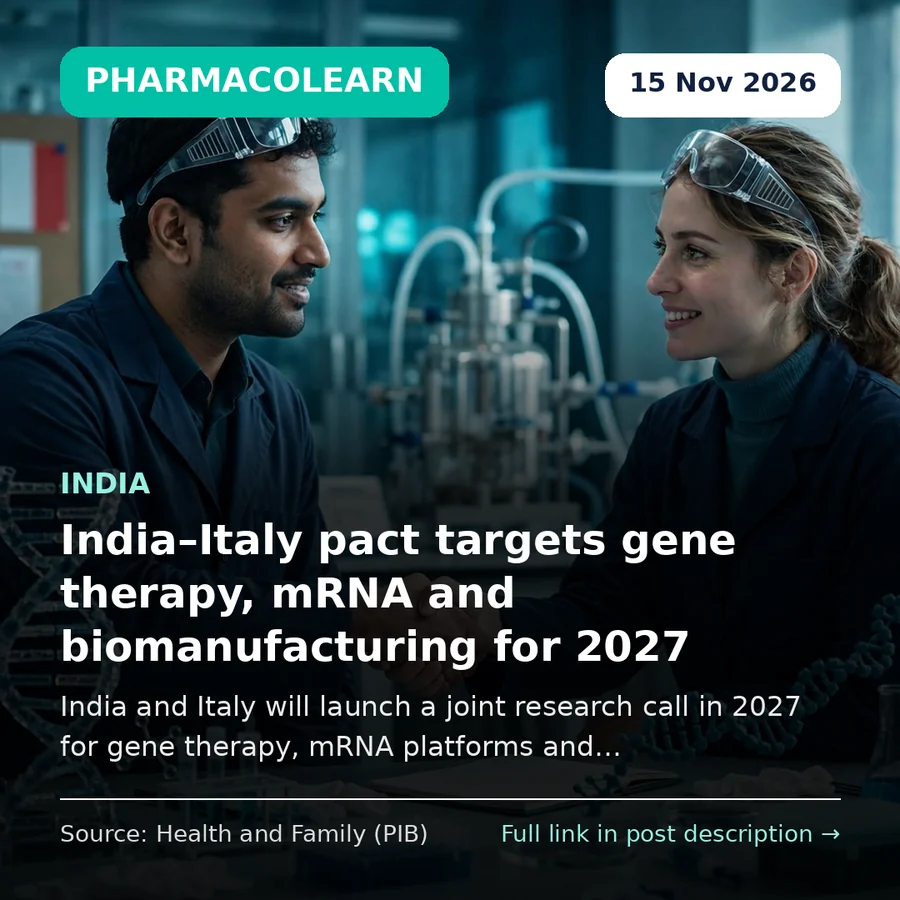
India and Italy have agreed to launch a joint research call in 2027 covering gene therapy, mRNA platforms and biomanufacturing, following discussions in Rome on 13 November during Union Minister Dr Jitendra Singh's visit. The pact brings together two countries with complementary strengths — India's large-scale, cost-efficient manufacturing base and Italy's advanced biomedical research ecosystem — and is expected to fund collaborative projects in advanced therapeutics.
For pharmacy students, this is a story worth following closely. Gene therapy and mRNA platforms are no longer distant science; they are the technologies behind the newest approved medicines, and joint research calls like this one create future careers in research, regulatory affairs and biomanufacturing. Watch for the formal call for proposals in 2027, and note how international collaboration is becoming a standard route for bringing advanced therapies to Indian patients.
NPPA warns over cancer drug prices: states must report compliance on 137 anti-cancer drugs by 16 November
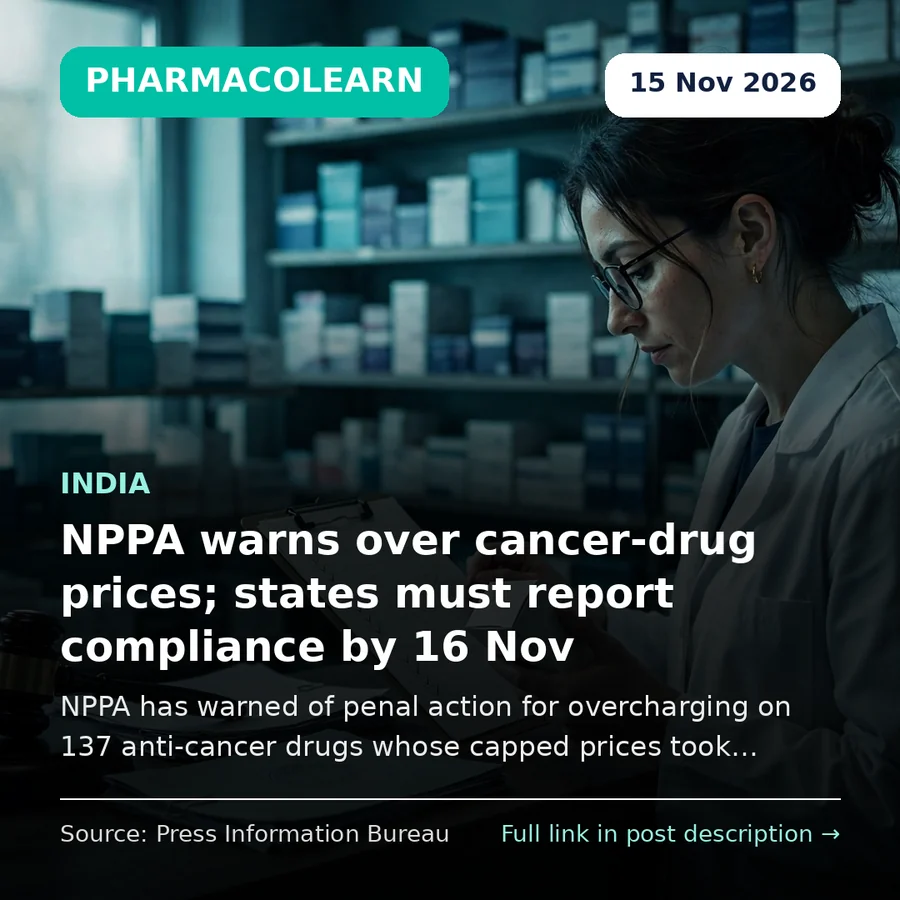
The National Pharmaceutical Pricing Authority (NPPA) has warned of penal action against overcharging on 137 anti-cancer drugs whose capped prices took effect on 9 November 2026. State drug controllers have been asked to file action-taken reports by 16 November, making this a live enforcement exercise rather than a routine advisory. Drug price control in India is governed by the Drugs (Prices Control) Order, and the NPPA can act against manufacturers and sellers who charge above the notified ceiling price.
This story is directly relevant to the pharmacy curriculum — drug price control, the DPCO and the NPPA are standard exam topics — and it is also a reminder of why pharmacists matter in practice. Pharmacists are often the first to spot overcharging at the retail counter, and state-level compliance reporting depends on ground-level enforcement by drug inspectors and pharmacy professionals. Students should revise how ceiling prices are fixed, what penalties apply for violations, and how the NPPA monitors the market.
World Diabetes Day 2026: India pushes early detection as 101 million Indians live with diabetes
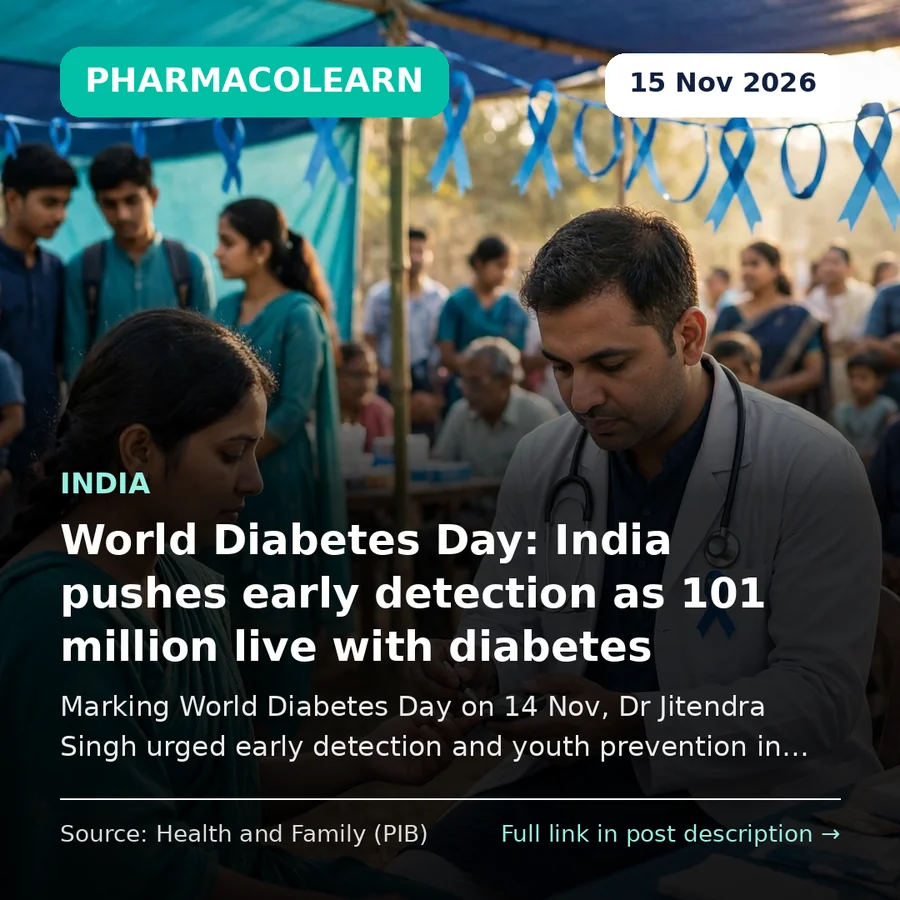
Marking World Diabetes Day on 14 November, Dr Jitendra Singh urged early detection and youth-focused prevention in Rome, noting that about 101 million Indians live with diabetes and that 43% of cases remain undiagnosed. The message is clear: diabetes in India is not only a treatment challenge but a detection challenge, with nearly half of those affected unaware of their condition. Early screening, lifestyle intervention and awareness among young people were highlighted as the most effective tools available.
For pharmacy students, diabetes is one of the most important therapeutic areas to master — from the pharmacology of metformin, sulfonylureas, DPP-4 inhibitors, GLP-1 receptor agonists and SGLT2 inhibitors, to patient counselling on blood glucose monitoring, adherence and hypoglycaemia. Community pharmacists play a frontline role in screening and awareness, and World Diabetes Day is a reminder that the pharmacist's role extends well beyond dispensing. With India carrying one of the world's largest diabetes burdens, this is a disease area every pharmacy graduate will encounter daily.
Telangana drug wing raids Neocell Biotechnologies, seizes Rs 3.5 lakh of APIs stocked without a drug licence
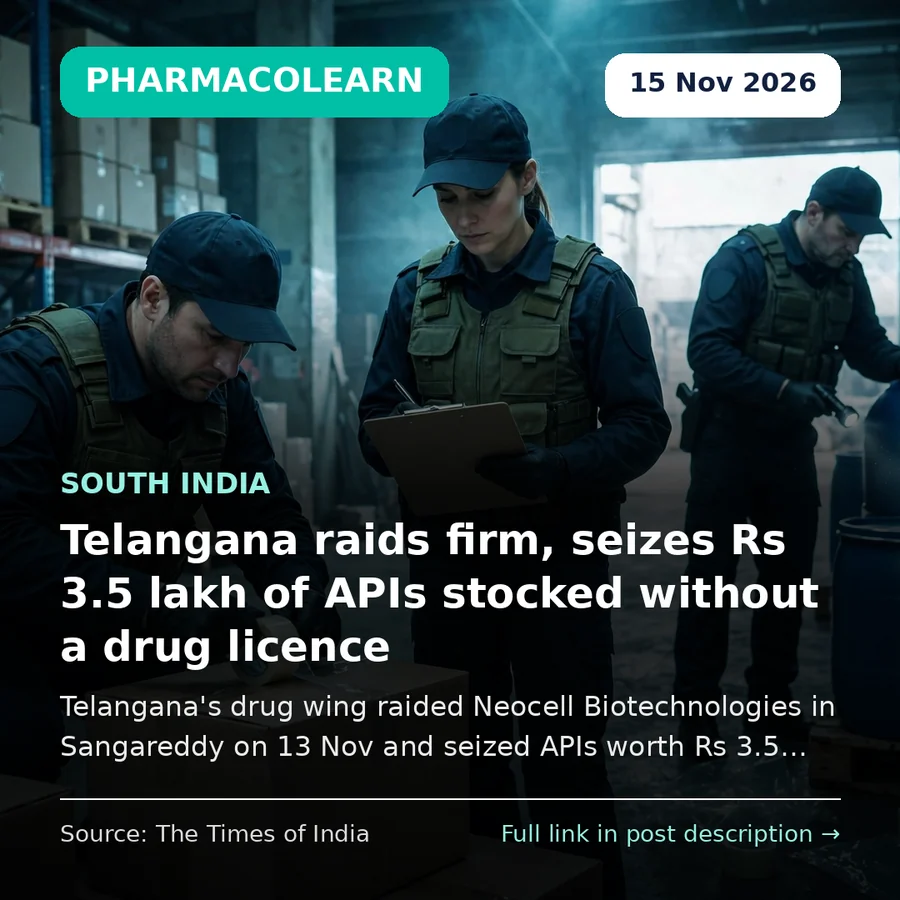
Telangana's drug control administration raided Neocell Biotechnologies in Sangareddy on 13 November and seized active pharmaceutical ingredients (APIs) worth Rs 3.5 lakh that were stocked for sale without a valid drug licence. A probe is under way. Stocking or selling drugs and APIs without a licence is an offence under the Drugs and Cosmetics Act, 1940, and such raids are part of routine enforcement by state drug control departments.
This is a practical lesson in pharmaceutical jurisprudence for every pharmacy student. The Drugs and Cosmetics Act, licensing requirements for sale and manufacture, and the role of drug inspectors are core exam topics — and stories like this one show how those rules are enforced in real life. APIs are the raw materials of every medicine, so unlicensed API trade is a serious quality and safety risk; it can feed substandard or spurious medicines into the supply chain. Remember that a valid drug licence is not paperwork for its own sake — it is the legal foundation of drug safety in India.
China lists satri-cel, the world's first solid-tumour CAR-T therapy, in commercial health insurance
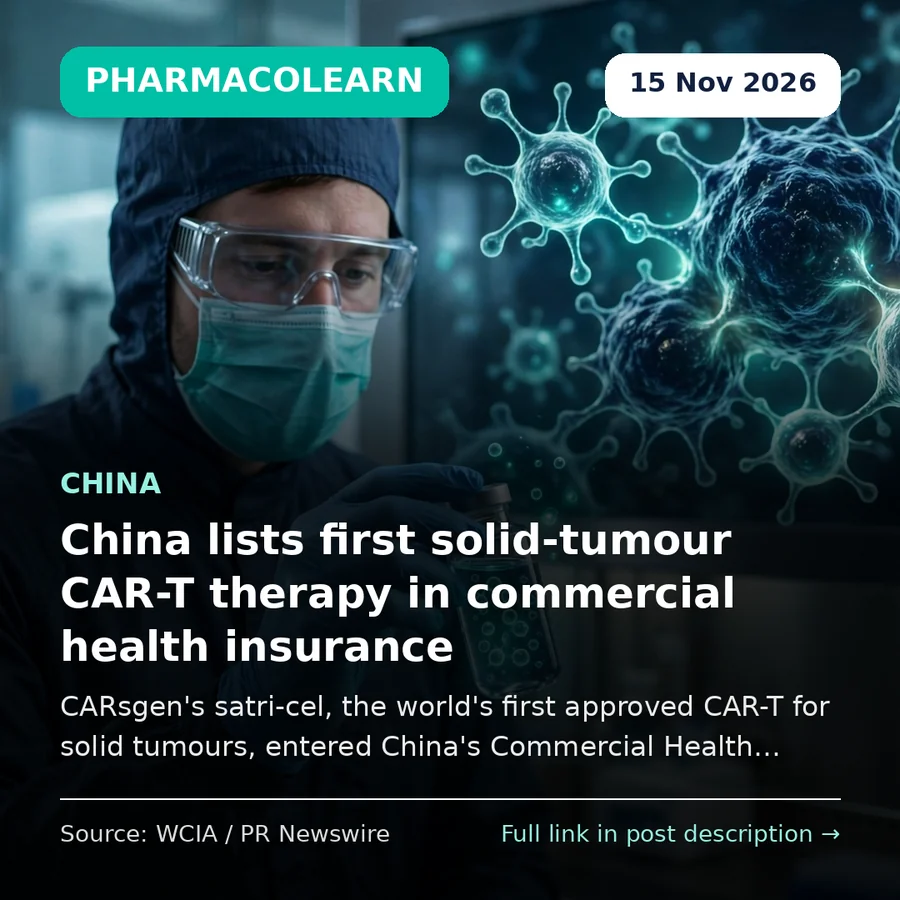
CARsgen's satri-cel, the world's first approved CAR-T cell therapy for solid tumours, has been included in China's Commercial Health Insurance Innovative Drug List, announced on 14 November and effective from 1 January 2027. Until now, CAR-T therapies have been approved mainly for blood cancers such as leukaemia and lymphoma; solid tumours have been far harder to treat with engineered T cells, making satri-cel a genuine milestone in cancer immunotherapy. Inclusion in the commercial insurance list should improve patient access by reducing out-of-pocket costs.
Pharmacy students should note the significance of this development. CAR-T therapy is a flagship example of advanced therapy medicinal products — living drugs manufactured from a patient's own immune cells — and it raises new questions for pharmacists around handling, cold-chain logistics, adverse effect management such as cytokine release syndrome, and the economics of ultra-expensive therapies. China's move also signals how regulators and insurers in Asia are building frameworks for cell and gene therapies, a trend India will need to follow as these products reach its market.
Russia–Zimbabwe talks open path to local drug manufacturing and technology transfer
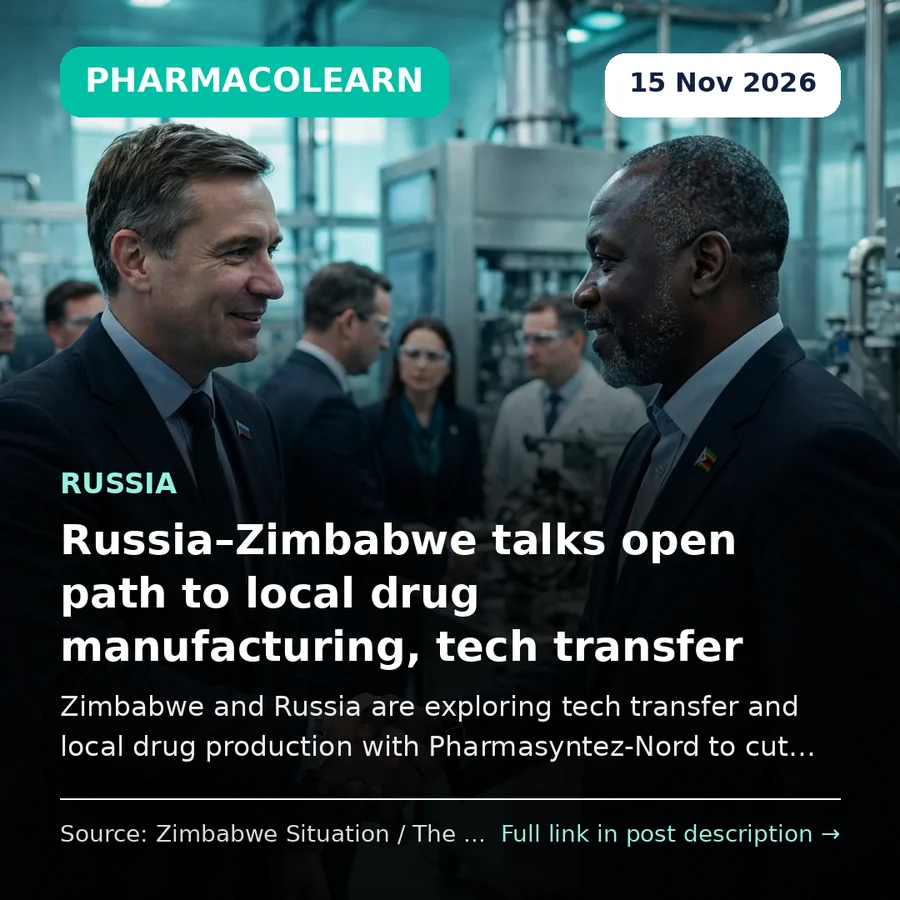
Zimbabwe and Russia are exploring technology transfer and local pharmaceutical manufacturing with Pharmasyntez-Nord, following talks in Moscow during a delegation visit this week. The aim is to reduce Zimbabwe's dependence on imported medicines by building domestic production capacity — a goal shared by many African countries, where local manufacturing remains limited and drug supply depends heavily on imports.
This story illustrates a theme pharmacy students should understand: pharmaceutical manufacturing is not only a business, it is a matter of health security. Countries that cannot make their own essential medicines are vulnerable to supply disruptions, price shocks and shortages. Technology transfer partnerships — covering formulation, good manufacturing practice (GMP) standards, quality control and regulatory compliance — are how that capacity is built. For Indian students, there is a direct connection too: India is known as the pharmacy of the world, and Indian manufacturers, regulators and pharmacists are deeply involved in exactly these kinds of capacity-building partnerships across Africa and Asia.
EMA recommends seven new medicines, including baxdrostat, the first aldosterone synthase inhibitor
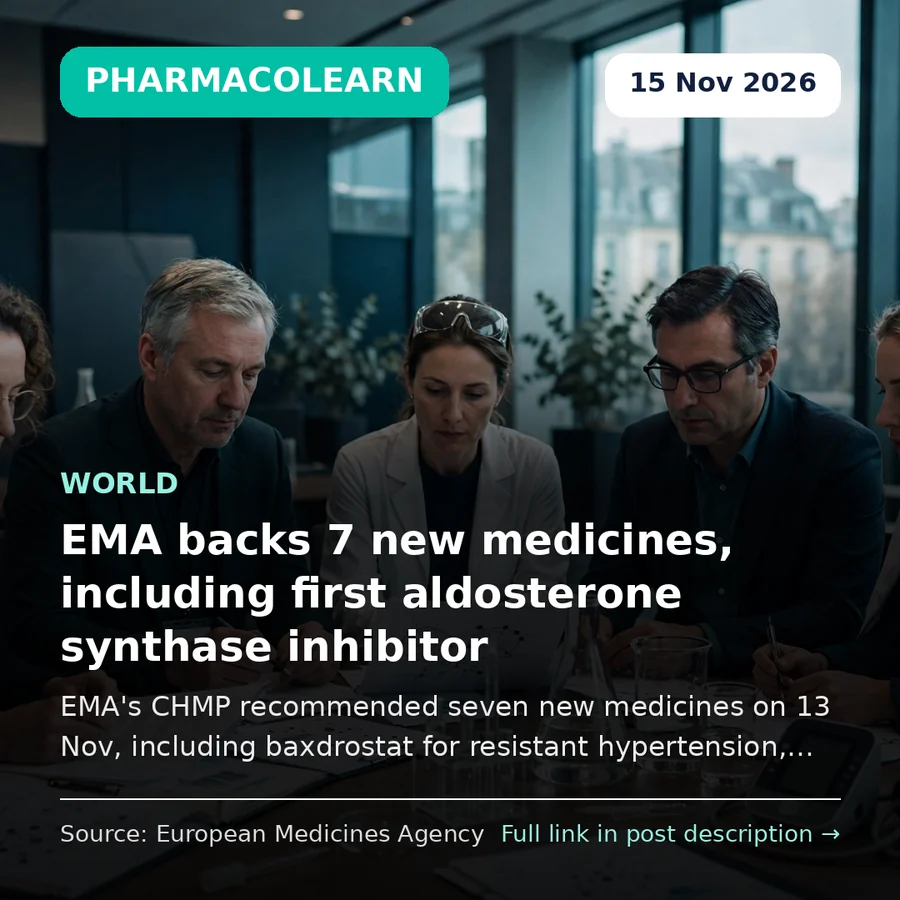
The European Medicines Agency's Committee for Medicinal Products for Human Use (CHMP) recommended seven new medicines at its meeting of 9–12 November 2026, announced on 13 November. The list includes baxdrostat, the first aldosterone synthase inhibitor, for resistant hypertension; aumolertinib and sintilimab for lung cancer; and two insulin aspart biosimilars. A positive CHMP opinion is the key step before the European Commission grants a marketing authorisation valid across the EU.
Baxdrostat deserves special attention from pharmacy students. Resistant hypertension — blood pressure that stays high despite multiple medicines — is a difficult clinical problem, and aldosterone synthase inhibition is a genuinely new mechanism, blocking the production of aldosterone rather than only blocking its receptor as spironolactone and eplerenone do. Meanwhile, the two insulin aspart biosimilars are a reminder of how biosimilars are steadily expanding access to affordable biological medicines, including in diabetes care. EMA recommendations are also a useful study habit: they preview the drugs that will appear in exams, formularies and Indian regulatory discussions in the years ahead.
Conclusion
Today's news ties together the big themes shaping pharmacy in 2026: international research collaboration on gene therapy and mRNA, tough price regulation to keep cancer medicines affordable, the urgent need for early diabetes detection in India, strict enforcement against unlicensed drug trade, the arrival of CAR-T therapy for solid tumours, manufacturing partnerships that strengthen drug security, and a wave of new medicines from Europe's regulator. For pharmacy students, each story connects to something in the syllabus — pharmacology, pharmaceutics, pharmaceutical jurisprudence, drug regulatory affairs and clinical pharmacy — and together they show how quickly the profession is changing. Keep reading the news alongside your textbooks: the exam questions of tomorrow are being written in today's headlines.
References
- Health and Family (PIB) https://healthandfamily.in/india-and-italy-forge-2027-biomedical-research-pact-focusing-on-gene-therapy-mrna-and-biomanufacturing/
- Press Information Bureau https://www.pib.gov.in/PressReleseDetailm.aspx?PRID=2335722®=48&lang=2
- Health and Family (PIB) https://healthandfamily.in/early-action-on-diabetes-takes-centre-stage-as-india-highlights-youth-prevention-and-metabolic-health-in-rome/
- The Times of India https://timesofindia.indiatimes.com/city/hyderabad/tg-safe-raids-firm-seizes-illegal-stocks/articleshow/135839510.cms
- WCIA / PR Newswire https://www.wcia.com/business/press-releases/cision/20261114CN97955/carsgens-car-t-product-satri-cel-included-in-chinas-commercial-health-insurance-innovative-drug-list/
- Zimbabwe Situation / The Herald https://www.zimbabwesituation.com/news/new-russia-talks-open-path-to-local-drug-industry/
- European Medicines Agency https://www.ema.europa.eu/en/news/meeting-highlights-committee-medicinal-products-human-use-chmp-9-12-november-2026