Daily Pharma News - 12 November 2026
BIMSTEC Health Ministers Adopt Joint Plan; India to Host Traditional Medicine Centre in Jamnagar
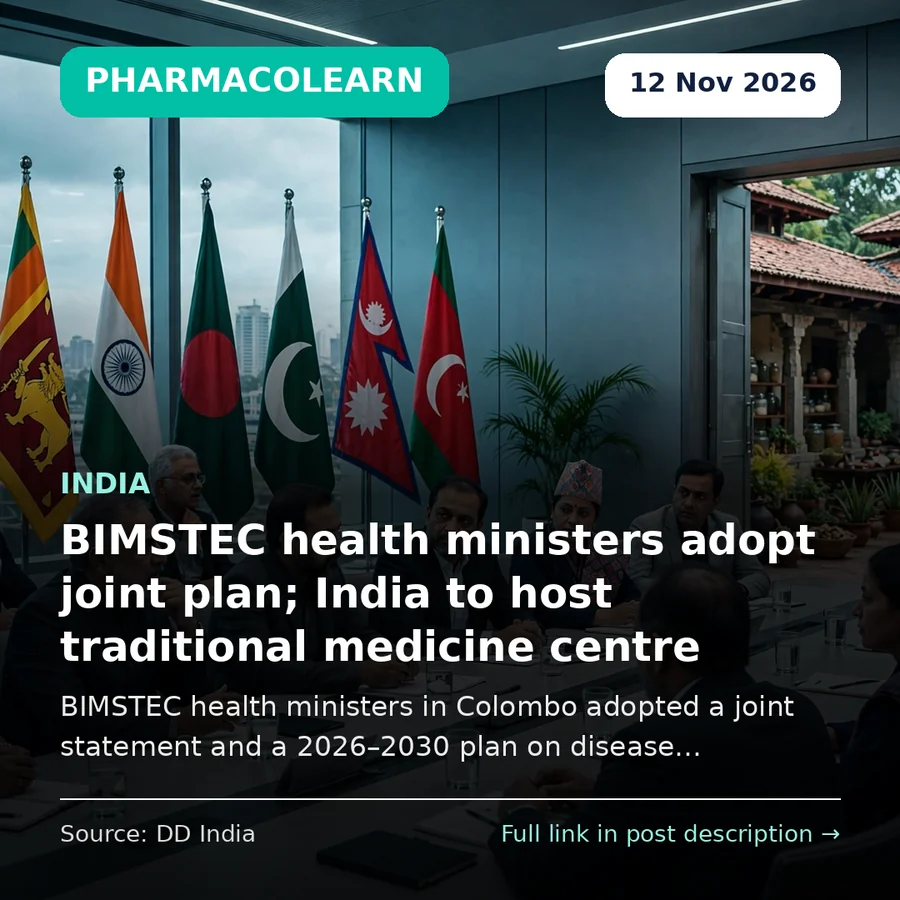
Health ministers of the BIMSTEC countries, meeting in Colombo, have adopted a joint statement and a 2026–2030 plan covering disease surveillance, pandemic readiness and One Health. The plan signals a more coordinated regional approach to health security, bringing together countries that share borders, trade routes and disease patterns, so that outbreaks and health threats can be spotted and answered together rather than country by country.
For India, the headline outcome is the decision to host a traditional medicine centre in Jamnagar. The centre places India's traditional medicine systems at the heart of a regional cooperation framework and gives pharmacy students a clear example of how AYUSH and traditional medicine are being positioned alongside modern public health planning. For students preparing for GPAT, NIPER and Drug Inspector examinations, the story is a useful case study in regional health diplomacy, the One Health concept linking human, animal and environmental health, and the growing policy role of traditional medicine in South and Southeast Asia.
CDSCO Pushes States to Join SUGAM Labs Portal for Digital Drug Testing and NSQ Monitoring
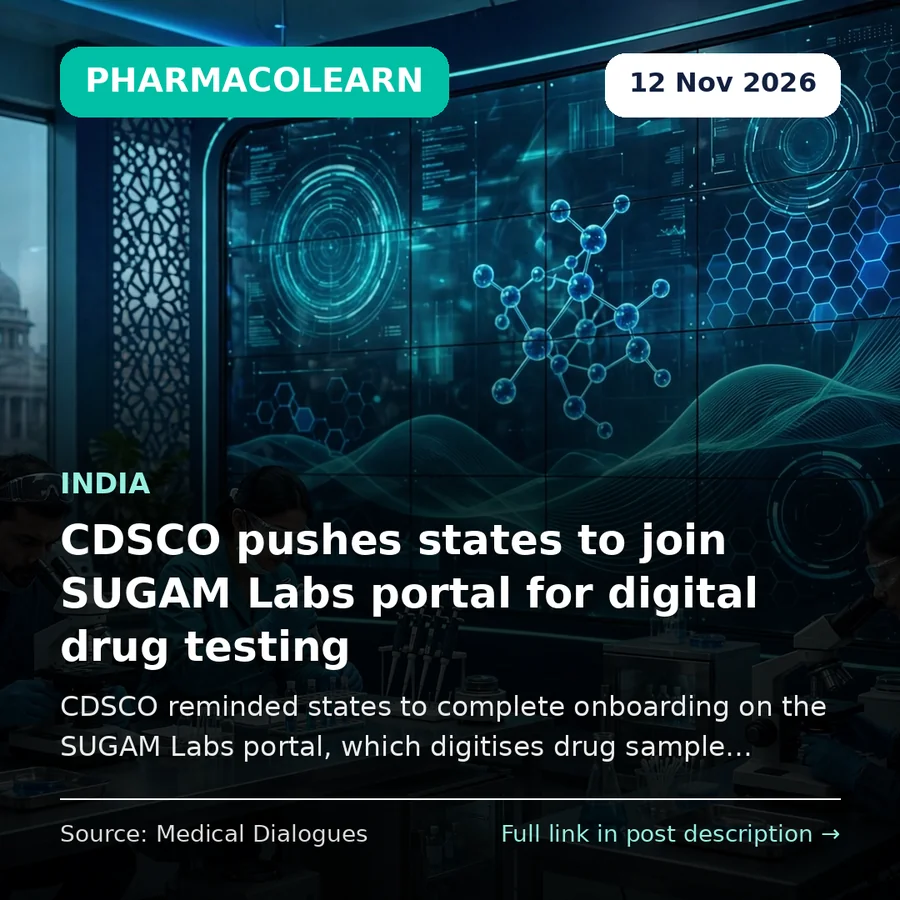
The Central Drugs Standard Control Organisation (CDSCO) has reminded states and Union Territories to complete their onboarding on the SUGAM Labs portal, which digitises drug sample testing and the reporting of Not of Standard Quality (NSQ) medicines. Only five states have finished onboarding so far, although 16 have applied, leaving a large gap between intent and implementation.
The portal matters because drug quality regulation in India depends on coordination between the central regulator and state drug control departments. A digital system for sample testing and NSQ reporting should make it faster to flag substandard medicines, trace test results and act on them, rather than relying on slow paper-based reporting. For pharmacy students, this is a practical illustration of how regulatory affairs and quality assurance are moving online in India, and why the Drugs and Cosmetics Act, Good Manufacturing Practices and post-market surveillance are such important examination topics.
Mounjaro Becomes India's Top-Selling Drug Brand as Generic Semaglutide Takes 74% of Sales Volumes
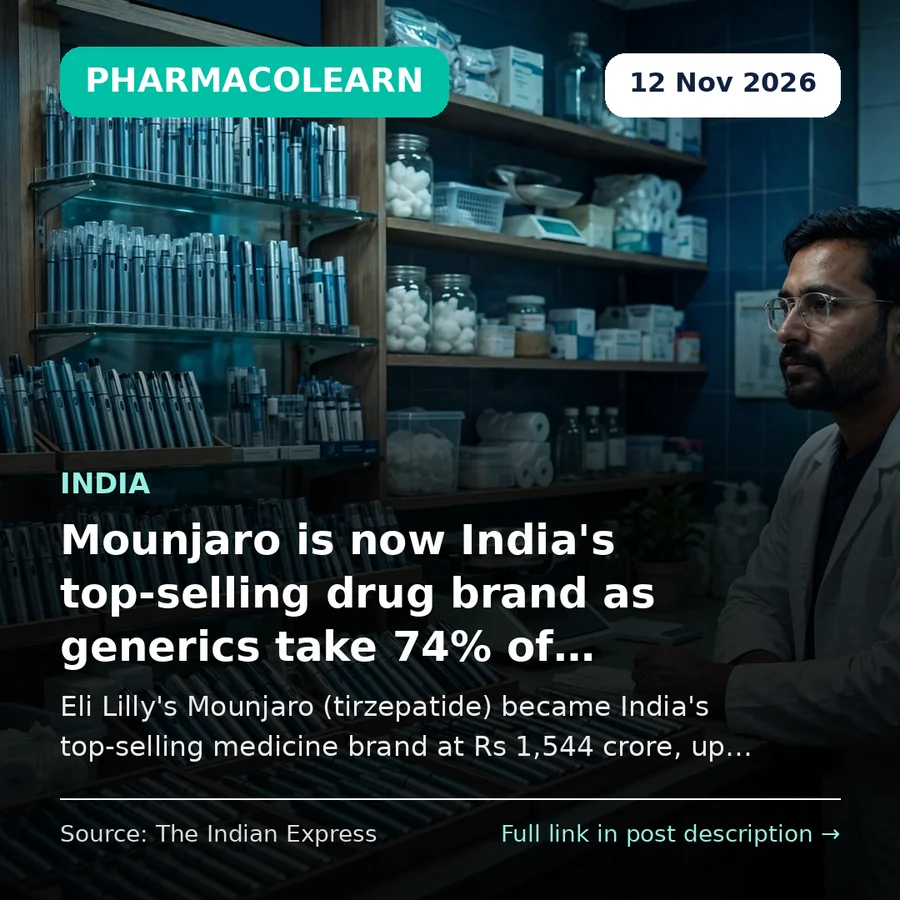
Eli Lilly's Mounjaro (tirzepatide) has become India's top-selling medicine brand, with sales of Rs 1,544 crore, up 229%. At the same time, cheaper generic semaglutide accounted for about 74% of monthly semaglutide volumes in September, showing that the Indian market for weight-loss and diabetes medicines is being shaped by both a premium innovator brand and low-cost generics.
The contrast is instructive for pharmacy students. Tirzepatide and semaglutide belong to the GLP-1 class of medicines used in type 2 diabetes and weight management, and their rapid growth in India reflects rising diabetes and obesity rates as well as strong patient demand. The split between a high-value brand leader and high-volume generics also shows how India's pharmaceutical market works in practice: innovator companies compete on brand and clinical positioning, while Indian generic manufacturers compete on price and access. Students should note the regulatory, pricing and pharmacovigilance questions this raises, including the safe and appropriate use of these medicines under medical supervision.
IISc and Herbalife Launch 1,000-Person Healthy Ageing Study Across Bengaluru, Mysuru, Hyderabad and Chennai
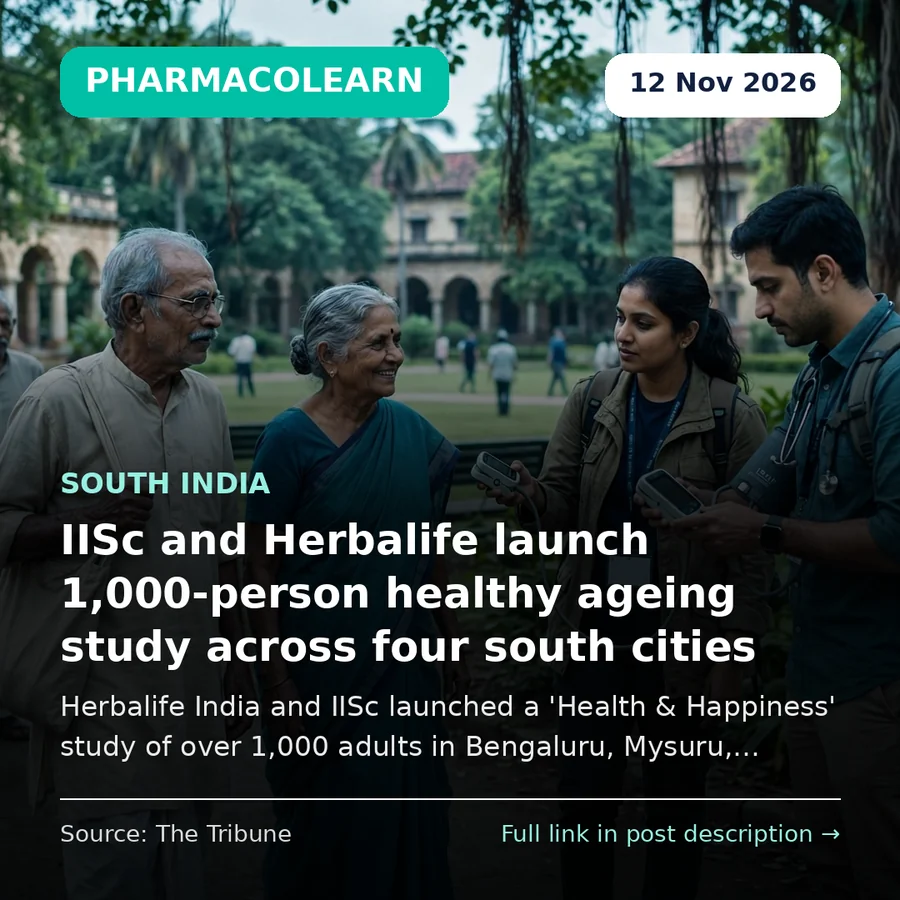
Herbalife India and the Indian Institute of Science (IISc) have launched a "Health & Happiness" study of more than 1,000 adults in Bengaluru, Mysuru, Hyderabad and Chennai, linking metabolic health, gut diversity and biomarkers with healthy ageing. The study brings together academic research and industry support to examine how diet, metabolism and the gut microbiome relate to ageing well.
For pharmacy students in South India, the study is directly relevant to the growing fields of nutraceuticals, preventive healthcare and personalised medicine. Metabolic health markers, gut microbiota diversity and ageing biomarkers are increasingly part of pharmacy and clinical research curricula, and large observational studies of this kind help build the evidence base for nutrition and lifestyle interventions. The four-city design also gives the study a regional spread across Karnataka, Telangana and Tamil Nadu, making its findings more representative of urban South Indian populations.
China Clears First In Vivo CAR-T Therapy IASO208 for Trials in the US and China
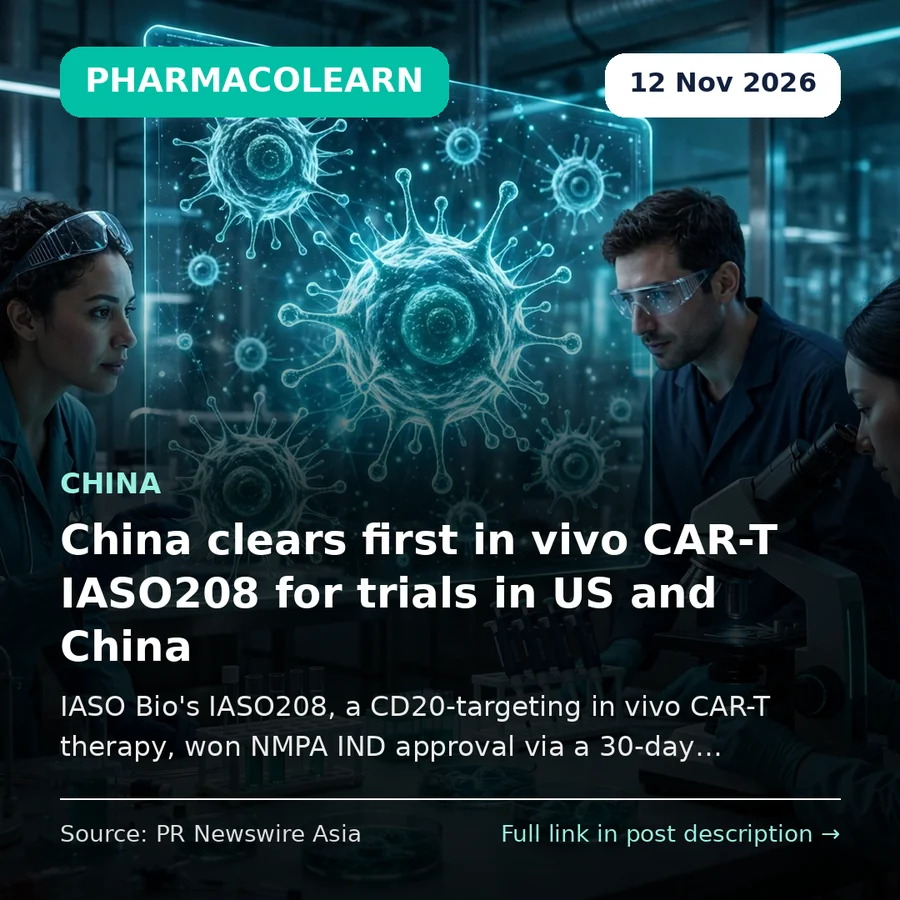
IASO Bio's IASO208, a CD20-targeting in vivo CAR-T therapy, has won approval from China's National Medical Products Administration (NMPA) for an Investigational New Drug (IND) application through a 30-day expedited review. With clearance from the US Food and Drug Administration (FDA) also in place, the therapy now moves into a Phase Ib trial in the United States in patients with relapsed B-cell lymphoma.
In vivo CAR-T therapy is a notable advance on conventional CAR-T treatment, which normally requires a patient's T cells to be collected, modified outside the body and infused back. An in vivo approach aims to generate CAR-T cells directly inside the patient, which could simplify manufacturing and widen access if it proves safe and effective. For pharmacy students, the story connects several important topics: targeted cancer immunotherapy, the CD20 antigen as a drug target in B-cell cancers, the NMPA and FDA regulatory pathways, and the growing role of China in global biopharmaceutical innovation.
Insulin and Diabetes Drug Shortages Hit Chelyabinsk as Glucagon Runs Short in Over 30 Russian Regions
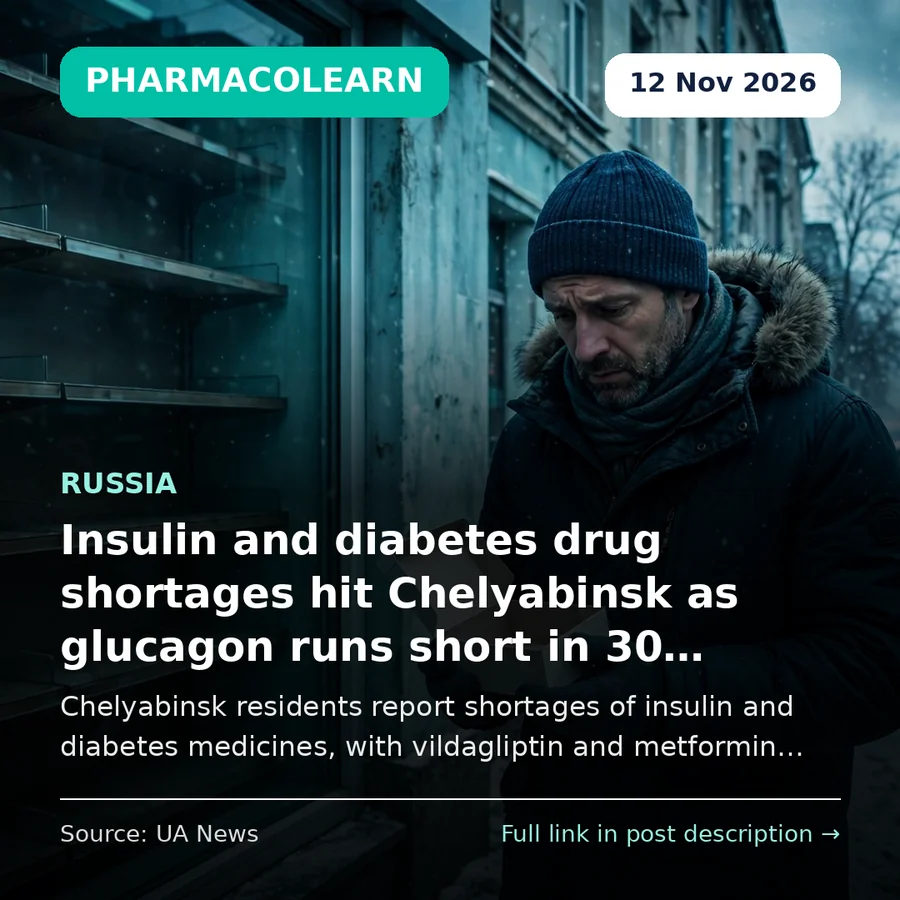
Residents of Chelyabinsk in Russia have reported shortages of insulin and diabetes medicines, with vildagliptin and metformin hard to obtain. Glucagon, used to treat severe hypoglycaemia, is reportedly in short supply in more than 30 Russian regions, raising serious concerns about access to essential diabetes care.
The reports are a reminder of how fragile medicine supply chains can be, and how shortages of essential medicines directly affect patients who depend on them every day. Insulin is life-saving for people with type 1 diabetes, while metformin and vildagliptin are widely used in type 2 diabetes, and glucagon is an emergency medicine for severe low blood sugar. For pharmacy students, the story underlines the importance of drug supply management, essential medicines lists, and the pharmacist's role in managing shortages, counselling patients and finding safe alternatives within the healthcare system.
WHO Launches Platform to Speed Access to Costly New Medicines in Europe
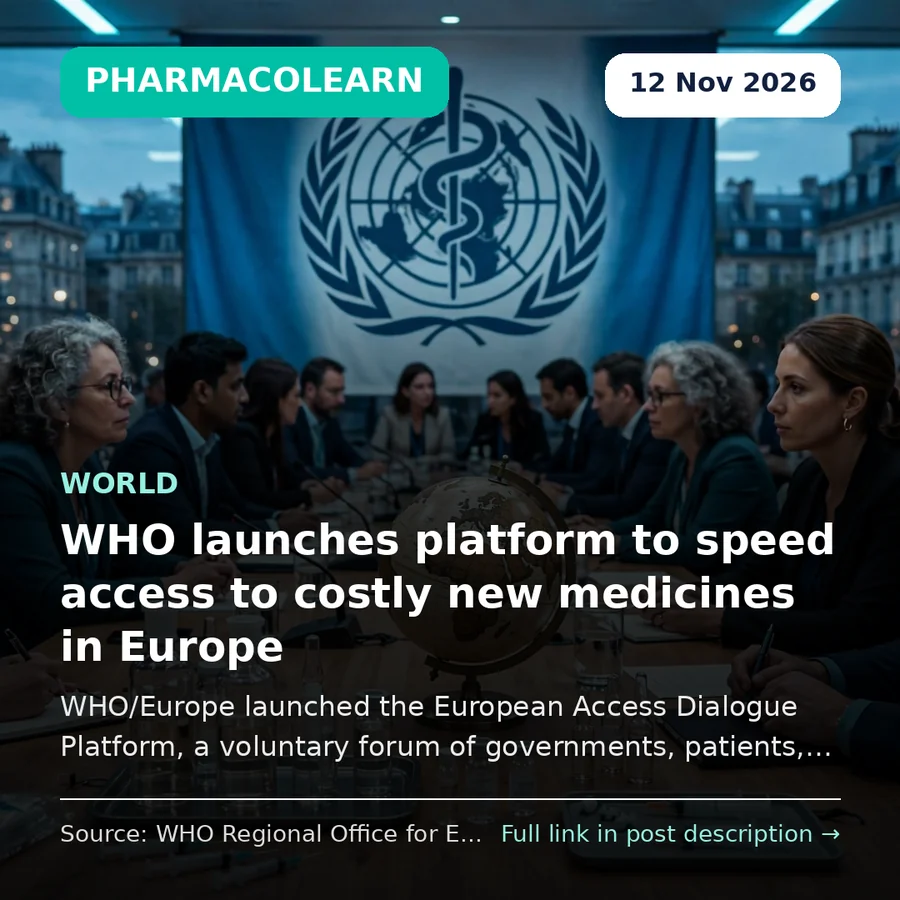
The World Health Organization's Regional Office for Europe (WHO/Europe) has launched the European Access Dialogue Platform, a voluntary forum bringing together governments, patients, industry and payers to cut delays in access to novel medicines across 53 countries. The platform aims to tackle one of the persistent problems in European healthcare: new, often very expensive medicines reaching patients slowly or unevenly.
Access to high-cost innovative medicines is a challenge for health systems everywhere, including India, where pricing, health technology assessment and insurance coverage shape which patients can receive new treatments. The WHO platform offers a model of structured dialogue between the parties involved in medicine pricing and reimbursement, and it is a useful example for pharmacy students studying pharmacoeconomics, health policy and the work of international health agencies.
Conclusion
Today's news spans regional health cooperation, digital drug regulation, blockbuster diabetes and weight-loss medicines, healthy ageing research, cutting-edge cancer immunotherapy, medicine shortages and access to costly new treatments. Together, these stories show how pharmacy sits at the centre of public health, regulation, research and patient care. For pharmacy students, the lesson is to keep connecting the dots: a CDSCO portal and a WHO platform both address the same question of how medicines reach patients safely and fairly, while a traditional medicine centre in Jamnagar and an in vivo CAR-T therapy in China both show how quickly the field is changing. Staying current with these developments will strengthen examination preparation and build the professional judgement every pharmacist needs.
References
- DD India https://ddindia.co.in/2026/11/india-strengthens-regional-health-cooperation-as-bimstec-adopts-joint-statement-in-colombo/
- Medical Dialogues https://medicaldialogues.in/news/industry/pharma/cdsco/cdsco-seeks-urgent-action-from-states-uts-to-complete-sugam-labs-onboarding-for-digital-drug-testing-nsq-monitoring-183050
- The Indian Express https://indianexpress.com/article/health-wellness/mounjaro-sales-soar-cheap-weight-loss-drug-alternatives-10957716/
- The Tribune https://www.tribuneindia.com/news/business/herbalife-india-and-iisc-launch-landmark-study-on-healthy-ageing/
- PR Newswire Asia https://en.prnasia.com/releases/global/iaso-bio-announces-nmpa-ind-approval-for-iaso208-advancing-its-in-vivo-car-t-platform-into-synchronized-u-s-china-clinical-development-555802.shtml
- UA News https://ua.news/en/world/u-rosiiskomu-cheliabinsku-vinik-defitsit-bezkoshtovnogo-insulinu-ta-preparativ-vid-diabetu
- WHO Regional Office for Europe https://www.who.int/europe/publications/i/item/WHO-EURO-2026-13826-53600-84324