Daily Pharma News - 2 November 2026
Today's daily pharma news spans Indian drug regulation, small-industry support, a major Hyderabad partnering event, and important cancer drug filings in China, Europe and Japan. From a CDSCO clearance for generic oral semaglutide to new filings for melanoma and lung cancer combination therapies, the day's stories touch diabetes care, pharmaceutical manufacturing, regulatory affairs and oncology — all core topics for pharmacy students in India. Read on for the full details, with the source of every story listed at the end.
Sun Pharma wins CDSCO nod for generic oral semaglutide tablets — CDSCO approval generic semaglutide tablets India, Sun Pharma Rybelsus generic type 2 diabetes
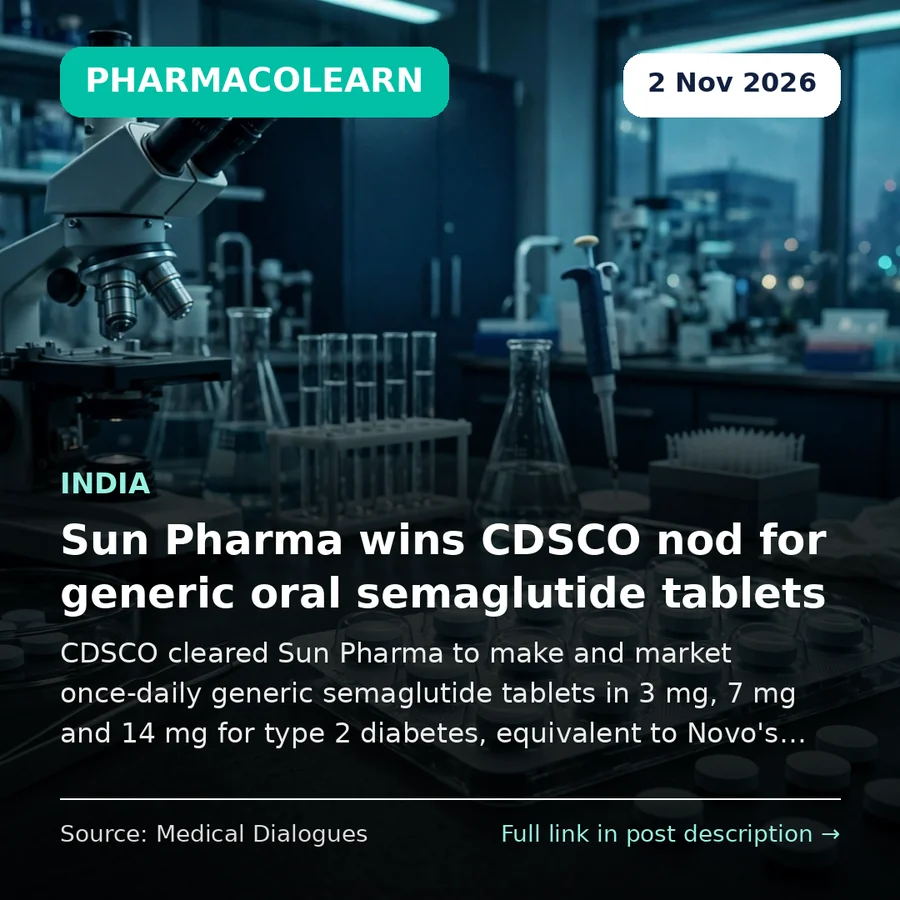
India's Central Drugs Standard Control Organisation (CDSCO) has cleared Sun Pharma to manufacture and market once-daily generic semaglutide tablets in 3 mg, 7 mg and 14 mg strengths for type 2 diabetes. The product is the generic equivalent of Novo Nordisk's Rybelsus, the innovator oral semaglutide brand, and the clearance marks an important step for affordable oral GLP-1 therapy in India. Semaglutide belongs to the glucagon-like peptide-1 receptor agonist class, which helps control blood sugar in type 2 diabetes, and an oral tablet form gives patients an alternative to injectable GLP-1 medicines.
For pharmacy students, this story connects several examination topics at once: generic drug approval in India, the role of CDSCO as the national regulator, and the difference between innovator and generic products. Sun Pharma is one of India's largest pharmaceutical companies, and a domestic generic oral semaglutide could widen access to a widely discussed diabetes therapy if it reaches the market at a lower price. Students should also note the three strengths, 3 mg, 7 mg and 14 mg, which reflect the dose-escalation approach used with oral semaglutide, and watch for launch and pricing announcements that will follow this regulatory clearance.
Pharma MSMEs get one more year to complete PLI investments — pharma MSME PLI scheme extension FY27, Production Linked Incentive pharmaceuticals India
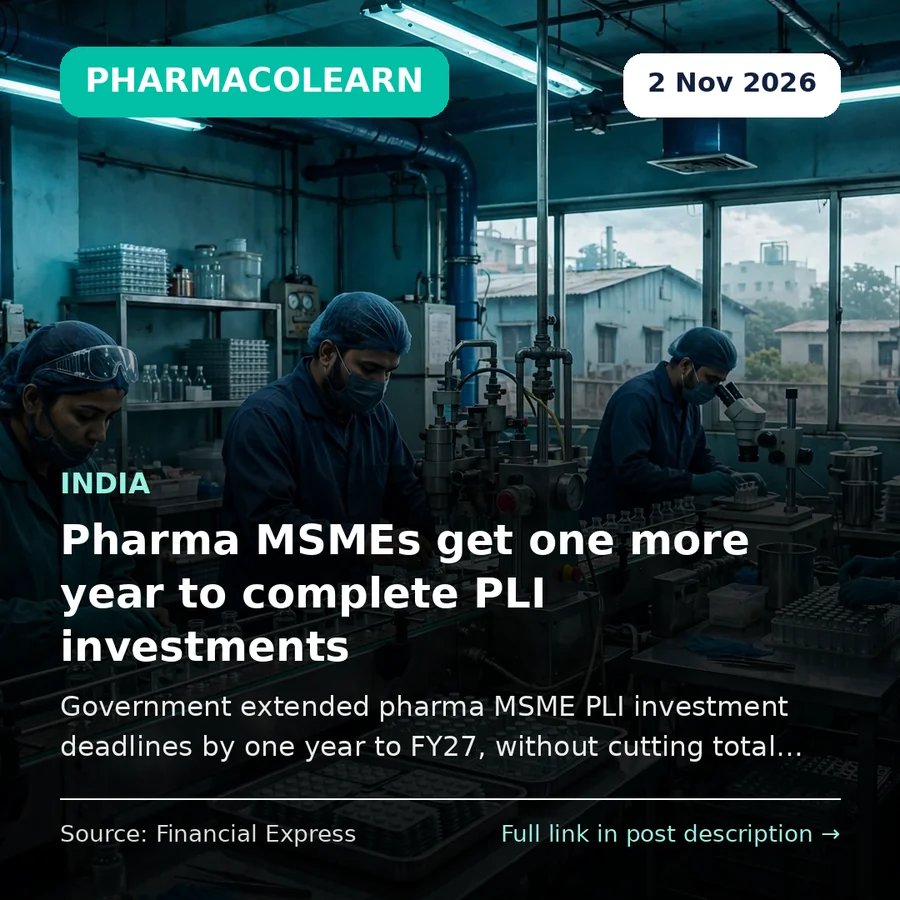
The Government has extended the investment deadlines for pharmaceutical micro, small and medium enterprises (MSMEs) under the Production Linked Incentive (PLI) scheme by one year, to FY27. Total investment commitments have not been cut, and the sales-growth rules that decide incentive eligibility remain unchanged. The extension gives smaller drug makers more time to complete the investments they committed to under the scheme, which rewards companies for incremental sales of eligible pharmaceutical products manufactured in India.
This is a practical lesson in pharmaceutical policy and industrial pharmacy for students. The PLI scheme for pharmaceuticals was designed to strengthen domestic manufacturing, reduce import dependence for key drugs and intermediates, and support smaller firms that often struggle with capital timelines. By extending the deadline without diluting the targets, the Government is signalling that it wants the committed capacity built rather than penalising companies for delays. For students interested in industry, regulatory affairs or pharmaceutical management, the story shows how incentive schemes, investment milestones and sales thresholds work together to shape manufacturing decisions.
Hyderabad hosts Global Pharma Partnering Summit on 2-3 November — Global Pharma Partnering Summit Hyderabad 2026, pharma partnerships drug discovery API biotech
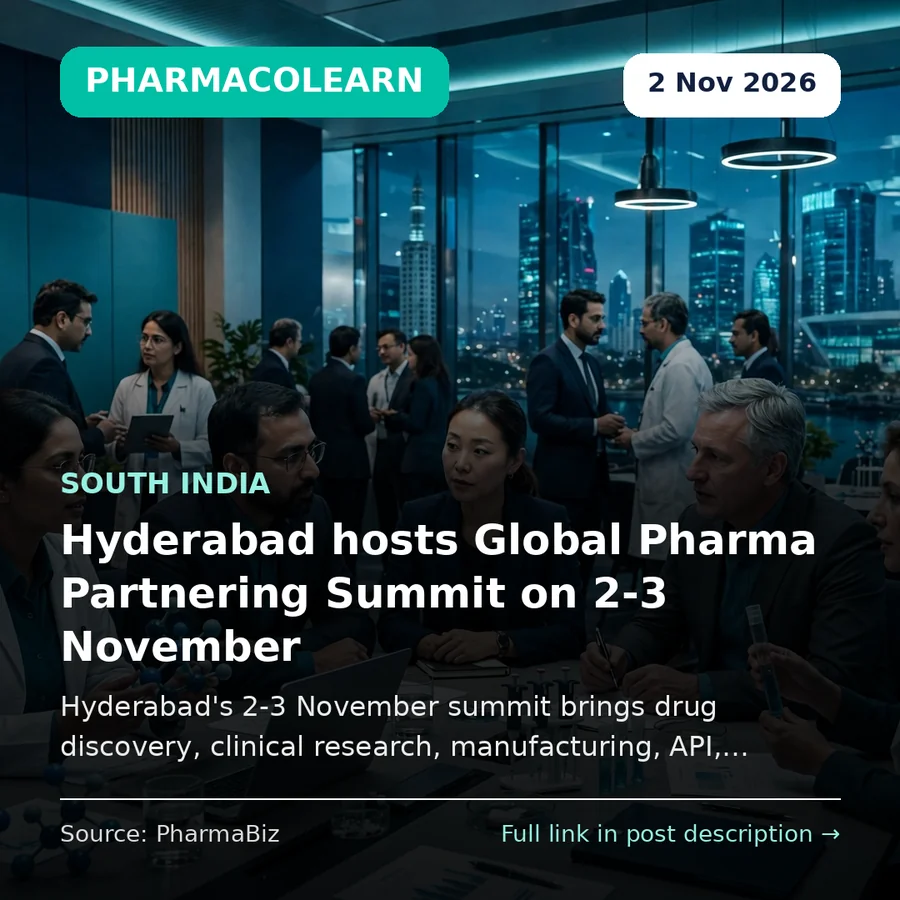
Hyderabad is hosting the Global Pharma Partnering Summit on 2-3 November, bringing together leaders from drug discovery, clinical research, manufacturing, active pharmaceutical ingredients (API), biotechnology, regulatory affairs and artificial intelligence. The two-day event is built around partnerships, with companies, researchers and service providers meeting to discuss collaborations across the full drug development and manufacturing chain. Hyderabad, home to one of India's largest pharmaceutical and life sciences clusters, is a natural venue for such a gathering.
For pharmacy students, the summit is a window into how the industry actually works beyond the laboratory. Drug discovery, clinical trials, API production, formulation, regulation and AI-driven research are usually taught as separate subjects, but a partnering summit shows how they connect in practice, with each player depending on the others. Students in and around Hyderabad, and those following the event online, can use it to understand current industry priorities, from outsourcing and contract manufacturing to the growing role of AI in drug discovery and development, and the career paths that open up across these segments.
China accepts sintilimab plus GC101 filing for advanced melanoma — NMPA sintilimab nolgileucel melanoma filing China, Innovent PD-1 combination therapy
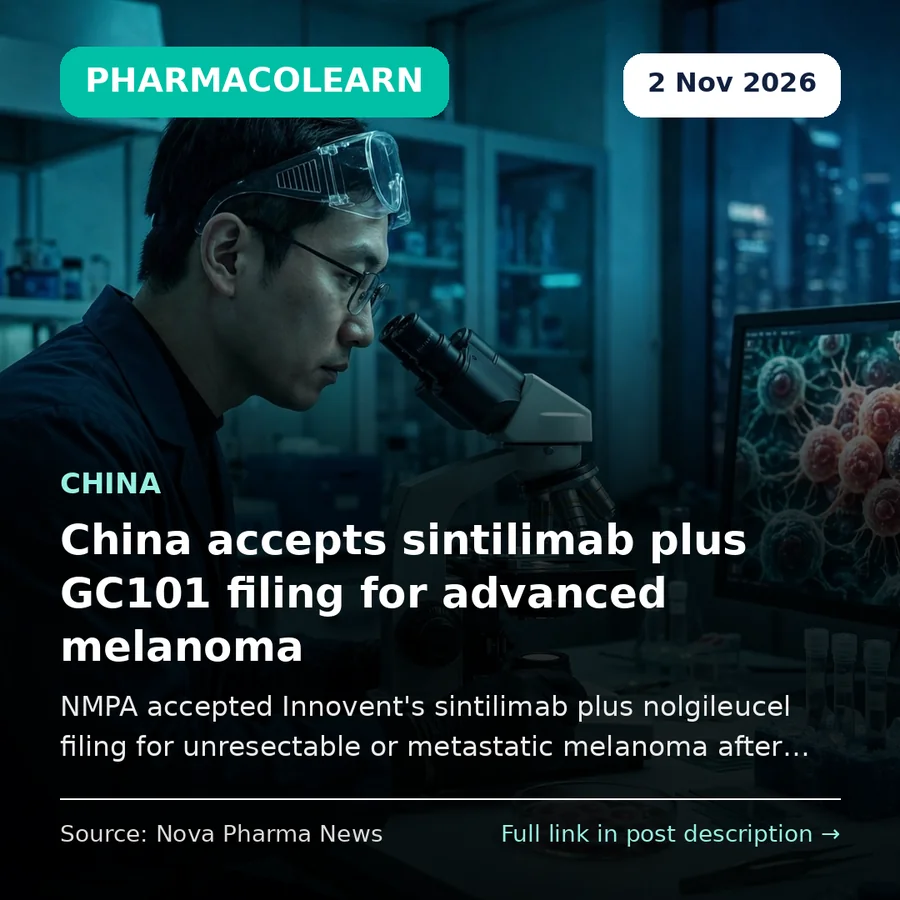
China's National Medical Products Administration (NMPA) has accepted Innovent Biologics' filing for sintilimab plus nolgileucel (GC101) in unresectable or metastatic melanoma in patients previously treated with PD-1 therapy. Acceptance of the filing means the NMPA will now review the application; it is not an approval, and the combination cannot be marketed for this use in China until the review is complete and approval is granted. Sintilimab is a PD-1 checkpoint inhibitor, a type of cancer immunotherapy that helps the immune system recognise and attack tumour cells, and the filing pairs it with nolgileucel in a population with limited options after prior immunotherapy.
For Indian pharmacy students, this story is valuable on two counts. First, it reinforces the crucial regulatory distinction between filing acceptance and drug approval, a distinction that examiners test repeatedly across CDSCO, FDA, EMA and NMPA decisions. Second, it illustrates modern melanoma treatment research, where checkpoint inhibitors are combined with other immunotherapies to help patients whose disease has progressed after earlier PD-1 treatment. Melanoma, a serious skin cancer that can spread rapidly once metastatic, remains a challenging disease, and combination immunotherapy strategies are a major focus of oncology teaching and research worldwide.
EMA and Japan accept savolitinib plus osimertinib lung filings — EMA Japan savolitinib osimertinib lung cancer filing, HUTCHMED Orpathys Tagrisso MET EGFR
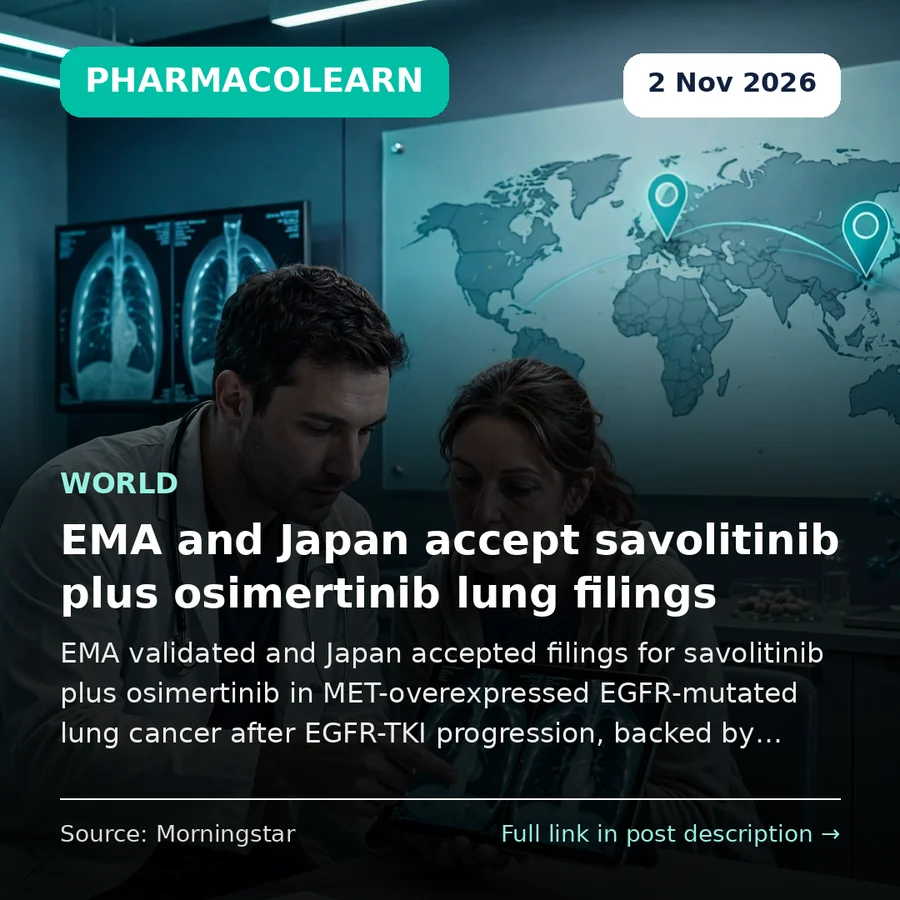
Europe's medicines regulator and Japan's regulator have accepted filings for the combination of savolitinib (Orpathys) plus osimertinib (Tagrisso) in MET-overexpressed, EGFR-mutated non-small cell lung cancer after progression on EGFR tyrosine kinase inhibitor (TKI) therapy. The European Medicines Agency (EMA) has validated the filing, and Japan has accepted its filing, both steps that start formal review. Again, acceptance and validation are not approvals: the combination is under review in both regions and is not yet authorised for this use there. The filings are supported by SAFFRON Phase III trial data from HUTCHMED and AstraZeneca's development programme.
This is a rich case study for students of pharmacology, oncology and regulatory affairs. EGFR-mutated lung cancer is commonly treated with EGFR-TKIs such as osimertinib, but tumours can develop resistance, and MET overexpression is one resistance mechanism that can drive further growth. Savolitinib is a MET inhibitor, so combining it with osimertinib targets both the original EGFR driver and the MET resistance pathway at the same time. For Indian students, the story also matters because EGFR-mutated lung cancer is a frequently examined topic, and because regulatory filings in Europe and Japan often signal where global lung cancer treatment guidelines may head next.
Conclusion
Taken together, today's stories show the pharmaceutical world moving on several fronts at once: India is widening access to a major diabetes therapy and giving its smaller drug makers breathing room to invest, Hyderabad is convening the partnerships that turn research into products, and regulators in China, Europe and Japan are reviewing new cancer combinations that tackle drug resistance. For pharmacy students, the lesson is that a medicine's journey runs from laboratory science through regulatory review, manufacturing policy and industry partnership before it ever reaches a patient. Following these milestones day by day builds exactly the regulatory, pharmacological and industry awareness that examinations and pharmacy careers demand.
References
- Medical Dialogues https://medicaldialogues.in/news/industry/pharma/sun-pharma-gets-cdsco-nod-for-generic-semaglutide-pill-182463
- Financial Express https://www.financialexpress.com/business/healthcare/pharma-msmes-get-more-time-for-pli-investments/4374644/
- PharmaBiz https://pharmabiz.com/PrintArticle.aspx?aid=191545&sid=2
- Nova Pharma News https://novapharmanews.com/apac/news/sintilimab-nmpa-filing-pfs-hr-0-53
- HUTCHMED via Morningstar / GlobeNewswire https://www.morningstar.com/news/globe-newswire/9857409/hutchmed-announces-regulatory-filings-accepted-for-review-for-orpathys-plus-tagrisso-in-met-driven-egfr-mutated-lung-cancer-in-europe-and-japan