
Daily Pharma News - 1 November 2026
Today's daily pharma news brings together regulatory action from India, a major USFDA inspection outcome from Hyderabad, and important drug and vaccine developments from Russia, China and the United States. From CDSCO's action on misleading cosmetic claims to new rules on imported drug shelf life, the day's stories are directly relevant to pharmacy students studying drug regulation, good manufacturing practice, pharmacology and global pharmaceutical markets. Read on for the full details, with the source of every story listed at the end.
CDSCO cancels FatX registration over misleading fat-dissolving claims — CDSCO FatX cancellation, cosmetic versus drug claims under the Drugs and Cosmetics Act India

India's Central Drugs Standard Control Organisation (CDSCO) has cancelled the registration of FatX, bearing registration number RC/COS-003300, after finding that website claims presenting the product as dissolving fat cells amounted to drug claims rather than cosmetic claims. Under the Drugs and Cosmetics Act, the line between a cosmetic and a drug depends on the claims made for a product, not only on how it is labelled or marketed, and claims of a therapeutic or physiological effect can bring a product within the drug regulatory framework. For pharmacy students, this case is a clear example of why claim wording matters in regulatory affairs, and why cosmetic products cannot carry promises that imply treatment of a condition or a change in body function.
The FatX decision also underlines the regulator's role in protecting consumers from misleading health claims in a market where beauty and wellness products are promoted heavily online. Students preparing for regulatory pharmacy, drug inspector examinations and industry roles should note how CDSCO examined the actual claims on the product website, and how that evidence shaped the cancellation decision. It is a useful reminder that regulatory compliance covers advertising and online content as well as manufacturing quality and labelling, and that misleading claims can cost a company its registration in India.
India bars import of drugs with under one year of shelf life left — India drug import shelf life rule, Drugs Thirteenth Amendment Rules 2026, imported medicines regulation
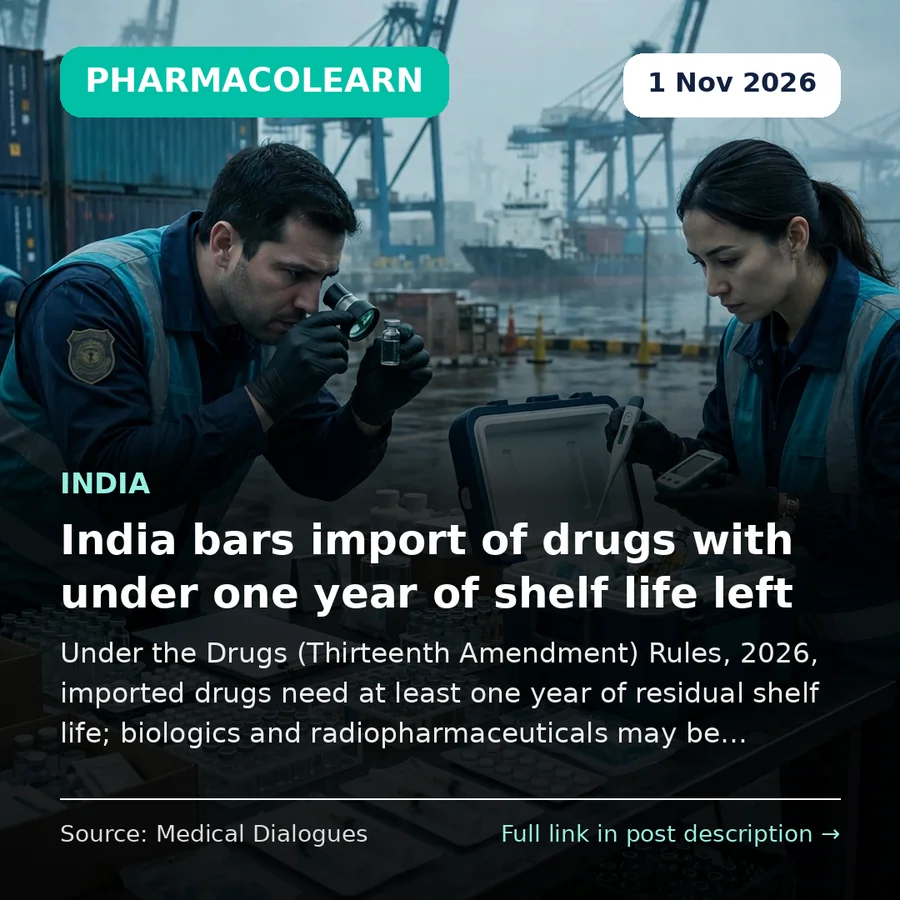
India has barred the import of drugs with less than one year of residual shelf life under the Drugs (Thirteenth Amendment) Rules, 2026, meaning imported medicines must arrive with at least one year of their labelled shelf life remaining. The rule is designed to ensure that imported drugs reach patients with enough usable life for distribution, dispensing and treatment, rather than arriving close to expiry and creating waste or shortage risks in the supply chain. Importers, distributors and hospital pharmacies will therefore need to check residual shelf life carefully at the point of procurement, since stock that falls short of the threshold cannot be brought into the country.
An important exception applies to biologics and radiopharmaceuticals, which may be allowed with 60 percent of their labelled life remaining, reflecting the shorter shelf lives and specialised handling of these products. This distinction matters for students of biopharmaceutics and hospital pharmacy, because biologics and radiopharmaceuticals often have complex storage requirements and limited stability windows compared with conventional small-molecule medicines. The amendment is a practical lesson in how Indian drug regulation balances patient safety, supply continuity and the realities of modern pharmaceutical products.
USFDA gives 11 observations at Granules' Hyderabad Gagillapur plant — USFDA Form 483 Granules India Hyderabad Gagillapur GMP inspection
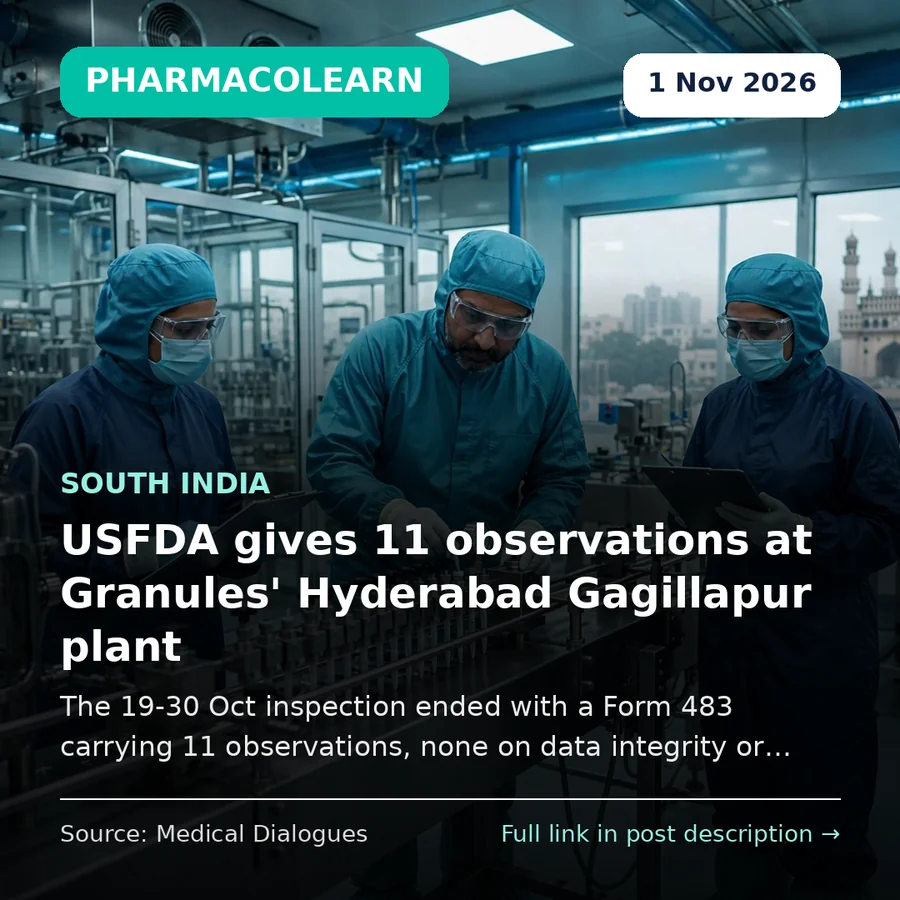
The United States Food and Drug Administration (USFDA) has issued 11 observations to Granules India following an inspection of its Gagillapur facility in Hyderabad conducted from 19 to 30 October. The observations were recorded on a Form 483, the document USFDA inspectors use to list conditions that may violate good manufacturing practice (GMP) requirements at the close of an inspection. Granules has said that production output is unaffected and that it will respond to the observations within 15 business days, which is the standard window for a company to explain corrective actions to the regulator.
Significantly, none of the 11 observations related to data integrity or cross-contamination, two areas that regulators treat with particular seriousness because they go to the trustworthiness of manufacturing records and the safety of products made in shared facilities. For pharmacy students, this story connects classroom GMP teaching with real inspection practice: a Form 483 is not a final enforcement action, but a list of findings the company must answer with a credible corrective and preventive action plan. It also shows why Hyderabad, one of India's largest pharmaceutical manufacturing hubs, remains closely watched by global regulators.
Russia registers Pfizer's Trumenba, second MenB vaccine in country — Pfizer Trumenba meningococcal B vaccine Russia registration, MenB immunisation

Russia has registered Pfizer's Trumenba, a vaccine against serogroup B meningococcal disease, for people aged 10 years and over, making it the second MenB vaccine registered in the country. The first was GSK's Bexsero, which can be used from two months of age, so the two vaccines now cover different age groups in the Russian immunisation landscape. Meningococcal disease, caused by Neisseria meningitidis, can progress rapidly to meningitis and septicaemia, which is why serogroup B vaccines are an important part of preventive care for adolescents and young adults, who face higher carriage and transmission rates.
For Indian pharmacy students, the Trumenba registration is a useful case study in vaccine regulation and age-specific licensing, showing how the same disease can be addressed by different products with different approved age ranges. It also illustrates how national regulators assess vaccines already used elsewhere in the world, and how competition between established products such as Trumenba and Bexsero can expand access. Understanding serogroup B meningococcal vaccines, their target populations and their place in immunisation programmes is valuable background for community pharmacy, clinical pharmacy and public health examinations.
China's NMPA accepts subcutaneous toripalimab filing for bladder cancer — NMPA toripalimab subcutaneous injection bladder cancer, Junshi HER2 urothelial carcinoma China
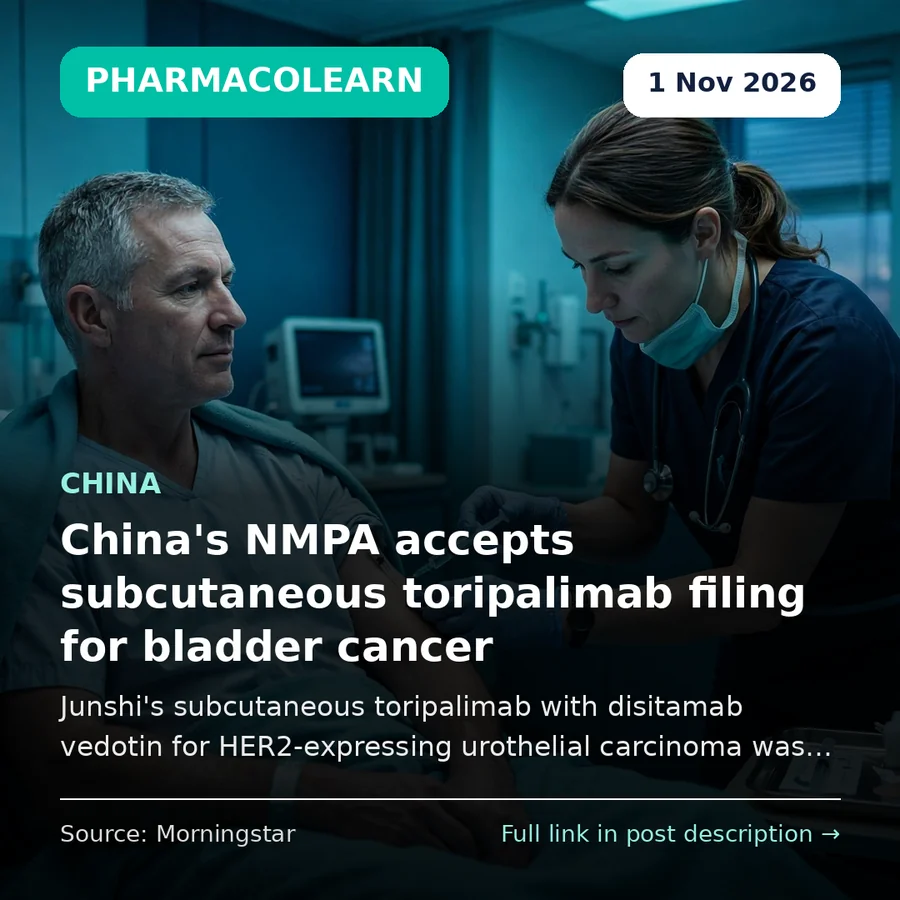
China's National Medical Products Administration (NMPA) has accepted a supplemental new drug application for Junshi Biosciences' subcutaneous toripalimab, announced on 28 October, for first-line treatment of HER2-expressing urothelial carcinoma in combination with disitamab vedotin. Toripalimab is a PD-1 checkpoint inhibitor, a class of cancer immunotherapy that helps the immune system recognise and attack tumour cells, and the subcutaneous formulation is presented as a more convenient alternative to intravenous infusion. Urothelial carcinoma, the most common type of bladder cancer, remains a challenging disease, and HER2 expression helps identify patients whose tumours may respond to targeted combinations such as this one.
Acceptance of the filing means the NMPA will now review the application; it is not itself an approval, a distinction that matters greatly in regulatory pharmacy. For students following oncology and biopharmaceuticals, the story highlights two wider trends: the shift from intravenous to subcutaneous delivery for monoclonal antibodies and checkpoint inhibitors, which can shorten clinic visits and improve patient experience, and China's growing role in innovative cancer drug development. It also shows how combination strategies pairing immunotherapy with antibody-drug conjugates such as disitamab vedotin are shaping modern bladder cancer treatment research.
FDA approves NRx preservative-free ketamine injection in US — FDA NRx preservative-free ketamine injection ANDA approval, ketamine shortage United States
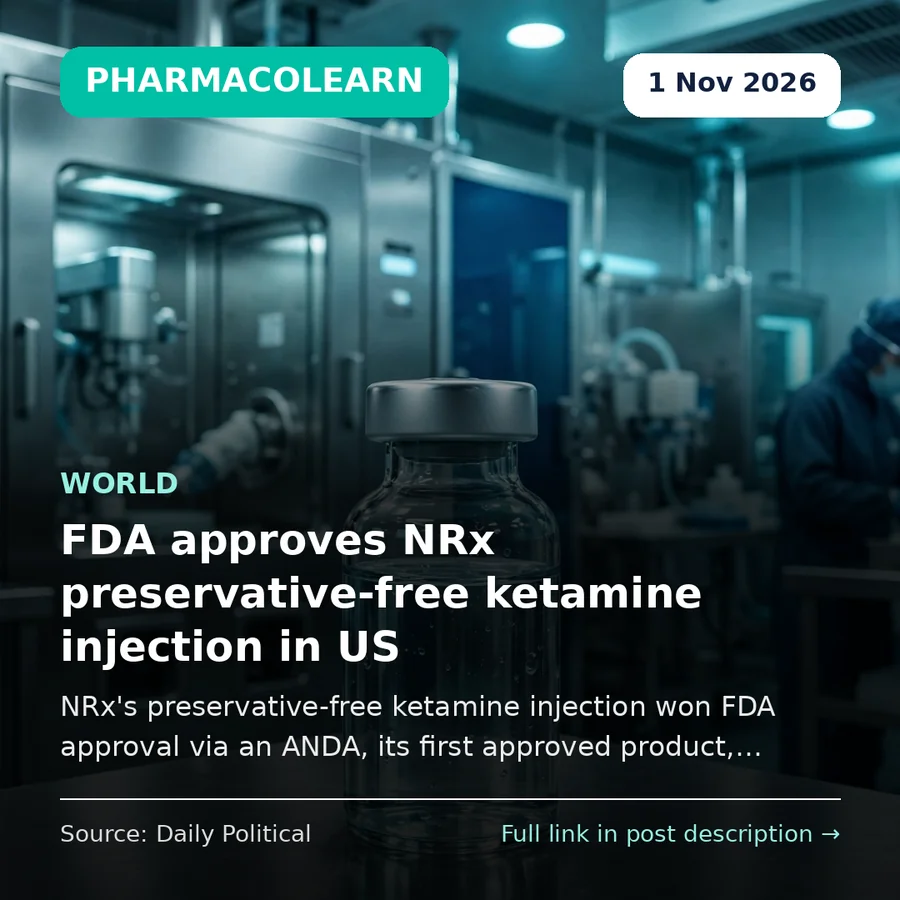
The United States Food and Drug Administration (FDA) has approved NRx Pharmaceuticals' preservative-free ketamine injection through an Abbreviated New Drug Application (ANDA), marking the company's first approved product. The injection is manufactured in the United States with Nephron using blow-fill-seal packaging, a sterile manufacturing technology that forms, fills and seals containers in a single automated process and is well suited to preservative-free injectables. The approval comes amid a long-running ketamine shortage in the United States, where the drug is used as an anaesthetic and in other clinical settings, making additional domestic supply capacity significant for hospitals and clinics.
For pharmacy students, this story brings together several core topics: the ANDA pathway for generic drugs, which requires demonstration of bioequivalence to a reference product rather than full clinical trials; the importance of preservative-free formulations for certain injectable medicines; and the real-world impact of drug shortages on patient care. It also illustrates how smaller companies can reach the market through partnerships with established manufacturers such as Nephron, and why sterile manufacturing technology and supply chain resilience are central concerns for the pharmaceutical industry worldwide, including in India.
Conclusion
Taken together, today's stories show regulation working at every stage of a medicine's life: claims are policed before a product reaches consumers, imports are screened for shelf life, manufacturing plants are inspected against GMP standards, and new vaccines and cancer therapies move step by step through national approval systems. For pharmacy students, the lesson is that pharmacology knowledge alone is not enough; understanding regulators such as CDSCO, USFDA, NMPA and FDA, and processes such as Form 483 responses, ANDA filings and supplemental applications, is what turns textbook learning into professional practice. Keep following these regulatory milestones, because the rules and approvals reported today are the examination topics and workplace realities of tomorrow.
References
- The Hindu BusinessLine https://www.thehindubusinessline.com/companies/cdsco-cancels-fatxs-registration-over-misleading-claims-on-product/article71648237.ece
- Medical Dialogues https://medicaldialogues.in/news/industry/pharma/health-ministry-bars-import-of-drugs-with-less-than-one-year-of-residual-shelf-life-182432
- Medical Dialogues https://medicaldialogues.in/news/industry/pharma/granules-india-receives-11-usfda-observations-at-gagillapur-facility-182423
- GxP News https://gxpnews.net/en/2026/10/russias-health-ministry-registers-second-vaccine-against-meningococcal-group-b/
- Morningstar / GlobeNewswire (Junshi Biosciences) https://www.morningstar.com/news/globe-newswire/9855772/junshi-biosciences-announces-acceptance-of-the-supplemental-new-drug-application-of-toripalimab-subsutaneous-injection-for-the-1st-line-treatment-of-her2-expressing-urothelial-carcinoma
- Daily Political https://www.dailypolitical.com/2026/10/31/nrx-pharmaceuticals-wins-fda-approval-for-preservative-free-ketamine-injection.html