Daily Pharma News - 30 October 2026
Today's daily pharma news brings important updates for pharmacy students from India and around the world, covering drug import regulation, Indian pharmaceutical company results, USFDA inspections, and new approvals in China, Russia, Europe and the United States. From the Drugs Rules amendment on imported medicine shelf life to Laurus Labs results, Dr Reddy's USFDA outcome, NMPA approval for a botulinum toxin, Russia's HPV vaccine calendar plan, FDA approval for a hydrogel embolic system, and EMA validation for single-pill lipid-lowering combinations, these stories connect classroom topics such as regulatory affairs, good manufacturing practice, pharmacology and pharmaceutical industry trends with real practice.
India Bans Import of Drugs With Less Than One Year Shelf Life: Drugs (Thirteenth Amendment) Rules 2026 Explained
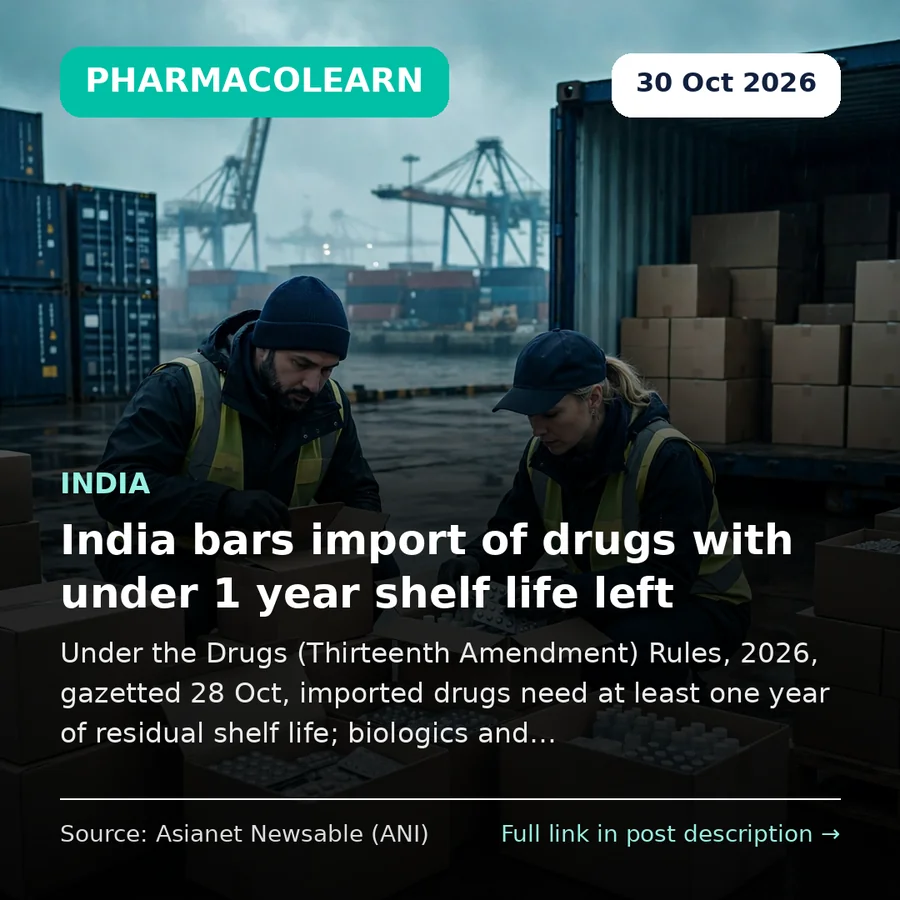
India has tightened the rules for imported medicines under the Drugs (Thirteenth Amendment) Rules, 2026, gazetted on 28 October. Under the new rule, imported drugs must have at least one year of residual shelf life remaining at the time of import. Biologics and radiopharmaceuticals receive a different allowance, with a 60 percent labelled-life requirement, recognising their shorter and more variable stability profiles.
For pharmacy students, this is a clear example of how drug regulation protects patients beyond the manufacturing stage. Shelf life, storage conditions and expiry dating are not only quality control topics, they also shape import policy, supply chain planning and access to medicines. Importers, distributors and hospital pharmacies will need to check residual shelf life carefully, because stock with a short remaining life may now be refused entry even if it is otherwise in date.
Laurus Labs Q2 FY27 Results: Net Profit Up 126 Percent on CDMO and Affordable Medicines Growth
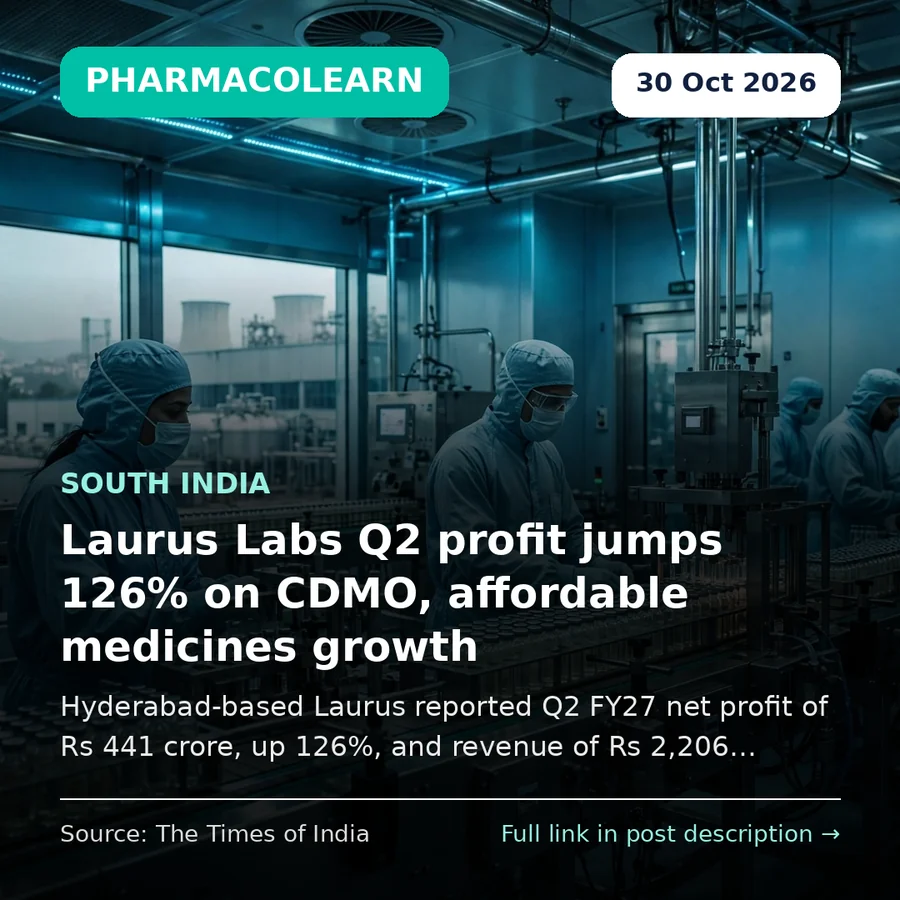
Hyderabad-based Laurus Labs reported a strong second quarter for FY27, with net profit of Rs 441 crore, up 126 percent, and revenue of Rs 2,206 crore, up 33 percent. Growth was led by the contract development and manufacturing organisation (CDMO) business, where revenue rose 75 percent to Rs 904 crore, alongside growth in affordable medicines. The company also highlighted a new peptide plant at Vizag.
This result is useful for students studying the Indian pharmaceutical industry, because it shows how CDMO work, active pharmaceutical ingredient (API) manufacturing and finished formulations fit together in one company. Contract manufacturing is now a major career area for pharmacists, covering process development, quality assurance, regulatory documentation and scale-up. The focus on peptides also reflects a wider shift in the industry towards complex molecules and injectable products.
USFDA Closes Dr Reddy's Srikakulam Inspection With VAI Classification: What VAI Means for Pharma Students
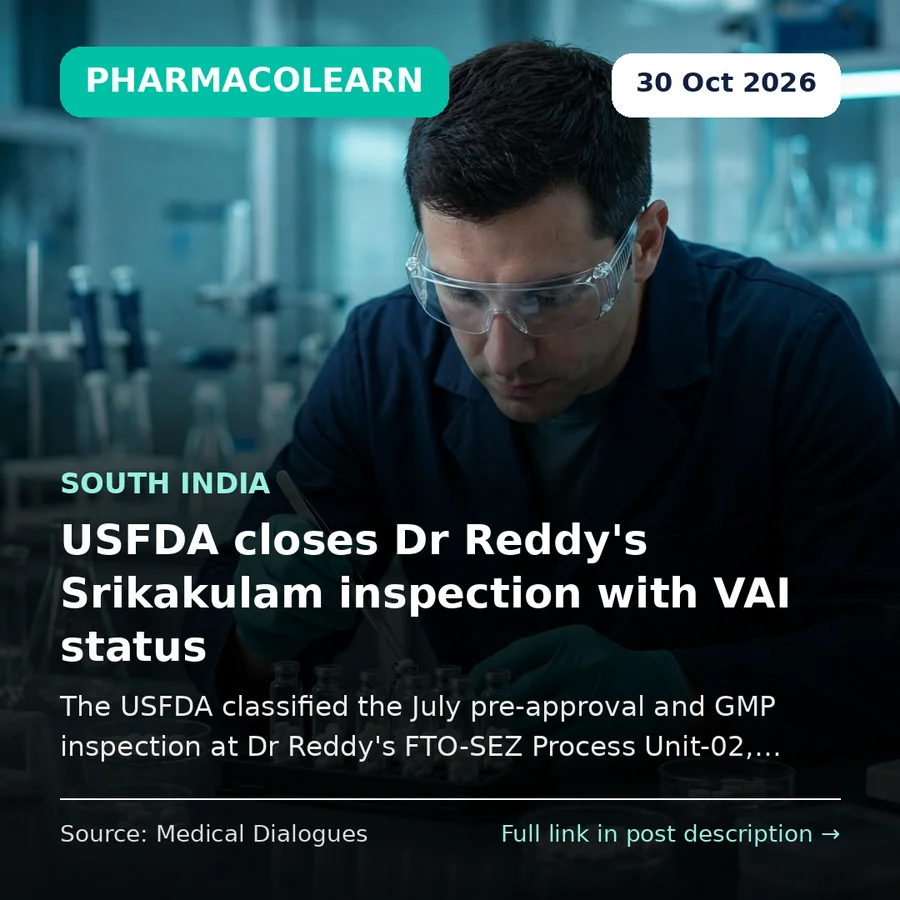
The United States Food and Drug Administration (USFDA) has classified its July pre-approval and good manufacturing practice (GMP) inspection at Dr Reddy's FTO-SEZ Process Unit-02 in Srikakulam as Voluntary Action Indicated (VAI), and closed the inspection, the company said on 28 October. A VAI classification generally means that objectionable conditions were noted but do not warrant formal regulatory action, and the company is expected to address them voluntarily.
For Indian pharmacy students, USFDA inspection outcomes are essential regulatory affairs knowledge. India supplies a large share of generic medicines to the United States, so inspection classifications such as No Action Indicated (NAI), Voluntary Action Indicated (VAI) and Official Action Indicated (OAI) directly affect exports, approvals and company reputation. A pre-approval inspection is especially important, because it is linked to whether a new product can be approved for the US market.
China NMPA Approves Inibio Botulinum Toxin Inibo: Ninth Botulinum Toxin Product in China
China's National Medical Products Administration (NMPA) has approved Inibio's type-A botulinum toxin, Inibo. It is the ninth such product approved in China and the third from a Korean firm, with commercial launch targeted for the first quarter of 2027.
Botulinum toxin products are a good pharmacology revision topic, because they illustrate how a bacterial toxin is developed into a therapeutic product used in controlled doses, and how manufacturing quality, potency testing and regulation control a high-risk biological product. The approval also shows the competitive landscape in Asia, where Korean biotechnology companies are expanding into the large Chinese market and where regulatory approval is the gateway to commercial launch.
Russia HPV Vaccine National Calendar 2027: Domestic HPV Vaccine to Join National Vaccination Programme
Russia's domestic human papillomavirus (HPV) vaccine will enter the national vaccination calendar in 2027 and will be supplied to regions next year, Health Minister Mikhail Murashko said on 29 October. Inclusion in a national calendar is a major step for any vaccine, because it moves the product from availability in the market to organised, population-level immunisation.
Pharmacy students should note the public health importance of HPV vaccination, which is aimed at preventing HPV-related disease including cervical cancer. National immunisation programmes depend on pharmacists and pharmacy supply chains for cold chain maintenance, storage, distribution and correct handling of vaccines. A domestic vaccine also raises questions about self-reliance in vaccine manufacturing, a theme that is relevant to India's own vaccine industry.
FDA Approves Embrace Hydrogel Embolic System for Peripheral Arterial Bleeds: HALT Trial Results
The United States Food and Drug Administration (FDA) has approved the Embrace Hydrogel Embolic System from Instylla for embolization of peripheral arterial bleeds in vessels up to 6 mm. The approval is based on the HALT trial, which reported 90 percent clinical success at 30 days.
Embolization is a procedure in which blood flow to a target vessel is deliberately blocked, in this case to stop bleeding. A hydrogel embolic system offers an alternative to coils and other embolic agents, and the trial result will be of interest to students studying interventional procedures, medical devices and clinical trial endpoints. For pharmacists, the story is a reminder that modern therapy includes combination products and devices as well as conventional medicines, and that trial design and regulatory review apply across all of them.
EMA Validates Daiichi Sankyo Single-Pill Triple Lipid-Lowering Combinations: Bempedoic Acid, Ezetimibe and Atorvastatin or Rosuvastatin
The European Medicines Agency (EMA) has validated two applications from Daiichi Sankyo for single-pill triple combinations for high cholesterol. One combination contains bempedoic acid, ezetimibe and atorvastatin, and the other contains bempedoic acid, ezetimibe and rosuvastatin. Validation means the applications are complete enough for review to begin, and it is not itself an approval.
This story links directly to cardiovascular pharmacology. Bempedoic acid, ezetimibe and statins such as atorvastatin and rosuvastatin lower cholesterol through different mechanisms, and combining them in a single pill is designed to improve adherence in patients who need more than one lipid-lowering medicine. Students should remember the distinction between validation, authorisation and approval in European regulation, because confusing these stages is a common exam error. If approved, fixed-dose combinations of this kind could also influence prescribing discussions in India, where combination therapy and adherence are major practical issues.
Conclusion
Taken together, the news of 30 October 2026 shows how regulation, industry performance and clinical innovation move together. India is strengthening import quality rules while its companies report strong growth and navigate USFDA inspections, and regulators in China, Russia, Europe and the United States are each shaping access to vaccines, devices and combination medicines. For pharmacy students, the lesson is practical: regulatory affairs, GMP, pharmacology and industry knowledge are not separate subjects, they are the same story told from different sides. Following daily pharma news in this way builds the habit of connecting exam topics with the decisions that regulators, companies and healthcare systems make every day.
References
- Asianet Newsable (ANI) https://newsable.asianetnews.com/business/india-bans-import-of-medicines-with-less-than-one-year-shelf-life-left-articleshow-kve7lvq
- The Times of India https://timesofindia.indiatimes.com/city/hyderabad/laurus-labs-q2-net-profit-surges-126-backed-by-growth-in-cdmo-affordable-medicines-businesses/articleshow/135317979.cms
- Medical Dialogues https://medicaldialogues.in/news/industry/pharma/dr-reddys-srikakulam-facility-gets-usfda-vai-classification-inspection-closed-182211
- The Herald Business https://biz.heraldcorp.com/article/10918420
- Izvestia https://iz.ru/en/node/2192880
- PR Newswire (Instylla) https://www.prnewswire.com/news-releases/instyllas-embrace-hydrogel-embolic-system-receives-fda-approval-for-peripheral-arterial-bleeds-302922926.html
- Business Wire (Daiichi Sankyo) https://www.businesswire.com/news/home/20261029012837/en/Two-Single-Pill-Triple-Combination-Lipid-Lowering-Therapy-Applications-Validated-in-The-European-Union